Building Blocks
This section contains fundamental products for the synthesis of organic and biological compounds. Building blocks are the essential starting materials used to construct complex molecules through various chemical reactions. They play a critical role in drug discovery, material science, and chemical research. At CymitQuimica, we offer a diverse range of high-quality building blocks to support your innovative research and industrial projects, ensuring you have the essential components for successful synthesis.
Subcategories of "Building Blocks"
- Boronic Acids & Boronic Acid Derivatives(5,756 products)
- Chiral Building Blocks(1,242 products)
- Hydrocarbon Building Blocks(6,095 products)
- Organic Building Blocks(61,038 products)
Found 196817 products of "Building Blocks"
Sort by
Purity (%)
0
100
|
0
|
50
|
90
|
95
|
100
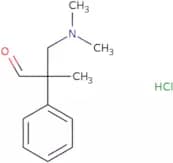
3-(Dimethylamino)-2-methyl-2-phenylpropanal hydrochloride
CAS:<p>Versatile small molecule scaffold</p>Formula:C12H18ClNOPurity:Min. 95%Molecular weight:227.73 g/mol2,5-Dimethoxybenzenesulfonamide
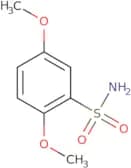
CAS:<p>2,5-Dimethoxybenzenesulfonamide is a piperidine derivative that has been shown to be an efficient electrophile. 2,5-Dimethoxybenzenesulfonamide reacts with protonated metal surfaces, forming a monolayer of high surface area and low coverage. The affinity of this compound for the metal surface is due to its nucleophilic nature. This compound displays a strong adsorption to the metal surface and provides protection from corrosion by acting as an oxygen scavenger. Experimental results have shown that 2,5-dimethoxybenzenesulfonamide exhibits higher efficiencies in the presence of other reactive compounds.<br>2,5-Dimethoxybenzenesulfonamide was used in computational simulations to study the effects of different parameters on the adsorption process. The use of these simulations can provide insight into how changes in experimental conditions affect the efficiency of this molecule.</p>Formula:C8H11NO4SPurity:Min. 95%Molecular weight:217.24 g/mol2-Bromo-3-chloronitrobenzene
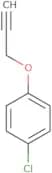
CAS:<p>2-Bromo-3-chloronitrobenzene is an estrogenic compound that binds to the estrogen receptor. It has been shown to have anticancer activity in animal studies, which may be due to its ability to inhibit transcriptional activity and induce apoptosis. 2-Bromo-3-chloronitrobenzene has been used as a starting material for synthesis of other compounds and exhibits moderate affinity for the estrogen receptor. This compound can be synthesized by a palladium-catalyzed cross-coupling reaction of 2-bromobenzyl bromide and chloroacetone, followed by treatment with salicylaldoxime in the presence of base.</p>Formula:C6H3BrClNO2Purity:Min. 95%Molecular weight:236.45 g/mol1-chloro-4-(prop-2-yn-1-yloxy)benzene
CAS:<p>1-Chloro-4-(prop-2-yn-1-yloxy)benzene is a copper chelating agent that is used in the production of organic chemicals. It is also an antimicrobial agent that has been shown to be active against filamentous fungi, including Aspergillus and Rhizopus species. This compound has been shown to inhibit the growth of Trichosporon species and itraconazole resistant strains of Candida albicans. The antimicrobial activity of 1-chloro-4-(prop-2-yn-1-yloxy)benzene is catalytic and additive, when combined with other agents such as benzalkonium chloride or thymol.</p>Formula:C9H7ClOPurity:Min. 95%Molecular weight:166.6 g/mol1-(Morpholin-4-yl)-1-phenylpropan-2-one
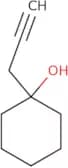
CAS:Controlled Product<p>Versatile small molecule scaffold</p>Formula:C13H17NO2Purity:Min. 95%Molecular weight:219.28 g/mol1-(Prop-2-yn-1-yl)cyclohexan-1-ol
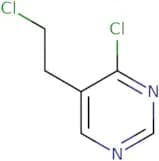
CAS:<p>1-(Prop-2-yn-1-yl)cyclohexan-1-ol is a colorless liquid with a sweet odor. It is soluble in most organic solvents, including ethanol and ether. It has been used as an intermediate for the synthesis of other organic compounds.</p>Formula:C9H14OPurity:Min. 95%Molecular weight:138.21 g/mol4-Chloro-5-(2-chloroethyl)pyrimidine
CAS:<p>Versatile small molecule scaffold</p>Formula:C6H6Cl2N2Purity:Min. 95%Molecular weight:177.03 g/molPyrimido[4,5-d]pyrimidine-2,4,7-triamine
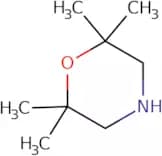
CAS:<p>Versatile small molecule scaffold</p>Formula:C6H7N7Purity:Min. 95%Molecular weight:177.17 g/mol2,2,6,6-Tetramethylmorpholine
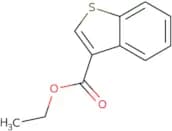
CAS:<p>2,2,6,6-Tetramethylmorpholine (TEM) is a chemical compound that is used in the synthesis of other chemicals. It is an electrolyte with a high dielectric constant and has been used as a solvent. The TEM molecule has two hydrogen isotopes: deuterium and protium. Deuterium has higher mass than protium, so it has different kinetic properties. In voltammetry experiments on TEM, the voltammogram obtained from deuterium-substituted TEM is shifted to a more positive potential than for protium-substituted TEM. This can be seen by examining the difference in the kinetic curves for each of the isotopes.</p>Formula:C8H17NOPurity:Min. 95%Molecular weight:143.23 g/molEthyl 1-benzothiophene-3-carboxylate
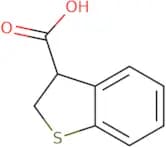
CAS:<p>Ethyl 1-benzothiophene-3-carboxylate is a heterocyclic compound that has been shown to be an efficient condensation reagent. This compound has two methylene groups and is used in the synthesis of heterocycles. It can be used as a precursor for the synthesis of amines and pyridopyridazine derivatives, which are often used as reagents in organic chemistry. Ethyl 1-benzothiophene-3-carboxylate can also be used for irradiation experiments. It has been shown that this compound is active at lower temperatures than other benzothiophenes, making it ideal for use in x-ray crystallography experiments.</p>Formula:C11H10O2SPurity:Min. 95%Molecular weight:206.26 g/mol2,3-Dihydro-1-benzothiophene-3-carboxylic acid
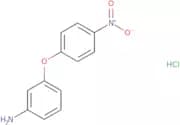
CAS:<p>Versatile small molecule scaffold</p>Formula:C9H8O2SPurity:Min. 95%Molecular weight:180.23 g/mol3-(4-Nitrophenoxy)aniline hydrochloride
CAS:<p>Versatile small molecule scaffold</p>Formula:C12H11ClN2O3Purity:Min. 95%Molecular weight:266.68 g/mol3,4-Dihydro-1H-2-benzothiopyran-1-ylmethanamine
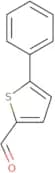
CAS:<p>Versatile small molecule scaffold</p>Formula:C10H13NSPurity:Min. 95%Molecular weight:179.28 g/mol5-Phenylthiophene-2-carboxaldehyde
CAS:<p>5-Phenylthiophene-2-carboxaldehyde is a molecule that inhibits the activity of tyrosinase, an enzyme involved in melanin biosynthesis. It reacts with the formyl group of tyrosinase to produce a reactive intermediate that undergoes a series of reactions with methyl ketones to inhibit the reaction mechanism. The inhibition of tyrosinase by 5-phenylthiophene-2-carboxaldehyde has been shown to be reversible and competitive. This molecule has also shown antibacterial activities against Gram positive and Gram negative bacteria. 5-Phenylthiophene-2-carboxaldehyde may also have potential for use as a ferroelectric material due to its ability to crystallize in the orthorhombic system. This molecule also exhibits optical properties such as fluorescence, phosphorescence and photoluminescence.</p>Formula:C11H8OSPurity:Min. 95%Molecular weight:188.24 g/mol2,1,3-Benzoxadiazole, 5-methyl-, 1-oxide
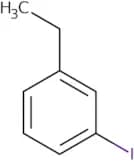
CAS:<p>2,1,3-Benzoxadiazole, 5-methyl-, 1-oxide is a nitro compound that has tautomeric equilibrium. It is a gaseous chemical with a refluxing property. This compound can be mediated and is magnetic. It has the formula C6H5NO2NOSCl. The chlorine atom in this molecule functions as an inorganic functional group. 2,1,3-Benzoxadiazole, 5-methyl-, 1-oxide has three phenazine groups per molecule and a constant of -0.084 kcal/mol.</p>Formula:C7H6N2O2Purity:Min. 95%Molecular weight:150.13 g/mol1-Ethyl-3-iodobenzene
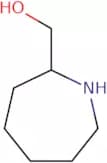
CAS:<p>Versatile small molecule scaffold</p>Formula:C8H9IPurity:Min. 95%Molecular weight:232.06 g/mol(Azepan-2-yl)methanol
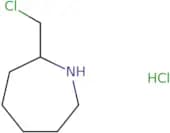
CAS:<p>Versatile small molecule scaffold</p>Formula:C7H15NOPurity:Min. 95%Molecular weight:129.2 g/mol2-(Chloromethyl)azepane hydrochloride
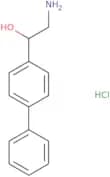
CAS:<p>Versatile small molecule scaffold</p>Formula:C7H15Cl2NPurity:Min. 95%Molecular weight:184.1 g/mol2-Amino-1-(4-phenylphenyl)ethan-1-ol hydrochloride
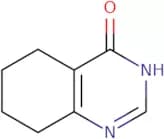
CAS:<p>Versatile small molecule scaffold</p>Formula:C14H16ClNOPurity:Min. 95%Molecular weight:249.73 g/mol5,6,7,8-Tetrahydro-3H-quinazolin-4-one
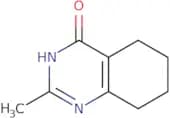
CAS:<p>5,6,7,8-Tetrahydro-3H-quinazolin-4-one is a pharmacological agent that is structurally related to the benzyl and piperidino groups. It has a low toxicity and can be used in peptic ulcer disease, as well as other conditions where this type of drug is indicated. 5,6,7,8-Tetrahydro-3H-quinazolin-4-one has shown some efficacy in treating duodenal ulcers. The drug binds to the H+/K+ ATPase enzyme in the stomach and inhibits gastric acid secretion by binding to the proton pump at the cellular level. This prevents it from functioning normally.</p>Formula:C8H10N2OPurity:Min. 95%Molecular weight:150.18 g/mol2-Methyl-5,6,7,8-tetrahydroquinazolin-4-ol
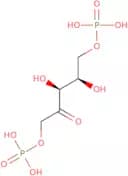
CAS:<p>Versatile small molecule scaffold</p>Formula:C9H12N2OPurity:Min. 95%Molecular weight:164.2 g/molD-Xylulose 1,5-diphosphate
CAS:<p>Versatile small molecule scaffold</p>Formula:C5H12O11P2Purity:Min. 95%Molecular weight:310.09 g/mol4-Oxo-3,4-dihydroquinazoline-6-sulfonamide
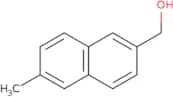
CAS:<p>Versatile small molecule scaffold</p>Formula:C8H7N3O3SPurity:Min. 95%Molecular weight:225.23 g/mol(6-Methylnaphthalen-2-yl)methanol
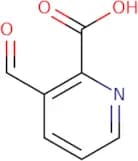
CAS:<p>Vanillyl alcohol is a chemical compound that has been identified as a gene product in the bacterium Bacillus subtilis. It is an aminopentol and may be synthesized from the amino acid sequence L-valine, L-alanine, and glyceraldehyde-3-phosphate. Vanillyl alcohol has been shown to inhibit bacterial growth by binding to alcohol dehydrogenases, which are involved in the breakdown of alcohols in bacteria. Vanillyl alcohol also inhibits xylene degradation through its reaction with naphthalene to form vanillylmandelic acid, which can inhibit the activity of aldehyde dehydrogenase in bacteria.</p>Formula:C12H12OPurity:Min. 95%Molecular weight:172.22 g/mol3-formylpyridine-2-carboxylic acid
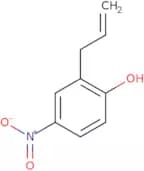
CAS:<p>3-formylpyridine-2-carboxylic acid is a phenylhydrazine derivative, which is a white crystalline solid. It is soluble in solvents such as chloroform and methanol, but insoluble in water. 3-Formylpyridine-2-carboxylic acid can be prepared by the chlorination of pyridine or by alkaline hydrolysis of its esters with sodium hydroxide. It can also be synthesized from the reaction of phenylhydrazine with formaldehyde in organic solvents. 3-Formylpyridine-2-carboxylic acid has been shown to react with carbonyl compounds to form a conjugated system through an addition reaction and to form esters that are soluble in organic solvents. The yield of this reaction depends on the solvent used and the temperature at which it is carried out.</p>Formula:C7H5NO3Purity:Min. 95%Molecular weight:151.1 g/mol4-Nitro-2-(prop-2-en-1-yl)phenol
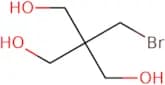
CAS:<p>4-Nitro-2-(prop-2-en-1-yl)phenol is a reactive chemical that can be synthesized from eugenol. It has been used as a monomer in the synthesis of polymers. The rate at which 4-Nitro-2-(prop-2-en-1-yl)phenol reacts increases when it is in the presence of a reoxidant, such as oxygen or hydrogen peroxide. The rate also increases when it is in the presence of an antioxidant, such as αtocopherol. This product has been shown to have antioxidant properties and can be used to scavenge free radicals.</p>Formula:C9H9NO3Purity:Min. 95%Molecular weight:179.17 g/mol2-(Bromomethyl)-2-(hydroxymethyl)-1,3-propanediol
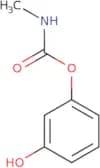
CAS:<p>2-(Bromomethyl)-2-(hydroxymethyl)-1,3-propanediol is a synthetic compound that is used as a stabilizer in polymers. It has magnetic properties and crystallizes in an orthorhombic system. This substance also has an aryl group and a chlorine substituent. 2-(Bromomethyl)-2-(hydroxymethyl)-1,3-propanediol reacts with the phosphite trialkyl to form polyvalent phosphorus compounds, which are residues of the trialkyl. The insecticidal properties of this compound may be due to its ability to inhibit the growth of insects by affecting the metabolism of arthropods. The hydrocarbon residue may be due to its synthesis from bromoethane and methanol.</p>Formula:C5H11BrO3Purity:Min. 95%Molecular weight:199.04 g/mol3-Hydroxyphenyl N-methylcarbamate
CAS:<p>Versatile small molecule scaffold</p>Formula:C8H9NO3Purity:Min. 95%Molecular weight:167.16 g/mol4-Methyl-1H-benzo[d]imidazol-2(3H)-one
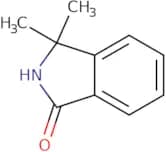
CAS:<p>4-Methyl-1H-benzo[d]imidazol-2(3H)-one is a chemical that belongs to the group of agrochemicals. It is used as a yield enhancer for crops and is biologically active. 4-Methyl-1H-benzo[d]imidazol-2(3H)-one has been shown to be an active molecule in science, but also a cyanate. There are no known human health effects from exposure to this chemical.</p>Formula:C8H8N2OPurity:Min. 95%Molecular weight:148.17 g/mol2,3-Dihydro-3,3-dimethyl-1H-isoindol-1-one
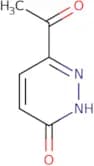
CAS:<p>Versatile small molecule scaffold</p>Formula:C10H11NOPurity:Min. 95%Molecular weight:161.2 g/mol6-Acetyl-2,3-dihydropyridazin-3-one
CAS:<p>Versatile small molecule scaffold</p>Formula:C6H6N2O2Purity:Min. 95%Molecular weight:138.12 g/molTetrazolo[1,5-b]pyridazin-6-ylamine
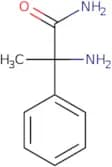
CAS:<p>Tetrazolo[1,5-b]pyridazin-6-ylamine is a chemical compound with the molecular formula C6H2N6. It has a mass spectrum that shows characteristic peaks at m/z 155, 121 and 107. This compound was first synthesized in 1885 and was found to have activity as an antipyretic agent. Tetrazolo[1,5-b]pyridazin-6-ylamine is used in experiments to study the effects of different substances on protein synthesis and DNA replication. The positioning of this molecule can be determined using the algorithm for molecular ion, which is based on the position of the signal in the mass spectrum.</p>Formula:C4H4N6Purity:Min. 95%Molecular weight:136.12 g/mol2-Amino-2-phenylpropanamide
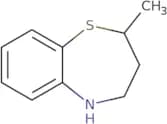
CAS:<p>Versatile small molecule scaffold</p>Formula:C9H12N2OPurity:Min. 95%Molecular weight:164.2 g/mol2-Methyl-2,3,4,5-tetrahydro-1,5-benzothiazepine
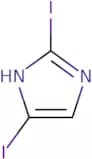
CAS:<p>Versatile small molecule scaffold</p>Formula:C10H13NSPurity:Min. 95%Molecular weight:179.28 g/mol2,4-Diiodo-1H-imidazole
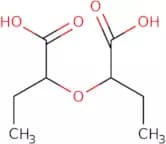
CAS:<p>2,4-Diiodo-1H-imidazole (DIIM) is a heterocyclic compound that can be obtained by cross-coupling of an imidazole with a diamine. It is an annular compound that tautomerizes between the two possible structures. DIIM has been used as a ligand in palladium-catalyzed cross-coupling reactions. In these reactions, DIIM mediates the coupling of organic molecules with palladium complexes to form new carbon–carbon bonds. The nucleophilic properties of the imidazole ring have also been exploited in its use as a reactant in hydrogen peroxide oxidation reactions to produce sulphite, which is often used as a food preservative.</p>Formula:C3H2I2N2Purity:Min. 95%Molecular weight:319.87 g/mol2-(1-Carboxypropoxy)butanoic acid
CAS:Versatile small molecule scaffoldFormula:C8H14O5Purity:Min. 95%Molecular weight:190.19 g/mol1-(2-Phenylacetyl)piperidin-4-one
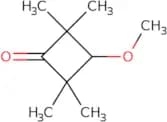
CAS:Controlled Product<p>Versatile small molecule scaffold</p>Formula:C13H15NO2Purity:Min. 95%Molecular weight:217.3 g/mol3-Methoxy-2,2,4,4-tetramethylcyclobutan-1-one
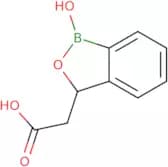
CAS:<p>Versatile small molecule scaffold</p>Formula:C9H16O2Purity:Min. 95%Molecular weight:156.2 g/mol2-(1-Hydroxy-1,3-dihydro-2,1-benzoxaborol-3-yl)acetic acid
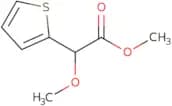
CAS:<p>Versatile small molecule scaffold</p>Formula:C9H9BO4Purity:Min. 95%Molecular weight:191.98 g/molMethyl 2-methoxy-2-(thiophen-2-yl)acetate
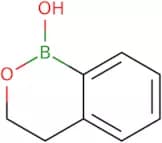
CAS:<p>Versatile small molecule scaffold</p>Formula:C8H10O3SPurity:Min. 95%Molecular weight:186.23 g/mol2-(2-Hydroxyethyl)phenylboronic acid dehydrated
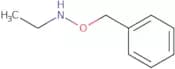
CAS:<p>2-(2-Hydroxyethyl)phenylboronic acid dehydrated is a molecule with a hydroxyl group, a neutral ph, and a hydroxyl group. It is used in the synthesis of nitro compounds and has shown to have an inhibitory effect on protein synthesis. The compound also binds to hyaluronic acid, which may be due to its structural similarity to the sugar glucose.</p>Formula:C8H9BO2Purity:Min. 95%Molecular weight:147.97 g/mol(Benzyloxy)(ethyl)amine
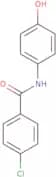
CAS:<p>Versatile small molecule scaffold</p>Formula:C9H13NOPurity:Min. 95%Molecular weight:151.21 g/mol4-Chloro-N-(4-hydroxyphenyl)benzamide
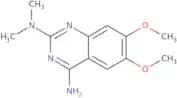
CAS:<p>Versatile small molecule scaffold</p>Formula:C13H10ClNO2Purity:Min. 95%Molecular weight:247.67 g/mol6,7-Dimethoxy-N2,N2-dimethylquinazoline-2,4-diamine
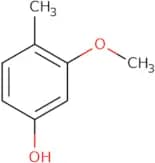
CAS:<p>Versatile small molecule scaffold</p>Formula:C12H16N4O2Purity:Min. 95%Molecular weight:248.28 g/mol3-Methoxy-4-methylphenol
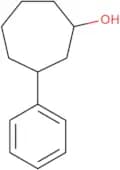
CAS:<p>3-Methoxy-4-methylphenol is a fatty acid that has been found to be an effective feedstock for the production of octane and other alkanes. It is produced by treatment of hexane with mandelonitrile followed by acetylation and alkylation. This chemical can also be used in the production of polyaromatic compounds, such as naphthalene, anthracene, phenanthrene, and pyrene. 3-Methoxy-4-methylphenol can be modified by peroxide treatment to produce a variety of products including methyl methacrylate.</p>Formula:C8H10O2Purity:Min. 95%Molecular weight:138.16 g/mol3-Phenylcycloheptan-1-ol
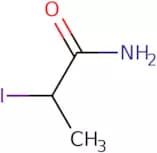
CAS:<p>Versatile small molecule scaffold</p>Formula:C13H18OPurity:Min. 95%Molecular weight:190.28 g/mol2-Iodopropanamide
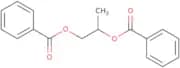
CAS:<p>2-Iodopropanamide is a polymeric compound that is obtained from the reaction of 2-iodobenzene with triethylborane in the presence of polystyrene. The product has a high yield and can be used to make laminates that are semipermeable, osmotic, and environmentally friendly. The polymeric composition is also cyclisable.</p>Formula:C3H6INOPurity:Min. 95%Molecular weight:198.99 g/mol2-(Benzoyloxy)propyl benzoate
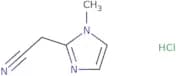
CAS:<p>2-(Benzoyloxy)propyl benzoate is a dibenzoate ester with a hydroxy group. It is an organic solvent that is minimizes the spreading of coatings and has optical properties. This compound reduces the viscosity of various polymers, such as polystyrene and polyvinyl chloride, when mixed in water. 2-(Benzoyloxy)propyl benzoate can be used to make coatings for plastics and paper products, including those that are biodegradable. This compound has been shown to have health effects like irritation on skin and mucous membranes, but it is not toxic to aquatic organisms.</p>Formula:C17H16O4Purity:Min. 95%Molecular weight:284.31 g/mol2-(1-Methyl-1H-imidazol-2-yl)acetonitrile hydrochloride
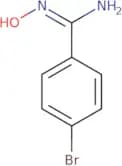
CAS:<p>Versatile small molecule scaffold</p>Formula:C6H8ClN3Purity:Min. 95%Molecular weight:157.6 g/mol(E)-4-Bromo-N'-hydroxybenzimidamide
CAS:<p>(E)-4-Bromo-N'-hydroxybenzimidamide is a synthetic antifungal agent that is resistant to many microorganisms. It is a potent inhibitor of the uptake of β-amyloid peptide in rat cortical neurons and also inhibits the modification of β-amyloid. This drug has been shown to have pharmacological effects on bacterial cells, including inhibition of protein synthesis and DNA synthesis. The molecular basis for these interactions is not known, but it has been suggested that (E)-4-Bromo-N'-hydroxybenzimidamide interacts with the pharmacophore site on bacteria and binds to nitrogen atoms that are important for binding. These interactions are bioisosteric with oxadiazole derivatives such as clotrimazole, which have been shown to inhibit protein synthesis in fungi. The drug has also been used as a radiotracer to study the uptake of β-amyloid peptides by neurons</p>Formula:C7H7BrN2OPurity:Min. 95%Molecular weight:215.05 g/mol


![Pyrimido[4,5-d]pyrimidine-2,4,7-triamine](/_next/image/?url=https%3A%2Fstatic.cymitquimica.com%2Fproducts%2F3D%2Fthumb-webp%2FUAA14844.webp&w=3840&q=75)



![4-Methyl-1H-benzo[d]imidazol-2(3H)-one](/_next/image/?url=https%3A%2Fstatic.cymitquimica.com%2Fproducts%2F3D%2Fthumb-webp%2FUAA19068.webp&w=3840&q=75)
![Tetrazolo[1,5-b]pyridazin-6-ylamine](/_next/image/?url=https%3A%2Fstatic.cymitquimica.com%2Fproducts%2F3D%2Fthumb-webp%2FUAA19543.webp&w=3840&q=75)