Building Blocks
This section contains fundamental products for the synthesis of organic and biological compounds. Building blocks are the essential starting materials used to construct complex molecules through various chemical reactions. They play a critical role in drug discovery, material science, and chemical research. At CymitQuimica, we offer a diverse range of high-quality building blocks to support your innovative research and industrial projects, ensuring you have the essential components for successful synthesis.
Subcategories of "Building Blocks"
- Boronic Acids & Boronic Acid Derivatives(5,756 products)
- Chiral Building Blocks(1,242 products)
- Hydrocarbon Building Blocks(6,095 products)
- Organic Building Blocks(61,037 products)
Found 196139 products of "Building Blocks"
Sort by
Purity (%)
0
100
|
0
|
50
|
90
|
95
|
100
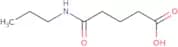
4-(Propylcarbamoyl)butanoic acid
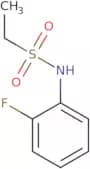
CAS:<p>Versatile small molecule scaffold</p>Formula:C8H15NO3Purity:Min. 95%Molecular weight:173.21 g/molN-(2-Fluorophenyl)ethane-1-sulfonamide
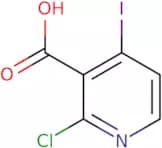
CAS:<p>N-(2-Fluorophenyl)ethane-1-sulfonamide is a drug that inhibits the proximal tubules in the kidney. It has been shown to be effective against a number of viruses, including syncytial virus and HIV. This drug also has anti-inflammatory properties and can be used to treat inflammatory disorders such as septic shock, arthritis, and psoriasis. N-(2-Fluorophenyl)ethane-1-sulfonamide has been shown to inhibit collagenase activity in vitro by binding to collagenase at an allosteric site, thereby preventing the cleavage of proline residues from collagen molecules.</p>Formula:C8H10FNO2SPurity:Min. 95%Molecular weight:203.24 g/mol2-Chloro-4-iodopyridine-3-carboxylic acid
CAS:<p>Versatile small molecule scaffold</p>Formula:C6H3ClINO2Purity:Min. 95%Molecular weight:283.45 g/mol2-[(2-Aminoethyl)amino]pyridine-3-carbonitrile
CAS:<p>Versatile small molecule scaffold</p>Formula:C8H10N4Purity:Min. 95%Molecular weight:162.19 g/mol[2-(Dimethylamino)-5-nitrophenyl]methanol
CAS:<p>Versatile small molecule scaffold</p>Formula:C9H12N2O3Purity:Min. 95%Molecular weight:196.2 g/mol1-tert-Butoxycarbonylpiperidine-4-carboxylic acid methyl amide
CAS:<p>1-tert-Butoxycarbonylpiperidine-4-carboxylic acid methyl amide is a reactive compound that is used as a neuroprotective agent. It blocks the formation of malondialdehyde, which are toxic byproducts of lipid peroxidation, and protects cells from oxidative damage in animal models of Parkinson's disease. 1-tert-Butoxycarbonylpiperidine-4-carboxylic acid methyl amide also has the ability to bind to alpha synuclein (a protein associated with Parkinson's disease) and inhibit its aggregation, as well as bind to markers associated with hyperproliferative diseases such as striatal markers. This molecule may also be useful for the treatment of cardiovascular diseases due to its ability to form hydrogen bonds with carbonyl groups.</p>Formula:C12H22N2O3Purity:Min. 95%Molecular weight:242.31 g/moltert-Butyl 4-{[(2-chloropyrimidin-4-yl)(methyl)amino]methyl}piperidine-1-carboxylate
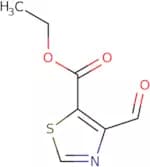
CAS:<p>Versatile small molecule scaffold</p>Formula:C16H25ClN4O2Purity:Min. 95%Molecular weight:340.8 g/molEthyl 4-formyl-1,3-thiazole-5-carboxylate
CAS:<p>Versatile small molecule scaffold</p>Formula:C7H7NO3SPurity:Min. 95%Molecular weight:185.2 g/molBenzyl N-[2-(fluorosulfonyl)ethyl]carbamate
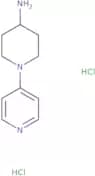
CAS:<p>Versatile small molecule scaffold</p>Formula:C10H12FNO4SPurity:Min. 95%Molecular weight:261.27 g/mol4-(4-Aminopiperidino)pyridine Dihydrochloride
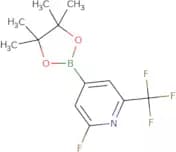
CAS:<p>Versatile small molecule scaffold</p>Formula:C10H15N3·2HClPurity:Min. 95%Molecular weight:250.17 g/mol2-Fluoro-4-(4,4,5,5-tetramethyl-1,3,2-dioxaborolan-2-yl)-6-(trifluoromethyl)pyridine
CAS:<p>Versatile small molecule scaffold</p>Formula:C12H14BF4NO2Purity:Min. 95%Molecular weight:291.05 g/mol2-{Bicyclo[2.2.1]heptan-2-yl}ethan-1-ol
CAS:<p>Versatile small molecule scaffold</p>Formula:C9H16OPurity:Min. 95%Molecular weight:140.22 g/mol[2-(2-Chlorophenoxy)ethyl](methyl)amine
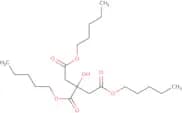
CAS:<p>Versatile small molecule scaffold</p>Formula:C9H12ClNOPurity:Min. 95%Molecular weight:185.65 g/mol1,2,3-Tripentyl 2-hydroxypropane-1,2,3-tricarboxylate
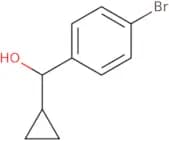
CAS:<p>1,2,3-Tripentyl 2-hydroxypropane-1,2,3-tricarboxylate (TPTC) is a citric acid derivative that has been shown to have antibacterial activity. It is used in the production of coatings and as an intermediate in the manufacture of cellulose acetate. TPTC can be synthesized by reacting orthophosphoric acid with 1,2,3-tripentyl 2-bromopropane-1,2,3-tricarboxylate. TPTC has a reaction rate that is faster than that of the corresponding ester derived from glycerol or sorbitol. This makes it suitable for use in coatings manufacturing and other applications where processability is important.</p>Formula:C21H38O7Purity:Min. 95%Molecular weight:402.5 g/molCyclopropyl (4-bromophenyl)methanol
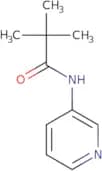
CAS:<p>Versatile small molecule scaffold</p>Formula:C10H11BrOPurity:Min. 95%Molecular weight:227.1 g/mol2,2-Dimethyl-N-pyridin-3-yl-propionamide
CAS:<p>2,2-Dimethyl-N-pyridin-3-yl-propionamide is a tertiary amide with a pyridine ring that forms a dimer. It is soluble in water and has no odor or taste. 2,2-Dimethyl-N-pyridin-3-yl-propionamide has two orientations and hydrogen bonds occur between the tertiary amide groups. There are also two carbonyls in this compound, which are C=O groups. The crystal structure of 2,2-Dimethyl-N-pyridin3ylpropionamide is disordered because it does not have any long range order.</p>Formula:C10H14N2OPurity:Min. 95%Molecular weight:178.23 g/mol2,2-Dimethyl-N-pyridin-4-yl-propionamide
CAS:<p>2,2-Dimethyl-N-pyridin-4-yl-propionamide is an analgesic and antipyretic drug with anti-inflammatory properties. It has been shown to inhibit the synthesis of prostaglandins, which are important mediators of inflammation. This disulphide compound is synthesized by reacting 2,2-dimethylpyridine with propionic acid chloride in the presence of a base such as pyridine. The product can be hydrolyzed to phenothiazines, which are drugs with antipsychotic effects.</p>Formula:C10H14N2OPurity:Min. 95%Molecular weight:178.24 g/mol2-{[(Furan-2-ylmethyl)amino]methyl}phenol
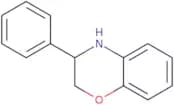
CAS:<p>Versatile small molecule scaffold</p>Formula:C12H13NO2Purity:Min. 95%Molecular weight:203.24 g/mol3-Phenyl-3,4-dihydro-2H-1,4-benzoxazine
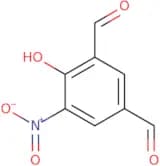
CAS:<p>Versatile small molecule scaffold</p>Formula:C14H13NOPurity:Min. 95%Molecular weight:211.26 g/mol4-Hydroxy-5-nitrobenzene-1,3-dicarbaldehyde
CAS:<p>4-Hydroxy-5-nitrobenzene-1,3-dicarbaldehyde (HNAD) is a formyl group that is used as a reagent in organic synthesis. It reacts with phosphonium salts to give formylphosphonium salts. HNAD has been shown to be an excellent chromophore for the bathochromic shift and fluorescence techniques. This compound has also been used in the Wittig reaction, which is a method of synthesizing substituted phenols from olefins and phenols. HNAD can also be used to synthesize chromenes via the wittig reaction and uv irradiation.</p>Formula:C8H5NO5Purity:Min. 95%Molecular weight:195.13 g/mol1-{6-Chloroimidazo[2,1-b][1,3]thiazol-5-yl}ethan-1-ol
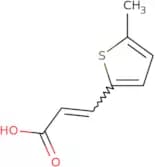
CAS:<p>Versatile small molecule scaffold</p>Formula:C7H7ClN2OSPurity:Min. 95%Molecular weight:202.66 g/mol(2E)-3-(5-methylthiophen-2-yl)prop-2-enoic acid
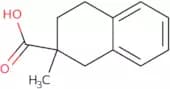
CAS:<p>Versatile small molecule scaffold</p>Formula:C8H8O2SPurity:Min. 95%Molecular weight:168.21 g/mol2-Methyl-1,2,3,4-tetrahydronaphthalene-2-carboxylic acid
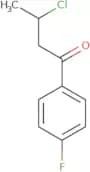
CAS:<p>Versatile small molecule scaffold</p>Formula:C12H14O2Purity:Min. 95%Molecular weight:190.24 g/mol3-Chloro-1-(4-fluorophenyl)butan-1-one
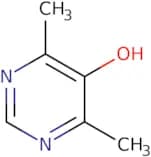
CAS:<p>Versatile small molecule scaffold</p>Formula:C10H10ClFOPurity:Min. 95%Molecular weight:200.64 g/mol4,6-Dimethylpyrimidin-5-ol
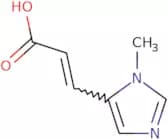
CAS:<p>4,6-Dimethylpyrimidin-5-ol (4,6-DMP) is a small molecule that is an immunomodulatory agent. It has been shown to have immunomodulatory effects on cells in vitro and in vivo. 4,6-DMP binds to the lipid bilayer of cell membranes and inhibits the activity of phosphoinositide 3-kinase, which results in changes in the intracellular concentration of calcium ions. This leads to an increase in cytokine production by T cells and B cells, as well as an increase in IgG production by plasma cells. Kinetic constants for the reactions of 4,6-DMP with various chemical moieties have been reported. These constants are useful for determining rates of reaction with other chemicals and can be used to determine mechanisms for 4,6-DMP’s antitumor activity.</p>Formula:C6H8N2OPurity:Min. 95%Molecular weight:124.14 g/mol(2E)-3-(1-Methyl-1H-imidazol-5-yl)prop-2-enoic acid
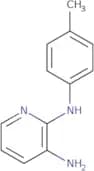
CAS:<p>Versatile small molecule scaffold</p>Formula:C7H8N2O2Purity:Min. 95%Molecular weight:152.15 g/mol2-N-(4-Methylphenyl)pyridine-2,3-diamine
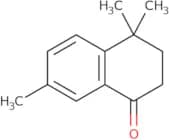
CAS:<p>Versatile small molecule scaffold</p>Formula:C12H13N3Purity:Min. 95%Molecular weight:199.25 g/mol4,4,7-Trimethyl-1,2,3,4-tetrahydronaphthalen-1-one
CAS:<p>Versatile small molecule scaffold</p>Formula:C13H16OPurity:Min. 95%Molecular weight:188.26 g/mol2-[2-(1-Methyl-1H-indol-3-yl)ethyl]-2,3-dihydro-1H-isoindole-1,3-dione
CAS:Controlled Product<p>Versatile small molecule scaffold</p>Formula:C19H16N2O2Purity:Min. 95%Molecular weight:304.3 g/mol5-Amino-1,3-dimethyl-1H,2H,3H,4H-[1,3]diazino[4,5-d]pyrimidine-2,4-dione
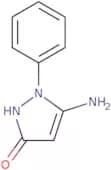
CAS:<p>Azelastine belongs to the class of antihistamines, and is used in the treatment of allergic diseases. It inhibits histamine release from mast cells and basophils, which are white blood cells responsible for inflammatory reactions, such as asthma and allergic rhinitis. Azelastine is not active against infections, but it is effective in the treatment of conjunctivitis caused by allergies or infection. Azelastine also has a local anesthetic effect on the eye. This drug is available in a nasal spray that can be used to treat allergic rhinitis, conjunctivitis and dermatopathy.br><br>Azelastine has been shown to inhibit the growth of bacteria that are resistant to penicillin, ampicillin, erythromycin. Azelastine binds to the penicillin-binding proteins in the bacterial cell wall by competitive inhibition. This binding prevents the formation of an antibiotic-inhibitor complex with the enzyme cell wall synthesis</p>Formula:C8H9N5O2Purity:Min. 95%Molecular weight:207.19 g/mol5-Amino-1-phenyl-2,3-dihydro-1H-pyrazol-3-one
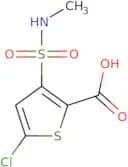
CAS:<p>Versatile small molecule scaffold</p>Formula:C9H9N3OPurity:Min. 95%Molecular weight:175.19 g/mol5-Chloro-3-(N-methylsulfamoyl)thiophene-2-carboxylic acid
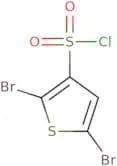
CAS:<p>Versatile small molecule scaffold</p>Formula:C6H6ClNO4S2Purity:Min. 95%Molecular weight:255.7 g/mol2,5-Dibromothiophene-3-sulfonyl chloride
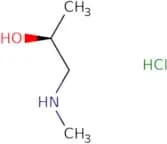
CAS:<p>Versatile small molecule scaffold</p>Formula:C4HBr2ClO2S2Purity:Min. 95%Molecular weight:340.4 g/mol(S)-1-(Methylamino)-2-propanol Hydrochloride
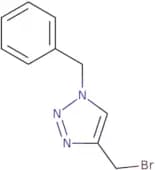
CAS:<p>Versatile small molecule scaffold</p>Formula:C4H11NO·HClPurity:Min. 95%Molecular weight:125.59 g/mol1-Benzyl-4-(bromomethyl)-1H-1,2,3-triazole
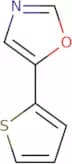
CAS:<p>Versatile small molecule scaffold</p>Formula:C10H10BrN3Purity:Min. 95%Molecular weight:252.11 g/mol5-(2-Thienyl)-1,3-oxazole
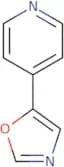
CAS:<p>Versatile small molecule scaffold</p>Formula:C7H5NOSPurity:Min. 95%Molecular weight:151.19 g/mol4-(1,3-Oxazol-5-yl)pyridine
CAS:<p>4-(1,3-Oxazol-5-yl)pyridine (4-OP) is an organic solvent that is also a bioisoster of nicotinic acid and nicotinamide. It has significant activity against some bacteria and fungi, and can be used as an antimicrobial agent. 4-OP is decarboxylated by alkali metal hydroxides to give the corresponding amine salt. This process yields a high yield of 4-OP, which can be purified via column chromatography or crystallization with aqueous ammonia. 4-OP has been shown to inhibit streptochlorin production in Streptomyces clavuligerus and act as an antibiotic against Escherichia coli and Pseudomonas aeruginosa.</p>Formula:C8H6N2OPurity:Min. 95%Molecular weight:146.15 g/mol3-Benzyl-9-hydroxy-2-methyl-4H-pyrido[1,2-a]pyrimidin-4-one
CAS:<p>Versatile small molecule scaffold</p>Formula:C16H14N2O2Purity:Min. 95%Molecular weight:266.29 g/mol6-Amino-5-methyl-[1,2,4]triazolo[1,5-a]pyrimidin-7-ol
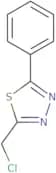
CAS:<p>Versatile small molecule scaffold</p>Formula:C6H7N5OPurity:Min. 95%Molecular weight:165.15 g/mol2-(Chloromethyl)-5-phenyl-1,3,4-thiadiazole
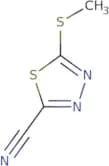
CAS:<p>Versatile small molecule scaffold</p>Formula:C9H7ClN2SPurity:Min. 95%Molecular weight:210.68 g/mol5-(Methylsulfanyl)-1,3,4-thiadiazole-2-carbonitrile
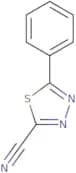
CAS:<p>Versatile small molecule scaffold</p>Formula:C4H3N3S2Purity:Min. 95%Molecular weight:157.2 g/mol5-Phenyl-1,3,4-thiadiazole-2-carbonitrile
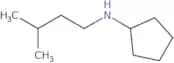
CAS:<p>Versatile small molecule scaffold</p>Formula:C9H5N3SPurity:Min. 95%Molecular weight:187.22 g/molN-(3-Methylbutyl)cyclopentanamine
CAS:<p>Versatile small molecule scaffold</p>Formula:C10H21NPurity:Min. 95%Molecular weight:155.28 g/mol6-Chloropyrido[2,3-b]pyrazin-2(1H)-one
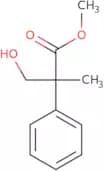
CAS:<p>Versatile small molecule scaffold</p>Formula:C7H4ClN3OPurity:Min. 95%Molecular weight:181.58 g/molMethyl 3-hydroxy-2-methyl-2-phenylpropanoate
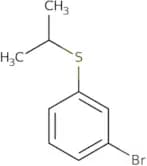
CAS:<p>Versatile small molecule scaffold</p>Formula:C11H14O3Purity:Min. 95%Molecular weight:194.23 g/mol1-Bromo-3-(isopropylsulfanyl)benzene
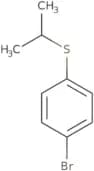
CAS:<p>Versatile small molecule scaffold</p>Formula:C9H11BrSPurity:Min. 95%Molecular weight:231.15 g/mol1-Bromo-4-(isopropylthio)benzene
CAS:<p>1-Bromo-4-(isopropylthio)benzene is a reusable, phenylboronic acid reagent. It is used in organic synthesis as a Grignard reagent or peroxide. 1-Bromo-4-(isopropylthio)benzene can be prepared by the reaction of benzene and phenylboronic acid in the presence of potassium carbonate. The reaction proceeds with high yield at room temperature and pressure. 1-Bromo-4-(isopropylthio)benzene reacts with hydrogen peroxide to form 4,5-dihydrobenzoquinone and 2-phenylethanol. This chemical is also used as an industrial acid ester and a reagent for organic synthesis.</p>Formula:C9H11BrSPurity:Min. 95%Molecular weight:231.15 g/mol1-Bromo-3-(isopropanesulfonyl)benzene
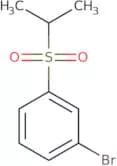
CAS:<p>Versatile small molecule scaffold</p>Formula:C9H11BrO2SPurity:Min. 95%Molecular weight:263.15 g/mol1-Oxa-8-azaspiro[5.5]undecane
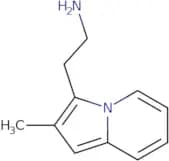
CAS:<p>Versatile small molecule scaffold</p>Formula:C9H17NOPurity:Min. 95%Color and Shape:Clear LiquidMolecular weight:155.24 g/mol2-(2-Methylindolizin-3-yl)ethan-1-amine
CAS:<p>Versatile small molecule scaffold</p>Formula:C11H14N2Purity:Min. 95%Molecular weight:174.24 g/mol

![2-[(2-Aminoethyl)amino]pyridine-3-carbonitrile](/_next/image/?url=https%3A%2Fstatic.cymitquimica.com%2Fproducts%2F3D%2Fthumb-webp%2FUWA67863.webp&w=3840&q=75)
![[2-(Dimethylamino)-5-nitrophenyl]methanol](/_next/image/?url=https%3A%2Fstatic.cymitquimica.com%2Fproducts%2F3D%2Fthumb-webp%2FUWA69391.webp&w=3840&q=75)

![tert-Butyl 4-{[(2-chloropyrimidin-4-yl)(methyl)amino]methyl}piperidine-1-carboxylate](/_next/image/?url=https%3A%2Fstatic.cymitquimica.com%2Fproducts%2F3D%2Fthumb-webp%2FUWA69602.webp&w=3840&q=75)
![Benzyl N-[2-(fluorosulfonyl)ethyl]carbamate](/_next/image/?url=https%3A%2Fstatic.cymitquimica.com%2Fproducts%2F3D%2Fthumb-webp%2FUWB19920.webp&w=3840&q=75)
![2-{Bicyclo[2.2.1]heptan-2-yl}ethan-1-ol](/_next/image/?url=https%3A%2Fstatic.cymitquimica.com%2Fproducts%2F3D%2Fthumb-webp%2FVCA28906.webp&w=3840&q=75)
amine](/_next/image/?url=https%3A%2Fstatic.cymitquimica.com%2Fproducts%2F3D%2Fthumb-webp%2FVCA28929.webp&w=3840&q=75)

![2-{[(Furan-2-ylmethyl)amino]methyl}phenol](/_next/image/?url=https%3A%2Fstatic.cymitquimica.com%2Fproducts%2F3D%2Fthumb-webp%2FVCA30150.webp&w=3840&q=75)
![1-{6-Chloroimidazo[2,1-b][1,3]thiazol-5-yl}ethan-1-ol](/_next/image/?url=https%3A%2Fstatic.cymitquimica.com%2Fproducts%2F3D%2Fthumb-webp%2FVCA32772.webp&w=3840&q=75)
![2-[2-(1-Methyl-1H-indol-3-yl)ethyl]-2,3-dihydro-1H-isoindole-1,3-dione](/_next/image/?url=https%3A%2Fstatic.cymitquimica.com%2Fproducts%2F3D%2Fthumb-webp%2FVCA36920.webp&w=3840&q=75)
![5-Amino-1,3-dimethyl-1H,2H,3H,4H-[1,3]diazino[4,5-d]pyrimidine-2,4-dione](/_next/image/?url=https%3A%2Fstatic.cymitquimica.com%2Fproducts%2F3D%2Fthumb-webp%2FVCA37155.webp&w=3840&q=75)
![3-Benzyl-9-hydroxy-2-methyl-4H-pyrido[1,2-a]pyrimidin-4-one](/_next/image/?url=https%3A%2Fstatic.cymitquimica.com%2Fproducts%2F3D%2Fthumb-webp%2FVCA38149.webp&w=3840&q=75)
![6-Amino-5-methyl-[1,2,4]triazolo[1,5-a]pyrimidin-7-ol](/_next/image/?url=https%3A%2Fstatic.cymitquimica.com%2Fproducts%2F3D%2Fthumb-webp%2FVCA38475.webp&w=3840&q=75)
![6-Chloropyrido[2,3-b]pyrazin-2(1H)-one](/_next/image/?url=https%3A%2Fstatic.cymitquimica.com%2Fproducts%2F3D%2Fthumb-webp%2FVCA39575.webp&w=3840&q=75)
![1-Oxa-8-azaspiro[5.5]undecane](/_next/image/?url=https%3A%2Fstatic.cymitquimica.com%2Fproducts%2F3D%2Fthumb-webp%2FVCA39919.webp&w=3840&q=75)