Building Blocks
This section contains fundamental products for the synthesis of organic and biological compounds. Building blocks are the essential starting materials used to construct complex molecules through various chemical reactions. They play a critical role in drug discovery, material science, and chemical research. At CymitQuimica, we offer a diverse range of high-quality building blocks to support your innovative research and industrial projects, ensuring you have the essential components for successful synthesis.
Subcategories of "Building Blocks"
- Boronic Acids & Boronic Acid Derivatives(5,756 products)
- Chiral Building Blocks(1,242 products)
- Hydrocarbon Building Blocks(6,095 products)
- Organic Building Blocks(61,037 products)
Found 196139 products of "Building Blocks"
Sort by
Purity (%)
0
100
|
0
|
50
|
90
|
95
|
100
2-Formylfuran-3-carboxylic acid
CAS:<p>2-Formylfuran-3-carboxylic acid is a furan derivative with an oxidation product that has been shown to be useful as a peroxide scavenger. It is synthesized by the reaction of 2-formylphenol and formaldehyde in the presence of copper salts. The molecular modelling studies revealed that this compound consists of a five membered ring with an oxygen atom at its centre, which is flanked by two carbon atoms at each side. The carboxylic acid group (-COOH) is on one end and the hydroxymethyl group (-CHOH) on the other end. The molecule also has a carbonyl group (-C=O) and a methylene bridge (-CH2-) between the two carbon atoms. This compound has been found to have efficient antioxidant properties when it reacts with reactive oxygen species (ROS). It was also found to have antioxidative activities when it reacts with ROS produced by galacturonic acid and fur</p>Formula:C6H4O4Purity:Min. 95%Molecular weight:140.09 g/mol4-Chlorofuro[2,3-d]pyridazine
CAS:<p>Versatile small molecule scaffold</p>Formula:C6H3ClN2OPurity:Min. 95%Molecular weight:154.55 g/mol7-Chlorofuro[2,3-d]pyridazine
CAS:<p>Versatile small molecule scaffold</p>Formula:C6H3ClN2OPurity:Min. 95%Molecular weight:154.55 g/molEthyl 6-(bromomethyl)-4-methyl-2-oxo-1,2,3,4-tetrahydropyrimidine-5-carboxylate
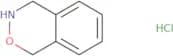
CAS:<p>Versatile small molecule scaffold</p>Formula:C9H13BrN2O3Purity:Min. 95%Molecular weight:277.11 g/mol3,4-Dihydro-1H-2,3-benzoxazine hydrochloride
CAS:<p>Versatile small molecule scaffold</p>Formula:C8H10ClNOPurity:Min. 95%Molecular weight:171.62 g/mol1-Piperidino-2-[4]piperidyl-ethane
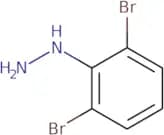
CAS:<p>Versatile small molecule scaffold</p>Formula:C12H24N2Purity:Min. 95%Molecular weight:196.33 g/mol(2,6-Dibromophenyl)hydrazine
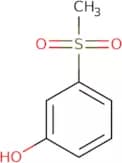
CAS:<p>Versatile small molecule scaffold</p>Formula:C6H6Br2N2Purity:Min. 95%Molecular weight:265.93 g/mol3-Methanesulfonylphenol
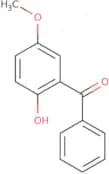
CAS:<p>3-Methanesulfonylphenol is a reactive and computationally descriptors, damages, neutralizing, piperidine, vector, oxygen species, molecular descriptors, antioxidant, phenolic lead compound that was synthesized for the purpose of identifying new potential antioxidants. 3-Methanesulfonylphenol has been shown to inhibit the oxidation of lipids and proteins in cells. It also has a strong antioxidant activity against peroxyl radicals and hydroxyl radicals. 3-Methanesulfonylphenol also inhibits the production of hydrogen peroxide by reacting with peroxides in vivo. This results in reduced levels of lipid hydroperoxides and protein carbonyls.</p>Formula:C7H8O3SPurity:Min. 95%Molecular weight:172.2 g/mol2-Benzoyl-4-methoxyphenol
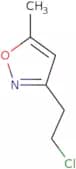
CAS:<p>2-Benzoyl-4-methoxyphenol is a surfactant that is sustainable and biodegradable. It is used in the production of micelles to form detergents, which are important for the environment. The binding constants of this chemical with 2-hydroxybenzophenone and benzyl have been determined at different temperatures. 2-Benzoyl-4-methoxyphenol has been shown to be an effective transient probe for mechanistic investigations in organic chemistry. This compound can be prepared by reacting benzaldehyde with methoxyacetophenone in acetonitrile. Irradiation can break down the benzene ring, producing phenoxy (2,6-dioxo)cyclohexane or 2-(2,6-dioxo)cyclohexanone. 2-Benzoyl-4-methoxyphenol also has hydrophobic properties and can be used as a surf</p>Formula:C14H12O3Purity:Min. 95%Molecular weight:228.24 g/mol3-(2-Chloroethyl)-5-methyl-1,2-oxazole
CAS:<p>Versatile small molecule scaffold</p>Formula:C6H8ClNOPurity:Min. 95%Molecular weight:145.59 g/mol2-[(4-Methylphenyl)sulfanyl]acetohydrazide
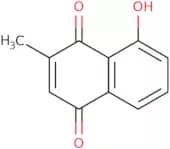
CAS:<p>Versatile small molecule scaffold</p>Formula:C9H12N2OSPurity:Min. 95%Molecular weight:196.27 g/mol8-Hydroxy-2-methyl-1,4-dihydronaphthalene-1,4-dione
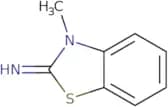
CAS:<p>8-Hydroxy-2-methyl-1,4-dihydronaphthalene-1,4-dione is a natural product that has been found to have anticancer activity. It induces apoptosis in human cancer cells and inhibits the growth of bacteria by binding to the 50S ribosomal subunit. 8HMN has also been shown to inhibit the proliferation of cervical cancer cells in vitro. The active form of this compound is acetate extract and it has been shown to have strong anti-inflammatory properties by inhibiting prostaglandin synthesis in neutrophils. 8HMN binds to mitochondrial membrane protein complexes, leading to mitochondrial fission and inhibition of ATP production.</p>Formula:C11H8O3Purity:Min. 95%Molecular weight:188.18 g/mol3-Methyl-2,3-dihydro-1,3-benzothiazol-2-imine
CAS:<p>3-Methyl-2,3-dihydro-1,3-benzothiazol-2-imine is an imine nitrogen that is a ligand for transition metals. It is used in the synthesis of 1,3-benzothiazoles and has been shown to have anti-malarial activity. 3-Methyl-2,3-dihydro-1,3-benzothiazol-2-imine interacts with aldehydes to form ring opening products. This compound also has been shown to be a ligand for palladium and platinum metals. The compound has been functionalized with thiol groups and can be used as a reagent in organic synthesis.</p>Formula:C8H8N2SPurity:Min. 95%Molecular weight:164.23 g/mol7-Methylbenzo[d]thiazol-2-amine
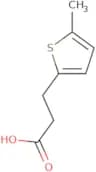
CAS:<p>7-Methylbenzo[d]thiazol-2-amine is an antimicrobial agent that has been shown to have both antibacterial and antifungal properties. It has a broad spectrum of activity against Gram-positive and Gram-negative bacteria, as well as fungi. 7-Methylbenzo[d]thiazol-2-amine also inhibits the growth of yeast cells by interfering with their ability to produce proteins necessary for cell division. This drug can be synthesized using a number of different techniques, including the reaction between phenyl mercaptan and dimethyl acetylenedicarboxylate in the presence of aluminium chloride or phosphorus pentachloride. The yield is typically low (5%).</p>Formula:C8H8N2SPurity:Min. 95%Molecular weight:164.23 g/mol3-(5-Methyl-thiophen-2-yl)-propionic acid
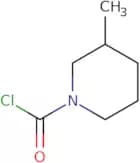
CAS:<p>Versatile small molecule scaffold</p>Formula:C8H10O2SPurity:Min. 95%Molecular weight:170.23 g/mol3-Methylpiperidine-1-carbonyl chloride
CAS:<p>Versatile small molecule scaffold</p>Formula:C7H12ClNOPurity:Min. 95%Molecular weight:161.63 g/molN-[3,3-Dimethyl-1-(1H-pyrazol-1-yl)butan-2-ylidene]hydroxylamine
CAS:<p>Versatile small molecule scaffold</p>Formula:C9H15N3OPurity:Min. 95%Molecular weight:181.23 g/mol3-Methyl-1-(1H-pyrazol-1-yl)butan-2-one
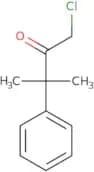
CAS:<p>Versatile small molecule scaffold</p>Formula:C8H12N2OPurity:Min. 95%Molecular weight:152.19 g/mol1-Chloro-3-methyl-3-phenylbutan-2-one
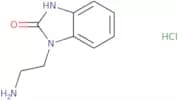
CAS:<p>Versatile small molecule scaffold</p>Formula:C11H13ClOPurity:Min. 95%Molecular weight:196.67 g/mol1-(2-Aminoethyl)-2,3-dihydro-1H-1,3-benzodiazol-2-one hydrochloride
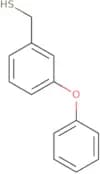
CAS:<p>Versatile small molecule scaffold</p>Formula:C9H12ClN3OPurity:Min. 95%Molecular weight:213.67 g/mol(3-Phenoxyphenyl)methanethiol
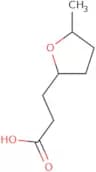
CAS:<p>Versatile small molecule scaffold</p>Formula:C13H12OSPurity:Min. 95%Molecular weight:216.3 g/mol3-(5-Methyloxolan-2-yl)propanoic acid
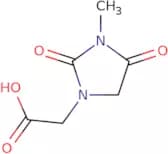
CAS:<p>Versatile small molecule scaffold</p>Formula:C8H14O3Purity:Min. 95%Molecular weight:158.19 g/mol2-(3-Methyl-2,4-dioxoimidazolidin-1-yl)acetic acid
CAS:<p>Versatile small molecule scaffold</p>Formula:C6H8N2O4Purity:Min. 95%Molecular weight:172.14 g/molEthyl imidazo[1,2-a]pyrimidine-3-carboxylate
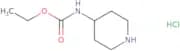
CAS:<p>Versatile small molecule scaffold</p>Formula:C9H9N3O2Purity:Min. 95%Molecular weight:191.19 g/molEthyl piperidin-4-ylcarbamate hydrochloride
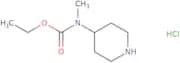
CAS:<p>Versatile small molecule scaffold</p>Formula:C8H17ClN2O2Purity:Min. 95%Molecular weight:208.68 g/molEthyl N-methyl-N-(piperidin-4-yl)carbamate hydrochloride
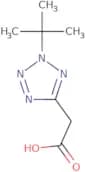
CAS:<p>Versatile small molecule scaffold</p>Formula:C9H19ClN2O2Purity:Min. 95%Molecular weight:222.71 g/mol2-(2-tert-Butyl-2H-1,2,3,4-tetrazol-5-yl)acetic acid
CAS:<p>Versatile small molecule scaffold</p>Formula:C7H12N4O2Purity:Min. 95%Molecular weight:184.2 g/mol2-Chloro-1-(4-ethoxyphenyl)ethan-1-one
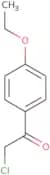
CAS:<p>2-Chloro-1-(4-ethoxyphenyl)ethan-1-one is a hydrocarbon radical that is used as a vitamin and in the synthesis of other molecules. This molecule has a covalent bond between the two chlorine atoms and one carbon atom. The hydrocarbon radical is also present in many hydrocarbons.</p>Formula:C10H11ClO2Purity:Min. 95%Molecular weight:198.64 g/mol3-methylquinolin-4-ol
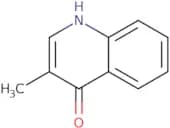
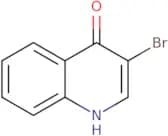
CAS:<p>Versatile small molecule scaffold</p>Formula:C10H9NOPurity:Min. 95%Molecular weight:159.19 g/mol3-Bromoquinolin-4-ol
CAS:<p>3-Bromoquinolin-4-ol is a pyrrole derivative with a hydroxy group on the 4 position. It is an intermediate in the synthesis of 3-bromo-5-hydroxypyridine, which can be used as a reagent for aminations, oxindole syntheses, and piperidide formation. The presence of substituents on the 2 position of the quinoline ring determines whether it is an isomeric or nonisomeric compound. Substituents on the 2 position also determine if it is a nucleus or not. Finally, a substitution at the 4 position determines whether it is 2-amino-4-hydroxypyridine or pyrrole derivatives.</p>Formula:C9H6BrNOPurity:Min. 95%Molecular weight:224.05 g/mol3-Iodo-2-methylquinolin-4-ol
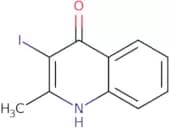
CAS:<p>Versatile small molecule scaffold</p>Formula:C10H8INOPurity:Min. 95%Molecular weight:285.08 g/mol1-(2-Methylphenoxy)-3-(piperazin-1-yl)propan-2-ol dihydrochloride
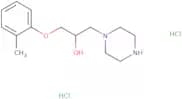
CAS:<p>Versatile small molecule scaffold</p>Formula:C14H24Cl2N2O2Purity:Min. 95%Molecular weight:323.3 g/mol8-Methyl-5-nitroquinoline
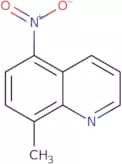
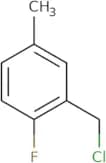
CAS:<p>8-methyl-5-nitroquinoline is a linker that has been shown to be cytotoxic in tumor cells. It binds to DNA by forming covalent bonds and inhibits the synthesis of DNA. 8-methyl-5-nitroquinoline is also able to inhibit the growth of human colon carcinoma cells in vitro and tumor xenografts in vivo. This nitro compound has been shown to cause necrosis, which may be due to its ability to bind oxygen and generate reactive oxygen species. The ability of 8-methyl-5-nitroquinoline to form covalent bonds with DNA makes it a potent antioxidant that may be used for the treatment of radiation injury.</p>Formula:C10H8N2O2Purity:Min. 95%Molecular weight:188.18 g/mol2-(Chloromethyl)-1-fluoro-4-methylbenzene
CAS:<p>Versatile small molecule scaffold</p>Formula:C8H8ClFPurity:Min. 95%Molecular weight:158.6 g/mol4-(Benzylamino)-4-oxobutanoic acid
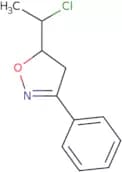
CAS:<p>Versatile small molecule scaffold</p>Formula:C11H13NO3Purity:Min. 95%Molecular weight:207.23 g/mol5-(1-Chloroethyl)-3-phenyl-4,5-dihydro-1,2-oxazole
CAS:<p>Versatile small molecule scaffold</p>Formula:C11H12ClNOPurity:Min. 95%Molecular weight:209.67 g/mol2-[2-(4-Hydroxyphenyl)ethyl]-2,3-dihydro-1H-isoindole-1,3-dione
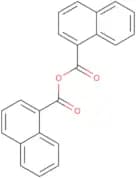
CAS:<p>Versatile small molecule scaffold</p>Formula:C16H13NO3Purity:Min. 95%Molecular weight:267.28 g/molNaphthalene-1-carbonyl naphthalene-1-carboxylate
CAS:<p>Naphthalene-1-carbonyl naphthalene-1-carboxylate is a benzoylation of a primary alcohol. It is a monosubstituted benzoyl derivative with a transition state that has a benzoic anhydride and enolate as reactants. It is not an alkylation reaction because the carbonyl group prevents the formation of an alkyl bond. The kinetic product, which is favored in this reaction, is the cyclic sulfate ester. The carboxylate group can be either chiral or non-chiral depending on the configuration of the starting material. The R/S system for naphthalene-1-carbonyl naphthalene-1-carboxylate would be S/R because it has no chiral atoms. Naphthalene-1-carbonyl naphthalene-1-carboxylate can also form chiral alcohol</p>Formula:C22H14O3Purity:Min. 95%Molecular weight:326.3 g/mol4-[(2,5-Dioxo-2,5-dihydro-1H-pyrrol-1-yl)methyl]benzoic acid
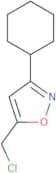
CAS:<p>Versatile small molecule scaffold</p>Formula:C12H9NO4Purity:Min. 95%Molecular weight:231.2 g/mol5-(Chloromethyl)-3-cyclohexylisoxazole
CAS:<p>5-(Chloromethyl)-3-cyclohexylisoxazole is an aliphatic aldehyde. It reacts with aldoximes to form cyclic imines, and then undergoes nucleophilic substitution with sodium hydroxide to produce the corresponding oxime. This reagent can be used for the synthesis of 2-amino-1,3-dioxolane compounds.</p>Formula:C10H14ClNOPurity:Min. 95%Molecular weight:199.68 g/mol2-(Ethylamino)-3-phenylpropanoic acid
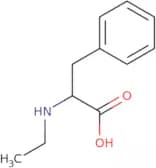
CAS:<p>Versatile small molecule scaffold</p>Formula:C11H15NO2Purity:Min. 95%Molecular weight:193.24 g/mol4-(Bromomethyl)-2-fluoropyridine
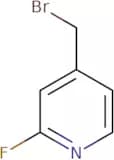
CAS:<p>Versatile small molecule scaffold</p>Formula:C6H5BrFNPurity:Min. 95%Molecular weight:190.01 g/mol6-Nitro-1,3-benzodioxol-5-amine
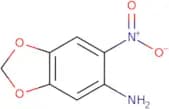
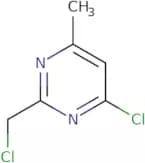
CAS:<p>Versatile small molecule scaffold</p>Formula:C7H6N2O4Purity:Min. 95%Molecular weight:182.13 g/mol4-Chloro-2-(chloromethyl)-6-methylpyrimidine
CAS:<p>Versatile small molecule scaffold</p>Formula:C6H6Cl2N2Purity:Min. 95%Molecular weight:177.03 g/mol4-[2-(2-Methoxyethoxy)ethoxy]benzaldehyde
CAS:<p>Versatile small molecule scaffold</p>Formula:C12H16O4Purity:Min. 95%Molecular weight:224.25 g/mol2-(Piperidin-3-yl)-acetic acid ethyl ester
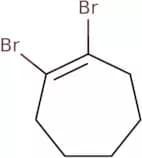
CAS:<p>Versatile small molecule scaffold</p>Formula:C9H17NO2Purity:Min. 95%Molecular weight:171.24 g/mol1,2-Dibromocyclohept-1-ene
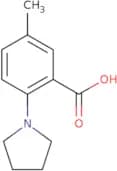
CAS:<p>Versatile small molecule scaffold</p>Formula:C7H10Br2Purity:Min. 95%Molecular weight:253.96 g/mol5-Methyl-2-(pyrrolidin-1-yl)benzoic acid
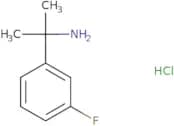
CAS:<p>Versatile small molecule scaffold</p>Formula:C12H15NO2Purity:Min. 95%Molecular weight:205.25 g/mol2-(3-Fluorophenyl)propan-2-amine hydrochloride
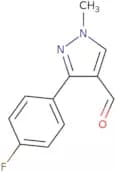
CAS:<p>Versatile small molecule scaffold</p>Formula:C9H13ClFNPurity:Min. 95%Molecular weight:189.66 g/mol3-(4-Fluorophenyl)-1-methyl-1H-pyrazole-4-carbaldehyde
CAS:<p>Versatile small molecule scaffold</p>Formula:C11H9FN2OPurity:Min. 95%Molecular weight:204.2 g/mol


![4-Chlorofuro[2,3-d]pyridazine](/_next/image/?url=https%3A%2Fstatic.cymitquimica.com%2Fproducts%2F3D%2Fthumb-webp%2FPAA75781.webp&w=3840&q=75)
![7-Chlorofuro[2,3-d]pyridazine](/_next/image/?url=https%3A%2Fstatic.cymitquimica.com%2Fproducts%2F3D%2Fthumb-webp%2FPAA75789.webp&w=3840&q=75)

![1-Piperidino-2-[4]piperidyl-ethane](/_next/image/?url=https%3A%2Fstatic.cymitquimica.com%2Fproducts%2F3D%2Fthumb-webp%2FPAA75909.webp&w=3840&q=75)
![2-[(4-Methylphenyl)sulfanyl]acetohydrazide](/_next/image/?url=https%3A%2Fstatic.cymitquimica.com%2Fproducts%2F3D%2Fthumb-webp%2FPAA77665.webp&w=3840&q=75)
![7-Methylbenzo[d]thiazol-2-amine](/_next/image/?url=https%3A%2Fstatic.cymitquimica.com%2Fproducts%2F3D%2Fthumb-webp%2FPAA77918.webp&w=3840&q=75)
![N-[3,3-Dimethyl-1-(1H-pyrazol-1-yl)butan-2-ylidene]hydroxylamine](/_next/image/?url=https%3A%2Fstatic.cymitquimica.com%2Fproducts%2F3D%2Fthumb-webp%2FPCA92157.webp&w=3840&q=75)
![Ethyl imidazo[1,2-a]pyrimidine-3-carboxylate](/_next/image/?url=https%3A%2Fstatic.cymitquimica.com%2Fproducts%2F3D%2Fthumb-webp%2FPCA95107.webp&w=3840&q=75)
![2-[2-(4-Hydroxyphenyl)ethyl]-2,3-dihydro-1H-isoindole-1,3-dione](/_next/image/?url=https%3A%2Fstatic.cymitquimica.com%2Fproducts%2F3D%2Fthumb-webp%2FPCA98542.webp&w=3840&q=75)
![4-[(2,5-Dioxo-2,5-dihydro-1H-pyrrol-1-yl)methyl]benzoic acid](/_next/image/?url=https%3A%2Fstatic.cymitquimica.com%2Fproducts%2F3D%2Fthumb-webp%2FPCA98781.webp&w=3840&q=75)
![4-[2-(2-Methoxyethoxy)ethoxy]benzaldehyde](/_next/image/?url=https%3A%2Fstatic.cymitquimica.com%2Fproducts%2F3D%2Fthumb-webp%2FPCA99451.webp&w=3840&q=75)