Building Blocks
This section contains fundamental products for the synthesis of organic and biological compounds. Building blocks are the essential starting materials used to construct complex molecules through various chemical reactions. They play a critical role in drug discovery, material science, and chemical research. At CymitQuimica, we offer a diverse range of high-quality building blocks to support your innovative research and industrial projects, ensuring you have the essential components for successful synthesis.
Subcategories of "Building Blocks"
- Boronic Acids & Boronic Acid Derivatives(5,756 products)
- Chiral Building Blocks(1,242 products)
- Hydrocarbon Building Blocks(6,095 products)
- Organic Building Blocks(61,051 products)
Found 199813 products of "Building Blocks"
Sort by
Purity (%)
0
100
|
0
|
50
|
90
|
95
|
100
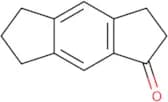
1,2,3,5,6,7-Hexahydro-S-indacen-1-one
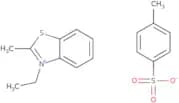
CAS:<p>Versatile small molecule scaffold</p>Formula:C12H12OPurity:Min. 95%Molecular weight:172.22 g/mol3-Ethyl-2-methyl-1,3-benzothiazol-3-ium 4-methylbenzene-1-sulfonate
CAS:3-Ethyl-2-methyl-1,3-benzothiazol-3-ium 4-methylbenzene-1-sulfonate is a tosylate salt that is used in organic synthesis. It is a mesoionic compound that can be prepared by the reaction of benzaldehyde with sodium methylsulfinate and ethyl iodide. This compound has been shown to react with anhydrides such as acetic anhydride and pivaloyl chloride to form esters.Formula:C17H19NO3S2Purity:Min. 95%Molecular weight:349.5 g/mol2-[(2-Aminoethyl)sulfanyl]benzoic acid hydrochloride
CAS:<p>Versatile small molecule scaffold</p>Formula:C9H11NO2SPurity:Min. 95%Molecular weight:197.26 g/mol2,3,4,5-Tetrahydro-1,4-benzothiazepin-5-one
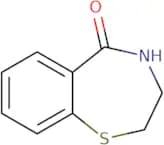
CAS:<p>2,3,4,5-Tetrahydro-1,4-benzothiazepin-5-one is a crystalline dimer that has a seven membered ring and two hydrogen bonds. The conformation of the molecule is centrosymmetric and the crystal structure has been determined by X-ray diffraction.</p>Formula:C9H9NOSPurity:Min. 95%Molecular weight:179.24 g/mol3-Methyl-1,2,3,4-tetrahydronaphthalen-1-one
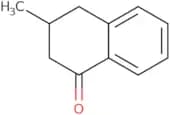
CAS:<p>3-Methyl-1,2,3,4-tetrahydronaphthalen-1-one is a methylated natural product. It is synthesized by the metalation of 1,2,3,4-tetrahydronaphthalene with methyl iodide and zinc. This reaction proceeds in two steps: first the ortho hydrogen of 1,2,3,4-tetrahydronaphthalene is replaced by the methyl group and then the nitrogen atom is alkylated. The formation of 3-methyl-1,2,3,4-tetrahydronaphthalen-1-one can be explained by an S N 2 substitution reaction in which a hydrogen on the methyl group attacks the electron deficient carbon atom of 1,2,3,4 tetrahydronaphthalene. 3-Methyl-1,2,3 4 tetrahydronaphthalen 1 one has been shown to</p>Formula:C11H12OPurity:Min. 95%Molecular weight:160.21 g/mol1-[Amino(methylsulfanyl)methylidene]guanidine hydroiodide
CAS:<p>Versatile small molecule scaffold</p>Formula:C3H9IN4SPurity:Min. 95%Molecular weight:260.1 g/mol2-Iodo-4-oxatricyclo[4.2.1.0,3,7]nonan-5-one
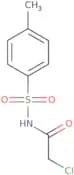
CAS:<p>Versatile small molecule scaffold</p>Formula:C8H9IO2Purity:Min. 95%Molecular weight:264.06 g/mol2-Chloro-N-(4-methylbenzenesulfonyl)acetamide
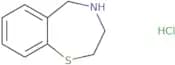
CAS:<p>Versatile small molecule scaffold</p>Formula:C9H10ClNO3SPurity:Min. 95%Molecular weight:247.7 g/mol2,3,4,5-Tetrahydro-1,4-benzothiazepine hydrochloride
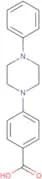
CAS:<p>Versatile small molecule scaffold</p>Formula:C9H12ClNSPurity:Min. 95%Molecular weight:201.72 g/mol4-(4-Phenylpiperazin-1-yl)benzoic acid
CAS:<p>Versatile small molecule scaffold</p>Formula:C17H18N2O2Purity:Min. 95%Molecular weight:282.34 g/mol4-Amino-4'-hydroxybenzophenone
CAS:<p>4-Amino-4'-hydroxybenzophenone is a benzophenone with a hydroxyl group in the ortho position. It has absorption spectra that are similar to those of benzene, but it is less soluble in solvents and more soluble in water. The molecule has two possible conformations, both of which have an equilibrium constant (K) of 10. The two conformations can interconvert by rotation about the C=C bond, which is referred to as torsion. This conformational change in the molecule alters its light absorption properties.</p>Formula:C13H11NO2Purity:Min. 95%Molecular weight:213.24 g/mol4-Methoxyisobenzofuran-1,3-dione
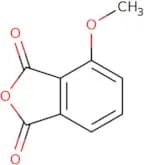
CAS:<p>4-Methoxyisobenzofuran-1,3-dione is a natural product that belongs to the group of hydroxybenzoic acids. It is obtained by the hydrogenation of 3-nitrophthalic anhydride and 3-hydroxyphthalic anhydride, which are obtained from anacardic acid. 4-Methoxyisobenzofuran-1,3-dione has been used as an intermediate for antibiotics and synthetic dyestuffs. The chloride salt of this compound has been used as a reagent in organic synthesis.</p>Formula:C9H6O4Purity:Min. 95%Molecular weight:178.14 g/mol2-Chloro-5-methylbenzaldehyde
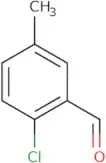
CAS:<p>Versatile small molecule scaffold</p>Formula:C8H7ClOPurity:Min. 95%Molecular weight:154.59 g/mol3-(5-Bromo-2-methylphenyl)propanoic acid
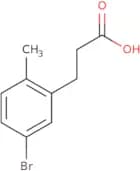
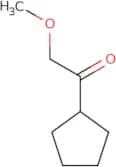
CAS:<p>Versatile small molecule scaffold</p>Formula:C10H11BrO2Purity:Min. 95%Molecular weight:243.1 g/mol1-Cyclopentyl-2-methoxyethan-1-one
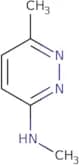
CAS:<p>Versatile small molecule scaffold</p>Formula:C8H14O2Purity:Min. 95%Molecular weight:142.2 g/molN,6-Dimethylpyridazin-3-amine
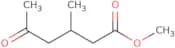
CAS:<p>Versatile small molecule scaffold</p>Formula:C6H9N3Purity:Min. 95%Molecular weight:123.16 g/molMethyl 3-methyl-5-oxohexanoate
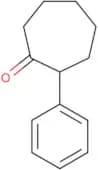
CAS:<p>Versatile small molecule scaffold</p>Formula:C8H14O3Purity:Min. 95%Molecular weight:158.19 g/mol2-Phenylcycloheptan-1-one
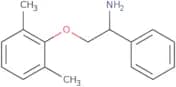
CAS:<p>2-Phenylcycloheptan-1-one is a chemical used in organic synthesis. It has been shown to undergo decarbonylation and dimerization reactions, as well as rearrangements of the carbon-carbon double bond. These reactions are used to synthesize a wide variety of other molecules. The efficiency of 2-phenylcycloheptan-1-one depends on the type and amount of reagents used in the process, as well as on the structure of the molecule being synthesized. 2-Phenylcycloheptan-1-one is often used as a sensitizer for photochemical reactions due to its ability to absorb ultraviolet light.</p>Formula:C13H16OPurity:Min. 95%Molecular weight:188.26 g/mol2-(2-Amino-2-phenylethoxy)-1,3-dimethylbenzene
CAS:<p>2-(2-Amino-2-phenylethoxy)-1,3-dimethylbenzene is a molecule that binds to the sodium channel of nerve cells and blocks the flow of ions. It prevents the nerve cell from transmitting its signal. This drug has been shown to be effective in animal models for muscle spasms, but it is not used clinically because it can cause paralysis.</p>Formula:C16H19NOPurity:Min. 95%Molecular weight:241.33 g/mol3-Methoxy-2,4-dimethylaniline
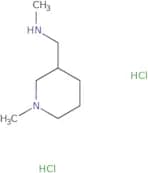
CAS:<p>Versatile small molecule scaffold</p>Formula:C9H13NOPurity:Min. 95%Molecular weight:151.21 g/molN-Methyl-1-(1-methylpiperidin-3-yl)methanamine
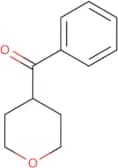
CAS:<p>Versatile small molecule scaffold</p>Formula:C8H18N2Purity:Min. 95%Molecular weight:142.25 g/mol4-benzoyloxane
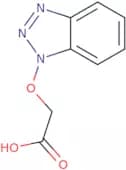
CAS:<p>Versatile small molecule scaffold</p>Formula:C12H14O2Purity:Min. 95%Molecular weight:190.23 g/mol2-(1H-1,2,3-Benzotriazol-1-yloxy)acetic acid
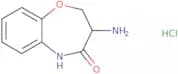
CAS:2-(1H-1,2,3-Benzotriazol-1-yloxy)acetic acid is a ligand that has been used to study molecular orbitals and the theory of diffraction. It is also luminescent and can be used for elemental analysis. The crystal system of 2-(1H-1,2,3-Benzotriazol-1-yloxy)acetic acid is trigonal pyramidal with a space group P212121. This molecule has an isomorphous substitution in the coordination sphere with the metal ion. The functional theory was applied to this molecule to elucidate its absorption properties. When this ligand absorbs light, it can transfer energy to other molecules through resonance, which may lead to changes in their electronic structure.Formula:C8H7N3O3Purity:Min. 95%Molecular weight:193.16 g/mol(3R)-3-Amino-2,3,4,5-tetrahydro-1,5-benzoxazepin-4-one hydrochloride
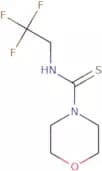
CAS:<p>Versatile small molecule scaffold</p>Formula:C9H11ClN2O2Purity:Min. 95%Molecular weight:214.65 g/molN-(2,2,2-Trifluoroethyl)morpholine-4-carbothioamide
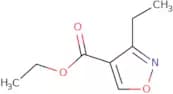
CAS:<p>Versatile small molecule scaffold</p>Formula:C7H11F3N2OSPurity:Min. 95%Molecular weight:228.24 g/molEthyl 3-ethyl-1,2-oxazole-4-carboxylate
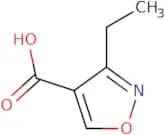
CAS:Versatile small molecule scaffoldFormula:C8H11NO3Purity:Min. 95%Molecular weight:169.18 g/mol3-Ethylisoxazole-4-carboxylic acid
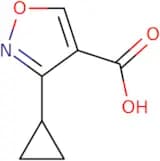
CAS:<p>Versatile small molecule scaffold</p>Formula:C6H7NO3Purity:Min. 95%Molecular weight:141.13 g/mol3-Cyclopropyl-1,2-oxazole-4-carboxylic acid
CAS:<p>Versatile small molecule scaffold</p>Formula:C7H7NO3Purity:Min. 95%Molecular weight:153.14 g/mol5H,6H,7H-[1,2,4]Triazolo[3,4-b][1,3]thiazin-3-amine
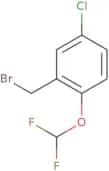
CAS:<p>Versatile small molecule scaffold</p>Formula:C5H8N4SPurity:Min. 95%Molecular weight:156.21 g/mol2-(Bromomethyl)-4-chloro-1-(difluoromethoxy)benzene
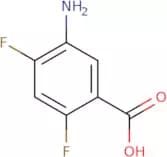
CAS:<p>Versatile small molecule scaffold</p>Formula:C8H6BrClF2OPurity:Min. 95%Molecular weight:271.48 g/mol5-Amino-2,4-difluorobenzoic acid
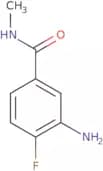
CAS:<p>Versatile small molecule scaffold</p>Formula:C7H5F2NO2Purity:Min. 95%Molecular weight:173.12 g/mol3-amino-4-fluoro-N-methylbenzamide
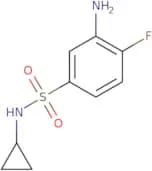
CAS:<p>Versatile small molecule scaffold</p>Formula:C8H9FN2OPurity:Min. 95%Molecular weight:168.17 g/mol3-Amino-N-cyclopropyl-4-fluorobenzene-1-sulfonamide
CAS:<p>Versatile small molecule scaffold</p>Formula:C9H11FN2O2SPurity:Min. 95%Molecular weight:230.26 g/mol2-[4-(4H-1,2,4-Triazol-4-yl)phenyl]acetic acid
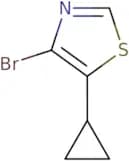
CAS:<p>2-[4-(4H-1,2,4-Triazol-4-yl)phenyl]acetic acid (DSC) is a compound that has been shown to have anti-cancer properties. It was found to be effective against breast cancer cells in vitro and in vivo. The cytotoxic effect of DSC on cancer cells may be due to its ability to bind to the membrane phospholipid bilayer and interfere with the cell's ability to regulate ion fluxes. This can lead to increased intracellular calcium levels and subsequent activation of proteases, which are important for the proliferation of cancer cells. 2-[4-(4H-1,2,4-Triazol-4-yl)phenyl]acetic acid has also been found to inhibit protein synthesis in cancer cells. These results show that 2-[4-(4H-1,2,4-Triazol-4-yl)phenyl]acetic acid may</p>Formula:C10H9N3O2Purity:Min. 95%Molecular weight:203.2 g/mol4-Bromo-5-cyclopropyl-1,3-thiazole
CAS:<p>Versatile small molecule scaffold</p>Formula:C6H6BrNSPurity:Min. 95%Molecular weight:204.09 g/mol2-[2-(Trifluoromethyl)phenyl]quinazolin-4-ol
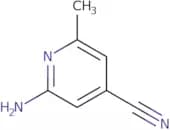
CAS:<p>Versatile small molecule scaffold</p>Formula:C15H9F3N2OPurity:Min. 95%Molecular weight:290.24 g/mol2-Amino-6-methylpyridine-4-carbonitrile
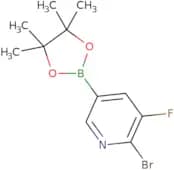
CAS:<p>Versatile small molecule scaffold</p>Formula:C7H7N3Purity:Min. 95%Molecular weight:133.15 g/mol6-Bromo-5-fluoropyridine-3-boronic acid pinacol ester
CAS:<p>Versatile small molecule scaffold</p>Formula:C11H14BBrFNO2Purity:Min. 95%Molecular weight:301.95 g/mol6-Bromopyrazolo[1,5-a]pyridine
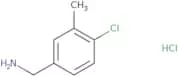
CAS:<p>Versatile small molecule scaffold</p>Formula:C7H5BrN2Purity:Min. 95%Molecular weight:197.03 g/mol(4-Chloro-3-methylphenyl)methanamine hydrochloride
CAS:<p>Versatile small molecule scaffold</p>Formula:C8H11Cl2NPurity:Min. 95%Molecular weight:192.08 g/mol4,4,5,5-Tetramethyl-2-(3,5-dihydro-2H-thiopyran-4-yl)-1,3,2-dioxaborolane
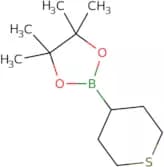
CAS:<p>Versatile small molecule scaffold</p>Formula:C11H21BO2SPurity:Min. 95%Molecular weight:228.16 g/molFuro[3,2-c]pyridin-2-ylboronic acid
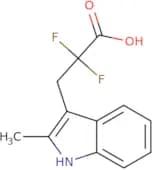
CAS:<p>Versatile small molecule scaffold</p>Formula:C7H6BNO3Purity:Min. 95%Molecular weight:162.94 g/mol2,2-Difluoro-3-(2-methyl-1H-indol-3-yl)propanoic acid
CAS:<p>Versatile small molecule scaffold</p>Formula:C12H11F2NO2Purity:Min. 95%Molecular weight:239.22 g/mol1-[(tert-Butoxy)carbonyl]-3-(2-oxopropyl)pyrrolidine-3-carboxylic acid
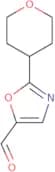
CAS:<p>Versatile small molecule scaffold</p>Formula:C13H21NO5Purity:Min. 95%Molecular weight:271.31 g/mol2-(Oxan-4-yl)-1,3-oxazole-5-carbaldehyde
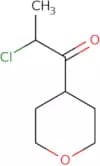
CAS:<p>Versatile small molecule scaffold</p>Formula:C9H11NO3Purity:Min. 95%Molecular weight:181.19 g/mol2-Chloro-1-(oxan-4-yl)propan-1-one
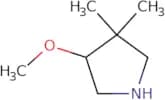
CAS:<p>Versatile small molecule scaffold</p>Formula:C8H13ClO2Purity:Min. 95%Molecular weight:176.64 g/mol4-Methoxy-3,3-dimethylpyrrolidine
CAS:<p>Versatile small molecule scaffold</p>Formula:C7H15NOPurity:Min. 95%Molecular weight:129.2 g/mol(5-Cyclopropyl-1,3-oxazol-2-yl)methanol
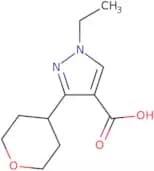
CAS:<p>Versatile small molecule scaffold</p>Formula:C7H9NO2Purity:Min. 95%Molecular weight:139.2 g/mol1-Ethyl-3-(oxan-4-yl)-1H-pyrazole-4-carboxylic acid
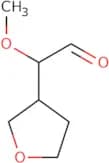
CAS:<p>Versatile small molecule scaffold</p>Formula:C11H16N2O3Purity:Min. 95%Molecular weight:224.26 g/mol2-Methoxy-2-(oxolan-3-yl)acetaldehyde
CAS:<p>Versatile small molecule scaffold</p>Formula:C7H12O3Purity:Min. 95%Molecular weight:144.17 g/mol

![2-[(2-Aminoethyl)sulfanyl]benzoic acid hydrochloride](/_next/image/?url=https%3A%2Fstatic.cymitquimica.com%2Fproducts%2F3D%2Fthumb-webp%2FPAA94394.webp&w=3840&q=75)
![1-[Amino(methylsulfanyl)methylidene]guanidine hydroiodide](/_next/image/?url=https%3A%2Fstatic.cymitquimica.com%2Fproducts%2F3D%2Fthumb-webp%2FPAA94592.webp&w=3840&q=75)
![2-Iodo-4-oxatricyclo[4.2.1.0,3,7]nonan-5-one](/_next/image/?url=https%3A%2Fstatic.cymitquimica.com%2Fproducts%2F3D%2Fthumb-webp%2FPAA94868.webp&w=3840&q=75)


![5H,6H,7H-[1,2,4]Triazolo[3,4-b][1,3]thiazin-3-amine](/_next/image/?url=https%3A%2Fstatic.cymitquimica.com%2Fproducts%2F3D%2Fthumb-webp%2FPAB78244.webp&w=3840&q=75)
![2-[4-(4H-1,2,4-Triazol-4-yl)phenyl]acetic acid](/_next/image/?url=https%3A%2Fstatic.cymitquimica.com%2Fproducts%2F3D%2Fthumb-webp%2FPAB86389.webp&w=3840&q=75)
![2-[2-(Trifluoromethyl)phenyl]quinazolin-4-ol](/_next/image/?url=https%3A%2Fstatic.cymitquimica.com%2Fproducts%2F3D%2Fthumb-webp%2FPAC03781.webp&w=3840&q=75)
![6-Bromopyrazolo[1,5-a]pyridine](/_next/image/?url=https%3A%2Fstatic.cymitquimica.com%2Fproducts%2F3D%2Fthumb-webp%2FPAC19311.webp&w=3840&q=75)
![Furo[3,2-c]pyridin-2-ylboronic acid](/_next/image/?url=https%3A%2Fstatic.cymitquimica.com%2Fproducts%2F3D%2Fthumb-webp%2FPAC51167.webp&w=3840&q=75)
![1-[(tert-Butoxy)carbonyl]-3-(2-oxopropyl)pyrrolidine-3-carboxylic acid](/_next/image/?url=https%3A%2Fstatic.cymitquimica.com%2Fproducts%2F3D%2Fthumb-webp%2FPAD13624.webp&w=3840&q=75)