


Building Blocks
This section contains fundamental products for the synthesis of organic and biological compounds. Building blocks are the essential starting materials used to construct complex molecules through various chemical reactions. They play a critical role in drug discovery, material science, and chemical research. At CymitQuimica, we offer a diverse range of high-quality building blocks to support your innovative research and industrial projects, ensuring you have the essential components for successful synthesis.
Subcategories of "Building Blocks"
- Boronic Acids & Boronic Acid Derivatives(5,756 products)
- Chiral Building Blocks(1,242 products)
- Hydrocarbon Building Blocks(6,095 products)
- Organic Building Blocks(61,037 products)
Found 196200 products of "Building Blocks"
Sort by
Purity (%)
0
100
|
0
|
50
|
90
|
95
|
100
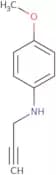
4-Methoxy-N-(prop-2-yn-1-yl)aniline
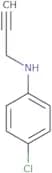
CAS:<p>Versatile small molecule scaffold</p>Formula:C10H11NOPurity:Min. 95%Molecular weight:161.2 g/mol(4-Chloro-phenyl)-prop-2-ynyl-amine
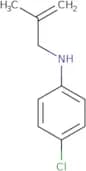
CAS:<p>Versatile small molecule scaffold</p>Formula:C9H8ClNPurity:Min. 95%Molecular weight:165.62 g/mol4-Chloro-N-(2-methylprop-2-en-1-yl)aniline
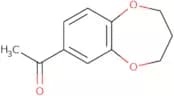
CAS:<p>Versatile small molecule scaffold</p>Formula:C10H12ClNPurity:Min. 95%Molecular weight:181.66 g/mol1-(3,4-Dihydro-2H-1,5-benzodioxepin-7-yl)ethan-1-one
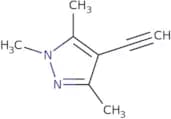
CAS:<p>Versatile small molecule scaffold</p>Formula:C11H12O3Purity:Min. 95%Molecular weight:192.21 g/mol4-Ethynyl-1,3,5-trimethyl-1H-pyrazole
CAS:<p>4-Ethynyl-1,3,5-trimethyl-1H-pyrazole is an aromatic compound that belongs to the pyrazole family. It has been shown to be a potent inhibitor of the dehydrochlorination of 4-ethynylphenol by chlorine at low pH. The spectral data indicate that 4-ethynyl-1,3,5-trimethylpyrazole is a n-substituted pyrazole with a ketone group in the para position.</p>Formula:C8H10N2Purity:Min. 95%Molecular weight:134.18 g/mol2-{[(2E)-3-(4-Methoxyphenyl)prop-2-enoyl]amino}benzoic acid
CAS:<p>2-{[(2E)-3-(4-Methoxyphenyl)prop-2-enoyl]amino}benzoic acid is a carboxamide, benzoic acid, anthranilic acid, and anthranilic. It has been shown to inhibit the growth of Mycobacterium tuberculosis and Mycobacterium avium complex. This compound also has anti-inflammatory properties that may be due to its ability to inhibit prostaglandin synthesis.</p>Formula:C17H15NO4Purity:Min. 95%Molecular weight:297.3 g/mol1H-Isoindol-3-amine
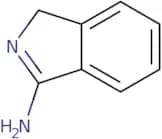
CAS:<p>1H-Isoindol-3-amine is a coordination complex with a palladium atom coordinated to three active methylene ligands. It is used as an intermediate in the synthesis of organic compounds. 1H-Isoindol-3-amine can be synthesized by the reaction of sodium hydrogen with hydroxybenzoic acid, followed by the Suzuki coupling reaction with copper chloride and an aryl chloride. The coordination chemistry between 1H-Isoindol-3-amine and palladium has been studied using viscosity measurements and X-ray diffraction data. The coordination complexes are usually based on aryl chlorides, which are electron rich, electron deficient, or electrophilic. The reaction mechanism for 1H-Isoindol-3-amine has been recorded.</p>Formula:C8H8N2Purity:Min. 95%Molecular weight:132.16 g/mol(2-Methoxyphenyl)(phenyl)methanol
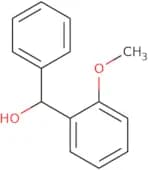
CAS:<p>2-Methoxyphenyl)(phenyl)methanol is a protonated molecule that becomes deuterium-labeled when it is treated with deuterium gas. The deuterium label can be used to measure the rate of proton transport in biological systems, including mitochondria and chloroplasts. 2-Methoxyphenyl)(phenyl)methanol has been shown to have a high yield of labeled product, which allows for the study of reactions involving carbonyl groups. This compound can also be used for labeling chalcones and other elements. It has been shown to catalyze benzene ring formation from phenol.</p>Formula:C14H14O2Purity:Min. 95%Molecular weight:214.26 g/mol4-(Trichloromethyl)pyridine
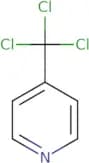
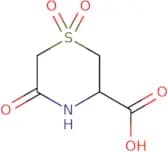
CAS:<p>4-(Trichloromethyl)pyridine is an organic compound that can be used as a pesticide. It is the main active ingredient in chloropicrin, which is used primarily for agricultural purposes to help protect crops from insect damage. 4-(Trichloromethyl)pyridine has been shown to have toxic effects on animals, including humans, and may cause adverse health effects such as headaches, nausea, vomiting and dizziness. The chemical reacts with hydrogen chloride in the presence of an organic solvent to form the chlorinated derivative of 4-chloropyridinol. The reactivity of 4-(trichloromethyl)pyridine towards nucleophilic inorganic bases has also been studied and it was found that it reacts with potassium hydroxide at room temperature to form a 1:1 mixture of 4-chloropyridinol and potassium chloride.</p>Formula:C6H4Cl3NPurity:Min. 95%Molecular weight:196.5 g/mol5-Oxo-3-thiomorpholinecarboxylic acid 1,1-dioxide
CAS:<p>Versatile small molecule scaffold</p>Formula:C5H7NO5SPurity:Min. 95%Molecular weight:193.18 g/moltert-Butyl N-methyl-N-[4-(methylamino)butyl]carbamate
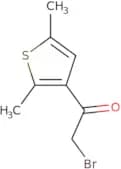
CAS:<p>Versatile small molecule scaffold</p>Formula:C11H24N2O2Purity:Min. 95%Molecular weight:216.32 g/mol2-Bromo-1-(2,5-dimethylthiophen-3-yl)ethan-1-one
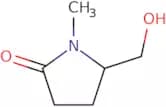
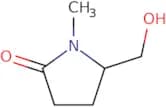
CAS:<p>Versatile small molecule scaffold</p>Formula:C8H9BrOSPurity:Min. 95%Molecular weight:233.13 g/mol(S)-5-(Hydroxymethyl)-1-methylpyrrolidin-2-one
CAS:<p>Versatile small molecule scaffold</p>Formula:C6H11NO2Purity:Min. 95%Molecular weight:129.16 g/mol(R)-5-(Hydroxymethyl)-1-methylpyrrolidin-2-one
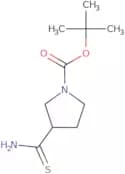
CAS:<p>Versatile small molecule scaffold</p>Formula:C6H11NO2Purity:Min. 95%Molecular weight:129.16 g/mol3-Thiocarbamoyl-pyrrolidine-1-carboxylic acid tert-butyl ester
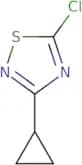
CAS:<p>Versatile small molecule scaffold</p>Formula:C10H18N2O2SPurity:Min. 95%Molecular weight:230.33 g/mol5-Chloro-3-cyclopropyl-1,2,4-thiadiazole
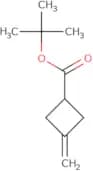
CAS:<p>Versatile small molecule scaffold</p>Formula:C5H5ClN2SPurity:Min. 95%Molecular weight:160.62 g/moltert-Butyl 3-methylidenecyclobutane-1-carboxylate
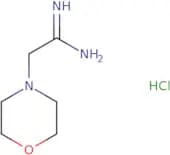
CAS:<p>Versatile small molecule scaffold</p>Formula:C10H16O2Purity:Min. 95%Molecular weight:168.23 g/mol2-(Morpholin-4-yl)ethanimidamide hydrochloride
CAS:<p>Versatile small molecule scaffold</p>Formula:C6H14ClN3OPurity:Min. 95%Molecular weight:179.65 g/mol2-Methyl-5-(3-nitro-phenyl)-[1,3,4]oxadiazole
CAS:<p>Versatile small molecule scaffold</p>Formula:C9H7N3O3Purity:Min. 95%Molecular weight:205.17 g/mol3-(5-Methyl-[1,3,4]oxadiazol-2-yl)-phenylamine
CAS:<p>Versatile small molecule scaffold</p>Formula:C9H9N3OPurity:Min. 95%Molecular weight:175.19 g/moltert-Butyl N-ethyl-N-[2-(ethylamino)ethyl]carbamate
CAS:<p>Versatile small molecule scaffold</p>Formula:C11H24N2O2Purity:Min. 95%Molecular weight:216.32 g/mol1-Azabicyclo[2.2.1]heptan-3-one hydrochloride
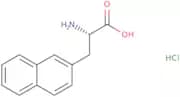
CAS:<p>Versatile small molecule scaffold</p>Formula:C6H10ClNOPurity:Min. 95%Molecular weight:147.6 g/mol(S)-2-Amino-3-(naphthalen-2-yl)propanoic acid hydrochloride
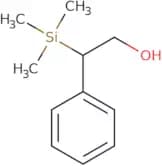
CAS:<p>Versatile small molecule scaffold</p>Formula:C13H14ClNO2Purity:Min. 95%Molecular weight:251.71 g/mol2-Phenyl-2-(trimethylsilyl)ethan-1-ol
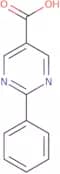
CAS:<p>Versatile small molecule scaffold</p>Formula:C11H18OSiPurity:Min. 95%Molecular weight:194.34 g/mol2-Phenyl-pyrimidine-5-carboxylic acid
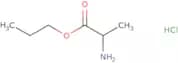
CAS:<p>2-Phenyl-pyrimidine-5-carboxylic acid is a hydroxy derivative of pyrimidine carboxylic acid that has an inhibitory effect on xanthine oxidase. It inhibits the production of uric acid from xanthine and hypoxanthine, which results in a decrease in blood pressure and lipid levels. 2-Phenyl-pyrimidine-5-carboxylic acid has been shown to be more potent than other known inhibitors of xanthine oxidase, such as allopurinol, probenecid, or benzbromarone. The molecular modeling study showed that 2-Phenyl-pyrimidine-5-carboxylic acid binds to the active site of the enzyme xanthine oxidase and blocks access to the substrate. Inhibitors of xanthine oxidase are used clinically to treat dyslipidemia and cardiovascular diseases by lowering blood pressure and lipid levels</p>Formula:C11H8N2O2Purity:Min. 95%Molecular weight:200.2 g/mol(S)-Propyl 2-aminopropanoate hydrochloride
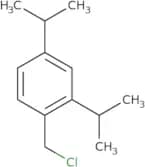
CAS:<p>Versatile small molecule scaffold</p>Formula:C6H14ClNO2Purity:Min. 95%Molecular weight:167.63 g/mol1-(Chloromethyl)-2,4-bis(propan-2-yl)benzene
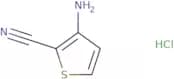
CAS:<p>Versatile small molecule scaffold</p>Formula:C13H19ClPurity:Min. 95%Molecular weight:210.74 g/mol3-Aminothiophene-2-carbonitrile hydrochloride
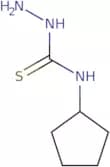
CAS:<p>Versatile small molecule scaffold</p>Formula:C5H5ClN2SPurity:Min. 95%Molecular weight:160.63 g/mol3-Amino-1-cyclopentylthiourea
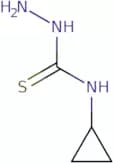
CAS:<p>Versatile small molecule scaffold</p>Formula:C6H13N3SPurity:Min. 95%Molecular weight:159.26 g/mol3-Amino-1-cyclopropylthiourea
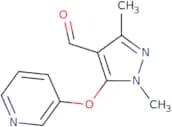
CAS:<p>Versatile small molecule scaffold</p>Formula:C4H9N3SPurity:Min. 95%Molecular weight:131.2 g/mol1,3-Dimethyl-5-(pyridin-3-yloxy)-1H-pyrazole-4-carbaldehyde
CAS:<p>Versatile small molecule scaffold</p>Formula:C11H11N3O2Purity:Min. 95%Molecular weight:217.22 g/mol1,8-Dioxa-4-azaspiro[4.5]decane
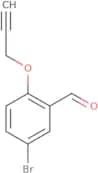
CAS:<p>Versatile small molecule scaffold</p>Formula:C7H13NO2Purity:Min. 95%Molecular weight:143.18 g/mol5-Bromo-2-(prop-2-yn-1-yloxy)benzaldehyde
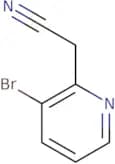
CAS:<p>5-Bromo-2-(prop-2-yn-1-yloxy)benzaldehyde is a cytotoxic agent that is used as an anticancer drug. It has been shown to have significant cytotoxic activity against the breast adenocarcinoma cell line, MDA-MB231. The cytotoxicity of 5-bromo-2-(prop-2-yn-1-yloxy)benzaldehyde is due to its ability to react with nucleophiles, such as DNA and proteins, in cells. This molecule also has antibacterial and antifungal activities. 5-Bromo-2-(prop-2-yn-1 -yloxy)benzaldehyde can be used for the treatment of bacterial and fungal infections, such as those caused by Aspergillus niger.</p>Formula:C10H7BrO2Purity:Min. 95%Molecular weight:239.06 g/mol2-(3-Bromopyridin-2-yl)acetonitrile
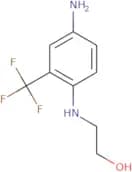
CAS:<p>Versatile small molecule scaffold</p>Formula:C7H5BrN2Purity:Min. 95%Molecular weight:197.04 g/mol2-((4-Amino-2-(trifluoromethyl)phenyl)amino)ethanol
CAS:<p>Versatile small molecule scaffold</p>Formula:C9H11F3N2OPurity:Min. 95%Molecular weight:220.19 g/mol3-Chloropropyl trifluoromethanesulfonate
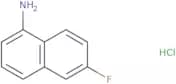
CAS:<p>Versatile small molecule scaffold</p>Formula:C4H6ClF3O3SPurity:Min. 95%Molecular weight:226.6 g/mol6-Fluoronaphthalen-1-amine hydrochloride
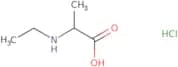
CAS:<p>Versatile small molecule scaffold</p>Formula:C10H9ClFNPurity:Min. 95%Molecular weight:197.63 g/mol2-(Ethylamino)propanoic acid hydrochloride
CAS:<p>Versatile small molecule scaffold</p>Formula:C5H12ClNO2Purity:Min. 95%Molecular weight:153.61 g/mol{4-[2-(Pyrrolidin-1-yl)ethoxy]phenyl}methanamine
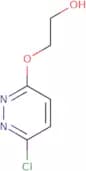
CAS:<p>Versatile small molecule scaffold</p>Formula:C13H20N2OPurity:Min. 95%Molecular weight:220.31 g/mol2-(6-Chloro-pyridazin-3-yloxy)-ethanol
CAS:<p>Versatile small molecule scaffold</p>Formula:C6H7ClN2O2Purity:Min. 95%Molecular weight:174.58 g/mol2-Amino-6-methylbenzenethiol
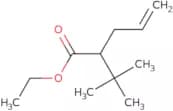
CAS:<p>Please enquire for more information about 2-Amino-6-methylbenzenethiol including the price, delivery time and more detailed product information at the technical inquiry form on this page</p>Formula:C7H9NSPurity:Min. 95%Molecular weight:139.22 g/molEthyl 2-tert-butylpent-4-enoate
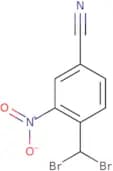
CAS:<p>Versatile small molecule scaffold</p>Formula:C11H20O2Purity:Min. 95%Molecular weight:184.27 g/mol4-(Dibromomethyl)-3-nitrobenzonitrile
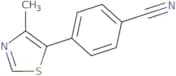
CAS:<p>Versatile small molecule scaffold</p>Formula:C8H4Br2N2O2Purity:Min. 95%Molecular weight:319.94 g/mol-4(4-methylthiazol-5-yl)benzonitrile
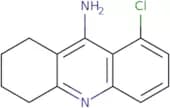
CAS:<p>Versatile small molecule scaffold</p>Formula:C11H8N2SPurity:Min. 95%Molecular weight:200.26 g/mol8-Chloro-1,2,3,4-tetrahydroacridin-9-amine
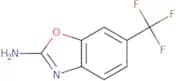
CAS:<p>Versatile small molecule scaffold</p>Formula:C13H13ClN2Purity:Min. 95%Molecular weight:232.71 g/mol6-(Trifluoromethyl)-1,3-benzoxazol-2-amine
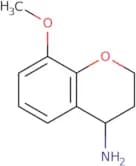
CAS:<p>Versatile small molecule scaffold</p>Formula:C8H5F3N2OPurity:Min. 95%Molecular weight:202.14 g/mol8-Methoxy-3,4-dihydro-2H-1-benzopyran-4-amine
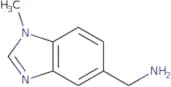
CAS:<p>Versatile small molecule scaffold</p>Formula:C10H13NO2Purity:Min. 95%Molecular weight:179.22 g/mol(1-Methyl-1H-1,3-benzodiazol-5-yl)methanamine
CAS:<p>Versatile small molecule scaffold</p>Formula:C9H11N3Purity:Min. 95%Molecular weight:161.2 g/mol4-[(3-Methylbutyl)sulfanyl]-3-nitrobenzoic acid
CAS:<p>Versatile small molecule scaffold</p>Formula:C12H15NO4SPurity:Min. 95%Molecular weight:269.32 g/mol2-[(2-Methylpiperidin-1-yl)sulfonyl]benzoic acid
CAS:<p>Versatile small molecule scaffold</p>Formula:C13H17NO4SPurity:Min. 95%Molecular weight:283.35 g/mol

![2-{[(2E)-3-(4-Methoxyphenyl)prop-2-enoyl]amino}benzoic acid](/_next/image/?url=https%3A%2Fstatic.cymitquimica.com%2Fproducts%2F3D%2Fthumb-webp%2FXAA78032.webp&w=3840&q=75)
![tert-Butyl N-methyl-N-[4-(methylamino)butyl]carbamate](/_next/image/?url=https%3A%2Fstatic.cymitquimica.com%2Fproducts%2F3D%2Fthumb-webp%2FXEA63207.webp&w=3840&q=75)
![2-Methyl-5-(3-nitro-phenyl)-[1,3,4]oxadiazole](/_next/image/?url=https%3A%2Fstatic.cymitquimica.com%2Fproducts%2F3D%2Fthumb-webp%2FXEA73339.webp&w=3840&q=75)
![3-(5-Methyl-[1,3,4]oxadiazol-2-yl)-phenylamine](/_next/image/?url=https%3A%2Fstatic.cymitquimica.com%2Fproducts%2F3D%2Fthumb-webp%2FXEA73340.webp&w=3840&q=75)
![tert-Butyl N-ethyl-N-[2-(ethylamino)ethyl]carbamate](/_next/image/?url=https%3A%2Fstatic.cymitquimica.com%2Fproducts%2F3D%2Fthumb-webp%2FXEA73434.webp&w=3840&q=75)
![1-Azabicyclo[2.2.1]heptan-3-one hydrochloride](/_next/image/?url=https%3A%2Fstatic.cymitquimica.com%2Fproducts%2F3D%2Fthumb-webp%2FXEA73766.webp&w=3840&q=75)
![1,8-Dioxa-4-azaspiro[4.5]decane](/_next/image/?url=https%3A%2Fstatic.cymitquimica.com%2Fproducts%2F3D%2Fthumb-webp%2FXEA82412.webp&w=3840&q=75)

![{4-[2-(Pyrrolidin-1-yl)ethoxy]phenyl}methanamine](/_next/image/?url=https%3A%2Fstatic.cymitquimica.com%2Fproducts%2F3D%2Fthumb-webp%2FXEA89333.webp&w=3840&q=75)

![4-[(3-Methylbutyl)sulfanyl]-3-nitrobenzoic acid](/_next/image/?url=https%3A%2Fstatic.cymitquimica.com%2Fproducts%2F3D%2Fthumb-webp%2FXEB41098.webp&w=3840&q=75)
![2-[(2-Methylpiperidin-1-yl)sulfonyl]benzoic acid](/_next/image/?url=https%3A%2Fstatic.cymitquimica.com%2Fproducts%2F3D%2Fthumb-webp%2FXEB41108.webp&w=3840&q=75)