


Building Blocks
This section contains fundamental products for the synthesis of organic and biological compounds. Building blocks are the essential starting materials used to construct complex molecules through various chemical reactions. They play a critical role in drug discovery, material science, and chemical research. At CymitQuimica, we offer a diverse range of high-quality building blocks to support your innovative research and industrial projects, ensuring you have the essential components for successful synthesis.
Subcategories of "Building Blocks"
- Boronic Acids & Boronic Acid Derivatives(5,756 products)
- Chiral Building Blocks(1,242 products)
- Hydrocarbon Building Blocks(6,095 products)
- Organic Building Blocks(61,055 products)
Found 199650 products of "Building Blocks"
Sort by
Purity (%)
0
100
|
0
|
50
|
90
|
95
|
100
N-[4-(4-Bromophenoxy)phenyl]-2-chloroacetamide
CAS:<p>Versatile small molecule scaffold</p>Formula:C14H11BrClNO2Purity:Min. 95%Molecular weight:340.6 g/mol1-Methyl-4-(hydroxymethyl)-1,2,3,6-tetrahydropyridine
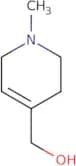
CAS:<p>Versatile small molecule scaffold</p>Formula:C7H13NOPurity:Min. 95%Molecular weight:127.18 g/molBenzene, 1-isothiocyanato-2-(1-methylethyl)-
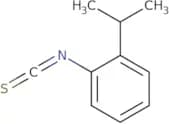
CAS:<p>Versatile small molecule scaffold</p>Formula:C10H11NSPurity:Min. 95%Molecular weight:177.27 g/molN-(Cyclopropylmethyl)aniline
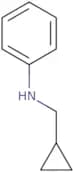
CAS:<p>Versatile small molecule scaffold</p>Formula:C10H13NPurity:Min. 95%Molecular weight:147.22 g/mol2-Propyl-1,3-oxazole-4-carboxylic acid
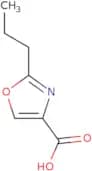
CAS:<p>2-Propyl-1,3-oxazole-4-carboxylic acid is an organic compound with a nitrile group, carboxylic acid group, and two amide groups. It can be synthesized by reacting acrylonitrile with acrylic acid in the presence of nitrile hydrates. The reaction produces amidoxime as a byproduct. This compound has been used to produce thioamides and hydrazides. 2-Propyl-1,3-oxazole-4-carboxylic acid is also used for the synthesis of other derivatives such as acid chlorides and esters.</p>Formula:C7H9NO3Purity:Min. 95%Molecular weight:155.15 g/mol2-Propyl-1,3-oxazole-4-carbonitrile
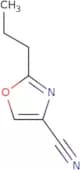
CAS:<p>Versatile small molecule scaffold</p>Formula:C7H8N2OPurity:Min. 95%Molecular weight:136.15 g/mol(2-Aminophenyl)(p-tolyl)methanone+
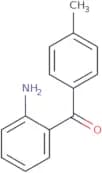
CAS:<p>The isomeric 2-aminophenyl (p-tolyl)methanone+ is a hydrogen bond acceptor. It has been synthesised by the diazotisation reaction of 3-acetylacetonate and aluminium. The synthesis of this compound has been achieved by the removal of water from 3-acetylacetonate, followed by the addition of aluminium to form an acetylacetonate complex. The reaction was completed by adding a solution of phenothiazine in acridone to produce the desired product. The nature and solvents used for this synthesis were not listed.br>br></p>Formula:C14H13NOPurity:Min. 95%Molecular weight:211.27 g/molN-Hydroxy2-aminopentanimidic acid
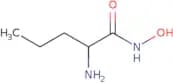
CAS:<p>N-Hydroxy2-aminopentanimidic acid is a metal complexing agent that forms a ligand with the metal ion. It has been shown to form complexes with zinc, copper, and nickel ions. The protonation of N-hydroxy2-aminopentanimidic acid leads to its formation constants. These are determined by potentiometric titrations and can be used to estimate the concentration of hydrogen ions in solution. This chemical has been shown to have potentiometric properties, which make it useful for determining the concentrations of hydroxo and metal ions in solution. The formation constants of N-hydroxy2-aminopentanimidic acid are also determined by complex formation techniques and can be used to estimate the concentration of ligands in solution.</p>Formula:C5H12N2O2Purity:Min. 95%Molecular weight:132.16 g/mol(Pyridin-2-ylmethyl)urea
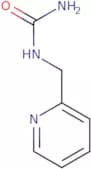
CAS:<p>Versatile small molecule scaffold</p>Formula:C7H9N3OPurity:Min. 95%Molecular weight:151.17 g/molN-(3-Pyridinylmethyl)urea
CAS:Controlled Product<p>N-(3-Pyridinylmethyl)urea is an analog of isonicotinamide. It binds to the receptor tyrosine and inhibits the growth of cells that are exposed to radiation. N-(3-Pyridinylmethyl)urea has been shown to inhibit cell proliferation in vitro by preventing DNA synthesis. This compound can also be used as a fluorescent probe for tyrosine kinase activity.</p>Formula:C7H9N3OPurity:Min. 95%Molecular weight:151.17 g/mol(Pyridin-4-ylmethyl)urea
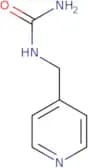
CAS:<p>Versatile small molecule scaffold</p>Formula:C7H9N3OPurity:Min. 95%Molecular weight:151.17 g/molethyl 5-amino-2-phenyl-1,3-oxazole-4-carboxylate
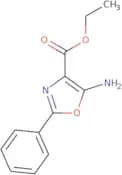
CAS:<p>Versatile small molecule scaffold</p>Formula:C12H12N2O3Purity:Min. 95%Molecular weight:232.2 g/mol2-Ethyltetrahydro-4H-pyran-4-one
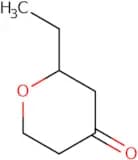
CAS:<p>Versatile small molecule scaffold</p>Formula:C7H12O2Purity:Min. 95%Molecular weight:128.16 g/mol2-Amino-6,7-dihydrobenzo[d]thiazol-4(5H)-one
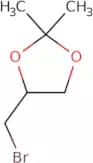
CAS:<p>Versatile small molecule scaffold</p>Formula:C7H8N2OSPurity:Min. 95%Molecular weight:168.21 g/mol4-(Bromomethyl)-2,2-dimethyl-1,3-dioxolane
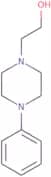
CAS:<p>Versatile small molecule scaffold</p>Formula:C6H11BrO2Purity:Min. 95%Molecular weight:195.05 g/mol2-(4-Phenylpiperazin-1-yl)ethan-1-ol
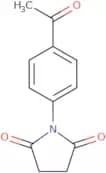
CAS:<p>Versatile small molecule scaffold</p>Formula:C12H18N2OPurity:Min. 95%Molecular weight:206.28 g/mol1-(4-Acetylphenyl)pyrrolidine-2,5-dione
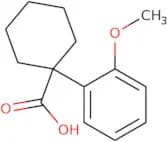
CAS:<p>Versatile small molecule scaffold</p>Formula:C12H11NO3Purity:Min. 95%Molecular weight:217.22 g/mol1-(2-Methoxyphenyl)cyclohexane-1-carboxylic acid
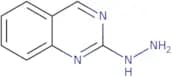
CAS:<p>Versatile small molecule scaffold</p>Formula:C14H18O3Purity:Min. 95%Molecular weight:234.29 g/mol2-Hydrazinylquinazoline
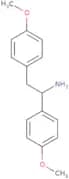
CAS:<p>2-Hydrazinylquinazoline is a heterocyclic compound that inhibits the binding of active substances to their receptors. It has been shown to be a potent antagonist in assays measuring the inhibition of benzodiazepine receptor and quinazolinones. 2-Hydrazinylquinazoline has also been used as an antidepressant drug, due to its ability to inhibit the uptake of serotonin into cells. This compound is also reactive and can form sulfa drugs with amines, amino acids, or peptides. The detection sensitivity for this compound is high and it can be found in human serum at concentrations of 0.2-0.4 mg/L.</p>Formula:C8H8N4Purity:Min. 95%Molecular weight:160.18 g/mol1,2-Bis(4-methoxyphenyl)ethan-1-amine
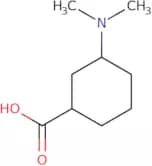
CAS:<p>1,2-Bis(4-methoxyphenyl)ethan-1-amine is an organic compound with the formula CH3C6H4(OCH2CH2)2NH. It is a colorless liquid that is soluble in water and polar organic solvents. The molecule consists of an ethanamine moiety substituted with two methoxyphenyl groups at the 1 and 2 positions. The molecule has been shown to react via a hydride transfer reaction with diborane to form a boronate ester, which can be hydrogenated back to the starting material. This process is catalyzed by acid or acid esters such as pyridine or triethylamine.</p>Formula:C16H19NO2Purity:Min. 95%Molecular weight:257.33 g/mol3-(Dimethylamino)cyclohexane-1-carboxylic acid
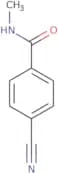
CAS:<p>Versatile small molecule scaffold</p>Formula:C9H17NO2Purity:Min. 95%Molecular weight:171.24 g/mol4-Cyano-N-methylbenzamide
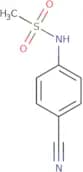
CAS:<p>Versatile small molecule scaffold</p>Formula:C9H8N2OPurity:Min. 95%Molecular weight:160.17 g/mol4-(Methanesulfonylamino)benzonitrile
CAS:<p>4-(Methanesulfonylamino)benzonitrile is a potent and selective vanilloid receptor antagonist. It has been shown to inhibit the uptake of nitro compounds by rat brain synaptosomes in vitro and to block the binding of [3H]nitro-N-methyl-4-phenylpyridinium ion (NMPA) to rat brain membranes. 4-(Methanesulfonylamino)benzonitrile has been shown to bind to albumin, which may be an important factor in its pharmacokinetics. This drug also binds with serum albumin, which may reduce its absorption after oral administration.</p>Formula:C8H8N2O2SPurity:Min. 95%Molecular weight:196.23 g/mol2-Amino-4λ⁵-[1,2,4]thiadiazolo[2,3-a]pyridin-4-ylium chloride
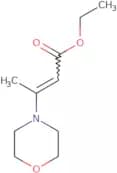
CAS:<p>Versatile small molecule scaffold</p>Formula:C6H6ClN3SPurity:Min. 95%Molecular weight:187.65 g/molEthyl 3-(morpholin-4-yl)but-2-enoate
CAS:<p>Versatile small molecule scaffold</p>Formula:C10H17NO3Purity:Min. 95%Color and Shape:PowderMolecular weight:199.25 g/mol(1S,6R)-8,8-Dimethylbicyclo[4.2.0]octan-7-one
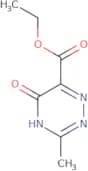
CAS:<p>Versatile small molecule scaffold</p>Formula:C10H16OPurity:Min. 95%Molecular weight:152.23 g/molEthyl 5-hydroxy-3-methyl-1,2,4-triazine-6-carboxylate
CAS:<p>Versatile small molecule scaffold</p>Formula:C7H9N3O3Purity:Min. 95%Molecular weight:183.16 g/mol3-Methoxy-1-nitroso-pyrrolidine
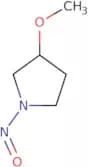
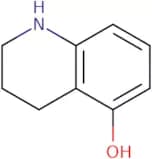
CAS:<p>Versatile small molecule scaffold</p>Formula:C5H10N2O2Purity:Min. 95%Molecular weight:130.15 g/mol1,2,3,4-Tetrahydroquinolin-5-ol
CAS:<p>1,2,3,4-Tetrahydroquinolin-5-ol is a heterobicyclic compound that has been shown to be an efficient and selective pharmacophore. It can be used as a skeleton in the optimization of drug discovery. The physicochemical properties of 1,2,3,4-tetrahydroquinolin-5-ol have been studied by vectors such as solubility and melting point. This chemical has also been used in research on the synthesis of bicyclic compounds.</p>Formula:C9H11NOPurity:Min. 95%Molecular weight:149.19 g/mol4-[(Methoxyimino)methyl]benzoic acid
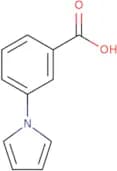
CAS:<p>Versatile small molecule scaffold</p>Formula:C9H9NO3Purity:Min. 95%Molecular weight:179.17 g/mol3-(1H-Pyrrol-1-yl)benzoic acid
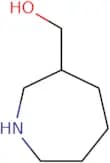
CAS:<p>Versatile small molecule scaffold</p>Formula:C11H9NO2Purity:Min. 95%Molecular weight:187.2 g/mol(Azepan-3-yl)methanol
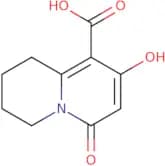
CAS:<p>Versatile small molecule scaffold</p>Formula:C7H15NOPurity:Min. 95%Molecular weight:129.2 g/mol2-Hydroxy-4-oxo-6,7,8,9-tetrahydro-4H-quinolizine-1-carboxylic acid
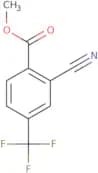
CAS:<p>Versatile small molecule scaffold</p>Formula:C10H11NO4Purity:Min. 95%Molecular weight:209.2 g/molMethyl 2-cyano-4-(trifluoromethyl)benzoate
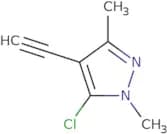
CAS:<p>Versatile small molecule scaffold</p>Formula:C10H6F3NO2Purity:Min. 95%Molecular weight:229.15 g/mol5-Chloro-4-ethynyl-1,3-dimethyl-1H-pyrazole
CAS:<p>Versatile small molecule scaffold</p>Formula:C7H7ClN2Purity:Min. 95%Molecular weight:154.6 g/mol2-[(2-Ethyl-6-methylphenyl)amino]propan-1-ol
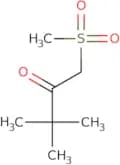
CAS:<p>Versatile small molecule scaffold</p>Formula:C12H19NOPurity:Min. 95%Molecular weight:193.28 g/mol1-Methanesulfonyl-3,3-dimethylbutan-2-one
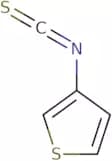
CAS:<p>Versatile small molecule scaffold</p>Formula:C7H14O3SPurity:Min. 95%Molecular weight:178.25 g/mol3-Isothiocyanatothiophene
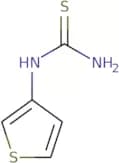
CAS:<p>Versatile small molecule scaffold</p>Formula:C5H3NS2Purity:Min. 95%Molecular weight:141.2 g/mol(Thiophen-3-yl)thiourea
CAS:<p>Versatile small molecule scaffold</p>Formula:C5H6N2S2Purity:Min. 95%Molecular weight:158.2 g/mol3-Phenyl-3H-imidazo[4,5-b]pyridine
CAS:<p>3-Phenyl-3H-imidazo[4,5-b]pyridine is a ligand that binds with high affinity to the GABA receptor. It has an aromatic ring and two phenyl groups. 3-Phenyl-3H-imidazo[4,5-b]pyridine is a member of the class of pyridine derivatives. This compound has been shown to have nervous system effects in animals and humans, including sedative and hypnotic effects.</p>Formula:C12H9N3Purity:Min. 95%Molecular weight:195.22 g/mol1-Phenyl-1H-imidazo[4,5-c]pyridine
CAS:<p>Merocyanine is a polymethine dye that has been shown to have antimicrobial activity. It binds to DNA by intercalating between the base pairs, and it has been reported to inhibit the growth of Gram-positive bacteria. Merocyanine may be used for the treatment of Gram-positive bacterial infections such as staphylococcus aureus, streptococcus pyogenes, and enterobacteriaceae. This molecule also exhibits quaternary salt properties and can be used as an antiseptic.</p>Formula:C12H9N3Purity:Min. 95%Molecular weight:195.22 g/mol3-Methyl-1,3-dihydro-2H-imidazo[4,5-c]pyridin-2-one
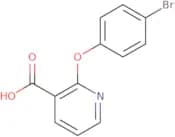
CAS:<p>Versatile small molecule scaffold</p>Formula:C7H7N3OPurity:Min. 95%Molecular weight:149.15 g/mol2-(4-Bromophenoxy)nicotinic acid
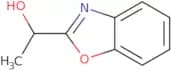
CAS:<p>Versatile small molecule scaffold</p>Formula:C12H8BrNO3Purity:Min. 95%Molecular weight:294.1 g/mol1-(1,3-Benzoxazol-2-yl)ethan-1-ol
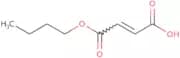
CAS:<p>Versatile small molecule scaffold</p>Formula:C9H9NO2Purity:Min. 95%Molecular weight:163.17 g/mol4-Butoxy-4-oxobut-2-enoic acid
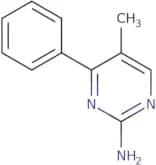
CAS:<p>4-Butoxy-4-oxobutanoic acid (BABA) is an anti-inflammatory agent that belongs to the class of prodrugs. It is a monomer that is polymerized in vivo to form polycarboxylic acids which are then metabolized by hydrogenase. BABA has been shown to be useful for treating inflammatory bowel disease, as well as other autoimmune diseases. The chemical stability of BABA has also been demonstrated in microcapsules and it can be used for the treatment of bowel disease, such as ulcerative colitis and Crohn's disease.</p>Formula:C8H12O4Purity:Min. 95%Molecular weight:172.18 g/mol5-Methyl-4-phenylpyrimidin-2-amine
CAS:<p>Versatile small molecule scaffold</p>Formula:C11H11N3Purity:Min. 95%Molecular weight:185.22 g/mol1-Iodo-3-methoxypropane
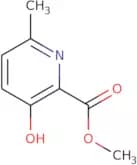
CAS:<p>1-Iodo-3-methoxypropane is a ligand that belongs to the polyhedron class. The crystal structure of this compound has been determined by x-ray and thermal analysis. It is stable at room temperature, but decomposes at higher temperatures. 1-Iodo-3-methoxypropane can be used as a ligand in coordination chemistry, or as an intermediate in organic synthesis. It has been shown to form stable complexes with metal ions such as copper(II) and silver(I). The 1-iodo-3-methoxypropane molecule contains two oxygen atoms that are bonded to each other through a triple bond. These atoms are part of the ligand’s backbone and allow it to coordinate well with metal ions.</p>Formula:C4H9IOPurity:Min. 95%Molecular weight:200.01 g/molMethyl 3-hydroxy-6-methylpicolinate
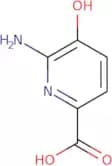
CAS:<p>Versatile small molecule scaffold</p>Formula:C8H9NO3Purity:Min. 95%Molecular weight:167.16 g/mol6-Amino-5-hydroxypyridine-2-carboxylic acid
CAS:<p>Versatile small molecule scaffold</p>Formula:C6H6N2O3Purity:Min. 95%Molecular weight:154.12 g/mol2-Oxo-2H,3H-[1,3]oxazolo[4,5-b]pyridine-5-carboxylic acid
CAS:<p>Versatile small molecule scaffold</p>Formula:C7H4N2O4Purity:Min. 95%Molecular weight:180.12 g/mol
![N-[4-(4-Bromophenoxy)phenyl]-2-chloroacetamide](/_next/image/?url=https%3A%2Fstatic.cymitquimica.com%2Fproducts%2F3D%2Fthumb-webp%2FLBA16096.webp&w=3840&q=75)

![2-Amino-6,7-dihydrobenzo[d]thiazol-4(5H)-one](/_next/image/?url=https%3A%2Fstatic.cymitquimica.com%2Fproducts%2F3D%2Fthumb-webp%2FLBA23466.webp&w=3840&q=75)
![2-Amino-4λ⁵-[1,2,4]thiadiazolo[2,3-a]pyridin-4-ylium chloride](/_next/image/?url=https%3A%2Fstatic.cymitquimica.com%2Fproducts%2F3D%2Fthumb-webp%2FLBA27397.webp&w=3840&q=75)
![(1S,6R)-8,8-Dimethylbicyclo[4.2.0]octan-7-one](/_next/image/?url=https%3A%2Fstatic.cymitquimica.com%2Fproducts%2F3D%2Fthumb-webp%2FLBA27738.webp&w=3840&q=75)
![4-[(Methoxyimino)methyl]benzoic acid](/_next/image/?url=https%3A%2Fstatic.cymitquimica.com%2Fproducts%2F3D%2Fthumb-webp%2FLCA47143.webp&w=3840&q=75)
![2-[(2-Ethyl-6-methylphenyl)amino]propan-1-ol](/_next/image/?url=https%3A%2Fstatic.cymitquimica.com%2Fproducts%2F3D%2Fthumb-webp%2FLCA52053.webp&w=3840&q=75)
![3-Phenyl-3H-imidazo[4,5-b]pyridine](/_next/image/?url=https%3A%2Fstatic.cymitquimica.com%2Fproducts%2F3D%2Fthumb-webp%2FLCA53233.webp&w=3840&q=75)
![1-Phenyl-1H-imidazo[4,5-c]pyridine](/_next/image/?url=https%3A%2Fstatic.cymitquimica.com%2Fproducts%2F3D%2Fthumb-webp%2FLCA53235.webp&w=3840&q=75)
![3-Methyl-1,3-dihydro-2H-imidazo[4,5-c]pyridin-2-one](/_next/image/?url=https%3A%2Fstatic.cymitquimica.com%2Fproducts%2F3D%2Fthumb-webp%2FLCA53236.webp&w=3840&q=75)

![2-Oxo-2H,3H-[1,3]oxazolo[4,5-b]pyridine-5-carboxylic acid](/_next/image/?url=https%3A%2Fstatic.cymitquimica.com%2Fproducts%2F3D%2Fthumb-webp%2FLCA54855.webp&w=3840&q=75)