Building Blocks
This section contains fundamental products for the synthesis of organic and biological compounds. Building blocks are the essential starting materials used to construct complex molecules through various chemical reactions. They play a critical role in drug discovery, material science, and chemical research. At CymitQuimica, we offer a diverse range of high-quality building blocks to support your innovative research and industrial projects, ensuring you have the essential components for successful synthesis.
Subcategories of "Building Blocks"
- Boronic Acids & Boronic Acid Derivatives(5,756 products)
- Chiral Building Blocks(1,242 products)
- Hydrocarbon Building Blocks(6,095 products)
- Organic Building Blocks(61,038 products)
Found 196817 products of "Building Blocks"
Sort by
Purity (%)
0
100
|
0
|
50
|
90
|
95
|
100
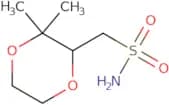
(3,3-Dimethyl-1,4-dioxan-2-yl)methanesulfonamide
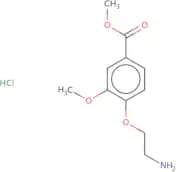
CAS:<p>Versatile small molecule scaffold</p>Formula:C7H15NO4SPurity:Min. 95%Molecular weight:209.3 g/molMethyl 4-(2-aminoethoxy)-3-methoxybenzoate hydrochloride
CAS:<p>Versatile small molecule scaffold</p>Formula:C11H16ClNO4Purity:Min. 95%Molecular weight:261.7 g/molTricyclo[2.2.1.0,2,6]heptane-3-sulfonamide
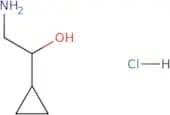
CAS:<p>Versatile small molecule scaffold</p>Formula:C7H11NO2SPurity:Min. 95%Molecular weight:173.2 g/mol2-Amino-1-cyclopropylethan-1-ol hydrochloride
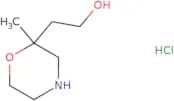
CAS:<p>Versatile small molecule scaffold</p>Formula:C5H12ClNOPurity:Min. 95%Molecular weight:137.6 g/mol2-(2-Methylmorpholin-2-yl)ethan-1-ol hydrochloride
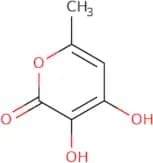
CAS:<p>Versatile small molecule scaffold</p>Formula:C7H16ClNO2Purity:Min. 95%Molecular weight:181.7 g/mol3,4-Dihydroxy-6-methyl-2H-pyran-2-one
CAS:<p>Versatile small molecule scaffold</p>Formula:C6H6O4Purity:Min. 95%Molecular weight:142.1 g/mol7-(Dimethyl-1,2-oxazol-4-yl)-6-[(4-methoxyphenyl)methoxy]-N-(pyridin-2-ylmethyl)quinolin-4-amine
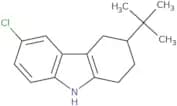
CAS:<p>Versatile small molecule scaffold</p>Formula:C28H26N4O3Purity:Min. 95%Molecular weight:466.5 g/mol3-tert-Butyl-6-chloro-2,3,4,9-tetrahydro-1H-carbazole
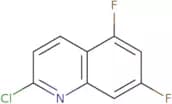
CAS:<p>Versatile small molecule scaffold</p>Formula:C16H20ClNPurity:Min. 95%Molecular weight:261.79 g/mol2-Chloro-5,7-difluoroquinoline
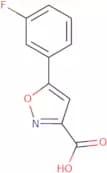
CAS:<p>Versatile small molecule scaffold</p>Formula:C9H4ClF2NPurity:Min. 95%Molecular weight:199.58 g/mol5-(3-Fluorophenyl)-3-isoxazolecarboxylic Acid
CAS:<p>Versatile small molecule scaffold</p>Formula:C10H6FNO3Purity:Min. 95%Molecular weight:207.16 g/mol2-Chloro-4-[2-(trifluoromethyl)phenyl]-1,3-thiazole
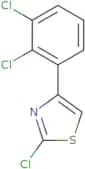
CAS:<p>Versatile small molecule scaffold</p>Formula:C10H5ClF3NSPurity:Min. 95%Molecular weight:263.67 g/mol2-Chloro-4-(2,3-dichlorophenyl)-1,3-thiazole
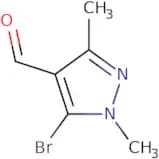
CAS:<p>Versatile small molecule scaffold</p>Formula:C9H4Cl3NSPurity:Min. 95%Molecular weight:264.6 g/mol5-Bromo-1,3-dimethyl-1H-pyrazole-4-carbaldehyde
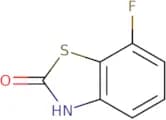
CAS:<p>Versatile small molecule scaffold</p>Formula:C6H7BrN2OPurity:Min. 95%Molecular weight:203.04 g/mol7-Fluoro-2,3-dihydro-1,3-benzothiazol-2-one
CAS:<p>Versatile small molecule scaffold</p>Formula:C7H4FNOSPurity:Min. 95%Molecular weight:169.18 g/molEthyl 5-[2-(trifluoromethyl)phenyl]-1,2-oxazole-3-carboxylate
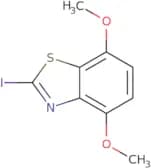
CAS:<p>Versatile small molecule scaffold</p>Formula:C13H10F3NO3Purity:Min. 95%Molecular weight:285.22 g/mol2-Iodo-4,7-dimethoxy-1,3-benzothiazole
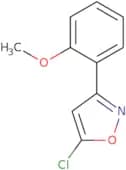
CAS:<p>Versatile small molecule scaffold</p>Formula:C9H8INO2SPurity:Min. 95%Molecular weight:321.1 g/mol5-Chloro-3-(2-methoxyphenyl)-1,2-oxazole
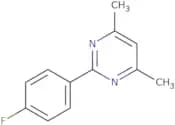
CAS:<p>Versatile small molecule scaffold</p>Formula:C10H8ClNO2Purity:Min. 95%Molecular weight:209.63 g/mol2-(4-Fluorophenyl)-4,6-dimethylpyrimidine
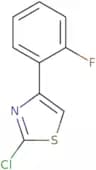
CAS:<p>Versatile small molecule scaffold</p>Formula:C12H11FN2Purity:Min. 95%Molecular weight:202.23 g/mol2-Chloro-4-(2-fluorophenyl)-1,3-thiazole
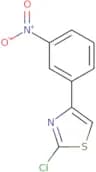
CAS:<p>Versatile small molecule scaffold</p>Formula:C9H5ClFNSPurity:Min. 95%Molecular weight:213.66 g/mol2-Chloro-4-(3-nitrophenyl)thiazole
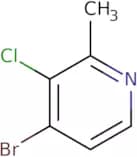
CAS:<p>Versatile small molecule scaffold</p>Formula:C9H5ClN2O2SPurity:Min. 95%Molecular weight:240.67 g/mol4-Bromo-3-chloro-2-methylpyridine
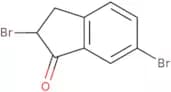
CAS:<p>Versatile small molecule scaffold</p>Formula:C6H5BrClNPurity:Min. 95%Molecular weight:206.47 g/mol2,6-Dibromo-2,3-dihydro-1H-inden-1-one
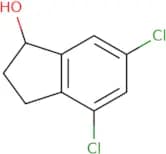
CAS:<p>Versatile small molecule scaffold</p>Formula:C9H6Br2OPurity:Min. 95%Molecular weight:289.95 g/mol4,6-Dichloro-2,3-dihydro-1H-inden-1-ol
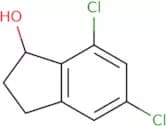
CAS:<p>Versatile small molecule scaffold</p>Formula:C9H8Cl2OPurity:Min. 95%Molecular weight:203.06 g/mol5,7-Dichloro-2,3-dihydro-1H-inden-1-ol
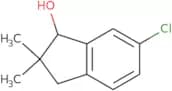
CAS:<p>Versatile small molecule scaffold</p>Formula:C9H8Cl2OPurity:Min. 95%Molecular weight:203.06 g/mol6-Chloro-2,2-dimethyl-2,3-dihydro-1H-inden-1-ol
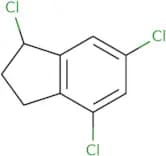
CAS:<p>Versatile small molecule scaffold</p>Formula:C11H13ClOPurity:Min. 95%Molecular weight:196.67 g/mol1,4,6-Trichloro-2,3-dihydro-1H-indene
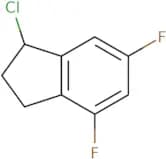
CAS:<p>Versatile small molecule scaffold</p>Formula:C9H7Cl3Purity:Min. 95%Molecular weight:221.5 g/mol1-Chloro-4,6-difluoro-2,3-dihydro-1H-indene
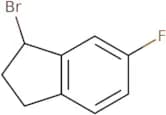
CAS:<p>Versatile small molecule scaffold</p>Formula:C9H7ClF2Purity:Min. 95%Molecular weight:188.6 g/mol1-Bromo-6-fluoro-2,3-dihydro-1H-indene
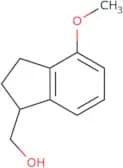
CAS:<p>Versatile small molecule scaffold</p>Formula:C9H8BrFPurity:Min. 95%Molecular weight:215.06 g/mol(4-Methoxy-2,3-dihydro-1H-inden-1-yl)methanol
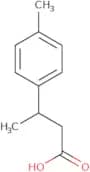
CAS:<p>Versatile small molecule scaffold</p>Formula:C11H14O2Purity:Min. 95%Molecular weight:178.23 g/mol3-(4-methylphenyl)butanoic acid
CAS:<p>3-(4-Methylphenyl)butanoic acid is a type of organic compound that belongs to the class of organic compounds called fatty acids. It is an activator of chloride channels, which leads to an increase in the permeability of the cell membrane. 3-(4-Methylphenyl)butanoic acid also has an inhibitory effect on tyrosinase, which is an enzyme that catalyzes the conversion of tyrosinase to melanin. This product may be used as a supplement or medicine for Alzheimer's disease and other neurological disorders. 3-(4-Methylphenyl)butanoic acid is levorotatory and can be found in butanoic acid, isopropyl, and c1-6 alkyl.</p>Formula:C11H14O2Purity:Min. 95%Molecular weight:178.23 g/molImidazo[1,2-a]pyridine-2-carboxamide
CAS:<p>Imidazo[1,2-a]pyridine-2-carboxamide (IPC) is a nematicide that belongs to the class of imidazopyridine. It has been shown to have a high efficacy against nematodes in the soil and in plants. This compound has an elemental analysis that shows the fluorine content is at 1%. IPC has a long-chain alkynyl group and phenyl group, which indicates its chemical structures. The diffraction pattern of IPC shows that it is a polymorph form with two different crystalline forms. One of these forms can be seen as a solid and the other as a powder.<br>IPC binds to nuclear receptors on the surface of nematodes and causes them to die from dehydration and lack of oxygen.</p>Formula:C8H7N3OPurity:Min. 95%Molecular weight:161.16 g/mol1-Methyl-1H-1,2,3-triazole-4-carboxamide
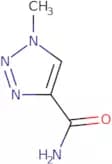
CAS:<p>Versatile small molecule scaffold</p>Formula:C4H6N4OPurity:Min. 95%Molecular weight:126.12 g/mol[2-(Hydroxymethyl)naphthalen-1-yl]methanol
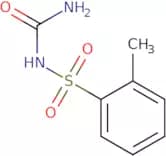
CAS:<p>Versatile small molecule scaffold</p>Formula:C12H12O2Purity:Min. 95%Molecular weight:188.22 g/molN-carbamoyl-2-methyl benzene sulfonamide
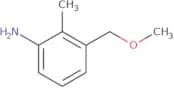
CAS:<p>Versatile small molecule scaffold</p>Formula:C8H10N2O3SPurity:Min. 95%Molecular weight:214.24 g/mol3-(Methoxymethyl)-2-methylaniline
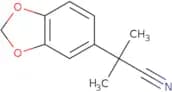
CAS:<p>Versatile small molecule scaffold</p>Formula:C9H13NOPurity:Min. 95%Molecular weight:151.21 g/mol2-(1,3-Dioxaindan-5-yl)-2-methylpropanenitrile
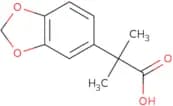
CAS:<p>Versatile small molecule scaffold</p>Formula:C11H11NO2Purity:Min. 95%Molecular weight:189.21 g/mol2-(1,3-Dioxaindan-5-yl)-2-methylpropanoic acid
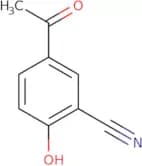
CAS:<p>Versatile small molecule scaffold</p>Formula:C11H12O4Purity:Min. 95%Molecular weight:208.21 g/mol5-Acetyl-2-hydroxybenzonitrile
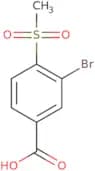
CAS:<p>5-Acetyl-2-hydroxybenzonitrile (5AHB) is a fluorophore that has been used as an exploratory reagent in photochemistry and fluorescence. This compound is a radical mechanism and belongs to the family of benzenes. The quantum yield for 5AHB has been measured at 1.4% in single molecule experiments and 4% in bulk experiments. The mechanistic studies have shown that it is a radiation sensitive compound with a short half life, which can be explained by its photolytic properties. 5AHB has also been shown to be an efficient photosensitizer, which can be used to generate singlet oxygen that can be used as an oxidizing agent or electron donor in photochemical reactions.</p>Formula:C9H7NO2Purity:Min. 95%Molecular weight:161.16 g/mol3-Bromo-4-(methylsulfonyl)benzoic acid
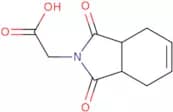
CAS:<p>Versatile small molecule scaffold</p>Formula:C8H7BrO4SPurity:Min. 95%Molecular weight:279.11 g/mol2-(1,3-Dioxo-2,3,3a,4,7,7a-hexahydro-1H-isoindol-2-yl)acetic acid
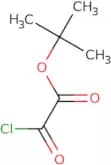
CAS:<p>Versatile small molecule scaffold</p>Formula:C10H11NO4Purity:Min. 95%Molecular weight:209.2 g/moltert-Butyl 2-Chloro-2-oxoacetate
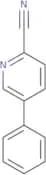
CAS:<p>Tert-butyl 2-chloro-2-oxoacetate is a substrate analogue that has been shown to inhibit the activity of aminopeptidase (AP) and esterase (EST). These enzymes are important for the degradation of peptides in the urine. Tert-butyl 2-chloro-2-oxoacetate has also been shown to have antibacterial properties against uropathogenic E. coli. This analog interacts with substrate proteins, inhibiting their function, which leads to an increase in the concentration of substrates and an inhibition of bacterial growth. Tert-butyl 2-chloro-2-oxoacetate is an amide that can be used as a biomolecular probe for conformational studies and as an inhibitor for AP and EST.</p>Formula:C6H9O3ClPurity:Min. 95%Molecular weight:164.58 g/mol5-phenylpyridine-2-carbonitrile
CAS:<p>5-Phenylpyridine-2-carbonitrile is a synthetic compound. It emits light when subjected to an electric field, and it can be used in intermolecular quantum efficiency measurements. 5-Phenylpyridine-2-carbonitrile has been shown to have a quantum efficiency of 0.72% in benzonitrile and picolinonitrile diodes at room temperature, which is lower than the quantum efficiency of phosphorescent materials such as ZnS:CuCl (0.87%). This may be due to the low energy required for the triplet state to emit light.</p>Formula:C12H8N2Purity:Min. 95%Molecular weight:180.21 g/mol6-Phenylpyridine-2-carbonitrile
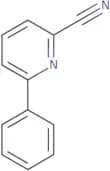
CAS:<p>6-Phenylpyridine-2-carbonitrile is a nitrogenous organic compound that has been used as a ligand to bind metal ions. It is also an efficient aminating agent. 6-Phenylpyridine-2-carbonitrile binds to bidentate ligands such as imidazole, which leads to the formation of amides and nitriles. This product has been used in the synthesis of biomolecules with nitrogen, such as urea.</p>Formula:C12H8N2Purity:Min. 95%Molecular weight:180.2 g/mol6-Phenylnicotinonitrile
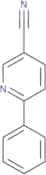
CAS:<p>6-Phenylnicotinonitrile is a reactive moiety that is generated from the reaction of an aryl halide and boronic acid. The 6-phenyl group can be used to form new carbon-carbon bonds in the synthesis of heteroaromatic compounds. This compound can also be recycled after use by reacting it with a boronic acid, which creates another reactive moiety. This recycling process has been shown to increase the efficiency of this chemical reaction.</p>Formula:C12H8N2Purity:Min. 95%Molecular weight:180.21 g/mol2-(4-Chlorophenyl)butanenitrile
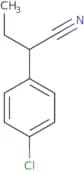
CAS:<p>Versatile small molecule scaffold</p>Formula:C10H10ClNPurity:Min. 95%Molecular weight:179.64 g/mol1-[4-Methyl-2-(pyridin-3-yl)-1,3-thiazol-5-yl]ethan-1-one hydrochloride
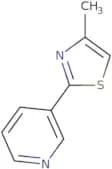
CAS:<p>Versatile small molecule scaffold</p>Formula:C11H11ClN2OSPurity:Min. 95%Molecular weight:254.74 g/mol3-(4-Methyl-1,3-thiazol-2-yl)pyridine
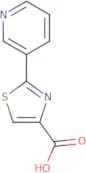
CAS:<p>Versatile small molecule scaffold</p>Formula:C9H8N2SPurity:Min. 95%Molecular weight:176.24 g/mol2-(Pyridin-3-yl)-1,3-thiazole-4-carboxylic acid
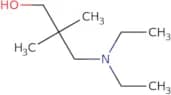
CAS:<p>Versatile small molecule scaffold</p>Formula:C9H6N2O2SPurity:Min. 95%Molecular weight:206.22 g/mol3-(Diethylamino)-2,2-dimethyl-propan-1-ol
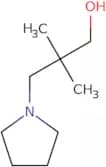
CAS:<p>3-(Diethylamino)-2,2-dimethyl-propan-1-ol is a psychoactive substance that belongs to the group of phenethylamines. It is structurally related to the precursor molecule 2,5-dihydroxyphenethylamine (or dopamine). 3-(Diethylamino)-2,2-dimethyl-propan-1-ol has been shown to inhibit cytochrome P450 2C19 and metabolize into glucuronidated metabolites through CYP3A4 and other isoforms. This metabolite is excreted in human urine as a result of its metabolism by uridine diphosphate glucuronosyltransferase 1A1 (UGT1A1).</p>Formula:C9H21NOPurity:Min. 95%Color and Shape:Clear LiquidMolecular weight:159.27 g/mol2,2-Dimethyl-3-(pyrrolidin-1-yl)propan-1-ol
CAS:<p>Versatile small molecule scaffold</p>Formula:C9H19NOPurity:Min. 95%Molecular weight:157.25 g/mol

![Tricyclo[2.2.1.0,2,6]heptane-3-sulfonamide](/_next/image/?url=https%3A%2Fstatic.cymitquimica.com%2Fproducts%2F3D%2Fthumb-webp%2FNWD88623.webp&w=3840&q=75)
![7-(Dimethyl-1,2-oxazol-4-yl)-6-[(4-methoxyphenyl)methoxy]-N-(pyridin-2-ylmethyl)quinolin-4-amine](/_next/image/?url=https%3A%2Fstatic.cymitquimica.com%2Fproducts%2F3D%2Fthumb-webp%2FNWD90425.webp&w=3840&q=75)
![2-Chloro-4-[2-(trifluoromethyl)phenyl]-1,3-thiazole](/_next/image/?url=https%3A%2Fstatic.cymitquimica.com%2Fproducts%2F3D%2Fthumb-webp%2FNXB03800.webp&w=3840&q=75)
![Ethyl 5-[2-(trifluoromethyl)phenyl]-1,2-oxazole-3-carboxylate](/_next/image/?url=https%3A%2Fstatic.cymitquimica.com%2Fproducts%2F3D%2Fthumb-webp%2FNXB05668.webp&w=3840&q=75)
![Imidazo[1,2-a]pyridine-2-carboxamide](/_next/image/?url=https%3A%2Fstatic.cymitquimica.com%2Fproducts%2F3D%2Fthumb-webp%2FPBA03144.webp&w=3840&q=75)
![[2-(Hydroxymethyl)naphthalen-1-yl]methanol](/_next/image/?url=https%3A%2Fstatic.cymitquimica.com%2Fproducts%2F3D%2Fthumb-webp%2FPBA05028.webp&w=3840&q=75)
![1-[4-Methyl-2-(pyridin-3-yl)-1,3-thiazol-5-yl]ethan-1-one hydrochloride](/_next/image/?url=https%3A%2Fstatic.cymitquimica.com%2Fproducts%2F3D%2Fthumb-webp%2FPBA06699.webp&w=3840&q=75)