Building Blocks
This section contains fundamental products for the synthesis of organic and biological compounds. Building blocks are the essential starting materials used to construct complex molecules through various chemical reactions. They play a critical role in drug discovery, material science, and chemical research. At CymitQuimica, we offer a diverse range of high-quality building blocks to support your innovative research and industrial projects, ensuring you have the essential components for successful synthesis.
Subcategories of "Building Blocks"
- Boronic Acids & Boronic Acid Derivatives(5,778 products)
- Chiral Building Blocks(1,242 products)
- Hydrocarbon Building Blocks(6,098 products)
- Organic Building Blocks(61,034 products)
Found 199601 products of "Building Blocks"
Sort by
Purity (%)
0
100
|
0
|
50
|
90
|
95
|
100
5-(4-Methylphenyl)-4H-1,2,4-triazole-3-thiol
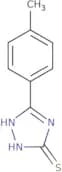
CAS:<p>5-(4-Methylphenyl)-4H-1,2,4-triazole-3-thiol is a crystalline compound that has been shown to form cyclocondensation products with certain amino acids. It also acts as an x-ray diffraction reagent and can be used in the study of the interaction between x-rays and matter. 5-(4-Methylphenyl)-4H-1,2,4-triazole-3-thiol has been shown to react with amino acids such as L -alanine, L -serine, and L -leucine to form new compounds. This reaction is regioselective as it only occurs at the C5 position on the thiazole ring.</p>Formula:C9H9N3SPurity:Min. 95%Molecular weight:191.26 g/mol2-[4-(2-{[(tert-Butoxy)carbonyl]amino}ethyl)phenoxy]acetic acid
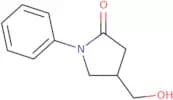
CAS:<p>Versatile small molecule scaffold</p>Formula:C15H21NO5Purity:Min. 95%Molecular weight:295.33 g/mol4-(Hydroxymethyl)-1-phenylpyrrolidin-2-one
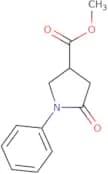
CAS:<p>Versatile small molecule scaffold</p>Formula:C11H13NO2Purity:Min. 95%Molecular weight:191.23 g/molMethyl 5-oxo-1-phenylpyrrolidine-3-carboxylate
CAS:<p>Versatile small molecule scaffold</p>Formula:C12H13NO3Purity:Min. 95%Molecular weight:219.24 g/mol3-[3-(Trifluoromethyl)phenyl]piperidine
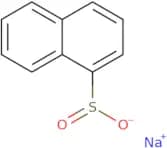
CAS:<p>Versatile small molecule scaffold</p>Formula:C12H14F3NPurity:Min. 95%Molecular weight:229.24 g/molSodium naphthalene-1-sulfinate
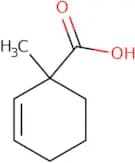
CAS:<p>Sodium naphthalene-1-sulfinate is an additive that can be used in the synthesis of pyrazoles and sulfonyl derivatives. It is a reagent for the sulfonylation of aromatic substrates, including tosylates, sulfones, and sulfoxides. Sodium naphthalene-1-sulfinate is also used as a solvent in mediated reactions. The functionalities of this compound are its ability to yield peroxides through oxidation with air or hydrogen peroxide. This compound can also be used as a synlett reagent in an advanced approach to synthesize functionalized pyrazoles.</p>Formula:C10H7NaO2SPurity:Min. 95%Molecular weight:214.22 g/mol1-Methylcyclohex-2-ene-1-carboxylic acid
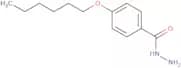
CAS:<p>Versatile small molecule scaffold</p>Formula:C8H12O2Purity:Min. 95%Molecular weight:140.18 g/mol4-(Hexyloxy)benzohydrazide
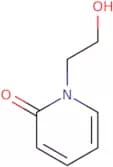
CAS:<p>4-(Hexyloxy)benzohydrazide is a chloride salt that is used as an antibacterial agent. It has been shown to be active against both Gram-positive and Gram-negative bacteria. 4-(Hexyloxy)benzohydrazide has also been shown to be effective against strains of methicillin-resistant Staphylococcus aureus (MRSA). This compound is prepared by reacting formaldehyde with hexahydrated 4-methoxybenzaldehyde in water, followed by crystallization from water or acetone. The crystals are colorless and have a melting point of 177 °C. 4-(Hexyloxy)benzohydrazide has a low solubility in water, but its solubility increases when it is mixed with other compounds such as acetaldehyde, which may contribute to its antimicrobial activity.</p>Formula:C13H20N2O2Purity:Min. 95%Molecular weight:236.32 g/mol1-(2-Hydroxyethyl)-1,2-dihydropyridin-2-one
CAS:Versatile small molecule scaffoldFormula:C7H9NO2Purity:Min. 95%Molecular weight:139.15 g/mol2-[(6-Chloropyrazin-2-yl)oxy]ethan-1-ol
CAS:<p>Versatile small molecule scaffold</p>Formula:C6H7ClN2O2Purity:Min. 95%Molecular weight:174.58 g/mol2-(2-(2H-Benzo[d][1,2,3]triazol-2-yl)-4-methylphenoxy)acetic acid
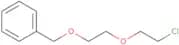
CAS:<p>Versatile small molecule scaffold</p>Formula:C15H13N3O3Purity:Min. 95%Molecular weight:283.28 g/mol((2-(2-Chloroethoxy)ethoxy)methyl)benzene
CAS:<p>Versatile small molecule scaffold</p>Formula:C11H15ClO2Purity:Min. 95%Molecular weight:214.69 g/mol[4-(2-Amino-ethyl)-phenyl]-methanol
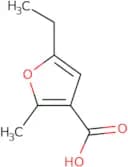
CAS:<p>Versatile small molecule scaffold</p>Formula:C9H13NOPurity:Min. 95%Molecular weight:151.21 g/mol5-Ethyl-2-methyl-furan-3-carboxylic acid
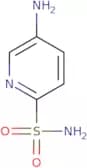
CAS:<p>Versatile small molecule scaffold</p>Formula:C8H10O3Purity:Min. 95%Molecular weight:154.16 g/mol5-Aminopyridine-2-sulfonamide
CAS:<p>5-Aminopyridine-2-sulfonamide (5APS) is an inhibitor of carbonic anhydrase. It binds to the active site of the enzyme, which is a cavity in the protein's surface, and prevents the conversion of CO2 to HCO3-. The inhibition of this process leads to a decrease in the production of bicarbonate ions and an increase in acidity. 5APS has been shown to have inhibitory properties against several isoforms of carbonic anhydrase, including those found in bacteria and erythrocytes. X-ray crystallographic studies have led to the rationalization of its binding mode within the active site. 5APS has been shown to be effective as a treatment for glaucoma by reducing intraocular pressure.</p>Formula:C5H7N3O2SPurity:Min. 95%Molecular weight:173.19 g/mol7-Diethylamino-4-hydroxy-chromen-2-one
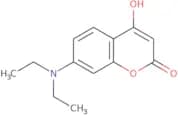
CAS:<p>7-Diethylamino-4-hydroxy-chromen-2-one is a fluorescent chemical compound that belongs to the family of atypical fluorophores. It has a number of photophysical properties, including fluorescence and regression, which are characteristic of amines. 7-Diethylamino-4-hydroxy-chromen-2-one can be synthesized from diazonium salt and 4-hydroxycoumarin. This chemical compound has been used as a fluorescent probe for nucleophilic reactions in various types of organic molecules. The nature of this fluorophore is unknown, but it may be due to its ability to shift the wavelength of fluorescence by up to 400 nm.</p>Formula:C13H15NO3Purity:Min. 95%Molecular weight:233.26 g/mol5-Methyl-3-oxohexanenitrile
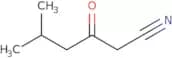
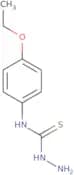
CAS:<p>5-Methyl-3-oxohexanenitrile is a dialkylamino compound that has been used as a reagent in organic chemistry. It is tautomeric and can exist as both an amide and an isoxazole. The pyridine ring of 5-methyl-3-oxohexanenitrile can be either substituted with a carbamate, nitro, or alkenyl group, depending on the substitution pattern. 5-Methyl-3-oxohexanenitrile reacts with dinitrophenyl to form an N–N bond, which is then cleaved by amines in order to generate the corresponding carbamate or amide. 5-Methyl-3-oxohexanenitrile also reacts with copper to form the corresponding nitro or alkenyl group.</p>Formula:C7H11NOPurity:Min. 95%Molecular weight:125.17 g/mol3-Amino-1-(4-ethoxyphenyl)thiourea
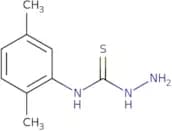
CAS:<p>Versatile small molecule scaffold</p>Formula:C9H13N3OSPurity:Min. 95%Molecular weight:211.29 g/mol3-Amino-1-(2,5-dimethylphenyl)thiourea
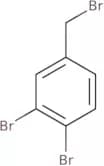
CAS:<p>Versatile small molecule scaffold</p>Formula:C9H13N3SPurity:Min. 95%Molecular weight:195.29 g/mol1,2-Dibromo-4-(bromomethyl)benzene
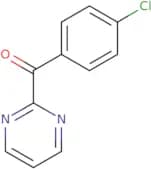
CAS:1,2-Dibromo-4-(bromomethyl)benzene is a brominated organic compound that has been shown to act as a potent agonist for the peroxisome proliferator-activated receptor delta (PPARδ). It has been shown to have structural and biological effects on PPARδ. This compound has been used as a template in the synthesis of many other compounds. 1,2-Dibromo-4-(bromomethyl)benzene is non-selective and bioavailable, which means it can be taken orally or applied topically.Formula:C7H5Br3Purity:Min. 95%Molecular weight:328.83 g/mol2-(4-Chlorobenzoyl)pyrimidine
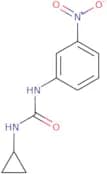
CAS:<p>Versatile small molecule scaffold</p>Formula:C11H7ClN2OPurity:Min. 95%Molecular weight:218.64 g/mol3-Cyclopropyl-1-(3-nitrophenyl)urea
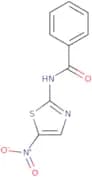
CAS:<p>Versatile small molecule scaffold</p>Formula:C10H11N3O3Purity:Min. 95%Molecular weight:221.21 g/molN-(5-Nitro-thiazol-2-yl)-benzamide
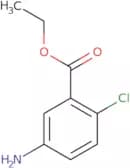
CAS:<p>N-(5-Nitro-thiazol-2-yl)-benzamide is a noncompetitive inhibitor of the enzyme succinate dehydrogenase and is used as an molluscicide. It binds to the active site of the enzyme, which is located in the mitochondrial membrane, and prevents electron transfer from succinate to ubiquinone. This leads to a decrease in production of ATP, which is needed for cell growth and division. N-(5-Nitro-thiazol-2-yl)-benzamide has been shown to inhibit inflammation by inhibiting prostaglandin synthesis in mice. The drug also inhibits neutrophil infiltration into inflamed areas, which may be due to its effect on 5HT2A receptors.</p>Formula:C10H7N3O3SPurity:Min. 95%Molecular weight:249.25 g/molEthyl 5-amino-2-chlorobenzoate
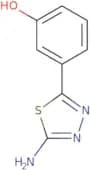
CAS:<p>Versatile small molecule scaffold</p>Formula:C9H10ClNO2Purity:Min. 95%Molecular weight:199.63 g/mol3-(5-Amino-1,3,4-thiadiazol-2-yl)phenol
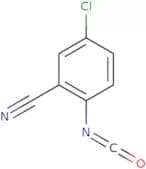
CAS:<p>Versatile small molecule scaffold</p>Formula:C8H7N3OSPurity:Min. 95%Molecular weight:193.23 g/mol5-Chloro-2-isocyanatobenzonitrile
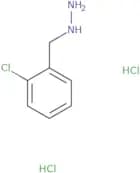
CAS:<p>Versatile small molecule scaffold</p>Formula:C8H3ClN2OPurity:Min. 95%Molecular weight:178.58 g/mol(2-chlorobenzyl)hydrazine 2hcl
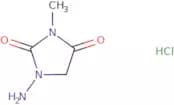
CAS:<p>Versatile small molecule scaffold</p>Formula:C7H11Cl3N2Purity:Min. 95%Molecular weight:229.53 g/mol1-Amino-3-methylimidazolidine-2,4-dione hydrochloride
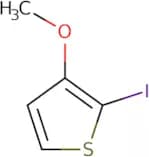
CAS:<p>Versatile small molecule scaffold</p>Formula:C4H8ClN3O2Purity:Min. 95%Molecular weight:165.58 g/mol2-Iodo-3-methoxythiophene
CAS:<p>Versatile small molecule scaffold</p>Formula:C5H5IOSPurity:Min. 95%Molecular weight:240.06 g/mol2-Methyl-1-[4-(trifluoromethyl)phenyl]propan-1-one
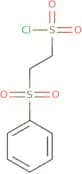
CAS:<p>Versatile small molecule scaffold</p>Formula:C11H11F3OPurity:Min. 95%Molecular weight:216.2 g/mol2-(Benzenesulfonyl)ethane-1-sulfonyl chloride
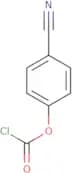
CAS:<p>Versatile small molecule scaffold</p>Formula:C8H9ClO4S2Purity:Min. 95%Molecular weight:268.7 g/mol4-Cyanophenyl chloroformate
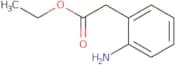
CAS:<p>4-Cyanophenyl chloroformate is a macrocyclic compound that has been shown to have a potential use as an almqvist reagent. Almqvist reagents are nucleophilic compounds that can be used in organic synthesis as carbonylating agents, which are used to form esters and amides. 4-Cyanophenyl chloroformate is a chiral compound with the ability to form macrocycles, which are biomimetic structures. The conformational stepwise reaction of the macrocycle formation enables it to mimic natural processes.</p>Formula:C8H4ClNO2Purity:Min. 95%Molecular weight:181.57 g/molethyl 2-(2-aminophenyl)acetate
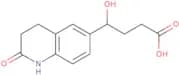
CAS:<p>Ethyl 2-(2-aminophenyl)acetate is a cytotoxic agent that binds to DNA and inhibits the synthesis of RNA and protein. It has been shown to inhibit the growth of murine leukemia cells in culture at concentrations between 0.3 and 3 mM, which are dependent on the concentration of benzyl substituents. Ethyl 2-(2-aminophenyl)acetate also exhibits dose-dependent cytotoxic activity against murine leukemia cells. The cytotoxic effects of this compound have been studied in vivo and in vitro using murine leukemia cells (WEHI-3).</p>Formula:C10H13NO2Purity:Min. 95%Molecular weight:179.2 g/mol4-Hydroxy-4-(2-oxo-1,2,3,4-tetrahydroquinolin-6-yl)butanoic acid
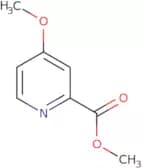
CAS:<p>Versatile small molecule scaffold</p>Formula:C13H15NO4Purity:Min. 95%Molecular weight:249.26 g/molMethyl 4-formylpyridine-2-carboxylate
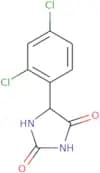
CAS:<p>Versatile small molecule scaffold</p>Formula:C8H7NO3Purity:Min. 95%Molecular weight:165.15 g/mol5-(2,4-Dichlorophenyl)imidazolidine-2,4-dione
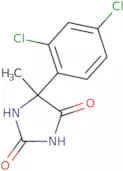
CAS:<p>Versatile small molecule scaffold</p>Formula:C9H6Cl2N2O2Purity:Min. 95%Molecular weight:245.06 g/mol5-(2,4-Dichlorophenyl)-5-methylimidazolidine-2,4-dione
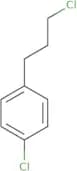
CAS:<p>Versatile small molecule scaffold</p>Formula:C10H8Cl2N2O2Purity:Min. 95%Molecular weight:259.09 g/mol1-Chloro-3-(4-chlorophenyl)propane
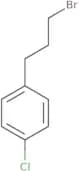
CAS:<p>Versatile small molecule scaffold</p>Formula:C9H10Cl2Purity:Min. 95%Molecular weight:189.08 g/mol1-(3-Bromopropyl)-4-chlorobenzene
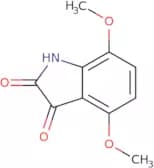
CAS:<p>1-(3-Bromopropyl)-4-chlorobenzene is an expedited source of chlorine that is used in the oxidation of aromatic compounds. The chlorination of 1-(3-bromopropyl)-4-chlorobenzene occurs with a yield of about 98% and has high selectivity for the chlorination product. In a photoredox process, this compound can be used as an oxidant to produce an intermediate that can then be used in the oxidative chlorination reactions. This compound has been shown to have bioactivity and is used as a science catalyst.</p>Formula:C9H10BrClPurity:Min. 95%Molecular weight:233.54 g/mol4,7-Dimethoxy-2,3-dihydro-1H-indole-2,3-dione
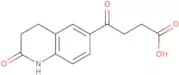
CAS:<p>Versatile small molecule scaffold</p>Formula:C10H9NO4Purity:Min. 95%Molecular weight:207.18 g/mol4-Oxo-4-(2-oxo-1,2,3,4-tetrahydroquinolin-6-yl)butanoic acid
CAS:<p>Versatile small molecule scaffold</p>Formula:C13H13NO4Purity:Min. 95%Molecular weight:247.25 g/molN-[(3-Chlorophenyl)methyl]-2-cyanoacetamide
CAS:<p>Versatile small molecule scaffold</p>Formula:C10H9ClN2OPurity:Min. 95%Molecular weight:208.64 g/mol2-Cyano-N-[(3-methylphenyl)methyl]acetamide
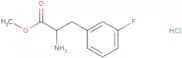
CAS:<p>Versatile small molecule scaffold</p>Formula:C11H12N2OPurity:Min. 95%Molecular weight:188.23 g/molMethyl 2-amino-3-(3-fluorophenyl)propanoate hydrochloride
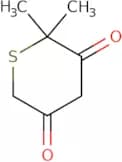
CAS:<p>Versatile small molecule scaffold</p>Formula:C10H13ClFNO2Purity:Min. 95%Molecular weight:233.67 g/mol2,2-Dimethylthiane-3,5-dione
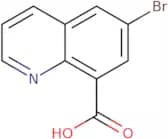
CAS:<p>Versatile small molecule scaffold</p>Formula:C7H10O2SPurity:Min. 95%Molecular weight:158.22 g/mol6-bromoquinoline-8-carboxylic acid
CAS:<p>Versatile small molecule scaffold</p>Formula:C10H6BrNO2Purity:Min. 95%Molecular weight:252.06 g/mol2-[(Cyclopropylcarbonyl)amino]acetic acid
CAS:<p>2-[(Cyclopropylcarbonyl)amino]acetic acid is a carboxylic acid that is used as an oral drug for the treatment of cardiac and renal diseases. It has been shown to be effective in the treatment of angiotensin-dependent hypertension and congestive heart failure. The therapeutic effects may be due to its ability to inhibit angiotensin-converting enzyme (ACE) and block the conversion of angiotensin I to angiotensin II, which causes vasoconstriction and increased blood pressure. 2-[(Cyclopropylcarbonyl)amino]acetic acid also inhibits phosphodiesterase, which may lead to improved cardiac function.</p>Formula:C6H9NO3Purity:Min. 95%Molecular weight:143.14 g/mol2-Methyl-5-oxopyrrolidine-2-carboxylic acid
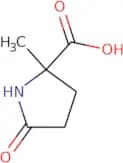
CAS:<p>2-Methyl-5-oxopyrrolidine-2-carboxylic acid (2MOP) is a levulinic acid derivative with a carboxylic acid group on the side chain. It can be synthesized from levulinic acid, which is produced from the hydrolysis of cellulose. 2MOP is used as a plasticizer and an intermediate in the synthesis of esters such as methyl acetate and ethyl acetate. 2MOP has been found to have good compatibility with polyvinyl chloride, polystyrene, and polyolefins. This compound has been used to produce plastics that are flexible, tough, and resistant to heat degradation.</p>Formula:C6H9NO3Purity:Min. 95%Molecular weight:143.14 g/mol5-Oxo-2-pyrrolidineacetic Acid
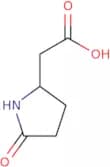
CAS:<p>Versatile small molecule scaffold</p>Formula:C6H9NO3Purity:Min. 95%Molecular weight:143.14 g/mol(2S)-2-(4-Acetamidobenzenesulfonamido)propanoic acid
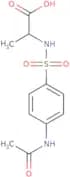
CAS:<p>Versatile small molecule scaffold</p>Formula:C11H14N2O5SPurity:Min. 95%Molecular weight:286.31 g/mol

![2-[4-(2-{[(tert-Butoxy)carbonyl]amino}ethyl)phenoxy]acetic acid](/_next/image/?url=https%3A%2Fstatic.cymitquimica.com%2Fproducts%2F3D%2Fthumb-webp%2FPCA31833.webp&w=3840&q=75)
![3-[3-(Trifluoromethyl)phenyl]piperidine](/_next/image/?url=https%3A%2Fstatic.cymitquimica.com%2Fproducts%2F3D%2Fthumb-webp%2FPCA32145.webp&w=3840&q=75)
![2-[(6-Chloropyrazin-2-yl)oxy]ethan-1-ol](/_next/image/?url=https%3A%2Fstatic.cymitquimica.com%2Fproducts%2F3D%2Fthumb-webp%2FPCA33221.webp&w=3840&q=75)
![2-(2-(2H-Benzo[d][1,2,3]triazol-2-yl)-4-methylphenoxy)acetic acid](/_next/image/?url=https%3A%2Fstatic.cymitquimica.com%2Fproducts%2F3D%2Fthumb-webp%2FPCA34149.webp&w=3840&q=75)
![[4-(2-Amino-ethyl)-phenyl]-methanol](/_next/image/?url=https%3A%2Fstatic.cymitquimica.com%2Fproducts%2F3D%2Fthumb-webp%2FPCA35330.webp&w=3840&q=75)
![2-Methyl-1-[4-(trifluoromethyl)phenyl]propan-1-one](/_next/image/?url=https%3A%2Fstatic.cymitquimica.com%2Fproducts%2F3D%2Fthumb-webp%2FPCA43658.webp&w=3840&q=75)
![N-[(3-Chlorophenyl)methyl]-2-cyanoacetamide](/_next/image/?url=https%3A%2Fstatic.cymitquimica.com%2Fproducts%2F3D%2Fthumb-webp%2FPCA48808.webp&w=3840&q=75)
![2-Cyano-N-[(3-methylphenyl)methyl]acetamide](/_next/image/?url=https%3A%2Fstatic.cymitquimica.com%2Fproducts%2F3D%2Fthumb-webp%2FPCA48811.webp&w=3840&q=75)
![2-[(Cyclopropylcarbonyl)amino]acetic acid](/_next/image/?url=https%3A%2Fstatic.cymitquimica.com%2Fproducts%2F3D%2Fthumb-webp%2FPCA51370.webp&w=3840&q=75)