


Building Blocks
This section contains fundamental products for the synthesis of organic and biological compounds. Building blocks are the essential starting materials used to construct complex molecules through various chemical reactions. They play a critical role in drug discovery, material science, and chemical research. At CymitQuimica, we offer a diverse range of high-quality building blocks to support your innovative research and industrial projects, ensuring you have the essential components for successful synthesis.
Subcategories of "Building Blocks"
- Boronic Acids & Boronic Acid Derivatives(5,756 products)
- Chiral Building Blocks(1,242 products)
- Hydrocarbon Building Blocks(6,095 products)
- Organic Building Blocks(61,037 products)
Found 196200 products of "Building Blocks"
Sort by
Purity (%)
0
100
|
0
|
50
|
90
|
95
|
100
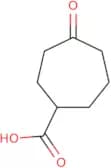
4-Oxocycloheptane-1-carboxylic acid
CAS:<p>Versatile small molecule scaffold</p>Formula:C8H12O3Purity:Min. 95%Molecular weight:156.18 g/molEthyl 2-oxabicyclo[3.1.0]hexane-6-carboxylate
CAS:<p>Versatile small molecule scaffold</p>Formula:C8H12O3Purity:Min. 95%Molecular weight:156.18 g/mol3-Azabicyclo[3.3.1]nonan-9-ol
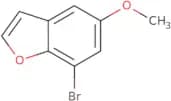
CAS:<p>Versatile small molecule scaffold</p>Formula:C8H15NOPurity:Min. 95%Molecular weight:141.21 g/mol7-Bromo-5-methoxy-1-benzofuran
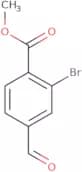
CAS:<p>7-Bromo-5-methoxy-1-benzofuran is a drug that belongs to the group of nootropics, which are drugs that have the ability to enhance cognitive and intellectual functions. This drug has been shown to have regenerative and medicament effects on nerve cells and neurological disorders such as Parkinson's disease. 7-Bromo-5-methoxy-1-benzofuran has been shown to be a nootropic agent in animal studies. It has been shown to increase the activity of nerve cells by preventing the degeneration of neurons in rats with experimentally induced spinal cord injury. 7-Bromo-5-methoxy-1-benzofuran also enhances learning abilities in mice with experimentally induced Alzheimer's disease.</p>Formula:C9H7BrO2Purity:Min. 95%Molecular weight:227.05 g/molmethyl 2-bromo-4-formylbenzoate
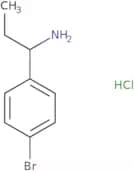
CAS:<p>Versatile small molecule scaffold</p>Formula:C9H7BrO3Purity:Min. 95%Molecular weight:243.1 g/mol1-(4-Bromophenyl)propan-1-amine hydrochloride
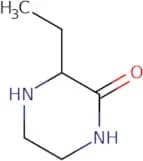
CAS:<p>Versatile small molecule scaffold</p>Formula:C9H13BrClNPurity:Min. 95%Molecular weight:250.56 g/mol3-Ethylpiperazin-2-one
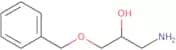
CAS:<p>Versatile small molecule scaffold</p>Formula:C6H12N2OPurity:Min. 95%Molecular weight:128.17 g/mol1-Amino-3-benzyloxy-propan-2-ol
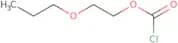
CAS:<p>Versatile small molecule scaffold</p>Formula:C10H15NO2Purity:Min. 95%Molecular weight:181.24 g/mol2-Propoxyethyl chloroformate
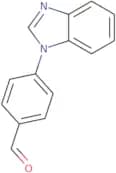
CAS:<p>Versatile small molecule scaffold</p>Formula:C6H11ClO3Purity:Min. 95%Molecular weight:166.6 g/mol4-(1H-1,3-Benzimidazol-1-yl)benzenecarbaldehyde
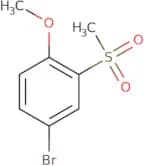
CAS:<p>4-(1H-1,3-Benzimidazol-1-yl)benzenecarbaldehyde (BABA) is an imidazole that can be used for labeling and detection. It has been shown to react with hydrosulfite in the presence of chloroform to produce a fluorescent compound. This compound can be detected using UV light at 365 nm. BABA has also been shown to react with chalcone in the presence of potassium cyanide in order to produce a fluorescent compound. BABA is also used as a reagent in the detection of Leishmania organisms and has been shown to have low detection limits. This compound is often used as a leukocyte lysis agent and can be activated by guanidine hydrochloride.</p>Formula:C14H10N2OPurity:Min. 95%Molecular weight:222.24 g/mol4-Bromo-2-methanesulfonyl-1-methoxybenzene
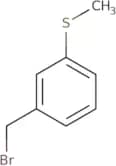
CAS:<p>Versatile small molecule scaffold</p>Formula:C8H9BrO3SPurity:Min. 95%Molecular weight:265.13 g/mol1-(Bromomethyl)-3-(methylsulfanyl)benzene
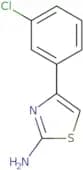
CAS:<p>Versatile small molecule scaffold</p>Formula:C8H9BrSPurity:Min. 95%Molecular weight:217.13 g/mol2-Amino-4-(3-chlorophenyl) thiazole
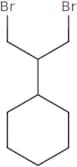
CAS:<p>Versatile small molecule scaffold</p>Formula:C9H7ClN2SPurity:Min. 95%Molecular weight:210.69 g/mol(1,3-Dibromopropan-2-yl)cyclohexane
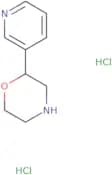
CAS:<p>Versatile small molecule scaffold</p>Formula:C9H16Br2Purity:Min. 95%Molecular weight:284.03 g/mol2-(Pyridin-3-yl)morpholine dihydrochloride
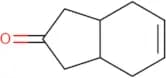
CAS:<p>Versatile small molecule scaffold</p>Formula:C9H14Cl2N2OPurity:Min. 95%Molecular weight:237.12 g/mol2,3,3a,4,7,7a-Hexahydro-1H-inden-2-one
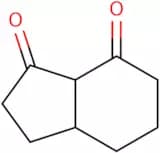
CAS:<p>Versatile small molecule scaffold</p>Formula:C9H12OPurity:Min. 95%Molecular weight:136.2 g/molOctahydro-1H-indene-1,7-dione
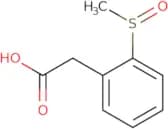
CAS:<p>Versatile small molecule scaffold</p>Formula:C9H12O2Purity:Min. 95%Molecular weight:152.19 g/mol2-(2-Methanesulfinylphenyl)acetic acid
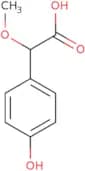
CAS:<p>Versatile small molecule scaffold</p>Formula:C9H10O3SPurity:Min. 95%Molecular weight:198.24 g/mol2-(4-Hydroxyphenyl)-2-methoxyacetic acid
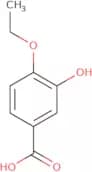
CAS:<p>Versatile small molecule scaffold</p>Formula:C9H10O4Purity:Min. 95%Molecular weight:182.17 g/mol4-Ethoxy-3-hydroxybenzoic acid
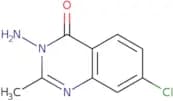
CAS:<p>Versatile small molecule scaffold</p>Formula:C9H10O4Purity:Min. 95%Molecular weight:182.17 g/mol3-Amino-7-chloro-2-methylquinazolin-4(3H)-one
CAS:Controlled Product<p>Versatile small molecule scaffold</p>Formula:C9H8ClN3OPurity:Min. 95%Molecular weight:209.63 g/mol[(5-bromothiophen-2-yl)methyl](methyl)amine
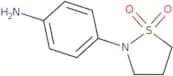
CAS:<p>Versatile small molecule scaffold</p>Formula:C6H8BrNSPurity:Min. 95%Molecular weight:206.1 g/molN-(4-Aminophenyl)-1,3-propanesultam
CAS:<p>Versatile small molecule scaffold</p>Formula:C9H12N2O2SPurity:Min. 95%Molecular weight:212.27 g/mol2-[(4-Methanesulfonyl-2-nitrophenyl)amino]acetic acid
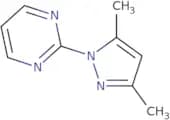
CAS:<p>Versatile small molecule scaffold</p>Formula:C9H10N2O6SPurity:Min. 95%Molecular weight:274.25 g/mol2-(3,5-Dimethyl-1H-pyrazol-1-yl)pyrimidine
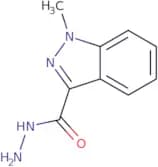
CAS:<p>2-(3,5-Dimethyl-1H-pyrazol-1-yl)pyrimidine (2DMP) is an organic compound that belongs to the group of steric compounds. It has been shown that 2DMP can be prepared by the reaction of copper and a pyrimidine derivative. The molecule is composed of two rings: a pyrimidine ring and a pyrazole ring. The three methyl groups on the pyrazole ring are in ortho, meta, and para positions. In 2DMP, the methyl groups are in a meta position. This isomer has been studied using NMR spectroscopy and it was found that it reacts with ruthenium to form a fluxional complex. Thermodynamically, this isomer is more stable than its counterpart with all methyl groups in ortho positions.<br>2DMP also reacts with palladium to form an acyl group from which it can be converted back to the original p</p>Formula:C9H10N4Purity:Min. 95%Molecular weight:174.2 g/mol1-Methyl-1H-indazole-3-carbohydrazide
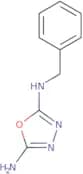
CAS:Controlled Product<p>Versatile small molecule scaffold</p>Formula:C9H10N4OPurity:Min. 95%Molecular weight:190.2 g/mol2-N-Benzyl-1,3,4-oxadiazole-2,5-diamine
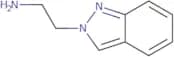
CAS:<p>Versatile small molecule scaffold</p>Formula:C9H10N4OPurity:Min. 95%Molecular weight:190.2 g/mol2-(2H-Indazol-2-yl)ethan-1-amine
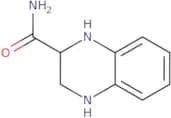
CAS:<p>Versatile small molecule scaffold</p>Formula:C9H11N3Purity:Min. 95%Molecular weight:161.2 g/mol1,2,3,4-Tetrahydroquinoxaline-2-carboxamide
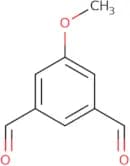
CAS:<p>Versatile small molecule scaffold</p>Formula:C9H11N3OPurity:Min. 95%Molecular weight:177.2 g/mol5-Methoxybenzene-1,3-dicarbaldehyde
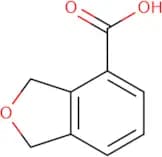
CAS:<p>5-Methoxybenzene-1,3-dicarbaldehyde is a supramolecular compound that features a square planar structure. It is soluble in solvents such as benzene and alkoxys, which are chemically like it. The ligand may be synthesized by reacting the dicarbaldehyde with dimethyl sulfate or thiocyanogen. The functional groups of 5-Methoxybenzene-1,3-dicarbaldehyde are its methoxy group, which has two hydrogens bonded to it, and its carbonyl group, which is a carbon double bonded to an oxygen atom. X-ray analysis shows that the molecule has two points where fluorine atoms can attach to it. This allows for the production of multidentate ligands that may bind to other molecules through many points on the ligand. 5-Methoxybenzene-1,3-dicarbaldehyde exhibits excellent solub</p>Formula:C9H8O3Purity:Min. 95%Molecular weight:164.16 g/mol1,3-Dihydro-2-benzofuran-4-carboxylic acid
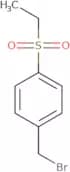
CAS:<p>Versatile small molecule scaffold</p>Formula:C9H8O3Purity:Min. 95%Molecular weight:164.16 g/mol1-(Bromomethyl)-4-(ethanesulfonyl)benzene
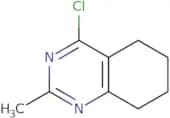
CAS:<p>Versatile small molecule scaffold</p>Formula:C9H11BrO2SPurity:Min. 95%Molecular weight:263.15 g/mol4-Chloro-2-methyl-5,6,7,8-tetrahydroquinazoline
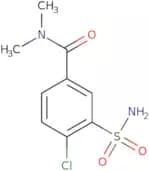
CAS:<p>Versatile small molecule scaffold</p>Formula:C9H11ClN2Purity:Min. 95%Molecular weight:182.65 g/mol4-Chloro-N,N-dimethyl-3-sulfamoylbenzamide
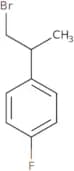
CAS:<p>Versatile small molecule scaffold</p>Formula:C9H11ClN2O3SPurity:Min. 95%Molecular weight:262.71 g/mol1-(1-Bromopropan-2-yl)-4-fluorobenzene
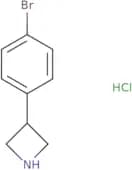
CAS:<p>Versatile small molecule scaffold</p>Formula:C9H10BrFPurity:Min. 95%Molecular weight:217.08 g/mol3-(4-Bromophenyl)azetidine HCl
CAS:<p>Versatile small molecule scaffold</p>Formula:C9H11BrClNPurity:Min. 95%Molecular weight:248.55 g/molN-[(4-Bromophenyl)methyl]acetamide
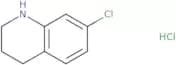
CAS:<p>N-[(4-Bromophenyl)methyl]acetamide is a chemical synthesis of lipase. The synthesis was done in a vessel, and the synthetic pathways were highlighted. The molecule was synthesized using chemistry and biomimetic methods. It was amidated to form its final product. The reaction vessel is palladium-based, which makes it an efficient catalyst for the amidation reaction.</p>Formula:C9H10BrNOPurity:Min. 95%Molecular weight:228.09 g/mol7-Chloro-1,2,3,4-tetrahydroquinoline hydrochloride
CAS:<p>Versatile small molecule scaffold</p>Formula:C9H11Cl2NPurity:Min. 95%Molecular weight:204.1 g/molN-[2-(Chloromethyl)phenyl]acetamide
CAS:<p>Versatile small molecule scaffold</p>Formula:C9H10ClNOPurity:Min. 95%Molecular weight:183.63 g/mol2-{[(4-Chlorophenyl)methyl]amino}acetic acid hydrochloride
CAS:<p>Versatile small molecule scaffold</p>Formula:C9H11Cl2NO2Purity:Min. 95%Molecular weight:236.09 g/mol3-Amino-2-(4-chlorophenyl)propanoic acid hydrochloride
CAS:<p>Versatile small molecule scaffold</p>Formula:C9H11Cl2NO2Purity:Min. 95%Molecular weight:236.09 g/mol7,8-Dihydro-6H-quinolin-5-one hydrochloride
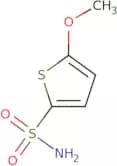
CAS:<p>Versatile small molecule scaffold</p>Formula:C9H10ClNOPurity:Min. 95%Molecular weight:183.63 g/mol5-Methoxythiophene-2-sulfonamide
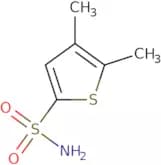
CAS:<p>Versatile small molecule scaffold</p>Formula:C5H7NO3S2Purity:Min. 95%Molecular weight:193.2 g/mol4,5-Dimethylthiophene-2-sulfonamide
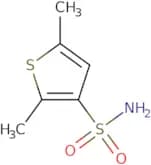
CAS:<p>Versatile small molecule scaffold</p>Formula:C6H9NO2S2Purity:Min. 95%Molecular weight:191.3 g/mol2,5-Dimethylthiophene-3-sulfonamide
CAS:<p>Versatile small molecule scaffold</p>Formula:C6H9NO2S2Purity:Min. 95%Molecular weight:191.3 g/mol6-Bromoimidazo[1,2-a]pyrimidin-5(1H)-one
CAS:<p>Versatile small molecule scaffold</p>Formula:C6H4BrN3OPurity:Min. 95%Molecular weight:214.02 g/mol2-Oxo-6-[3-(trifluoromethyl)phenyl]-1,2-dihydropyridine-3-carbonitrile
CAS:<p>Versatile small molecule scaffold</p>Formula:C13H7F3N2OPurity:Min. 95%Molecular weight:264.2 g/molN-Butyl-N-methyl-2-sulfanylacetamide
CAS:<p>Versatile small molecule scaffold</p>Formula:C7H15NOSPurity:Min. 95%Molecular weight:161.27 g/mol[2-(3-Aminomethyl-phenoxy)-ethyl]-dimethyl-amine
CAS:Controlled Product<p>Versatile small molecule scaffold</p>Formula:C11H18N2OPurity:Min. 95%Molecular weight:194.28 g/mol{2-[(2-Methylpiperidin-1-yl)methyl]phenyl}methanamine
CAS:<p>Versatile small molecule scaffold</p>Formula:C14H22N2Purity:Min. 95%Molecular weight:218.34 g/mol

![Ethyl 2-oxabicyclo[3.1.0]hexane-6-carboxylate](/_next/image/?url=https%3A%2Fstatic.cymitquimica.com%2Fproducts%2F3D%2Fthumb-webp%2FQDA48242.webp&w=3840&q=75)
![3-Azabicyclo[3.3.1]nonan-9-ol](/_next/image/?url=https%3A%2Fstatic.cymitquimica.com%2Fproducts%2F3D%2Fthumb-webp%2FQDA48313.webp&w=3840&q=75)
amine](/_next/image/?url=https%3A%2Fstatic.cymitquimica.com%2Fproducts%2F3D%2Fthumb-webp%2FQDA55343.webp&w=3840&q=75)
![2-[(4-Methanesulfonyl-2-nitrophenyl)amino]acetic acid](/_next/image/?url=https%3A%2Fstatic.cymitquimica.com%2Fproducts%2F3D%2Fthumb-webp%2FQDA55840.webp&w=3840&q=75)
![N-[(4-Bromophenyl)methyl]acetamide](/_next/image/?url=https%3A%2Fstatic.cymitquimica.com%2Fproducts%2F3D%2Fthumb-webp%2FQDA56176.webp&w=3840&q=75)
![N-[2-(Chloromethyl)phenyl]acetamide](/_next/image/?url=https%3A%2Fstatic.cymitquimica.com%2Fproducts%2F3D%2Fthumb-webp%2FQDA56237.webp&w=3840&q=75)
![2-{[(4-Chlorophenyl)methyl]amino}acetic acid hydrochloride](/_next/image/?url=https%3A%2Fstatic.cymitquimica.com%2Fproducts%2F3D%2Fthumb-webp%2FQDA56254.webp&w=3840&q=75)


![6-Bromoimidazo[1,2-a]pyrimidin-5(1H)-one](/_next/image/?url=https%3A%2Fstatic.cymitquimica.com%2Fproducts%2F3D%2Fthumb-webp%2FQFA68572.webp&w=3840&q=75)
![2-Oxo-6-[3-(trifluoromethyl)phenyl]-1,2-dihydropyridine-3-carbonitrile](/_next/image/?url=https%3A%2Fstatic.cymitquimica.com%2Fproducts%2F3D%2Fthumb-webp%2FQFA69240.webp&w=3840&q=75)

![[2-(3-Aminomethyl-phenoxy)-ethyl]-dimethyl-amine](/_next/image/?url=https%3A%2Fstatic.cymitquimica.com%2Fproducts%2F3D%2Fthumb-webp%2FQFA83670.webp&w=3840&q=75)
![{2-[(2-Methylpiperidin-1-yl)methyl]phenyl}methanamine](/_next/image/?url=https%3A%2Fstatic.cymitquimica.com%2Fproducts%2F3D%2Fthumb-webp%2FQFA83726.webp&w=3840&q=75)