


Building Blocks
This section contains fundamental products for the synthesis of organic and biological compounds. Building blocks are the essential starting materials used to construct complex molecules through various chemical reactions. They play a critical role in drug discovery, material science, and chemical research. At CymitQuimica, we offer a diverse range of high-quality building blocks to support your innovative research and industrial projects, ensuring you have the essential components for successful synthesis.
Subcategories of "Building Blocks"
- Boronic Acids & Boronic Acid Derivatives(5,756 products)
- Chiral Building Blocks(1,242 products)
- Hydrocarbon Building Blocks(6,095 products)
- Organic Building Blocks(61,038 products)
Found 196817 products of "Building Blocks"
Sort by
Purity (%)
0
100
|
0
|
50
|
90
|
95
|
100
5-(Pyrrolidin-1-yl)-1,3,4-thiadiazole-2-thiol
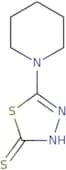
CAS:<p>Versatile small molecule scaffold</p>Formula:C6H9N3S2Purity:Min. 95%Molecular weight:187.3 g/mol5-(Piperidin-1-yl)-1,3,4-thiadiazole-2-thiol
CAS:<p>Versatile small molecule scaffold</p>Formula:C7H11N3S2Purity:Min. 95%Molecular weight:201.3 g/mol5-[(2-Methylpropyl)amino]-1,3,4-thiadiazole-2-thiol
CAS:<p>5-[(2-Methylpropyl)amino]-1,3,4-thiadiazole-2-thiol is a modification of the oligosaccharide. It is a monosaccharide with a methyl group at the C5 position and a fluorine atom at the C4 position. 5-[(2-Methylpropyl)amino]-1,3,4-thiadiazole-2-thiol is synthesized by reacting 2-(methylpropyl)amine with thiadiazole dithiole. This compound has CAS No. 66180-54-9 and can be used as an intermediate in the synthesis of complex carbohydrates. The carbohydrate structure of 5-[(2-Methylpropyl)amino]-1,3,4-thiadiazole-2-thiol consists of a glycosidic linkage between two saccharides: a hexose and an acetal</p>Formula:C6H11N3S2Purity:Min. 95%Molecular weight:189.3 g/mol2-(Benzyloxy)propanamide
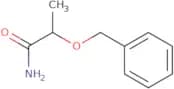
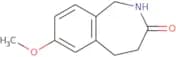
CAS:<p>Versatile small molecule scaffold</p>Formula:C10H13NO2Purity:Min. 95%Molecular weight:179.22 g/mol7-Methoxy-2,3,4,5-tetrahydro-1H-2-benzazepin-3-one
CAS:<p>Versatile small molecule scaffold</p>Formula:C11H13NO2Purity:Min. 95%Molecular weight:191.23 g/mol2-[(2-Bromophenyl)methyl]butanoic acid
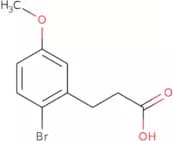
CAS:<p>Versatile small molecule scaffold</p>Formula:C11H13BrO2Purity:Min. 95%Molecular weight:257.12 g/mol3-(2-Bromo-5-methoxyphenyl)propanoic acid
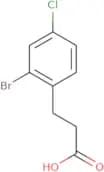
CAS:<p>Versatile small molecule scaffold</p>Formula:C10H11BrO3Purity:Min. 95%Molecular weight:259.1 g/mol3-(2-Bromo-4-chlorophenyl)propanoic acid
CAS:<p>Versatile small molecule scaffold</p>Formula:C9H8BrClO2Purity:Min. 95%Molecular weight:263.51 g/mol3-(2-bromo-5-chlorophenyl)propanoic acid
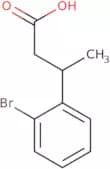
CAS:<p>Versatile small molecule scaffold</p>Formula:C9H8BrClO2Purity:Min. 95%Molecular weight:263.5 g/mol3-(2-Bromophenyl)butanoic acid
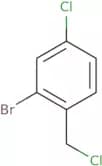
CAS:<p>Versatile small molecule scaffold</p>Formula:C10H11BrO2Purity:Min. 95%Molecular weight:243.1 g/mol2-Bromo-4-chloro-1-(chloromethyl)benzene
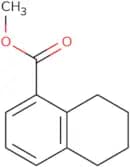
CAS:<p>Versatile small molecule scaffold</p>Formula:C7H5BrCl2Purity:Min. 95%Molecular weight:239.92 g/molMethyl 5,6,7,8-tetrahydronaphthalene-1-carboxylate
CAS:<p>Versatile small molecule scaffold</p>Formula:C12H14O2Purity:Min. 95%Molecular weight:190.24 g/mol3-Benzylpyrrolidine-2,5-dione
CAS:<p>3-Benzylpyrrolidine-2,5-dione is a potent and selective serine protease inhibitor. It binds to the active site of the enzyme, blocking the formation of an acyl enzyme intermediate that is required for biological activity. 3-Benzylpyrrolidine-2,5-dione is effective at inhibiting a wide range of serine proteases, including those from bacteria and viruses. This drug has been shown to be chemically stable in solution and does not react with other molecules in solution, which may be due to its carbonyl group. 3-Benzylpyrrolidine-2,5-dione also irreversibly inhibits serine proteases by covalent modification of key amino acid residues on the enzyme's active site.</p>Formula:C11H11NO2Purity:Min. 95%Molecular weight:189.21 g/mol2-Iodo-6-methoxybenzoic acid
CAS:<p>Versatile small molecule scaffold</p>Formula:C8H7IO3Purity:Min. 95%Molecular weight:278.04 g/molDiethyl bromomethylphosphonate
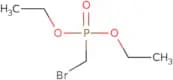
CAS:<p>Diethyl bromomethylphosphonate is a chemical compound with fatty acid properties. It is used as an inhibitor in pharmaceutical preparations and has been shown to be bactericidal to animals. Diethyl bromomethylphosphonate also inhibits the enzyme fatty acid synthase, which catalyzes the formation of fatty acids from acetyl-CoA and malonyl-CoA. This inhibitor is used in the treatment of congestive heart failure and insulin resistance. Diethyl bromomethylphosphonate is a functional group that can undergo hydrolysis by hydrochloric acid, leading to the release of diethyl methylphosphonite. Diethyl bromomethylphosphonate is a chemical compound that can react with organic solvents such as water or alcohols for reactions.</p>Formula:C5H12BrO3PPurity:Min. 95%Molecular weight:231.03 g/mol3-Chlorofuran-2-carboxylic acid
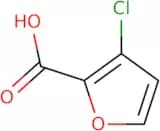
CAS:<p>Versatile small molecule scaffold</p>Formula:C5H3ClO3Purity:Min. 95%Molecular weight:146.53 g/molEthyl 1,3-thiazolidine-4-carboxylate hydrochloride
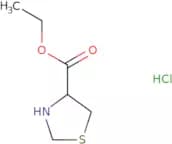
CAS:<p>Versatile small molecule scaffold</p>Formula:C6H12ClNO2SPurity:Min. 95%Molecular weight:197.68 g/mol2-Acetamido-6-methylbenzoic acid
CAS:Versatile small molecule scaffoldFormula:C10H11NO3Purity:Min. 95%Molecular weight:193.2 g/mol7-(Aminomethyl)-5-chloroquinolin-8-ol dihydrochloride
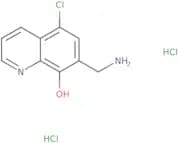
CAS:<p>Versatile small molecule scaffold</p>Formula:C10H11Cl3N2OPurity:Min. 95%Molecular weight:281.6 g/mol2-{[1,2,4]Triazolo[4,3-a]pyridin-3-ylsulfanyl}acetic acid
CAS:<p>Versatile small molecule scaffold</p>Formula:C8H7N3O2SPurity:Min. 95%Molecular weight:209.23 g/mol[1,2,4]Triazolo[1,5-a]pyrimidine-2-thiol
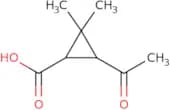
CAS:<p>Versatile small molecule scaffold</p>Formula:C5H4N4SPurity:Min. 95%Molecular weight:152.18 g/molrac-(1R,3R)-3-Acetyl-2,2-dimethylcyclopropane-1-carboxylic acid
CAS:<p>Versatile small molecule scaffold</p>Formula:C8H12O3Purity:Min. 95%Molecular weight:156.2 g/mol3-(2,5-Dioxopyrrolidin-1-yl)propanamide
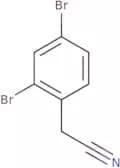
CAS:<p>Versatile small molecule scaffold</p>Formula:C7H10N2O3Purity:Min. 95%Molecular weight:170.17 g/mol2-(2,4-Dibromophenyl)acetonitrile
CAS:<p>Versatile small molecule scaffold</p>Formula:C8H5Br2NPurity:Min. 95%Molecular weight:274.94 g/mol5-Methylnaphthalen-2-ol
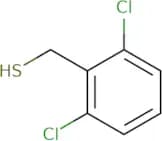
CAS:<p>Versatile small molecule scaffold</p>Formula:C11H10OPurity:Min. 95%Molecular weight:158.2 g/mol(2,6-Dichlorophenyl)methanethiol
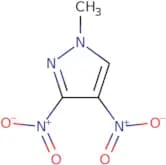
CAS:<p>Versatile small molecule scaffold</p>Formula:C7H6Cl2SPurity:Min. 95%Molecular weight:193.09 g/mol1-Methyl-3,4-dinitro-1H-pyrazole
CAS:<p>1-Methyl-3,4-dinitro-1H-pyrazole is a chemical compound that is not naturally occurring. It has been synthesized by the reaction of 1,2-diaminoethane with nitric acid and dinitrobenzene. The synthesis of this compound was first reported in 1966 by an Australian research team. The magnetic resonance spectrum of this compound showed a monoclinic crystal structure with a molecular weight of 166.19 g/mol. The molecular formula for this compound is C6H5N3O2 and it has an empirical formula of C6H5N3O2I. The yield for this reaction was found to be 85%.</p>Formula:C4H4N4O4Purity:Min. 95%Molecular weight:172.1 g/mol2-{[4-(4-Methylphenyl)-4H-1,2,4-triazol-3-yl]sulfanyl}acetic acid
CAS:<p>Versatile small molecule scaffold</p>Formula:C11H11N3O2SPurity:Min. 95%Molecular weight:249.29 g/mol2-{[4-(4-Methoxyphenyl)-4H-1,2,4-triazol-3-yl]sulfanyl}acetic acid
CAS:<p>Versatile small molecule scaffold</p>Formula:C11H11N3O3SPurity:Min. 95%Molecular weight:265.29 g/mol{[4-(3-Chlorophenyl)-4H-1,2,4-triazol-3-yl]thio}acetic acid
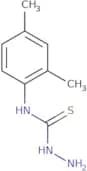
CAS:<p>Versatile small molecule scaffold</p>Formula:C10H8ClN3O2SPurity:Min. 95%Molecular weight:269.71 g/mol4-(2,4-Dimethylphenyl)-3-thiosemicarbazide
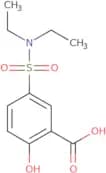
CAS:<p>Versatile small molecule scaffold</p>Formula:C9H13N3SPurity:Min. 95%Color and Shape:PowderMolecular weight:195.28 g/mol5-(Diethylsulfamoyl)-2-hydroxybenzoic acid
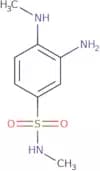
CAS:<p>Versatile small molecule scaffold</p>Formula:C11H15NO5SPurity:Min. 95%Molecular weight:273.31 g/mol3-Amino-N-methyl-4-(methylamino)benzenesulfonamide
CAS:<p>3-Amino-N-methyl-4-(methylamino)benzenesulfonamide is a synthetic compound that is used in the synthesis of oligosaccharides and polysaccharides. It is also used as a reagent for the methylation of saccharide, carbonyls and amines. 3-Amino-N-methyl-4-(methylamino)benzenesulfonamide has been shown to be useful in click chemistry reactions.</p>Formula:C8H13N3O2SPurity:Min. 95%Molecular weight:215.28 g/mol3-Amino-4-(methylamino)benzoic acid
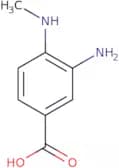
CAS:<p>3-Amino-4-(methylamino)benzoic acid is a modified amino acid that is used in the synthesis of proteins. It has been shown to inhibit the growth of retinoblastoma cells and to bind to specific sites in cellular protein, thereby inhibiting protein synthesis. 3-Amino-4-(methylamino)benzoic acid has also been shown to be effective as a linker in chemical ligation reactions, which can be used for the synthesis of peptides and proteins. This compound has not been found to have any biochemical or chemical modifications.</p>Formula:C8H10N2O2Purity:Min. 95%Molecular weight:166.18 g/molMethyl 3-amino-4-(methylamino)benzenecarboxylate
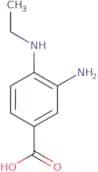
CAS:<p>Versatile small molecule scaffold</p>Formula:C9H12N2O2Purity:Min. 95%Molecular weight:180.21 g/mol3-Amino-4-(ethylamino)benzoic acid
CAS:<p>Versatile small molecule scaffold</p>Formula:C9H12N2O2Purity:Min. 95%Molecular weight:180.2 g/mol3-Amino-4-(methylamino)benzene-1-sulfonamide
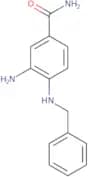
CAS:<p>Versatile small molecule scaffold</p>Formula:C7H11N3O2SPurity:Min. 95%Molecular weight:201.25 g/mol3-Amino-4-(benzylamino)benzamide
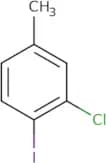
CAS:<p>Versatile small molecule scaffold</p>Formula:C14H15N3OPurity:Min. 95%Molecular weight:241.29 g/mol3-Chloro-4-iodotoluene
CAS:<p>3-Chloro-4-iodotoluene is a cyclic compound that has been shown to inhibit the activity of HIV-1. It is selective for the HIV transcriptases and has a high potency. 3-Chloro-4-iodotoluene binds to the pyrazolyl group in RNA and inhibits transcription by binding to the cyclic tetraazole ring of the enzyme, preventing the conformational change required for transcription. This agent is not acyclic but is still active as an inhibitor of transcriptases.</p>Formula:C7H6ClIPurity:Min. 95%Molecular weight:252.48 g/mol3-Chloro-5-iodotoluene
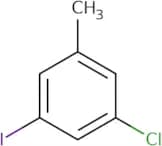
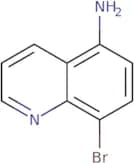
CAS:<p>Versatile small molecule scaffold</p>Formula:C7H6ClIPurity:Min. 95%Molecular weight:252.48 g/mol5-Amino-8-bromoquinoline
CAS:<p>Versatile small molecule scaffold</p>Formula:C9H7BrN2Purity:Min. 95%Molecular weight:223.07 g/mol3-(Aminomethyl)cyclohexanol
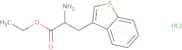
CAS:<p>Versatile small molecule scaffold</p>Formula:C7H15NOPurity:Min. 95%Molecular weight:129.2 g/molEthyl 2-amino-3-(1-benzothiophen-3-yl)propanoate hydrochloride
CAS:<p>Versatile small molecule scaffold</p>Formula:C13H16ClNO2SPurity:Min. 95%Molecular weight:285.79 g/molHydrazine, (2,3-difluorophenyl)-
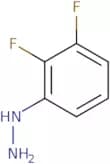
CAS:<p>Hydrazine is an organic compound with the chemical formula HN-NH2. Hydrazine is a colorless, water-soluble liquid with an extremely unpleasant odor. It has many industrial and agricultural uses, including in pharmaceutical preparations. Hydrazine reacts with acids to produce hydrogen gas and a salt plus water. It also undergoes reductive amination with ketones or aldehydes to give secondary amines. <br>Hydrazine is used as an intermediate in the production of agrochemicals, dyes, pharmaceuticals, explosives, and other chemicals. It is also used as a reducing agent for analytical chemistry purposes or as a reagent in organic synthesis.<br>Hydrazine can be found in small quantities in some plants such as potatoes and spinach where it acts as an acidity regulator that helps prevent the plants from wilting under high soil pH levels.END>></p>Formula:C6H6F2N2Purity:Min. 95%Molecular weight:144.12 g/mol2-{[(tert-butyldimethylsilyl)oxy]methyl}prop-2-en-1-ol
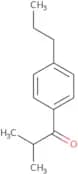
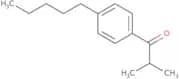
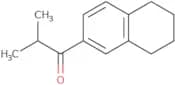
CAS:<p>Versatile small molecule scaffold</p>Formula:C10H22O2SiPurity:Min. 95%Molecular weight:202.37 g/mol2-Methyl-1-(4-propylphenyl)propan-1-one
CAS:<p>2-Methyl-1-(4-propylphenyl)propan-1-one is a small molecule that has been shown to inhibit the activity of protein kinases. It is a white crystalline solid with a melting point of 168°C. This compound is soluble in water and DMSO, but insoluble in most organic solvents. 2MPPP is used as a research tool for studying protein interactions and receptor activation in cell biology. It has also been used as an inhibitor in pharmacology studies.</p>Formula:C13H18OPurity:Min. 95%Molecular weight:190.28 g/mol2-Methyl-1-(4-pentylphenyl)propan-1-one
CAS:<p>Versatile small molecule scaffold</p>Formula:C15H22OPurity:Min. 95%Molecular weight:218.33 g/mol2-Methyl-1-(5,6,7,8-tetrahydronaphthalen-2-yl)propan-1-one
CAS:<p>Versatile small molecule scaffold</p>Formula:C14H18OPurity:Min. 95%Molecular weight:202.29 g/mol2-Methyl-1-[4-(trifluoromethyl)phenyl]propan-1-ol
CAS:<p>Versatile small molecule scaffold</p>Formula:C11H13F3OPurity:Min. 95%Molecular weight:218.21 g/mol5-[(1,3-Benzothiazol-2-ylsulfanyl)methyl]-4-phenyl-4H-1,2,4-triazole-3-thiol
CAS:<p>Versatile small molecule scaffold</p>Formula:C16H12N4S3Purity:Min. 95%Molecular weight:356.5 g/mol


![5-[(2-Methylpropyl)amino]-1,3,4-thiadiazole-2-thiol](/_next/image/?url=https%3A%2Fstatic.cymitquimica.com%2Fproducts%2F3D%2Fthumb-webp%2FRCA18054.webp&w=3840&q=75)
![2-[(2-Bromophenyl)methyl]butanoic acid](/_next/image/?url=https%3A%2Fstatic.cymitquimica.com%2Fproducts%2F3D%2Fthumb-webp%2FRCA19200.webp&w=3840&q=75)




![2-{[1,2,4]Triazolo[4,3-a]pyridin-3-ylsulfanyl}acetic acid](/_next/image/?url=https%3A%2Fstatic.cymitquimica.com%2Fproducts%2F3D%2Fthumb-webp%2FRCA23467.webp&w=3840&q=75)
![[1,2,4]Triazolo[1,5-a]pyrimidine-2-thiol](/_next/image/?url=https%3A%2Fstatic.cymitquimica.com%2Fproducts%2F3D%2Fthumb-webp%2FRCA23479.webp&w=3840&q=75)


![2-{[4-(4-Methylphenyl)-4H-1,2,4-triazol-3-yl]sulfanyl}acetic acid](/_next/image/?url=https%3A%2Fstatic.cymitquimica.com%2Fproducts%2F3D%2Fthumb-webp%2FRCA29764.webp&w=3840&q=75)
![2-{[4-(4-Methoxyphenyl)-4H-1,2,4-triazol-3-yl]sulfanyl}acetic acid](/_next/image/?url=https%3A%2Fstatic.cymitquimica.com%2Fproducts%2F3D%2Fthumb-webp%2FRCA29767.webp&w=3840&q=75)
![{[4-(3-Chlorophenyl)-4H-1,2,4-triazol-3-yl]thio}acetic acid](/_next/image/?url=https%3A%2Fstatic.cymitquimica.com%2Fproducts%2F3D%2Fthumb-webp%2FRCA29769.webp&w=3840&q=75)


![2-{[(tert-butyldimethylsilyl)oxy]methyl}prop-2-en-1-ol](/_next/image/?url=https%3A%2Fstatic.cymitquimica.com%2Fproducts%2F3D%2Fthumb-webp%2FREA70073.webp&w=3840&q=75)
![2-Methyl-1-[4-(trifluoromethyl)phenyl]propan-1-ol](/_next/image/?url=https%3A%2Fstatic.cymitquimica.com%2Fproducts%2F3D%2Fthumb-webp%2FREA70707.webp&w=3840&q=75)
![5-[(1,3-Benzothiazol-2-ylsulfanyl)methyl]-4-phenyl-4H-1,2,4-triazole-3-thiol](/_next/image/?url=https%3A%2Fstatic.cymitquimica.com%2Fproducts%2F3D%2Fthumb-webp%2FREA71050.webp&w=3840&q=75)