


Building Blocks
This section contains fundamental products for the synthesis of organic and biological compounds. Building blocks are the essential starting materials used to construct complex molecules through various chemical reactions. They play a critical role in drug discovery, material science, and chemical research. At CymitQuimica, we offer a diverse range of high-quality building blocks to support your innovative research and industrial projects, ensuring you have the essential components for successful synthesis.
Subcategories of "Building Blocks"
- Boronic Acids & Boronic Acid Derivatives(5,756 products)
- Chiral Building Blocks(1,242 products)
- Hydrocarbon Building Blocks(6,095 products)
- Organic Building Blocks(61,038 products)
Found 196817 products of "Building Blocks"
Sort by
Purity (%)
0
100
|
0
|
50
|
90
|
95
|
100
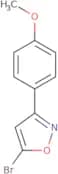
5-Bromo-3-(4-methoxyphenyl)-1,2-oxazole
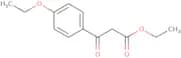
CAS:<p>Versatile small molecule scaffold</p>Formula:C10H8BrNO2Purity:Min. 95%Molecular weight:254.08 g/molethyl 3-(4-ethoxyphenyl)-3-oxopropanoate
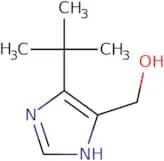
CAS:<p>Versatile small molecule scaffold</p>Formula:C13H16O4Purity:Min. 95%Molecular weight:236.27 g/mol(5-tert-Butyl-1H-imidazol-4-yl)methanol
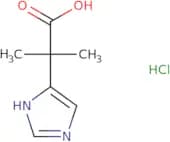
CAS:<p>Versatile small molecule scaffold</p>Formula:C8H14N2OPurity:Min. 95%Molecular weight:154.21 g/mol2-(1H-Imidazol-4-yl)-2-methylpropanoic acid hydrochloride
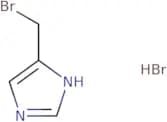
CAS:<p>Versatile small molecule scaffold</p>Formula:C7H11ClN2O2Purity:Min. 95%Molecular weight:190.63 g/mol4-(Bromomethyl)-1H-imidazole hydrobromide
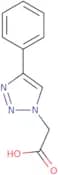
CAS:<p>Versatile small molecule scaffold</p>Formula:C4H6Br2N2Purity:Min. 95%Molecular weight:241.91 g/mol2-(4-Phenyl-1H-1,2,3-triazol-1-yl)acetic acid
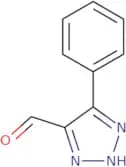
CAS:<p>Versatile small molecule scaffold</p>Formula:C10H9N3O2Purity:Min. 95%Molecular weight:203.2 g/mol5-Phenyl-1,2,3-triazole-4-carbaldehyde
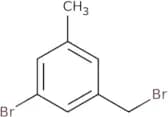
CAS:<p>Versatile small molecule scaffold</p>Formula:C9H7N3OPurity:Min. 95%Molecular weight:173.17 g/mol3-Bromo-5-methylbenzyl bromide
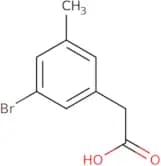
CAS:<p>Versatile small molecule scaffold</p>Formula:C8H8Br2Purity:Min. 95%Molecular weight:263.96 g/mol3-Bromo-5-methylphenylacetic acid
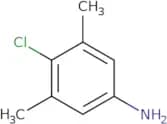
CAS:<p>Versatile small molecule scaffold</p>Formula:C9H9BrO2Purity:Min. 95%Molecular weight:229.07 g/mol4-chloro-3,5-dimethylaniline
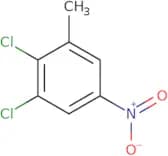
CAS:<p>Versatile small molecule scaffold</p>Formula:C8H10ClNPurity:Min. 95%Molecular weight:155.63 g/mol1,2-Dichloro-3-methyl-5-nitrobenzene
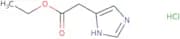
CAS:<p>Versatile small molecule scaffold</p>Formula:C7H5Cl2NO2Purity:Min. 95%Molecular weight:206.02 g/molEthyl 2-(1H-imidazol-4-yl)acetate hydrochloride
CAS:<p>Versatile small molecule scaffold</p>Formula:C7H11ClN2O2Purity:Min. 95%Molecular weight:190.6 g/molHexahydro-1'H-spiro[1,3-dioxolane-2,2'-pentalene]-5'-one
CAS:<p>Versatile small molecule scaffold</p>Formula:C10H14O3Purity:Min. 95%Molecular weight:182.22 g/molBenzyl[2-(4-methoxyphenyl)ethyl]amine
CAS:Controlled Product<p>Versatile small molecule scaffold</p>Formula:C16H19NOPurity:Min. 95%Molecular weight:241.33 g/mol4-Chloro-2-methylbutanoyl Chloride
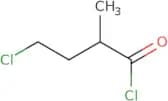
CAS:<p>4-Chloro-2-methylbutanoyl Chloride is a thiolactone that is used in the synthesis of dl-homocysteine. It is an environmental pollutant and can be found in the distillate from chlorinated solvents. 4-Chloro-2-methylbutanoyl Chloride reacts with chloride to form an environmentally hazardous reaction product. This chemical has been used as a medicine, but it has not been approved by the FDA for use in humans.</p>Formula:C5H8Cl2OPurity:Min. 95%Molecular weight:155.02 g/molN-(3-Chlorophenyl)hydrazinecarboxamide
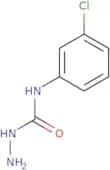
CAS:<p>Versatile small molecule scaffold</p>Formula:C7H8ClN3OPurity:Min. 95%Molecular weight:185.61 g/mol2-Amino-2-phenylacetamide hydrochloride
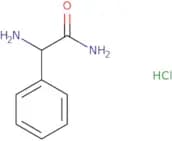
CAS:<p>Versatile small molecule scaffold</p>Formula:C8H11ClN2OPurity:Min. 95%Molecular weight:186.64 g/molEthyl 3-(3-bromophenyl)-3-hydroxypropanoate
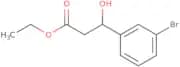
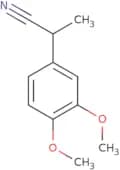
CAS:<p>Versatile small molecule scaffold</p>Formula:C11H13BrO3Purity:Min. 95%Molecular weight:273.12 g/mol2-(3,4-Dimethoxyphenyl)propanenitrile
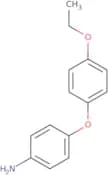
CAS:<p>Versatile small molecule scaffold</p>Formula:C11H13NO2Purity:Min. 95%Molecular weight:191.23 g/mol4-(4-Ethoxyphenoxy)aniline
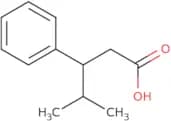
CAS:<p>Versatile small molecule scaffold</p>Formula:C14H15NO2Purity:Min. 95%Molecular weight:229.27 g/mol4-Methyl-3-phenylpentanoic acid
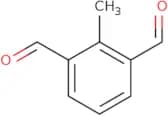
CAS:<p>4-Methyl-3-phenylpentanoic acid is a chiral, enantioselective catalyst. It is catalyzed by rhodium and used in the asymmetric synthesis of β-unsaturated amides. This reaction is an example of an esterification that is catalyzed by a chiral, enantioselective reagent. 4-Methyl-3-phenylpentanoic acid has also been shown to be effective for the synthesis of chiral esters.</p>Formula:C12H16O2Purity:Min. 95%Molecular weight:192.25 g/mol2-Methylbenzene-1,3-dicarbaldehyde
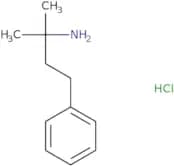
CAS:<p>2-Methylbenzene-1,3-dicarbaldehyde is a divalent hydrocarbon that has an oxidation catalyst. This compound is used as an intermediate in the production of drugs and pharmaceuticals. It has been shown to have cardiovascular disorders, such as vasodilatation and hypotension. The mechanism of action is not fully understood but may be related to its ability to act as a nitrovasodilator by increasing nitric oxide (NO) release. 2-Methylbenzene-1,3-dicarbaldehyde also produces psychotic disorders when long term exposure occurs. This compound has been shown to have neurotoxic effects in animal models with long term exposure.</p>Formula:C9H8O2Purity:Min. 95%Molecular weight:148.16 g/mol2-Methyl-4-phenylbutan-2-amine hydrochloride
CAS:<p>Versatile small molecule scaffold</p>Formula:C11H18ClNPurity:Min. 95%Molecular weight:199.72 g/mol4-Bromo-2-chloronaphthalen-1-amine
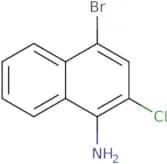
CAS:<p>4-Bromo-2-chloronaphthalen-1-amine is a chemical compound that can be synthesized from acetone and chlorides. The reaction proceeds via a nucleophilic substitution reaction in which one of the chlorine atoms is replaced by an electron pair from acetone. This process occurs when the substituent on the naphthalene ring is not sterically hindered, and it is therefore necessary to use substituents that are electron donors, such as methyl or ethyl groups. 4-Bromo-2-chloronaphthalen-1-amine has been synthesized in Japan by reacting acetone with sodium chloride and bromine at high temperature and pressure. The solvent used was benzene, which was removed after the reaction was complete.</p>Formula:C10H7BrClNPurity:Min. 95%Molecular weight:256.52 g/molBis(2-bromoethyl)dimethylsilane
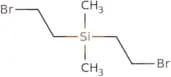
CAS:<p>Versatile small molecule scaffold</p>Formula:C6H14Br2SiPurity:Min. 95%Molecular weight:274.07 g/mol1,2,4,5-Tetrahydro-3-benzothiepin-1-one
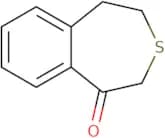
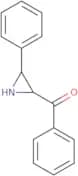
CAS:<p>Versatile small molecule scaffold</p>Formula:C10H10OSPurity:Min. 95%Molecular weight:178.25 g/mol2-Benzoyl-3-phenylaziridine
CAS:<p>2-Benzoyl-3-phenylaziridine is a heterocyclic compound that is obtained by the condensation of benzoyl chloride and phenylamine. It is used in the synthesis of azomethine dyes, which are mainly used as textile dyes. The ammonium salt of 2-benzoyl-3-phenylaziridine can be obtained on refluxing the hydrate with thiocyanate and acetonitrile. This transformation has been shown to be dependent on pH with an optimum at pH 8.5.</p>Formula:C15H13NOPurity:Min. 95%Molecular weight:223.27 g/molEthyl 1,4-dioxaspiro[4.5]dec-8-ylideneacetate
CAS:<p>Versatile small molecule scaffold</p>Formula:C12H18O4Purity:Min. 95%Molecular weight:226.27 g/mol8-Methylene-1,4-dioxa-spiro[4.5]decane
CAS:<p>Versatile small molecule scaffold</p>Formula:C9H14O2Purity:Min. 95%Molecular weight:154.21 g/mol5,7-Dimethyl[1,2,4]triazolo[1,5-a]pyrimidin-2-ylhydrosulfide
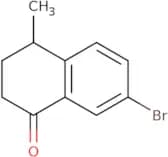
CAS:<p>5,7-Dimethyl[1,2,4]triazolo[1,5-a]pyrimidin-2-ylhydrosulfide is a compound that is used in the synthesis of fonamide. It is a sugar with nitrification and nitrogen metabolism activity. 5,7-Dimethyl[1,2,4]triazolo[1,5-a]pyrimidin-2-ylhydrosulfide can be converted to ammonium hydroxide by reaction with hydroxide or carbon disulfide. The resulting product can be further converted to amides by an amine or ethanol. The structure of this compound is similar to that of fonamide and may have antiinflammatory properties.</p>Formula:C7H8N4SPurity:Min. 95%Molecular weight:180.23 g/mol7-Bromo-4-methyl-1,2,3,4-tetrahydronaphthalen-1-one
CAS:<p>Versatile small molecule scaffold</p>Formula:C11H11BrOPurity:Min. 95%Molecular weight:239.11 g/mol2,6-Dimethyl-thiobenzamide
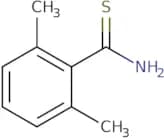
CAS:<p>Versatile small molecule scaffold</p>Formula:C9H11NSPurity:Min. 95%Molecular weight:165.26 g/mol5-[(Hydroxyimino)methyl]-1,3-thiazol-2-amine
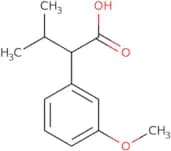
CAS:<p>Versatile small molecule scaffold</p>Formula:C4H5N3OSPurity:Min. 95%Molecular weight:143.17 g/mol2-(3-Methoxyphenyl)-3-methylbutanoic acid
CAS:<p>Versatile small molecule scaffold</p>Formula:C12H16O3Purity:Min. 95%Molecular weight:208.25 g/mol3-Methyl-2-[3-(trifluoromethyl)phenyl]butanoic acid
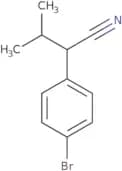
CAS:<p>Versatile small molecule scaffold</p>Formula:C12H13F3O2Purity:Min. 95%Molecular weight:246.22 g/mol2-(4-Bromophenyl)-3-methylbutanenitrile
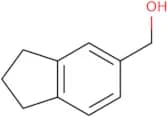
CAS:<p>Versatile small molecule scaffold</p>Formula:C11H12BrNPurity:Min. 95%Molecular weight:238.13 g/mol5-Hydroxymethylindane
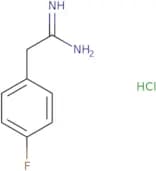
CAS:<p>Versatile small molecule scaffold</p>Formula:C10H12OPurity:Min. 95%Molecular weight:148.2 g/mol2-(4-Fluorophenyl)ethanimidamide hydrochloride
CAS:<p>Versatile small molecule scaffold</p>Formula:C8H10ClFN2Purity:Min. 95%Molecular weight:188.63 g/mol1-Azabicyclo[2.2.2]octane-3-carbonitrile
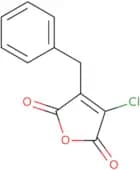
CAS:<p>1-Azabicyclo[2.2.2]octane-3-carbonitrile (1ABOC) is a hydrolyzing antihistamine that is used to treat allergies in the eye. This drug binds to histamine H1 receptors and blocks the release of histamine from mast cells, thereby preventing allergic symptoms. 1ABOC also has anti-inflammatory properties and may be useful for treating inflammatory disorders.</p>Formula:C8H12N2Purity:Min. 95%Molecular weight:136.19 g/mol3-Benzyl-4-chloro-2,5-dihydrofuran-2,5-dione
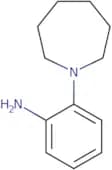
CAS:<p>Versatile small molecule scaffold</p>Formula:C11H7ClO3Purity:Min. 95%Molecular weight:222.62 g/mol2-Azepan-1-yl-phenylamine
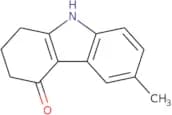
CAS:<p>Versatile small molecule scaffold</p>Formula:C12H18N2Purity:Min. 95%Molecular weight:190.28 g/mol6-Methyl-2,3,4,9-tetrahydro-1H-carbazol-4-one
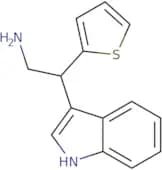
CAS:<p>Versatile small molecule scaffold</p>Formula:C13H13NOPurity:Min. 95%Molecular weight:199.25 g/mol2-(1H-Indol-3-yl)-2-(thiophen-2-yl)ethan-1-amine
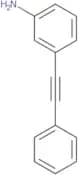
CAS:<p>Versatile small molecule scaffold</p>Formula:C14H14N2SPurity:Min. 95%Molecular weight:242.34 g/mol3-(phenylethynyl)aniline
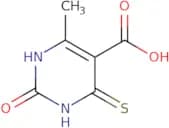
CAS:<p>3-(Phenylethynyl)aniline is a chemical compound that is insoluble in water and has a reactive crosslink. It is reactive with long-term exposure and has a gel permeation chromatography isolated yield. 3-(Phenylethynyl)aniline can be thermally decomposed to phenylethanethiol, which is an exothermic reaction. The technique of nmr spectroscopy can be used to study the reactivity of this compound. 3-(Phenylethynyl)aniline exhibits specific spectral features that can be used to identify it by nmr spectroscopy.</p>Formula:C14H11NPurity:Min. 95%Molecular weight:193.24 g/mol6-Methyl-2-oxo-4-sulfanylidene-1,2,3,4-tetrahydropyrimidine-5-carboxylic acid
CAS:<p>Versatile small molecule scaffold</p>Formula:C6H6N2O3SPurity:Min. 95%Molecular weight:186.19 g/molChloro[(chlorocarbonyl)disulfanyl]methanone
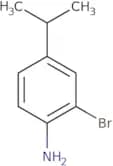
CAS:<p>Chloro[(chlorocarbonyl)disulfanyl]methanone is a chemical compound that is used in the synthesis of new organic compounds. It is a substrate for cross-coupling reactions with organometallic reagents. Chloro[(chlorocarbonyl)disulfanyl]methanone reacts to form a chloroalkyl sulfide and an alkene, which can be converted into an amide or amine. The reaction mechanism involves nucleophilic attack at the sulfur atom by the metal halide, followed by elimination of chloride ion from the intermediate sulfonium salt to form the desired product. Chloro[(chlorocarbonyl)disulfanyl]methanone has been used in the synthesis of enantiopure compounds that are difficult to obtain through other methods.</p>Formula:C2Cl2O2S2Purity:Min. 95%Molecular weight:191.1 g/mol2-Bromo-4-isopropylaniline
CAS:<p>2-Bromo-4-isopropylaniline is a spiroindoline that was synthesized by modification of the natural product, bryostatin. The compound has shown experimental activity against encephalomyelitis in mice. However, the mechanism of action is not known. 2-Bromo-4-isopropylaniline has been found to be an activator for ethylene and can catalyze reactions involving diphosphines and ligands. It binds to phenyl substituents on the molecule and forms x-ray crystallographic structures with high resolution. Optimization of the structure may lead to more potent analogs.</p>Formula:C9H12BrNPurity:Min. 95%Molecular weight:214.11 g/mol5-(Chloromethyl)-4-methyl-1H-imidazole hydrochloride
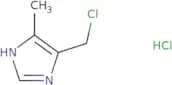
CAS:<p>Isothiourea is an imidazole derivative that acts as a competitive antagonist of histamine H2 receptors. It has been used in the synthesis of cimetidine and other histamine H2 receptor antagonists. Isothiourea inhibits the action of histamine on the H2 receptor by binding to it, thereby preventing its activation. This drug is a synthetic compound that can be made from chloroform and thionyl chloride. It may be synthesized in a two-step process starting with chloromethyl methyl (methylchloro)imidazole, which is reacted with hydrochloric acid to produce 5-(chloromethyl)-4-methyl-1H-imidazole hydrochloride.</p>Formula:C5H8Cl2N2Purity:Min. 95%Molecular weight:167.04 g/mol1-Methanesulfonylpyrrolidine
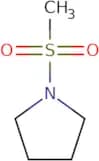
CAS:<p>Versatile small molecule scaffold</p>Formula:C5H11NO2SPurity:Min. 95%Molecular weight:149.21 g/mol3-Chloro-N-[(furan-2-yl)methyl]aniline
CAS:<p>Versatile small molecule scaffold</p>Formula:C11H10ClNOPurity:Min. 95%Molecular weight:207.65 g/mol

![Hexahydro-1'H-spiro[1,3-dioxolane-2,2'-pentalene]-5'-one](/_next/image/?url=https%3A%2Fstatic.cymitquimica.com%2Fproducts%2F3D%2Fthumb-webp%2FBCA71662.webp&w=3840&q=75)
![Benzyl[2-(4-methoxyphenyl)ethyl]amine](/_next/image/?url=https%3A%2Fstatic.cymitquimica.com%2Fproducts%2F3D%2Fthumb-webp%2FBCA71372.webp&w=3840&q=75)
![Ethyl 1,4-dioxaspiro[4.5]dec-8-ylideneacetate](/_next/image/?url=https%3A%2Fstatic.cymitquimica.com%2Fproducts%2F3D%2Fthumb-webp%2FBCA65691.webp&w=3840&q=75)
![8-Methylene-1,4-dioxa-spiro[4.5]decane](/_next/image/?url=https%3A%2Fstatic.cymitquimica.com%2Fproducts%2F3D%2Fthumb-webp%2FBCA65690.webp&w=3840&q=75)
![5,7-Dimethyl[1,2,4]triazolo[1,5-a]pyrimidin-2-ylhydrosulfide](/_next/image/?url=https%3A%2Fstatic.cymitquimica.com%2Fproducts%2F3D%2Fthumb-webp%2FBCA64617.webp&w=3840&q=75)
![5-[(Hydroxyimino)methyl]-1,3-thiazol-2-amine](/_next/image/?url=https%3A%2Fstatic.cymitquimica.com%2Fproducts%2F3D%2Fthumb-webp%2FBCA64050.webp&w=3840&q=75)
![3-Methyl-2-[3-(trifluoromethyl)phenyl]butanoic acid](/_next/image/?url=https%3A%2Fstatic.cymitquimica.com%2Fproducts%2F3D%2Fthumb-webp%2FBCA63232.webp&w=3840&q=75)
![1-Azabicyclo[2.2.2]octane-3-carbonitrile](/_next/image/?url=https%3A%2Fstatic.cymitquimica.com%2Fproducts%2F3D%2Fthumb-webp%2FBCA62776.webp&w=3840&q=75)
![Chloro[(chlorocarbonyl)disulfanyl]methanone](/_next/image/?url=https%3A%2Fstatic.cymitquimica.com%2Fproducts%2F3D%2Fthumb-webp%2FBCA61588.webp&w=3840&q=75)
![3-Chloro-N-[(furan-2-yl)methyl]aniline](/_next/image/?url=https%3A%2Fstatic.cymitquimica.com%2Fproducts%2F3D%2Fthumb-webp%2FBCA59776.webp&w=3840&q=75)