Building Blocks
This section contains fundamental products for the synthesis of organic and biological compounds. Building blocks are the essential starting materials used to construct complex molecules through various chemical reactions. They play a critical role in drug discovery, material science, and chemical research. At CymitQuimica, we offer a diverse range of high-quality building blocks to support your innovative research and industrial projects, ensuring you have the essential components for successful synthesis.
Subcategories of "Building Blocks"
- Boronic Acids & Boronic Acid Derivatives(5,756 products)
- Chiral Building Blocks(1,242 products)
- Hydrocarbon Building Blocks(6,095 products)
- Organic Building Blocks(61,038 products)
Found 196817 products of "Building Blocks"
Sort by
Purity (%)
0
100
|
0
|
50
|
90
|
95
|
100
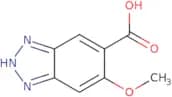
6-Methoxy-1H-1,2,3-benzotriazole-5-carboxylic acid
CAS:<p>6-Methoxy-1H-1,2,3-benzotriazole-5-carboxylic acid is a liquid chromatography (LC) standard. It is used as an analytical reference substance for the calibration of LC methods. 6-Methoxy-1H-1,2,3-benzotriazole-5-carboxylic acid has been shown to be recoverable in high purity with average recoveries of 99.8%. This product is hydrophobic and elutes between 3 and 4 minutes on a column with a flow rate of 1 mL/min. It is also linear over the concentration range from 0.05 to 10 μg/mL and can be used for validation of analytical methods in LC.</p>Formula:C8H7N3O3Purity:Min. 95%Molecular weight:193.16 g/mol2,2,7,7-Tetramethyl-1,4-diazepane
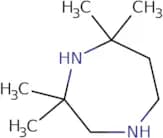
CAS:<p>Versatile small molecule scaffold</p>Formula:C9H20N2Purity:Min. 95%Molecular weight:156.27 g/mol2,3-Diamino-5-bromo-6-methylpyridine
CAS:<p>2,3-Diamino-5-bromo-6-methylpyridine is an organic compound that belongs to the class of heterocyclic compounds. It is a heterocyclic compound that has been shown to undergo cyclization reactions at low temperatures. This substance forms azeotropic mixtures with water and alcohols and is used in the synthesis of other substances.</p>Formula:C6H8BrN3Purity:Min. 95%Molecular weight:202.06 g/mol1-(Bromomethoxy)propane
CAS:<p>1-(Bromomethoxy)propane is a solvent that is used in laboratories to dissolve other substances. It is a cyclopentadienyl, which has the chemical formula CH3-CH2-CCl3. This solvent is used as a reaction vessel that contains anions and aromatic hydrocarbons. It reacts with halides to form reaction intermediates, including chloride and methoxymethyl. 1-(Bromomethoxy)propane can be used as an organic solvent for reactive molecules such as carbostyril and anilines.</p>Formula:C4H9BrOPurity:Min. 95%Molecular weight:153.02 g/mol7-Methyl-1,2,3,4-tetrahydronaphthalen-1-amine Hydrochloride
CAS:<p>Versatile small molecule scaffold</p>Formula:C11H15NPurity:Min. 95%Molecular weight:161.24 g/mol4-Phenoxyphenyl Isocyanate
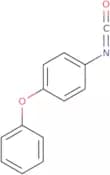
CAS:<p>4-Phenoxyphenyl Isocyanate is an amino acid that is used as a reuptake inhibitor for the treatment of depression. It binds to the l-phenylalanine transporter, which is responsible for transporting l-phenylalanine into the brain and blocking its uptake. This leads to increased levels of l-phenylalanine in the brain, which may be responsible for 4-Phenoxyphenyl Isocyanate's antidepressant effects.<br>4-Phenoxyphenyl Isocyanate has been shown to inhibit the transport of L-amino acids across cell membranes, which decreases their uptake and increases their concentration in cells. This inhibition also has cross-coupling effects on β-amino acids and inhibits their transport across cell membranes. As a result, this compound may have therapeutic applications in treating diabetes and obesity.</p>Formula:C13H9NO2Purity:Min. 95%Molecular weight:211.22 g/molcyclopropyl[3-(trifluoromethyl)phenyl]methanamine
CAS:<p>Versatile small molecule scaffold</p>Formula:C11H12NF3Purity:Min. 95%Molecular weight:215.21 g/mol1,2,3,4-Tetrahydro-2,2,4,7-tetramethylquinoline
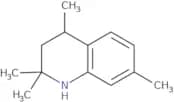
CAS:<p>1,2,3,4-Tetrahydro-2,2,4,7-tetramethylquinoline is a synthetic derivative of the natural quinoline alkaloid 1,2,3,4-tetrahydro-2,2,4-trimethylquinoline. It acts as an acceptor of hydrogen peroxide and has been shown to have antioxidant effects in human lymphocytes. 1,2,3,4-Tetrahydro-2,2,4-trimethylquinoline has also been found to be genotoxic and able to induce micronuclei and genotoxicity. This compound can be used for the treatment of oxidative stress and damage.</p>Formula:C13H19NPurity:Min. 95%Molecular weight:189.3 g/mol7-chloroquinoline-2-carbaldehyde
CAS:<p>Versatile small molecule scaffold</p>Formula:C10H6ClNOPurity:Min. 95%Molecular weight:191.61 g/mol8-Chloroquinoline-2-carbaldehyde
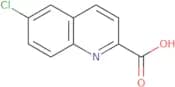
CAS:<p>Versatile small molecule scaffold</p>Formula:C10H6ClNOPurity:Min. 95%Molecular weight:191.61 g/mol6-chloroquinoline-2-carboxylic acid
CAS:<p>6-chloroquinoline-2-carboxylic acid is a metabolite that is formed by the coupling of two molecules of ethanolamide. The coupling reaction was first developed by Miyaura and Suzuki in 1980. 6-Chloroquinaline-2-carboxylic acid is used in marine chemistry to synthesize tetracyclic molecules with a side chain.</p>Formula:C10H6ClNO2Purity:Min. 95%Molecular weight:207.61 g/mol(4-Bromophenyl)(2-fluorophenyl)methanone
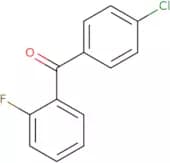
CAS:<p>Versatile small molecule scaffold</p>Formula:C13H8BrFOPurity:Min. 95%Molecular weight:279.1 g/mol(4-Chlorophenyl)(2-fluorophenyl)methanone
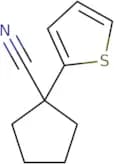
CAS:<p>Versatile small molecule scaffold</p>Formula:C13H8ClFOPurity:Min. 95%Molecular weight:234.65 g/mol1-(Thiophen-2-yl)cyclopentane-1-carbonitrile
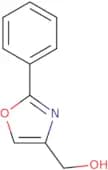
CAS:<p>Versatile small molecule scaffold</p>Formula:C10H11NSPurity:Min. 95%Molecular weight:177.3 g/mol(2-Phenyl-oxazol-4-yl)-methanol
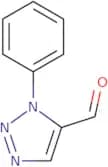
CAS:<p>Versatile small molecule scaffold</p>Formula:C10H9NO2Purity:Min. 95%Molecular weight:175.19 g/mol1-Phenyl-1H-1,2,3-triazole-5-carbaldehyde
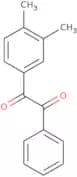
CAS:<p>Versatile small molecule scaffold</p>Formula:C9H7N3OPurity:Min. 95%Molecular weight:173.17 g/mol1-(3,4-Dimethylphenyl)-2-phenylethane-1,2-dione
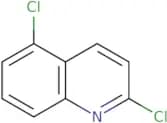
CAS:<p>Versatile small molecule scaffold</p>Formula:C16H14O2Purity:Min. 95%Molecular weight:238.28 g/mol2,5-Dichloroquinoline
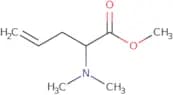
CAS:<p>2,5-Dichloroquinoline is an efficient and versatile organic compound that can be used in the synthesis of a variety of different compounds. It is also used as an intermediate in the synthesis of eupolauramine. 2,5-Dichloroquinoline has been synthesized from 2,5-dichloroaniline and ammonia. This chemical has been manufactured in Australia since 1891.</p>Formula:C9H5Cl2NPurity:Min. 95%Molecular weight:198.05 g/molMethyl 2-(dimethylamino)pent-4-enoate
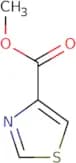
CAS:<p>Methyl 2-(dimethylamino)pent-4-enoate is a chemical compound that is used in organic chemistry as a reagent to convert esters into alcohols. It can also be used to synthesize ammonium salts from amines. Methyl 2-(dimethylamino)pent-4-enoate is typically synthesized by the reaction of benzene and methoxide or phenoxide. The yields are low, with transesterification being the most effective method for converting esters into alcohols. In addition, methyl 2-(dimethylamino)pent-4-enoate reacts with sodium methoxide or phenoxide to produce ammonium salts from amines.<br>Methyl 2-(dimethylamino)pent-4-enoate has no known analogues.</p>Formula:C8H15NO2Purity:Min. 95%Molecular weight:157.21 g/molMethyl thiazole-4-carboxylate
CAS:<p>Methyl thiazole-4-carboxylate is an organic compound that is a derivative of thiabendazole. It is used as a fungicide and insecticide. Methyl thiazole-4-carboxylate binds to the benzene ring of the aromatic hydrocarbon, acetaldehyde, and inhibits its ability to interact with the acetyl group of acetylation. This results in the accumulation of acetaldehyde within cells, which can lead to cancerous growth. Methyl thiazole-4-carboxylate also has anti-inflammatory properties that may be due to its ability to inhibit prostaglandin synthesis.</p>Formula:C5H5NO2SPurity:Min. 95%Molecular weight:143.17 g/mol2-(4-Aminophenyl)propanoic acid
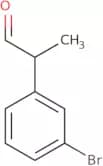
CAS:<p>2-(4-Aminophenyl)propanoic acid (APPA) is an organic compound that is used in the synthesis of other chemicals. It can be synthesized by nitrating 4-aminophenol, which has a phenyl ring and a nucleophilic acetonitrile group. This reaction produces 2-nitrophenol, which can then be reduced to APPA. The nitro groups on APPA are cleaved by dithiothreitol and the reagents are deactivated by endogenous thiolates. Monitoring of these reactions is carried out using kinetic analysis.</p>Formula:C9H11NO2Purity:Min. 95%Molecular weight:165.19 g/mol2-(3-Bromophenyl)propionaldehyde
CAS:<p>2-(3-Bromophenyl)propionaldehyde (BPPA) is a nonsteroidal anti-inflammatory drug that has been shown to be effective in animal studies. It is an oxime, which is a class of drugs that are used to reduce inflammation by inhibiting the release of prostaglandins. BPPA also inhibits the formation of amines, such as ethylene and benzonitrile, which are involved in inflammatory reactions. The mechanism of BPPA's anti-inflammatory activity may involve its ability to inhibit the production of hydrochloric acid and other pro-inflammatory agents by reducing oxidative stress.</p>Formula:C9H9BrOPurity:Min. 95%Molecular weight:213.1 g/molSpiro[imidazolidine-4,8'-tricyclo[5.2.1.0,2,6]decane]-2,5-dione
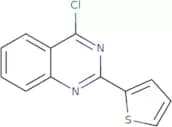
CAS:<p>Versatile small molecule scaffold</p>Formula:C12H16N2O2Purity:Min. 95%Molecular weight:220.27 g/mol4-Chloro-2-(thiophen-2-yl)quinazoline
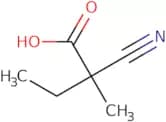
CAS:<p>Versatile small molecule scaffold</p>Formula:C12H7ClN2SPurity:Min. 95%Molecular weight:246.72 g/mol2-Cyano-2-methylbutanoic acid
CAS:<p>Versatile small molecule scaffold</p>Formula:C6H9NO2Purity:Min. 95%Molecular weight:127.14 g/mol6-Amino-N-phenylhexanamide hydrochloride
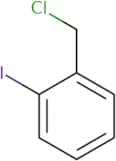
CAS:<p>Versatile small molecule scaffold</p>Formula:C12H19ClN2OPurity:Min. 95%Molecular weight:242.7 g/mol2-Iodobenzyl chloride
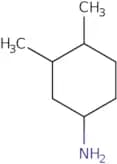
CAS:<p>2-Iodobenzyl chloride is a reactive compound that is used in the synthesis of organic molecules. It reacts with amines to form 2-iodobenzamide, which is an antihistaminic drug. 2-Iodobenzyl chloride can be used to synthesize a variety of compounds, including benzamides, phenols, and other aromatic compounds. The addition of 2-iodobenzyl chloride to dibutyltin oxide creates an organotin halide, which then reacts with chlorides and produces cross-coupling products. This reaction is stereoselective because the two iodines are not exchanged in the same reaction.</p>Formula:IC6H4CH2ClPurity:Min. 95%Molecular weight:252.48 g/mol3,4-Dimethylcyclohexan-1-amine
CAS:<p>Versatile small molecule scaffold</p>Formula:C8H17NPurity:Min. 95%Molecular weight:127.23 g/mol1-(4-tert-Butylphenyl)-2-chloropropan-1-one
CAS:<p>Versatile small molecule scaffold</p>Formula:C13H17ClOPurity:Min. 95%Molecular weight:224.72 g/mol4-[(Propan-2-yl)carbamoyl]butanoic acid
CAS:<p>Versatile small molecule scaffold</p>Formula:C8H15NO3Purity:Min. 95%Molecular weight:173.21 g/mol7-Chloro-2(1H)-quinoxalinone
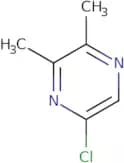
CAS:<p>Versatile small molecule scaffold</p>Formula:C8H5ClN2OPurity:Min. 95%Molecular weight:180.59 g/mol5-Chloro-2,3-dimethylpyrazine
CAS:<p>5-Chloro-2,3-dimethylpyrazine is a trisubstituted methyl pyrazine that is used in the synthesis of insecticides. It has been shown to be a potent inhibitor of mandibular gland and formicidae activity. 5-Chloro-2,3-dimethylpyrazine has also been shown to have chromatographic properties and to produce spectra that are different from other methyl pyrazines. 5-Chloro-2,3-dimethylpyrazine may be a positional isomer of 2,5-dimethylpyrazine, but this has not yet been confirmed.</p>Formula:C6H7ClN2Purity:Min. 95%Molecular weight:142.59 g/mol1H-Indole-3-carbonyl chloride
CAS:<p>1H-Indole-3-carbonyl chloride is a chemical compound that has been shown to have anticancer activity. It binds selectively to the 5-HT4 receptor, inhibiting the growth of colorectal adenocarcinoma cells in cell culture. The binding of 1H-indole-3-carbonyl chloride to the 5HT4 receptor leads to an increase in intracellular calcium, which inhibits proliferation and induces apoptosis. 1H-Indole-3-carbonyl chloride also inhibits fatty acid synthesis in bacteria such as Escherichia coli and Saccharomyces cerevisiae. This compound can be synthesized from 1H-indole and chloroformate using a method called Grignard reaction.</p>Formula:C9H6NOClPurity:Min. 95%Molecular weight:179.6 g/mol2-[6-(Methylsulfanyl)hexyl]-2,3-dihydro-1H-isoindole-1,3-dione
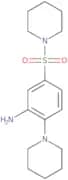
CAS:<p>2-[6-(Methylsulfanyl)hexyl]-2,3-dihydro-1H-isoindole-1,3-dione is a racemic mixture of the two enantiomers diptocarpiline and diptocarpidine. Diptocarpiline is a potent analgesic that has been shown to be an effective treatment for chronic pain in animals. The drug binds to opioid receptors in the body and blocks pain signals from being transmitted to the brain. Diptocarpiline also has antiinflammatory properties. DPTD can be used as an alternative therapy for those who have become resistant to other opioids or who cannot take them because of side effects.</p>Formula:C15H19NO2SPurity:Min. 95%Molecular weight:277.4 g/mol5-(Piperidine-1-sulfonyl)-2-piperidin-1-yl-phenylamine
CAS:<p>Versatile small molecule scaffold</p>Formula:C16H25N3O2SPurity:Min. 95%Molecular weight:323.5 g/mol6-bromo-2,3,4,9-tetrahydro-1h-carbazol-1-one
CAS:<p>6-bromo-2,3,4,9-tetrahydro-1h-carbazol-1-one is a palladium catalyzed amidation process that produces high yields of the desired product. The use of palladium as a catalyst in this process has been shown to be effective in generating high yields of the desired product. This process also utilizes bromoindole as an amine donor and can be used with other heterocycles. The reaction is catalytic and can be done in high yield by using an efficient catalytic system.</p>Formula:C12H10BrNOPurity:Min. 95%Molecular weight:264.12 g/mol1,8-Naphthyridine-2,4-diol
CAS:<p>1,8-Naphthyridine-2,4-diol (1,8ND) is a naphthyridine alkynyl that has been shown to have herbicidal activity. It is a plant growth regulator and can be used in the production of alkenyl and alkoxy derivatives. 1,8ND has been shown to have herbicidal activity against dicotyledonous plants and haloalkyl derivatives.</p>Formula:C8H6N2O2Purity:Min. 95%Molecular weight:162.15 g/mol2,4-Dichloro-1,8-naphthyridine
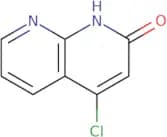
CAS:<p>Versatile small molecule scaffold</p>Formula:C8H4Cl2N2Purity:Min. 95%Molecular weight:199.03 g/mol4-Chloro-1,8-naphthyridin-2(1H)-one
CAS:Versatile small molecule scaffoldFormula:C8H5ClN2OPurity:Min. 95%Molecular weight:180.59 g/mol4-Hydrazinyl-1,8-naphthyridin-2-ol
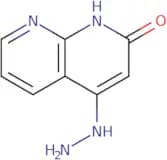
CAS:<p>Versatile small molecule scaffold</p>Formula:C8H8N4OPurity:Min. 95%Molecular weight:176.18 g/molMethyl 3-(2-bromoethoxy)benzenecarboxylate
CAS:<p>Versatile small molecule scaffold</p>Formula:C10H11BrO3Purity:Min. 95%Molecular weight:259.1 g/mol[4-(Butan-2-yl)phenyl]methanamine hydrochloride
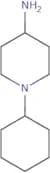
CAS:<p>Versatile small molecule scaffold</p>Formula:C11H18ClNPurity:Min. 95%Molecular weight:199.7 g/mol1-Cyclohexylpiperidin-4-amine
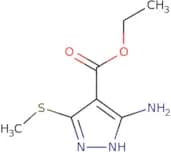
CAS:<p>1-Cyclohexylpiperidin-4-amine is an organic compound that is structurally related to the amino acid piperidine. It has been shown to have a number of biological activities, including antagonistic activity against extracellular matrix proteins and chemokine production. 1-Cyclohexylpiperidin-4-amine can be used as a potential therapeutic agent for autoimmune diseases such as rheumatoid arthritis or inflammatory bowel disease. It can also be used to modify the immune system in order to prevent diseases, such as cancer. The compound can be modified by adding functional groups at specific positions on the molecule, which may alter its activity. Optimization of the molecule can be achieved by screening it against different chemokines or modifying it with different side chains at specific positions in order to improve its potency or specificity.</p>Formula:C11H22N2Purity:Min. 95%Molecular weight:182.31 g/molethyl 5-amino-3-(methylsulfanyl)-1H-pyrazole-4-carboxylate
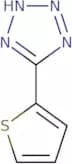
CAS:<p>Diketene is a hydrogen-bonded chain that has been stabilized by ethyl 5-amino-3-(methylsulfanyl)-1H-pyrazole-4-carboxylate. It can be used to prevent the formation of diketones, which are harmful to both humans and the environment. Diketene is also used to make other substances, such as pharmaceuticals and plastics.</p>Formula:C7H11N3O2SPurity:Min. 95%Molecular weight:201.2 g/mol5-(Thiophen-2-yl)-2H-1,2,3,4-tetrazole
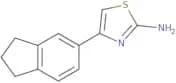
CAS:<p>5-(Thiophen-2-yl)-2H-1,2,3,4-tetrazole is an antibiotic that belongs to the group of tetrazoles. It has been shown to have bactericidal and bacteriostatic properties against Streptococcus and Staphylococcus strains. 5-(Thiophen-2-yl)-2H-1,2,3,4-tetrazole inhibits bacterial growth by inhibiting the enzyme dehydrogenase that catalyzes the conversion of branched chain amino acids into energy. 5-(Thiophen-2-yl)-2H-1,2,3,4-tetrazole also has a strong disinfectant effect on bacteria because it reacts with acid in the environment to form a highly reactive species that damages DNA.</p>Formula:C5H4N4SPurity:Min. 95%Molecular weight:152.18 g/mol4-Indan-5-yl-thiazol-2-ylamine
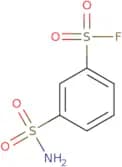
CAS:<p>Versatile small molecule scaffold</p>Formula:C12H12N2SPurity:Min. 95%Molecular weight:216.3 g/mol3-Sulfamoylbenzene-1-sulfonyl fluoride
CAS:<p>Versatile small molecule scaffold</p>Formula:C6H6FNO4S2Purity:Min. 95%Molecular weight:239.2 g/mol3-(2-Methoxyethoxy)benzene-1-sulfonamide
CAS:<p>Versatile small molecule scaffold</p>Formula:C9H13NO4SPurity:Min. 95%Molecular weight:231.27 g/mol(2S)-2-({[(9H-Fluoren-9-yl)methoxy]carbonyl}amino)-3-[4-(methoxycarbonyl)phenyl]propanoic acid
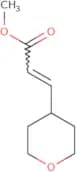
CAS:<p>Versatile small molecule scaffold</p>Formula:C26H23NO6Purity:Min. 95%Molecular weight:445.5 g/molMethyl (2E)-3-(oxan-4-yl)prop-2-enoate
CAS:<p>Versatile small molecule scaffold</p>Formula:C9H14O3Purity:Min. 95%Molecular weight:170.21 g/mol


![cyclopropyl[3-(trifluoromethyl)phenyl]methanamine](/_next/image/?url=https%3A%2Fstatic.cymitquimica.com%2Fproducts%2F3D%2Fthumb-webp%2FJCA38227.webp&w=3840&q=75)

![Spiro[imidazolidine-4,8'-tricyclo[5.2.1.0,2,6]decane]-2,5-dione](/_next/image/?url=https%3A%2Fstatic.cymitquimica.com%2Fproducts%2F3D%2Fthumb-webp%2FJCA45506.webp&w=3840&q=75)

![4-[(Propan-2-yl)carbamoyl]butanoic acid](/_next/image/?url=https%3A%2Fstatic.cymitquimica.com%2Fproducts%2F3D%2Fthumb-webp%2FJCA48143.webp&w=3840&q=75)
![2-[6-(Methylsulfanyl)hexyl]-2,3-dihydro-1H-isoindole-1,3-dione](/_next/image/?url=https%3A%2Fstatic.cymitquimica.com%2Fproducts%2F3D%2Fthumb-webp%2FJCA50175.webp&w=3840&q=75)
![[4-(Butan-2-yl)phenyl]methanamine hydrochloride](/_next/image/?url=https%3A%2Fstatic.cymitquimica.com%2Fproducts%2F3D%2Fthumb-webp%2FJCA52831.webp&w=3840&q=75)

![(2S)-2-({[(9H-Fluoren-9-yl)methoxy]carbonyl}amino)-3-[4-(methoxycarbonyl)phenyl]propanoic acid](/_next/image/?url=https%3A%2Fstatic.cymitquimica.com%2Fproducts%2F3D%2Fthumb-webp%2FJDC67109.webp&w=3840&q=75)