Building Blocks
This section contains fundamental products for the synthesis of organic and biological compounds. Building blocks are the essential starting materials used to construct complex molecules through various chemical reactions. They play a critical role in drug discovery, material science, and chemical research. At CymitQuimica, we offer a diverse range of high-quality building blocks to support your innovative research and industrial projects, ensuring you have the essential components for successful synthesis.
Subcategories of "Building Blocks"
- Boronic Acids & Boronic Acid Derivatives(5,756 products)
- Chiral Building Blocks(1,242 products)
- Hydrocarbon Building Blocks(6,095 products)
- Organic Building Blocks(61,038 products)
Found 196817 products of "Building Blocks"
Sort by
Purity (%)
0
100
|
0
|
50
|
90
|
95
|
100
[(1,3,4-Thiadiazol-2-yl)amino]formonitrile
CAS:<p>[(1,3,4-Thiadiazol-2-yl)amino]formonitrile is a cytostatic agent that inhibits the synthesis of cellular proteins. It has been shown to be effective against influenza virus and some other viruses. [(1,3,4-Thiadiazol-2-yl)amino]formonitrile also has anti-inflammatory properties and can be used as a diagnostic agent for tissue culture. This drug binds to DNA at the nucleotide level and prevents the formation of protein by inhibiting RNA synthesis in cells. It has been shown to be effective against tissue culture cells infected with hepatitis B virus or influenza A virus. [(1,3,4-Thiadiazol-2-yl)amino]formonitrile is reconstituted in water or DMSO before use in experiments with animals such as mice (CD1 strain).</p>Formula:C3H2N4SPurity:Min. 95%Molecular weight:126.14 g/mol(2-Bromoethynyl)tris(propan-2-yl)silane
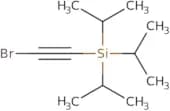
CAS:<p>(2-Bromoethynyl)tris(propan-2-yl)silane is a synthetically useful compound that has been used in the synthesis of amines, as well as in the preparation of triazoles. It can be used to produce chaperones and antitumoural drugs, such as solvents and palladium-catalyzed cross-coupling reactions. This compound is an efficient source of ethynyl groups for cross-coupling reactions with a wide range of amine partners. The ring-opening reaction of this compound with pyrroles provides two equivalents of propargyl alcohols, which can then be converted into an array of products including amino acids and pharmaceuticals.</p>Formula:C11H21SiBrPurity:Min. 95%Molecular weight:261.27 g/mol3-(Thiophen-2-yl)morpholine
CAS:<p>Versatile small molecule scaffold</p>Formula:C8H11NOSPurity:Min. 95%Molecular weight:169.25 g/mol3-Ethyl-1,2,3,4-tetrahydroisoquinoline
CAS:<p>Versatile small molecule scaffold</p>Formula:C11H15NPurity:Min. 95%Molecular weight:161.24 g/mol2-Ethoxy-9H-purin-6-amine
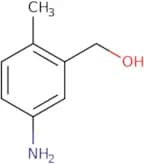
CAS:<p>Versatile small molecule scaffold</p>Formula:C7H9N5OPurity:Min. 95%Molecular weight:179.18 g/mol(5-Amino-2-methylphenyl)methanol
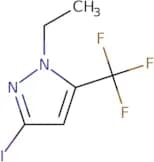
CAS:<p>Versatile small molecule scaffold</p>Formula:C8H11NOPurity:Min. 95%Molecular weight:137.18 g/mol1-Ethyl-3-iodo-5-(trifluoromethyl)-1H-pyrazole
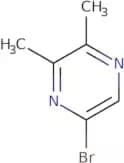
CAS:<p>Versatile small molecule scaffold</p>Formula:C6H6F3IN2Purity:Min. 95%Molecular weight:290.02 g/mol5-Bromo-2,3-dimethylpyrazine
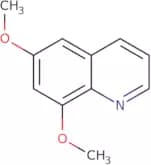
CAS:<p>Versatile small molecule scaffold</p>Formula:C6H7BrN2Purity:Min. 95%Molecular weight:187.04 g/mol6,8-Dimethoxyquinoline
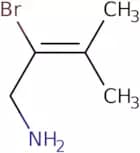
CAS:<p>6,8-Dimethoxyquinoline is a quinoline derivative that has been used to synthesize a number of other drugs. It has shown activity against cancer cells in vitro and in vivo and has been shown to have an anticholinergic effect on the central nervous system. 6,8-Dimethoxyquinoline also inhibits bacterial growth and is active against Gram-positive bacteria such as Enterococcus faecalis, Staphylococcus aureus, Streptococcus pyogenes, and Bacillus subtilis. This compound binds to the enzyme carbonic anhydrase II with high affinity. The binding of 6,8-dimethoxyquinoline with carbonic anhydrase II prevents the conversion of CO2 into carbonic acid, which may lead to cell death by inhibiting respiration.</p>Formula:C11H11NO2Purity:Min. 95%Molecular weight:189.21 g/mol2-Bromo-3-methylbut-2-en-1-amine
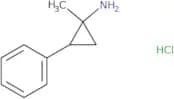
CAS:<p>Versatile small molecule scaffold</p>Formula:C5H10BrNPurity:Min. 95%Molecular weight:164.04 g/molrac-(1R,2S)-1-Methyl-2-phenylcyclopropan-1-amine hydrochloride
CAS:<p>Versatile small molecule scaffold</p>Formula:C10H14ClNPurity:Min. 95%Molecular weight:183.7 g/mol(Hept-6-en-1-yl)(methyl)amine
CAS:<p>Versatile small molecule scaffold</p>Formula:C8H17NPurity:Min. 95%Molecular weight:127.23 g/mol{Imidazo[1,2-a]pyridin-8-yl}methanol hydrochloride
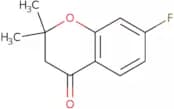
CAS:<p>Versatile small molecule scaffold</p>Formula:C8H9ClN2OPurity:Min. 95%Molecular weight:184.62 g/mol7-Fluoro-2,3-dihydro-2,2-dimethylchromen-4-one
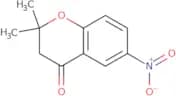
CAS:<p>Versatile small molecule scaffold</p>Formula:C11H11FO2Purity:Min. 95%Molecular weight:194.2 g/mol2,2-Dimethyl-6-nitrochroman-4-one
CAS:<p>2,2-Dimethyl-6-nitrochroman-4-one is an active compound that belongs to the group of serotonin antagonists. It binds to the 5-HT1A, 5-HT2C, and 5-HT7 receptors, with high affinity. The 5-HT6 receptor has also been shown to be expressed in the nervous system. This drug is used to treat psychotic disorders and dementia. 2,2-Dimethyl-6-nitrochroman-4-one inhibits dopamine receptors and can cause depression or worsen schizophrenia symptoms when it is taken for a long time.</p>Formula:C11H11NO4Purity:Min. 95%Molecular weight:221.21 g/moltert-Butyl (2S)-2-benzoylpyrrolidine-1-carboxylate
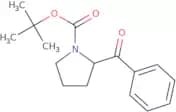
CAS:Controlled Product<p>Versatile small molecule scaffold</p>Formula:C16H21NO3Purity:Min. 95%Molecular weight:275.34 g/mol(R)-Phenyl[(2S)-pyrrolidin-2-yl]methanol hydrochloride
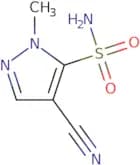
CAS:<p>Versatile small molecule scaffold</p>Formula:C11H16ClNOPurity:Min. 95%Molecular weight:213.7 g/mol4-Cyano-1-methyl-1H-pyrazole-5-sulfonamide
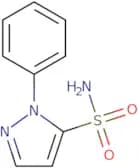
CAS:<p>Versatile small molecule scaffold</p>Formula:C5H6N4O2SPurity:Min. 95%Molecular weight:186.19 g/mol1-Phenyl-1H-pyrazole-5-sulfonamide
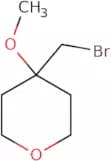
CAS:<p>Versatile small molecule scaffold</p>Formula:C9H9N3O2SPurity:Min. 95%Molecular weight:223.25 g/mol4-(Bromomethyl)-4-methoxyoxane
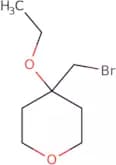
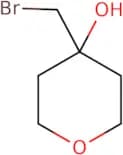
CAS:<p>Versatile small molecule scaffold</p>Formula:C7H13BrO2Purity:Min. 95%Molecular weight:209.08 g/mol4-(Bromomethyl)-4-ethoxyoxane
CAS:<p>Versatile small molecule scaffold</p>Formula:C8H15BrO2Purity:Min. 95%Molecular weight:223.11 g/mol4-(Bromomethyl)oxan-4-ol
CAS:<p>Versatile small molecule scaffold</p>Formula:C6H11BrO2Purity:Min. 95%Molecular weight:195.05 g/mol[4-(Aminomethyl)oxan-4-yl]methanamine dihydrochloride
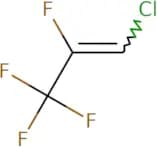
CAS:<p>Versatile small molecule scaffold</p>Formula:C7H18Cl2N2OPurity:Min. 95%Molecular weight:217.13 g/mol(Z)-1-Chloro-2,3,3,3-tetrafluoropropene
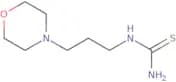
CAS:<p>(Z)-1-Chloro-2,3,3,3-tetrafluoropropene is a chemical used in commercial solvents. It is a colorless gas with an odor similar to that of hexane. It has been shown to have cardiac effects in chronic exposure studies and it can also cause chronic oral toxicity in animals. Studies on the toxicology of (Z)-1-chloro-2,3,3,3-tetrafluoropropene have been conducted using fruit extract and protein synthesis assays. The results show that this compound may be useful for the treatment of cancer and other diseases caused by protein aggregation.</p>Formula:C3HClF4Purity:Min. 95%Molecular weight:148.49 g/mol1-(3-Morpholinopropyl)-2-thiourea
CAS:<p>Versatile small molecule scaffold</p>Formula:C8H17N3OSPurity:Min. 95%Molecular weight:203.31 g/mol1-[(2R)-Piperidin-2-yl]ethan-1-one hydrochloride
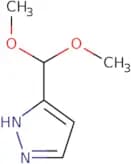
CAS:<p>Versatile small molecule scaffold</p>Formula:C7H14ClNOPurity:Min. 95%Molecular weight:163.64 g/mol3-(Dimethoxymethyl)-1H-pyrazole
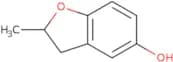
CAS:<p>3-(Dimethoxymethyl)-1H-pyrazole is a natural product that is produced by the reaction of acetals with catalytic amounts of trifluoromethanesulfonic acid. This chemical is synthesised by reacting orthoformates and functional groups. 3-(Dimethoxymethyl)-1H-pyrazole is found in catalytic amounts in the synthesis of pyrazoles and cyclic compounds. The yield of 3-(dimethoxymethyl)-1H-pyrazole can be increased by adding an oxidant to the reaction mixture.</p>Formula:C6H10N2O2Purity:Min. 95%Molecular weight:142.16 g/mol2-Methyl-2,3-dihydro-1-benzofuran-5-ol
CAS:<p>Versatile small molecule scaffold</p>Formula:C9H10O2Purity:Min. 95%Molecular weight:150.17 g/mol5-Ethynyl-4-methyl-1,3-thiazole
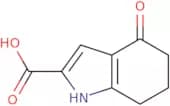
CAS:<p>Versatile small molecule scaffold</p>Formula:C6H5NSPurity:Min. 95%Molecular weight:123.18 g/mol4-Oxo-4,5,6,7-tetrahydro-1H-indole-2-carboxylic acid
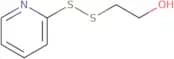
CAS:<p>Versatile small molecule scaffold</p>Formula:C9H9NO3Purity:Min. 95%Molecular weight:179.17 g/mol2-(Pyridin-2-yldisulfanyl)ethan-1-ol
CAS:<p>This linker, 2-(Pyridin-2-yldisulfanyl)ethan-1-ol, forms a disulfide bond with thiol-containing molecules. It can be cleaved intracellularly in a reductive environment, allowing controlled payload release.</p>Formula:C7H9NOS2Purity:Min. 95%Molecular weight:187.3 g/mol1-Benzenesulfonyl-piperidine-4-carboxylic acid ethyl ester
CAS:<p>1-Benzenesulfonyl-piperidine-4-carboxylic acid ethyl ester is an inhibitor of acetylcholinesterase. It is a white solid that can be synthesized in two steps from commercially available starting materials. Inhibition of this enzyme leads to the accumulation of acetylcholine, which causes increased stimulation of nicotinic and muscarinic receptors. This drug has been shown to have IC50 values that are similar to those of the reference inhibitor donepezil. 1-Benzenesulfonyl-piperidine-4-carboxylic acid ethyl ester also interacts with sulfonyl chlorides, butyrylcholinesterase, and other proteins in a manner similar to donepezil. The molecular docking studies suggest that this compound binds competitively with the active site of acetylcholinesterase.</p>Formula:C14H19NO4SPurity:Min. 95%Molecular weight:297.37 g/mol9-Azatricyclo[6.2.1.0,2,7]undeca-2,4,6-triene hydrochloride
CAS:<p>Versatile small molecule scaffold</p>Formula:C10H12ClNPurity:Min. 95%Molecular weight:181.66 g/molEthyl 4-hydroxy-4-phenylbutanoate
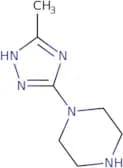
CAS:<p>Versatile small molecule scaffold</p>Formula:C12H16O3Purity:Min. 95%Molecular weight:208.25 g/mol1-(5-Methyl-4H-1,2,4-triazol-3-yl)piperazine
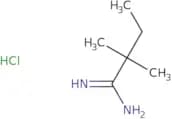
CAS:<p>Versatile small molecule scaffold</p>Formula:C7H13N5Purity:Min. 95%Molecular weight:167.21 g/mol2,2-Dimethylbutanimidamide hydrochloride
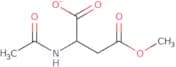
CAS:<p>Versatile small molecule scaffold</p>Formula:C6H15ClN2Purity:Min. 95%Molecular weight:150.6 g/mol2-Acetamido-4-methoxy-4-oxobutanoic acid
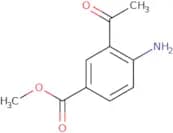
CAS:<p>Versatile small molecule scaffold</p>Formula:C7H10NO5Purity:Min. 95%Molecular weight:188.16 g/molmethyl 3-acetyl-4-aminobenzoate
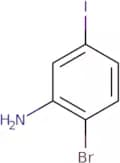
CAS:<p>Versatile small molecule scaffold</p>Formula:C10H11NO3Purity:Min. 95%Molecular weight:193.2 g/mol2-Bromo-5-iodoaniline
CAS:<p>Versatile small molecule scaffold</p>Formula:C6H5BrINPurity:Min. 95%Molecular weight:297.92 g/mol6,6-Dimethyl-1,5,7-trioxaspiro[2.5]octane
CAS:<p>Versatile small molecule scaffold</p>Formula:C7H12O3Purity:Min. 95%Molecular weight:144.17 g/mol2-[4-(Methoxymethyl)phenyl]acetonitrile
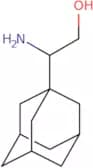
CAS:<p>Versatile small molecule scaffold</p>Formula:C10H11NOPurity:Min. 95%Molecular weight:161.2 g/mol2-(Adamantan-1-yl)-2-aminoethan-1-ol
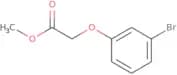
CAS:<p>Versatile small molecule scaffold</p>Formula:C12H21NOPurity:Min. 95%Molecular weight:195.3 g/molMethyl 2-(3-bromophenoxy)acetate
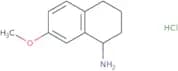
CAS:<p>Versatile small molecule scaffold</p>Formula:C9H9BrO3Purity:Min. 95%Molecular weight:245.07 g/mol7-Methoxy-1,2,3,4-tetrahydronaphthalen-1-amine hydrochloride
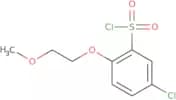
CAS:<p>Versatile small molecule scaffold</p>Formula:C11H16ClNOPurity:Min. 95%Molecular weight:213.7 g/mol5-Chloro-2-(2-methoxyethoxy)benzene-1-sulfonyl chloride
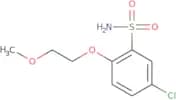
CAS:<p>Versatile small molecule scaffold</p>Formula:C9H10Cl2O4SPurity:Min. 95%Molecular weight:285.14 g/mol5-Chloro-2-(2-methoxyethoxy)benzene-1-sulfonamide
CAS:<p>Versatile small molecule scaffold</p>Formula:C9H12ClNO4SPurity:Min. 95%Molecular weight:265.71 g/mol(R)-Tetrahydrofuran-3-amine
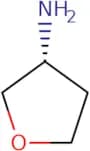
CAS:<p>(R)-Tetrahydrofuran-3-amine is a nucleoside phosphorylase inhibitor that binds to the catalytic site of the enzyme, inhibiting the synthesis of purine nucleotides. This drug has been shown to be effective in treating atrial fibrillation. (R)-Tetrahydrofuran-3-amine has also been used as a lead compound for the development of analogues with improved inhibitory potency and selectivity for adenosine receptors. The synthetic scheme for this compound starts by reacting 1,4-dihydropurine with aldehyde and formaldehyde under acid conditions. The product is then condensed with 2,2-dimethylpropane-1,3-dione to yield an intermediate that is oxidized and reduced to produce the final product. This process can be carried out using high performance liquid chromatography (HPLC) methods.</p>Formula:C4H9NOPurity:Min. 95%Molecular weight:87.12 g/mol5-Bromo-2-[2-(trimethylsilyl)ethynyl]pyridine
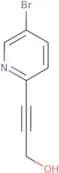
CAS:<p>Versatile small molecule scaffold</p>Formula:C10H12BrNSiPurity:Min. 95%Molecular weight:254.2 g/mol3-(5-Bromopyridin-2-yl)prop-2-yn-1-ol
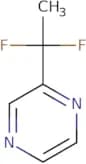
CAS:<p>Versatile small molecule scaffold</p>Formula:C8H6BrNOPurity:Min. 95%Molecular weight:212.04 g/mol2-(1,1-Difluoroethyl)pyrazine
CAS:<p>Versatile small molecule scaffold</p>Formula:C6H6F2N2Purity:Min. 95%Molecular weight:144.12 g/mol
![[(1,3,4-Thiadiazol-2-yl)amino]formonitrile](/_next/image/?url=https%3A%2Fstatic.cymitquimica.com%2Fproducts%2F3D%2Fthumb-webp%2FLEA39384.webp&w=3840&q=75)




![{Imidazo[1,2-a]pyridin-8-yl}methanol hydrochloride](/_next/image/?url=https%3A%2Fstatic.cymitquimica.com%2Fproducts%2F3D%2Fthumb-webp%2FLEA47718.webp&w=3840&q=75)
![(R)-Phenyl[(2S)-pyrrolidin-2-yl]methanol hydrochloride](/_next/image/?url=https%3A%2Fstatic.cymitquimica.com%2Fproducts%2F3D%2Fthumb-webp%2FLEA49262.webp&w=3840&q=75)
![[4-(Aminomethyl)oxan-4-yl]methanamine dihydrochloride](/_next/image/?url=https%3A%2Fstatic.cymitquimica.com%2Fproducts%2F3D%2Fthumb-webp%2FLEA51191.webp&w=3840&q=75)
![1-[(2R)-Piperidin-2-yl]ethan-1-one hydrochloride](/_next/image/?url=https%3A%2Fstatic.cymitquimica.com%2Fproducts%2F3D%2Fthumb-webp%2FLEA55621.webp&w=3840&q=75)


![9-Azatricyclo[6.2.1.0,2,7]undeca-2,4,6-triene hydrochloride](/_next/image/?url=https%3A%2Fstatic.cymitquimica.com%2Fproducts%2F3D%2Fthumb-webp%2FLEA63504.webp&w=3840&q=75)

![6,6-Dimethyl-1,5,7-trioxaspiro[2.5]octane](/_next/image/?url=https%3A%2Fstatic.cymitquimica.com%2Fproducts%2F3D%2Fthumb-webp%2FLEA72248.webp&w=3840&q=75)
![2-[4-(Methoxymethyl)phenyl]acetonitrile](/_next/image/?url=https%3A%2Fstatic.cymitquimica.com%2Fproducts%2F3D%2Fthumb-webp%2FLEA73559.webp&w=3840&q=75)
![5-Bromo-2-[2-(trimethylsilyl)ethynyl]pyridine](/_next/image/?url=https%3A%2Fstatic.cymitquimica.com%2Fproducts%2F3D%2Fthumb-webp%2FLEA77080.webp&w=3840&q=75)