


Building Blocks
This section contains fundamental products for the synthesis of organic and biological compounds. Building blocks are the essential starting materials used to construct complex molecules through various chemical reactions. They play a critical role in drug discovery, material science, and chemical research. At CymitQuimica, we offer a diverse range of high-quality building blocks to support your innovative research and industrial projects, ensuring you have the essential components for successful synthesis.
Subcategories of "Building Blocks"
- Boronic Acids & Boronic Acid Derivatives(5,756 products)
- Chiral Building Blocks(1,242 products)
- Hydrocarbon Building Blocks(6,095 products)
- Organic Building Blocks(61,055 products)
Found 199650 products of "Building Blocks"
Sort by
Purity (%)
0
100
|
0
|
50
|
90
|
95
|
100
Ethyl 3,5-dimethyl-1H-pyrazole-4-carboxylate
CAS:Ethyl 3,5-dimethyl-1H-pyrazole-4-carboxylate is a chemical compound that belongs to the group of organic compounds. It is a colorless liquid with a pungent odor and a boiling point of 150 degrees Celsius. It is soluble in water, ethanol, and ether. Ethyl 3,5-dimethyl-1H-pyrazole-4-carboxylate can be used as an amine transfer agent and has been shown to react with hydroxyl ions under acidic conditions. The reaction rate increases when the concentration of acid solutions increase. This chemical also reacts with inorganic anions to form salts.Formula:C8H12N2O2Purity:Min. 95%Molecular weight:168.19 g/mol1-(2,4-Dimethoxyphenyl)-2-thiourea
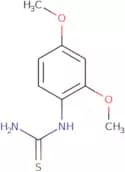
CAS:<p>1-(2,4-Dimethoxyphenyl)-2-thiourea is a lead compound for the development of opioid analgesics. It has shown to be an effective analgesic in animal models and has been found to have low side effects. This drug interacts with the μ-opioid receptor and activates it by changing its conformation. This activation mechanism is different from that of other opioids, which typically inhibit the receptor's activity. The activation mechanism of 1-(2,4-dimethoxyphenyl)-2-thiourea is believed to be due to structural modifications at the site of the receptor that promote signal transduction. This drug also acts as a competitive antagonist at the μ-opioid receptor, which may contribute to its antinociceptive properties.</p>Formula:C9H12N2O2SPurity:Min. 95%Molecular weight:212.27 g/mol4-(Phenylamino)-2,3-dihydroquinazoline-2-thione
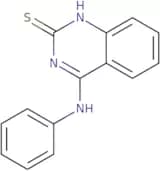
CAS:<p>Versatile small molecule scaffold</p>Formula:C14H11N3SPurity:Min. 95%Molecular weight:253.32 g/mol5-Nitro-1,3-benzoxazole-2-carbonitrile
CAS:<p>5-Nitro-1,3-benzoxazole-2-carbonitrile is a chemical compound that inhibits the uptake of drugs into cells. It is a selective inhibitor of the enzyme adenosine transporter (AT) which prevents the uptake of adenosine and other compounds into cells. The inhibition is reversible under conditions where ATP levels are low. 5-Nitro-1,3-benzoxazole-2-carbonitrile has been shown to be stable when exposed to human serum and can be used for sample preparation prior to analysis with high performance liquid chromatography (HPLC). This agent has also been shown to inhibit theophylline uptake in human erythrocytes, making it a useful tool for studying drug interactions. 5NBB also inhibits caffeine uptake in microspheres and can be used as an analytical reagent for determining caffeine content in beverages.</p>Formula:C8H3N3O3Purity:Min. 95%Molecular weight:189.13 g/mol1-Methylnaphthalene-2-carbaldehyde
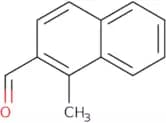
CAS:1-Methylnaphthalene-2-carbaldehyde is a compound that can be found in acetonitrile. The molecule has two isomers, which are distinguished by the position of the methyl group on the ring. The 1-methylnaphthalene-2-carbaldehyde molecule is an organic compound with a molecular weight of 136.19 g/mol and a boiling point of 141°C at 0.1 mmHg. It has a photoisomerization quantum yield of 0.05 and fluorescence lifetimes of 4 to 5 nanoseconds, which are both relatively low. The molecule's singlet state lifetime is about half that of its triplet state lifetime, although it has been shown to have a higher quantum yield for this state than for its ground state. This means that the singlet state is more stable than the ground state, so it will remain in this state longer before emitting light or changing back to its ground state. This property makesFormula:C12H10OPurity:Min. 95%Molecular weight:170.21 g/mol7-Bromo-5-methyl-1-benzofuran-2-carboxylic acid
CAS:<p>Versatile small molecule scaffold</p>Formula:C10H7BrO3Purity:Min. 95%Molecular weight:255.06 g/mol5-Methyl-2,3-dihydro-1-benzofuran-7-carboxylic acid
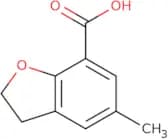
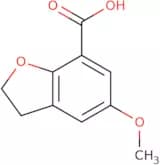
CAS:<p>Versatile small molecule scaffold</p>Formula:C10H10O3Purity:Min. 95%Molecular weight:178.18 g/mol5-Methoxy-2,3-dihydro-1-benzofuran-7-carboxylic acid
CAS:<p>Versatile small molecule scaffold</p>Formula:C10H10O4Purity:Min. 95%Molecular weight:194.18 g/molN-(Propan-2-yl)-1-[N'-(propan-2-yl)carbamimidamido]methanimidamide hydrochloride
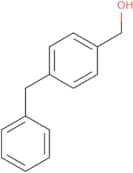
CAS:<p>Versatile small molecule scaffold</p>Formula:C8H20ClN5Purity:Min. 95%Molecular weight:221.73 g/mol(4-Benzylphenyl)methanol
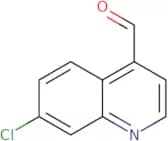
CAS:<p>4-Benzylphenylmethanol is a natural compound that belongs to the class of amines. It is found in pyrethrum, which is derived from plants of the genus Chrysanthemum. 4-Benzylphenylmethanol has been used as a supplement for insect control, usually as an additive to natural pyrethrins. This substance has been shown to be effective against insect species such as the German cockroach, the fruit fly, and the mosquito. 4-Benzylphenylmethanol also has insecticidal properties by preventing insects from breaking down the chemical bonds in their cell membranes. This allows for more rapid death of insects and lessens their ability to regenerate cells after contact with this substance.</p>Formula:C14H14OPurity:Min. 95%Molecular weight:198.27 g/mol7-Chloroquinoline-4-carbaldehyde
CAS:<p>7-Chloroquinoline-4-carbaldehyde is an intermediate in the synthesis of quinolines. It is a functionalized, hydroxylated compound that can be used as an antiproliferative reagent. 7-Chloroquinoline-4-carbaldehyde has been shown to inhibit the growth of leukemia cells, prostate cancer cells and breast cancer cells. The hydroxyl group on this molecule reacts with electrophiles to form covalent adducts and undergoes substitution reactions with amino groups. This molecule also has an aryl group that can be modified to create bioisosteres.</p>Formula:C10H6ClNOPurity:Min. 95%Molecular weight:191.61 g/mol3-Chloro-N-(2,6-dichlorophenyl)propanamide
CAS:<p>Versatile small molecule scaffold</p>Formula:C9H8Cl3NOPurity:Min. 95%Molecular weight:252.5 g/mol1-(4-Bromothiophen-3-yl)ethan-1-one
CAS:<p>Versatile small molecule scaffold</p>Formula:C6H5BrOSPurity:Min. 95%Molecular weight:205.07 g/molBis(propan-2-yl) [(4-methylbenzenesulfonyl)oxy]methanephosphonate
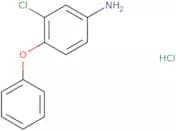
CAS:<p>Bis(propan-2-yl) [(4-methylbenzenesulfonyl)oxy]methanephosphonate is a nucleoside phosphonate that inhibits the replication of dna and RNA viruses. It is used to treat human immunodeficiency virus (HIV), varicella, and hepatitis. The antiviral activity of bis(propan-2-yl) [(4-methylbenzenesulfonyl)oxy]methanephosphonate has been shown to be effective against HIV, herpes simplex virus type 1, and hepatitis B virus. This drug binds to the viral nucleic acid polymerase and prevents it from adding new nucleotides to the growing strand of DNA or RNA.</p>Formula:C14H23O6PSPurity:Min. 95%Molecular weight:350.37 g/mol3-Chloro-4-phenoxyaniline hydrochloride
CAS:<p>Versatile small molecule scaffold</p>Formula:C12H11Cl2NOPurity:Min. 95%Molecular weight:256.13 g/mol2,4-Dibromo-5-methoxyaniline
CAS:<p>2,4-Dibromo-5-methoxyaniline is an analog of 2,4-diaminopyridine. It is a synthetic compound that can be prepared by catalytic reduction of the corresponding bromide. The yields are between 60 and 90%. It is used as a precursor to make other compounds such as methoxybenzene and 4-bromo-2,6-dimethoxyphenol. The compound has two methoxy groups and two hydroxy groups that can be substituted with dialkoxy or alkoxy groups. This compound also undergoes debromination to form 2,4-dibromo-5-(hydroxymethyl)aniline. 2,4-Dibromo-5-(hydroxymethyl)aniline can be oxidized to form aniline or reduced to form dihydroxybenzene (1,3).</p>Formula:C7H7Br2NOPurity:Min. 95%Molecular weight:280.94 g/molBenzyl (2,5-Dioxotetrahydrofuran-3-Yl)Carbamate
CAS:<p>Versatile small molecule scaffold</p>Formula:C12H11NO5Purity:Min. 95%Molecular weight:249.22 g/mol2-Bromo-3-methylquinoline
CAS:<p>2-Bromo-3-methylquinoline is a pyrimidine compound that has been shown to have anti-inflammatory properties. It has been demonstrated to inhibit the conversion of propionate and acetyl-CoA into propionyl CoA, which is an important step in the synthesis of fatty acids. This inhibition leads to a decrease in the production of inflammatory leukotrienes and prostaglandins. 2-Bromo-3-methylquinoline also inhibits the formation of reactive oxygen species by inhibiting the conversion of isobutyrate into isobutyraldehyde, which results in decreased inflammation and oxidative stress.</p>Formula:C10H8BrNPurity:Min. 95%Molecular weight:222.08 g/mol2-(3-Iodo-2-oxopropyl)-2,3-dihydro-1H-isoindole-1,3-dione
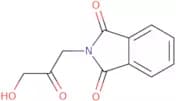
CAS:<p>Versatile small molecule scaffold</p>Formula:C11H8INO3Purity:Min. 95%Molecular weight:329.09 g/mol2-(3-Hydroxy-2-oxopropyl)-2,3-dihydro-1H-isoindole-1,3-dione
CAS:<p>Versatile small molecule scaffold</p>Formula:C11H9NO4Purity:Min. 95%Molecular weight:219.19 g/mol3-Nitro-N-phenylpyridin-4-amine
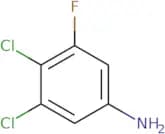
CAS:<p>Versatile small molecule scaffold</p>Formula:C11H9N3O2Purity:Min. 95%Molecular weight:215.21 g/mol3,4-Dichloro-5-fluoroaniline
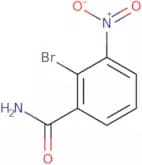
CAS:<p>Versatile small molecule scaffold</p>Formula:C6H4Cl2FNPurity:Min. 95%Molecular weight:180 g/mol2-Bromo-3-nitrobenzamide
CAS:<p>2-Bromo-3-nitrobenzamide (2-BNBA) is an organic compound that has been shown to have insecticidal properties. It is a quinoline derivative with a cinnabarinus structure and a benzyl group on the nitrogen atom. 2-BNBA was synthesized by modifying the pharmacophore of the natural product cinnabarinus, which is found in the leaves of Cinnamomum zeylanicum. The modification of this pharmacophore led to increased insecticidal activity against tetranychus and other insects. The target compounds for 2-BNBA are sulfide, which are found in cells and tissues of insects such as tetranychus. 2-BNBA inhibits the synthesis of proteins and DNA, leading to death by accumulation of reactive oxygen species within cells.</p>Formula:C7H5N2O3BrPurity:Min. 95%Molecular weight:245.03 g/mol3-Acetyl-2,3,4,5-tetrahydro-1H-3-benzazepine-7-sulfonyl chloride
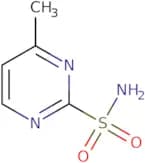
CAS:<p>Versatile small molecule scaffold</p>Formula:C12H14ClNO3SPurity:Min. 95%Molecular weight:287.76 g/mol4-Methylpyrimidine-2-sulfonamide
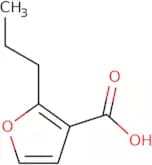
CAS:<p>4-Methylpyrimidine-2-sulfonamide is a pharmaceutical preparation that has been shown to be effective in the treatment of hyperproliferative diseases. It has been found to inhibit cellular proliferation and induce apoptosis in cells from patients with chronic bronchitis, which may be due to its ability to modulate extracellular signal transduction pathways. 4-Methylpyrimidine-2-sulfonamide also has anti-cancer effects, inhibiting the growth of cancer cells by triggering cell cycle arrest or inducing apoptosis. This drug can also lead to symptoms such as nausea, vomiting, and diarrhea, which are indications of a hypersensitivity reaction. The gene sequence analysis was done using DNA from wild type mice and transgenic animals.</p>Formula:C5H7N3O2SPurity:Min. 95%Molecular weight:173.2 g/mol2-Propylfuran-3-carboxylic acid
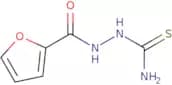
CAS:<p>Versatile small molecule scaffold</p>Formula:C8H10O3Purity:Min. 95%Molecular weight:154.16 g/molN-(Carbamothioylamino)furan-2-carboxamide
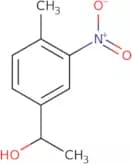
CAS:<p>N-(Carbamothioylamino)furan-2-carboxamide is a chemical compound that has been used as a liver protectant and to treat calcium deficiencies. The calcium salt of the drug is prepared by mixing anhydrous ethanol with calcium chloride and adding pyridine dropwise. Upon refluxing, the mixture is cooled and then evaporated under vacuum to yield the desired product.</p>Formula:C6H7N3O2SPurity:Min. 95%Molecular weight:185.21 g/mol1-(4-Methyl-3-nitrophenyl)ethan-1-ol
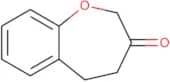
CAS:<p>Versatile small molecule scaffold</p>Formula:C9H11NO3Purity:Min. 95%Molecular weight:181.19 g/mol2,3,4,5-Tetrahydro-1-benzoxepin-3-one
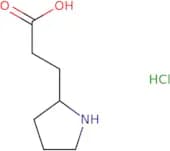
CAS:<p>2,3,4,5-Tetrahydro-1-benzoxepin-3-one is an acrylamide derivative that has been shown to undergo ring cleavage under certain conditions. The cleavage of the benzene ring leads to the formation of two aromatic rings and a carboxylic acid.</p>Formula:C10H10O2Purity:Min. 95%Molecular weight:162.18 g/mol3-(Pyrrolidin-2-yl)propanoic acid hydrochloride
CAS:<p>Versatile small molecule scaffold</p>Formula:C7H14ClNO2Purity:Min. 95%Molecular weight:179.64 g/mol6-Cyano-4-oxo-4H-chromene-2-carboxylic acid
CAS:<p>Versatile small molecule scaffold</p>Formula:C11H5NO4Purity:Min. 95%Molecular weight:215.16 g/mol1,2,3,4-Tetrahydropyrido[3,4-b]pyrazine
CAS:<p>1,2,3,4-Tetrahydropyrido[3,4-b]pyrazine is an organic solvent that has been shown to be a good catalyst for the dimerization of isocyanates. It is used as a basic additive in resins and coatings. 1,2,3,4-Tetrahydropyrido[3,4-b]pyrazine is soluble in most solvents and can be used as a diluent of other solvents. This chemical has been shown to have good thermal stability and low volatility.</p>Formula:C7H9N3Purity:Min. 95%Molecular weight:135.17 g/mol6-Chloro-5-formyl-1,3-dimethyluracil
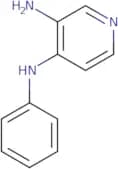
CAS:<p>6-Chloro-5-formyl-1,3-dimethyluracil is a cyclized compound that is formed from the reaction between a vinyl group and sulfilimine. It has been shown to be a precursor for the synthesis of uracil derivatives by photolysis. 6-Chloro-5-formyl-1,3-dimethyluracil is also an intermediate in the synthesis of analogues of uracil and cytosine.</p>Formula:C7H7ClN2O3Purity:Min. 95%Molecular weight:202.6 g/mol4-N-Phenylpyridine-3,4-diamine
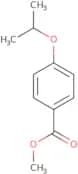
CAS:<p>Versatile small molecule scaffold</p>Formula:C11H11N3Purity:Min. 95%Molecular weight:185.22 g/molMethyl 4-Isopropoxybenzoate
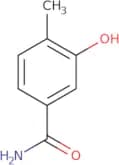
CAS:<p>Versatile small molecule scaffold</p>Formula:C11H14O3Purity:Min. 95%Molecular weight:194.23 g/mol3-Hydroxy-4-methylbenzamide
CAS:<p>3-Hydroxy-4-methylbenzamide (3HMB) is a phenyl amine that has been used in medicinal chemistry. It is an inhibitor of cyclopentyl, phenolic, and n-substituted aromatic amines. 3HMB has also been shown to be a potent antitumor agent. 3HMB inhibits the metabolic stability of these compounds, which leads to their degradation by enzymes. The selectivity for these compounds over other substrates may be due to the presence of a benzene ring in 3HMB.br></p>Formula:C8H9NO2Purity:Min. 95%Molecular weight:151.16 g/mol4'-Formyl-[1,1'-biphenyl]-2-carbonitrile
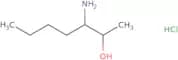
CAS:<p>4'-Formyl-[1,1'-biphenyl]-2-carbonitrile is an aldehyde that can be used to synthesize medicines and other organic compounds. It has a high yield and is a crystalline solid with a melting point of about 163 degrees Celsius. 4'-Formyl-[1,1'-biphenyl]-2-carbonitrile can be manufactured from tetrahydrofuran in a high-purity form. This compound is also used as an intermediate for the synthesis of other medicines.</p>Formula:C14H9NOPurity:Min. 95%Molecular weight:207.23 g/mol3-Aminoheptan-2-ol hydrochloride
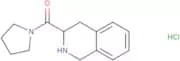
CAS:Versatile small molecule scaffoldFormula:C7H18ClNOPurity:Min. 95%Molecular weight:167.68 g/mol3-(Pyrrolidine-1-carbonyl)-1,2,3,4-tetrahydroisoquinoline hydrochloride
CAS:Versatile small molecule scaffoldFormula:C14H19ClN2OPurity:Min. 95%Molecular weight:266.76 g/mol2-Chloro-N-[2-(thiophen-3-yl)ethyl]acetamide
CAS:<p>Versatile small molecule scaffold</p>Formula:C8H10ClNOSPurity:Min. 95%Molecular weight:203.69 g/mol2-(1,4-Dioxaspiro[4.5]decan-8-yl)ethanol
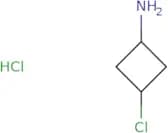
CAS:<p>Versatile small molecule scaffold</p>Formula:C10H18O3Purity:Min. 95%Molecular weight:186.24 g/mol3-Chlorocyclobutan-1-amine hydrochlorides
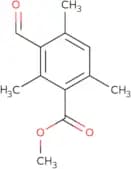
CAS:<p>Versatile small molecule scaffold</p>Formula:C4H9Cl2NPurity:Min. 95%Molecular weight:142 g/molMethyl 3-formyl-2,4,6-trimethylbenzoate
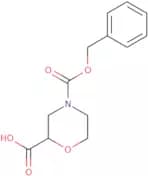
CAS:<p>Versatile small molecule scaffold</p>Formula:C12H14O3Purity:Min. 95%Molecular weight:206.24 g/molN-Cbz-2-morpholinecarboxylic acid
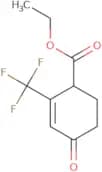
CAS:<p>Versatile small molecule scaffold</p>Formula:C13H15NO5Purity:Min. 95%Molecular weight:265.26 g/molEthyl 4-oxo-2-(trifluoromethyl)cyclohex-2-ene-1-carboxylate
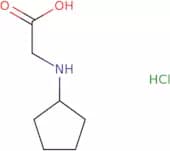
CAS:<p>Versatile small molecule scaffold</p>Formula:C10H11F3O3Purity:Min. 95%Molecular weight:236.19 g/mol2-(cyclopentylamino)acetic acid hydrochloride
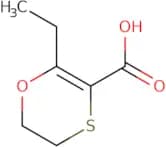
CAS:Versatile small molecule scaffoldFormula:C7H14ClNO2Purity:Min. 95%Molecular weight:179.64 g/mol2-Ethyl-5,6-dihydro-1,4-oxathiine-3-carboxylic acid
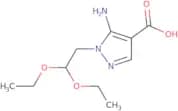
CAS:<p>Versatile small molecule scaffold</p>Formula:C7H10O3SPurity:Min. 95%Molecular weight:174.2 g/mol5-Amino-1-(2,2-diethoxyethyl)-1H-pyrazole-4-carboxylic acid
CAS:<p>Versatile small molecule scaffold</p>Formula:C10H17N3O4Purity:Min. 95%Molecular weight:243.26 g/mol1-Methyl-1H-imidazo[1,2-b]pyrazole-7-carbonitrile
CAS:<p>Versatile small molecule scaffold</p>Formula:C7H6N4Purity:Min. 95%Molecular weight:146.15 g/mol1-Methyl-1H-imidazo[1,2-b]pyrazole-7-carboxylic acid
CAS:<p>Versatile small molecule scaffold</p>Formula:C7H7N3O2Purity:Min. 95%Molecular weight:165.15 g/mol




![N-(Propan-2-yl)-1-[N'-(propan-2-yl)carbamimidamido]methanimidamide hydrochloride](/_next/image/?url=https%3A%2Fstatic.cymitquimica.com%2Fproducts%2F3D%2Fthumb-webp%2FKBA70882.webp&w=3840&q=75)


![Bis(propan-2-yl) [(4-methylbenzenesulfonyl)oxy]methanephosphonate](/_next/image/?url=https%3A%2Fstatic.cymitquimica.com%2Fproducts%2F3D%2Fthumb-webp%2FKBA71798.webp&w=3840&q=75)





![1,2,3,4-Tetrahydropyrido[3,4-b]pyrazine](/_next/image/?url=https%3A%2Fstatic.cymitquimica.com%2Fproducts%2F3D%2Fthumb-webp%2FKBA80841.webp&w=3840&q=75)

![4'-Formyl-[1,1'-biphenyl]-2-carbonitrile](/_next/image/?url=https%3A%2Fstatic.cymitquimica.com%2Fproducts%2F3D%2Fthumb-webp%2FKFA68993.webp&w=3840&q=75)
![2-Chloro-N-[2-(thiophen-3-yl)ethyl]acetamide](/_next/image/?url=https%3A%2Fstatic.cymitquimica.com%2Fproducts%2F3D%2Fthumb-webp%2FKFA70970.webp&w=3840&q=75)
![2-(1,4-Dioxaspiro[4.5]decan-8-yl)ethanol](/_next/image/?url=https%3A%2Fstatic.cymitquimica.com%2Fproducts%2F3D%2Fthumb-webp%2FKFA76176.webp&w=3840&q=75)
![1-Methyl-1H-imidazo[1,2-b]pyrazole-7-carbonitrile](/_next/image/?url=https%3A%2Fstatic.cymitquimica.com%2Fproducts%2F3D%2Fthumb-webp%2FKFA83004.webp&w=3840&q=75)
![1-Methyl-1H-imidazo[1,2-b]pyrazole-7-carboxylic acid](/_next/image/?url=https%3A%2Fstatic.cymitquimica.com%2Fproducts%2F3D%2Fthumb-webp%2FKFA83016.webp&w=3840&q=75)