Building Blocks
This section contains fundamental products for the synthesis of organic and biological compounds. Building blocks are the essential starting materials used to construct complex molecules through various chemical reactions. They play a critical role in drug discovery, material science, and chemical research. At CymitQuimica, we offer a diverse range of high-quality building blocks to support your innovative research and industrial projects, ensuring you have the essential components for successful synthesis.
Subcategories of "Building Blocks"
- Boronic Acids & Boronic Acid Derivatives(5,756 products)
- Chiral Building Blocks(1,242 products)
- Hydrocarbon Building Blocks(6,095 products)
- Organic Building Blocks(61,051 products)
Found 199813 products of "Building Blocks"
Sort by
Purity (%)
0
100
|
0
|
50
|
90
|
95
|
100
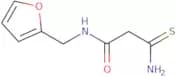
2-Carbamothioyl-N-(furan-2-ylmethyl)acetamide
CAS:<p>Versatile small molecule scaffold</p>Formula:C8H10N2O2SPurity:Min. 95%Molecular weight:198.24 g/mol(E)-(Methyl N-cyano-2-methylpropanecarboximidate)
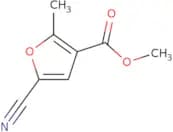
CAS:<p>Versatile small molecule scaffold</p>Formula:C6H10N2OPurity:Min. 95%Molecular weight:126.2 g/molMethyl 5-cyano-2-methylfuran-3-carboxylate
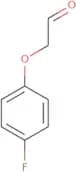
CAS:<p>Versatile small molecule scaffold</p>Formula:C8H7NO3Purity:Min. 95%Molecular weight:165.15 g/mol2-(4-Fluorophenoxy)acetaldehyde
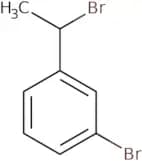
CAS:<p>Versatile small molecule scaffold</p>Formula:C8H7FO2Purity:Min. 95%Molecular weight:154.14 g/mol1-bromo-3-(1-bromoethyl)benzene
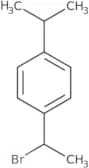
CAS:<p>Versatile small molecule scaffold</p>Formula:C8H8Br2Purity:Min. 95%Molecular weight:263.96 g/mol1-(1-Bromoethyl)-4-(propan-2-yl)benzene
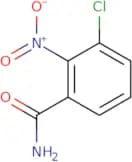
CAS:<p>Versatile small molecule scaffold</p>Formula:C11H15BrPurity:Min. 95%Molecular weight:227.14 g/mol3-Chloro-2-nitrobenzamide
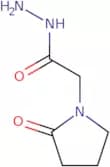
CAS:<p>Versatile small molecule scaffold</p>Formula:C7H5ClN2O3Purity:Min. 95%Molecular weight:200.58 g/mol2-(2-Oxopyrrolidin-1-yl)acetohydrazide
CAS:Versatile small molecule scaffoldFormula:C6H11N3O2Purity:Min. 95%Molecular weight:157.17 g/molMethyl 3-sulfamoylbenzoate
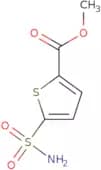
CAS:<p>Versatile small molecule scaffold</p>Formula:C8H9NO4SPurity:Min. 95%Molecular weight:215.22 g/molMethyl 5-sulfamoylthiophene-2-carboxylate
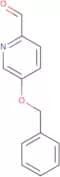
CAS:<p>Versatile small molecule scaffold</p>Formula:C6H7NO4S2Purity:Min. 95%Molecular weight:221.3 g/mol5-(Benzyloxy)pyridine-2-carbaldehyde
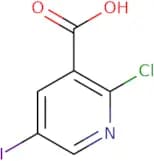
CAS:<p>Versatile small molecule scaffold</p>Formula:C13H11NO2Purity:Min. 95%Molecular weight:213.23 g/mol2-Chloro-5-iodonicotinic acid
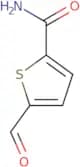
CAS:<p>Versatile small molecule scaffold</p>Formula:C6H3ClINO2Purity:Min. 95%Molecular weight:283.45 g/mol5-Formylthiophene-2-carboxamide
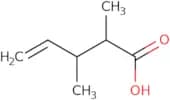
CAS:<p>Versatile small molecule scaffold</p>Formula:C6H5NO2SPurity:Min. 95%Molecular weight:155.18 g/mol2,3-Dimethylpent-4-enoic acid
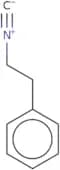
CAS:<p>Versatile small molecule scaffold</p>Formula:C7H12O2Purity:Min. 95%Molecular weight:128.17 g/mol2-Isocyanoethylbenzene
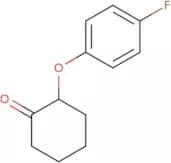
CAS:<p>2-Isocyanoethylbenzene, also known as 2-IBAB, is an organic compound that contains a carbonyl group and two isocyanate groups. It is used as a catalyst in hydrosilylation reactions to synthesize polymers such as polyurethanes. The reaction between 2-isocyanoethylbenzene and copper complex produces an imine that reacts with phosphite to form quinoline derivatives. These quinoline derivatives are then reacted with carboxylates to form ruthenium complexes, which catalyze the polymerization of deionized water. The polymerization initiator for this process is typically an organic peroxide or azide.</p>Formula:C9H9NPurity:Min. 95%Molecular weight:131.18 g/mol2-(4-Fluorophenoxy)cyclohexan-1-one
CAS:<p>Versatile small molecule scaffold</p>Formula:C12H13FO2Purity:Min. 95%Molecular weight:208.23 g/mol9-Cyclopropylnonan-1-ol
CAS:<p>Versatile small molecule scaffold</p>Formula:C12H24OPurity:Min. 95%Molecular weight:184.32 g/mol3-Chloro-6-nitro-benzo[b]thiophene-2-carboxylic acid methyl ester
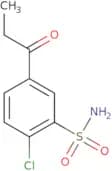
CAS:<p>Versatile small molecule scaffold</p>Formula:C10H6ClNO4SPurity:Min. 95%Molecular weight:271.68 g/mol2-Chloro-5-propanoylbenzene-1-sulfonamide
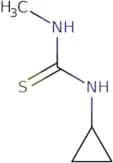
CAS:<p>Versatile small molecule scaffold</p>Formula:C9H10ClNO3SPurity:Min. 95%Molecular weight:247.7 g/mol1-Cyclopropyl-3-methylthiourea
CAS:<p>1-Cyclopropyl-3-methylthiourea (1CMTU) is an inhibitor of glutamate dehydrogenase and has been shown to regulate the levels of glutamate in the brain. It is an effective treatment for a number of neurological disorders, such as epilepsy and Parkinson's disease. 1CMTU inhibits the activity of glutamic acid decarboxylase, which is responsible for converting glutamate into GABA. This drug also prevents neuronal death by inhibiting oxidative stress and regulating insulin sensitivity.</p>Formula:C5H10N2SPurity:Min. 95%Molecular weight:130.21 g/mol1,3-Dicyclopropylthiourea
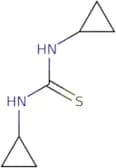
CAS:<p>Versatile small molecule scaffold</p>Formula:C7H12N2SPurity:Min. 95%Molecular weight:156.25 g/mol1-(Furan-2-ylmethyl)-3-methylthiourea
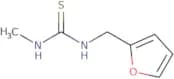
CAS:<p>Versatile small molecule scaffold</p>Formula:C7H10N2OSPurity:Min. 95%Molecular weight:170.23 g/mol4-bromo-3-sulfamoylbenzoic acid
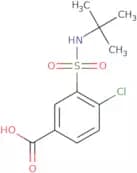
CAS:<p>Versatile small molecule scaffold</p>Formula:C7H6BrNO4SPurity:Min. 95%Molecular weight:280.1 g/mol3-(tert-Butylsulfamoyl)-4-chlorobenzoic acid
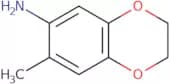
CAS:<p>Versatile small molecule scaffold</p>Formula:C11H14ClNO4SPurity:Min. 95%Molecular weight:291.75 g/mol7-Methyl-2,3-dihydro-1,4-benzodioxin-6-amine
CAS:<p>Versatile small molecule scaffold</p>Formula:C9H11NO2Purity:Min. 95%Molecular weight:165.19 g/mol2H,3H,6H-[1,4]Dioxino[2,3-F]indole-7-carboxylic acid
CAS:2H,3H,6H-[1,4]Dioxino[2,3-F]indole-7-carboxylic acid is an indole that reacts with electrophiles such as chlorine and bromine to form chloro and bromo derivatives. These derivatives can be used to produce a wide variety of compounds. The reactivity of this chemical is determined by the presence of electron withdrawing groups on the ring. When these groups are present, the compound is more reactive. This reactivity can be seen in the reaction with sodium hydroxide, which produces an alkoxide ion when reacted with 2H,3H,6H-[1,4]Dioxino[2,3-F]indole-7-carboxylic acid.Formula:C11H9NO4Purity:Min. 95%Molecular weight:219.19 g/mol7-bromo-2,3-dihydrobenzo[b][1,4]dioxine-6-carboxylic acid
CAS:<p>Versatile small molecule scaffold</p>Formula:C9H7BrO4Purity:Min. 95%Molecular weight:259.05 g/mol6-Bromo-7-nitro-2,3-dihydrobenzo[b][1,4]dioxine
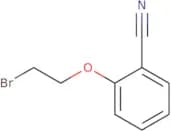
CAS:<p>Versatile small molecule scaffold</p>Formula:C8H6BrNO4Purity:Min. 95%Molecular weight:260.04 g/mol2-(2-Bromoethoxy)benzonitrile
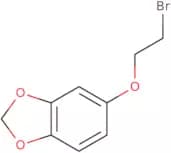
CAS:<p>Versatile small molecule scaffold</p>Formula:C9H8BrNOPurity:Min. 95%Molecular weight:226.07 g/mol5-(2-Bromoethoxy)-1,3-dioxaindane
CAS:<p>Versatile small molecule scaffold</p>Formula:C9H9BrO3Purity:Min. 95%Molecular weight:245.07 g/mol4-(1,2,3-Thiadiazol-4-yl)phenol
CAS:<p>4-(1,2,3-Thiadiazol-4-yl)phenol is an antibiotic that belongs to the group of antimicrobials. It has an inhibitory concentration (IC) of 0.5 micrograms/ml against pyogenic bacteria and 1.0 micrograms/ml against a number of other bacterial strains. 4-(1,2,3-Thiadiazol-4-yl)phenol also has antimicrobial properties against fungi and may be used for the treatment of catalase-producing bacteria such as Streptococcus pyogenes or Staphylococcus aureus. Elemental analysis revealed that this compound is composed entirely of carbon, hydrogen, and oxygen. The molecular weight was found to be 166.16 g/mol. This compound inhibits bacterial growth by binding to DNA-dependent RNA polymerase and preventing transcription and replication of DNA. This active form is metabolized through a number of metabolic transformations including hydro</p>Formula:C8H6N2OSPurity:Min. 95%Molecular weight:178.21 g/mol1-(Pyridine-4-carbonyl)pyrrolidine-2-carboxylic acid
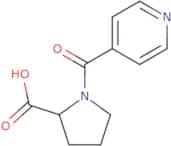
CAS:<p>Versatile small molecule scaffold</p>Formula:C11H12N2O3Purity:Min. 95%Molecular weight:220.22 g/mol3-(2,5-Dichlorophenyl)pyrazole
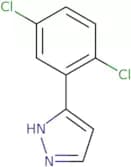
CAS:<p>Versatile small molecule scaffold</p>Formula:C9H6Cl2N2Purity:Min. 95%Molecular weight:213.06 g/mol1-Benzofuran-2-carboximidamide hydrochloride
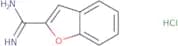
CAS:<p>1-Benzofuran-2-carboximidamide hydrochloride is a selective serotonin reuptake inhibitor that is used in research to investigate the effects of serotonin on the central nervous system. It binds to the 5-HT1A receptor and inhibits serotonin uptake, preventing it from being broken down by neurons. This drug has also been shown to bind to 5-HT2C and D2 dopamine receptors, which may explain its ability to inhibit dopamine uptake. 1-Benzofuran-2-carboximidamide hydrochloride has been shown to have a high affinity for 5-HT1A receptors and has been used in animal studies at temperatures ranging from 0°C to 40°C.</p>Formula:C9H9ClN2OPurity:Min. 95%Molecular weight:196.63 g/mol2H,3H-[1,3]Oxazolo[4,5-c]pyridin-2-one
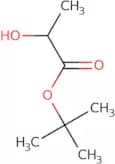
CAS:<p>Versatile small molecule scaffold</p>Formula:C6H4N2O2Purity:Min. 95%Molecular weight:136.11 g/moltert-Butyl 2-hydroxypropanoate
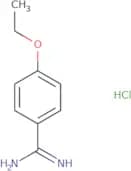
CAS:<p>Tert-Butyl 2-hydroxypropanoate (TBHP) is a lactate compound that is synthesized in the vapor phase. It is a liquid at room temperature and has a molecular weight of 147. TBHP has been shown to have neuroprotective effects, which are due to its ability to reduce oxidative stress. TBHP also possesses potent antagonist activity against GABAA receptors, which may be due to its ability to inhibit the binding of GABA.</p>Formula:C7H14O3Purity:Min. 95%Molecular weight:146.18 g/mol4-Ethoxybenzene-1-carboximidamide hydrochloride
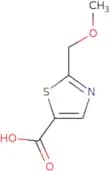
CAS:<p>Versatile small molecule scaffold</p>Formula:C9H13ClN2OPurity:Min. 95%Molecular weight:200.66 g/mol2-(Methoxymethyl)-1,3-thiazole-5-carboxylic acid
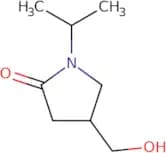
CAS:<p>Versatile small molecule scaffold</p>Formula:C6H7NO3SPurity:Min. 95%Molecular weight:173.19 g/mol4-(Hydroxymethyl)-1-isopropylpyrrolidin-2-one
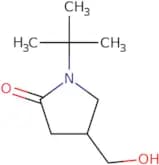
CAS:<p>Versatile small molecule scaffold</p>Formula:C8H15NO2Purity:Min. 95%Molecular weight:157.21 g/mol1-tert-Butyl-4-(hydroxymethyl)pyrrolidin-2-one
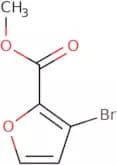
CAS:<p>Versatile small molecule scaffold</p>Formula:C9H17NO2Purity:Min. 95%Molecular weight:171.24 g/molMethyl 3-bromofuran-2-carboxylate
CAS:Methyl 3-bromofuran-2-carboxylate is a methoxylated furan that can be synthesized by the oxidation of methyl 2-bromofuran-2-carboxylate. It has a methoxyl group, which is a reactive functional group. With this reaction, it can be used to create other compounds. Furan rings are found in many natural and manmade molecules such as drugs and plastics. The graphs show that the reaction mechanism for furan carboxylic acid involves the removal of a proton from sulfuric acid, followed by an electrophilic addition by bromine to form methyl 3-bromofuran-2-carboxylate.Formula:C6H5BrO3Purity:Min. 95%Molecular weight:205.01 g/mol2,4-Dimethoxypyrimidine-6-carboxylic acid
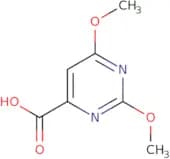
CAS:<p>Versatile small molecule scaffold</p>Formula:C7H8N2O4Purity:Min. 95%Molecular weight:184.15 g/mol1-Methyl-6-oxo-1,6-dihydropyridine-2-carboxylic acid
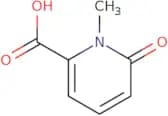
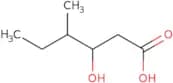
CAS:<p>Versatile small molecule scaffold</p>Formula:C7H7NO3Purity:Min. 95%Molecular weight:153.14 g/mol3-Hydroxy-4-methylhexanoic acid
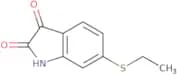
CAS:<p>3-Hydroxy-4-methylhexanoic acid is a cyclic octapeptide with a hydroxyl group in the 3-position, which has been found to be an intermediate in penicillin biosynthesis. It was originally isolated from Penicillium chrysogenum and other fungi that produce penicillin. 3-Hydroxy-4-methylhexanoic acid can be synthesized by the condensation of L -alanine and succinic acid. The synthesis of this compound is an example of bioorganic chemistry, where organic compounds are synthesized using living organisms. 3-Hydroxy-4-methylhexanoic acid has a physicochemical property that allows it to be easily purified by high performance liquid chromatography (HPLC) or gas chromatography (GC). This compound also has antibiotic activity against Gram positive bacteria including Staphylococcus aureus and Gram negative bacteria such as Escherichia coli.</p>Formula:C7H14O3Purity:Min. 95%Molecular weight:146.18 g/mol6-(Ethylsulfanyl)-2,3-dihydro-1H-indole-2,3-dione
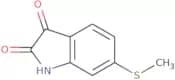
CAS:<p>Versatile small molecule scaffold</p>Formula:C10H9NO2SPurity:Min. 95%Molecular weight:207.25 g/mol6-(Methylsulfanyl)-2,3-dihydro-1H-indole-2,3-dione
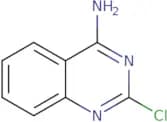
CAS:<p>Versatile small molecule scaffold</p>Formula:C9H7NO2SPurity:Min. 95%Molecular weight:193.22 g/mol2-chloroquinazolin-4-amine
CAS:<p>2-Chloroquinazolin-4-amine (CQA) is an anti-oxidant that exhibits significant cytotoxicity against human cancer cells. It is a competitive inhibitor of the enzyme chloride channel protein, which is involved in regulating the concentration of chloride ions in the blood. CQA has been shown to inhibit chemotaxis of white blood cells and platelets, and to have a protective effect on muscle tissue. The cytotoxic effects of CQA were shown to be due to its ability to induce apoptosis, or programmed cell death.</p>Formula:C8H6ClN3Purity:Min. 95%Molecular weight:179.6 g/mol3-Chloro-4-(3-methoxyphenoxy)aniline
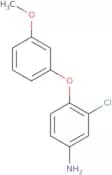
CAS:<p>Versatile small molecule scaffold</p>Formula:C13H12ClNO2Purity:Min. 95%Molecular weight:249.69 g/moltert-Butyl 4-chlorocarbonylpiperazine-1-carboxylate
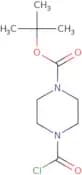
CAS:<p>Versatile small molecule scaffold</p>Formula:C10H17ClN2O3Purity:Min. 95%Color and Shape:PowderMolecular weight:248.71 g/mol4-Chloro-3-methylpyridine-2-carbaldehyde
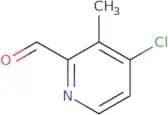
CAS:<p>Versatile small molecule scaffold</p>Formula:C7H6ClNOPurity:Min. 95%Molecular weight:155.58 g/mol


![3-Chloro-6-nitro-benzo[b]thiophene-2-carboxylic acid methyl ester](/_next/image/?url=https%3A%2Fstatic.cymitquimica.com%2Fproducts%2F3D%2Fthumb-webp%2FJCA81236.webp&w=3840&q=75)
![2H,3H,6H-[1,4]Dioxino[2,3-F]indole-7-carboxylic acid](/_next/image/?url=https%3A%2Fstatic.cymitquimica.com%2Fproducts%2F3D%2Fthumb-webp%2FJCA82087.webp&w=3840&q=75)
![7-bromo-2,3-dihydrobenzo[b][1,4]dioxine-6-carboxylic acid](/_next/image/?url=https%3A%2Fstatic.cymitquimica.com%2Fproducts%2F3D%2Fthumb-webp%2FJCA82091.webp&w=3840&q=75)
![6-Bromo-7-nitro-2,3-dihydrobenzo[b][1,4]dioxine](/_next/image/?url=https%3A%2Fstatic.cymitquimica.com%2Fproducts%2F3D%2Fthumb-webp%2FJCA82092.webp&w=3840&q=75)
![2H,3H-[1,3]Oxazolo[4,5-c]pyridin-2-one](/_next/image/?url=https%3A%2Fstatic.cymitquimica.com%2Fproducts%2F3D%2Fthumb-webp%2FJCA85150.webp&w=3840&q=75)