Building Blocks
This section contains fundamental products for the synthesis of organic and biological compounds. Building blocks are the essential starting materials used to construct complex molecules through various chemical reactions. They play a critical role in drug discovery, material science, and chemical research. At CymitQuimica, we offer a diverse range of high-quality building blocks to support your innovative research and industrial projects, ensuring you have the essential components for successful synthesis.
Subcategories of "Building Blocks"
- Boronic Acids & Boronic Acid Derivatives(5,756 products)
- Chiral Building Blocks(1,242 products)
- Hydrocarbon Building Blocks(6,095 products)
- Organic Building Blocks(61,038 products)
Found 196817 products of "Building Blocks"
Sort by
Purity (%)
0
100
|
0
|
50
|
90
|
95
|
100
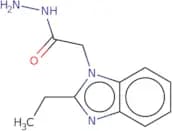
2-(2-Ethyl-1H-1,3-benzodiazol-1-yl)acetohydrazide
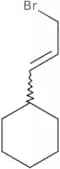
CAS:Controlled Product<p>Versatile small molecule scaffold</p>Formula:C11H14N4OPurity:Min. 95%Molecular weight:218.3 g/mol(3-Bromoprop-1-en-1-yl)cyclohexane
CAS:<p>Versatile small molecule scaffold</p>Formula:C9H15BrPurity:Min. 95%Molecular weight:203.12 g/mol2-(2-Bromoethyl)-2H-naphtho[1,8-cd]isothiazole 1,1-dioxide
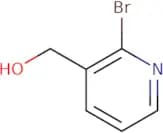
CAS:Versatile small molecule scaffoldFormula:C12H10BrNO2SPurity:Min. 95%Molecular weight:312.18 g/mol2-Bromo-3-pyridinemethanol
CAS:<p>2-Bromo-3-pyridinemethanol is a heteroaryl compound that contains a pyridine ring. It is synthesized by the lithiation of 2-bromopyridine followed by intramolecular bromination with 3-bromopyridinemethanol. The methodologies for this synthesis are similar to those used in the synthesis of quinolines and pyridines. Lithiation of 2-bromopyridine at low temperature (0°C) led to the formation of 2,6-dibromopyridine, which was then reacted with 3-bromopyridinemethanol in a sequence similar to that described for the synthesis of quinoline and pyridine. This reaction yielded 2,6-dibromo-3-(2'-pyridinyl)-N,N'-dimethylethanamine. The desired product was obtained after cyclization with potassium tert</p>Formula:C6H6BrNOPurity:Min. 95%Molecular weight:188.02 g/mol3-Formylpicolinonitrile
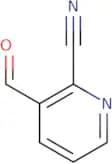
CAS:<p>Versatile small molecule scaffold</p>Formula:C7H4N2OPurity:Min. 95%Molecular weight:132.12 g/mol1-(6-Chloropyridin-3-yl)-3-methylthiourea
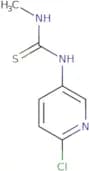
CAS:<p>Versatile small molecule scaffold</p>Formula:C7H8ClN3SPurity:Min. 95%Molecular weight:201.68 g/mol2-Bromo-5-(bromomethyl)thiazole
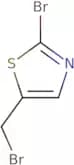
CAS:<p>2-Bromo-5-(bromomethyl)thiazole is an industrial chemical that belongs to the tribromide class of compounds. It is used as a solvent in organic reactions and can be prepared by reacting sodium borohydride with 2-bromothiazole. The preparation process includes recrystallization from acetonitrile and dihedral rotation with potassium carbonate and phthalimide.<br>2-Bromo-5-(bromomethyl)thiazole has been shown to react with fluoride ions to form a borohydride ion, which is then able to abstract a hydrogen atom from a molecule of water to produce hydrogen gas.</p>Formula:C4H3Br2NSPurity:Min. 95%Molecular weight:256.94 g/mol(2-bromo-1,3-thiazol-5-yl)methanamine
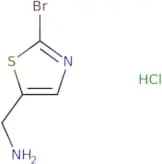
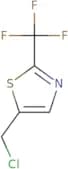
CAS:<p>2-bromo-1,3-thiazol-5-yl)methanamine is a ring system that contains a phthalimide and thiazole. It has a planar molecular geometry. The methoxy group is located on the left side of the molecule, which creates a dihedral angle of about 60°. The two bromine atoms are on opposite sides of the molecule and are separated by 2.6 Å. This ring system reacts readily with nucleophiles to form covalent bonds.</p>Formula:C4H5BrN2SPurity:Min. 95%Molecular weight:193.1 g/mol5-(Chloromethyl)-2-(trifluoromethyl)-1,3-thiazole
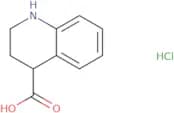
CAS:<p>Versatile small molecule scaffold</p>Formula:C5H3ClF3NSPurity:Min. 95%Molecular weight:201.6 g/mol1,2,3,4-Tetrahydroquinoline-4-carboxylic acid hydrochloride
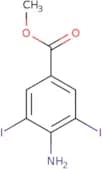
CAS:<p>Versatile small molecule scaffold</p>Formula:C10H12ClNO2Purity:Min. 95%Molecular weight:213.66 g/molMethyl 4-amino-3,5-diiodobenzoate
CAS:<p>Versatile small molecule scaffold</p>Formula:C8H7I2NO2Purity:Min. 95%Molecular weight:402.96 g/molN-(Propan-2-yl)-2-[({2-[(propan-2-yl)carbamoyl]phenyl}sulfamoyl)amino]benzamide
CAS:<p>Versatile small molecule scaffold</p>Formula:C20H26N4O4SPurity:Min. 95%Molecular weight:418.5 g/mol2-Chloroimidazo[1,2-a]pyridine-3-carbonitrile
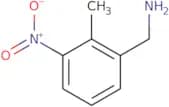
CAS:<p>Versatile small molecule scaffold</p>Formula:C8H4ClN3Purity:Min. 95%Molecular weight:177.59 g/mol(2-Methyl-3-nitrophenyl)methanamine
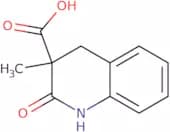
CAS:<p>Versatile small molecule scaffold</p>Formula:C8H10N2O2Purity:Min. 95%Molecular weight:166.18 g/mol3-Methyl-2-oxo-1,2,3,4-tetrahydroquinoline-3-carboxylic acid
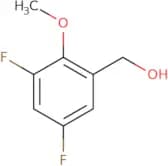
CAS:<p>Versatile small molecule scaffold</p>Formula:C11H11NO3Purity:Min. 95%Molecular weight:205.21 g/mol3,5-Difluoro-2-methoxybenzyl alcohol
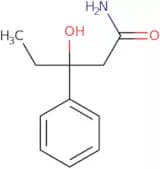
CAS:<p>Versatile small molecule scaffold</p>Formula:C8H8F2O2Purity:Min. 95%Molecular weight:174.15 g/mol3-Hydroxy-3-phenylpentanamide
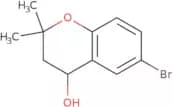
CAS:<p>3-Hydroxy-3-phenylpentanamide is a chiral molecule that has been found to produce neurotoxic effects in rats. 3-Hydroxy-3-phenylpentanamide binds to the benzodiazepine binding site on the GABA receptor and produces a neurotoxic effect. The neurotoxicity of this drug was studied using x-ray crystallography and it was found that 3-hydroxy-3-phenylpentanamide binds with high affinity to the gamma amino butyric acid (GABA) receptor, which causes an increase in chloride ion flow into the neuron and can lead to death of the neuron. This compound also has a halogen substituent at C3, which may be responsible for its toxicity. 3-Hydroxy-3-phenylpentanamide is an enantiomer that is not present in nature and is produced synthetically by reacting phenylacetonitrile with hydroxylamine followed by chlorination. It has</p>Formula:C11H15NO2Purity:Min. 95%Molecular weight:193.24 g/mol6-Bromo-2,2-dimethyl-3,4-dihydro-2H-1-benzopyran-4-ol
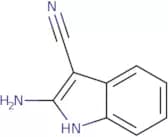
CAS:<p>Versatile small molecule scaffold</p>Formula:C11H13BrO2Purity:Min. 95%Molecular weight:257.12 g/mol2-Amino-1H-indole-3-carbonitrile
CAS:<p>2-Amino-1H-indole-3-carbonitrile is a nucleoside analog used as a precursor for the synthesis of other biologically active compounds. 2-Amino-1H-indole-3-carbonitrile has been shown to be capable of forming hydrogen bonds with nucleic acid bases, which can lead to changes in conformation and chain length. This leads to changes in the spectra of these compounds, allowing them to be identified.<br>2AICC is prepared from indolium salt and carbon tetrachloride by reaction with ammonia gas. The reaction takes place in an ice bath with stirring and produces a white solid that can be purified by recrystallization or column chromatography.</p>Formula:C9H7N3Purity:Min. 95%Molecular weight:157.17 g/mol2-Methyl-4-(piperazin-1-yl)pyrimidine
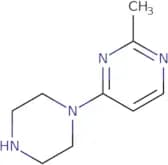
CAS:<p>Versatile small molecule scaffold</p>Formula:C9H14N4Purity:Min. 95%Molecular weight:178.23 g/mol2-Sulfanyl-3-(4H-1,2,4-triazol-3-yl)-3,4-dihydroquinazolin-4-one
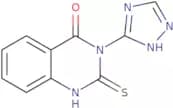
CAS:<p>Versatile small molecule scaffold</p>Formula:C10H7N5OSPurity:Min. 95%Molecular weight:245.26 g/molrac-(1R,2S)-N-Methyl-2-phenylcyclopropan-1-amine hydrochloride
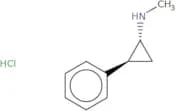
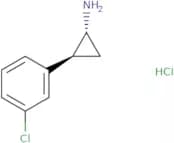
CAS:<p>Versatile small molecule scaffold</p>Formula:C10H14ClNPurity:Min. 95%Molecular weight:183.7 g/moltrans-2-(3-Chlorophenyl)cyclopropanamine Hydrochloride
CAS:<p>Versatile small molecule scaffold</p>Formula:C9H11Cl2NPurity:Min. 95%Molecular weight:204.1 g/molBenzo[f]quinoline-5-carboxylic acid
CAS:<p>Versatile small molecule scaffold</p>Formula:C14H9NO2Purity:Min. 95%Molecular weight:223.23 g/mol(S)-1-(2-Chlorophenyl)ethanol
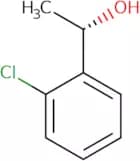
CAS:<p>(S)-1-(2-Chlorophenyl)ethanol is a substrate for the enzyme dehydrogenase, which catalyzes the conversion of (R)-1-(2-chlorophenyl)ethanol to (R)-1-(2-chlorophenyl)propanol. The reaction time for this reaction is dependent on the concentration of the substrate, with high concentrations of (S)-1-(2-chlorophenyl)ethanol requiring a longer reaction time. The product, (R)-1-(2-chlorophenyl)propanol, is an organic chemical that can be used as a model system for studying other reactions involving alcohols. This compound has been shown to be reactive in biological systems and has been found to have symptoms similar to those of Parkinson's disease in mice.</p>Formula:C8H9ClOPurity:Min. 95%Molecular weight:156.61 g/mol(2S)-1-(2-Methoxyphenyl)propan-2-ol
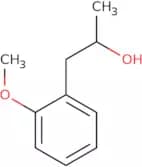
CAS:<p>Versatile small molecule scaffold</p>Formula:C10H14O2Purity:Min. 95%Molecular weight:166.22 g/molrac-(1R,2S)-2-(2-Methoxyphenyl)cyclopropan-1-amine hydrochloride
CAS:<p>Versatile small molecule scaffold</p>Formula:C10H14ClNOPurity:Min. 95%Molecular weight:199.7 g/molrac-(1R,2S)-2-(3-Methoxyphenyl)cyclopropan-1-amine hydrochloride
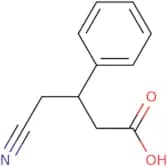
CAS:<p>Versatile small molecule scaffold</p>Formula:C10H14ClNOPurity:Min. 95%Molecular weight:199.7 g/mol4-Cyano-3-phenylbutanoic acid
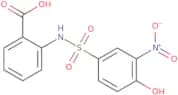
CAS:<p>4-Cyano-3-phenylbutanoic acid is a chiral organic compound with two stereogenic centers. The molecule can be synthesized by the hydrolysis of racemic 4-cyano-3-phenylbutanoic acid or by the optically catalyzed desymmetrization of (S)-trans,trans-2,4,6-trimethylcyclohexanone. This compound has been used as an additive to produce homochiral products in chemical reactions and as a catalyst for enantioselective reactions.</p>Formula:C11H11NO2Purity:Min. 95%Molecular weight:189.21 g/mol2-(4-hydroxy-3-nitrobenzenesulfonamido)benzoic acid
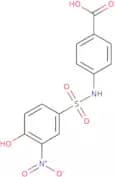
CAS:<p>Versatile small molecule scaffold</p>Formula:C13H10N2O7SPurity:Min. 95%Molecular weight:338.3 g/mol4-(4-Hydroxy-3-nitrobenzenesulfonamido)benzoic acid
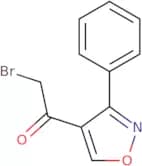
CAS:<p>Versatile small molecule scaffold</p>Formula:C13H10N2O7SPurity:Min. 95%Molecular weight:338.29 g/mol2-Bromo-1-(3-phenyl-1,2-oxazol-4-yl)ethan-1-one
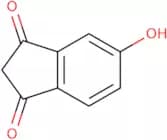
CAS:<p>Versatile small molecule scaffold</p>Formula:C11H8BrNO2Purity:Min. 95%Molecular weight:266.09 g/mol5-Hydroxy-2,3-dihydro-1H-indene-1,3-dione
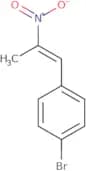
CAS:<p>Versatile small molecule scaffold</p>Formula:C9H6O3Purity:Min. 95%Molecular weight:162.14 g/mol(E)-1-Bromo-4-(2-nitroprop-1-en-1-yl)benzene
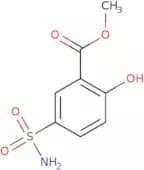
CAS:<p>(E)-1-Bromo-4-(2-nitroprop-1-en-1-yl)benzene is an organic compound with a benzene ring. It is stabilized by the dihedral angle and has a crystal structure. The condensation reaction of ethyl nitrite and 1,2-dibromoethane was found to produce (E)-1-bromo-4-(2-nitroprop-1-en-1-yl)benzene. This compound is used in the synthesis of other chemicals, such as azo dyes.</p>Formula:C9H8BrNO2Purity:Min. 95%Molecular weight:242.07 g/molMethyl 2-hydroxy-5-sulfamoylbenzoate
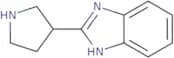
CAS:<p>Versatile small molecule scaffold</p>Formula:C8H9NO5SPurity:Min. 95%Molecular weight:231.23 g/mol2-(Pyrrolidin-3-yl)-1H-1,3-benzodiazole
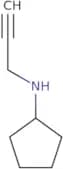
CAS:<p>Versatile small molecule scaffold</p>Formula:C11H13N3Purity:Min. 95%Molecular weight:187.24 g/molN-(Prop-2-yn-1-yl)cyclopentanamine
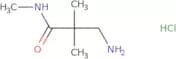
CAS:<p>Versatile small molecule scaffold</p>Formula:C8H13NPurity:Min. 95%Molecular weight:123.2 g/mol3-Amino-N,2,2-trimethylpropanamide
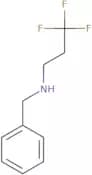
CAS:<p>Versatile small molecule scaffold</p>Formula:C6H15ClN2OPurity:Min. 95%Molecular weight:166.65 g/molBenzyl(3,3,3-trifluoropropyl)amine
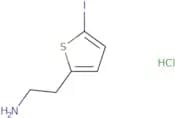
CAS:<p>Versatile small molecule scaffold</p>Formula:C10H12F3NPurity:Min. 95%Molecular weight:203.2 g/mol2-(5-Iodothiophen-2-yl)ethan-1-amine hydrochloride
CAS:<p>Versatile small molecule scaffold</p>Formula:C6H9ClINSPurity:Min. 95%Molecular weight:289.57 g/mol2-Bromothieno[2,3-c]pyridine
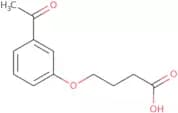
CAS:<p>Versatile small molecule scaffold</p>Formula:C7H4BrNSPurity:Min. 95%Molecular weight:214.08 g/mol4-(3-Acetylphenoxy)butanoic acid
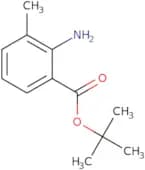
CAS:Controlled Product<p>Versatile small molecule scaffold</p>Formula:C12H14O4Purity:Min. 95%Molecular weight:222.24 g/moltert-Butyl 2-amino-3-methylbenzoate
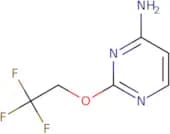
CAS:<p>Versatile small molecule scaffold</p>Formula:C12H17NO2Purity:Min. 95%Molecular weight:207.27 g/mol2-(2,2,2-Trifluoroethoxy)pyrimidin-4-amine
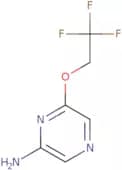
CAS:<p>Versatile small molecule scaffold</p>Formula:C6H6F3N3OPurity:Min. 95%Molecular weight:193.13 g/mol6-(2,2,2-Trifluoroethoxy)pyrazin-2-amine
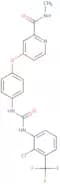
CAS:<p>Versatile small molecule scaffold</p>Formula:C6H6F3N3OPurity:Min. 95%Molecular weight:193.13 g/mol4-Deschloro-2-chloro-Sorafenib
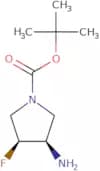
CAS:<p>Versatile small molecule scaffold</p>Formula:C21H16ClF3N4O3Purity:Min. 95%Molecular weight:464.82 g/molrac-tert-butyl (3R,4S)-3-amino-4-fluoropyrrolidine-1-carboxylate
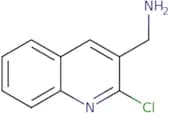
CAS:<p>Versatile small molecule scaffold</p>Formula:C9H17FN2O2Purity:Min. 95%Molecular weight:204.2 g/mol1-(2-Chloroquinolin-3-yl)methanamine
CAS:<p>1-(2-Chloroquinolin-3-yl)methanamine is an analog of luotonin, which has been synthesized by a new efficient methodology. It has an efficiency of 100% in the synthesis of 3,4-dichloroaniline and 4-chloroaniline. It is a powerful inhibitor for the reaction of 1,4-diaminobutane with nitric acid.</p>Formula:C10H9ClN2Purity:Min. 95%Molecular weight:192.64 g/mol3,4-Dihydro-2H-1,4-benzoxazine-2-carboxylic acid hydrochloride
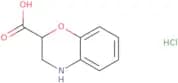
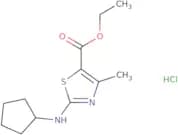
CAS:<p>Versatile small molecule scaffold</p>Formula:C9H10ClNO3Purity:Min. 95%Molecular weight:215.63 g/molEthyl 2-(cyclopentylamino)-4-methyl-1,3-thiazole-5-carboxylate hydrochloride
CAS:<p>Versatile small molecule scaffold</p>Formula:C12H19ClN2O2SPurity:Min. 95%Molecular weight:290.81 g/mol

![2-(2-Bromoethyl)-2H-naphtho[1,8-cd]isothiazole 1,1-dioxide](/_next/image/?url=https%3A%2Fstatic.cymitquimica.com%2Fproducts%2F3D%2Fthumb-webp%2FGFA72917.webp&w=3840&q=75)
![N-(Propan-2-yl)-2-[({2-[(propan-2-yl)carbamoyl]phenyl}sulfamoyl)amino]benzamide](/_next/image/?url=https%3A%2Fstatic.cymitquimica.com%2Fproducts%2F3D%2Fthumb-webp%2FGFA76871.webp&w=3840&q=75)
![2-Chloroimidazo[1,2-a]pyridine-3-carbonitrile](/_next/image/?url=https%3A%2Fstatic.cymitquimica.com%2Fproducts%2F3D%2Fthumb-webp%2FGFA77348.webp&w=3840&q=75)
![Benzo[f]quinoline-5-carboxylic acid](/_next/image/?url=https%3A%2Fstatic.cymitquimica.com%2Fproducts%2F3D%2Fthumb-webp%2FGFA86230.webp&w=3840&q=75)
![2-Bromothieno[2,3-c]pyridine](/_next/image/?url=https%3A%2Fstatic.cymitquimica.com%2Fproducts%2F3D%2Fthumb-webp%2FGFB47736.webp&w=3840&q=75)