Building Blocks
This section contains fundamental products for the synthesis of organic and biological compounds. Building blocks are the essential starting materials used to construct complex molecules through various chemical reactions. They play a critical role in drug discovery, material science, and chemical research. At CymitQuimica, we offer a diverse range of high-quality building blocks to support your innovative research and industrial projects, ensuring you have the essential components for successful synthesis.
Subcategories of "Building Blocks"
- Boronic Acids & Boronic Acid Derivatives(5,756 products)
- Chiral Building Blocks(1,242 products)
- Hydrocarbon Building Blocks(6,095 products)
- Organic Building Blocks(61,051 products)
Found 199813 products of "Building Blocks"
Sort by
Purity (%)
0
100
|
0
|
50
|
90
|
95
|
100
Exo-3-cbz-3-azabicyclo[3.1.0]hexane-6-carboxylic Acid
CAS:<p>Versatile small molecule scaffold</p>Formula:C14H15NO4Purity:Min. 95%Molecular weight:261.27 g/moltert-Butyl N-[(1S,5R)-3-Azabicyclo[3.1.0]hexan-6-yl]carbamate
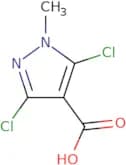
CAS:<p>Versatile small molecule scaffold</p>Formula:C10H18N2O2Purity:Min. 95%Molecular weight:198.26 g/mol3,5-Dichloro-1-methyl-1H-pyrazole-4-carboxylic acid
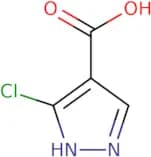
CAS:3,5-Dichloro-1-methyl-1H-pyrazole-4-carboxylic acid is a carboxylic acid that belongs to the group of medicines. It is used as an organic base and a catalyst in the preparation of other chemicals. 3,5-Dichloro-1-methyl-1H-pyrazole-4-carboxylic acid also has herbicidal and chlorinating properties. In addition, it can be converted into 3,5 dichloro 1 methyl pyrazole 4 (chloromethyl) oxazole, which can be used as an amide or glycolic reagent. This chemical is also used to make phosphorus pentoxide by reacting with phosphorus pentoxide in the liquid phase.Formula:C5H4Cl2N2O2Purity:Min. 95%Molecular weight:195 g/mol5-Chloro-1H-pyrazole-4-carboxylic acid
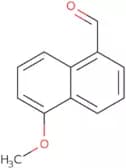
CAS:<p>Versatile small molecule scaffold</p>Formula:C4H3ClN2O2Purity:Min. 95%Molecular weight:146.53 g/mol5-Methoxynaphthalene-1-carbaldehyde
CAS:<p>Versatile small molecule scaffold</p>Formula:C12H10O2Purity:Min. 95%Molecular weight:186.21 g/moltert-Butyl N-[2-methyl-1-(methylamino)propan-2-yl]carbamate
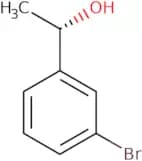
CAS:<p>Versatile small molecule scaffold</p>Formula:C10H22N2O2Purity:Min. 95%Molecular weight:202.29 g/mol(S)-1-(3-Bromophenyl)ethanol
CAS:(S)-1-(3-Bromophenyl)ethanol is an aromatic ketone that is used as a substrate for the preparation of other compounds. It has been shown to be effective in the oxidation of formate, with dehydrogenase activity. The enzyme was immobilized onto an ion-exchange resin, which improved its stability and allowed for the selective removal of byproducts. The enantiopurity of (S)-1-(3-bromophenyl)ethanol was determined using preparative gas chromatography and parameters such as alcohols and chiral phenylacetaldehyde.Formula:C8H9BrOPurity:Min. 95%Molecular weight:201.06 g/mol(R)-1-(3-Bromophenyl)ethanol
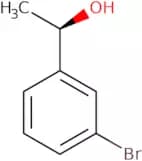
CAS:<p>(R)-1-(3-Bromophenyl)ethanol is a prochiral ketone that undergoes asymmetric hydrogenation to afford racemic 1-phenylethanol. The catalytic system consists of an ionic liquid, imidazolium salt, and chiral ligands. This catalyst system can be used to transfer hydrogen to the ketone in order to generate two enantiomers with opposite optical rotation.</p>Formula:C8H9BrOPurity:Min. 95%Molecular weight:201.06 g/mol2-[(3-Cyano-4-methyl-6-oxo-1,6-dihydropyridin-2-yl)sulfanyl]acetic acid
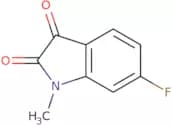
CAS:<p>Versatile small molecule scaffold</p>Formula:C9H7N2O3SPurity:Min. 95%Molecular weight:223.23 g/mol6-Fluoro-1-methyl-2,3-dihydro-1H-indole-2,3-dione
CAS:<p>Versatile small molecule scaffold</p>Formula:C9H6FNO2Purity:Min. 95%Molecular weight:179.15 g/moltert-Butyl (2Z)-2-[(dimethylamino)methylidene]-3-oxobutanoate
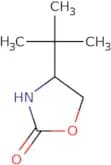
CAS:<p>Versatile small molecule scaffold</p>Formula:C11H19NO3Purity:Min. 95%Molecular weight:213.27 g/mol4-tert-Butyl-1,3-oxazolidin-2-one
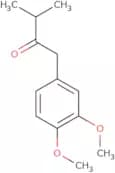
CAS:<p>4-tert-Butyl-1,3-oxazolidin-2-one is a natural product that has been isolated from the Cathayensis plant. It is an inhibitor of protein synthesis and can be used to treat bacterial infections.</p>Formula:C7H13NO2Purity:Min. 95%Molecular weight:143.18 g/mol1-(3,4-Dimethoxyphenyl)-3-methylbutan-2-one
CAS:<p>Versatile small molecule scaffold</p>Formula:C13H18O3Purity:Min. 95%Molecular weight:222.28 g/mol5-Bromo-6-methylimidazo[2,1-b][1,3]thiazole
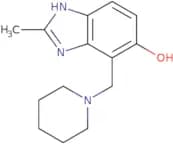
CAS:<p>Versatile small molecule scaffold</p>Formula:C6H5BrN2SPurity:Min. 95%Molecular weight:217.09 g/mol2-Methyl-4-(piperidin-1-ylmethyl)-1H-1,3-benzodiazol-5-ol
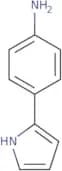
CAS:<p>Versatile small molecule scaffold</p>Formula:C14H19N3OPurity:Min. 95%Molecular weight:245.32 g/mol4-(1H-Pyrrol-2-yl)aniline
CAS:<p>Versatile small molecule scaffold</p>Formula:C10H10N2Purity:Min. 95%Molecular weight:158.2 g/mol2-[5-(Thiophen-3-yl)-1H-1,2,3,4-tetrazol-1-yl]acetic acid
CAS:<p>2-[5-(Thiophen-3-yl)-1H-1,2,3,4-tetrazol-1-yl]acetic acid is a thiazolidinone derivative that has been shown to normalize peripheral nerve function in diabetic neuropathy. This drug has been shown to improve blood flow and nerve function in the sciatic nerve of diabetic rats, and to increase blood carnitine levels. 2-[5-(Thiophen-3-yl)-1H-1,2,3,4-tetrazol-1-yl]acetic acid is an analog of L -carnitine and may be used as a treatment for cardiac abnormalities caused by diabetes. It also helps decrease hyperactivity in mice with type 1 diabetes. 2-[5-(Thiophen-3-yl)-1H-1,2,3,4-tetrazol-1-yl]acetic acid is a potent inhibitor of</p>Formula:C7H6N4O2SPurity:Min. 95%Molecular weight:210.22 g/molEthyl 2-[5-(thiophen-3-yl)-1H-1,2,3,4-tetrazol-1-yl]acetate
CAS:<p>Versatile small molecule scaffold</p>Formula:C9H10N4O2SPurity:Min. 95%Molecular weight:238.3 g/mol2-Amino-2-(4-methoxyphenyl)acetic acid hydrochloride
CAS:<p>Versatile small molecule scaffold</p>Formula:C9H12ClNO3Purity:Min. 95%Molecular weight:217.65 g/molmethyl 2-amino-2-(4-methylphenyl)acetate hydrochloride
CAS:<p>Versatile small molecule scaffold</p>Formula:C10H14ClNO2Purity:Min. 95%Molecular weight:215.7 g/molAcetic acid, [(1,3-dihydro-1,3-dioxo-2H-isoindol-2-yl)oxy]-
CAS:<p>Acetic acid is a molecule that contains a linker group, which can be used in the synthesis of cinnamic acid derivatives. This molecule has been shown to have antioxidant activity and is often used as a synthetic flavonoid. Acetic acid is also reactive and may react with other molecules such as cinnamic acid derivatives or perfluorinated compounds. Acetic acid can be found in kidney disease patients and has been linked to inflammatory diseases such as arthritis. Acetic acid is also used for labeling purposes and can be crosslinked with other molecules to form a long-lasting complex.</p>Formula:C10H7NO5Purity:Min. 95%Molecular weight:221.17 g/mol(S)-1,2,3,4-Tetrahydro-isoquinoline-3-carboxylic acid amide ee
CAS:<p>Versatile small molecule scaffold</p>Formula:C10H12N2OPurity:Min. 95%Molecular weight:176.22 g/molN-tert-Butyl-2-(hydroxymethyl)benzamide
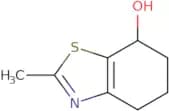
CAS:<p>Versatile small molecule scaffold</p>Formula:C12H17NO2Purity:Min. 95%Molecular weight:207.27 g/mol2-Methyl-4,5,6,7-tetrahydro-1,3-benzothiazol-7-ol
CAS:<p>Versatile small molecule scaffold</p>Formula:C8H11NOSPurity:Min. 95%Molecular weight:169.25 g/mol2-{2-Oxo-1-oxa-4-thiaspiro[4.4]nonan-3-yl}acetic acid
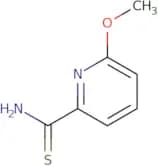
CAS:<p>Versatile small molecule scaffold</p>Formula:C9H12O4SPurity:Min. 95%Molecular weight:216.26 g/mol6-Methoxypyridine-2-carbothioamide
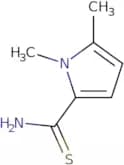
CAS:<p>Versatile small molecule scaffold</p>Formula:C7H8N2OSPurity:Min. 95%Molecular weight:168.22 g/mol1,5-Dimethyl-1H-pyrrole-2-carbothioamide
CAS:<p>Versatile small molecule scaffold</p>Formula:C7H10N2SPurity:Min. 95%Molecular weight:154.24 g/mol2-[(tert-butoxy)carbonyl]-2-azabicyclo[2.2.1]heptane-3-carboxylic acid, Mixture of diastereomers
CAS:<p>Versatile small molecule scaffold</p>Formula:C12H19NO4Purity:Min. 95%Molecular weight:241.3 g/mol3-{[(4-Chlorophenyl)methyl]sulfanyl}-1H-1,2,4-triazole
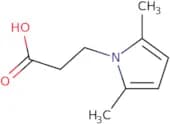
CAS:<p>Versatile small molecule scaffold</p>Formula:C9H8ClN3SPurity:Min. 95%Molecular weight:225.7 g/mol3-(2,5-Dimethyl-1H-pyrrol-1-yl)propanoic acid
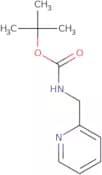
CAS:<p>3-(2,5-Dimethyl-1H-pyrrol-1-yl)propanoic acid is a neurotransmitter that is found in the brain and spinal cord. It is synthesized from glycine by the enzyme glycine decarboxylase, which converts it to 3-(2,5-dimethyl-1H-pyrrol-1-yl)propanoic acid. The oxidized form of this compound has been shown to produce some atrophy in the nervous system and also exhibits neurotoxic effects. 3-(2,5-Dimethyl-1H-pyrrol-1-yl)propanoic acid can be metabolized into propanoic acid, which may also have neurotoxic effects.</p>Formula:C9H13NO2Purity:Min. 95%Molecular weight:167.21 g/molN-Boc-2-aminomethylpyridine
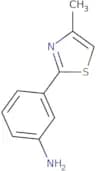
CAS:<p>N-Boc-2-aminomethylpyridine is a ligand with a pyridine ring that has been substituted with a tert-butyl group. The compound is used in the synthesis of other ligands and as a reagent for studying asymmetric reactions. It crystallizes as monoclinic crystals with the space group P21/n, which are unsymmetrical and tripodal. It is anhydrous and reacts readily with carboxaldehyde to form cyclopentane derivatives.</p>Formula:C11H18N2O2Purity:Min. 95%Molecular weight:208.26 g/mol3-(4-Methyl-1,3-thiazol-2-yl)aniline
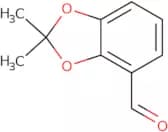
CAS:<p>Versatile small molecule scaffold</p>Formula:C10H10N2SPurity:Min. 95%Molecular weight:190.27 g/mol2,2-Dimethyl-1,3-dioxaindane-4-carbaldehyde
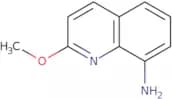
CAS:<p>Versatile small molecule scaffold</p>Formula:C10H10O3Purity:Min. 95%Molecular weight:178.18 g/mol2-Methoxyquinolin-8-amine
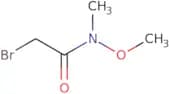
CAS:<p>Versatile small molecule scaffold</p>Formula:C10H10N2OPurity:Min. 95%Molecular weight:174.2 g/mol2-Bromo-N-methoxy-N-methyl-acetamide
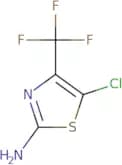
CAS:<p>2-Bromo-N-methoxy-N-methylacetamide (2BMAM) is a functional compound that can be used for the synthesis of a variety of molecules, including enamines, amides and carbinols. 2BMAM functions as an electrophilic reagent in organic chemistry. It is a hydrogen transfer agent and can be used to synthesize salicylaldehyde from benzaldehyde by reducing the carbonyl group to an alcohol with hydrogen. 2BMAM is also useful in the synthesis of amides and carbinols, which are two important classes of compounds that are found in many biologically active molecules.</p>Formula:C4H8BrNO2Purity:Min. 95%Molecular weight:182.02 g/mol5-Chloro-4-(trifluoromethyl)-1,3-thiazol-2-amine
CAS:Versatile small molecule scaffoldFormula:C4H2ClF3N2SPurity:Min. 95%Molecular weight:202.59 g/mol2-Amino-5H,6H,7H-pyrrolo[1,2-a]imidazole-3-carbonitrile
CAS:<p>Versatile small molecule scaffold</p>Formula:C7H8N4Purity:Min. 95%Molecular weight:148.17 g/mol3-Oxo-N-[4-(trifluoromethoxy)phenyl]butanamide
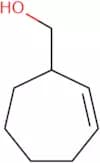
CAS:<p>Versatile small molecule scaffold</p>Formula:C11H10F3NO3Purity:Min. 95%Molecular weight:261.2 g/mol(Cyclohept-2-en-1-yl)methanol
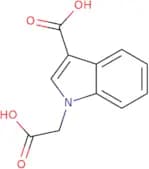
CAS:<p>Versatile small molecule scaffold</p>Formula:C8H14OPurity:Min. 95%Molecular weight:126.2 g/mol1-(Carboxymethyl)-1H-indole-3-carboxylic acid
CAS:Controlled Product<p>Versatile small molecule scaffold</p>Formula:C11H9NO4Purity:Min. 95%Molecular weight:219.19 g/mol2-[4-(Trifluoromethyl)phenyl]propanoic acid
CAS:<p>Versatile small molecule scaffold</p>Formula:C10H9F3O2Purity:Min. 95%Molecular weight:218.17 g/mol1-Benzylazepan-3-amine
CAS:<p>Versatile small molecule scaffold</p>Formula:C13H20N2Purity:Min. 95%Molecular weight:204.3 g/mol1-[1-(Propan-2-yl)-1H-1,2,3-triazol-4-yl]ethan-1-one
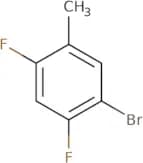
CAS:<p>Versatile small molecule scaffold</p>Formula:C7H11N3OPurity:Min. 95%Molecular weight:153.18 g/mol1-Bromo-2,4-difluoro-5-methylbenzene
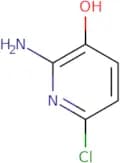
CAS:<p>Versatile small molecule scaffold</p>Formula:C7H5BrF2Purity:Min. 95%Molecular weight:207.02 g/mol2-amino-6-chloropyridin-3-ol
CAS:<p>Versatile small molecule scaffold</p>Formula:C5H5ClN2OPurity:Min. 95%Molecular weight:144.6 g/mol1,4-Dioxaspiro[4.4]nonane-7-carbonitrile
CAS:<p>Versatile small molecule scaffold</p>Formula:C8H11NO2Purity:Min. 95%Molecular weight:153.18 g/mol7a-(Chloromethyl)-hexahydro-1H-pyrrolizine hydrochloride
CAS:<p>Versatile small molecule scaffold</p>Formula:C8H15Cl2NPurity:Min. 95%Molecular weight:196.1 g/mol9-Oxobicyclo[3.3.1]non-6-ene-3-carboxylic acid
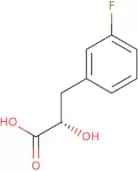
CAS:<p>9-Oxobicyclo[3.3.1]non-6-ene-3-carboxylic acid is a quaternary ammonium salt that is used as an intermediate in the preparation of other compounds. It is prepared by condensation of an amide and a quaternary ammonium salt followed by heating with hydrochloric acid. 9-Oxobicyclo[3.3.1]non-6-ene-3-carboxylic acid can be used as an intermediate for preparing adamantane, which is a bicyclic compound that has a rigid six member ring structure with alternating double and single bonds. This molecule has been shown to have antihistamine, antiemetic, and antianxiety properties in animals and humans respectively.</p>Formula:C10H12O3Purity:Min. 95%Molecular weight:180.2 g/mol(S)-3-(3-Fluorophenyl)-2-hydroxypropionic acid
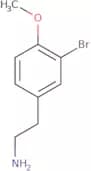
CAS:<p>Versatile small molecule scaffold</p>Formula:C9H9FO3Purity:Min. 95%Molecular weight:184.16 g/mol3-Bromo-4-methoxyphenethylamine
CAS:Controlled Product<p>3-Bromo-4-methoxyphenethylamine is a short-chain molecule that is a signal molecule in bacterial pyocyanin production. It acts as an acyl chain carrier, which orchestrates the coexistence of genes involved in gene regulation and proteolytic activity. 3-Bromo-4-methoxyphenethylamine was isolated from marine sponges and has been shown to have dose-dependent effects on eukaryotic organisms such as E. coli.</p>Formula:C9H12BrNOPurity:Min. 95%Molecular weight:230.11 g/mol
![Exo-3-cbz-3-azabicyclo[3.1.0]hexane-6-carboxylic Acid](/_next/image/?url=https%3A%2Fstatic.cymitquimica.com%2Fproducts%2F3D%2Fthumb-webp%2FJFA57515.webp&w=3840&q=75)

![tert-Butyl N-[(1S,5R)-3-Azabicyclo[3.1.0]hexan-6-yl]carbamate](/_next/image/?url=https%3A%2Fstatic.cymitquimica.com%2Fproducts%2F3D%2Fthumb-webp%2FJFA57517.webp&w=3840&q=75)
![tert-Butyl N-[2-methyl-1-(methylamino)propan-2-yl]carbamate](/_next/image/?url=https%3A%2Fstatic.cymitquimica.com%2Fproducts%2F3D%2Fthumb-webp%2FJFA59795.webp&w=3840&q=75)
![2-[(3-Cyano-4-methyl-6-oxo-1,6-dihydropyridin-2-yl)sulfanyl]acetic acid](/_next/image/?url=https%3A%2Fstatic.cymitquimica.com%2Fproducts%2F3D%2Fthumb-webp%2FJFA61673.webp&w=3840&q=75)
![tert-Butyl (2Z)-2-[(dimethylamino)methylidene]-3-oxobutanoate](/_next/image/?url=https%3A%2Fstatic.cymitquimica.com%2Fproducts%2F3D%2Fthumb-webp%2FJFA65371.webp&w=3840&q=75)
![5-Bromo-6-methylimidazo[2,1-b][1,3]thiazole](/_next/image/?url=https%3A%2Fstatic.cymitquimica.com%2Fproducts%2F3D%2Fthumb-webp%2FJFA67013.webp&w=3840&q=75)
![2-[5-(Thiophen-3-yl)-1H-1,2,3,4-tetrazol-1-yl]acetic acid](/_next/image/?url=https%3A%2Fstatic.cymitquimica.com%2Fproducts%2F3D%2Fthumb-webp%2FJFA71773.webp&w=3840&q=75)
![Ethyl 2-[5-(thiophen-3-yl)-1H-1,2,3,4-tetrazol-1-yl]acetate](/_next/image/?url=https%3A%2Fstatic.cymitquimica.com%2Fproducts%2F3D%2Fthumb-webp%2FJFA71810.webp&w=3840&q=75)
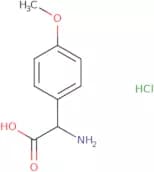
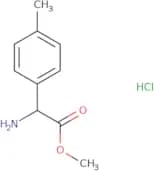
![Acetic acid, [(1,3-dihydro-1,3-dioxo-2H-isoindol-2-yl)oxy]-](/_next/image/?url=https%3A%2Fstatic.cymitquimica.com%2Fproducts%2F3D%2Fthumb-webp%2FJFA72487.webp&w=3840&q=75)
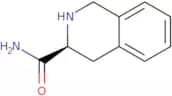
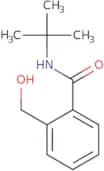
![2-{2-Oxo-1-oxa-4-thiaspiro[4.4]nonan-3-yl}acetic acid](/_next/image/?url=https%3A%2Fstatic.cymitquimica.com%2Fproducts%2F3D%2Fthumb-webp%2FJFA76782.webp&w=3840&q=75)
![2-[(tert-butoxy)carbonyl]-2-azabicyclo[2.2.1]heptane-3-carboxylic acid, Mixture of diastereomers](/_next/image/?url=https%3A%2Fstatic.cymitquimica.com%2Fproducts%2F3D%2Fthumb-webp%2FJFA79525.webp&w=3840&q=75)
![3-{[(4-Chlorophenyl)methyl]sulfanyl}-1H-1,2,4-triazole](/_next/image/?url=https%3A%2Fstatic.cymitquimica.com%2Fproducts%2F3D%2Fthumb-webp%2FJFA79634.webp&w=3840&q=75)
![2-Amino-5H,6H,7H-pyrrolo[1,2-a]imidazole-3-carbonitrile](/_next/image/?url=https%3A%2Fstatic.cymitquimica.com%2Fproducts%2F3D%2Fthumb-webp%2FJFA88151.webp&w=3840&q=75)
![3-Oxo-N-[4-(trifluoromethoxy)phenyl]butanamide](/_next/image/?url=https%3A%2Fstatic.cymitquimica.com%2Fproducts%2F3D%2Fthumb-webp%2FJFA88896.webp&w=3840&q=75)
![2-[4-(Trifluoromethyl)phenyl]propanoic acid](/_next/image/?url=https%3A%2Fstatic.cymitquimica.com%2Fproducts%2F3D%2Fthumb-webp%2FJFA90486.webp&w=3840&q=75)
![1-[1-(Propan-2-yl)-1H-1,2,3-triazol-4-yl]ethan-1-one](/_next/image/?url=https%3A%2Fstatic.cymitquimica.com%2Fproducts%2F3D%2Fthumb-webp%2FJFA92695.webp&w=3840&q=75)
![1,4-Dioxaspiro[4.4]nonane-7-carbonitrile](/_next/image/?url=https%3A%2Fstatic.cymitquimica.com%2Fproducts%2F3D%2Fthumb-webp%2FJGA32938.webp&w=3840&q=75)
![9-Oxobicyclo[3.3.1]non-6-ene-3-carboxylic acid](/_next/image/?url=https%3A%2Fstatic.cymitquimica.com%2Fproducts%2F3D%2Fthumb-webp%2FJGA34517.webp&w=3840&q=75)