Building Blocks
This section contains fundamental products for the synthesis of organic and biological compounds. Building blocks are the essential starting materials used to construct complex molecules through various chemical reactions. They play a critical role in drug discovery, material science, and chemical research. At CymitQuimica, we offer a diverse range of high-quality building blocks to support your innovative research and industrial projects, ensuring you have the essential components for successful synthesis.
Subcategories of "Building Blocks"
- Boronic Acids & Boronic Acid Derivatives(5,778 products)
- Chiral Building Blocks(1,242 products)
- Hydrocarbon Building Blocks(6,098 products)
- Organic Building Blocks(61,034 products)
Found 199601 products of "Building Blocks"
Sort by
Purity (%)
0
100
|
0
|
50
|
90
|
95
|
100
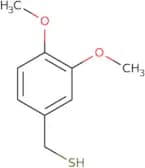
(3,4-Dimethoxyphenyl)methanethiol
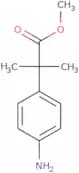
CAS:<p>Versatile small molecule scaffold</p>Formula:C9H12O2SPurity:Min. 95%Molecular weight:184.26 g/molMethyl 2-(4-aminophenyl)-2-methylpropanoate
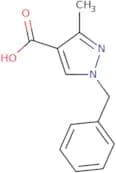
CAS:<p>Versatile small molecule scaffold</p>Formula:C11H15NO2Purity:Min. 95%Molecular weight:193.24 g/mol1-Benzyl-3-methyl-1H-pyrazole-4-carboxylic acid
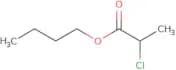
CAS:<p>Versatile small molecule scaffold</p>Formula:C12H12N2O2Purity:Min. 95%Molecular weight:216.24 g/molButyl 2-chloropropanoate
CAS:<p>Butyl 2-chloropropanoate is a synthetic compound that can be derived by reacting butyl chloride and propanol in the presence of persulfate. The reaction yields two products, with the desired product being the major product. Butyl 2-chloropropanoate has been used as a reactant in organic synthesis to generate disulphides and hydroxy groups. Optimization of the reaction parameters has resulted in a faster reaction time and higher yield. Butyl 2-chloropropanoate is typically used as a solvent for other reactions due to its ability to dissolve halides, such as chloroformates and bromides, and hydrocarbons, such as hexane or benzene.</p>Formula:C7H13ClO2Purity:Min. 95%Molecular weight:164.63 g/mol3-Bromo-4-chloroacetophenone
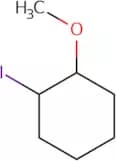
CAS:<p>Versatile small molecule scaffold</p>Formula:C8H6BrClOPurity:Min. 95%Molecular weight:233.49 g/molrac-(1R,2R)-1-Iodo-2-methoxycyclohexane
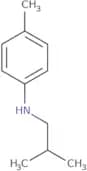
CAS:<p>Versatile small molecule scaffold</p>Formula:C7H13IOPurity:Min. 95%Molecular weight:240.08 g/mol4-Methyl-N-(2-methylpropyl)aniline
CAS:<p>Versatile small molecule scaffold</p>Formula:C11H17NPurity:Min. 95%Molecular weight:163.26 g/mol4-[Methyl(phenyl)sulfamoyl]benzoic acid
CAS:<p>Versatile small molecule scaffold</p>Formula:C14H13NO4SPurity:Min. 95%Molecular weight:291.32 g/molEthyl 5-hydroxy-3-oxobicyclo[3.3.1]nonane-2-carboxylate
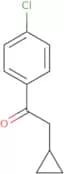
CAS:<p>Versatile small molecule scaffold</p>Formula:C12H18O4Purity:Min. 95%Molecular weight:226.27 g/mol1-(4-chlorophenyl)-2-cyclopropylethan-1-one
CAS:<p>1-(4-chlorophenyl)-2-cyclopropylethan-1-one is a phenylcyclohexanone derivative that can be synthesized by diazotizing cyclopropylamine with sodium nitrite in an alkaline condition. This compound has been shown to be a good precursor for the synthesis of other compounds, such as amino acids, peptides, and nucleosides. 1-(4-Chlorophenyl)-2-cyclopropylethan-1-one has also been shown to have antimicrobial effects against several bacteria.</p>Formula:C11H11ClOPurity:Min. 95%Molecular weight:194.66 g/mol2-[(2,5-Dichlorophenyl)sulfanyl]-2-phenylacetic acid
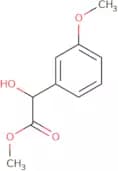
CAS:<p>Versatile small molecule scaffold</p>Formula:C14H10Cl2O2SPurity:Min. 95%Molecular weight:313.2 g/molMethyl 2-hydroxy-2-(3-methoxyphenyl)acetate
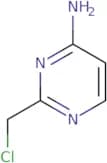
CAS:<p>Versatile small molecule scaffold</p>Formula:C10H12O4Purity:Min. 95%Molecular weight:196.2 g/mol2-(Chloromethyl)pyrimidin-4-amine
CAS:<p>Versatile small molecule scaffold</p>Formula:C5H6ClN3Purity:Min. 95%Molecular weight:143.57 g/mol8-Methyl-3H,4H,5H-pyridazino[4,5-b]indol-4-one
CAS:<p>Versatile small molecule scaffold</p>Formula:C11H9N3OPurity:Min. 95%Molecular weight:199.21 g/mol4-Amino-1,3-diazaspiro[4.4]non-3-en-2-one
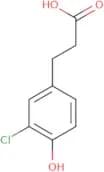
CAS:<p>Versatile small molecule scaffold</p>Formula:C7H11N3OPurity:Min. 95%Molecular weight:153.18 g/mol3-(3-Chloro-4-hydroxyphenyl)propanoic acid
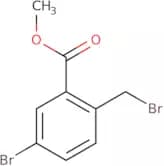
CAS:<p>Versatile small molecule scaffold</p>Formula:C9H9ClO3Purity:Min. 95%Molecular weight:200.62 g/molMethyl 5-bromo-2-(bromomethyl)benzoate
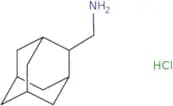
CAS:<p>Methyl 5-bromo-2-(bromomethyl)benzoate (5BMB) is a synthetic chemical that can be prepared by anionic bromination of methyl benzoate. The reaction proceeds with high efficiency and the product is obtained in good yields. 5BMB has been used as a target compound for X-ray diffraction studies, which have shown its structural properties.</p>Formula:C9H8Br2O2Purity:Min. 95%Molecular weight:307.98 g/molAdamantan-2-ylmethanamine hydrochloride
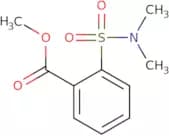
CAS:<p>Versatile small molecule scaffold</p>Formula:C11H20ClNPurity:Min. 95%Molecular weight:201.73 g/molMethyl 2-(dimethylsulfamoyl)benzoate
CAS:<p>Versatile small molecule scaffold</p>Formula:C10H13NO4SPurity:Min. 95%Molecular weight:243.28 g/mol[2,3,5,6-Tetrafluoro-4-(trifluoromethyl)phenyl]methanol
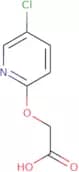
CAS:<p>Versatile small molecule scaffold</p>Formula:C8H3F7OPurity:Min. 95%Molecular weight:248.1 g/mol2-((5-Chloropyridin-2-yl)oxy)acetic acid
CAS:<p>Versatile small molecule scaffold</p>Formula:C7H6ClNO3Purity:Min. 95%Molecular weight:187.58 g/mol2-[(5-Bromopyridin-2-yl)oxy]acetic acid
CAS:<p>Versatile small molecule scaffold</p>Formula:C7H6BrNO3Purity:Min. 95%Molecular weight:232.03 g/mol2-Trifluoromethanesulfinylbenzoic acid
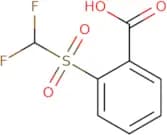
CAS:<p>Versatile small molecule scaffold</p>Formula:C8H5F3O3SPurity:Min. 95%Molecular weight:238.19 g/mol2-Difluoromethanesulfonylbenzoic acid
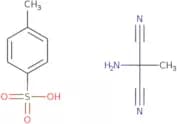
CAS:<p>Versatile small molecule scaffold</p>Formula:C8H6F2O4SPurity:Min. 95%Molecular weight:236.19 g/mol2-Amino-2-methylpropanedinitrile, 4-methylbenzene-1-sulfonic acid
CAS:2-Amino-2-methylpropanedinitrile (MMPD) is a precursor for the synthesis of perovskite. It is used as a reagent in organic synthesis to introduce nitrogen atoms into molecules. MMPD reacts with 4-methylbenzenesulfonic acid to produce the corresponding sulfonyl chloride and an aldehyde, which can be oxidized to produce a carboxylic acid. This reaction has been shown to be efficient and selective. The optimal reaction time is 2 hours at room temperature in order to yield the desired product with minimal amounts of byproducts. MMPD has been used in biological studies and chemical structures analysis, including an analytical method that can detect hydrogen bonds between MMPD and chloride ions.Formula:C11H13N3O3SPurity:Min. 95%Molecular weight:267.31 g/mol2-Amino-5-ethylbenzonitrile
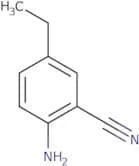
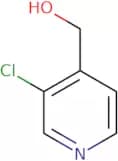
CAS:<p>Versatile small molecule scaffold</p>Formula:C9H10N2Purity:Min. 95%Molecular weight:146.19 g/mol(3-Chloropyridin-4-yl)methanol
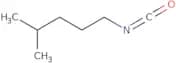
CAS:Versatile small molecule scaffoldFormula:C6H6ClNOPurity:Min. 95%Molecular weight:143.57 g/mol1-Isocyanato-4-methylpentane
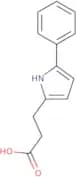
CAS:<p>Versatile small molecule scaffold</p>Formula:C7H13NOPurity:Min. 95%Molecular weight:127.18 g/mol3-(5-Phenyl-1H-pyrrol-2-yl)-propionic acid
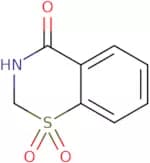
CAS:<p>Versatile small molecule scaffold</p>Formula:C13H13NO2Purity:Min. 95%Molecular weight:215.25 g/mol2,3-Dihydro-4H-1,3-benzothiazin-4-one 1,1-dioxide
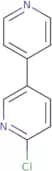
CAS:<p>Versatile small molecule scaffold</p>Formula:C8H7NO3SPurity:Min. 95%Molecular weight:197.21 g/mol6-Chloro-3,4'bipyridine
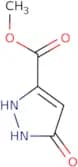
CAS:<p>Versatile small molecule scaffold</p>Formula:C10H7N2ClPurity:Min. 95%Molecular weight:190.63 g/mol5-Hydroxy-2H-pyrazole-3-carboxylic acid methyl ester
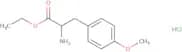
CAS:<p>Versatile small molecule scaffold</p>Formula:C5H6N2O3Purity:Min. 95%Molecular weight:142.11 g/molEthyl 2-amino-3-(4-methoxyphenyl)propanoate hydrochloride
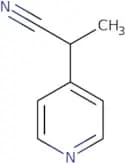
CAS:<p>Versatile small molecule scaffold</p>Formula:C12H18ClNO3Purity:Min. 95%Molecular weight:259.73 g/mol2-(Pyridin-4-yl)propanenitrile
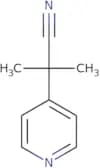
CAS:<p>Versatile small molecule scaffold</p>Formula:C8H8N2Purity:Min. 95%Molecular weight:132.16 g/mol2-Methyl-2-pyridin-4-ylpropanenitrile
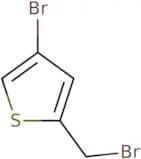
CAS:<p>Versatile small molecule scaffold</p>Formula:C9H10N2Purity:Min. 95%Molecular weight:146.19 g/mol4-Bromo-2-(bromomethyl)thiophene
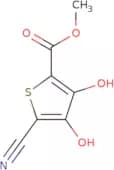
CAS:<p>Versatile small molecule scaffold</p>Formula:C5H4Br2SPurity:Min. 95%Molecular weight:255.96 g/molMethyl 5-cyano-3,4-dihydroxythiophene-2-carboxylate
CAS:<p>Versatile small molecule scaffold</p>Formula:C7H5NO4SPurity:Min. 95%Molecular weight:199.19 g/mol4-{[(tert-butoxy)carbonyl]amino}-2-methylbutanoic acid
CAS:Versatile small molecule scaffoldFormula:C10H19NO4Purity:Min. 95%Molecular weight:217.3 g/mol[(2R)-1-Ethylpyrrolidin-2-yl]methanol
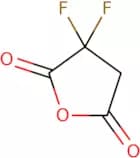
CAS:<p>Versatile small molecule scaffold</p>Formula:C7H15NOPurity:Min. 95%Molecular weight:129.2 g/mol3,3-Difluorodihydrofuran-2,5-dione
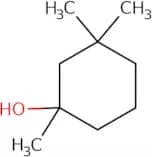
CAS:<p>3,3-Difluorodihydrofuran-2,5-dione is a chemical compound with the molecular formula C6H8F2O. It has a melting point of 149 °C and a boiling point of 260 °C. The chemical shifts in the 1H NMR spectrum are 8.59 ppm (s), 7.84 ppm (s), 7.34 ppm (m), 6.89 ppm (s) and 5.66 ppm (s). The coupling constants are J = 1 Hz, J = 2 Hz, J = 3 Hz and J = 4 Hz. The parameters optimized were the amide proton coupling constants and the amide proton chemical shift constants were determined to be A1 = 9 Hz, A2 = 12 Hz, A3 = 15 Hz and A4 = 18 Hz for this molecule. Analysis of solutions containing 3,3-difluorodihydrofuran-2,5-</p>Formula:C4H2F2O3Purity:Min. 95%Molecular weight:136.05 g/mol1,3,3-Trimethylcyclohexan-1-ol
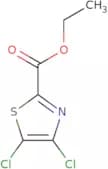
CAS:<p>Versatile small molecule scaffold</p>Formula:C9H18OPurity:Min. 95%Molecular weight:142.24 g/molEthyl 4,5-dichloro-1,3-thiazole-2-carboxylate
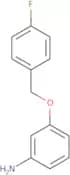
CAS:<p>Versatile small molecule scaffold</p>Formula:C6H5Cl2NO2SPurity:Min. 95%Molecular weight:226.08 g/mol3-(4-Fluoro-benzyloxy)-phenylamine
CAS:<p>Versatile small molecule scaffold</p>Formula:C13H12FNOPurity:Min. 95%Molecular weight:217.25 g/mol2-{[(2-Methylphenyl)methyl]amino}acetic acid hydrochloride
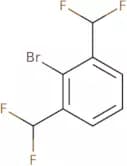
CAS:Versatile small molecule scaffoldFormula:C10H14ClNO2Purity:Min. 95%Molecular weight:215.67 g/mol2-Bromo-1,3-bis(difluoromethyl)benzene
CAS:<p>Versatile small molecule scaffold</p>Formula:C8H5BrF4Purity:Min. 95%Molecular weight:257.02 g/molDiethoxy-1,2,5-thiadiazol-1-one
CAS:<p>Versatile small molecule scaffold</p>Formula:C6H10N2O3SPurity:Min. 95%Molecular weight:190.2 g/molN-2-Pyrimidinyl-glycine
CAS:<p>N-2-Pyrimidinyl-glycine is a natural amino acid that is present in many protein mixtures. N-2-Pyrimidinyl-glycine has been shown to have affinity for the lipid bilayer of membranes, which may be due to its ability to act as a carbamate. The transport of this amino acid across membranes has been studied computationally and experimentally. Experimental results show that N-2-pyrimidinylglycine can be used as an absorbent for liquids such as oil or water. The molecule has also been shown to have spectroscopic properties, which make it useful in studies related to natural amino acids.</p>Formula:C6H7N3O2Purity:Min. 95%Molecular weight:153.13 g/mol2-[(1,3-Thiazol-2-yl)amino]acetic acid
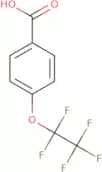
CAS:<p>Versatile small molecule scaffold</p>Formula:C5H6N2O2SPurity:Min. 95%Molecular weight:158.18 g/mol4-(Pentafluoroethoxy)benzoic acid
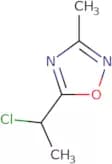
CAS:<p>Versatile small molecule scaffold</p>Formula:C9H5F5O3Purity:Min. 95%Molecular weight:256.13 g/mol5-(1-Chloroethyl)-3-methyl-1,2,4-oxadiazole
CAS:<p>Versatile small molecule scaffold</p>Formula:C5H7ClN2OPurity:Min. 95%Molecular weight:146.57 g/mol


![4-[Methyl(phenyl)sulfamoyl]benzoic acid](/_next/image/?url=https%3A%2Fstatic.cymitquimica.com%2Fproducts%2F3D%2Fthumb-webp%2FECA83878.webp&w=3840&q=75)
![Ethyl 5-hydroxy-3-oxobicyclo[3.3.1]nonane-2-carboxylate](/_next/image/?url=https%3A%2Fstatic.cymitquimica.com%2Fproducts%2F3D%2Fthumb-webp%2FECA83902.webp&w=3840&q=75)
![2-[(2,5-Dichlorophenyl)sulfanyl]-2-phenylacetic acid](/_next/image/?url=https%3A%2Fstatic.cymitquimica.com%2Fproducts%2F3D%2Fthumb-webp%2FECA84265.webp&w=3840&q=75)
![8-Methyl-3H,4H,5H-pyridazino[4,5-b]indol-4-one](/_next/image/?url=https%3A%2Fstatic.cymitquimica.com%2Fproducts%2F3D%2Fthumb-webp%2FEDA65237.webp&w=3840&q=75)
![4-Amino-1,3-diazaspiro[4.4]non-3-en-2-one](/_next/image/?url=https%3A%2Fstatic.cymitquimica.com%2Fproducts%2F3D%2Fthumb-webp%2FEDA66282.webp&w=3840&q=75)
![[2,3,5,6-Tetrafluoro-4-(trifluoromethyl)phenyl]methanol](/_next/image/?url=https%3A%2Fstatic.cymitquimica.com%2Fproducts%2F3D%2Fthumb-webp%2FEDA67446.webp&w=3840&q=75)
![2-[(5-Bromopyridin-2-yl)oxy]acetic acid](/_next/image/?url=https%3A%2Fstatic.cymitquimica.com%2Fproducts%2F3D%2Fthumb-webp%2FEDA67466.webp&w=3840&q=75)
![4-{[(tert-butoxy)carbonyl]amino}-2-methylbutanoic acid](/_next/image/?url=https%3A%2Fstatic.cymitquimica.com%2Fproducts%2F3D%2Fthumb-webp%2FEDA79926.webp&w=3840&q=75)
![[(2R)-1-Ethylpyrrolidin-2-yl]methanol](/_next/image/?url=https%3A%2Fstatic.cymitquimica.com%2Fproducts%2F3D%2Fthumb-webp%2FEDA80213.webp&w=3840&q=75)
![2-{[(2-Methylphenyl)methyl]amino}acetic acid hydrochloride](/_next/image/?url=https%3A%2Fstatic.cymitquimica.com%2Fproducts%2F3D%2Fthumb-webp%2FEDA82392.webp&w=3840&q=75)

![2-[(1,3-Thiazol-2-yl)amino]acetic acid](/_next/image/?url=https%3A%2Fstatic.cymitquimica.com%2Fproducts%2F3D%2Fthumb-webp%2FEDA85847.webp&w=3840&q=75)