


Building Blocks
This section contains fundamental products for the synthesis of organic and biological compounds. Building blocks are the essential starting materials used to construct complex molecules through various chemical reactions. They play a critical role in drug discovery, material science, and chemical research. At CymitQuimica, we offer a diverse range of high-quality building blocks to support your innovative research and industrial projects, ensuring you have the essential components for successful synthesis.
Subcategories of "Building Blocks"
- Boronic Acids & Boronic Acid Derivatives(5,756 products)
- Chiral Building Blocks(1,242 products)
- Hydrocarbon Building Blocks(6,095 products)
- Organic Building Blocks(61,038 products)
Found 196817 products of "Building Blocks"
Sort by
Purity (%)
0
100
|
0
|
50
|
90
|
95
|
100
1-Boc-4-[(3-aminophenyl)methyl]-piperidine
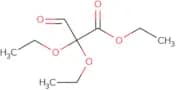
CAS:<p>Versatile small molecule scaffold</p>Formula:C17H26N2O2Purity:Min. 95%Molecular weight:290.4 g/molEthyl 2,2-diethoxy-3-oxopropanoate
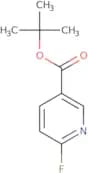
CAS:<p>Versatile small molecule scaffold</p>Formula:C9H16O5Purity:Min. 95%Molecular weight:204.22 g/mol6-Fluoronicotinic acid tert-butyl ester
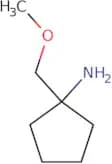
CAS:<p>Versatile small molecule scaffold</p>Formula:C10H12FNO2Purity:Min. 95%Molecular weight:197.21 g/mol1-(Methoxymethyl)cyclopentan-1-amine
CAS:<p>Versatile small molecule scaffold</p>Formula:C7H15NOPurity:Min. 95%Molecular weight:129.2 g/mol3-Amino-6-(difluoromethyl)-4-methylthieno[2,3-b]pyridine-2-carboxylic acid
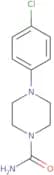
CAS:<p>Versatile small molecule scaffold</p>Formula:C10H8F2N2O2SPurity:Min. 95%Molecular weight:258.25 g/mol4-(4-Chlorophenyl)piperazine-1-carboxamide
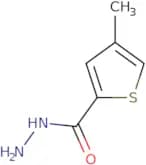
CAS:Controlled Product<p>Versatile small molecule scaffold</p>Formula:C11H14ClN3OPurity:Min. 95%Molecular weight:239.7 g/mol4-Methylthiophene-2-carbohydrazide
CAS:<p>Versatile small molecule scaffold</p>Formula:C6H8N2OSPurity:Min. 95%Molecular weight:156.21 g/mol5H,6H,7H,8H,9H-Pyrido[3,2-b]azepine-6,9-dione
CAS:<p>Versatile small molecule scaffold</p>Formula:C9H8N2O2Purity:Min. 95%Molecular weight:176.17 g/mol2,3-Dihydro-1H-spiro[isoquinoline-4,4'-piperidine]-3-one
CAS:<p>Versatile small molecule scaffold</p>Formula:C13H16N2OPurity:Min. 95%Molecular weight:216.28 g/molEthyl 7-(2-furyl)pyrazolo[1,5-a]pyrimidine-3-carboxylate
CAS:<p>Versatile small molecule scaffold</p>Formula:C13H11N3O3Purity:Min. 95%Molecular weight:257.24 g/mol[5-(2-Fluoroethoxy)pyridin-2-yl]methanol
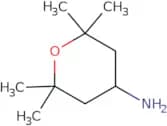
CAS:<p>Versatile small molecule scaffold</p>Formula:C8H10FNO2Purity:Min. 95%Molecular weight:171.17 g/molTetrahydro-2,2,6,6-tetramethyl-2H-pyran-4-amine
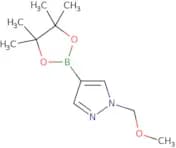
CAS:<p>Versatile small molecule scaffold</p>Formula:C9H19NOPurity:Min. 95%Molecular weight:157.25 g/mol1-(Methoxymethyl)-4-(4,4,5,5-tetramethyl-1,3,2-dioxaborolan-2-yl)-1H-pyrazole
CAS:<p>Versatile small molecule scaffold</p>Formula:C11H19BN2O3Purity:Min. 95%Molecular weight:238.09 g/mol7-Methylthieno[3,2-d]pyrimidin-4-amine
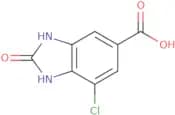
CAS:<p>Versatile small molecule scaffold</p>Formula:C7H7N3SPurity:Min. 95%Molecular weight:165.22 g/mol7-Chloro-2-oxo-2,3-dihydro-1H-1,3-benzodiazole-5-carboxylic acid
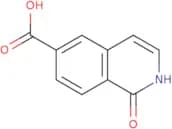
CAS:<p>Versatile small molecule scaffold</p>Formula:C8H5ClN2O3Purity:Min. 95%Molecular weight:212.59 g/mol1-Hydroxyisoquinoline-6-carboxylic acid
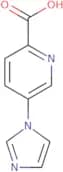
CAS:<p>Versatile small molecule scaffold</p>Formula:C10H7NO3Purity:Min. 95%Molecular weight:189.17 g/mol5-(1H-Imidazol-1-yl)pyridine-2-carboxylic acid
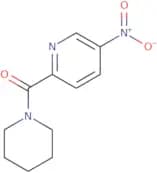
CAS:<p>Versatile small molecule scaffold</p>Formula:C9H7N3O2Purity:Min. 95%Molecular weight:189.17 g/mol5-Nitro-2-(piperidine-1-carbonyl)pyridine
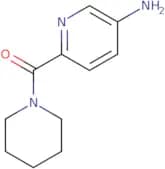
CAS:<p>Versatile small molecule scaffold</p>Formula:C11H13N3O3Purity:Min. 95%Molecular weight:235.24 g/mol6-(Piperidine-1-carbonyl)pyridin-3-amine
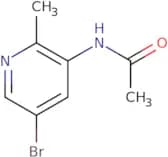
CAS:<p>Versatile small molecule scaffold</p>Formula:C11H15N3OPurity:Min. 95%Molecular weight:205.26 g/molN-(5-Bromo-2-methylpyridin-3-yl)acetamide
CAS:<p>Versatile small molecule scaffold</p>Formula:C8H9BrN2OPurity:Min. 95%Molecular weight:229.07 g/molmethyl 1H-pyrazolo[4,3-b]pyridine-6-carboxylate
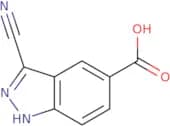
CAS:<p>Versatile small molecule scaffold</p>Formula:C8H7N3O2Purity:Min. 95%Molecular weight:177.16 g/mol3-Cyano-1H-indazole-5-carboxylic acid
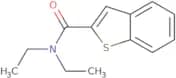
CAS:<p>Versatile small molecule scaffold</p>Formula:C9H5N3O2Purity:Min. 95%Molecular weight:187.15 g/molN,N-Diethyl-1-benzothiophene-2-carboxamide
CAS:<p>Versatile small molecule scaffold</p>Formula:C13H15NOSPurity:Min. 95%Molecular weight:233.33 g/molPyrazolo[1,5-a]pyrazin-4-ol
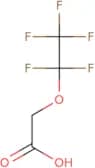
CAS:Pyrazolo[1,5-a]pyrazin-4-ol is a fluorescent compound that has been shown to inhibit the growth of cancer cells. It binds to the metabotropic glutamate receptor subtype 1 (mGluR1) and inhibits glutamate binding, which reduces the production of cAMP and inhibits the proliferation of cancer cells. Pyrazolo[1,5-a]pyrazin-4-ol may be useful for treating conditions such as Alzheimer's disease, Parkinson's disease, epilepsy, and schizophrenia. In addition to being a potential treatment for these diseases, pyrazolo[1,5-a]pyrazin-4-ol also has optical properties that make it suitable as a fluorescent probe. This compound can be used in living cells by attaching it to another molecule or by attaching it to an antibody that specifically recognizes a protein of interest. The diffraction patterns produced from this compound can then be analysed using X-ray crystallography or nuclear magneticFormula:C6H5N3OPurity:Min. 95%Molecular weight:135.12 g/mol2-(1,1,2,2,2-Pentafluoroethoxy)acetic acid
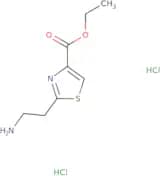
CAS:<p>Versatile small molecule scaffold</p>Formula:C4H3F5O3Purity:Min. 95%Molecular weight:194.06 g/molEthyl 2-(2-aminoethyl)-1,3-thiazole-4-carboxylate dihydrochloride
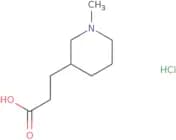
CAS:<p>Versatile small molecule scaffold</p>Formula:C8H14Cl2N2O2SPurity:Min. 95%Molecular weight:273.18 g/mol3-(1-Methyl-3-piperidinyl)propanoic acid hydrochloride
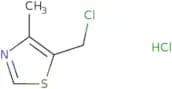
CAS:<p>3-(1-Methyl-3-piperidinyl)propanoic acid hydrochloride is a ligand that binds to the nicotinic acetylcholine receptor. It has been shown to be an inhibitor of the antibody response in rats. 3-(1-Methyl-3-piperidinyl)propanoic acid hydrochloride has also been shown to inhibit activation of ion channels, which may be due to its ability to bind to the ligand binding site and inhibit the binding of endogenous ligands such as acetylcholine. This ligand can be used in cell biology research, pharmacology, and as a research tool for protein interactions.</p>Formula:C9H18ClNO2Purity:Min. 95%Molecular weight:207.7 g/mol5-(Chloromethyl)-4-methyl-1,3-thiazole hydrochloride
CAS:Versatile small molecule scaffoldFormula:C5H7Cl2NSPurity:Min. 95%Molecular weight:184.09 g/mol4-Azaspiro[2,5]octanehydrochloride
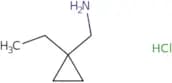
CAS:<p>Versatile small molecule scaffold</p>Formula:C7H14ClNPurity:Min. 95%Molecular weight:147.65 g/mol1-(1-ethylcyclopropyl)methanamine hydrochloride
CAS:<p>Versatile small molecule scaffold</p>Formula:C6H14ClNPurity:Min. 95%Molecular weight:135.64 g/mol1-[(tert-Butoxy)carbonyl]-3-isocyanopyrrolidine
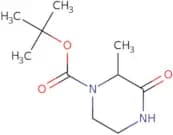
CAS:<p>Versatile small molecule scaffold</p>Formula:C10H16N2O2Purity:Min. 95%Molecular weight:196.2 g/mol1-Boc-2-methyl-3-oxopiperazine
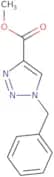
CAS:<p>Versatile small molecule scaffold</p>Formula:C10H18N2O3Purity:Min. 95%Molecular weight:214.26 g/molMethyl 1-Benzyl-1H-1,2,3-triazole-4-carboxylate
CAS:<p>Methyl 1-benzyl-1H-1,2,3-triazole-4-carboxylate is a functional molecule that has the potential to be used in the development of new drugs. It is a triazole molecule that has been shown to have an A+B type structure. The methyl group and the benzyl group are both electron donating groups. The methyl group is localized on the benzene ring and it has a negative charge due to its electronegativity. The benzyl group is more electronegative than the methyl group and it can act as a good leaving group because of its dipole. This molecule has an infrared absorption band at 3270 cm−1 and uv absorption bands at 220 nm, 247 nm, and 311 nm.</p>Formula:C11H11N3O2Purity:Min. 95%Molecular weight:217.22 g/mol1,6-Dihydro-7H-pyrazolo[3,4-c]pyridin-7-one
CAS:<p>1,6-Dihydro-7H-pyrazolo[3,4-c]pyridin-7-one is an isoamyl, pyridine, pyrazole ring that is synthesized from 1,6-dihydro-7H-pyrazolo[3,4-c]pyridin-7-one. This compound has the ability to catalyze the deacetylation of acetyl compounds in a process that involves potassium carbonate and copper. The reaction between 1,6-dihydro-7H-pyrazolo[3,4-c]pyridin-7-one and nitrite yields acetyl radicals. The acetyl radicals then react with methoxyl groups to form ethoxy radicals. Ethoxy radicals are more reactive than acetyl radicals and can be used to produce other organic or inorganic compounds.</p>Formula:C6H5N3OPurity:Min. 95%Molecular weight:135.12 g/mol1H-Pyrazolo[3,4-c]pyridin-3-amine
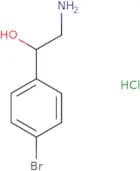
CAS:<p>Versatile small molecule scaffold</p>Formula:C6H6N4Purity:Min. 95%Molecular weight:134.14 g/mol2-Amino-1-(4-bromophenyl)ethanol hydrochloride
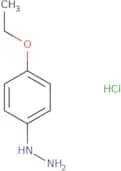
CAS:<p>Versatile small molecule scaffold</p>Formula:C8H11BrClNOPurity:Min. 95%Molecular weight:252.54 g/mol(4-Ethoxyphenyl)hydrazine hydrochloride
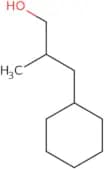
CAS:<p>Versatile small molecule scaffold</p>Formula:C8H13ClN2OPurity:Min. 95%Molecular weight:188.66 g/molCyclohexanepropanol, β-methyl-
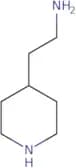
CAS:<p>Cyclohexanepropanol, beta-methyl- is an enantioselective lipase that can be used for the production of chiral drugs and fine chemicals. This enzyme has a high enantioselectivity for esters, alcohols, and solvents. Cyclohexanepropanol, beta-methyl- is one of the most cost-effective enzymes for these reactions. The kinetic properties of this enzyme allows it to efficiently catalyze the hydrolysis of esters under mild conditions. The best results are obtained when using aryl groups with electron withdrawing substituents.</p>Formula:C10H20OPurity:Min. 95%Molecular weight:156.27 g/mol2-(Piperidin-4-yl)ethan-1-amine
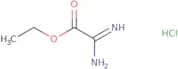
CAS:<p>2-(Piperidin-4-yl)ethan-1-amine is a nonsteroidal anti-inflammatory drug (NSAID) that inhibits the enzyme pancreatic lipase. This inhibition of lipases leads to the decrease in triglycerides and phospholipids in the blood, which prevents inflammation. 2-(Piperidin-4-yl)ethan-1-amine has been shown to have antibacterial and antifungal properties. It has been used for the treatment of infections caused by Mycobacteria sp., including Mycobacterium tuberculosis, M. avium complex, and M. kansasii. It also has been used for the treatment of orlistat induced side effects such as steatorrhea and diarrhea. The use of this drug is limited because it can cause liver toxicity or gastrointestinal ulceration at high doses.</p>Formula:C7H16N2Purity:Min. 95%Molecular weight:128.22 g/molEthyl 2-amino-2-iminoacetate hydrochloride
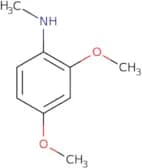
CAS:<p>Versatile small molecule scaffold</p>Formula:C4H9ClN2O2Purity:Min. 95%Molecular weight:152.58 g/mol2,4-Dimethoxy-N-methylaniline
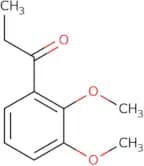
CAS:<p>Versatile small molecule scaffold</p>Formula:C9H13NO2Purity:Min. 95%Molecular weight:167.2 g/mol1-(2,3-Dimethoxyphenyl)propan-1-one
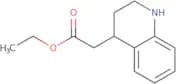
CAS:<p>Versatile small molecule scaffold</p>Formula:C11H14O3Purity:Min. 95%Molecular weight:194.23 g/molEthyl 2-(1,2,3,4-tetrahydroquinolin-4-yl)acetate
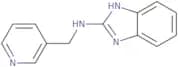
CAS:<p>Versatile small molecule scaffold</p>Formula:C13H17NO2Purity:Min. 95%Molecular weight:219.28 g/molN-(Pyridin-3-ylmethyl)-1H-1,3-benzodiazol-2-amine
CAS:<p>N-(Pyridin-3-ylmethyl)-1H-1,3-benzodiazol-2-amine is a drug product that has been custom synthesized for a laboratory or research use. It has been purified to high purity and is suitable for analytical studies. It has been shown to be metabolized in vivo in humans and animals and is an impurity standard used for HPLC analysis. This compound may also be used as an API impurity or as a research and development chemical intermediate.</p>Formula:C13H12N4Purity:Min. 95%Molecular weight:224.26 g/mol2-Amino-1-cyclopentylethan-1-ol hydrochloride
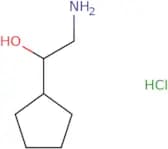
CAS:<p>Versatile small molecule scaffold</p>Formula:C7H16ClNOPurity:Min. 95%Molecular weight:165.66 g/mol5-m-Tolyl-[1,3,4]thiadiazol-2-ylamine
CAS:<p>Versatile small molecule scaffold</p>Formula:C9H9N3SPurity:Min. 95%Molecular weight:191.26 g/mol7-Chloro-5-methylimidazo[1,2-c]pyrimidine-2-carboxamide
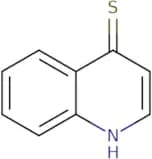
CAS:<p>Versatile small molecule scaffold</p>Formula:C8H7ClN4OPurity:Min. 95%Molecular weight:210.62 g/mol1,4-Dihydroquinoline-4-thione
CAS:<p>1,4-Dihydroquinoline-4-thione is an antibacterial agent that belongs to the class of thiourea derivatives. It has been shown to inhibit the growth of bacteria by binding to the 50S ribosomal subunit. The crystal structure of 1,4-dihydroquinoline-4-thione was determined using X-ray crystallography techniques and gold nanoparticles. The compound has a hydroxyl group that can be labeled with several different groups to produce a variety of isomers.</p>Formula:C9H7NSPurity:Min. 95%Molecular weight:161.23 g/molSCH 28080
CAS:<p>SCH 28080 is a potent inhibitor of transcriptional activator protein-1 (AP-1) and nuclear factor-κB (NF-κB). These two transcriptional regulatory proteins are activated by various stimuli, including inflammatory cytokines, such as IL-1β, TNF-α, and IL-6. Activation of these transcription factors leads to the upregulation of the genes encoding proinflammatory mediators, such as eosinophil cationic protein and interleukins. SCH 28080 has been shown to inhibit NF-κB activation in human HL60 cells, which may be due to its ability to bind to both the α subunit of NF-κB and AP-1.</p>Formula:C17H15N3OPurity:Min. 95%Molecular weight:277.33 g/mol2-Chloro-1-[4-(2-phenoxyethyl)piperazin-1-yl]ethan-1-one hydrochloride
CAS:<p>Versatile small molecule scaffold</p>Formula:C14H20Cl2N2O2Purity:Min. 95%Molecular weight:319.2 g/mol
![1-Boc-4-[(3-aminophenyl)methyl]-piperidine](/_next/image/?url=https%3A%2Fstatic.cymitquimica.com%2Fproducts%2F3D%2Fthumb-webp%2FBCB52803.webp&w=3840&q=75)

![3-Amino-6-(difluoromethyl)-4-methylthieno[2,3-b]pyridine-2-carboxylic acid](/_next/image/?url=https%3A%2Fstatic.cymitquimica.com%2Fproducts%2F3D%2Fthumb-webp%2FBCB57953.webp&w=3840&q=75)
![5H,6H,7H,8H,9H-Pyrido[3,2-b]azepine-6,9-dione](/_next/image/?url=https%3A%2Fstatic.cymitquimica.com%2Fproducts%2F3D%2Fthumb-webp%2FBCB59663.webp&w=3840&q=75)
![2,3-Dihydro-1H-spiro[isoquinoline-4,4'-piperidine]-3-one](/_next/image/?url=https%3A%2Fstatic.cymitquimica.com%2Fproducts%2F3D%2Fthumb-webp%2FBCB60738.webp&w=3840&q=75)
![Ethyl 7-(2-furyl)pyrazolo[1,5-a]pyrimidine-3-carboxylate](/_next/image/?url=https%3A%2Fstatic.cymitquimica.com%2Fproducts%2F3D%2Fthumb-webp%2FBCB64301.webp&w=3840&q=75)
![[5-(2-Fluoroethoxy)pyridin-2-yl]methanol](/_next/image/?url=https%3A%2Fstatic.cymitquimica.com%2Fproducts%2F3D%2Fthumb-webp%2FBCC16803.webp&w=3840&q=75)
![7-Methylthieno[3,2-d]pyrimidin-4-amine](/_next/image/?url=https%3A%2Fstatic.cymitquimica.com%2Fproducts%2F3D%2Fthumb-webp%2FBCC21243.webp&w=3840&q=75)
![methyl 1H-pyrazolo[4,3-b]pyridine-6-carboxylate](/_next/image/?url=https%3A%2Fstatic.cymitquimica.com%2Fproducts%2F3D%2Fthumb-webp%2FBCC21472.webp&w=3840&q=75)
![Pyrazolo[1,5-a]pyrazin-4-ol](/_next/image/?url=https%3A%2Fstatic.cymitquimica.com%2Fproducts%2F3D%2Fthumb-webp%2FBCC71400.webp&w=3840&q=75)
![4-Azaspiro[2,5]octanehydrochloride](/_next/image/?url=https%3A%2Fstatic.cymitquimica.com%2Fproducts%2F3D%2Fthumb-webp%2FBCC73956.webp&w=3840&q=75)
![1-[(tert-Butoxy)carbonyl]-3-isocyanopyrrolidine](/_next/image/?url=https%3A%2Fstatic.cymitquimica.com%2Fproducts%2F3D%2Fthumb-webp%2FBCC74068.webp&w=3840&q=75)
![1,6-Dihydro-7H-pyrazolo[3,4-c]pyridin-7-one](/_next/image/?url=https%3A%2Fstatic.cymitquimica.com%2Fproducts%2F3D%2Fthumb-webp%2FBDA00609.webp&w=3840&q=75)
![1H-Pyrazolo[3,4-c]pyridin-3-amine](/_next/image/?url=https%3A%2Fstatic.cymitquimica.com%2Fproducts%2F3D%2Fthumb-webp%2FBDA00617.webp&w=3840&q=75)
![5-m-Tolyl-[1,3,4]thiadiazol-2-ylamine](/_next/image/?url=https%3A%2Fstatic.cymitquimica.com%2Fproducts%2F3D%2Fthumb-webp%2FBDA07447.webp&w=3840&q=75)
![7-Chloro-5-methylimidazo[1,2-c]pyrimidine-2-carboxamide](/_next/image/?url=https%3A%2Fstatic.cymitquimica.com%2Fproducts%2F3D%2Fthumb-webp%2FBDA07540.webp&w=3840&q=75)
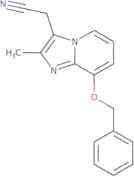
![2-Chloro-1-[4-(2-phenoxyethyl)piperazin-1-yl]ethan-1-one hydrochloride](/_next/image/?url=https%3A%2Fstatic.cymitquimica.com%2Fproducts%2F3D%2Fthumb-webp%2FBDA08780.webp&w=3840&q=75)