Building Blocks
This section contains fundamental products for the synthesis of organic and biological compounds. Building blocks are the essential starting materials used to construct complex molecules through various chemical reactions. They play a critical role in drug discovery, material science, and chemical research. At CymitQuimica, we offer a diverse range of high-quality building blocks to support your innovative research and industrial projects, ensuring you have the essential components for successful synthesis.
Subcategories of "Building Blocks"
- Boronic Acids & Boronic Acid Derivatives(5,756 products)
- Chiral Building Blocks(1,242 products)
- Hydrocarbon Building Blocks(6,095 products)
- Organic Building Blocks(61,051 products)
Found 199813 products of "Building Blocks"
Sort by
Purity (%)
0
100
|
0
|
50
|
90
|
95
|
100
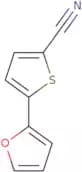
5-(5-Methylthiophen-2-yl)thiophene-2-carboxylic acid
CAS:Versatile small molecule scaffoldFormula:C9H5NOSPurity:Min. 95%Molecular weight:175.21 g/mol2-Hydrazinylpyridin-3-amine
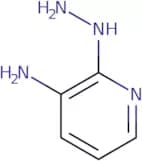
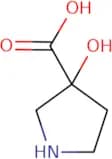
CAS:<p>2-Hydrazinylpyridin-3-amine is an anticancer drug that functions as a prodrug. The hydrochloride salt of 2-hydrazinylpyridin-3-amine is formed by the reaction of the drug with hydrochloric acid. This product has been shown to have anticancer activity in vitro and in vivo and can be used for the treatment of breast cancer. It is also used for other types of cancer, such as prostate cancer or pancreatic cancer. The mechanism by which 2-hydrazinylpyridin-3-amine induces cell death is unclear, but it may involve inhibition of DNA synthesis and prevention of DNA repair.</p>Formula:C5H8N4Purity:Min. 95%Molecular weight:124.14 g/mol3-Hydroxypyrrolidine-3-carboxylic acid
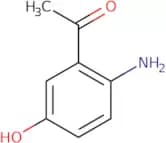
CAS:<p>Versatile small molecule scaffold</p>Formula:C5H9NO3Purity:Min. 95%Molecular weight:131.13 g/mol1-(2-Amino-5-hydroxyphenyl)ethanone
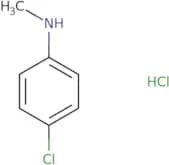
CAS:<p>1-(2-Amino-5-hydroxyphenyl)ethanone is an inhibitor of topoisomerase enzymes. It binds to the enzyme, preventing it from breaking and rejoining DNA strands. This inhibition leads to abnormal DNA replication and cell death. The potency of this compound is determined by its ability to inhibit the enzyme in a kinetically competitive manner. 1-(2-Amino-5-hydroxyphenyl)ethanone has been shown to have inhibitory properties against acetaminophen (APAP)-induced liver injury in rats, and can be used as a synthetic intermediate for other drugs or chemical compounds.</p>Formula:C8H9NO2Purity:Min. 95%Molecular weight:151.16 g/molN-Methyl 4-chloroaniline hydrochloride
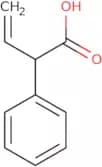
CAS:N-Methyl 4-chloroaniline hydrochloride is a cholinesterase inhibitor that belongs to the group of organochlorines. It has been shown to be effective in demethylation and epoxidase activity in vitro. N-Methyl 4-chloroaniline hydrochloride is also an aminotransferase inhibitor, which inhibits the synthesis of the amino acid methionine. This drug has been shown to have an effect on rat liver microsomes and has been used as a model system for studying enzyme activities. The fluorescence assay shows that this compound binds to DNA and inhibits its transcription and replication, inhibiting cell growth.Formula:C7H9Cl2NPurity:Min. 95%Molecular weight:178.06 g/mol2-Phenylbut-3-enoic acid
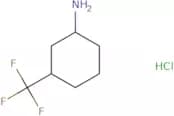
CAS:<p>2-Phenylbut-3-enoic acid is an organic compound that contains a hydroxyl group in its molecular structure. This compound can be synthesized by the ring opening of a cyclopropane carboxylic acid and an alkene. The reaction takes place at temperatures between -78 and -35 degrees Celsius, which is below the boiling point of water. 2-Phenylbut-3-enoic acid is often used as a reagent for catalyzing reactions, especially those that are kinetically controlled. The nucleophile (a reactive chemical species with an affinity for positively charged regions of other molecules) can react with protonated carbonyl groups to form acylium ions, which are highly reactive. These reactions are known as carbonyl addition reactions or Michael reactions. 2-Phenylbut-3-enoic acid also has the ability to act as a nucleophile and react with alkyl halides, such as methoxy</p>Formula:C10H10O2Purity:Min. 95%Molecular weight:162.18 g/molrac-(1R,3S)-3-(Trifluoromethyl)cyclohexan-1-amine hydrochloride
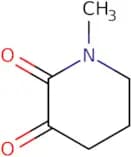
CAS:<p>Versatile small molecule scaffold</p>Formula:C7H13ClF3NPurity:Min. 95%Molecular weight:203.63 g/mol1-Methylpiperidine-2,3-dione
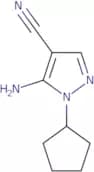
CAS:<p>Versatile small molecule scaffold</p>Formula:C6H9NO2Purity:Min. 95%Molecular weight:127.14 g/mol5-Amino-1-cyclopentyl-1H-pyrazole-4-carbonitrile
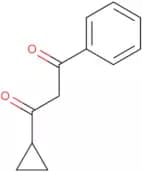
CAS:<p>Versatile small molecule scaffold</p>Formula:C9H12N4Purity:Min. 95%Molecular weight:176.22 g/mol1-Cyclopropyl-3-phenylpropane-1,3-dione
CAS:Versatile small molecule scaffoldFormula:C12H12O2Purity:Min. 95%Molecular weight:188.22 g/mol1,3-Dicyclopropylpropane-1,3-dione
CAS:<p>Versatile small molecule scaffold</p>Formula:C9H12O2Purity:Min. 95%Molecular weight:152.19 g/mol2-[3-(Trifluoromethyl)phenyl]morpholine
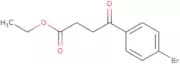
CAS:<p>2-[3-(Trifluoromethyl)phenyl]morpholine (TFM) is a hydrophobic, insoluble compound that can be reconstituted in water at a concentration of 0.2%. TFM has been shown to have an affinity for cancer cells. It targets the cell membrane and enters the cell through iontophoresis by inserting itself into the lipid bilayer. Once inside, it disrupts the cell membrane and induces apoptosis by disrupting protein synthesis. TFM is used in diagnostic tests to detect cancerous cells and as a diluent for other drugs during injection procedures. This drug should only be administered in high concentrations (above 5 mg/mL).</p>Formula:C11H12F3NOPurity:Min. 95%Molecular weight:231.21 g/molEthyl 4-(4-bromophenyl)-4-oxobutyrate
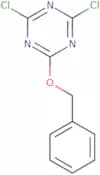
CAS:<p>Versatile small molecule scaffold</p>Formula:C12H13BrO3Purity:Min. 95%Molecular weight:285.13 g/mol2-(Benzyloxy)-4,6-dichloro-1,3,5-triazine
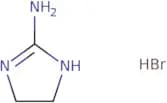
CAS:2-(Benzyloxy)-4,6-dichloro-1,3,5-triazine is an aromatic compound that has a benzene ring at the end of its structure. This compound undergoes cleavage reactions with chlorides and toluene. The 2-(Benzyloxy)-4,6-dichloro-1,3,5-triazine can be used in Friedel-Crafts reactions to produce benzene from ethylene. It also can be used in the production of ethers by reacting with alcohols.Formula:C10H7Cl2N3OPurity:Min. 95%Molecular weight:256.08 g/molImidazolidin-2-imine hydrobromide
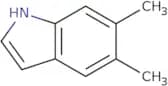
CAS:<p>Versatile small molecule scaffold</p>Formula:C3H8BrN3Purity:Min. 95%Molecular weight:166.02 g/mol5,6-Dimethyl-1H-indole
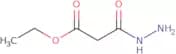
CAS:<p>Versatile small molecule scaffold</p>Formula:C10H11NPurity:Min. 95%Molecular weight:145.2 g/molN1-Ethylmalonohydrazide
CAS:<p>N1-Ethylmalonohydrazide (NEMH) is a hydroxylase ligand that has been shown to have anticancer activity. It binds to the active site of the enzyme, which converts 4-nitrophenylacetic acid into 4-aminophenol and carbon dioxide. NEMH is a precursor to the anticancer drug, melphalan. The anticancer activity of NEMH is due to its ability to crosslink DNA molecules, thereby inhibiting DNA synthesis. It also has an effect on the conformation of the molecule and may be responsible for its anti-cancer effects.</p>Formula:C5H10N2O3Purity:Min. 95%Color and Shape:PowderMolecular weight:146.14 g/mol1-cyclopropyl-1,4-diazepane
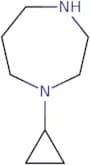
CAS:<p>1-Cyclopropyl-1,4-diazepane is a serotonin receptor antagonist that has been shown to inhibit platelet aggregation by inhibiting the release of serotonin from platelets. It inhibits the binding of histamine to its receptor and prevents the activation of H3 receptors in the brain. 1-Cyclopropyl-1,4-diazepane is an aromatic heterocycle that binds to benzamide receptors on the transporter protein. This drug inhibits serotonin reuptake by blocking serotonin transporters and may also inhibit cox-1 activity. 1-Cyclopropyl-1,4-diazepane may be used for treating disorders such as ischemic heart disease, angina pectoris, and hypertension.</p>Formula:C8H16N2Purity:Min. 95%Molecular weight:140.22 g/mol1-Cyclopropyl-1,4-diazepan-5-one
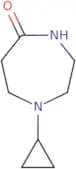
CAS:<p>Versatile small molecule scaffold</p>Formula:C8H14N2OPurity:Min. 95%Molecular weight:154.21 g/molEthyl 6-amino-1,2,4-triazine-5-carboxylate
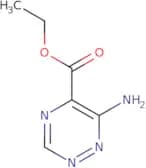
CAS:<p>Versatile small molecule scaffold</p>Formula:C6H8N4O2Purity:Min. 95%Molecular weight:168.15 g/molN-[(2-Oxocyclohexyl)methyl]formamide
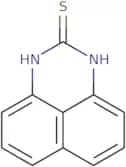
CAS:<p>Versatile small molecule scaffold</p>Formula:C8H13NO2Purity:Min. 95%Molecular weight:155.19 g/mol1H-Perimidine-2-thiol
CAS:<p>Versatile small molecule scaffold</p>Formula:C11H8N2SPurity:Min. 95%Molecular weight:200.26 g/mol2,3-Dimethylbutane-1-sulfonyl chloride
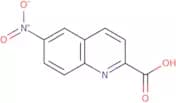
CAS:Versatile small molecule scaffoldFormula:C6H13ClO2SPurity:Min. 95%Molecular weight:184.7 g/mol6-nitroquinoline-2-carboxylic acid
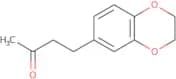
CAS:<p>Versatile small molecule scaffold</p>Formula:C10H6N2O4Purity:Min. 95%Molecular weight:218.2 g/mol4-(2,3-Dihydro-1,4-benzodioxin-6-yl)butan-2-one
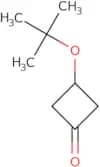
CAS:<p>Versatile small molecule scaffold</p>Formula:C12H14O3Purity:Min. 95%Molecular weight:206.24 g/mol-3(tert-butoxy)cyclobutanone
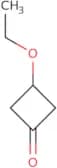
CAS:<p>The compound (-3(tert-butoxy)cyclobutanone) is a stereoselective hydroxylation of 4-cyanopyridine catalyzed by acetonitrile in the presence of sodium as a base. The reaction product is an unsymmetrical aldehyde with two hydroxyl groups on opposite sides of the ring. This synthesis can be carried out in one step, and the amines that are used as starting materials can be varied to synthesize different products. The reaction proceeds via nucleophilic attack on the nitro group of 5-nitroquinoline by chloride ion to yield an intermediate that undergoes hydrolysis with water and elimination of chloride ion to give 2-hydroxy-5-(tosyloxy)pyridine. This intermediate then reacts with ferrocene and vinyl ether in acetonitrile to give (-3(tert-butoxy)cyclobutanone).</p>Formula:C8H14O2Purity:Min. 95%Molecular weight:142.2 g/mol3-Ethoxycyclobutan-1-one
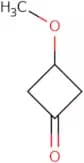
CAS:<p>Versatile small molecule scaffold</p>Formula:C6H10O2Purity:Min. 95%Molecular weight:114.14 g/mol3-Methoxycyclobutan-1-one
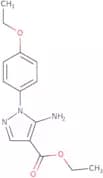
CAS:<p>3-Methoxycyclobutan-1-one (3MCO) is an electron donor and is capable of undergoing electrochemical oxidation. 3MCO has been shown to oxidize electron acceptors, such as hydrocarbons, and transfer the electrons to a second electron acceptor. The mechanism of this process is thought to be a three-electron transfer, which is also known as a "polycyclic" reaction. 3MCO has also been shown to have anti-inflammatory properties by inhibiting prostaglandin synthesis in mice with lung cancer.</p>Formula:C5H8O2Purity:Min. 95%Molecular weight:100.12 g/molEthyl 5-amino-1-(4-ethoxyphenyl)-1H-pyrazole-4-carboxylate
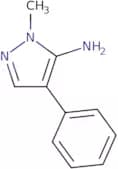
CAS:<p>Versatile small molecule scaffold</p>Formula:C14H17N3O3Purity:Min. 95%Molecular weight:275.3 g/mol1H-Pyrazol-5-amine, 1-methyl-4-phenyl-
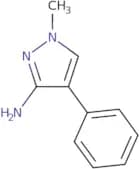
CAS:Versatile small molecule scaffoldFormula:C10H11N3Purity:Min. 95%Molecular weight:173.21 g/mol1-Methyl-4-phenyl-1H-pyrazol-3-amine
CAS:<p>1-Methyl-4-phenyl-1H-pyrazol-3-amine is a ligand that has structural similarity to the class of pyrimidine derivatives. It also binds to the pharmacophoric sites of the receptor. 1MPD has shown affinity for both dopamine and serotonin receptors, but not for other receptors, in vitro.</p>Formula:C10H11N3Purity:Min. 95%Molecular weight:173.21 g/mol2-Chloro-5-fluoronicotinamide
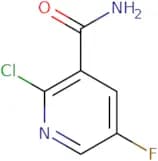
CAS:<p>Versatile small molecule scaffold</p>Formula:C6H4ClFN2OPurity:Min. 95%Molecular weight:174.56 g/mol3-(tert-Butoxy)cyclobutan-1-ol, cis
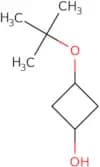
CAS:<p>Versatile small molecule scaffold</p>Formula:C8H16O2Purity:Min. 95%Molecular weight:144.21 g/molTrans-3-ethoxycyclobutan-1-ol
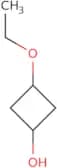
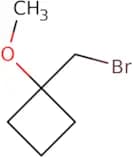
CAS:<p>Versatile small molecule scaffold</p>Formula:C6H12O2Purity:Min. 95%Molecular weight:116.16 g/mol1-(Bromomethyl)-1-methoxycyclobutane
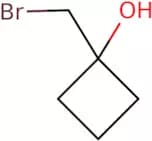
CAS:<p>Versatile small molecule scaffold</p>Formula:C6H11BrOPurity:Min. 95%Molecular weight:179.05 g/mol1-(Bromomethyl)cyclobutan-1-ol
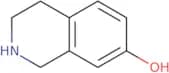
CAS:<p>Versatile small molecule scaffold</p>Formula:C5H9BrOPurity:Min. 95%Molecular weight:165.03 g/mol1,2,3,4-Tetrahydroisoquinolin-7-ol
CAS:<p>1,2,3,4-Tetrahydroisoquinolin-7-ol is a pharmacologically active compound. It has been shown to inhibit the production of urotensin and corypalline in cultured cells. This drug also inhibits the binding of ligands such as mcf-7 to their corresponding receptors. 1,2,3,4-Tetrahydroisoquinolin-7-ol has been shown to have affinity for sulfamate and non-steroidal antiinflammatory drugs (NSAIDs). The pharmacologic effects of this compound are not fully understood at this time.</p>Formula:C9H11NOPurity:Min. 95%Molecular weight:149.19 g/mol2-(5-Methyl-2-furyl)ethanamine
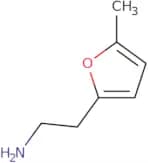
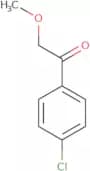
CAS:<p>Versatile small molecule scaffold</p>Formula:C7H11NOPurity:Min. 95%Molecular weight:125.17 g/mol1-(4-Chlorophenyl)-2-methoxyethan-1-one
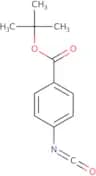
CAS:<p>Versatile small molecule scaffold</p>Formula:C9H9ClO2Purity:Min. 95%Molecular weight:184.62 g/moltert-Butyl 4-isocyanatobenzoate
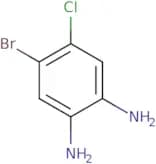
CAS:<p>Versatile small molecule scaffold</p>Formula:C12H13NO3Purity:Min. 95%Molecular weight:219.24 g/mol4-Bromo-5-chlorobenzene-1,2-diamine
CAS:<p>Versatile small molecule scaffold</p>Formula:C6H6BrClN2Purity:Min. 95%Molecular weight:221.48 g/molIndeno[2,1-b]chromene-6-carbaldehyde
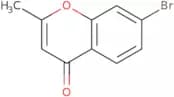
CAS:<p>Versatile small molecule scaffold</p>Formula:C17H10O2Purity:Min. 95%Molecular weight:246.26 g/mol7-Bromo-2-methyl-4H-chromen-4-one
CAS:<p>Versatile small molecule scaffold</p>Formula:C10H7BrO2Purity:Min. 95%Molecular weight:239.06 g/mol2-[(2-Hydroxyethyl)(2-methylpropyl)amino]ethan-1-ol
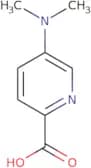
CAS:<p>Versatile small molecule scaffold</p>Formula:C8H19NO2Purity:Min. 95%Molecular weight:161.24 g/mol5-(Dimethylamino)pyridine-2-carboxylic acid
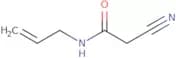
CAS:<p>Versatile small molecule scaffold</p>Formula:C8H10N2O2Purity:Min. 95%Molecular weight:166.18 g/mol2-Cyano-N-(prop-2-en-1-yl)acetamide
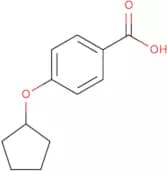
CAS:<p>Versatile small molecule scaffold</p>Formula:C6H8N2OPurity:Min. 95%Molecular weight:124.14 g/mol4-(Cyclopentyloxy)-benzoic acid
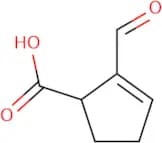
CAS:<p>Versatile small molecule scaffold</p>Formula:C12H14O3Purity:Min. 95%Molecular weight:206.24 g/mol2-Formylcyclopent-2-ene-1-carboxylic acid
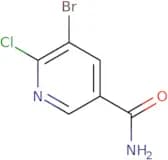
CAS:<p>2-Formylcyclopent-2-ene-1-carboxylic acid is a synthetic, ring-opening reaction that can be used to produce cyclopentenones. It has been optimized for use with a temperature of 100 degrees Celsius and in the presence of solvents such as dichloromethane or benzene. The ring opening and hydrolysis are efficient, with an optimized reaction temperature of 100 C.</p>Formula:C7H8O3Purity:Min. 95%Molecular weight:140.14 g/mol5-Bromo-6-chloropyridine-3-carboxamide
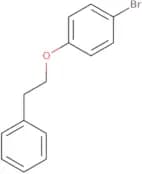
CAS:<p>Versatile small molecule scaffold</p>Formula:C6H4BrClN2OPurity:Min. 95%Color and Shape:PowderMolecular weight:235.5 g/mol1-Bromo-4-(2-phenylethoxy)benzene
CAS:<p>Versatile small molecule scaffold</p>Formula:C14H13BrOPurity:Min. 95%Molecular weight:277.16 g/mol


![2-[3-(Trifluoromethyl)phenyl]morpholine](/_next/image/?url=https%3A%2Fstatic.cymitquimica.com%2Fproducts%2F3D%2Fthumb-webp%2FFBA91489.webp&w=3840&q=75)
![N-[(2-Oxocyclohexyl)methyl]formamide](/_next/image/?url=https%3A%2Fstatic.cymitquimica.com%2Fproducts%2F3D%2Fthumb-webp%2FFBA83764.webp&w=3840&q=75)

![Indeno[2,1-b]chromene-6-carbaldehyde](/_next/image/?url=https%3A%2Fstatic.cymitquimica.com%2Fproducts%2F3D%2Fthumb-webp%2FADA29382.webp&w=3840&q=75)
![2-[(2-Hydroxyethyl)(2-methylpropyl)amino]ethan-1-ol](/_next/image/?url=https%3A%2Fstatic.cymitquimica.com%2Fproducts%2F3D%2Fthumb-webp%2FFBA76976.webp&w=3840&q=75)