Building Blocks
This section contains fundamental products for the synthesis of organic and biological compounds. Building blocks are the essential starting materials used to construct complex molecules through various chemical reactions. They play a critical role in drug discovery, material science, and chemical research. At CymitQuimica, we offer a diverse range of high-quality building blocks to support your innovative research and industrial projects, ensuring you have the essential components for successful synthesis.
Subcategories of "Building Blocks"
- Boronic Acids & Boronic Acid Derivatives(5,778 products)
- Chiral Building Blocks(1,242 products)
- Hydrocarbon Building Blocks(6,098 products)
- Organic Building Blocks(61,034 products)
Found 199601 products of "Building Blocks"
Sort by
Purity (%)
0
100
|
0
|
50
|
90
|
95
|
100
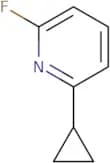
2-Cyclopropyl-6-fluoropyridine
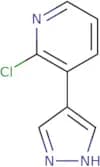
CAS:<p>Versatile small molecule scaffold</p>Formula:C8H8FNPurity:Min. 95%Molecular weight:137.15 g/mol2-Chloro-3-(1H-pyrazol-4-yl)pyridine
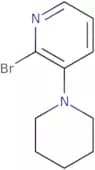
CAS:<p>Versatile small molecule scaffold</p>Formula:C8H6ClN3Purity:Min. 95%Molecular weight:179.6 g/mol2-Bromo-3-(piperidin-1-yl)pyridine
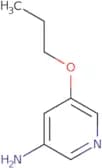
CAS:Versatile small molecule scaffoldFormula:C10H13BrN2Purity:Min. 95%Molecular weight:241.13 g/mol5-Propoxypyridin-3-amine
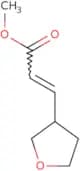
CAS:<p>Versatile small molecule scaffold</p>Formula:C8H12N2OPurity:Min. 95%Molecular weight:152.19 g/molMethyl (2E)-3-(oxolan-3-yl)prop-2-enoate
CAS:<p>Versatile small molecule scaffold</p>Formula:C8H12O3Purity:Min. 95%Molecular weight:156.18 g/mol2-[(Thiophen-3-yl)methylidene]butanal
CAS:<p>Versatile small molecule scaffold</p>Formula:C9H10OSPurity:Min. 95%Molecular weight:166.24 g/mol3-[2-(Methoxymethyl)phenyl]-2-methylprop-2-enal
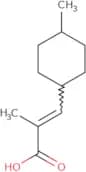
CAS:<p>Versatile small molecule scaffold</p>Formula:C12H14O2Purity:Min. 95%Molecular weight:190.24 g/mol2-Methyl-3-(4-methylcyclohexyl)prop-2-enoic acid
CAS:<p>Versatile small molecule scaffold</p>Formula:C11H18O2Purity:Min. 95%Molecular weight:182.26 g/mol4-[(1E)-3-Chloroprop-1-en-1-yl]-1-methyl-1H-pyrazole
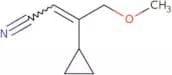
CAS:<p>Versatile small molecule scaffold</p>Formula:C7H9ClN2Purity:Min. 95%Molecular weight:156.61 g/mol3-Cyclopropyl-4-methoxybut-2-enenitrile
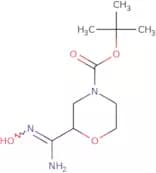
CAS:<p>Versatile small molecule scaffold</p>Formula:C8H11NOPurity:Min. 95%Molecular weight:137.18 g/moltert-Butyl 2-(N'-hydroxycarbamimidoyl)morpholine-4-carboxylate
CAS:<p>Versatile small molecule scaffold</p>Formula:C10H19N3O4Purity:Min. 95%Molecular weight:245.28 g/molMethyl 3-[(2,5-difluorophenyl)sulfanyl]prop-2-enoate
CAS:<p>Versatile small molecule scaffold</p>Formula:C10H8F2O2SPurity:Min. 95%Molecular weight:230.23 g/mol3-(5-Chlorothiophen-2-yl)-2-methylprop-2-enal
CAS:<p>Versatile small molecule scaffold</p>Formula:C8H7ClOSPurity:Min. 95%Molecular weight:186.66 g/molMethyl (2Z)-3-[(2,4-difluorophenyl)sulfanyl]prop-2-enoate
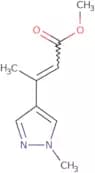
CAS:<p>Versatile small molecule scaffold</p>Formula:C10H8F2O2SPurity:Min. 95%Molecular weight:230.23 g/molMethyl 3-(1-methyl-1H-pyrazol-4-yl)but-2-enoate
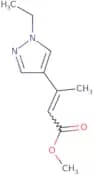
CAS:<p>Versatile small molecule scaffold</p>Formula:C9H12N2O2Purity:Min. 95%Molecular weight:180.2 g/molMethyl 3-(1-ethyl-1H-pyrazol-4-yl)but-2-enoate
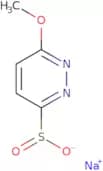
CAS:<p>Versatile small molecule scaffold</p>Formula:C10H14N2O2Purity:Min. 95%Molecular weight:194.23 g/molSodium 6-methoxypyridazine-3-sulfinate
CAS:<p>Versatile small molecule scaffold</p>Formula:C5H5N2NaO3SPurity:Min. 95%Molecular weight:196.16 g/mol4-[(tert-Butoxy)carbonyl]-3,4-dihydro-2H-1,4-benzoxazine-7-carboxylic acid
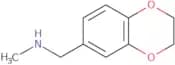
CAS:Versatile small molecule scaffoldFormula:C14H17NO5Purity:Min. 95%Molecular weight:279.3 g/mol(2,3-Dihydro-1,4-benzodioxin-6-ylmethyl)(methyl)amine
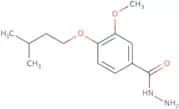
CAS:<p>Versatile small molecule scaffold</p>Formula:C10H13NO2Purity:Min. 95%Molecular weight:179.22 g/mol3-Methoxy-4-(3-methylbutoxy)benzohydrazide
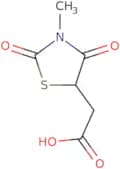
CAS:<p>3-Methoxy-4-(3-methylbutoxy)benzohydrazide is a high purity and cost-effective small molecule with an IC50 of 9.2 μM, which can be used as a research tool for studying the interaction between proteins and peptides. It has been shown to inhibit ion channels in cells, such as the nicotinic acetylcholine receptor (nAChR), and can be used as a potential therapeutic agent for treating conditions that involve excessive neurotransmitter release, such as epilepsy. 3-Methoxy-4-(3-methylbutoxy)benzohydrazide has also been shown to bind to an antibody in cell culture, suggesting that it may be useful for detecting protein expression levels in cells.</p>Formula:C13H20N2O3Purity:Min. 95%Molecular weight:252.31 g/mol(3-Methyl-2,4-dioxo-thiazolidin-5-yl)-acetic acid
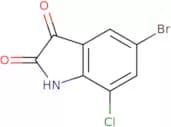
CAS:<p>Versatile small molecule scaffold</p>Formula:C6H7NO4SPurity:Min. 95%Molecular weight:189.19 g/mol5-Bromo-7-chloroindoline-2,3-dione
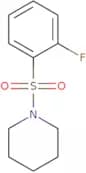
CAS:<p>Versatile small molecule scaffold</p>Formula:C8H3BrClNO2Purity:Min. 95%Molecular weight:260.47 g/mol1-(2-Fluorobenzenesulfonyl)piperidine
CAS:<p>Versatile small molecule scaffold</p>Formula:C11H14FNO2SPurity:Min. 95%Molecular weight:243.3 g/mol4-(([3-(Trifluoromethyl)phenyl]sulfonyl)amino)benzoic acid
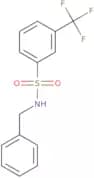
CAS:<p>Versatile small molecule scaffold</p>Formula:C14H10F3NO4SPurity:Min. 95%Molecular weight:345.3 g/molN-Benzyl-3-(trifluoromethyl)benzene-1-sulfonamide
CAS:<p>Versatile small molecule scaffold</p>Formula:C14H12F3NO2SPurity:Min. 95%Molecular weight:315.31 g/mol3-[2-(Trifluoromethyl)benzenesulfonamido]propanoic acid
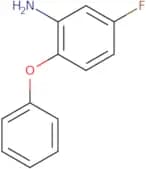
CAS:<p>Versatile small molecule scaffold</p>Formula:C10H10F3NO4SPurity:Min. 95%Molecular weight:297.25 g/mol5-Fluoro-2-phenoxyaniline
CAS:<p>5-Fluoro-2-phenoxyaniline is a synthetic drug that has been shown to bind to the benzodiazepine receptor in rat brain tissue. This binding causes a decrease in cerebral blood flow, which can lead to seizure activity. 5-Fluoro-2-phenoxyaniline has also been shown to inhibit the production of inflammatory cytokines and other substances that are associated with neuroinflammation. It has not been determined whether this drug binds to any other receptors or what its target organ might be.</p>Formula:C12H10FNOPurity:Min. 95%Molecular weight:203.22 g/mol3-Methyl-1-oxa-3,8-diazaspiro[4,5]decan-2-one hydrochloride
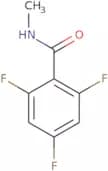
CAS:<p>Versatile small molecule scaffold</p>Formula:C8H15ClN2O2Purity:Min. 95%Molecular weight:206.67 g/mol2,4,6-Trifluoro-N-methylbenzamide
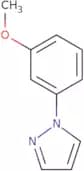
CAS:<p>Versatile small molecule scaffold</p>Formula:C8H6F3NOPurity:Min. 95%Molecular weight:189.13 g/mol1-(3-Methoxyphenyl)-1H-pyrazole
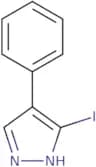
CAS:<p>Versatile small molecule scaffold</p>Formula:C10H10N2OPurity:Min. 95%Molecular weight:174.2 g/mol3-Iodo-4-phenyl-1H-pyrazole
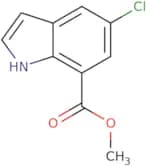
CAS:<p>Versatile small molecule scaffold</p>Formula:C9H7IN2Purity:Min. 95%Molecular weight:270.07 g/molMethyl 5-chloro-1H-indole-7-carboxylate
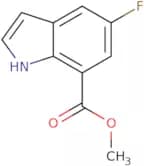
CAS:<p>Versatile small molecule scaffold</p>Formula:C10H8ClNO2Purity:Min. 95%Molecular weight:209.63 g/molMethyl 5-fluoro-1H-indole-7-carboxylate
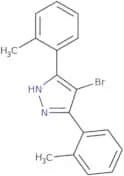
CAS:<p>Versatile small molecule scaffold</p>Formula:C10H8FNO2Purity:Min. 95%Molecular weight:193.17 g/mol4-Bromo-3,5-bis(2-methylphenyl)-1H-pyrazole
CAS:<p>Versatile small molecule scaffold</p>Formula:C17H15BrN2Purity:Min. 95%Molecular weight:327.2 g/molN-[(Z)-2-Nitroethenyl]acetamide
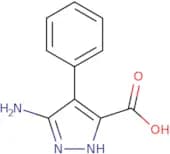
CAS:<p>N-[(Z)-2-Nitroethenyl]acetamide is a synthetic anti-influenza drug. It has shown to be effective against influenza virus, and it is currently being optimized for use as an anti-influenza drug. N-[(Z)-2-Nitroethenyl]acetamide binds to the neuraminidase enzyme of influenza viruses, which prevents them from releasing viral particles. This drug has been shown to be effective in experiments that used nitro compounds in place of the more commonly used tetraethyl amine. The nitro group is thought to increase the rate of reaction because it is more reactive than the tetraethyl amine group. Optimization of parameters such as solvent, temperature, and concentration were required for this synthesis.</p>Formula:C4H6N2O3Purity:Min. 95%Molecular weight:130.1 g/mol5-amino-4-phenyl-1H-pyrazole-3-carboxylic acid
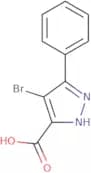
CAS:<p>Versatile small molecule scaffold</p>Formula:C10H9N3O2Purity:Min. 95%Molecular weight:203.2 g/mol4-bromo-3-phenyl-1H-pyrazole-5-carboxylic acid
CAS:<p>Versatile small molecule scaffold</p>Formula:C10H7BrN2O2Purity:Min. 95%Molecular weight:267.1 g/mol6,6-Difluoro-5,6,7,8,9,10-hexahydrobenzo[8]annulen-5-one
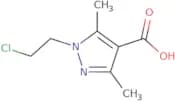
CAS:<p>Versatile small molecule scaffold</p>Formula:C12H12F2OPurity:Min. 95%Molecular weight:210.22 g/mol1-(2-Chloroethyl)-3,5-dimethyl-1H-pyrazole-4-carboxylic acid
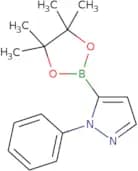
CAS:<p>Versatile small molecule scaffold</p>Formula:C8H11ClN2O2Purity:Min. 95%Molecular weight:202.64 g/mol1-Phenyl-5-(4,4,5,5-tetramethyl-1,3,2-dioxaborolan-2-yl)-1H-pyrazole
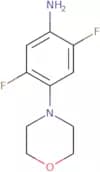
CAS:<p>Versatile small molecule scaffold</p>Formula:C15H19BN2O2Purity:Min. 95%Molecular weight:270.14 g/mol2,5-Difluoro-4-(morpholin-4-yl)aniline
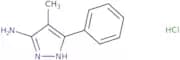
CAS:<p>Versatile small molecule scaffold</p>Formula:C10H12F2N2OPurity:Min. 95%Molecular weight:214.21 g/mol4-Methyl-3-phenyl-1H-pyrazol-5-amine hydrochloride
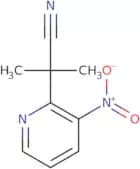
CAS:<p>Versatile small molecule scaffold</p>Formula:C10H12ClN3Purity:Min. 95%Molecular weight:209.67 g/mol2-Methyl-2-(3-nitropyridin-2-yl)propanenitrile
CAS:<p>Versatile small molecule scaffold</p>Formula:C9H9N3O2Purity:Min. 95%Molecular weight:191.19 g/molN-(5-Hydroxy-2,4-dimethylphenyl)acetamide
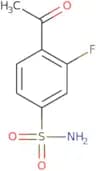
CAS:<p>Versatile small molecule scaffold</p>Formula:C10H13NO2Purity:Min. 95%Molecular weight:179.2 g/mol4-Acetyl-3-fluorobenzene-1-sulfonamide
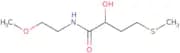
CAS:<p>Versatile small molecule scaffold</p>Formula:C8H8FNO3SPurity:Min. 95%Molecular weight:217.22 g/mol2-Hydroxy-N-(2-methoxyethyl)-4-(methylsulfanyl)butanamide
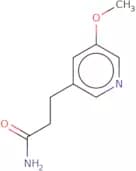
CAS:<p>Versatile small molecule scaffold</p>Formula:C8H17NO3SPurity:Min. 95%Molecular weight:207.3 g/mol3-(5-Methoxypyridin-3-yl)propanamide
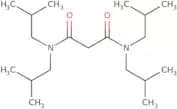
CAS:<p>Versatile small molecule scaffold</p>Formula:C9H12N2O2Purity:Min. 95%Molecular weight:180.2 g/molN,N,N',N'-Tetrakis(2-methylpropyl)propanediamide
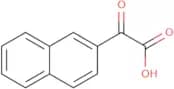
CAS:<p>N,N,N',N'-Tetrakis(2-methylpropyl)propanediamide (TPDA) is a hexavalent diamide that has been used as a catalyst in organic synthesis. TPDA has shown to be an effective catalyst for the Diels-Alder reaction of 2,3-dimethylbutadiene with maleic anhydride. TPDA is also useful in the synthesis of polymers such as polyurethane and polyimides.</p>Formula:C19H38N2O2Purity:Min. 95%Molecular weight:326.5 g/mol2-(Naphthalen-2-yl)-2-oxoacetic acid
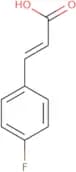
CAS:<p>2-(Naphthalen-2-yl)-2-oxoacetic acid is a naphthalene derivative that can be synthesized by reacting 2-naphthol with ethyl acetate. It has been shown to have a quantum yield of 0.024 and fluorescence emission at 561 nm in aqueous solution. The reaction scheme for the synthesis of 2-(naphthalen-2-yl)-2-oxoacetic acid is as follows:</p>Formula:C12H8O3Purity:Min. 95%Molecular weight:200.19 g/mol(E)-3-(4-Fluorophenyl)acrylic acid
CAS:<p>(E)-3-(4-Fluorophenyl)acrylic acid is a cinnamic acid derivative that is activated by trifluoroacetic acid. It has been shown to be effective in the treatment of wastewater containing high levels of organic matter, as well as bacterial strains found in sewage and clinical samples. This compound also inhibits lung fibroblasts and lung cancer cells, with an effective dose at less than 1 mM. (E)-3-(4-Fluorophenyl)acrylic acid has potent inhibitory activity against tumour cells and has been shown to inhibit gene expression. In addition, this compound shows kinetic effects on the hl-60 cell line.</p>Formula:C9H7FO2Purity:Min. 95%Molecular weight:166.15 g/mol

![2-[(Thiophen-3-yl)methylidene]butanal](/_next/image/?url=https%3A%2Fstatic.cymitquimica.com%2Fproducts%2F3D%2Fthumb-webp%2FNMC68262.webp&w=3840&q=75)
![3-[2-(Methoxymethyl)phenyl]-2-methylprop-2-enal](/_next/image/?url=https%3A%2Fstatic.cymitquimica.com%2Fproducts%2F3D%2Fthumb-webp%2FNMC75520.webp&w=3840&q=75)
![4-[(1E)-3-Chloroprop-1-en-1-yl]-1-methyl-1H-pyrazole](/_next/image/?url=https%3A%2Fstatic.cymitquimica.com%2Fproducts%2F3D%2Fthumb-webp%2FNMC79115.webp&w=3840&q=75)
![Methyl 3-[(2,5-difluorophenyl)sulfanyl]prop-2-enoate](/_next/image/?url=https%3A%2Fstatic.cymitquimica.com%2Fproducts%2F3D%2Fthumb-webp%2FNMC95723.webp&w=3840&q=75)

![Methyl (2Z)-3-[(2,4-difluorophenyl)sulfanyl]prop-2-enoate](/_next/image/?url=https%3A%2Fstatic.cymitquimica.com%2Fproducts%2F3D%2Fthumb-webp%2FNMC97041.webp&w=3840&q=75)
![4-[(tert-Butoxy)carbonyl]-3,4-dihydro-2H-1,4-benzoxazine-7-carboxylic acid](/_next/image/?url=https%3A%2Fstatic.cymitquimica.com%2Fproducts%2F3D%2Fthumb-webp%2FNMD18064.webp&w=3840&q=75)
![4-(([3-(Trifluoromethyl)phenyl]sulfonyl)amino)benzoic acid](/_next/image/?url=https%3A%2Fstatic.cymitquimica.com%2Fproducts%2F3D%2Fthumb-webp%2FNZA65761.webp&w=3840&q=75)
![3-[2-(Trifluoromethyl)benzenesulfonamido]propanoic acid](/_next/image/?url=https%3A%2Fstatic.cymitquimica.com%2Fproducts%2F3D%2Fthumb-webp%2FNZA65796.webp&w=3840&q=75)
![3-Methyl-1-oxa-3,8-diazaspiro[4,5]decan-2-one hydrochloride](/_next/image/?url=https%3A%2Fstatic.cymitquimica.com%2Fproducts%2F3D%2Fthumb-webp%2FNZA67534.webp&w=3840&q=75)
![N-[(Z)-2-Nitroethenyl]acetamide](/_next/image/?url=https%3A%2Fstatic.cymitquimica.com%2Fproducts%2F3D%2Fthumb-webp%2FNZB30524.webp&w=3840&q=75)
![6,6-Difluoro-5,6,7,8,9,10-hexahydrobenzo[8]annulen-5-one](/_next/image/?url=https%3A%2Fstatic.cymitquimica.com%2Fproducts%2F3D%2Fthumb-webp%2FNZB62755.webp&w=3840&q=75)