Building Blocks
This section contains fundamental products for the synthesis of organic and biological compounds. Building blocks are the essential starting materials used to construct complex molecules through various chemical reactions. They play a critical role in drug discovery, material science, and chemical research. At CymitQuimica, we offer a diverse range of high-quality building blocks to support your innovative research and industrial projects, ensuring you have the essential components for successful synthesis.
Subcategories of "Building Blocks"
- Boronic Acids & Boronic Acid Derivatives(5,756 products)
- Chiral Building Blocks(1,242 products)
- Hydrocarbon Building Blocks(6,095 products)
- Organic Building Blocks(61,055 products)
Found 199650 products of "Building Blocks"
Sort by
Purity (%)
0
100
|
0
|
50
|
90
|
95
|
100
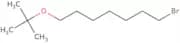
1-Bromo-7-(tert-butoxy)heptane
CAS:<p>Versatile small molecule scaffold</p>Formula:C11H23BrOPurity:Min. 95%Molecular weight:251.2 g/mol7-Chloro-1,3-dimethyl-1H-pyrazolo[4,3-d]pyrimidine
CAS:<p>Versatile small molecule scaffold</p>Formula:C7H7ClN4Purity:Min. 95%Molecular weight:182.61 g/mol7-Chloro-1,3,5-trimethyl-1H-pyrazolo[4,3-d]pyrimidine
CAS:<p>Versatile small molecule scaffold</p>Formula:C8H9ClN4Purity:Min. 95%Molecular weight:196.64 g/mol3-Methyl-1-(2,2,2-trifluoroethyl)-1H-pyrazole-5-carboxylic acid
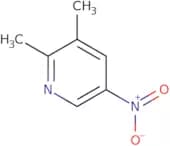
CAS:<p>Versatile small molecule scaffold</p>Formula:C7H7F3N2O2Purity:Min. 95%Molecular weight:208.14 g/mol2,3-Dimethyl-5-nitropyridine
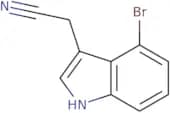
CAS:<p>Versatile small molecule scaffold</p>Formula:C7H8N2O2Purity:Min. 95%Molecular weight:152.15 g/mol2-(4-Bromo-1H-indol-3-yl)acetonitrile
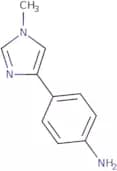
CAS:<p>2-(4-Bromo-1H-indol-3-yl)acetonitrile is an organic compound that contains a cyano group, which is a functional group consisting of three carbon atoms and one nitrogen atom. This molecule has an indole ring system with two hydrogen bonds. The acetonitrile chain is four carbons long, while the cyano group is only one carbon long.</p>Formula:C10H7BrN2Purity:Min. 95%Molecular weight:235.08 g/mol4-(1-Methyl-1H-imidazol-4-yl)aniline
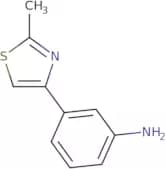
CAS:<p>Versatile small molecule scaffold</p>Formula:C10H11N3Purity:Min. 95%Molecular weight:173.21 g/mol3-(2-Methyl-1,3-thiazol-4-yl)aniline
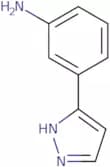
CAS:<p>Versatile small molecule scaffold</p>Formula:C10H10N2SPurity:Min. 95%Molecular weight:190.27 g/mol3-(1H-Pyrazol-3-yl)aniline
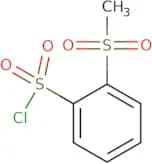
CAS:<p>3-(1H-Pyrazol-3-yl)aniline is a protonated form of fentanyl that interacts with the opioid receptors in the body. It is used as an analgesic, but also has a high risk for abuse and addiction. The drug is not considered to be a controlled substance according to the Controlled Substances Act. 3-(1H-Pyrazol-3-yl)aniline is a synthetic compound that does not have any major side effects other than respiratory depression, which can be reversed with naloxone. This drug has been found to have long lasting effects, making it suitable for chronic pain management. 3-(1H-Pyrazol-3-yl)aniline binds to the endocyclic nitrogen atom on the phenyl ring of fentanyl and causes ionization in water, which may lead to its long lasting effects. 3-(1H-Pyrazol-3-yl)aniline can be administered</p>Formula:C9H9N3Purity:Min. 95%Molecular weight:159.19 g/mol2-Methylsulfonylbenzenesulfonyl chloride
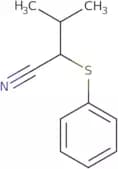
CAS:<p>Versatile small molecule scaffold</p>Formula:C7H7ClO4S2Purity:Min. 95%Molecular weight:254.71 g/mol3-Methyl-2-(phenylsulfanyl)butanenitrile
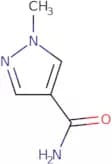
CAS:<p>Versatile small molecule scaffold</p>Formula:C11H13NSPurity:Min. 95%Molecular weight:191.29 g/mol1-Methyl-1H-pyrazole-4-carboxamide
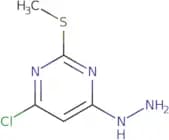
CAS:<p>1-Methyl-1H-pyrazole-4-carboxamide is a potent and selective activator of constitutive androstane receptor (CAR) which is involved in the regulation of gene transcription. 1-Methyl-1H-pyrazole-4-carboxamide has been shown to be cytotoxic, inducing apoptosis and inhibiting cancer cell proliferation in vitro. 1-Methyl-1H-pyrazole-4-carboxamide also induces the expression of hormone receptors such as the androgen receptor, estrogen receptor, progesterone receptor, glucocorticoid receptor, mineralocorticoid receptor, and peroxisome proliferator activated receptor (PPAR).</p>Formula:C5H7N3OPurity:Min. 95%Molecular weight:125.13 g/mol4-Chloro-6-hydrazino-2-(methylsulfanyl)pyrimidine
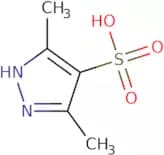
CAS:<p>Versatile small molecule scaffold</p>Formula:C5H7ClN4SPurity:Min. 95%Molecular weight:190.65 g/mol3,5-Dimethyl-1H-pyrazole-4-sulfonic acid
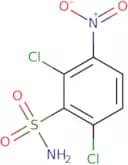
CAS:<p>Versatile small molecule scaffold</p>Formula:C5H8N2O3SPurity:Min. 95%Molecular weight:176.2 g/mol2,6-Dichloro-3-nitrobenzene-1-sulfonamide
CAS:<p>Versatile small molecule scaffold</p>Formula:C6H4Cl2N2O4SPurity:Min. 95%Molecular weight:271.08 g/mol5,7-Dichloro-6-methyl-[1,2,4]triazolo[1,5-a]pyrimidine
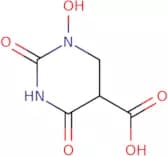
CAS:<p>Versatile small molecule scaffold</p>Formula:C6H4Cl2N4Purity:Min. 95%Molecular weight:203.03 g/mol1-Hydroxy-2,4-dioxo-1,2,3,4-tetrahydropyrimidine-5-carboxylic acid
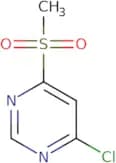
CAS:<p>Versatile small molecule scaffold</p>Formula:C5H6N2O5Purity:Min. 95%Molecular weight:174.11 g/mol4-Chloro-6-(methylsulfonyl)pyrimidine
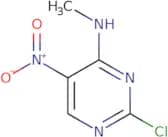
CAS:<p>4-Chloro-6-(methylsulfonyl)pyrimidine is a nucleophilic pyrimidine compound that reacts with nucleophiles to form four different products. This product preferentially reacts with the pyridazine ring, forming 4-chloro-6-(methylsulfonyl)pyridazine. It also reacts with the chloro group and forms 6-chloropyrimidine. Reaction with methylsulfonyl group yields 6-(methylsulfonyl)pyrimidine, while reaction with the pyrimidine ring yields 4-(methylsulfonyl)pyrimidine.</p>Formula:C5H5ClN2O2SPurity:Min. 95%Molecular weight:192.62 g/mol2-Chloro-N-methyl-5-nitropyrimidin-4-amine
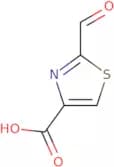
CAS:<p>Versatile small molecule scaffold</p>Formula:C5H5ClN4O2Purity:Min. 95%Molecular weight:188.57 g/mol2-Formyl-1,3-thiazole-4-carboxylic acid
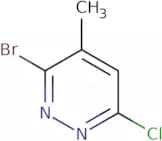
CAS:<p>Versatile small molecule scaffold</p>Formula:C5H3NO3SPurity:Min. 95%Molecular weight:157.15 g/mol3-Bromo-6-chloro-4-methylpyridazine
CAS:<p>Versatile small molecule scaffold</p>Formula:C5H4BrClN2Purity:Min. 95%Molecular weight:207.45 g/molN-[(3-Bromothiophen-2-yl)methylidene]hydroxylamine
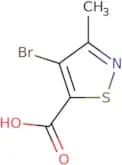
CAS:<p>Versatile small molecule scaffold</p>Formula:C5H4BrNOSPurity:Min. 95%Molecular weight:206.06 g/mol4-Bromo-3-methyl-isothiazole-5-carboxylic acid
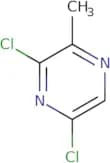
CAS:<p>Versatile small molecule scaffold</p>Formula:C5H4BrNO2SPurity:Min. 95%Molecular weight:222.06 g/mol3,5-Dichloro-2-methylpyrazine
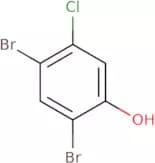
CAS:<p>Versatile small molecule scaffold</p>Formula:C5H4Cl2N2Purity:Min. 95%Molecular weight:163.01 g/mol2,4-Dibromo-5-chlorophenol
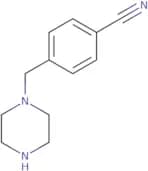
CAS:<p>Versatile small molecule scaffold</p>Formula:C6H3Br2ClOPurity:Min. 95%Molecular weight:286.35 g/mol1-(4-Cyano-benzyl)-piperazine
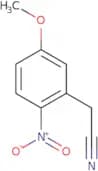
CAS:Controlled Product<p>Versatile small molecule scaffold</p>Formula:C12H15N3Purity:Min. 95%Molecular weight:201.27 g/mol(5-Methoxy-2-nitro-phenyl)-acetonitrile
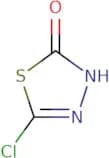
CAS:<p>5-Methoxy-2-nitro-phenyl)-acetonitrile is an analog of β-unsaturated ketones and has been synthesized from phenylmagnesium bromide, amido acid, and α-(chloromethyl)benzene. The reaction was stereoselective with the formation of a single diastereomer. 5-Methoxy-2-nitro-phenyl)-acetonitrile is a chiral compound with two asymmetric carbon atoms. The synthesis of this compound was efficient, requiring only four steps to complete the entire process.</p>Formula:C9H8N2O3Purity:Min. 95%Molecular weight:192.17 g/mol5-Chloro-2,3-dihydro-1,3,4-thiadiazol-2-one
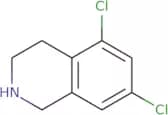
CAS:<p>Versatile small molecule scaffold</p>Formula:C2HClN2OSPurity:Min. 95%Molecular weight:136.56 g/mol5,7-Dichloro-1,2,3,4-tetrahydroisoquinoline
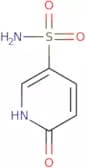
CAS:<p>5,7-Dichloro-1,2,3,4-tetrahydroisoquinoline is a crystalline organic solvent that is used industrially as a precursor to the benzyl group in organic synthesis. It can be used to synthesize lifitegrast through catalytic elimination of butyl lithium. 5,7-Dichloro-1,2,3,4-tetrahydroisoquinoline has two crystalline polymorphs: form I and form II. Form I has a melting point of 191°C and form II has a melting point of 190°C. The industrial scale production of 5,7-dichloro-1,2,3,4-tetrahydroisoquinoline is typically achieved by hydrogenation of the corresponding nitro compound.</p>Formula:C9H9Cl2NPurity:Min. 95%Molecular weight:202.08 g/mol6-Oxo-1,6-dihydropyridine-3-sulfonamide
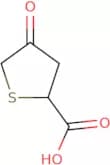
CAS:<p>Versatile small molecule scaffold</p>Formula:C5H6N2O3SPurity:Min. 95%Molecular weight:174.18 g/mol4-Oxothiolane-2-carboxylic acid
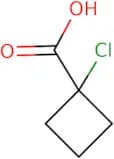
CAS:<p>Versatile small molecule scaffold</p>Formula:C5H6O3SPurity:Min. 95%Molecular weight:146.17 g/mol1-Chlorocyclobutane-1-carboxylic acid
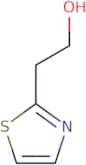
CAS:<p>Versatile small molecule scaffold</p>Formula:C5H7ClO2Purity:Min. 95%Molecular weight:134.56 g/mol2-(Thiazol-2-yl)ethanol
CAS:<p>2-(Thiazol-2-yl)ethanol is a molecule that belongs to the class of thiazolines. It has been shown to have a physiological effect on probiotic bacteria and is used as a prebiotic. 2-(Thiazol-2-yl)ethanol can be synthesized by coupling the corresponding acid chloride with an alcohol in the presence of an acid catalyst. This molecule is being investigated for its potential use as a therapeutic agent against infectious diseases, such as colitis. 2-(Thiazol-2-yl)ethanol also affects enzyme activities, regulatory proteins, and transcriptional regulation in model systems. This molecule may play a role in energy metabolism and protein synthesis through its interaction with enzymes, regulatory proteins, or transcriptional regulators.</p>Formula:C5H7NOSPurity:Min. 95%Molecular weight:129.18 g/mol5-Formylthiophene-3-carboxylic acid
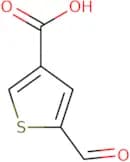
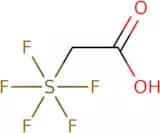
CAS:<p>5-Formylthiophene-3-carboxylic acid is an inhibitor of the cycloaddition reaction between azomethine and enamines. It has been shown to be diastereoselective, inhibiting the formation of the undesired enantiomer. The synthesis and characterization of this compound has been used in process research for drug discovery.</p>Formula:C6H4O3SPurity:Min. 95%Molecular weight:156.16 g/mol2-(Pentafluoro-sulfanyl)acetic acid
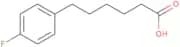
CAS:<p>Versatile small molecule scaffold</p>Formula:C2H3F5O2SPurity:Min. 95%Molecular weight:186.1 g/mol6-(4-Fluorophenyl)hexanoic acid
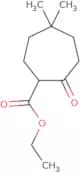
CAS:<p>Versatile small molecule scaffold</p>Formula:C12H15FO2Purity:Min. 95%Molecular weight:210.24 g/molEthyl 5,5-dimethyl-2-oxocycloheptane-1-carboxylate
CAS:<p>Versatile small molecule scaffold</p>Formula:C12H20O3Purity:Min. 95%Molecular weight:212.28 g/mol9-Bromo-1-nonene
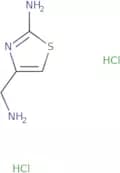
CAS:<p>9-Bromo-1-nonene is a hydroxy group, halide, and solute. It has been shown to undergo reductive elimination with cyclodehydration to form 9-bromononane. 9-Bromo-1-nonene has also been used as an actuator in phase liquid chromatography (also called high performance liquid chromatography). It is stereoselective and exhibits inhibitory activities against anomala, glycosidases, and magnetic particles. This compound is also soluble in diethyl ether.</p>Formula:C9H17BrPurity:Min. 95%Molecular weight:205.14 g/mol4-(Aminomethyl)-1,3-thiazol-2-amine dihydrochloride
CAS:<p>Versatile small molecule scaffold</p>Formula:C4H9Cl2N3SPurity:Min. 95%Molecular weight:202.11 g/mol4-(2-Aminoethyl)-1,3-thiazol-2-amine dihydrochloride
CAS:<p>Versatile small molecule scaffold</p>Formula:C5H11Cl2N3SPurity:Min. 95%Molecular weight:216.13 g/mol5-Carbamoyl-2-methoxybenzoic acid
CAS:<p>Versatile small molecule scaffold</p>Formula:C9H9NO4Purity:Min. 95%Molecular weight:195.17 g/mol1,4-Diaminobutane-2,3-diol dihydrochloride
CAS:<p>Versatile small molecule scaffold</p>Formula:C4H13ClN2O2Purity:Min. 95%Molecular weight:156.61 g/mol2-Cyclopropylethylamine hydrochloride
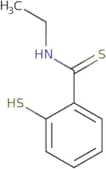
CAS:<p>Versatile small molecule scaffold</p>Formula:C5H12ClNPurity:Min. 95%Molecular weight:121.61 g/molN-Ethyl-2-sulfanylbenzene-1-carbothioamide
CAS:<p>Versatile small molecule scaffold</p>Formula:C9H11NS2Purity:Min. 95%Molecular weight:197.3 g/mol1-((Benzyloxy)carbonyl)-2-methylpiperidine-2-carboxylic acid
CAS:<p>Versatile small molecule scaffold</p>Formula:C15H19NO4Purity:Min. 95%Molecular weight:277.31 g/mol7-benzyl-3-thia-7-azabicyclo[3.3.1]nonan-9-one
CAS:<p>7-benzyl-3-thia-7-azabicyclo[3.3.1]nonan-9-one (7BAN) is a compound that has been shown to have antiarrhythmic effects in animal models. The conformational stability of 7BAN has been determined by single crystal x-ray diffraction data, and the conformers have been determined by conformational analysis. The conformation of this drug is stabilized by the benzyl group and the azabicyclo group, which are responsible for its antiarrhythmic activity.</p>Formula:C14H17NOSPurity:Min. 95%Molecular weight:247.36 g/mol3-(Ethylsulfanyl)benzonitrile
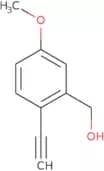
CAS:Versatile small molecule scaffoldFormula:C9H9NSPurity:Min. 95%Molecular weight:163.24 g/mol(2-Ethynyl-5-methoxyphenyl)methanol
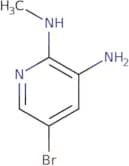
CAS:<p>Versatile small molecule scaffold</p>Formula:C10H10O2Purity:Min. 95%Molecular weight:162.19 g/mol5-Bromo-2-N-methylpyridine-2,3-diamine
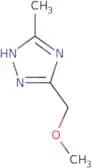
CAS:<p>Versatile small molecule scaffold</p>Formula:C6H8BrN3Purity:Min. 95%Molecular weight:202.05 g/mol5-(Methoxymethyl)-3-methyl-1H-1,2,4-triazole
CAS:<p>Versatile small molecule scaffold</p>Formula:C5H9N3OPurity:Min. 95%Molecular weight:127.14 g/mol

![7-Chloro-1,3-dimethyl-1H-pyrazolo[4,3-d]pyrimidine](/_next/image/?url=https%3A%2Fstatic.cymitquimica.com%2Fproducts%2F3D%2Fthumb-webp%2FPDA23918.webp&w=3840&q=75)
![7-Chloro-1,3,5-trimethyl-1H-pyrazolo[4,3-d]pyrimidine](/_next/image/?url=https%3A%2Fstatic.cymitquimica.com%2Fproducts%2F3D%2Fthumb-webp%2FPDA23922.webp&w=3840&q=75)

![5,7-Dichloro-6-methyl-[1,2,4]triazolo[1,5-a]pyrimidine](/_next/image/?url=https%3A%2Fstatic.cymitquimica.com%2Fproducts%2F3D%2Fthumb-webp%2FPDA28122.webp&w=3840&q=75)
![N-[(3-Bromothiophen-2-yl)methylidene]hydroxylamine](/_next/image/?url=https%3A%2Fstatic.cymitquimica.com%2Fproducts%2F3D%2Fthumb-webp%2FPDA28398.webp&w=3840&q=75)




![7-benzyl-3-thia-7-azabicyclo[3.3.1]nonan-9-one](/_next/image/?url=https%3A%2Fstatic.cymitquimica.com%2Fproducts%2F3D%2Fthumb-webp%2FPDA39804.webp&w=3840&q=75)