Building Blocks
This section contains fundamental products for the synthesis of organic and biological compounds. Building blocks are the essential starting materials used to construct complex molecules through various chemical reactions. They play a critical role in drug discovery, material science, and chemical research. At CymitQuimica, we offer a diverse range of high-quality building blocks to support your innovative research and industrial projects, ensuring you have the essential components for successful synthesis.
Subcategories of "Building Blocks"
- Boronic Acids & Boronic Acid Derivatives(5,756 products)
- Chiral Building Blocks(1,242 products)
- Hydrocarbon Building Blocks(6,095 products)
- Organic Building Blocks(61,051 products)
Found 199813 products of "Building Blocks"
Sort by
Purity (%)
0
100
|
0
|
50
|
90
|
95
|
100
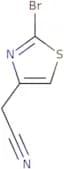
2-(2-Bromo-1,3-thiazol-4-yl)acetonitrile
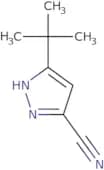
CAS:<p>Versatile small molecule scaffold</p>Formula:C5H3BrN2SPurity:Min. 95%Molecular weight:203.06 g/mol5-(tert-Butyl)-1H-pyrazole-3-carbonitrile
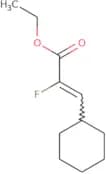
CAS:<p>Versatile small molecule scaffold</p>Formula:C8H11N3Purity:Min. 95%Molecular weight:149.19 g/molEthyl 3-cyclohexyl-2-fluoroprop-2-enoate
CAS:<p>Versatile small molecule scaffold</p>Formula:C11H17FO2Purity:Min. 95%Molecular weight:200.25 g/molEthyl 5-chloro-7-methyl-2-oxo-2H-pyrano[3,2-c]pyridine-3-carboxylate
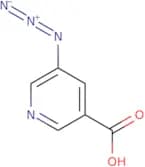
CAS:<p>Versatile small molecule scaffold</p>Formula:C12H10ClNO4Purity:Min. 95%Molecular weight:267.66 g/mol5-Azidopyridine-3-carboxylic acid
CAS:<p>Versatile small molecule scaffold</p>Formula:C6H4N4O2Purity:Min. 95%Molecular weight:164.12 g/mol1-[(tert-Butoxy)carbonyl]-3-(methoxymethyl)azetidine-3-carboxylic acid
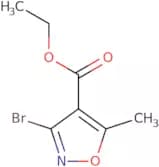
CAS:<p>Versatile small molecule scaffold</p>Formula:C11H19NO5Purity:Min. 95%Molecular weight:245.27 g/molEthyl 3-bromo-5-methyl-1,2-oxazole-4-carboxylate
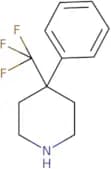
CAS:<p>Versatile small molecule scaffold</p>Formula:C7H8BrNO3Purity:Min. 95%Molecular weight:234.05 g/mol4-Phenyl-4-(trifluoromethyl)piperidine
CAS:<p>4-Phenyl-4-(trifluoromethyl)piperidine is a potential anticancer drug. It has been shown to inhibit the growth of colorectal carcinoma cells and inhibit fatty acid synthesis in liver cells. 4-Phenyl-4-(trifluoromethyl)piperidine has also been shown to reduce the uptake of glucose, fatty acids, and cholesterol by hepatocytes (liver cells), which may be due to its ability to inhibit lipid biosynthesis. This drug also inhibits the activity of mitochondrial enzymes involved in energy metabolism and causes hepatic steatosis. 4-Phenyl-4-(trifluoromethyl)piperidine is metabolized via the endoplasmic reticulum, leading to an accumulation of intermediates in this organelle. The profile of 4-Phenyl-4-(trifluoromethyl)piperidine has been determined using molecular modeling</p>Formula:C12H14F3NPurity:Min. 95%Molecular weight:229.24 g/mol1-{[(9H-Fluoren-9-yl)methoxy]carbonyl}-4-methoxypiperidine-4-carboxylic acid
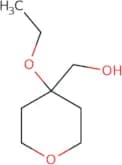
CAS:<p>Versatile small molecule scaffold</p>Formula:C22H23NO5Purity:Min. 95%Molecular weight:381.4 g/mol(4-Ethoxyoxan-4-yl)methanol
CAS:<p>Versatile small molecule scaffold</p>Formula:C8H16O3Purity:Min. 95%Molecular weight:160.21 g/molBenzyl 1,2-oxazinane-2-carboxylate
CAS:<p>Versatile small molecule scaffold</p>Formula:C12H15NO3Purity:Min. 95%Molecular weight:221.3 g/mol1-(Azonan-1-yl)ethan-1-one
CAS:<p>Versatile small molecule scaffold</p>Formula:C10H19NOPurity:Min. 95%Molecular weight:169.3 g/mol1-(4-Methylcyclohexyl)-1H-1,3-benzodiazole
CAS:<p>Versatile small molecule scaffold</p>Formula:C14H18N2Purity:Min. 95%Molecular weight:214.3 g/mol2-(But-3-yn-1-ylsulfanyl)-2-methylpropan-1-ol
CAS:<p>Versatile small molecule scaffold</p>Formula:C8H14OSPurity:Min. 95%Molecular weight:158.3 g/mol5-Bromobenzo[d]isothiazol-3(2H)-one 1,1-dioxide
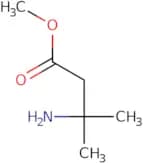
CAS:<p>Versatile small molecule scaffold</p>Formula:C7H4BrNO3SPurity:Min. 95%Molecular weight:262.08 g/molMethyl 3-amino-3-methylbutanoate
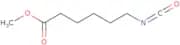
CAS:<p>Versatile small molecule scaffold</p>Formula:C6H13NO2Purity:Min. 95%Molecular weight:131.17 g/molMethyl 6-isocyanatohexanoate
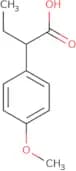
CAS:<p>Versatile small molecule scaffold</p>Formula:C8H13NO3Purity:Min. 95%Molecular weight:171.19 g/mol2-(4-Methoxyphenyl)butanoic acid
CAS:<p>2-(4-Methoxyphenyl)butanoic acid is a protonated form of 2-phenoxyacetic acid. It has been shown to act as a potent cardiac muscle activator and inotropic agent, with the ability to increase contractility and optimize cardiac function. The mechanism of action of 2-(4-methoxyphenyl)butanoic acid is not fully understood, but it may be due to its ability to decarboxylate into phenoxyacetic acid, which has been shown to increase calcium uptake by the sarcoplasmic reticulum.</p>Formula:C11H14O3Purity:Min. 95%Molecular weight:194.23 g/mol2-(4-chlorophenyl)butanoic acid
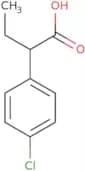
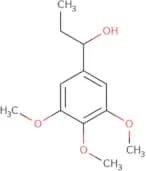
CAS:<p>2-(4-Chlorophenyl)butanoic acid is a metabolite of the drug baclofen. It is produced by Streptomyces, and has been found in cultures, experiments, and soil samples. This compound has been shown to metabolize through microbial metabolism with a chiral center (2R), which can be used as an indicator of microbial activity. 2-(4-Chlorophenyl)butanoic acid also has anti-inflammatory properties that may be due to its ability to inhibit prostaglandin synthesis.</p>Formula:C10H11ClO2Purity:Min. 95%Molecular weight:198.65 g/mol-1(3,4,5-Trimethoxyphenyl)Propan-1-Ol
CAS:<p>-1(3,4,5-Trimethoxyphenyl)Propan-1-Ol is a Grignard reagent that is used as a starting material for the synthesis of other compounds. This reagent is an alkylating agent that can be used to prepare various functional groups such as carbinols and dialkyls. This compound has been shown to react with methyl iodide in the presence of sodium carbonate to form a Grignard reagent.</p>Formula:C12H18O4Purity:Min. 95%Molecular weight:226.27 g/mol2,2-Dimethyloctanoic acid
CAS:<p>2,2-Dimethyloctanoic acid is a fatty acid that has been shown to increase the uptake of radioactive butyric acid in the rat. It is also known to be an intermediate in the metabolism of dodecyl and hexadecanoic acids. 2,2-Dimethyloctanoic acid has been shown to have anti-depressant effects in animals. The mechanism for this effect may be due to its ability to increase fatty acid metabolism in mitochondria.</p>Formula:C10H20O2Purity:Min. 95%Molecular weight:172.26 g/mol2,3-Dihydro-benzo[1,4]dioxine-5-carbaldehyde
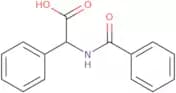
CAS:<p>Versatile small molecule scaffold</p>Formula:C9H8O3Purity:Min. 95%Molecular weight:164.16 g/mol2-(Benzoylamino)-2-phenylacetic acid
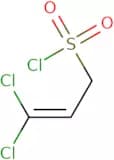
CAS:<p>2-(Benzoylamino)-2-phenylacetic acid is a hydrazone that has been used as a precursor for the synthesis of azoalkenes. It is also biologically active and may be useful for the treatment of cancer.</p>Formula:C15H13NO3Purity:Min. 95%Molecular weight:255.27 g/mol3,3-Dichloroprop-2-ene-1-sulfonyl chloride
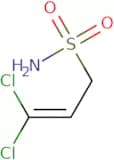
CAS:<p>Versatile small molecule scaffold</p>Formula:C3H3Cl3O2SPurity:Min. 95%Molecular weight:209.5 g/mol3,3-Dichloroprop-2-ene-1-sulfonamide
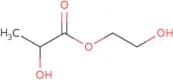
CAS:<p>Versatile small molecule scaffold</p>Formula:C3H5Cl2NO2SPurity:Min. 95%Molecular weight:190.05 g/mol2-Hydroxyethyl 2-hydroxypropanoate
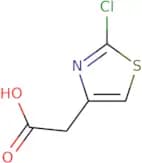
CAS:<p>2-Hydroxyethyl 2-hydroxypropanoate is a polyester that is produced by the dehydration of ethylene glycol and 2-hydroxyethanol. It is a biodegradable, degradable, and regenerative material that can be used in biomedical applications such as scaffolds for tissue engineering. The hydroxy group on the molecule has been shown to prevent protein adhesion and degradation. This product has been shown to inhibit growth of bacteria such as Staphylococcus aureus and Escherichia coli, which may be due to its ability to block the activity of cellular enzymes.</p>Formula:C5H10O4Purity:Min. 95%Molecular weight:134.13 g/mol(4-Chloro-thiazol-2-yl)acetic acid
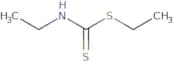
CAS:<p>Versatile small molecule scaffold</p>Formula:C5H4ClNO2SPurity:Min. 95%Molecular weight:177.61 g/molN-Ethyl(ethylsulfanyl)carbothioamide
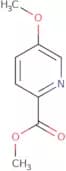
CAS:<p>Versatile small molecule scaffold</p>Formula:C5H11NS2Purity:Min. 95%Molecular weight:149.3 g/molMethyl 5-methoxypicolinate
CAS:<p>Versatile small molecule scaffold</p>Formula:C8H9NO3Purity:Min. 95%Molecular weight:167.16 g/molMethyl 5-methoxynicotinate
CAS:<p>Versatile small molecule scaffold</p>Formula:CH3OC5H3NCOOCH3Purity:Min. 95%Molecular weight:167.16 g/molMethyl 5-nitropicolinate
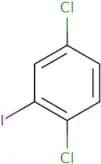
CAS:Methyl 5-nitropicolinate (MN) is a palladium complex that is used in the synthesis of amide and amine complexes. The MN-pyridyl parameters have been optimized to find an optimal coordination geometry. The MN-amide reaction has been shown to work well with primary amines, but not secondary amines. The methyl group on the nitro group of MN can be alkylated with dimethylamine or benzaldehyde. This product also has oxidative and nucleophilic properties, which are useful for nitrite reduction reactions.Formula:C7H6N2O4Purity:Min. 95%Molecular weight:182.13 g/mol1,4-Dichloro-2-iodobenzene
CAS:<p>Versatile small molecule scaffold</p>Formula:C6H3Cl2IPurity:Min. 95%Molecular weight:272.89 g/mol1-Bromo-2,4,5-trichlorobenzene
CAS:<p>1,2,4-Trichlorobenzene is a chlorinated aromatic hydrocarbon that has been shown to act as a neurotoxin. It is homologous to dibenzodioxins and stereoselectively reacts with dopamine in the rat brain. This reaction produces polyphosphoric acid, which may be involved in the etiology of Parkinson's disease. 1-Bromo-2,4,5-trichlorobenzene can also act as a neuroleptic and produces an increase in chloride ions in the rat brain. The mechanism of this effect is not well understood, but it may be due to its ability to catalyze the conversion of hydrogen chloride to chlorine. 1-Bromo-2,4,5-trichlorobenzene also binds copper ions at a high rate and depletes them from the body.</p>Formula:C6H2BrCl3Purity:Min. 95%Molecular weight:260.35 g/mol4-Methyl-2-(methylsulfanyl)aniline
CAS:<p>Versatile small molecule scaffold</p>Formula:C8H11NSPurity:Min. 95%Molecular weight:153.25 g/mol4-Chloro-2-(methylsulfanyl)aniline
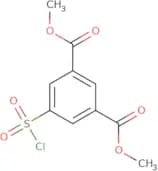
CAS:<p>4-Chloro-2-(methylsulfanyl)aniline is an organic compound that belongs to the class of aromatic amines. It is used in the production of dyes and pigments, as well as in the synthesis of other chemicals. The chemical reactions that 4-chloro-2-(methylsulfanyl)aniline undergoes are similar to those undergone by other aromatic amines. These reactions include oxidation, reduction, nitrosation, and halogenation. This organic compound yields sulfur, alkynes and phenyl isothiocyanate when heated with acid. It also reacts with benzene to produce a 3-chloroaniline ring. In addition, 4-chloro-2-(methylsulfanyl)aniline can be converted into 2-, 3-, or 4-chlorobenzenesulfonyl chloride through chlorination with Cl2 gas in the presence of SOCl2. The reactivity of this compound is</p>Formula:C7H8ClNSPurity:Min. 95%Molecular weight:173.66 g/mol1,3-Dimethyl 5-(chlorosulfonyl)benzene-1,3-dicarboxylate
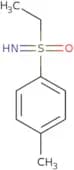
CAS:<p>Versatile small molecule scaffold</p>Formula:C10H9ClO6SPurity:Min. 95%Molecular weight:292.69 g/molS-Ethyl-S-(4-methylphenyl)-sulfoximine
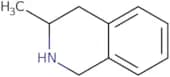
CAS:<p>Versatile small molecule scaffold</p>Formula:C9H13NOSPurity:Min. 95%Molecular weight:183.27 g/mol3-Methyl-1,2,3,4-tetrahydroisoquinoline
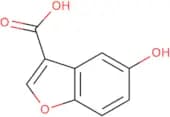
CAS:<p>3-Methyl-1,2,3,4-tetrahydroisoquinoline (3MT) is a chiral compound that can be used as a drug. It has been shown to have affinity for the striatal dopamine receptor and inhibitory potency against the pressor response in rats. 3MT may also be able to reverse tachyphylaxis when administered with selegiline. The toxicities of 3MT are similar to those of other drugs that act on the same receptor, such as atropine and selegiline. 3MT is not active against bacterial infections because it does not disrupt the cell membrane and does not have an effect on the synthesis of proteins.</p>Formula:C10H13NPurity:Min. 95%Molecular weight:147.22 g/mol5-Hydroxy-1-benzofuran-3-carboxylic acid
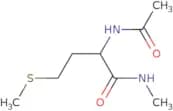
CAS:<p>Versatile small molecule scaffold</p>Formula:C9H6O4Purity:Min. 95%Molecular weight:178.14 g/mol(2S)-2-Acetamido-N-methyl-4-(methylsulfanyl)butanamide
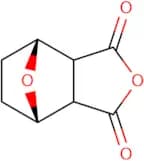
CAS:<p>Versatile small molecule scaffold</p>Formula:C8H16N2O2SPurity:Min. 95%Molecular weight:204.29 g/molNorcantharidin
CAS:<p>Norcantharidin is an antitumor drug that belongs to the group of pyrazole derivatives. It has shown significant cytotoxicity against human cancer cells in vitro and in vivo. Norcantharidin induces apoptosis by binding to DNA, inhibiting RNA polymerase activity, and blocking the synthesis of proteins needed for cell division. Norcantharidin also inhibits growth of the tumor by inducing differentiation of epithelial mesenchymal cells into fibroblasts. This drug has been shown to induce apoptosis in hl-60 cells at low doses (10 µM) and has a significant cytotoxicity against HL-60 cells at high doses (>10 µM).</p>Formula:C8H8O4Purity:Min. 95%Molecular weight:168.15 g/mol1-[(2-Chlorophenyl)methyl]cyclopropane-1-carboxylic acid
CAS:<p>Versatile small molecule scaffold</p>Formula:C11H11ClO2Purity:Min. 95%Molecular weight:210.65 g/mol1-[(4-Bromophenyl)methyl]cyclopropane-1-carboxylic acid
CAS:<p>Versatile small molecule scaffold</p>Formula:C11H11BrO2Purity:Min. 95%Molecular weight:255.11 g/mol1-{[4-(Trifluoromethyl)phenyl]methyl}cyclopropane-1-carboxylic acid
CAS:<p>Versatile small molecule scaffold</p>Formula:C12H11F3O2Purity:Min. 95%Molecular weight:244.21 g/mol1-{[4-(Trifluoromethoxy)phenyl]methyl}cyclopropane-1-carboxylic acid
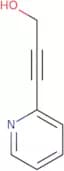
CAS:<p>Versatile small molecule scaffold</p>Formula:C12H11F3O3Purity:Min. 95%Molecular weight:260.21 g/mol3-(2-Pyridyl)-2-propyn-1-ol
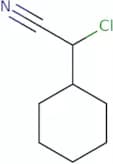
CAS:3-(2-Pyridyl)-2-propyn-1-ol is an intermediate in the synthesis of propargyl alcohols. It is a catalyst for the reaction of amines with propargyl alcohols. 3-(2-Pyridyl)-2-propyn-1-ol is also used as an intermediate in the synthesis of various other compounds, such as pharmaceuticals, pesticides, and dyes.Formula:C8H7NOPurity:Min. 95%Molecular weight:133.15 g/mol2-Chloro-2-cyclohexylacetonitrile
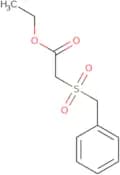
CAS:<p>Versatile small molecule scaffold</p>Formula:C8H12ClNPurity:Min. 95%Molecular weight:157.64 g/molEthyl-2-benzylsulfonyl acetate
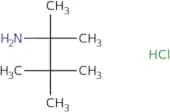
CAS:<p>Ethyl-2-benzylsulfonyl acetate is an arylating agent that can be prepared by deprotonation of ethyl diethyl malonate followed by the palladium-catalyzed arylation of 2-benzyl sulfonyl chloride. The product, which is isolated as a white solid, has been shown to undergo reductive elimination with sodium borohydride to form the corresponding alcohol. This reaction is regioselective and produces either the (E)- or (Z)-alcohol depending on the position of substitution on the benzene ring. Substitutions can also be made at other positions, such as halides or enolates, but yield decreases in these cases.</p>Formula:C11H14O4SPurity:Min. 95%Molecular weight:242.29 g/mol2,3,3-Trimethylbutan-2-amine hydrochloride
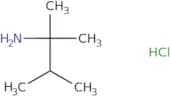
CAS:<p>Versatile small molecule scaffold</p>Formula:C7H18ClNPurity:Min. 95%Molecular weight:151.68 g/mol2,3-Dimethylbutan-2-amine hydrochloride
CAS:<p>Versatile small molecule scaffold</p>Formula:C6H16ClNPurity:Min. 95%Molecular weight:137.65 g/mol

![Ethyl 5-chloro-7-methyl-2-oxo-2H-pyrano[3,2-c]pyridine-3-carboxylate](/_next/image/?url=https%3A%2Fstatic.cymitquimica.com%2Fproducts%2F3D%2Fthumb-webp%2FEAC83070.webp&w=3840&q=75)
![1-[(tert-Butoxy)carbonyl]-3-(methoxymethyl)azetidine-3-carboxylic acid](/_next/image/?url=https%3A%2Fstatic.cymitquimica.com%2Fproducts%2F3D%2Fthumb-webp%2FEAC94560.webp&w=3840&q=75)
![1-{[(9H-Fluoren-9-yl)methoxy]carbonyl}-4-methoxypiperidine-4-carboxylic acid](/_next/image/?url=https%3A%2Fstatic.cymitquimica.com%2Fproducts%2F3D%2Fthumb-webp%2FEAD01083.webp&w=3840&q=75)
![5-Bromobenzo[d]isothiazol-3(2H)-one 1,1-dioxide](/_next/image/?url=https%3A%2Fstatic.cymitquimica.com%2Fproducts%2F3D%2Fthumb-webp%2FEBA63282.webp&w=3840&q=75)

![2,3-Dihydro-benzo[1,4]dioxine-5-carbaldehyde](/_next/image/?url=https%3A%2Fstatic.cymitquimica.com%2Fproducts%2F3D%2Fthumb-webp%2FEBA66843.webp&w=3840&q=75)




![1-[(2-Chlorophenyl)methyl]cyclopropane-1-carboxylic acid](/_next/image/?url=https%3A%2Fstatic.cymitquimica.com%2Fproducts%2F3D%2Fthumb-webp%2FEBA76539.webp&w=3840&q=75)
![1-[(4-Bromophenyl)methyl]cyclopropane-1-carboxylic acid](/_next/image/?url=https%3A%2Fstatic.cymitquimica.com%2Fproducts%2F3D%2Fthumb-webp%2FEBA76545.webp&w=3840&q=75)
![1-{[4-(Trifluoromethyl)phenyl]methyl}cyclopropane-1-carboxylic acid](/_next/image/?url=https%3A%2Fstatic.cymitquimica.com%2Fproducts%2F3D%2Fthumb-webp%2FEBA76548.webp&w=3840&q=75)
![1-{[4-(Trifluoromethoxy)phenyl]methyl}cyclopropane-1-carboxylic acid](/_next/image/?url=https%3A%2Fstatic.cymitquimica.com%2Fproducts%2F3D%2Fthumb-webp%2FEBA76549.webp&w=3840&q=75)