


Building Blocks
This section contains fundamental products for the synthesis of organic and biological compounds. Building blocks are the essential starting materials used to construct complex molecules through various chemical reactions. They play a critical role in drug discovery, material science, and chemical research. At CymitQuimica, we offer a diverse range of high-quality building blocks to support your innovative research and industrial projects, ensuring you have the essential components for successful synthesis.
Subcategories of "Building Blocks"
- Boronic Acids & Boronic Acid Derivatives(5,778 products)
- Chiral Building Blocks(1,242 products)
- Hydrocarbon Building Blocks(6,098 products)
- Organic Building Blocks(61,034 products)
Found 199601 products of "Building Blocks"
Sort by
Purity (%)
0
100
|
0
|
50
|
90
|
95
|
100
Benzyl({2-[2-(ethylamino)ethoxy]ethyl})amine
CAS:Versatile small molecule scaffoldFormula:C13H22N2OPurity:Min. 95%Molecular weight:222.33 g/mol4-{[3-(Chloromethyl)phenyl]methyl}morpholine hydrochloride
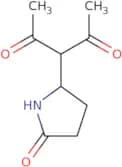
CAS:<p>Versatile small molecule scaffold</p>Formula:C12H17Cl2NOPurity:Min. 95%Molecular weight:262.17 g/mol3-(5-Oxopyrrolidin-2-yl)pentane-2,4-dione
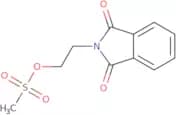
CAS:<p>Versatile small molecule scaffold</p>Formula:C9H13NO3Purity:Min. 95%Molecular weight:183.2 g/mol2-(1,3-Dioxo-2,3-dihydro-1H-isoindol-2-yl)ethyl methanesulfonate
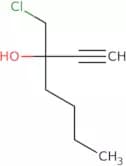
CAS:Versatile small molecule scaffoldFormula:C11H11NO5SPurity:Min. 95%Molecular weight:269.28 g/mol3-(Chloromethyl)hept-1-yn-3-ol
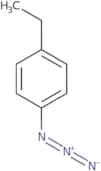
CAS:<p>Versatile small molecule scaffold</p>Formula:C8H13ClOPurity:Min. 95%Molecular weight:160.64 g/mol1-Azido-4-ethylbenzene
CAS:<p>1-Azido-4-ethylbenzene is a chemical compound that is synthesized from 1-azido-2,4-dibromobenzene and an alkylating agent. It reacts with triflates to produce the corresponding aziridines. The synthesis of 1-azido-4-ethylbenzene can be achieved by using photoreduction or cross coupling reactions. This compound is used in the synthesis of diarylamines and aziridinium salts.<br>1-Azido-4-ethylbenzene can be synthesized from 1,2,3,4,5,6-(dibromomethyl)benzene and an alkylating agent (e.g., ethyl bromide). It reacts with triflates to produce the corresponding aziridines. The synthesis of 1-azido-4-ethylbenzene can also be achieved by using photore</p>Formula:C8H9N3Purity:Min. 95%Molecular weight:147.18 g/mol[(4-Methanesulfinylphenyl)methyl](methyl)amine
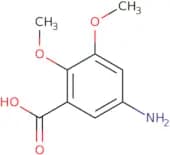
CAS:<p>Versatile small molecule scaffold</p>Formula:C9H13NOSPurity:Min. 95%Molecular weight:183.27 g/mol5-Amino-2,3-dimethoxybenzoic acid
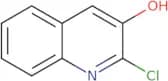
CAS:<p>Versatile small molecule scaffold</p>Formula:C9H11NO4Purity:Min. 95%Molecular weight:197.19 g/mol2-Chloroquinolin-3-ol
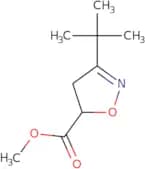
CAS:<p>2-Chloroquinolin-3-ol is an orally active, organic solvent-free, synthetic drug that is a basic compound. It has been shown to have anti-inflammatory properties and can be used for the treatment of inflammatory diseases such as rheumatoid arthritis. The drug has also been shown to be effective against autoimmune diseases such as type 1 diabetes mellitus. 2-Chloroquinolin-3-ol is an analogue of quinolinic acid, which is found in plants and animals. 2CQOL binds to chloride channels on the surface of cells, which prevents the influx of chloride ions into the cell and leads to cytotoxicity.</p>Formula:C9H6ClNOPurity:Min. 95%Molecular weight:179.6 g/molMethyl 3-tert-butyl-4,5-dihydro-1,2-oxazole-5-carboxylate
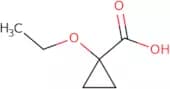
CAS:<p>Versatile small molecule scaffold</p>Formula:C9H15NO3Purity:Min. 95%Molecular weight:185.2 g/mol1-ethoxycyclopropane-1-carboxylic acid
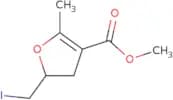
CAS:<p>Versatile small molecule scaffold</p>Formula:C6H10O3Purity:Min. 95%Molecular weight:130.14 g/molMethyl 5-(iodomethyl)-2-methyl-4,5-dihydrofuran-3-carboxylate
CAS:<p>Versatile small molecule scaffold</p>Formula:C8H11IO3Purity:Min. 95%Molecular weight:282.08 g/molMethyl[(6-methylpyridin-2-yl)methyl]amine dihydrochloride
CAS:Versatile small molecule scaffoldFormula:C8H14Cl2N2Purity:Min. 95%Molecular weight:209.11 g/mol1-Methyl-hexahydropyrrolo[3,4-b]pyrrole
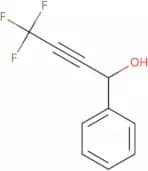
CAS:<p>Versatile small molecule scaffold</p>Formula:C7H14N2Purity:Min. 95%Molecular weight:126.2 g/mol4,4,4-Trifluoro-1-phenylbut-2-yn-1-ol
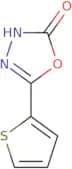
CAS:<p>Versatile small molecule scaffold</p>Formula:C10H7F3OPurity:Min. 95%Molecular weight:200.16 g/mol5-(Thiophen-2-yl)-2,3-dihydro-1,3,4-oxadiazol-2-one
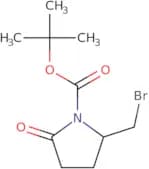
CAS:Versatile small molecule scaffoldFormula:C6H4N2O2SPurity:Min. 95%Molecular weight:168.18 g/mol(R)-1-Boc-5-(bromomethyl)pyrrolidin-2-one
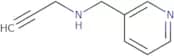
CAS:Versatile small molecule scaffoldFormula:C10H16BrNO3Purity:Min. 95%Molecular weight:278.14 g/mol(Prop-2-yn-1-yl)(pyridin-3-ylmethyl)amine
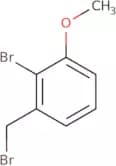
CAS:Versatile small molecule scaffoldFormula:C9H10N2Purity:Min. 95%Molecular weight:146.19 g/mol2-Bromo-3-methoxybenzyl bromide
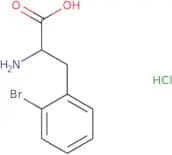
CAS:<p>2-Bromo-3-methoxybenzyl bromide is a ligand that binds to the 5-HT1A receptor. It has been shown to bind to the serotonin transporter and inhibit uptake of serotonin into the brain, as well as antagonize 5HT1A receptors. This drug has also been shown to be an optimization for 5HT1A receptor agonists, with potential therapeutic applications for disorders such as depression, anxiety, and insomnia.</p>Formula:C8H8Br2OPurity:Min. 95%Molecular weight:279.96 g/mol2-Amino-3-(2-bromophenyl)propanoic acid hydrochloride
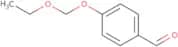
CAS:Controlled Product2-Amino-3-(2-bromophenyl)propanoic acid hydrochloride is a cell biology research tool. It is an inhibitor of ion channels and ligand for the receptor. 2-Amino-3-(2-bromophenyl)propanoic acid hydrochloride is soluble in water, which makes it suitable for use in pharmacological research and as an activator of antibodies.Formula:C9H11BrClNO2Purity:Min. 95%Molecular weight:280.54 g/mol4-(Ethoxymethoxy)benzaldehyde
CAS:<p>Versatile small molecule scaffold</p>Formula:C10H12O3Purity:Min. 95%Molecular weight:180.2 g/mol4-Amino-1H,2H,3H-pyrazolo[3,4-d]pyrimidin-3-one
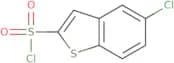
CAS:<p>Versatile small molecule scaffold</p>Formula:C5H5N5OPurity:Min. 95%Molecular weight:151.13 g/mol5-Chloro-1-benzothiophene-2-sulfonyl chloride
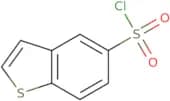
CAS:Versatile small molecule scaffoldFormula:C8H4Cl2O2S2Purity:Min. 95%Molecular weight:267.2 g/mol1-Benzothiophene-5-sulfonyl chloride
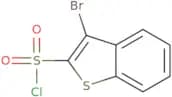
CAS:<p>Versatile small molecule scaffold</p>Formula:C8H5ClO2S2Purity:Min. 95%Molecular weight:232.7 g/mol3-Bromo-1-benzothiophene-2-sulfonyl chloride
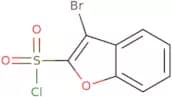
CAS:<p>Versatile small molecule scaffold</p>Formula:C8H4BrClO2S2Purity:Min. 95%Molecular weight:311.6 g/mol3-Bromo-1-benzofuran-2-sulfonyl chloride
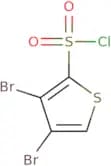
CAS:<p>Versatile small molecule scaffold</p>Formula:C8H4BrClO3SPurity:Min. 95%Molecular weight:295.54 g/mol3,4-Dibromothiophene-2-sulfonyl chloride
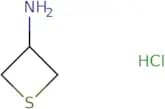
CAS:<p>Versatile small molecule scaffold</p>Formula:C4HBr2ClO2S2Purity:Min. 95%Molecular weight:340.4 g/mol3-Thietanamine HCl
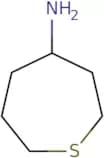
CAS:<p>Versatile small molecule scaffold</p>Formula:C3H8ClNSPurity:Min. 95%Molecular weight:125.16 g/molThiepan-4-amine
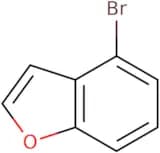
CAS:<p>Versatile small molecule scaffold</p>Formula:C6H13NSPurity:Min. 95%Molecular weight:131.24 g/mol4-Bromobenzofuran
CAS:<p>4-Bromobenzofuran is a heterocycle that has electron donating properties. It is a benzofuran with a bromine atom in the 4-position, which is activated and can be used as an intermediate for pharmaceuticals. The heterocycle has been shown to have medicinal properties, including anti-inflammatory, antibacterial, and antifungal activities. 4-Bromobenzofuran is also used as a starting material in the synthesis of other heterocycles such as furan, pyrrole, thiophene and benzene. Furfural and bromoform are two derivatives of 4-bromobenzofuran.</p>Formula:C8H5BrOPurity:Min. 95%Molecular weight:197.03 g/mol3-{[(tert-butoxy)carbonyl]amino}-1-methyl-1H-pyrazole-5-carboxylic acid
CAS:<p>Versatile small molecule scaffold</p>Formula:C10H15N3O4Purity:Min. 95%Molecular weight:241.2 g/mol1-Bromobicyclo[1.1.1]pentane
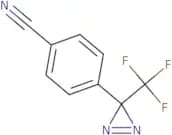
CAS:<p>Please enquire for more information about 1-Bromobicyclo[1.1.1]pentane including the price, delivery time and more detailed product information at the technical inquiry form on this page</p>Formula:C5H7BrPurity:Min. 95%Molecular weight:147.01 g/mol4-(3-(Trifluoromethyl)-3H-diazirin-3-yl)benzonitrile
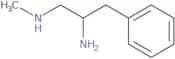
CAS:<p>Versatile small molecule scaffold</p>Formula:C9H4F3N3Purity:Min. 95%Molecular weight:211.14 g/mol(2-Amino-3-phenylpropyl)(methyl)amine
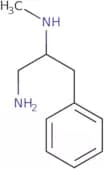
CAS:Versatile small molecule scaffoldFormula:C10H16N2Purity:Min. 95%Molecular weight:164.25 g/mol(1-Amino-3-phenylpropan-2-yl)(methyl)amine
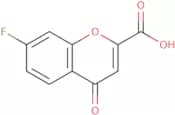
CAS:Versatile small molecule scaffoldFormula:C10H16N2Purity:Min. 95%Molecular weight:164.25 g/mol7-Fluorochromone-2-carboxylic acid
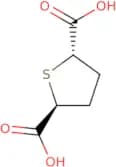
CAS:<p>7-Fluorochromone-2-carboxylic acid is an enantiomer of 2-fluorochromone. It is a potent compound that has been shown to have significant reduction in the activity of the channel protein. This drug is orally active and is selective for animal models over other animals, such as rats and mice. 7-Fluorochromone-2-carboxylic acid binds with high affinity to the amine group of the chiral center of the class A GABAA receptor and exhibits potency by inhibiting amino acid uptake into cells in culture.</p>Formula:C10H5FO4Purity:Min. 95%Molecular weight:208.14 g/molrac-(2R,5R)-Thiolane-2,5-dicarboxylic acid
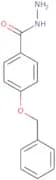
CAS:<p>Versatile small molecule scaffold</p>Formula:C6H8O4SPurity:Min. 95%Molecular weight:176.2 g/mol4-(Benzyloxy)benzohydrazide
CAS:<p>4-(Benzyloxy)benzohydrazide is a new, potent and selective inhibitor of candida glabrata and cryptococcus neoformans. It has been shown to inhibit the growth of cancer cells in vitro and can be used to rationalize the anticancer properties of formamide. This compound inhibits chloride ion uptake in tuberculosis bacteria, which may be responsible for its antifungal activity. 4-(Benzyloxy)benzohydrazide has been synthesized by reacting benzaldehyde with hydrazine hydrate in the presence of a base, such as sodium bicarbonate or potassium carbonate. The reaction occurs at temperatures between room temperature and 120°C. The product is purified by recrystallization from water or acetone, or by column chromatography on silica gel using chloroform-methanol (1:1) as eluent.</p>Formula:C14H14N2O2Purity:Min. 95%Molecular weight:242.27 g/mol1-[(2S)-2-Ethynylpiperidin-1-yl]ethan-1-one
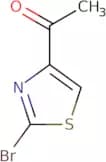
CAS:Versatile small molecule scaffoldFormula:C9H13NOPurity:Min. 95%Molecular weight:151.21 g/mol1-(2-Bromo-1,3-thiazol-4-yl)ethan-1-one
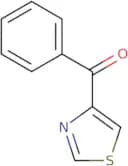
CAS:Versatile small molecule scaffoldFormula:C5H4BrNOSPurity:Min. 95%Molecular weight:206.06 g/mol4-Benzoyl-1,3-thiazole
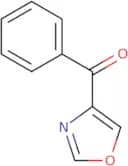
CAS:<p>Versatile small molecule scaffold</p>Formula:C10H7NOSPurity:Min. 95%Molecular weight:189.24 g/mol4-Benzoyl-1,3-oxazole
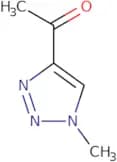
CAS:<p>Versatile small molecule scaffold</p>Formula:C10H7NO2Purity:Min. 95%Molecular weight:173.17 g/mol1-(1-Methyl-1H-1,2,3-triazol-4-yl)ethan-1-one
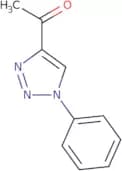
CAS:Versatile small molecule scaffoldFormula:C5H7N3OPurity:Min. 95%Molecular weight:125.13 g/mol1-(1-Phenyl-1H-1,2,3-triazol-4-yl)ethan-1-one
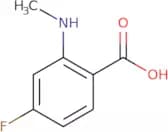
CAS:Versatile small molecule scaffoldFormula:C10H9N3OPurity:Min. 95%Molecular weight:187.2 g/mol4-Fluoro-2-(methylamino)benzoic acid
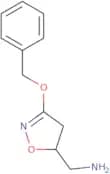
CAS:<p>Versatile small molecule scaffold</p>Formula:C8H8FNO2Purity:Min. 95%Molecular weight:169.15 g/mol(3-(Benzyloxy)-4,5-dihydroisoxazol-5-yl)methanamine
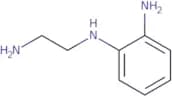
CAS:<p>Versatile small molecule scaffold</p>Formula:C11H14N2O2Purity:Min. 95%Molecular weight:206.24 g/mol1-N-(2-Aminoethyl)benzene-1,2-diamine
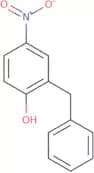
CAS:<p>Versatile small molecule scaffold</p>Formula:C8H13N3Purity:Min. 95%Molecular weight:151.21 g/mol2-Benzyl-4-nitrophenol
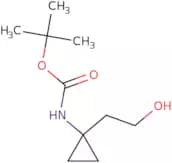
CAS:<p>Versatile small molecule scaffold</p>Formula:C13H11NO3Purity:Min. 95%Molecular weight:229.23 g/molN-Boc-1-(2-hydroxyethyl)cyclopropanamine
CAS:Versatile small molecule scaffoldFormula:C10H19NO3Purity:Min. 95%Molecular weight:201.26 g/molEthyl[2-(thiophen-2-yl)ethyl]amine
CAS:<p>Versatile small molecule scaffold</p>Formula:C8H13NSPurity:Min. 95%Molecular weight:155.26 g/mol
![Benzyl({2-[2-(ethylamino)ethoxy]ethyl})amine](/_next/image/?url=https%3A%2Fstatic.cymitquimica.com%2Fproducts%2F3D%2Fthumb-webp%2FDFA62059.webp&w=3840&q=75)

![4-{[3-(Chloromethyl)phenyl]methyl}morpholine hydrochloride](/_next/image/?url=https%3A%2Fstatic.cymitquimica.com%2Fproducts%2F3D%2Fthumb-webp%2FDFA62308.webp&w=3840&q=75)
amine](/_next/image/?url=https%3A%2Fstatic.cymitquimica.com%2Fproducts%2F3D%2Fthumb-webp%2FDFA66880.webp&w=3840&q=75)
![Methyl[(6-methylpyridin-2-yl)methyl]amine dihydrochloride](/_next/image/?url=https%3A%2Fstatic.cymitquimica.com%2Fproducts%2F3D%2Fthumb-webp%2FDFA73914.webp&w=3840&q=75)
![1-Methyl-hexahydropyrrolo[3,4-b]pyrrole](/_next/image/?url=https%3A%2Fstatic.cymitquimica.com%2Fproducts%2F3D%2Fthumb-webp%2FDFA74009.webp&w=3840&q=75)
![4-Amino-1H,2H,3H-pyrazolo[3,4-d]pyrimidin-3-one](/_next/image/?url=https%3A%2Fstatic.cymitquimica.com%2Fproducts%2F3D%2Fthumb-webp%2FDFA85054.webp&w=3840&q=75)
![3-{[(tert-butoxy)carbonyl]amino}-1-methyl-1H-pyrazole-5-carboxylic acid](/_next/image/?url=https%3A%2Fstatic.cymitquimica.com%2Fproducts%2F3D%2Fthumb-webp%2FDFA88383.webp&w=3840&q=75)
![1-Bromobicyclo[1.1.1]pentane](/_next/image/?url=https%3A%2Fstatic.cymitquimica.com%2Fproducts%2F3D%2Fthumb-webp%2FDFA88480.webp&w=3840&q=75)
![1-[(2S)-2-Ethynylpiperidin-1-yl]ethan-1-one](/_next/image/?url=https%3A%2Fstatic.cymitquimica.com%2Fproducts%2F3D%2Fthumb-webp%2FDFA96004.webp&w=3840&q=75)
![Ethyl[2-(thiophen-2-yl)ethyl]amine](/_next/image/?url=https%3A%2Fstatic.cymitquimica.com%2Fproducts%2F3D%2Fthumb-webp%2FDFB41340.webp&w=3840&q=75)