Building Blocks
This section contains fundamental products for the synthesis of organic and biological compounds. Building blocks are the essential starting materials used to construct complex molecules through various chemical reactions. They play a critical role in drug discovery, material science, and chemical research. At CymitQuimica, we offer a diverse range of high-quality building blocks to support your innovative research and industrial projects, ensuring you have the essential components for successful synthesis.
Subcategories of "Building Blocks"
- Boronic Acids & Boronic Acid Derivatives(5,756 products)
- Chiral Building Blocks(1,242 products)
- Hydrocarbon Building Blocks(6,095 products)
- Organic Building Blocks(61,051 products)
Found 199813 products of "Building Blocks"
Sort by
Purity (%)
0
100
|
0
|
50
|
90
|
95
|
100
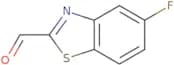
5-Fluoro-1,3-benzothiazole-2-carbaldehyde
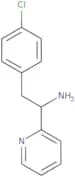
CAS:<p>Versatile small molecule scaffold</p>Formula:C8H4FNOSPurity:Min. 95%Molecular weight:181.19 g/mol2-(4-Chlorophenyl)-1-(pyridin-2-yl)ethan-1-amine
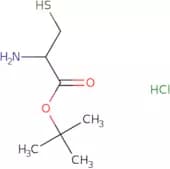
CAS:<p>Versatile small molecule scaffold</p>Formula:C13H13ClN2Purity:Min. 95%Molecular weight:232.71 g/moltert-Butyl (2R)-2-amino-3-sulfanylpropanoate hydrochloride
CAS:<p>Versatile small molecule scaffold</p>Formula:C7H16ClNO2SPurity:Min. 95%Molecular weight:213.73 g/mol6-Methyl-2-phenyl-3H,4H,5H,6H,7H,8H-pyrido[4,3-d]pyrimidin-4-one
CAS:<p>Versatile small molecule scaffold</p>Formula:C14H15N3OPurity:Min. 95%Molecular weight:241.29 g/mol3-Benzyl-3H-[1,2,3]triazole-4-carbaldehyde
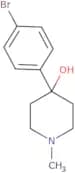
CAS:<p>Versatile small molecule scaffold</p>Formula:C10H9N3OPurity:Min. 95%Molecular weight:187.19 g/mol4-(4-Bromophenyl)-1-methylpiperidin-4-ol
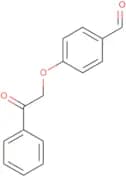
CAS:<p>Versatile small molecule scaffold</p>Formula:C12H16BrNOPurity:Min. 95%Molecular weight:270.17 g/mol4-(2-Oxo-2-phenylethoxy)benzaldehyde
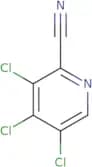
CAS:<p>4-(2-Oxo-2-phenylethoxy)benzaldehyde is an aldehyde that is used as a starting material for the synthesis of other chemical compounds. It is prepared from phenylacetaldehyde and acetone in the presence of a nucleophile such as hydrochloric acid. The mechanism for this reaction is postulated to be similar to that of the nitronate reduction, which involves the addition of a nucleophile to form an intermediate iminium salt. This intermediate then reacts with hydrogen gas, yielding 4-(2-oxo-2-phenylethoxy)benzaldehyde. The reaction can also be catalyzed by ruthenium or palladium complexes.</p>Formula:C15H12O3Purity:Min. 95%Molecular weight:240.25 g/mol3,4,5-Trichloropicolinonitrile
CAS:<p>3,4,5-Trichloropicolinonitrile is a pyridine derivative that has been shown to be a potent inhibitor of the enzyme xanthine oxidase. Xanthine oxidase catalyses the oxidation of hypoxanthine to xanthine and then to uric acid. This reaction is important in the purification of nucleotides and in the production of uric acid as a component of urine. 3,4,5-Trichloropicolinonitrile binds reversibly to xanthine oxidase by means of its hydrazone group. It reacts with nucleophilic groups on the enzyme's surface and inhibits its activity by preventing access to substrates.<br>3,4,5-Trichloropicolinonitrile has been shown to inhibit xanthine oxidase from human erythrocytes and rat liver preparations.</p>Formula:C6HCl3N2Purity:Min. 95%Molecular weight:207.4 g/molN-{1-[4-(2,2,2-Trifluoroethoxy)phenyl]ethylidene}hydroxylamine
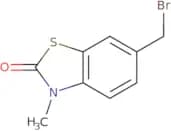
CAS:<p>Versatile small molecule scaffold</p>Formula:C10H10F3NO2Purity:Min. 95%Molecular weight:233.19 g/mol6-(Bromomethyl)-3-methyl-2,3-dihydro-1,3-benzothiazol-2-one
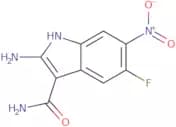
CAS:<p>Versatile small molecule scaffold</p>Formula:C9H8BrNOSPurity:Min. 95%Molecular weight:258.14 g/mol2-Amino-5-fluoro-6-nitro-1H-indole-3-carboxamide
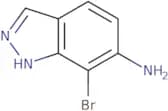
CAS:<p>Versatile small molecule scaffold</p>Formula:C9H7FN4O3Purity:Min. 95%Molecular weight:238.18 g/mol7-Bromo-1H-indazol-6-amine
CAS:<p>Versatile small molecule scaffold</p>Formula:C7H6BrN3Purity:Min. 95%Molecular weight:212.05 g/mol1-Propyl-1-[2-(2,4,6-trichloro-3-hydroxyphenoxy)ethyl]urea
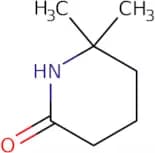
CAS:<p>Versatile small molecule scaffold</p>Formula:C12H15Cl3N2O3Purity:Min. 95%Molecular weight:341.6 g/mol6,6-dimethylpiperidin-2-one
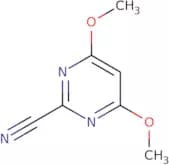
CAS:<p>Versatile small molecule scaffold</p>Formula:C7H13NOPurity:Min. 95%Molecular weight:127.19 g/mol4,6-Dimethoxypyrimidine-2-carbonitrile
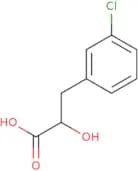
CAS:<p>4,6-Dimethoxypyrimidine-2-carbonitrile (DMP) is a chemical compound that belongs to the class of sulfones. It has been shown to be effective in the treatment of sulfate-reducing bacteria, such as Clostridium and Desulfovibrio. DMP is also used for the chlorination of organic compounds, such as chlorinated phenols and chlorinated benzenes. DMP can be synthesized by reacting 4,6-dimethoxybenzene with carbon disulfide and sodium hydroxide in aqueous solution.</p>Formula:C7H7N3O2Purity:Min. 95%Molecular weight:165.15 g/mol3-(3-Chlorophenyl)-2-hydroxypropanoic acid
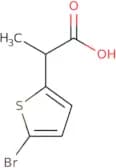
CAS:<p>Versatile small molecule scaffold</p>Formula:C9H9ClO3Purity:Min. 95%Molecular weight:200.62 g/mol2-(5-Bromothiophen-2-yl)propanoic acid
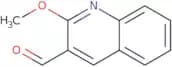
CAS:<p>Versatile small molecule scaffold</p>Formula:C7H7BrO2SPurity:Min. 95%Molecular weight:235.1 g/mol2-Methoxy-quinoline-3-carbaldehyde
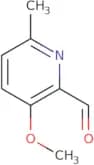
CAS:<p>2-Methoxy-quinoline-3-carbaldehyde (2MQC) is a novel oxadiazole derivative that has been shown to exhibit good in vitro antimicrobial activity against staphylococcus aureus and typhimurium. 2MQC also has inhibitory properties against the enzyme hepg2, which is involved in the production of reactive oxygen species by neutrophils. 2MQC inhibits the growth of bacteria by binding to their DNA and inhibiting protein synthesis. This compound also has anti-diabetic effects, as it increases glucose uptake and reduces blood sugar levels in mice with high blood sugar levels.</p>Formula:C11H9NO2Purity:Min. 95%Molecular weight:187.19 g/mol3-Methoxy-6-methylpyridine-2-carbaldehyde
CAS:Versatile small molecule scaffoldFormula:C8H9NO2Purity:Min. 95%Molecular weight:151.16 g/mol2-(Chloromethyl)-4,5,6,7-tetrahydrobenzo[D]oxazole
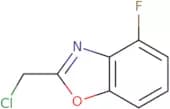
CAS:<p>Versatile small molecule scaffold</p>Formula:C8H10ClNOPurity:Min. 95%Molecular weight:171.62 g/mol2-(Chloromethyl)-4-fluoro-1,3-benzoxazole
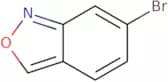
CAS:<p>Versatile small molecule scaffold</p>Formula:C8H5ClFNOPurity:Min. 95%Molecular weight:185.58 g/mol6-Bromo-2,1-benzoxazole
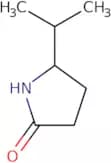
CAS:<p>Versatile small molecule scaffold</p>Formula:C7H4BrNOPurity:Min. 95%Molecular weight:198.02 g/mol(5S)-5-(Propan-2-yl)pyrrolidin-2-one
CAS:<p>(5S)-5-(Propan-2-yl)pyrrolidin-2-one is a vinyl compound that is used in the production of polyvinyl acetate. It is produced by transesterification of vinyl acetate and ethylene oxide, followed by hydrolysis of the ester group. The reaction proceeds via an enzymatic process, which is initiated by lipases.br><br>(5S)-5-(Propan-2-yl)pyrrolidin-2-one can be converted to other compounds through a number of chemical reactions. For example, it can be oxidized to (5S)-5-(propane-2,3-dione)pyrrolidine with hydrogen peroxide or sodium hypochlorite. It also reacts with potassium permanganate to form (5S)-5-(propane-1,3 diol)pyrrolidine and manganese dioxide to form (5S</p>Formula:C7H13NOPurity:Min. 95%Molecular weight:127.18 g/mol1-(2-Fluoroethyl)-1H-pyrazole
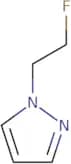
CAS:<p>Versatile small molecule scaffold</p>Formula:C5H7FN2Purity:Min. 95%Molecular weight:114.12 g/mol1-(2-Propynyl)-2-(trifluoromethyl)-1H-1,3-benzimidazole
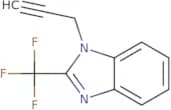
CAS:<p>Versatile small molecule scaffold</p>Formula:C11H7F3N2Purity:Min. 95%Molecular weight:224.18 g/mol8-Methyl-2H-1,4-benzothiazin-3(4H)-one
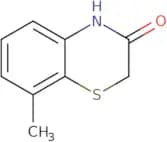
CAS:<p>Versatile small molecule scaffold</p>Formula:C9H9NOSPurity:Min. 95%Molecular weight:179.24 g/mol4-Methanesulfonylpiperazine-1-carbaldehyde
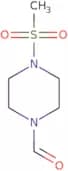
CAS:<p>Versatile small molecule scaffold</p>Formula:C6H12N2O3SPurity:Min. 95%Molecular weight:192.24 g/mol3-Iodo-2-methylbenzo[b]thiophene
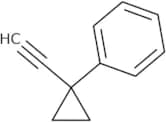
CAS:<p>Versatile small molecule scaffold</p>Formula:C9H7ISPurity:Min. 95%Molecular weight:274.12 g/mol(1-ethynylcyclopropyl)benzene
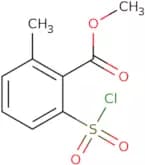
CAS:<p>Versatile small molecule scaffold</p>Formula:C11H10Purity:Min. 95%Molecular weight:142.2 g/molMethyl 2-(chlorosulfonyl)-6-methylbenzoate
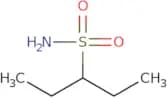
CAS:Versatile small molecule scaffoldFormula:C9H9ClO4SPurity:Min. 95%Molecular weight:248.68 g/molPentane-3-sulfonamide
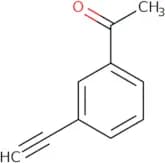
CAS:<p>Versatile small molecule scaffold</p>Formula:C5H13NO2SPurity:Min. 95%Molecular weight:151.23 g/mol1-(3-Ethynylphenyl)ethan-1-one
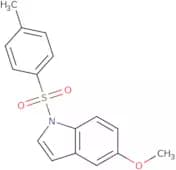
CAS:<p>Versatile small molecule scaffold</p>Formula:C10H8OPurity:Min. 95%Molecular weight:144.17 g/mol5-Methoxy-1-tosyl-1H-indole
CAS:<p>Versatile small molecule scaffold</p>Formula:C16H15NO3SPurity:Min. 95%Molecular weight:301.4 g/mol4-[(1H-Benzimidazol-1-yl)methyl]benzoic acid
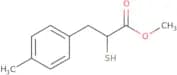
CAS:<p>4-[(1H-Benzimidazol-1-yl)methyl]benzoic acid is an ionic compound. The anion has a focus with a radius of 2.6 Å and the cation has a radius of 1.9 Å. It is stable in aqueous solution and reacts with chloride to form the salt 4-[(1H-Benzimidazol-1-yl)methyl]benzoyl chloride, which is colorless, crystalline, and soluble in water. This compound can be used for analyzing ligands that bind to lanthanide ions (e.g., lanthanum). The analyzes of frameworks have been carried out by single crystal x-ray diffraction methods and fluorescence spectroscopy parameters are given in Table 1.</p>Formula:C15H12N2O2Purity:Min. 95%Molecular weight:252.27 g/molMethyl 3-(4-methylphenyl)-2-sulfanylpropanoate
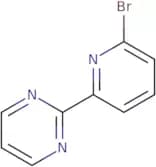
CAS:<p>Versatile small molecule scaffold</p>Formula:C11H14O2SPurity:Min. 95%Molecular weight:210.29 g/mol2-(6-Bromopyridin-2-yl)pyrimidine
CAS:<p>Versatile small molecule scaffold</p>Formula:C9H6BrN3Purity:Min. 95%Molecular weight:236.07 g/mol3-[[[5-(Aminocarbonyl)-1-methyl-3-propyl-1H-pyrazol-4-yl]amino]carbonyl]-4-propoxybenzene
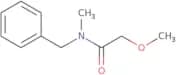
CAS:<p>Versatile small molecule scaffold</p>Formula:C18H24N4O3Purity:Min. 95%Molecular weight:344.41 g/molN-Benzyl-2-methoxy-N-methylacetamide
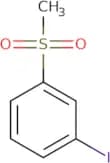
CAS:<p>Versatile small molecule scaffold</p>Formula:C11H15NO2Purity:Min. 95%Molecular weight:193.24 g/mol1-Iodo-3-methanesulfonylbenzene
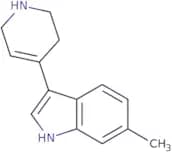
CAS:<p>Versatile small molecule scaffold</p>Formula:C7H7IO2SPurity:Min. 95%Molecular weight:282.1 g/mol6-Methyl-3-(1,2,3,6-tetrahydropyridin-4-yl)-1H-indole
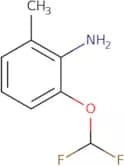
CAS:<p>Versatile small molecule scaffold</p>Formula:C14H16N2Purity:Min. 95%Molecular weight:212.29 g/mol2-(Difluoromethoxy)-6-methylaniline
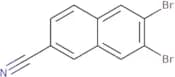
CAS:<p>Versatile small molecule scaffold</p>Formula:C8H9F2NOPurity:Min. 95%Molecular weight:173.16 g/mol6,7-dibromonaphthalene-2-carbonitrile
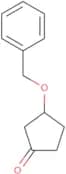
CAS:Versatile small molecule scaffoldFormula:C11H5Br2NPurity:Min. 95%Molecular weight:311 g/mol3-(Benzyloxy)cyclopentan-1-one
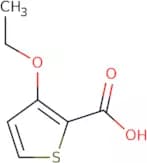
CAS:<p>Versatile small molecule scaffold</p>Formula:C12H14O2Purity:Min. 95%Molecular weight:190.24 g/mol3-Ethoxythiophene-2-carboxylic acid
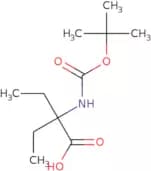
CAS:<p>Versatile small molecule scaffold</p>Formula:C7H8O3SPurity:Min. 95%Molecular weight:172.2 g/mol2-(Boc-amino)-2-ethyl-butanoic acid
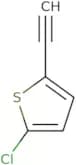
CAS:<p>Versatile small molecule scaffold</p>Formula:C11H21NO4Purity:Min. 95%Molecular weight:231.29 g/mol2-Chloro-5-ethynylthiophene
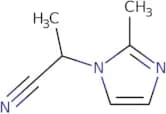
CAS:<p>2-Chloro-5-ethynylthiophene (2CET) is a x-ray crystal structure that exhibits potent adenosine receptor antagonist activity. 2CET binds to the adenosine receptor in a noncompetitive manner and blocks the receptor, preventing the activation of G proteins. The binding of 2CET to the adenosine receptor leads to an increase in adenine nucleotide levels, which may contribute to its antihypertensive properties. 2CET has also been shown to be a potent agonist at A1 and A2A receptors. It was found that 2CET bound with high affinity to both receptors, but only activated A1 receptors. This indicates that 2CET is capable of stimulating cAMP production without activating other G protein coupled receptors such as angiotensin II type 1 or muscarinic acetylcholine receptors.</p>Formula:C6H3ClSPurity:Min. 95%Molecular weight:142.61 g/mol2-(2-Methyl-1H-imidazol-1-yl)propanenitrile
CAS:<p>Versatile small molecule scaffold</p>Formula:C7H9N3Purity:Min. 95%Molecular weight:135.17 g/mol2-(4-Methoxyphenyl)-1H-pyrrolo[2,3-b]pyridine
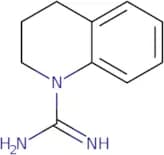
CAS:<p>Versatile small molecule scaffold</p>Formula:C14H12N2OPurity:Min. 95%Molecular weight:224.26 g/mol1,2,3,4-Tetrahydroquinoline-1-carboximidamide
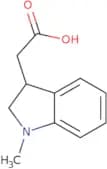
CAS:<p>Versatile small molecule scaffold</p>Formula:C10H13N3Purity:Min. 95%Molecular weight:175.23 g/mol2-(1-Methyl-2,3-dihydro-1H-indol-3-yl)acetic acid
CAS:Versatile small molecule scaffoldFormula:C11H13NO2Purity:Min. 95%Molecular weight:191.23 g/mol

![6-Methyl-2-phenyl-3H,4H,5H,6H,7H,8H-pyrido[4,3-d]pyrimidin-4-one](/_next/image/?url=https%3A%2Fstatic.cymitquimica.com%2Fproducts%2F3D%2Fthumb-webp%2FPFA45253.webp&w=3840&q=75)
![3-Benzyl-3H-[1,2,3]triazole-4-carbaldehyde](/_next/image/?url=https%3A%2Fstatic.cymitquimica.com%2Fproducts%2F3D%2Fthumb-webp%2FPFA45485.webp&w=3840&q=75)
![N-{1-[4-(2,2,2-Trifluoroethoxy)phenyl]ethylidene}hydroxylamine](/_next/image/?url=https%3A%2Fstatic.cymitquimica.com%2Fproducts%2F3D%2Fthumb-webp%2FPFA48644.webp&w=3840&q=75)
![1-Propyl-1-[2-(2,4,6-trichloro-3-hydroxyphenoxy)ethyl]urea](/_next/image/?url=https%3A%2Fstatic.cymitquimica.com%2Fproducts%2F3D%2Fthumb-webp%2FPFA52096.webp&w=3840&q=75)
![2-(Chloromethyl)-4,5,6,7-tetrahydrobenzo[D]oxazole](/_next/image/?url=https%3A%2Fstatic.cymitquimica.com%2Fproducts%2F3D%2Fthumb-webp%2FPFA54915.webp&w=3840&q=75)
![3-Iodo-2-methylbenzo[b]thiophene](/_next/image/?url=https%3A%2Fstatic.cymitquimica.com%2Fproducts%2F3D%2Fthumb-webp%2FPFA62561.webp&w=3840&q=75)
![4-[(1H-Benzimidazol-1-yl)methyl]benzoic acid](/_next/image/?url=https%3A%2Fstatic.cymitquimica.com%2Fproducts%2F3D%2Fthumb-webp%2FPFA74250.webp&w=3840&q=75)
![3-[[[5-(Aminocarbonyl)-1-methyl-3-propyl-1H-pyrazol-4-yl]amino]carbonyl]-4-propoxybenzene](/_next/image/?url=https%3A%2Fstatic.cymitquimica.com%2Fproducts%2F3D%2Fthumb-webp%2FPFA75604.webp&w=3840&q=75)
![2-(4-Methoxyphenyl)-1H-pyrrolo[2,3-b]pyridine](/_next/image/?url=https%3A%2Fstatic.cymitquimica.com%2Fproducts%2F3D%2Fthumb-webp%2FPFA96268.webp&w=3840&q=75)