Building Blocks
This section contains fundamental products for the synthesis of organic and biological compounds. Building blocks are the essential starting materials used to construct complex molecules through various chemical reactions. They play a critical role in drug discovery, material science, and chemical research. At CymitQuimica, we offer a diverse range of high-quality building blocks to support your innovative research and industrial projects, ensuring you have the essential components for successful synthesis.
Subcategories of "Building Blocks"
- Boronic Acids & Boronic Acid Derivatives(5,778 products)
- Chiral Building Blocks(1,243 products)
- Hydrocarbon Building Blocks(6,098 products)
- Organic Building Blocks(61,057 products)
Found 200716 products of "Building Blocks"
Sort by
Purity (%)
0
100
|
0
|
50
|
90
|
95
|
100
4-[4-(Pyrimidin-2-yl)piperazin-1-yl]butan-1-amine
CAS:<p>Versatile small molecule scaffold</p>Formula:C12H21N5Purity:Min. 95%Molecular weight:235.33 g/mol2-(2-Methoxyphenyl)acetamide
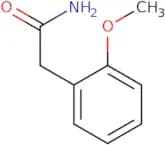
CAS:<p>2-(2-Methoxyphenyl)acetamide is a chemical compound that is used in the industrial production of acrylonitrile. It is also used to study the biochemical and microbiological properties of escherichia coli, as well as the biotechnology and biochemistry of recombinant protein expression. 2-(2-Methoxyphenyl)acetamide has been shown to be an excellent affinity ligand for ionic liquid chromatography (ILC). This chemical can be used to identify wild-type proteins in a sample.</p>Formula:C9H11NO2Purity:Min. 95%Molecular weight:165.19 g/mol1-Amino-3-methylguanidine hydroiodide
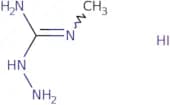
CAS:<p>Versatile small molecule scaffold</p>Formula:C2H8N4·HIPurity:Min. 95%Molecular weight:216.02 g/moltert-Butyl 3-oxopentanoate
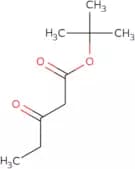
CAS:<p>Tert-Butyl 3-oxopentanoate is a chemical compound that has insulin-like growth factor (IGF) activity. This compound is synthesized from the reduction of tert-butyl 3-oxopinanedioate and reacts with a factor receptor. Tert-Butyl 3-oxopentanoate has been shown to inhibit the cancer cell proliferation by reducing the radiation induced DNA damage. The crystal structure of this compound has been determined using X-ray diffraction and molecular dynamics simulations, which have revealed that it is an inactive form of IGF.</p>Formula:C9H16O3Purity:Min. 95%Molecular weight:172.22 g/mol4-Cyano-N,N-diethylbenzene-1-sulfonamide
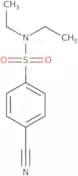
CAS:Versatile small molecule scaffoldFormula:C11H14N2O2SPurity:Min. 95%Molecular weight:238.31 g/mol3-Hydroxy-3-(2-oxopropyl)-1,3-dihydro-2H-indol-2-one
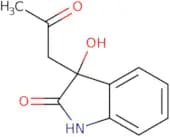
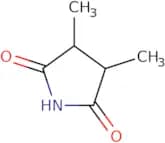
CAS:<p>Versatile small molecule scaffold</p>Formula:C11H11NO3Purity:Min. 95%Molecular weight:205.21 g/mol3,4-Dimethylpyrrolidine-2,5-dione
CAS:<p>3,4-Dimethylpyrrolidine-2,5-dione is a synthetic compound that has been found in the environment as a result of pollution. It is an average particle size with a molecular weight of 184.1 g/mol and chemical formula CHNO. 3,4-Dimethylpyrrolidine-2,5-dione is soluble in water and alcohols. It has been shown to have an imidazoline group and lactam ring that can easily be hydrolyzed by acid. 3,4-Dimethylpyrrolidine-2,5-dione can be used for the synthesis of monomers which are polymerized into polymers such as nitrocellulose or cellulose acetate butyrate using acidic or basic groups.</p>Formula:C6H9NO2Purity:Min. 95%Molecular weight:127.14 g/mol1-Oxaspiro[4.4]nonan-2-one
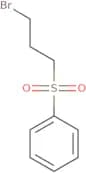
CAS:Versatile small molecule scaffoldFormula:C8H12O2Purity:Min. 95%Molecular weight:140.2 g/mol(3-Bromopropanesulfonyl)benzene
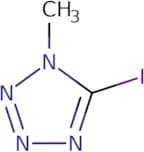
CAS:<p>Versatile small molecule scaffold</p>Formula:C9H11BrO2SPurity:Min. 95%Molecular weight:263.15 g/mol5-Iodo-1-methyl-1H-tetrazole
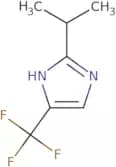
CAS:<p>Versatile small molecule scaffold</p>Formula:C2H3IN4Purity:Min. 95%Molecular weight:209.98 g/mol2-(Propan-2-yl)-5-(trifluoromethyl)-1H-imidazole
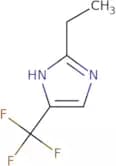
CAS:<p>Versatile small molecule scaffold</p>Formula:C7H9F3N2Purity:Min. 95%Molecular weight:178.15 g/mol2-Ethyl-5-(trifluoromethyl)-1H-imidazole
CAS:<p>Versatile small molecule scaffold</p>Formula:C6H7F3N2Purity:Min. 95%Molecular weight:164.13 g/mol3-[Ethyl(hydroxy)phosphoryl]but-2-enoic acid
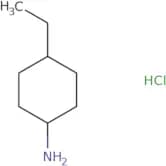
CAS:<p>Versatile small molecule scaffold</p>Formula:C6H11O4PPurity:Min. 95%Molecular weight:178.12 g/molrac-(1S,4R)-4-Ethylcyclohexan-1-amine hydrochloride
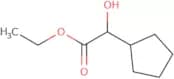
CAS:Versatile small molecule scaffoldFormula:C8H18ClNPurity:Min. 95%Molecular weight:163.69 g/molEthyl 2-cyclopentyl-2-hydroxyacetate
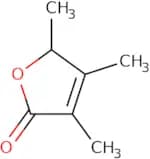
CAS:Versatile small molecule scaffoldFormula:C9H16O3Purity:Min. 95%Molecular weight:172.22 g/mol3,4,5-Trimethyl-2(5H)-furanone
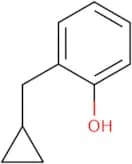
CAS:<p>3,4,5-Trimethyl-2(5H)-furanone (3,4,5-TMF) is a compound that has been identified as a germination inhibitor. 3,4,5-TMF inhibits the germination of lettuce seeds and wheat seeds. It is speculated that this inhibition may be due to the ability of 3,4,5-TMF to inhibit regulatory enzymes in the germination process. This compound also has neuroprotective properties and may be used for the treatment of neurodegenerative diseases. 3,4,5-TMF belongs to a group of compounds called furanones which are found in plants such as Triticum aestivum and Arabidopsis thaliana. Furanones are related to other phytochemicals such as flavonoids and phenolic acids.</p>Formula:C7H10O2Purity:Min. 95%Molecular weight:126.15 g/mol2-(Cyclopropylmethyl)phenol
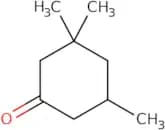
CAS:<p>Versatile small molecule scaffold</p>Formula:C10H12OPurity:Min. 95%Molecular weight:148.2 g/mol(5R)-3,3,5-Trimethylcyclohexan-1-one
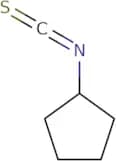
CAS:<p>Versatile small molecule scaffold</p>Formula:C9H16OPurity:Min. 95%Color and Shape:Clear LiquidMolecular weight:140.22 g/molCyclopentyl isothiocyanate
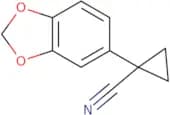
CAS:Cyclopentyl isothiocyanate (CPITC) is an organic solvent that is used as a pharmaceutical preparation. It has antiviral activity, which may be due to its ability to inhibit the serine protease of the virus. The hydroxy group on CPITC can react with the amide nitrogen of glutamine residues in protein and form an amide bond. CPITC has shown anticancer effects and inhibits the growth of cancer cells by inhibiting cell division at the G2/M phase. CPITC also has anti-inflammatory effects, which may be due to its ability to inhibit prostaglandin synthesis by blocking cyclooxygenase activity.Formula:C6H9NSPurity:Min. 95%Molecular weight:127.21 g/mol1-(1,3-Benzodioxol-5-yl)cyclopropanecarbonitrile
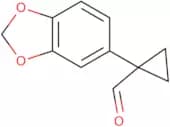
CAS:<p>Versatile small molecule scaffold</p>Formula:C11H9NO2Purity:Min. 95%Molecular weight:187.19 g/mol1-(1,3-Dioxaindan-5-yl)cyclopropane-1-carbaldehyde
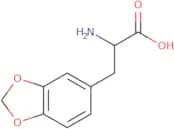
CAS:Versatile small molecule scaffoldFormula:C11H10O3Purity:Min. 95%Molecular weight:190.19 g/mol2-Amino-3-(1,3-dioxaindan-5-yl)propanoic acid
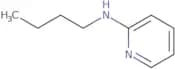
CAS:Controlled ProductVersatile small molecule scaffoldFormula:C10H11NO4Purity:Min. 95%Molecular weight:209.2 g/molN-Butylpyridin-2-amine
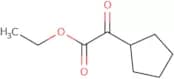
CAS:<p>Versatile small molecule scaffold</p>Formula:C9H14N2Purity:Min. 95%Molecular weight:150.22 g/molEthyl 2-Cyclopentyl-2-oxoacetate
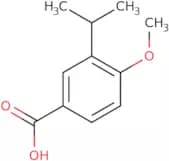
CAS:<p>Ethyl 2-Cyclopentyl-2-oxoacetate is a cyanoformate with the chemical formula C5H6O4. It is used as a reagent in organic synthesis and has been shown to react with stannic chloride to form a phosphonium salt. This reaction is followed by the addition of phosphorous pentachloride and potassium benzoate, which yields the corresponding phenylmagnesium chloride. The process can be completed by adding zinc chloride, which forms the desired organometallic compound.</p>Formula:C9H14O3Purity:Min. 95%Molecular weight:170.21 g/mol4-Methoxy-3-(propan-2-yl)benzoic acid
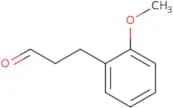
CAS:<p>Versatile small molecule scaffold</p>Formula:C11H14O3Purity:Min. 95%Molecular weight:194.23 g/mol3-(2-Methoxyphenyl)propanal
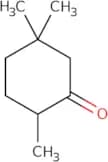
CAS:<p>3-(2-Methoxyphenyl)propanal is a heterocyclic compound that has been shown to be an efficient modulator of population growth. It has been found to be active against mosquitoes and inhibits the activity of phosphine. 3-(2-Methoxyphenyl)propanal binds to the surface of the mosquito’s mouthparts and prevents it from feeding, leading to death. The long-term effect on mosquito populations is not yet known. 3-(2-Methoxyphenyl)propanal has also been shown to inhibit trypsin and crystal x-ray diffraction, with five-membered ligands.</p>Formula:C10H12O2Purity:Min. 95%Molecular weight:164.2 g/mol2,5,5-Trimethylcyclohexanone
CAS:<p>2,5,5-Trimethylcyclohexanone is a chemical that is used in the production of other chemicals. It can be produced by a reaction of formaldehyde with malic acid and ammonium formate. The reaction is catalyzed by metal surfaces such as nickel or platinum plates. Malic acid acts as a conditioner agent for the reaction system and ammonium formate functions as a catalyst. To produce 2,5,5-trimethylcyclohexanone, an organic solvent like hexane or toluene is heated to above its boiling point. When heated, the reactants are mixed together and passed over the catalyst surface at high pressure and temperature. This process produces 2,5,5-trimethylcyclohexanone in a gaseous state that can then be condensed into liquid form.</p>Formula:C9H16OPurity:Min. 95%Molecular weight:140.22 g/molN-[2-(3-Methoxyphenyl)ethyl]-N-methylamine
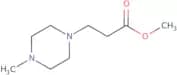
CAS:Controlled Product<p>Versatile small molecule scaffold</p>Formula:C10H15NOPurity:Min. 95%Molecular weight:165.23 g/mol4-Methyl-1-piperazinepropanoic acid methyl ester
CAS:<p>Versatile small molecule scaffold</p>Formula:C9H18N2O2Purity:Min. 95%Molecular weight:186.25 g/molN-[2-(1H-Imidazol-4-yl)ethyl]guanidine sulfate
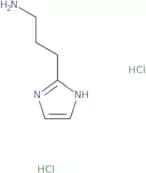
CAS:Versatile small molecule scaffoldFormula:C6H13N5O4SPurity:Min. 95%Molecular weight:251.3 g/mol2-(3-aminopropyl)imidazole 2hcl
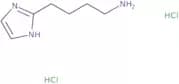
CAS:<p>Versatile small molecule scaffold</p>Formula:C6H13Cl2N3Purity:Min. 95%Molecular weight:198.09 g/mol4-(1H-Imidazol-2-yl)butan-1-amine dihydrochloride
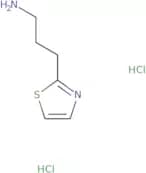
CAS:Versatile small molecule scaffoldFormula:C7H15Cl2N3Purity:Min. 95%Molecular weight:212.12 g/mol3-(1,3-Thiazol-2-yl)propan-1-amine dihydrochloride
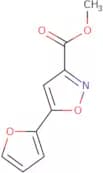
CAS:Versatile small molecule scaffoldFormula:C6H12Cl2N2SPurity:Min. 95%Molecular weight:215.14 g/molMethyl 5-(2-furyl)isoxazole-3-carboxylate
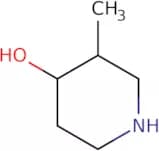
CAS:<p>Versatile small molecule scaffold</p>Formula:C9H7NO4Purity:Min. 95%Molecular weight:193.16 g/mol4-Hydroxy-3-methylpiperidine
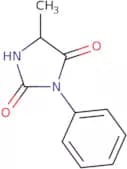
CAS:<p>4-Hydroxy-3-methylpiperidine (4HMPD) is a heterocyclic compound that has shown to be a potent inhibitor of influenza virus. 4HMPD can be used as a drug to treat influenza in humans because it has the ability to inhibit the replication of human influenza viruses and is not toxic to humans. 4HMPD targets the influenza virus by binding to the viral nucleoprotein and inhibiting its function. The molecular structure of 4HMPD is similar to that of piperidine, which is an amino acid found in proteins. This similarity may help explain why 4HMPD inhibits influenza virus replication because amino acids are necessary for protein synthesis.</p>Formula:C6H14ClNOPurity:Min. 95%Molecular weight:151.64 g/mol5-Methyl-3-phenylimidazolidine-2,4-dione
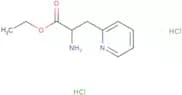
CAS:<p>Versatile small molecule scaffold</p>Formula:C10H10N2O2Purity:Min. 95%Molecular weight:190.2 g/molEthyl 2-amino-3-(pyridin-2-yl)propanoate dihydrochloride
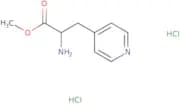
CAS:Versatile small molecule scaffoldFormula:C10H14N2O2·2HClPurity:Min. 95%Molecular weight:267.15 g/molMethyl 2-amino-3-(pyridin-4-yl)propanoate dihydrochloride
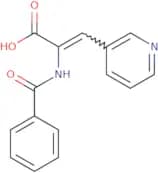
CAS:Versatile small molecule scaffoldFormula:C9H14Cl2N2O2Purity:Min. 95%Molecular weight:253.12 g/mol2-(Phenylformamido)-3-(pyridin-3-yl)prop-2-enoic acid
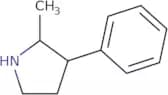
CAS:<p>Versatile small molecule scaffold</p>Formula:C15H12N2O3Purity:Min. 95%Molecular weight:268.27 g/mol2-Methyl-3-phenylpyrrolidine
CAS:Indapamide is a potassium-sparing diuretic with antihypertensive properties. It prevents the reabsorption of sodium and chloride in the kidney, which leads to increased urine volume. Indapamide is used for the treatment of hypertension in patients who are unable to control their blood pressure with diet and exercise alone. Indapamide has been shown to be effective in lowering blood pressure in hypertensive patients who have not responded well to other therapies.Formula:C11H15NPurity:Min. 95%Molecular weight:161.24 g/mol4-Ethoxybutanenitrile
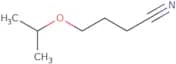
CAS:Versatile small molecule scaffoldFormula:C6H11NOPurity:Min. 95%Molecular weight:113.16 g/mol4-(Propan-2-yloxy)butanenitrile
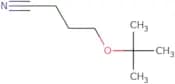
CAS:<p>Versatile small molecule scaffold</p>Formula:C7H13NOPurity:Min. 95%Molecular weight:127.18 g/mol4-(tert-Butoxy)butanenitrile
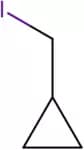
CAS:Versatile small molecule scaffoldFormula:C8H15NOPurity:Min. 95%Molecular weight:141.21 g/mol(Iodomethyl)cyclopropane
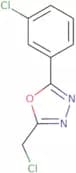
CAS:<p>(Iodomethyl)cyclopropane is a synthetic radical species that has been used in pharmaceutical preparations and industrial processes. It can be detected by its characteristic spectral signature and has been used in the preparation of pharmaceuticals, including an anti-inflammatory drug. The reaction time for (Iodomethyl)cyclopropane is typically short, which makes it suitable for use in industrial processes that require rapid completion.</p>Formula:C3H5CH2IPurity:Min. 95%Molecular weight:182 g/mol2-(Chloromethyl)-5-(3-chlorophenyl)-1,3,4-oxadiazole
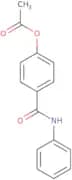
CAS:Versatile small molecule scaffoldFormula:C9H6Cl2N2OPurity:Min. 95%Molecular weight:229.06 g/mol4-(Phenylcarbamoyl)phenyl acetate
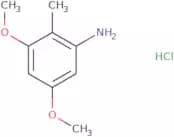
CAS:<p>Versatile small molecule scaffold</p>Formula:C15H13NO3Purity:Min. 95%Molecular weight:255.27 g/mol3,5-Dimethoxy-2-methylaniline hydrochloride
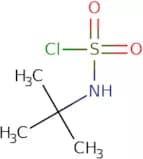
CAS:<p>Versatile small molecule scaffold</p>Formula:C9H14ClNO2Purity:Min. 95%Molecular weight:203.66 g/moltert-Butylsulphamoyl chloride
CAS:<p>Versatile small molecule scaffold</p>Formula:C4H10ClNO2SPurity:Min. 95%Molecular weight:171.65 g/mol2-Amino-5-bromo-2,3-dihydro-1H-indene-2-carboxylic acid hydrochloride
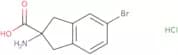
CAS:Versatile small molecule scaffoldFormula:C10H11BrClNO2Purity:Min. 95%Molecular weight:292.55 g/mol2-methylthiazole-4-carbaldehyde
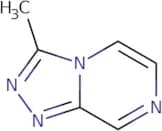
CAS:<p>Versatile small molecule scaffold</p>Formula:C6H6N4Purity:Min. 95%Molecular weight:134.14 g/mol
![4-[4-(Pyrimidin-2-yl)piperazin-1-yl]butan-1-amine](/_next/image/?url=https%3A%2Fstatic.cymitquimica.com%2Fproducts%2F3D%2Fthumb-webp%2FIBA38620.webp&w=3840&q=75)

![1-Oxaspiro[4.4]nonan-2-one](/_next/image/?url=https%3A%2Fstatic.cymitquimica.com%2Fproducts%2F3D%2Fthumb-webp%2FIBA44880.webp&w=3840&q=75)
![3-[Ethyl(hydroxy)phosphoryl]but-2-enoic acid](/_next/image/?url=https%3A%2Fstatic.cymitquimica.com%2Fproducts%2F3D%2Fthumb-webp%2FIBA47267.webp&w=3840&q=75)
![N-[2-(3-Methoxyphenyl)ethyl]-N-methylamine](/_next/image/?url=https%3A%2Fstatic.cymitquimica.com%2Fproducts%2F3D%2Fthumb-webp%2FIBA54362.webp&w=3840&q=75)
![N-[2-(1H-Imidazol-4-yl)ethyl]guanidine sulfate](/_next/image/?url=https%3A%2Fstatic.cymitquimica.com%2Fproducts%2F3D%2Fthumb-webp%2FIBA54475.webp&w=3840&q=75)