


Building Blocks
Subcategories of "Building Blocks"
- Boronic Acids & Boronic Acid Derivatives(5,780 products)
- Chiral Building Blocks(1,241 products)
- Hydrocarbon Building Blocks(6,100 products)
- Organic Building Blocks(61,017 products)
Found 205265 products of "Building Blocks"
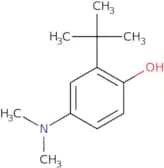
2-tert-Butyl-4-(dimethylamino)phenol
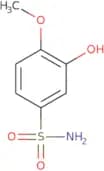
CAS:Versatile small molecule scaffoldFormula:C12H19NOPurity:Min. 95%Molecular weight:193.28 g/mol3-Hydroxy-4-methoxybenzene-1-sulfonamide
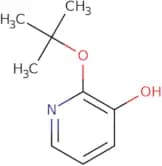
CAS:Versatile small molecule scaffoldFormula:C7H9NO4SPurity:Min. 95%Molecular weight:203.22 g/mol2-(tert-Butoxy)pyridin-3-ol
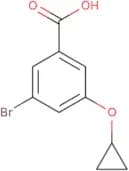
CAS:Versatile small molecule scaffoldFormula:C9H13NO2Purity:Min. 95%Molecular weight:167.2 g/mol3-Bromo-5-cyclopropoxybenzoic acid
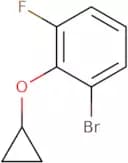
CAS:Versatile small molecule scaffoldFormula:C10H9BrO3Purity:Min. 95%Molecular weight:257.08 g/mol1-Bromo-2-cyclopropoxy-3-fluorobenzene
CAS:Versatile small molecule scaffold
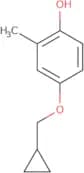
Formula:C9H8BrFOPurity:Min. 95%Molecular weight:231.06 g/mol4-(Cyclopropylmethoxy)-2-methylphenol
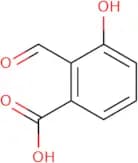
CAS:Versatile small molecule scaffoldFormula:C11H14O2Purity:Min. 95%Molecular weight:178.23 g/mol2-Formyl-3-hydroxybenzoic acid
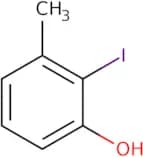
CAS:Versatile small molecule scaffoldFormula:C8H6O4Purity:Min. 95%Molecular weight:166.13 g/mol2-Iodo-3-methylphenol
CAS:2-Iodo-3-methylphenol is a nonpolar, polydimethylsiloxane with two isomers. It has substituents that are methylphenols, which are the isomers. 2-Iodo-3-methylphenol can be iodinated and detected by a detector. The phenols in this product have substituents that are acylated and have a nature of sensitivity.
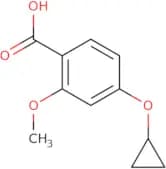
Formula:C7H7IOPurity:Min. 95%Molecular weight:234.03 g/mol4-Cyclopropoxy-2-methoxybenzoic acid
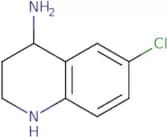
CAS:Versatile small molecule scaffoldFormula:C11H12O4Purity:Min. 95%Molecular weight:208.21 g/mol6-Chloro-1,2,3,4-tetrahydroquinolin-4-amine
CAS:Versatile small molecule scaffoldFormula:C9H11ClN2Purity:Min. 95%Molecular weight:182.65 g/mol1-[1-Methyl-5-(trifluoromethyl)-1H-1,3-benzodiazol-2-yl]ethan-1-ol
CAS:Versatile small molecule scaffoldFormula:C11H11F3N2OPurity:Min. 95%Molecular weight:244.21 g/mol[1-Methyl-5-(trifluoromethyl)-1H-1,3-benzodiazol-2-yl]methanol
CAS:Versatile small molecule scaffoldFormula:C10H9F3N2OPurity:Min. 95%Molecular weight:230.19 g/mol{[1-(4-Methoxyphenyl)-2,5-dimethyl-1H-pyrrol-3-yl]methyl}(methyl)amine
CAS:Versatile small molecule scaffoldFormula:C15H20N2OPurity:Min. 95%Molecular weight:244.33 g/mol[5-Chloro-1-(propan-2-yl)-1H-1,3-benzodiazol-2-yl]methanol
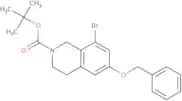
CAS:Controlled ProductVersatile small molecule scaffoldFormula:C11H13ClN2OPurity:Min. 95%Molecular weight:224.7 g/moltert-Butyl 6-(benzyloxy)-8-bromo-1,2,3,4-tetrahydroisoquinoline-2-carboxylate
CAS:Versatile small molecule scaffold
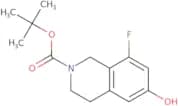
Formula:C21H24BrNO3Purity:Min. 95%Molecular weight:418.3 g/moltert-Butyl 8-fluoro-6-hydroxy-1,2,3,4-tetrahydroisoquinoline-2-carboxylate
CAS:Versatile small molecule scaffold
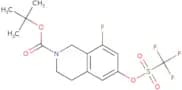
Formula:C14H18FNO3Purity:Min. 95%Molecular weight:267.3 g/moltert-Butyl 8-fluoro-6-(trifluoromethanesulfonyloxy)-1,2,3,4-tetrahydroisoquinoline-2-carboxylate
CAS:Versatile small molecule scaffoldFormula:C15H17F4NO5SPurity:Min. 95%Molecular weight:399.4 g/molMethoxy[1-(2-methyl-1,3-thiazol-4-yl)ethylidene]amine
CAS:Versatile small molecule scaffoldFormula:C7H10N2OSPurity:Min. 95%Molecular weight:170.23 g/mol(2E)-3-[2-(Trifluoromethyl)thiophen-3-yl]prop-2-enoic acid
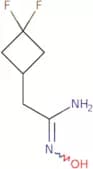
CAS:Versatile small molecule scaffoldFormula:C8H5F3O2SPurity:Min. 95%Molecular weight:222.19 g/mol2-(3,3-Difluorocyclobutyl)-N'-hydroxyethanimidamide
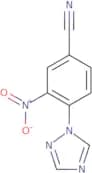
CAS:Versatile small molecule scaffoldFormula:C6H10F2N2OPurity:Min. 95%Molecular weight:164.15 g/mol3-Nitro-4-(1H-1,2,4-triazol-1-yl)benzonitrile
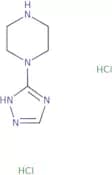
CAS:Versatile small molecule scaffoldFormula:C9H5N5O2Purity:Min. 95%Molecular weight:215.17 g/mol1-(1H-1,2,4-Triazol-3-yl)piperazine dihydrochloride
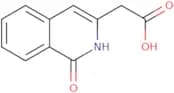
CAS:Versatile small molecule scaffoldFormula:C6H13Cl2N5Purity:Min. 95%Molecular weight:226.1 g/mol2-(1-Oxo-1,2-dihydroisoquinolin-3-yl)acetic acid
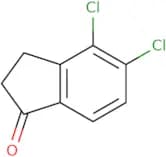
CAS:Versatile small molecule scaffoldFormula:C11H9NO3Purity:Min. 95%Molecular weight:203.19 g/mol4,5-Dichloro-2,3-dihydro-1H-inden-1-one
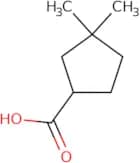
CAS:Versatile small molecule scaffoldFormula:C8H6Cl2N2Purity:Min. 95%Molecular weight:201.05 g/mol3,3-Dimethylcyclopentane-1-carboxylic acid
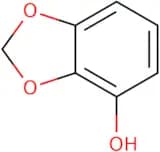
CAS:Versatile small molecule scaffoldFormula:C8H14O2Purity:Min. 95%Molecular weight:142.2 g/mol2H-1,3-benzodioxol-4-ol
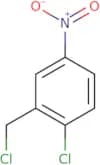
CAS:2H-1,3-benzodioxol-4-ol is a colorless liquid that has a density of 0.938 g/mL at 20°C. It is an acid with a pH of 3 and a lipophilicity of 1.2. The compound is reactive with chlorine, which can lead to the formation of diazonium salts in the presence of an acid catalyst. 2H-1,3-benzodioxol-4-ol's viscosity increases as its temperature decreases.Formula:C7H6O3Purity:Min. 95%Molecular weight:138.12 g/mol1-Chloro-2-(chloromethyl)-4-nitrobenzene
CAS:1-Chloro-2-(chloromethyl)-4-nitrobenzene is a chemical that is used as a reagent to measure creatinine in human urine. Creatinine is a natural product of muscle metabolism, and its concentration in the blood is usually used to estimate the rate of muscle breakdown. The creatinine content of urine can be determined by measuring the concentration of 1-chloro-2-(chloromethyl)-4-nitrobenzene. This compound has been shown to be metabolized to oxime, which can be quantified using gas chromatography with mass spectrometry (GC/MS) or liquid chromatography with mass spectrometry (LC/MS). The validation of this method for creatinine quantification in human urine has been done by analyzing different dilutions of urine samples and comparing them with their corresponding values from the standard curve. Emulsions are also used in this process as they can help increase accuracy
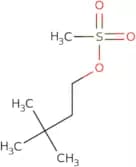
Formula:C7H5Cl2NO2Purity:Min. 95%Molecular weight:206.02 g/mol3,3-Dimethylbutyl methanesulfonate
CAS:Versatile small molecule scaffold
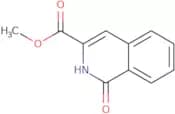
Formula:C7H16O3SPurity:Min. 95%Molecular weight:180.27 g/molMethyl 1-oxo-1,2-dihydroisoquinoline-3-carboxylate
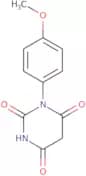
CAS:Methyl 1-oxo-1,2-dihydroisoquinoline-3-carboxylate is a ligand that binds to the benzodiazepine receptor. It is a potential antitumor agent that inhibits the growth of cells in culture. The methyl ester form of Methyl 1-oxo-1,2-dihydroisoquinoline-3-carboxylate has been shown to have apoptosis inducing activity in human leukemia cells. This compound also has antiplasmodial and antiinflammatory properties.Formula:C11H9NO3Purity:Min. 95%Molecular weight:203.19 g/mol1-(4-Methoxyphenyl)pyrimidine-2,4,6(1H,3H,5H)-trione
CAS:Versatile small molecule scaffold
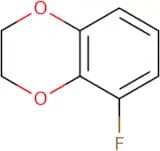
Formula:C11H10N2O4Purity:Min. 95%Molecular weight:234.21 g/mol5-Fluoro-2,3-dihydro-1,4-benzodioxine
CAS:Versatile small molecule scaffoldFormula:C8H7FO2Purity:Min. 95%Molecular weight:154.14 g/mol1,4-Diazabicyclo[2.2.2]octane-2-carboxylic acid dihydrochloride
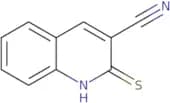
CAS:Versatile small molecule scaffoldFormula:C7H14Cl2N2O2Purity:Min. 95%Molecular weight:229.1 g/mol2-Sulfanylquinoline-3-carbonitrile
CAS:2-Sulfanylquinoline-3-carbonitrile is a quinoline derivative that has been synthesized from chloroacetamide and chloroacetonitrile. It has antibacterial activity, and is effective against Gram-positive bacteria such as Methicillin-resistant Staphylococcus aureus (MRSA). Quinoline derivatives have been used in the synthesis of alkynylated quinolones, which are potent inhibitors of bacterial topoisomerase IV. These compounds have also been shown to be effective against Gram-negative bacteria. 2-Sulfanylquinoline-3-carbonitrile has also been shown to inhibit the production of proteins vital for cell division by binding to bacterial 16S ribosomal RNA.
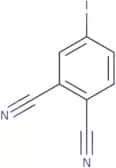
Formula:C10H6N2SPurity:Min. 95%Molecular weight:186.24 g/mol4-Iodophthalonitrile
CAS:4-Iodophthalonitrile is an unsymmetrical molecule with a low detection limit. This compound is soluble in organic solvents and has optical properties that are sensitive to the polarity of the solvent. 4-Iodophthalonitrile can be used as a precursor to other compounds, such as phenylacetic acid derivatives, which have potential applications in cancer treatment.Formula:C8H3IN2Purity:Min. 95%Molecular weight:254.03 g/molEthyl 2-aminofuro[3,2-b]pyridine-3-carboxylate
CAS:Versatile small molecule scaffold
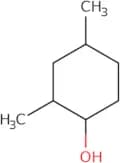
Formula:C10H10N2O3Purity:Min. 95%Molecular weight:206.2 g/mol2,4-Dimethylcyclohexan-1-ol
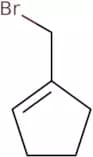
CAS:Versatile small molecule scaffoldFormula:C8H16OPurity:Min. 95%Molecular weight:128.21 g/mol1-(bromomethyl)cyclopentene
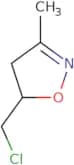
CAS:1-(bromomethyl)cyclopentene is an organocatalyst that can be used in tandem with a metal salt to form a zirconocene. It reacts with alkynes to form conjugated dienes, which are useful for the production of polymers. 1-(bromomethyl)cyclopentene is also commonly used as a monomer in the synthesis of polymers containing nonconjugated vinyl groups.Formula:C6H9BrPurity:Min. 95%Molecular weight:161.04 g/mol5-(Chloromethyl)-3-methyl-4,5-dihydro-1,2-oxazole
CAS:Versatile small molecule scaffoldFormula:C5H8ClNOPurity:Min. 95%Molecular weight:133.57 g/mol2-Oxo-2,3-dihydro-1H-imidazole-4,5-dicarboxylic acid
CAS:Versatile small molecule scaffoldFormula:C5H4N2O5Purity:Min. 95%Molecular weight:172.1 g/mol2H,3H,5H-Indeno[1,2-c]pyridazin-3-one
CAS:Versatile small molecule scaffold
Formula:C11H8N2OPurity:Min. 95%Molecular weight:184.19 g/mol3-Chloro-5H-indeno[1,2-c]pyridazine
CAS:Versatile small molecule scaffoldFormula:C11H7ClN2Purity:Min. 95%Molecular weight:202.64 g/molTricyclo[7.1.1.0,2,7]undeca-2,4,6-trien-8-one
CAS:Versatile small molecule scaffoldFormula:C11H10OPurity:Min. 95%Molecular weight:158.2 g/mol2-Pentyl-1,3-thiazolidine-4-carboxylic acid
CAS:Versatile small molecule scaffoldFormula:C9H17NO2SPurity:Min. 95%Molecular weight:203.3 g/mol6-Chloro-N-phenyl-4-pyrimidinamine
CAS:Versatile small molecule scaffold
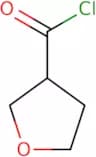
Formula:C10H8ClN3Purity:Min. 95%Molecular weight:205.65 g/molTetrahydrofuran-3-carbonyl chloride
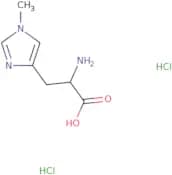
CAS:Tetrahydrofuran-3-carbonyl chloride is a chiral, stereoselective, and sustainable chemical. It is used in the synthesis of various chiral compounds with high stereospecificity. Tetrahydrofuran-3-carbonyl chloride is an imine that reacts with an amine to produce an unsymmetrical ketone. The reaction mechanism involves the formation of a mixed anhydride as the first step by reacting the amine with chlorine or bromine. In this step, the carbonyl group of the reactant becomes attached to one carbon atom of the double bond in the mixed anhydride. This reaction can be used to synthesize staudinger and stereoselectively substituted tetrahydrofurans with high selectivity.Formula:C5H7ClO2Purity:Min. 95%Molecular weight:134.56 g/mol1-Methyl-L-histidine dihydrochloride
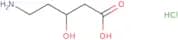
CAS:Versatile small molecule scaffoldFormula:C7H13Cl2N3O2Purity:Min. 95%Molecular weight:242.1 g/mol5-Amino-3-hydroxypentanoic acid hydrochloride
CAS:Versatile small molecule scaffoldFormula:C5H12ClNO3Purity:Min. 95%Molecular weight:169.61 g/molEthyl 5-{[(tert-butoxy)carbonyl]amino}-3-oxopentanoate
CAS:Versatile small molecule scaffoldFormula:C12H21NO5Purity:Min. 95%Molecular weight:259.3 g/mol2-Iodo-1-benzofuran
CAS:2-Iodo-1-benzofuran is a polymerase chain inhibitor that can bind to the d2 dopamine receptor. This drug has been shown to have potential use in the treatment of diseases such as autoimmune diseases, Parkinson’s disease, and cancer. 2-Iodo-1-benzofuran is a potent inhibitor of HIV replication in vitro and has been shown to be active against other retroviruses. 2-Iodo-1-benzofuran also binds with high affinity and specificity to rat striatal D2 dopamine receptors. The binding of this drug to the receptor leads to a decrease in the levels of dopamine in the brain and an increase in blood pressure.Formula:C8H5IOPurity:Min. 95%Molecular weight:244.03 g/mol3-Cyclopropylimidazolidine-2,4-dione
CAS:Versatile small molecule scaffoldFormula:C6H8N2O2Purity:Min. 95%Molecular weight:140.14 g/mol

![1-[1-Methyl-5-(trifluoromethyl)-1H-1,3-benzodiazol-2-yl]ethan-1-ol](/_next/image/?url=https%3A%2Fstatic.cymitquimica.com%2Fproducts%2F3D%2Fthumb-webp%2FTZB72075.webp&w=3840&q=75)
![[1-Methyl-5-(trifluoromethyl)-1H-1,3-benzodiazol-2-yl]methanol](/_next/image/?url=https%3A%2Fstatic.cymitquimica.com%2Fproducts%2F3D%2Fthumb-webp%2FTZB73594.webp&w=3840&q=75)
![{[1-(4-Methoxyphenyl)-2,5-dimethyl-1H-pyrrol-3-yl]methyl}(methyl)amine](/_next/image/?url=https%3A%2Fstatic.cymitquimica.com%2Fproducts%2F3D%2Fthumb-webp%2FTZB78728.webp&w=3840&q=75)
![[5-Chloro-1-(propan-2-yl)-1H-1,3-benzodiazol-2-yl]methanol](/_next/image/?url=https%3A%2Fstatic.cymitquimica.com%2Fproducts%2F3D%2Fthumb-webp%2FTZB82191.webp&w=3840&q=75)
![Methoxy[1-(2-methyl-1,3-thiazol-4-yl)ethylidene]amine](/_next/image/?url=https%3A%2Fstatic.cymitquimica.com%2Fproducts%2F3D%2Fthumb-webp%2FTZC66301.webp&w=3840&q=75)
![(2E)-3-[2-(Trifluoromethyl)thiophen-3-yl]prop-2-enoic acid](/_next/image/?url=https%3A%2Fstatic.cymitquimica.com%2Fproducts%2F3D%2Fthumb-webp%2FTZC83366.webp&w=3840&q=75)
![1,4-Diazabicyclo[2.2.2]octane-2-carboxylic acid dihydrochloride](/_next/image/?url=https%3A%2Fstatic.cymitquimica.com%2Fproducts%2F3D%2Fthumb-webp%2FUCA49142.webp&w=3840&q=75)
![Ethyl 2-aminofuro[3,2-b]pyridine-3-carboxylate](/_next/image/?url=https%3A%2Fstatic.cymitquimica.com%2Fproducts%2F3D%2Fthumb-webp%2FUCA53964.webp&w=3840&q=75)

![2H,3H,5H-Indeno[1,2-c]pyridazin-3-one](/_next/image/?url=https%3A%2Fstatic.cymitquimica.com%2Fproducts%2F3D%2Fthumb-webp%2FUCA58116.webp&w=3840&q=75)
![3-Chloro-5H-indeno[1,2-c]pyridazine](/_next/image/?url=https%3A%2Fstatic.cymitquimica.com%2Fproducts%2F3D%2Fthumb-webp%2FUCA58117.webp&w=3840&q=75)
![Tricyclo[7.1.1.0,2,7]undeca-2,4,6-trien-8-one](/_next/image/?url=https%3A%2Fstatic.cymitquimica.com%2Fproducts%2F3D%2Fthumb-webp%2FUCA58447.webp&w=3840&q=75)


![Ethyl 5-{[(tert-butoxy)carbonyl]amino}-3-oxopentanoate](/_next/image/?url=https%3A%2Fstatic.cymitquimica.com%2Fproducts%2F3D%2Fthumb-webp%2FUCA61921.webp&w=3840&q=75)

