Building Blocks
This section contains fundamental products for the synthesis of organic and biological compounds. Building blocks are the essential starting materials used to construct complex molecules through various chemical reactions. They play a critical role in drug discovery, material science, and chemical research. At CymitQuimica, we offer a diverse range of high-quality building blocks to support your innovative research and industrial projects, ensuring you have the essential components for successful synthesis.
Subcategories of "Building Blocks"
- Boronic Acids & Boronic Acid Derivatives(5,778 products)
- Chiral Building Blocks(1,242 products)
- Hydrocarbon Building Blocks(6,098 products)
- Organic Building Blocks(61,084 products)
Found 198714 products of "Building Blocks"
Sort by
Purity (%)
0
100
|
0
|
50
|
90
|
95
|
100
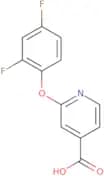
2-(2,4-Difluorophenoxy)pyridine-4-carboxylic acid
CAS:Versatile small molecule scaffoldFormula:C12H7F2NO3Purity:Min. 95%Molecular weight:251.18 g/mol2-[(4-Hydroxyphenyl)formamido]acetamide
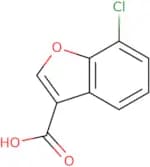
CAS:Versatile small molecule scaffoldFormula:C9H10N2O3Purity:Min. 95%Molecular weight:194.19 g/mol7-Chloro-1-benzofuran-3-carboxylic acid
CAS:<p>Versatile small molecule scaffold</p>Formula:C9H5ClO3Purity:Min. 95%Molecular weight:196.58 g/mol4,7-Dihydro-5h-thieno[2,3-c]pyran-3-carboxylic acid
CAS:4,7-Dihydro-5h-thieno[2,3-c]pyran-3-carboxylic acid (fesoterodine) is a potent amide with a heterocyclic ring that has been shown to have activity in the treatment of various disorders. It is used for the treatment of urinary frequency and urgency in adults with overactive bladder. Fesoterodine also has been shown to reduce the need for renal replacement therapy and improve quality of life in patients with chronic kidney disease. Fesoterodine inhibits cell proliferation by binding to acidic phospholipids. This drug has also been shown to be effective against vascular diseases, such as atherosclerosis, hypertension, and cardiac arrhythmia. Fesoterodine is used for treating erectile dysfunction caused by spinal cord injury or multiple sclerosis. It is also used for infections caused by bacteria including Clostridium difficile and ProteusFormula:C8H8O3SPurity:Min. 95%Molecular weight:184.21 g/mol3-Amino-5-methylbenzamide
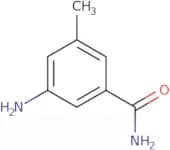
CAS:<p>Versatile small molecule scaffold</p>Formula:C8H10N2OPurity:Min. 95%Molecular weight:150.18 g/molPyrazolo[1,5-a]pyrimidine-3-boronic acid pinacol ester
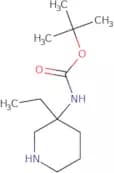
CAS:<p>Versatile small molecule scaffold</p>Formula:C12H16BN3O2Purity:Min. 95%Molecular weight:245.08 g/moltert-Butyl (3-ethylpiperidin-3-yl)carbamate
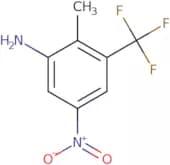
CAS:Versatile small molecule scaffoldFormula:C12H24N2O2Purity:Min. 95%Molecular weight:228.33 g/mol2-Methyl-5-nitro-3-(trifluoromethyl)aniline
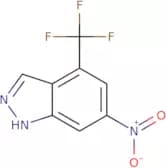
CAS:Versatile small molecule scaffoldFormula:C8H7F3N2O2Purity:Min. 95%Molecular weight:220.15 g/mol6-Nitro-4-(trifluoromethyl)-1H-indazole
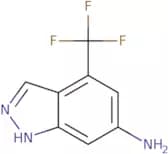
CAS:Versatile small molecule scaffoldFormula:C8H4F3N3O2Purity:Min. 95%Molecular weight:231.13 g/mol4-(Trifluoromethyl)-1H-indazol-6-amine
CAS:<p>Versatile small molecule scaffold</p>Formula:C8H6F3N3Purity:Min. 95%Molecular weight:201.15 g/mol3-[3-(Cyclopentyloxy)phenyl]propanoic acid
CAS:<p>Versatile small molecule scaffold</p>Formula:C14H18O3Purity:Min. 95%Molecular weight:234.29 g/mol1H,2H,2aH,3H,4H-Azeto[1,2-a]quinoxalin-3-one
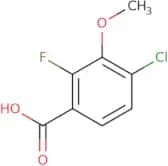
CAS:<p>Versatile small molecule scaffold</p>Formula:C10H10N2OPurity:Min. 95%Molecular weight:174.2 g/mol4-Chloro-2-fluoro-3-methoxybenzoic acid
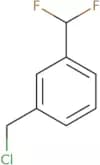
CAS:Versatile small molecule scaffoldFormula:C8H6ClFO3Purity:Min. 95%Molecular weight:204.58 g/mol1-(Chloromethyl)-3-(difluoromethyl)benzene
CAS:Versatile small molecule scaffoldFormula:C8H7ClF2Purity:Min. 95%Molecular weight:176.59 g/mol2-Amino-2-(tetrahydrofuran-3-yl)acetic acid
CAS:<p>Versatile small molecule scaffold</p>Formula:C6H11NO3Purity:Min. 95%Molecular weight:145.16 g/molMethyl 4-{[(tert-butoxy)carbonyl]amino}cyclopent-1-ene-1-carboxylate
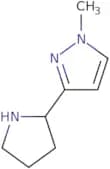
CAS:<p>Versatile small molecule scaffold</p>Formula:C12H19NO4Purity:Min. 95%Molecular weight:241.28 g/mol1-Methyl-3-(pyrrolidin-2-yl)-1H-pyrazole
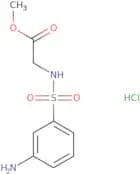
CAS:<p>Versatile small molecule scaffold</p>Formula:C8H13N3Purity:Min. 95%Molecular weight:151.21 g/molMethyl 2-(3-aminobenzenesulfonamido)acetate hydrochloride
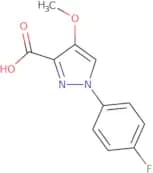
CAS:<p>Versatile small molecule scaffold</p>Formula:C9H13ClN2O4SPurity:Min. 95%Molecular weight:280.73 g/mol1-(4-Fluorophenyl)-4-methoxy-1H-pyrazole-3-carboxylic acid
CAS:<p>Versatile small molecule scaffold</p>Formula:C11H9FN2O3Purity:Min. 95%Molecular weight:236.2 g/molPhenyl[2-(trifluoromethyl)-1H-1,3-benzodiazol-6-yl]methanamine hydrochloride
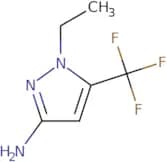
CAS:Versatile small molecule scaffoldFormula:C15H13ClF3N3Purity:Min. 95%Molecular weight:327.73 g/mol1-Ethyl-5-(trifluoromethyl)-1H-pyrazol-3-amine
CAS:<p>Versatile small molecule scaffold</p>Formula:C6H8F3N3Purity:Min. 95%Molecular weight:179.14 g/mol3-Methyl-1-phenyl-1H-pyrazolo[3,4-b]pyridin-5-amine hydrochloride
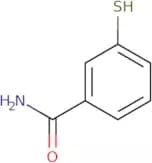
CAS:Versatile small molecule scaffoldFormula:C13H13ClN4Purity:Min. 95%Molecular weight:260.72 g/mol3-Sulfanylbenzamide
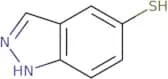
CAS:<p>3-Sulfanylbenzamide is an herbicide that inhibits the growth of plants by inhibiting the production of chlorophyll. It is a halogen that binds to cycloalkyl, which prevents the formation of phenylalanine, leading to cell death. 3-Sulfanylbenzamide has been shown to be effective in controlling the growth of weeds such as lambsquarters and ragweed.</p>Formula:C7H7NOSPurity:Min. 95%Molecular weight:153.2 g/mol1H-Indazole-5-thiol
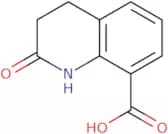
CAS:<p>Versatile small molecule scaffold</p>Formula:C7H6N2SPurity:Min. 95%Molecular weight:150.2 g/mol2-Oxo-1,2,3,4-tetrahydroquinoline-8-carboxylic acid
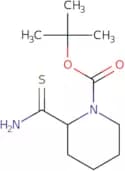
CAS:<p>Versatile small molecule scaffold</p>Formula:C10H9NO3Purity:Min. 95%Molecular weight:191.18 g/moltert-Butyl 2-carbamothioylpiperidine-1-carboxylate
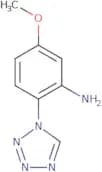
CAS:Versatile small molecule scaffoldFormula:C11H20N2O2SPurity:Min. 95%Molecular weight:244.35 g/mol5-Methoxy-2-(1H-tetrazol-1-yl)aniline
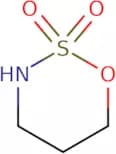
CAS:<p>Versatile small molecule scaffold</p>Formula:C8H9N5OPurity:Min. 95%Molecular weight:191.19 g/mol1,2λ⁶,3-Oxathiazinane-2,2-dione
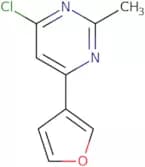
CAS:1,2λ⁶,3-Oxathiazinane-2,2-dione is a cyclization reaction product of 1,2λ⁶,3-oxathiazine and 2-mercaptobenzothiazole. It is an intramolecular reaction that produces a six-membered ring containing two heteroatoms. This product can be used as a reagent for the oxidation of sulfamates to sulfoxides. The radical reaction mechanism of this compound has been studied with the use of intermediacy and mechanistic studies. Hypervalent cations catalyze this process and it occurs in the presence of organic esters.Formula:C3H7NO3SPurity:Min. 95%Molecular weight:137.16 g/mol4-Chloro-6-(3-furyl)-2-methylpyrimidine
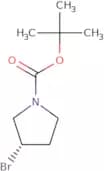
CAS:<p>Versatile small molecule scaffold</p>Formula:C9H7ClN2OPurity:Min. 95%Molecular weight:194.62 g/mol(S)-tert-Butyl 3-bromopyrrolidine-1-carboxylate
CAS:<p>(S)-tert-Butyl 3-bromopyrrolidine-1-carboxylate is a reagent that can be used for the synthesis of chiral compounds. It reacts with chlorosulfonyl isocyanate to form an N-substituted sulfonamide. This reaction proceeds with high stereoselectivity, yielding the desired product in high yield and enantiomeric excess. (S)-tert-Butyl 3-bromopyrrolidine-1-carboxylate can also be used as a desulfonylation reagent and has been shown to react with c1–c6 alkoxy groups to form alcohols. (S)-tert-Butyl 3-bromopyrrolidine-1-carboxylate reacts with nitro groups to form nitroso derivatives, octane to produce cyclohexanones, benzyl group to make phenols, piperidine to</p>Formula:C9H16BrNO2Purity:Min. 95%Molecular weight:250.13 g/mol[R]-1-Boc-3-Bromopyrrolidine
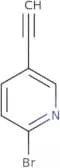
CAS:<p>Versatile small molecule scaffold</p>Formula:C9H16BrNO2Purity:Min. 95%Molecular weight:250.14 g/mol2-Bromo-5-ethynylpyridine
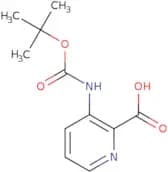
CAS:Versatile small molecule scaffoldFormula:C7H4BrNPurity:Min. 95%Molecular weight:182.02 g/mol3-(Boc-amino)pyridine-2-carboxylic acid
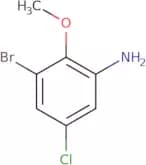
CAS:<p>3-(Boc-amino)pyridine-2-carboxylic acid is a chiral, stereoselective compound that can be synthesized by reacting an achiral amine with a carbamic acid. The yields of the reaction are high and the product is obtained in a single step. 3-(Boc-amino)pyridine-2-carboxylic acid can be used as an intermediate for the synthesis of β-lactams, which are important for their antibiotic properties. The diastereomer is formed when the amino group on the molecule interacts with either right or left side of the carbonyl group. This interaction leads to different configurations and stereoisomers.</p>Formula:C11H14N2O4Purity:Min. 95%Molecular weight:238.24 g/mol3-Bromo-5-chloro-2-methoxyaniline
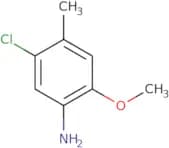
CAS:Versatile small molecule scaffoldFormula:C7H7BrClNOPurity:Min. 95%Molecular weight:236.49 g/mol5-Chloro-2-methoxy-4-methylaniline
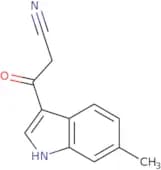
CAS:<p>Versatile small molecule scaffold</p>Formula:C8H10ClNOPurity:Min. 95%Molecular weight:171.63 g/mol3-(6-Methyl-1H-indol-3-yl)-3-oxopropanenitrile
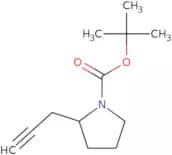
CAS:<p>Versatile small molecule scaffold</p>Formula:C12H10N2OPurity:Min. 95%Molecular weight:198.22 g/moltert-Butyl 2-(prop-2-yn-1-yl)pyrrolidine-1-carboxylate
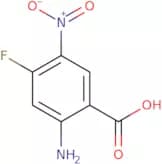
CAS:<p>Versatile small molecule scaffold</p>Formula:C12H19NO2Purity:Min. 95%Molecular weight:209.28 g/mol2-Amino-4-fluoro-5-nitrobenzoic acid
CAS:<p>2-Amino-4-fluoro-5-nitrobenzoic acid is a synthetic compound that has been shown to be an anticancer agent. It inhibits the growth of cancer cells by binding to the biological targets, such as DNA and RNA. 2-Amino-4-fluoro-5-nitrobenzoic acid also has antiviral properties, which may be related to its ability to inhibit protein synthesis and prevent virus replication. This compound has been shown to have anticancer effects in various types of cancer, including colon cancer, breast cancer, and leukemia. 2AFBA is a bicyclic heterocycle with two amino groups attached to the same ring at different positions.</p>Formula:C7H5FN2O4Purity:Min. 95%Molecular weight:200.12 g/mol3-(3-Oxomorpholin-4-yl)benzoic acid
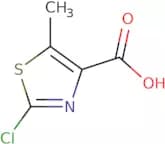
CAS:<p>Versatile small molecule scaffold</p>Formula:C11H11NO4Purity:Min. 95%Molecular weight:221.21 g/mol2-chloro-5-methyl-1,3-thiazole-4-carboxylic acid
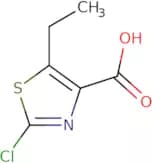
CAS:Versatile small molecule scaffoldFormula:C5H4ClNO2SPurity:Min. 95%Molecular weight:177.6 g/mol2-chloro-5-ethyl-1,3-thiazole-4-carboxylic acid
CAS:<p>Versatile small molecule scaffold</p>Formula:C6H6ClNO2SPurity:Min. 95%Molecular weight:191.6 g/moltert-Butyl 6-bromo-3,4-dihydrospiro[1-benzopyran-2,4'-piperidine]-1'-carboxylate
CAS:<p>Versatile small molecule scaffold</p>Formula:C18H24BrNO3Purity:Min. 95%Molecular weight:382.3 g/molMethyl 5-fluoro-2-formylbenzoate
CAS:<p>Versatile small molecule scaffold</p>Formula:C9H7FO3Purity:Min. 95%Molecular weight:182.15 g/mol8-bromoimidazo[1,2-a]pyridine-2-carbaldehyde
CAS:<p>Versatile small molecule scaffold</p>Formula:C8H5BrN2OPurity:Min. 95%Molecular weight:225.05 g/mol7-bromo-2-methylimidazo[1,2-a]pyridine
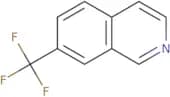
CAS:<p>Versatile small molecule scaffold</p>Formula:C8H7BrN2Purity:Min. 95%Molecular weight:211.06 g/mol7-(Trifluoromethyl)isoquinoline
CAS:<p>Versatile small molecule scaffold</p>Formula:C10H6F3NPurity:Min. 95%Molecular weight:197.16 g/mol2-Benzyl-2,6-diazaspiro[3.3]heptane dihydrochloride
CAS:<p>Versatile small molecule scaffold</p>Formula:C12H16N2Purity:Min. 95%Molecular weight:188.27 g/mol2-Boc-2,7-diazaspiro[4.4]nonane-6-one
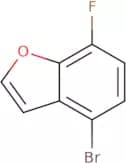
CAS:2-Boc-2,7-diazaspiro[4.4]nonane-6-one is a tertiary amine that has three hydrogen bonds to the carbonyl group and one to the nitrogen atom in the 2 position of the pyran ring. The compound exists as two conformations: one with a chair conformation and another with a boat conformation. In each case, the tertiary amine hydrogen bonds to the carbonyl carbon atom. The chair conformation is favored because it has less steric strain on the tertiary amine nitrogen atom than does the boat conformation.Formula:C12H20N2O3Purity:Min. 95%Molecular weight:240.3 g/mol4-Bromo-7-fluoro-1-benzofuran
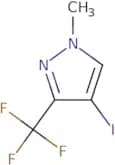
CAS:Versatile small molecule scaffoldFormula:C8H4OFBrPurity:Min. 95%Molecular weight:215.02 g/mol4-Iodo-1-methyl-3-trifluoromethyl-1H-pyrazole
CAS:<p>Versatile small molecule scaffold</p>Formula:C5H4F3IN2Purity:Min. 95%Molecular weight:276 g/mol

![2-[(4-Hydroxyphenyl)formamido]acetamide](/_next/image/?url=https%3A%2Fstatic.cymitquimica.com%2Fproducts%2F3D%2Fthumb-webp%2FUQB36495.webp&w=3840&q=75)
![4,7-Dihydro-5h-thieno[2,3-c]pyran-3-carboxylic acid](/_next/image/?url=https%3A%2Fstatic.cymitquimica.com%2Fproducts%2F3D%2Fthumb-webp%2FUWB49114.webp&w=3840&q=75)
![Pyrazolo[1,5-a]pyrimidine-3-boronic acid pinacol ester](/_next/image/?url=https%3A%2Fstatic.cymitquimica.com%2Fproducts%2F3D%2Fthumb-webp%2FUWB69088.webp&w=3840&q=75)
![3-[3-(Cyclopentyloxy)phenyl]propanoic acid](/_next/image/?url=https%3A%2Fstatic.cymitquimica.com%2Fproducts%2F3D%2Fthumb-webp%2FUWB84799.webp&w=3840&q=75)
![1H,2H,2aH,3H,4H-Azeto[1,2-a]quinoxalin-3-one](/_next/image/?url=https%3A%2Fstatic.cymitquimica.com%2Fproducts%2F3D%2Fthumb-webp%2FUWB86908.webp&w=3840&q=75)
![Methyl 4-{[(tert-butoxy)carbonyl]amino}cyclopent-1-ene-1-carboxylate](/_next/image/?url=https%3A%2Fstatic.cymitquimica.com%2Fproducts%2F3D%2Fthumb-webp%2FUWB93604.webp&w=3840&q=75)
![Phenyl[2-(trifluoromethyl)-1H-1,3-benzodiazol-6-yl]methanamine hydrochloride](/_next/image/?url=https%3A%2Fstatic.cymitquimica.com%2Fproducts%2F3D%2Fthumb-webp%2FUWB98627.webp&w=3840&q=75)
![3-Methyl-1-phenyl-1H-pyrazolo[3,4-b]pyridin-5-amine hydrochloride](/_next/image/?url=https%3A%2Fstatic.cymitquimica.com%2Fproducts%2F3D%2Fthumb-webp%2FUWC30026.webp&w=3840&q=75)
![[R]-1-Boc-3-Bromopyrrolidine](/_next/image/?url=https%3A%2Fstatic.cymitquimica.com%2Fproducts%2F3D%2Fthumb-webp%2FUXA66097.webp&w=3840&q=75)

![tert-Butyl 6-bromo-3,4-dihydrospiro[1-benzopyran-2,4'-piperidine]-1'-carboxylate](/_next/image/?url=https%3A%2Fstatic.cymitquimica.com%2Fproducts%2F3D%2Fthumb-webp%2FUXB37464.webp&w=3840&q=75)

![8-bromoimidazo[1,2-a]pyridine-2-carbaldehyde](/_next/image/?url=https%3A%2Fstatic.cymitquimica.com%2Fproducts%2F3D%2Fthumb-webp%2FUXB37512.webp&w=3840&q=75)
![7-bromo-2-methylimidazo[1,2-a]pyridine](/_next/image/?url=https%3A%2Fstatic.cymitquimica.com%2Fproducts%2F3D%2Fthumb-webp%2FUXB37540.webp&w=3840&q=75)
![2-Benzyl-2,6-diazaspiro[3.3]heptane dihydrochloride](/_next/image/?url=https%3A%2Fstatic.cymitquimica.com%2Fproducts%2F3D%2Fthumb-webp%2FUXB37585.webp&w=3840&q=75)
![2-Boc-2,7-diazaspiro[4.4]nonane-6-one](/_next/image/?url=https%3A%2Fstatic.cymitquimica.com%2Fproducts%2F3D%2Fthumb-webp%2FUXB37644.webp&w=3840&q=75)