Building Blocks
This section contains fundamental products for the synthesis of organic and biological compounds. Building blocks are the essential starting materials used to construct complex molecules through various chemical reactions. They play a critical role in drug discovery, material science, and chemical research. At CymitQuimica, we offer a diverse range of high-quality building blocks to support your innovative research and industrial projects, ensuring you have the essential components for successful synthesis.
Subcategories of "Building Blocks"
- Boronic Acids & Boronic Acid Derivatives(5,778 products)
- Chiral Building Blocks(1,242 products)
- Hydrocarbon Building Blocks(6,098 products)
- Organic Building Blocks(61,059 products)
Found 199580 products of "Building Blocks"
Sort by
Purity (%)
0
100
|
0
|
50
|
90
|
95
|
100
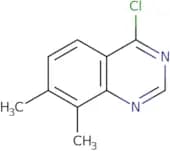
4-Chloro-7,8-dimethylquinazoline
CAS:Versatile small molecule scaffoldFormula:C10H9ClN2Purity:Min. 95%Molecular weight:192.64 g/mol2-Bromo-1-chloro-4-iodobenzene
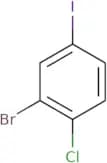
CAS:<p>Versatile small molecule scaffold</p>Formula:C6H3BrClIPurity:Min. 95%Molecular weight:317.35 g/mol1-Chloro-2,4-diiodobenzene
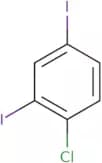
CAS:Versatile small molecule scaffoldFormula:C6H3ClI2Purity:Min. 95%Molecular weight:364.35 g/mol5-Chloro-3-methylcatechol
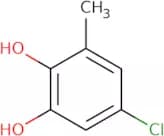
CAS:<p>5-Chloro-3-methylcatechol is a chemical that is produced as a byproduct during the chlorination of benzene. The conversion of 5-chloro-3,4-dihydroxybenzene to 5-chloro-3,4,5-trihydroxybenzene and 5,6-dichloroquinone is the first step in the production of this chemical. The second step involves the oxidation of 3,4,5-trihydroxybenzene to 3,4,5,-trihydroxyphenol by using oxygen or chlorine. This process produces 5-(chloromethyl)phenol as well as other products. The third step involves the decarboxylation of 5-(chloromethyl)phenol to produce methylcatechol. Methylcatechol can be dehydrogenated to catechol or oxidized to hydroquinone under different conditions.</p>Formula:C7H7ClO2Purity:Min. 95%Molecular weight:158.58 g/molO-Tritylhydroxylamine
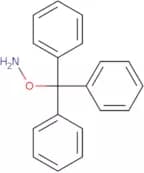
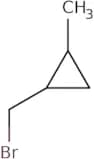
CAS:O-Tritylhydroxylamine is a synthetic compound that is used as a reagent in organic synthesis. It is a hydrogen-bond donor and nitrogen nucleophile with the ability to form stable complexes with magnesium salts. O-Tritylhydroxylamine has been shown to inhibit leukemia cells by acting as an inhibitor of matrix metalloproteinase (MMP) activity, which prevents cancer cell invasion and metastasis. This compound has also been used in clinical studies for the treatment of infectious diseases such as pneumonia, tuberculosis, and malaria. The scalable synthesis of this molecule has been achieved using palladium complexes.Formula:C19H17NOPurity:Min. 95%Molecular weight:275.35 g/mol1-(Bromomethyl)-2-methylcyclopropane, iastereomers
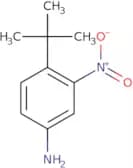
CAS:Versatile small molecule scaffoldFormula:C5H9BrPurity:Min. 95%Molecular weight:149.03 g/mol4-tert-Butyl-3-nitroaniline
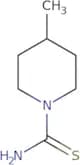
CAS:<p>Versatile small molecule scaffold</p>Formula:C10H14N2O2Purity:Min. 95%Molecular weight:194.23 g/mol4-Methylpiperidine-1-carbothioamide
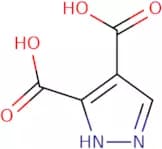
CAS:<p>Versatile small molecule scaffold</p>Formula:C7H14N2SPurity:Min. 95%Molecular weight:158.27 g/mol1H-Pyrazole-3,4-dicarboxylic acid
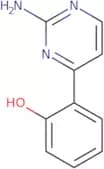
CAS:<p>1H-Pyrazole-3,4-dicarboxylic acid is an organic compound that is a white solid. It is a proton acceptor and stabilizer in ammonium formate. In the presence of amide and cyanoformate, it has been shown to inhibit neprilysin activity. 1H-Pyrazole-3,4-dicarboxylic acid also has membrane properties and can be used as a viscosity modifier for polyphosphoric acid. This compound also has some acid moieties that can modulate its solubility in organic solvents.</p>Formula:C5H4N2O4Purity:Min. 95%Molecular weight:156.1 g/mol2-(2-aminopyrimidin-4-yl)phenol
CAS:2-(2-Aminopyrimidin-4-yl)phenol is an inhibitor of enzymes that catalyze the synthesis of nucleic acids. It inhibits the activity of DNA polymerase, RNA polymerase and ribonucleotide reductase. 2-(2-Aminopyrimidin-4-yl)phenol inhibits cell growth by blocking the production of nucleic acids, which are necessary for cellular division. This compound has potent inhibitory activity against tumor cells and may be useful as an antitumor agent.Formula:C10H9N3OPurity:Min. 95%Molecular weight:187.19 g/molBicyclo[4.2.0]oct-2-en-7-one
CAS:<p>Versatile small molecule scaffold</p>Formula:C8H10OPurity:Min. 95%Molecular weight:122.16 g/mol2-Cyano-N-{[(3,4-dichlorophenyl)carbamothioyl]amino}acetamide
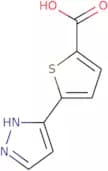
CAS:2-Cyano-N-[(3,4-dichlorophenyl)carbamothioyl]acetamide (CDPTA) is a biochemical that belongs to the class of antifungal drugs. It is an inhibitor of transcription activators, which are required for the production of proteins in fungal cells. CDPTA has been shown to have pleiotropic effects on bacteria and is effective against both human and animal pathogens. CDPTA also inhibits the synthesis of protein, which may be due to its ability to inhibit efflux pumps in Candida glabrata.Formula:C10H8Cl2N4OSPurity:Min. 95%Molecular weight:303.17 g/mol5-(1H-Pyrazol-3-yl)thiophene-2-carboxylic acid
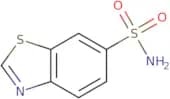
CAS:Versatile small molecule scaffoldFormula:C8H6N2O2SPurity:Min. 95%Molecular weight:194.21 g/mol1,3-Benzothiazole-6-sulfonamide
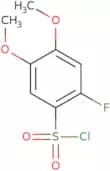
CAS:<p>Versatile small molecule scaffold</p>Formula:C7H6N2O2S2Purity:Min. 95%Molecular weight:214.3 g/mol2-Fluoro-4,5-dimethoxybenzene-1-sulfonyl chloride
CAS:Versatile small molecule scaffoldFormula:C8H8ClFO4SPurity:Min. 95%Molecular weight:254.66 g/mol3-Oxo-3,4-dihydro-2H-benzo[b][1,4]thiazine-6-carboxylic acid 1,1-dioxide
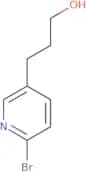
CAS:Versatile small molecule scaffoldFormula:C9H7NO5SPurity:Min. 95%Molecular weight:241.22 g/mol3-(6-Bromopyridin-3-yl)propan-1-ol
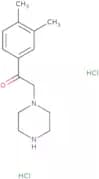
CAS:<p>Versatile small molecule scaffold</p>Formula:C8H10BrNOPurity:Min. 95%Molecular weight:216.08 g/mol1-(3,4-Dimethylphenyl)-2-(piperazin-1-yl)ethan-1-one dihydrochloride
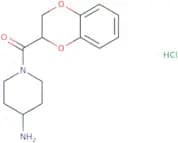
CAS:Controlled ProductVersatile small molecule scaffoldFormula:C14H22Cl2N2OPurity:Min. 95%Molecular weight:305.2 g/mol1-(2,3-Dihydro-1,4-benzodioxine-2-carbonyl)piperidin-4-amine hydrochloride
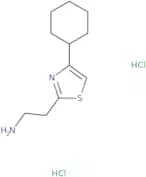
CAS:Versatile small molecule scaffoldFormula:C14H19ClN2O3Purity:Min. 95%Molecular weight:298.76 g/mol2-(4-Cyclohexyl-1,3-thiazol-2-yl)ethan-1-amine dihydrochloride
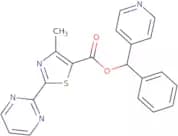
CAS:Versatile small molecule scaffoldFormula:C11H20Cl2N2SPurity:Min. 95%Molecular weight:283.3 g/molPhenyl(pyridin-4-yl)methyl 4-methyl-2-(pyrimidin-2-yl)-1,3-thiazole-5-carboxylate
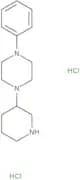
CAS:<p>Versatile small molecule scaffold</p>Formula:C21H16N4O2SPurity:Min. 95%Molecular weight:388.4 g/mol1-Phenyl-4-(piperidin-3-yl)piperazine dihydrochloride
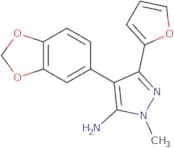
CAS:Versatile small molecule scaffoldFormula:C15H25Cl2N3Purity:Min. 95%Molecular weight:318.3 g/mol4-(1,3-Dioxaindan-5-yl)-5-(furan-2-yl)-2-methyl-2,3-dihydro-1H-pyrazol-3-imine
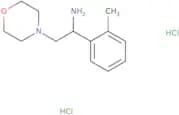
CAS:Versatile small molecule scaffoldFormula:C15H13N3O3Purity:Min. 95%Molecular weight:283.28 g/mol1-(2-Methylphenyl)-2-(morpholin-4-yl)ethan-1-amine dihydrochloride
CAS:Versatile small molecule scaffoldFormula:C13H22Cl2N2OPurity:Min. 95%Molecular weight:293.23 g/molPotassium 3-[4-(oxolane-2-carbonyl)piperazin-1-yl]propanoate
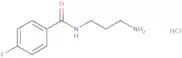
CAS:Versatile small molecule scaffoldFormula:C12H19KN2O4Purity:Min. 95%Molecular weight:294.39 g/molN-(3-Aminopropyl)-4-fluorobenzamide hydrochloride
CAS:Versatile small molecule scaffoldFormula:C10H14ClFN2OPurity:Min. 95%Molecular weight:232.68 g/mol1-{3-[(4-Methylphenyl)methoxy]phenyl}piperazine hydrochloride
CAS:Versatile small molecule scaffoldFormula:C18H23ClN2OPurity:Min. 95%Molecular weight:318.8 g/molN-[3-(2-Aminoethoxy)phenyl]-4-methoxybenzamide hydrochloride
CAS:Versatile small molecule scaffoldFormula:C16H19ClN2O3Purity:Min. 95%Molecular weight:322.78 g/mol4-[5-(5-Aminopentyl)-1,2,4-oxadiazol-3-yl]-2-methoxyphenol hydrochloride
CAS:Versatile small molecule scaffoldFormula:C14H20ClN3O3Purity:Min. 95%Molecular weight:313.78 g/mol1-{3-[(4-Chlorophenyl)methoxy]phenyl}piperazine hydrochloride
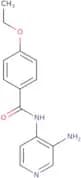
CAS:Versatile small molecule scaffoldFormula:C17H20Cl2N2OPurity:Min. 95%Molecular weight:339.3 g/molN-(3-Aminopyridin-4-yl)-4-ethoxybenzamide
CAS:Versatile small molecule scaffoldFormula:C14H15N3O2Purity:Min. 95%Molecular weight:257.29 g/mol[1-(2-Ethoxyethyl)cyclopentyl]methanamine
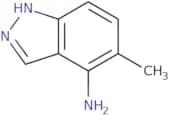
CAS:Versatile small molecule scaffoldFormula:C10H21NOPurity:Min. 95%Molecular weight:171.28 g/mol5-Methyl-1H-indazol-4-amine
CAS:<p>5-Methyl-1H-indazol-4-amine is a tyrosine kinase inhibitor that has been shown to be potent in inhibiting the activity of various types of tyrosine kinases. It has good oral pharmacokinetics and is not metabolized by the liver. 5-Methyl-1H-indazol-4-amine binds to the ATP site on the enzyme and prevents phosphorylation, which inhibits cell proliferation and growth. This agent also inhibits DNA synthesis, protein synthesis, and phosphoinositide turnover in cells. 5-Methyl-1H-indazol-4-amine is an orally active inhibitor of tyrosine kinases with good oral pharmacokinetics and does not require metabolic activation by the liver. This agent may be used for the treatment of cancer or other diseases associated with uncontrolled cell growth.</p>Formula:C8H9N3Purity:Min. 95%Molecular weight:147.18 g/mol2-[[4-(Boc-amino)methyl]phenoxy]acetic acid
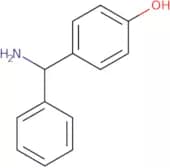
CAS:<p>Versatile small molecule scaffold</p>Formula:C14H19NO5Purity:Min. 95%Molecular weight:281.3 g/molalpha-(4-hydroxyphenyl)benzylamine
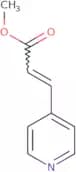
CAS:<p>Versatile small molecule scaffold</p>Formula:C13H13NOPurity:Min. 95%Molecular weight:199.25 g/mol(E)-Methyl 3-(pyridin-4-yl)acrylate
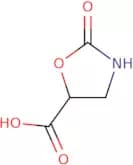
CAS:Versatile small molecule scaffoldFormula:C9H9NO2Purity:Min. 95%Molecular weight:163.17 g/mol(5S)-2-Oxo-1,3-oxazolidine-5-carboxylic acid
CAS:<p>Versatile small molecule scaffold</p>Formula:C4H5NO4Purity:Min. 95%Molecular weight:131.09 g/mol2-[(1-Phenylpropyl)amino]ethan-1-ol
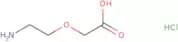
CAS:Versatile small molecule scaffoldFormula:C11H17NOPurity:Min. 95%Molecular weight:179.26 g/mol2-(2-Aminoethoxy)acetic acid hydrochloride
CAS:Versatile small molecule scaffoldFormula:C4H10ClNO3Purity:Min. 95%Molecular weight:155.58 g/mol4-[(4-Fluorophenyl)methoxy]piperidine
CAS:Versatile small molecule scaffoldFormula:C12H16FNOPurity:Min. 95%Molecular weight:209.26 g/mol4-[(2-Methylphenyl)methoxy]piperidine
CAS:Versatile small molecule scaffoldFormula:C13H19NOPurity:Min. 95%Molecular weight:205.3 g/mol4-[(2-Methoxyphenyl)methoxy]piperidine hydrochloride
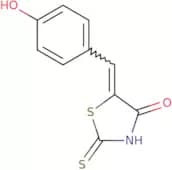
CAS:Versatile small molecule scaffoldFormula:C13H20ClNO2Purity:Min. 95%Molecular weight:257.75 g/mol(E)-5-(4-Hydroxybenzylidene)-2-mercaptothiazol-4(5H)-one
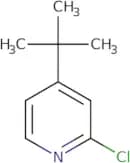
CAS:<p>Versatile small molecule scaffold</p>Formula:C10H7NO2S2Purity:Min. 95%Molecular weight:237.3 g/mol4-(tert-Butyl)-2-chloropyridine
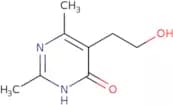
CAS:<p>4-(tert-Butyl)-2-chloropyridine is a ligand that has been used in the synthesis of a number of boronic acids and quinoline derivatives. It is also useful in cross-coupling reactions, which are nucleophilic substitution reactions involving two partners, such as an organometallic reagent and an organic halide or pseudohalide. The linker can be any group that connects the two partners together for these reactions. 4-(tert-Butyl)-2-chloropyridine is stable under acidic conditions, making it an excellent choice for coupling with amines to produce amides.</p>Formula:C9H12ClNPurity:Min. 95%Molecular weight:169.65 g/mol5-(2-Hydroxyethyl)-2,6-dimethylpyrimidin-4-ol
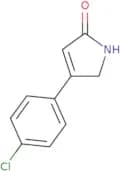
CAS:<p>Versatile small molecule scaffold</p>Formula:C8H12N2O2Purity:Min. 95%Molecular weight:168.19 g/mol4-(4-Chlorophenyl)-2,5-dihydro-1H-pyrrol-2-one
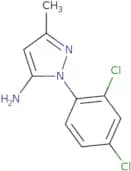
CAS:<p>Versatile small molecule scaffold</p>Formula:C10H8ClNOPurity:Min. 95%Molecular weight:193.63 g/mol1-(2,4-Dichlorophenyl)-3-methyl-1H-pyrazol-5-amine
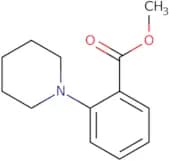
CAS:<p>Versatile small molecule scaffold</p>Formula:C10H9Cl2N3Purity:Min. 95%Molecular weight:242.1 g/molMethyl 2-(piperidin-1-yl)benzoate
CAS:<p>Versatile small molecule scaffold</p>Formula:C13H17NO2Purity:Min. 95%Molecular weight:219.28 g/mol8-Bromooct-1-yne
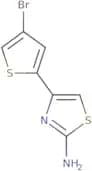
CAS:8-Bromooct-1-yne has a chiral carbon and is therefore optically active. It has a boiling point of about 44 degrees Celsius, and it is soluble in ether and chloroform but not in water. The compound is stable at temperatures up to 130 degrees Celsius, and it is soluble in benzene and acetone but not in acetone. 8-Bromooct-1-yne has an optical rotation of +10.5 degrees. The molecule can be monosubstituted with a hydrogen atom or halogen atom, which changes the optical properties of the molecule. 8-Bromooct-1-yne has dichroism when viewed under polarized light, which means that the molecule absorbs light differently when it is rotated by 90° compared to when it is rotated by 0°. The compound's fluorescence emission maxima are at 488 nm and 514 nm. 8-Bromooct-1-yne's conFormula:C8H13BrPurity:Min. 95%Molecular weight:189.09 g/mol4-(4-Bromothiophen-2-yl)-1,3-thiazol-2-amine
CAS:<p>Versatile small molecule scaffold</p>Formula:C7H5BrN2S2Purity:Min. 95%Molecular weight:261.2 g/mol

![Bicyclo[4.2.0]oct-2-en-7-one](/_next/image/?url=https%3A%2Fstatic.cymitquimica.com%2Fproducts%2F3D%2Fthumb-webp%2FGBA99668.webp&w=3840&q=75)
![2-Cyano-N-{[(3,4-dichlorophenyl)carbamothioyl]amino}acetamide](/_next/image/?url=https%3A%2Fstatic.cymitquimica.com%2Fproducts%2F3D%2Fthumb-webp%2FGBB22254.webp&w=3840&q=75)
![3-Oxo-3,4-dihydro-2H-benzo[b][1,4]thiazine-6-carboxylic acid 1,1-dioxide](/_next/image/?url=https%3A%2Fstatic.cymitquimica.com%2Fproducts%2F3D%2Fthumb-webp%2FGBB81953.webp&w=3840&q=75)
![Potassium 3-[4-(oxolane-2-carbonyl)piperazin-1-yl]propanoate](/_next/image/?url=https%3A%2Fstatic.cymitquimica.com%2Fproducts%2F3D%2Fthumb-webp%2FGBC15460.webp&w=3840&q=75)
![1-{3-[(4-Methylphenyl)methoxy]phenyl}piperazine hydrochloride](/_next/image/?url=https%3A%2Fstatic.cymitquimica.com%2Fproducts%2F3D%2Fthumb-webp%2FGBC18041.webp&w=3840&q=75)
![N-[3-(2-Aminoethoxy)phenyl]-4-methoxybenzamide hydrochloride](/_next/image/?url=https%3A%2Fstatic.cymitquimica.com%2Fproducts%2F3D%2Fthumb-webp%2FGBC18246.webp&w=3840&q=75)
![4-[5-(5-Aminopentyl)-1,2,4-oxadiazol-3-yl]-2-methoxyphenol hydrochloride](/_next/image/?url=https%3A%2Fstatic.cymitquimica.com%2Fproducts%2F3D%2Fthumb-webp%2FGBC19235.webp&w=3840&q=75)
![1-{3-[(4-Chlorophenyl)methoxy]phenyl}piperazine hydrochloride](/_next/image/?url=https%3A%2Fstatic.cymitquimica.com%2Fproducts%2F3D%2Fthumb-webp%2FGBC19355.webp&w=3840&q=75)
![[1-(2-Ethoxyethyl)cyclopentyl]methanamine](/_next/image/?url=https%3A%2Fstatic.cymitquimica.com%2Fproducts%2F3D%2Fthumb-webp%2FGBC22910.webp&w=3840&q=75)
![2-[[4-(Boc-amino)methyl]phenoxy]acetic acid](/_next/image/?url=https%3A%2Fstatic.cymitquimica.com%2Fproducts%2F3D%2Fthumb-webp%2FGDA12340.webp&w=3840&q=75)
![2-[(1-Phenylpropyl)amino]ethan-1-ol](/_next/image/?url=https%3A%2Fstatic.cymitquimica.com%2Fproducts%2F3D%2Fthumb-webp%2FGDA13369.webp&w=3840&q=75)
![4-[(4-Fluorophenyl)methoxy]piperidine](/_next/image/?url=https%3A%2Fstatic.cymitquimica.com%2Fproducts%2F3D%2Fthumb-webp%2FGDA15135.webp&w=3840&q=75)
![4-[(2-Methylphenyl)methoxy]piperidine](/_next/image/?url=https%3A%2Fstatic.cymitquimica.com%2Fproducts%2F3D%2Fthumb-webp%2FGDA15151.webp&w=3840&q=75)
![4-[(2-Methoxyphenyl)methoxy]piperidine hydrochloride](/_next/image/?url=https%3A%2Fstatic.cymitquimica.com%2Fproducts%2F3D%2Fthumb-webp%2FGDA15157.webp&w=3840&q=75)