Building Blocks
This section contains fundamental products for the synthesis of organic and biological compounds. Building blocks are the essential starting materials used to construct complex molecules through various chemical reactions. They play a critical role in drug discovery, material science, and chemical research. At CymitQuimica, we offer a diverse range of high-quality building blocks to support your innovative research and industrial projects, ensuring you have the essential components for successful synthesis.
Subcategories of "Building Blocks"
- Boronic Acids & Boronic Acid Derivatives(5,778 products)
- Chiral Building Blocks(1,243 products)
- Hydrocarbon Building Blocks(6,097 products)
- Organic Building Blocks(61,052 products)
Found 201390 products of "Building Blocks"
Sort by
Purity (%)
0
100
|
0
|
50
|
90
|
95
|
100
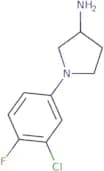
1-(3-Chloro-4-fluorophenyl)pyrrolidin-3-amine
CAS:Versatile small molecule scaffoldFormula:C10H12ClFN2Purity:Min. 95%Molecular weight:214.67 g/molN-[2-Bromo-4-(cyanosulfanyl)phenyl]-2-chloroacetamide
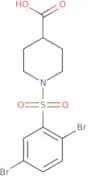
CAS:Versatile small molecule scaffoldFormula:C9H6BrClN2OSPurity:Min. 95%Molecular weight:305.58 g/mol1-(2,5-Dibromobenzenesulfonyl)piperidine-4-carboxylic acid
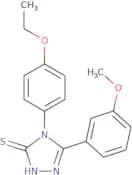
CAS:Versatile small molecule scaffoldFormula:C12H13Br2NO4SPurity:Min. 95%Molecular weight:427.11 g/mol4-(4-Ethoxyphenyl)-5-(3-methoxyphenyl)-4H-1,2,4-triazole-3-thiol
CAS:Versatile small molecule scaffoldFormula:C17H17N3O2SPurity:Min. 95%Molecular weight:327.4 g/mol2-{[4-(4-Chlorophenyl)-5-phenyl-4H-1,2,4-triazol-3-yl]sulfanyl}acetic acid
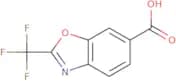
CAS:Controlled Product2-[(4-Chlorophenyl)-5-phenyl-4H-1,2,4-triazol-3-yl]sulfanylacetic acid is a ligand that binds to the peptide hormone receptors. It has been used as an inhibitor of angiotensin II and vasopressin in vitro. This product is for research use only and not for drug, diagnostic, or other therapeutic uses.Formula:C16H12ClN3O2SPurity:Min. 95%Molecular weight:345.8 g/mol2-(Trifluoromethyl)-1,3-benzoxazole-6-carboxylic acid
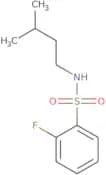
CAS:Versatile small molecule scaffoldFormula:C9H4F3NO3Purity:Min. 95%Molecular weight:231.13 g/mol2-Fluoro-N-(3-methylbutyl)benzene-1-sulfonamide
CAS:Versatile small molecule scaffoldFormula:C11H16FNO2SPurity:Min. 95%Molecular weight:245.32 g/mol1-[2-(Trifluoromethyl)benzenesulfonyl]piperidine-4-carboxylic acid
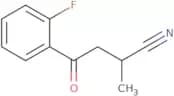
CAS:Versatile small molecule scaffoldFormula:C13H14F3NO4SPurity:Min. 95%Molecular weight:337.32 g/mol4-(2-Fluorophenyl)-2-methyl-4-oxobutanenitrile
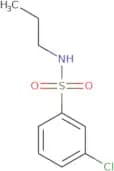
CAS:<p>Versatile small molecule scaffold</p>Formula:C11H10FNOPurity:Min. 95%Molecular weight:191.2 g/mol3-Chloro-N-propylbenzene-1-sulfonamide
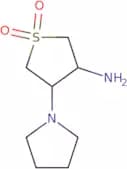
CAS:Versatile small molecule scaffoldFormula:C9H12ClNO2SPurity:Min. 95%Molecular weight:233.72 g/molTetrahydro-4-(1-pyrrolidinyl)-3-thiophenamine 1,1-dioxide
CAS:<p>Versatile small molecule scaffold</p>Formula:C8H16N2O2SPurity:Min. 95%Molecular weight:204.29 g/mol3-(1,3-Benzoxazol-5-yl)propanoic acid
CAS:<p>Versatile small molecule scaffold</p>Formula:C10H9NO3Purity:Min. 95%Molecular weight:191.2 g/mol2,8-diazaspiro[5.5]undecan-1-one hydrochloride
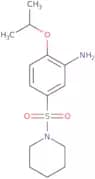
CAS:<p>Versatile small molecule scaffold</p>Formula:C9H17ClN2OPurity:Min. 95%Molecular weight:204.7 g/mol5-(Piperidine-1-sulfonyl)-2-(propan-2-yloxy)aniline
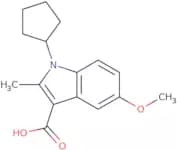
CAS:Versatile small molecule scaffoldFormula:C14H22N2O3SPurity:Min. 95%Molecular weight:298.4 g/mol1-Cyclopentyl-5-methoxy-2-methyl-1H-indole-3-carboxylic acid
CAS:Controlled ProductVersatile small molecule scaffoldFormula:C16H19NO3Purity:Min. 95%Molecular weight:273.33 g/mol3-[4-(5-Chloro-2-methylphenyl)piperazin-1-yl]-3-oxopropanenitrile
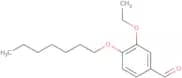
CAS:Versatile small molecule scaffoldFormula:C14H16ClN3OPurity:Min. 95%Molecular weight:277.75 g/mol3-Ethoxy-4-(heptyloxy)benzaldehyde
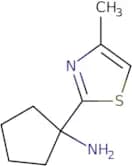
CAS:<p>Versatile small molecule scaffold</p>Formula:C16H24O3Purity:Min. 95%Molecular weight:264.36 g/mol1-(4-Methyl-1,3-thiazol-2-yl)cyclopentan-1-amine
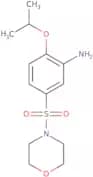
CAS:Versatile small molecule scaffoldFormula:C9H14N2SPurity:Min. 95%Molecular weight:182.29 g/mol5-(Morpholine-4-sulfonyl)-2-(propan-2-yloxy)aniline
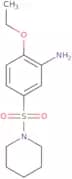
CAS:<p>Versatile small molecule scaffold</p>Formula:C13H20N2O4SPurity:Min. 95%Molecular weight:300.38 g/mol2-Ethoxy-5-(piperidine-1-sulfonyl)aniline
CAS:Versatile small molecule scaffoldFormula:C13H20N2O3SPurity:Min. 95%Molecular weight:284.38 g/molTCN 213
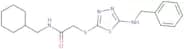
CAS:<p>TCN-213 is a novel agent that has been shown to inhibit glutamate release from neurons. TCN-213 reduces the amount of glutamate in the synaptic cleft, which may prevent excitotoxicity and subsequent cell death. TCN-213 has been shown to have potent anti-depressant effects in animal models, and it binds to the receptor of the a-type subunit of the N-methyl-D-aspartate (NMDA) class of glutamate receptors. This binding prevents the NMDA receptor from opening, thereby preventing membrane depolarization and neurotransmitter release. The binding affinity for this drug is surmountable, meaning that it can be overcome by high concentrations of glutamate or NMDA. TCN-213 also has a slow off rate, which means that it will stay bound for longer periods of time than other drugs.</p>Formula:C18H24N4OS2Purity:Min. 95%Molecular weight:376.54 g/mol2-Sulfanyl-3-[2-(trifluoromethyl)phenyl]-3,4-dihydroquinazolin-4-one
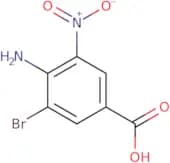
CAS:<p>Versatile small molecule scaffold</p>Formula:C15H9F3N2OSPurity:Min. 95%Molecular weight:322.31 g/mol4-Amino-3-bromo-5-nitrobenzoic acid
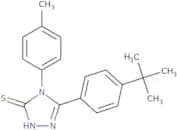
CAS:Versatile small molecule scaffoldFormula:C7H5BrN2O4Purity:Min. 95%Molecular weight:261.03 g/mol5-(4-tert-Butylphenyl)-4-(4-methylphenyl)-4H-1,2,4-triazole-3-thiol
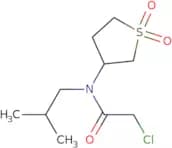
CAS:Versatile small molecule scaffoldFormula:C19H21N3SPurity:Min. 95%Molecular weight:323.5 g/mol2-Chloro-N-(1,1-dioxo-tetrahydro-1λ*6*-thiophen-3-yl)-N-isobutyl-acetamide
CAS:Versatile small molecule scaffoldFormula:C10H18ClNO3SPurity:Min. 95%Molecular weight:267.78 g/molN-[3-(4-Fluorobenzenesulfonamido)-4-methoxyphenyl]-4-phenylbenzamide
CAS:Versatile small molecule scaffoldFormula:C26H21FN2O4SPurity:Min. 95%Molecular weight:476.5 g/mol11-Pentyl-10-sulfanyl-7-thia-9,11-diazatricyclo[6.4.0.0,2,6]dodeca-1(8),2(6),9-trien-12-one
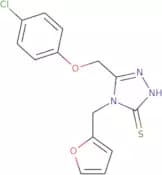
CAS:Versatile small molecule scaffoldFormula:C14H18N2OS2Purity:Min. 95%Molecular weight:294.4 g/mol5-(4-Chlorophenoxymethyl)-4-(furan-2-ylmethyl)-4H-1,2,4-triazole-3-thiol
CAS:Versatile small molecule scaffoldFormula:C14H12ClN3O2SPurity:Min. 95%Molecular weight:321.8 g/molN-[4-(4-Bromophenyl)-1,3-thiazol-2-yl]-2-chloro-N-(3,5-dimethylphenyl)acetamide
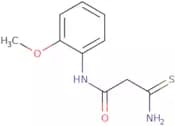
CAS:Versatile small molecule scaffoldFormula:C19H16BrClN2OSPurity:Min. 95%Molecular weight:435.8 g/mol2-Carbamothioyl-N-(2-methoxyphenyl)acetamide
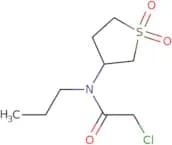
CAS:Versatile small molecule scaffoldFormula:C10H12N2O2SPurity:Min. 95%Molecular weight:224.28 g/molN-(1,1-Dioxothiolan-3-yl)-2-chloro-N-propylacetamide
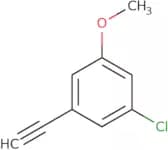
CAS:Versatile small molecule scaffoldFormula:C9H16ClNO3SPurity:Min. 95%Molecular weight:253.75 g/mol1-Chloro-3-ethynyl-5-methoxybenzene
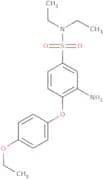
CAS:Versatile small molecule scaffoldFormula:C9H7ClOPurity:Min. 95%Molecular weight:166.6 g/mol3-Amino-4-(4-ethoxyphenoxy)-N,N-diethylbenzene-1-sulfonamide
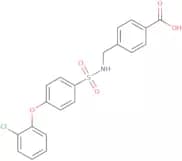
CAS:Versatile small molecule scaffoldFormula:C18H24N2O4SPurity:Min. 95%Molecular weight:364.5 g/mol4-(((4-(2-Chlorophenoxy)phenyl)sulfonamido)methyl)benzoic Acid
CAS:<p>Versatile small molecule scaffold</p>Formula:C20H16NO5SClPurity:Min. 95%Molecular weight:417.86 g/mol4-(([4-(3-Methylphenoxy)phenyl]sulfonyl)amino)benzoic acid
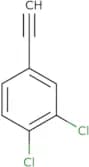
CAS:Versatile small molecule scaffoldFormula:C20H17NO5SPurity:Min. 95%Molecular weight:383.4 g/mol3,4-Dichlorophenylacetylene
CAS:<p>3,4-Dichlorophenylacetylene is a chemical compound that belongs to the group of isoxazoles. It has been shown to inhibit glycogen phosphorylase by binding to the enzyme's active site and blocking the conversion of glucose-1-phosphate into glucose-6-phosphate. This inhibition leads to a reduction in the production of glucose and glycogen in liver cells. 3,4-Dichlorophenylacetylene has also been shown to inhibit other enzymes such as human liver, cytochrome p450, and xanthine oxidase. Research on this chemical is ongoing for its use as a possible treatment for diabetes mellitus type II.</p>Formula:C8H4Cl2Purity:Min. 95%Molecular weight:171.02 g/mol1,2-Dichloro-3-ethynylbenzene
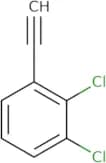
CAS:<p>Versatile small molecule scaffold</p>Formula:C8H4Cl2Purity:Min. 95%Molecular weight:171.02 g/mol2-(2,5-Dimethylphenyl)-6-fluoro-2,3-dihydro-1,2-benzothiazol-3-one
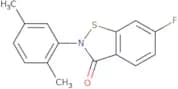
CAS:2-(2,5-Dimethylphenyl)-6-fluoro-2,3-dihydro-1,2-benzothiazol-3-one is an industrial and biochemical compound that has a wide range of applications. It is commonly used as an inhibitor in various assays and experiments. This compound has been found to have genotoxic properties, meaning it can cause damage to DNA. Additionally, it has been identified as a phytoalexin, a substance produced by plants as a defense mechanism against pathogens.Formula:C15H12FNOSPurity:Min. 95%Molecular weight:273.3 g/mol6-Iodopyrimidine-2,4-diamine
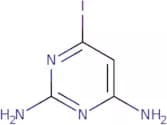
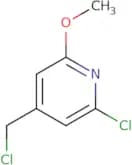
CAS:<p>6-Iodopyrimidine-2,4-diamine is an alkynyl compound that can be synthesized efficiently via a cross-coupling reaction. It has cytostatic activity and can be used in the treatment of cancer cells. 6-Iodopyrimidine-2,4-diamine inhibits the growth of cells by binding to DNA and preventing synthesis of proteins. This chemical also reacts with DNA to form covalent bonds, which prevents the replication of cells.</p>Formula:C4H5IN4Purity:Min. 95%Molecular weight:236.01 g/mol2-Chloro-4-(chloromethyl)-6-methoxypyridine
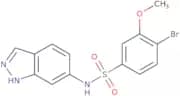
CAS:Versatile small molecule scaffoldFormula:C7H7NOCl2Purity:Min. 95%Molecular weight:192.05 g/mol4-Bromo-N-(2H-indazol-6-yl)-3-methoxybenzene-1-sulfonamide
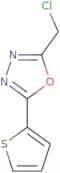
CAS:<p>Versatile small molecule scaffold</p>Formula:C14H12BrN3O3SPurity:Min. 95%Molecular weight:382.23 g/mol2-(Chloromethyl)-5-thien-2-yl-1,3,4-oxadiazole
CAS:<p>Versatile small molecule scaffold</p>Formula:C7H5ClN2OSPurity:Min. 95%Molecular weight:200.65 g/mol2-[2-(2-Chlorophenoxy)ethyl]-2,3-dihydro-1H-isoindole-1,3-dione
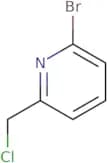
CAS:<p>Versatile small molecule scaffold</p>Formula:C16H12ClNO3Purity:Min. 95%Molecular weight:301.72 g/mol2-Bromo-6-(chloromethyl)pyridine
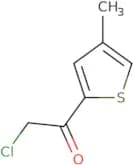
CAS:<p>2-Bromo-6-(chloromethyl)pyridine is a ligand that binds to transition metal ions. It has been shown to have a high affinity for thionyl, which is an endogenous substrate. The ligand has also been used in the immobilization of biomolecules, such as proteins and DNA. The ligand has been synthesized by reacting cyanuric chloride with 2-bromopyridine. This method is different from the traditional synthetic pathway, which typically involves reacting chloroform with methyl bromide in the presence of a base or acid. The synthesis of this ligand can be done using two methods: (1) reaction of histidine with hydroxylamine hydrochloride and methyl bromide; or (2) reaction of methylamine with ethyl chlorocarbonate and 1,4-diazabicyclo[2.2.2]octane.</p>Formula:C6H5BrClNPurity:Min. 95%Molecular weight:206.47 g/mol2-Chloro-1-(4-methyl-2-thienyl)-ethanone
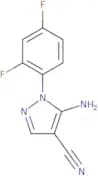
CAS:Versatile small molecule scaffoldFormula:C7H7ClOSPurity:Min. 95%Molecular weight:174.65 g/mol5-Amino-1-(2,4-difluorophenyl)-1H-pyrazole-4-carbonitrile
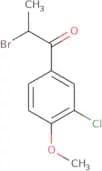
CAS:Versatile small molecule scaffoldFormula:C10H6N4F2Purity:Min. 95%Molecular weight:220.18 g/mol2-Bromo-1-(3-chloro-4-methoxyphenyl)propan-1-one
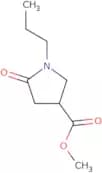
CAS:Versatile small molecule scaffoldFormula:C10H10BrClO2Purity:Min. 95%Molecular weight:277.54 g/molMethyl 5-oxo-1-propylpyrrolidine-3-carboxylate
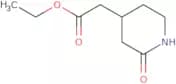
CAS:Versatile small molecule scaffoldFormula:C9H15NO3Purity:Min. 95%Molecular weight:185.22 g/molEthyl 2-(2-oxopiperidin-4-yl)acetate
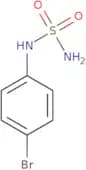
CAS:<p>Versatile small molecule scaffold</p>Formula:C9H15NO3Purity:Min. 95%Molecular weight:185.22 g/molN-(4-Bromophenyl)aminosulfonamide
CAS:<p>Versatile small molecule scaffold</p>Formula:C6H7BrN2O2SPurity:Min. 95%Molecular weight:251.1 g/mol

![N-[2-Bromo-4-(cyanosulfanyl)phenyl]-2-chloroacetamide](/_next/image/?url=https%3A%2Fstatic.cymitquimica.com%2Fproducts%2F3D%2Fthumb-webp%2FCEB71813.webp&w=3840&q=75)
![2-{[4-(4-Chlorophenyl)-5-phenyl-4H-1,2,4-triazol-3-yl]sulfanyl}acetic acid](/_next/image/?url=https%3A%2Fstatic.cymitquimica.com%2Fproducts%2F3D%2Fthumb-webp%2FCEB71772.webp&w=3840&q=75)
![1-[2-(Trifluoromethyl)benzenesulfonyl]piperidine-4-carboxylic acid](/_next/image/?url=https%3A%2Fstatic.cymitquimica.com%2Fproducts%2F3D%2Fthumb-webp%2FCEB71769.webp&w=3840&q=75)
![2,8-diazaspiro[5.5]undecan-1-one hydrochloride](/_next/image/?url=https%3A%2Fstatic.cymitquimica.com%2Fproducts%2F3D%2Fthumb-webp%2FGXB26543.webp&w=3840&q=75)
![3-[4-(5-Chloro-2-methylphenyl)piperazin-1-yl]-3-oxopropanenitrile](/_next/image/?url=https%3A%2Fstatic.cymitquimica.com%2Fproducts%2F3D%2Fthumb-webp%2FCEB70477.webp&w=3840&q=75)
![2-Sulfanyl-3-[2-(trifluoromethyl)phenyl]-3,4-dihydroquinazolin-4-one](/_next/image/?url=https%3A%2Fstatic.cymitquimica.com%2Fproducts%2F3D%2Fthumb-webp%2FCEB70463.webp&w=3840&q=75)
![N-[3-(4-Fluorobenzenesulfonamido)-4-methoxyphenyl]-4-phenylbenzamide](/_next/image/?url=https%3A%2Fstatic.cymitquimica.com%2Fproducts%2F3D%2Fthumb-webp%2FCEB69984.webp&w=3840&q=75)
![11-Pentyl-10-sulfanyl-7-thia-9,11-diazatricyclo[6.4.0.0,2,6]dodeca-1(8),2(6),9-trien-12-one](/_next/image/?url=https%3A%2Fstatic.cymitquimica.com%2Fproducts%2F3D%2Fthumb-webp%2FCEB69613.webp&w=3840&q=75)
![N-[4-(4-Bromophenyl)-1,3-thiazol-2-yl]-2-chloro-N-(3,5-dimethylphenyl)acetamide](/_next/image/?url=https%3A%2Fstatic.cymitquimica.com%2Fproducts%2F3D%2Fthumb-webp%2FCEB69608.webp&w=3840&q=75)
![4-(([4-(3-Methylphenoxy)phenyl]sulfonyl)amino)benzoic acid](/_next/image/?url=https%3A%2Fstatic.cymitquimica.com%2Fproducts%2F3D%2Fthumb-webp%2FCEB68953.webp&w=3840&q=75)
![2-[2-(2-Chlorophenoxy)ethyl]-2,3-dihydro-1H-isoindole-1,3-dione](/_next/image/?url=https%3A%2Fstatic.cymitquimica.com%2Fproducts%2F3D%2Fthumb-webp%2FCEB36876.webp&w=3840&q=75)