Building Blocks
Subcategories of "Building Blocks"
- Boronic Acids & Boronic Acid Derivatives(5,774 products)
- Chiral Building Blocks(1,237 products)
- Hydrocarbon Building Blocks(6,098 products)
- Organic Building Blocks(60,980 products)
Found 205158 products of "Building Blocks"
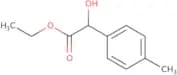
Ethyl 2-hydroxy-2-(4-methylphenyl)acetate
CAS:Versatile small molecule scaffoldFormula:C11H14O3Purity:Min. 95%Molecular weight:194.23 g/mol2-(2-Hydroxyethyl)phthalazin-1-one
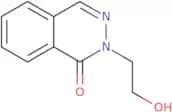
CAS:2-(2-Hydroxyethyl)phthalazin-1-one is a molecule that stabilizes benzene rings in the crystal by forming hydrogen bonds with the hydroxyl groups. The interplanar and intermolecular interactions between molecules are weak, but the coplanar and dihedral interactions are strong. This stabilizing effect leads to an increase in the melting point and boiling point of benzene. 2-(2-Hydroxyethyl)phthalazin-1-one has been shown to have a crystalline structure with a space group of P21/c.Formula:C10H10N2O2Purity:Min. 95%Molecular weight:190.2 g/mol5-Phenylpyrimidine-2,4-diamine
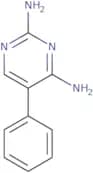
CAS:5-Phenylpyrimidine-2,4-diamine is an antiparasitic agent that belongs to the group of derivs. It has been shown to inhibit coccidian growth in vitro and has antiparasitic activity against bacteria and protozoa. 5-Phenylpyrimidine-2,4-diamine binds to the enzyme acetyl coenzyme A synthetase in the parasite's mitochondria and prevents the synthesis of ATP. This leads to cell death.Formula:C10H10N4Purity:Min. 95%Molecular weight:186.21 g/mol2-(Thiophen-2-yl)quinazoline-4-thiol
CAS:Versatile small molecule scaffold
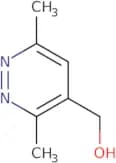
Formula:C12H8N2S2Purity:Min. 95%Molecular weight:244.3 g/mol(3,6-Dimethylpyridazin-4-yl)methanol
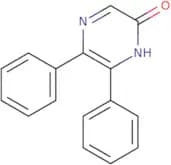
CAS:Versatile small molecule scaffoldFormula:C7H10N2OPurity:Min. 95%Molecular weight:138.17 g/mol5,6-Diphenylpyrazinol
CAS:5,6-Diphenylpyrazinol is a nitrated derivative of pyrazine. It is synthesized by nitrating 5,6-diphenylpyrazine with a mixture of sulfuric and nitric acid. The product is isolated by fractional distillation.Formula:C16H12N2OPurity:Min. 95%Molecular weight:248.28 g/mol2,5,6-Trimethyl-3H,4H-thieno[2,3-d]pyrimidin-4-one
CAS:Versatile small molecule scaffold
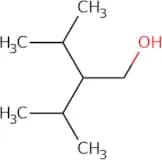
Formula:C9H10N2OSPurity:Min. 95%Molecular weight:194.26 g/mol3-Methyl-2-(propan-2-yl)butan-1-ol
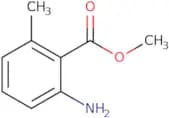
CAS:Versatile small molecule scaffoldFormula:C8H18OPurity:Min. 95%Molecular weight:130.23 g/molMethyl 2-amino-6-methylbenzoate
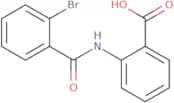
CAS:Methyl 2-amino-6-methylbenzoate (MMAB) is a prophylactic agent that inhibits the growth of tumor cells. It is used for prophylactic treatment of patients with a syndrome in which there is an increased risk of tumor formation. MMAB inhibits the production of DNA and RNA, which are needed for cell division. The drug also inhibits the activity of ribonucleotide reductase and deoxyribonucleotide reductase, which are enzymes involved in DNA synthesis. MMAB has been shown to inhibit the growth of tumor cells and may be useful in preventing tumors from forming.Formula:C9H11NO2Purity:Min. 95%Molecular weight:165.19 g/mol2-(2-Bromobenzamido)benzoic acid
CAS:Versatile small molecule scaffoldFormula:C14H10BrNO3Purity:Min. 95%Molecular weight:320.14 g/molAcetic acid, 2-[(2-chlorophenyl)thio]-
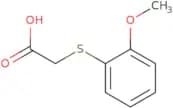
CAS:Versatile small molecule scaffoldFormula:C8H7O2SClPurity:Min. 95%Molecular weight:202.66 g/mol(2-Methoxy-phenylsulfanyl)-acetic acid
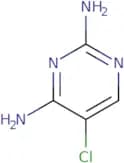
CAS:Versatile small molecule scaffoldFormula:C9H10O3SPurity:Min. 95%Molecular weight:198.24 g/mol5-Chloropyrimidine-2,4-diamine
CAS:5-Chloropyrimidine-2,4-diamine is a chemical compound that has been shown to inhibit the growth of cancer cells in vitro. The compound is an anti-cancer agent that can be used to treat lung cancer. It has been shown to have a cytotoxic effect on human lung cancer cells and to inhibit the proliferation of these cells in vitro. It also inhibits the growth of other types of human cancer cells, including those from breast, colon and prostate cancers. This substance has been shown to bind with high affinity to DNA and RNA and modulate their synthesis. 5-Chloropyrimidine-2,4-diamine also inhibits cell division by binding to the enzyme topoisomerase II, which controls the unwinding of DNA strands during replication.Formula:C4H5ClN4Purity:Min. 95%Molecular weight:144.56 g/mol2-[(2-Methylphenyl)sulfanyl]-2-phenylacetic acid
CAS:Versatile small molecule scaffoldFormula:C15H14O2SPurity:Min. 95%Molecular weight:258.3 g/mol2-[(2,4-Dimethylphenyl)sulfanyl]-2-phenylacetic acid
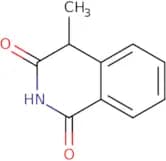
CAS:Versatile small molecule scaffoldFormula:C16H16O2SPurity:Min. 95%Molecular weight:272.4 g/mol4-Methyl-4H-isoquinoline-1,3-dione
CAS:Versatile small molecule scaffoldFormula:C10H9NO2Purity:Min. 95%Molecular weight:175.18 g/mol3-(Morpholin-4-yl)-1,2-dihydroisoquinolin-1-one
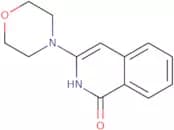
CAS:Versatile small molecule scaffoldFormula:C13H14N2O2Purity:Min. 95%Molecular weight:230.26 g/mol2-Tridecyloxirane
CAS:2-Tridecyloxirane is a diagnostic agent that is used to identify hydroxy groups in collagen. It reacts with the hydroxyl group on collagen, forming an acyl chloride intermediate. This intermediate can be detected using a gas chromatography technique. The biodegradability of 2-tridecyloxirane has been studied and found to be dependent on the environment in which it is released. It was found to have a half-life of around 4 days in water, but up to 8 months in soil. The viscosity of 2-tridecyloxirane has been shown to decrease as the temperature increases, with the highest rate of change at temperatures above 150°C. This chemical has also been shown to react with primary amines and alicyclic compounds, such as ebola virus.
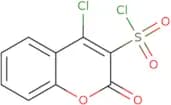
Formula:C15H30OPurity:Min. 95%Molecular weight:226.4 g/mol4-Chloro-2-oxo-2H-chromene-3-sulfonyl chloride
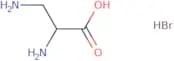
CAS:4-Chloro-2-oxo-2H-chromene-3-sulfonyl chloride is a heterocyclic compound with significant biological activity. It is a salmonicida that kills bacteria by inhibiting the enzyme adenosine triphosphate (ATP). 4-Chloro-2-oxo-2H-chromene-3-sulfonyl chloride has been shown to have significant activity against Staphylococcus aureus, Streptococcus pneumoniae, and Streptococcus pyogenes. This drug also inhibits the growth of Pseudomonas aeruginosa and Escherichia coli.Formula:C9H4Cl2O4SPurity:Min. 95%Molecular weight:279.1 g/mol2,3-Diaminopropionic acid monohydrobromide
CAS:2,3-Diaminopropionic acid monohydrobromide is a dibenzoylated derivative of 2,3-diaminopropionic acid. It has been shown to be an antibacterial agent. The compound inhibits bacterial growth by binding to the ribosomal protein L5 and blocking the synthesis of proteins necessary for cell division. 2,3-Diaminopropionic acid monohydrobromide has also been found to have neuropathic effects in animals. This compound can be extracted from plants such as lathyrus and eluted with ethanol or hydrobromide.Formula:C3H8N2O2·HBrPurity:Min. 95%Molecular weight:185.02 g/mol1H,2H,3H,4H-Pyrazino[1,2-a]indole hydrochloride
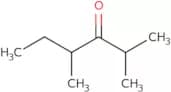
CAS:Versatile small molecule scaffoldFormula:C11H13ClN2Purity:Min. 95%Molecular weight:208.69 g/mol2,4-Dimethyl-3-hexanone
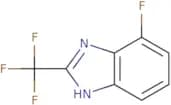
CAS:Versatile small molecule scaffoldFormula:C8H16OPurity:Min. 95%Molecular weight:128.21 g/mol4-Fluoro-2-(trifluoromethyl)-1H-1,3-benzodiazole
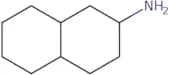
CAS:Versatile small molecule scaffoldFormula:C8H4F4N2Purity:Min. 95%Molecular weight:204.12 g/molDecahydronaphthalen-2-amine
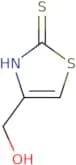
CAS:Versatile small molecule scaffoldFormula:C10H19NPurity:Min. 95%Molecular weight:153.26 g/mol(2-Sulfanyl-1,3-thiazol-4-yl)methanol
CAS:Versatile small molecule scaffoldFormula:C4H5NOS2Purity:Min. 95%Molecular weight:147.2 g/mol[3-(3-chlorophenyl)propyl]amine
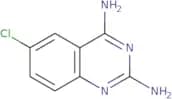
CAS:Versatile small molecule scaffoldFormula:C9H12ClNPurity:Min. 95%Molecular weight:169.65 g/mol6-Chloroquinazoline-2,4-diamine
CAS:Versatile small molecule scaffoldFormula:C8H7ClN4Purity:Min. 95%Molecular weight:194.62 g/mol2-Methylthieno[3,2-d]pyrimidin-4-ol
CAS:Versatile small molecule scaffold
Formula:C7H6N2OSPurity:Min. 95%Molecular weight:166.2 g/mol10-Methyl-7-thia-9,11-diazatricyclo[6.4.0.0,2,6]dodeca-1(8),2(6),9-trien-12-one
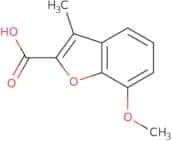
CAS:Versatile small molecule scaffoldFormula:C10H10N2OSPurity:Min. 95%Molecular weight:206.3 g/mol7-Methoxy-3-methyl-1-benzofuran-2-carboxylic acid
CAS:Versatile small molecule scaffold
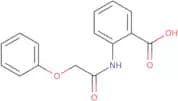
Formula:C11H10O4Purity:Min. 95%Molecular weight:206.19 g/mol2-(2-Phenoxyacetamido)benzoic acid
CAS:Versatile small molecule scaffoldFormula:C15H13NO4Purity:Min. 95%Molecular weight:271.27 g/mol6,7-dichloro-2,3-dihydro-1H-indole-2,3-dione
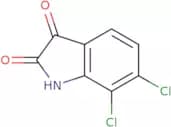
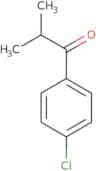
CAS:6,7-Dichloro-2,3-dihydro-1H-indole-2,3-dione is a drug that is used to treat high blood pressure. It is a potent inhibitor of the enzyme phosphodiesterase (PDE), which breaks down cyclic adenosine monophosphate (cAMP). 6,7-Dichloro-2,3-dihydro-1H-indole-2,3-dione inhibits PDE and increases the concentration of cAMP in cells. This increase in cAMP leads to an increased effect of the neurotransmitter acetylcholine on the heart and blood vessels. 6,7-Dichloro-2,3-dihydro-1H-indole--2,3--dione also increases calcium binding to membrane receptors and increases membrane hyperpolarization. These changes lead to an increase in nω--nitro--Formula:C8H3Cl2NO2Purity:Min. 95%Molecular weight:216.02 g/mol1-(4-Chlorophenyl)-2-methylpropan-1-one
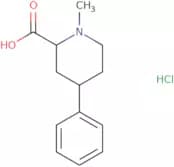
CAS:1-(4-Chlorophenyl)-2-methylpropan-1-one is a phenyl ester that is used as an intermediate in the synthesis of other compounds. 1-(4-Chlorophenyl)-2-methylpropan-1-one can be synthesized by reacting potassium t-butoxide with diethyl succinate, followed by reaction with isopropyl alcohol. This process will result in the production of 1-(4-chlorophenyl)-2-methylpropan-1-one and potassium t-butoxide. The compound can also be synthesized by condensing naphthalene, diethyl ether, and isopropanol. This process will produce the same product but with a different reactant order.Formula:C10H11OClPurity:Min. 95%Molecular weight:182.64 g/mol1-Methyl-4-phenylpiperidine-2-carboxylic acid hydrochloride
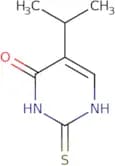
CAS:Versatile small molecule scaffoldFormula:C13H18ClNO2Purity:Min. 95%Molecular weight:255.74 g/mol5-(Propan-2-yl)-2-sulfanyl-3,4-dihydropyrimidin-4-one
CAS:5-(Propan-2-yl)-2-sulfanyl-3,4-dihydropyrimidin-4-one is a synthetic compound that blocks the activity of viral reverse transcriptase and DNA polymerase. It is also an inhibitor of human immunodeficiency virus (HIV) and has been shown to be effective in mice with AIDS. This drug also has radical scavenging activities and can be used as a possible anti-inflammatory agent for the treatment of rheumatoid arthritis. 5-(Propan-2-yl)-2-sulfanyl-3,4-dihydropyrimidin-4-one belongs to the class of pyrimidine nucleosides and has been shown to inhibit nonnucleoside reverse transcriptase inhibitors, such as indole alkaloids. This drug has a molecular weight of 319.06 g/mol and contains an ethyl formate, isopropyl group, hydroxyl
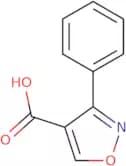
Formula:C7H10N2OSPurity:Min. 95%Molecular weight:170.23 g/mol3-Phenylisoxazole-4-carboxylic acid
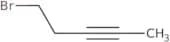
CAS:3-Phenylisoxazole-4-carboxylic acid is a small molecule that has been shown to have high affinity for the metabotropic glutamate receptor subtype mGluR7. It also binds to the allosteric site on this receptor and is therefore a potent agonist. 3-Phenylisoxazole-4-carboxylic acid has been shown to be orally bioavailable and selective for mGluR7 in vivo. This molecule can be modified chemically to increase its physicochemical properties, such as solubility, permeability, and lipophilicity, which will allow it to cross the blood brain barrier more easily. 3-Phenylisoxazole-4-carboxylic acid may be used as a lead compound for the development of new drugs that target metabotropic glutamate receptors.Formula:C10H7NO3Purity:Min. 95%Molecular weight:189.16 g/mol5-Bromopent-2-yne
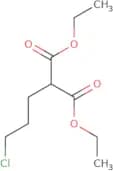
CAS:Versatile small molecule scaffoldFormula:C5H7BrPurity:Min. 95%Molecular weight:147.01 g/mol1,3-diethyl 2-(3-chloropropyl)propanedioate
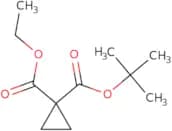
CAS:1,3-Diethyl 2-(3-chloropropyl)propanedioate is an organic compound that can be extracted from the seeds of a tree in the genus Garcinia (family Clusiaceae). It has been isolated from the leaves of plants in the family Fabaceae. The compound is a colorless liquid with a slightly fruity odor and a boiling point of 203°C. The chemical structure of 1,3-diethyl 2-(3-chloropropyl)propanedioate can be explained as two diethyl 3-chloropropanedioates linked by an ether bond. The molecule contains one alkoxycarbonyl group and one hydroxy group. The alkoxycarbonyl group is responsible for its basic properties and the hydroxy group allows it to form ester derivatives. The compound can be purified by using a variety of methods, including thermal treatment or acidification. Unpurified 1,3Formula:C10H17ClO4Purity:Min. 95%Molecular weight:236.69 g/mol1-tert-Butyl 1-ethyl cyclopropane-1,1-dicarboxylate
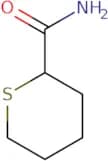
CAS:Versatile small molecule scaffoldFormula:C11H18O4Purity:Min. 95%Molecular weight:214.26 g/molThiane-2-carboxamide
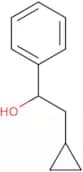
CAS:Versatile small molecule scaffoldFormula:C6H11NOSPurity:Min. 95%Molecular weight:145.23 g/mol2-Cyclopropyl-1-phenylethan-1-ol
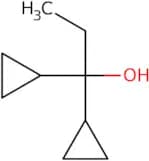
CAS:Versatile small molecule scaffoldFormula:C11H14OPurity:Min. 95%Molecular weight:162.23 g/mol1,1-Dicyclopropylpropan-1-ol
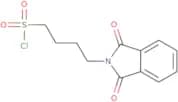
CAS:Versatile small molecule scaffoldFormula:C9H16OPurity:Min. 95%Molecular weight:140.22 g/mol4-(1,3-Dioxo-2,3-dihydro-1H-isoindol-2-yl)butane-1-sulfonyl chloride
CAS:Versatile small molecule scaffold
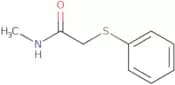
Formula:C12H12ClNO4SPurity:Min. 95%Molecular weight:301.75 g/molN-Methyl-2-(phenylsulfanyl)acetamide
CAS:Versatile small molecule scaffold
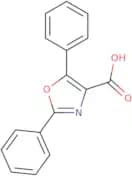
Formula:C9H11NOSPurity:Min. 95%Molecular weight:181.26 g/molDiphenyl-1,3-oxazole-4-carboxylic acid
CAS:Versatile small molecule scaffold
Formula:C16H11NO3Purity:Min. 95%Molecular weight:265.26 g/mol4-[(4-Methoxyphenyl)sulfamoyl]benzoic acid
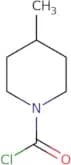
CAS:Versatile small molecule scaffoldFormula:C14H13NO5SPurity:Min. 95%Molecular weight:307.32 g/mol4-Methylpiperidine-1-carbonyl chloride
CAS:Versatile small molecule scaffoldFormula:C7H12ClNOPurity:Min. 95%Molecular weight:161.63 g/mol2-[(4-Bromophenyl)sulfanyl]propanoic acid
CAS:2-[(4-Bromophenyl)sulfanyl]propanoic acid is a small molecule that belongs to the group of peptides. It can be used as a research tool for cell biology and cell-based assays. The receptor activator of nuclear factor kappa B (NF-κB) kinase (RANK), which is encoded by the RANKL gene, plays an important role in bone resorption. 2-[(4-Bromophenyl)sulfanyl]propanoic acid enhances bone resorption by binding to the RANK receptor and activating NF-κB pathway. This ligand has also been shown to inhibit ion channels, such as potassium channels, sodium channels, calcium channels, and chloride channels.Formula:C9H9BrO2SPurity:Min. 95%Molecular weight:261.14 g/mol2-{Thieno[2,3-d]pyrimidin-4-ylsulfanyl}acetic acid
CAS:Versatile small molecule scaffold
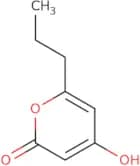
Formula:C8H6N2O2S2Purity:Min. 95%Molecular weight:226.3 g/mol4-Hydroxy-6-propyl-pyran-2-one
CAS:Versatile small molecule scaffoldFormula:C8H10O3Purity:Min. 95%Molecular weight:154.16 g/mol

![2,5,6-Trimethyl-3H,4H-thieno[2,3-d]pyrimidin-4-one](/_next/image/?url=https%3A%2Fstatic.cymitquimica.com%2Fproducts%2F3D%2Fthumb-webp%2FTAA59345.webp&w=3840&q=75)
![Acetic acid, 2-[(2-chlorophenyl)thio]-](/_next/image/?url=https%3A%2Fstatic.cymitquimica.com%2Fproducts%2F3D%2Fthumb-webp%2FTAA61918.webp&w=3840&q=75)
![2-[(2-Methylphenyl)sulfanyl]-2-phenylacetic acid](/_next/image/?url=https%3A%2Fstatic.cymitquimica.com%2Fproducts%2F3D%2Fthumb-webp%2FTAA62645.webp&w=3840&q=75)
![2-[(2,4-Dimethylphenyl)sulfanyl]-2-phenylacetic acid](/_next/image/?url=https%3A%2Fstatic.cymitquimica.com%2Fproducts%2F3D%2Fthumb-webp%2FTAA62651.webp&w=3840&q=75)

![1H,2H,3H,4H-Pyrazino[1,2-a]indole hydrochloride](/_next/image/?url=https%3A%2Fstatic.cymitquimica.com%2Fproducts%2F3D%2Fthumb-webp%2FTAA63752.webp&w=3840&q=75)
![[3-(3-chlorophenyl)propyl]amine](/_next/image/?url=https%3A%2Fstatic.cymitquimica.com%2Fproducts%2F3D%2Fthumb-webp%2FTAA65549.webp&w=3840&q=75)
![2-Methylthieno[3,2-d]pyrimidin-4-ol](/_next/image/?url=https%3A%2Fstatic.cymitquimica.com%2Fproducts%2F3D%2Fthumb-webp%2FTAA67813.webp&w=3840&q=75)
![10-Methyl-7-thia-9,11-diazatricyclo[6.4.0.0,2,6]dodeca-1(8),2(6),9-trien-12-one](/_next/image/?url=https%3A%2Fstatic.cymitquimica.com%2Fproducts%2F3D%2Fthumb-webp%2FTAA67829.webp&w=3840&q=75)
![4-[(4-Methoxyphenyl)sulfamoyl]benzoic acid](/_next/image/?url=https%3A%2Fstatic.cymitquimica.com%2Fproducts%2F3D%2Fthumb-webp%2FTAA73858.webp&w=3840&q=75)
![2-[(4-Bromophenyl)sulfanyl]propanoic acid](/_next/image/?url=https%3A%2Fstatic.cymitquimica.com%2Fproducts%2F3D%2Fthumb-webp%2FTAA73977.webp&w=3840&q=75)
![2-{Thieno[2,3-d]pyrimidin-4-ylsulfanyl}acetic acid](/_next/image/?url=https%3A%2Fstatic.cymitquimica.com%2Fproducts%2F3D%2Fthumb-webp%2FTAA74026.webp&w=3840&q=75)