Building Blocks
Subcategories of "Building Blocks"
- Boronic Acids & Boronic Acid Derivatives(5,781 products)
- Chiral Building Blocks(1,242 products)
- Hydrocarbon Building Blocks(6,101 products)
- Organic Building Blocks(61,033 products)
Found 205320 products of "Building Blocks"
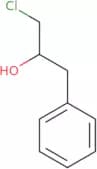
1-Chloro-3-phenylpropan-2-ol
CAS:1-Chloro-3-phenylpropan-2-ol is an alcohol that is detectable and has been shown to have a stereoselective dehydrogenase activity. The kinetic parameters of this enzyme are optimal for the detection of 1-chloro-3-phenylpropan-2-ol in complex mixtures. It has been used in pharmaceuticals as a chiral building block, where it forms a ternary complex with a chiral metal ion and an amino acid. This enzyme is also able to catalyze the conversion of phenylacetone into amphetamine.
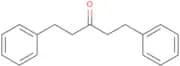
Formula:C9H11ClOPurity:Min. 95%Molecular weight:170.63 g/mol1,5-Diphenylpentan-3-one
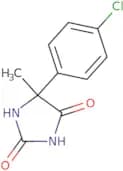
CAS:1,5-Diphenylpentan-3-one is a hydroxylated analog of the anti-inflammatory compound 1,5-diphenylpentan-2-one. It can be used as a reactive intermediate in the synthesis of ester compounds, hydrogen bond inhibitors, and insulin resistance inhibitors. This compound also has the ability to inhibit HDAC activity and radiation.Formula:C17H18OPurity:Min. 95%Molecular weight:238.32 g/mol5-(4-Chlorophenyl)-5-methylimidazolidine-2,4-dione
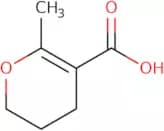
CAS:Versatile small molecule scaffoldFormula:C10H9ClN2O2Purity:Min. 95%Molecular weight:224.64 g/mol6-Methyl-3,4-dihydro-2H-pyran-5-carboxylic acid
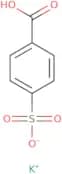
CAS:6-Methyl-3,4-dihydro-2H-pyran-5-carboxylic acid is an organic compound that is used as a solvent. It is preferentially soluble in solvents with low boiling points and high dielectric constants. The solvation of 6-methylpyran-5-carboxylic acid can be accomplished by photooxygenation or hydroperoxide formation.Formula:C7H10O3Purity:Min. 95%Molecular weight:142.15 g/mol4-Sulfobenzoic acid potassium
CAS:4-Sulfobenzoic acid potassium salt is a quasicrystalline compound with a flow rate of 0.1 cm/s. It is a molecule with an approximate diameter of 2 nm and functional groups that include sulfonic acid, carboxylic acid, hydroxyl, and OH. 4-Sulfobenzoic acid potassium salt has a high solubility in water and can be found in the form of potassium ions or as a covalent bond to other molecules. The analytical methods for this compound include IR (infrared) spectroscopy, Raman spectroscopy, X-ray diffraction analysis, and electron microscopy. A synthetic method for 4-sulfobenzoic acid potassium salt is via reaction of benzoic acid with potassium hydroxide followed by recrystallization from ethanol. This compound can be found in the form of nanosheets or polymerized into polybenzoxazole filmsFormula:C7H6O5S•KPurity:Min. 95%Molecular weight:241.28 g/mol7-Chloro-3-methyl-1H-pyrazolo[4,3-d]pyrimidine
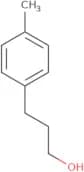
CAS:Formycin is a form of potassium glycolate (KG), which belongs to the class of chlorinated alkyl ethers. Formycin has been used as an antiseptic, but is no longer in use due to its toxicity. It is also a potent inhibitor of bacterial growth and was used in the past for treating tuberculosis. The methylation of KG produces formaldehyde, which can react with ethylene glycol to produce ethylene glycol monomethyl ether (EGME). EGME is highly toxic and can cause lung damage.Formula:C6H5ClN4Purity:Min. 95%Molecular weight:168.58 g/mol3-(4-Methylphenyl)propan-1-ol
CAS:3-(4-Methylphenyl)propan-1-ol is a compound that is used as an intermediate in organic synthesis. It has been shown to undergo regioselective radical cyclization reactions with cations and radical cations, yielding the corresponding methylenecyclopropane derivatives. 3-(4-Methylphenyl)propan-1-ol can be used as a precursor for various other compounds, such as ethyl (2E)-3-[4-(methylphenyl)buta-1,3-diene]propanoate.Formula:C10H14OPurity:Min. 95%Molecular weight:150.22 g/mol7-Methyloctan-3-one
CAS:7-Methyloctan-3-one is a natural product that belongs to the family of cyclic terpenes. It has been identified in the fur of the arctic fox and has been shown to be a pheromone in some species of formicidae (ants). The compound is also found in tarandus (reindeer) and formicidae species. 7-Methyloctan-3-one exhibits an endoparasitic effect on insects, including those that are pests for humans such as the Colorado potato beetle, and can be used as an insecticide. The compound is hypothesized to have a similar effect on other types of pests, including mites and ticks. 7-Methyloctan-3-one is extracted by distillation from animal fat or vegetable oils with high boiling points. Chromatographic analysis reveals its presence at Rf 0.4 on TLC plates with a solvent system of hexane/diethyl ether/Formula:C9H18OPurity:Min. 95%Molecular weight:142.24 g/mol1-(2-chlorophenyl)-2-methylpropan-1-one
CAS:Versatile small molecule scaffoldFormula:C10H11OClPurity:Min. 95%Molecular weight:182.64 g/mol2,3-Dibromobutane
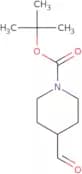
CAS:2,3-Dibromobutane is a molecule that is used as a polarizer in liquid crystal composition. It is an elimination reaction product of bromine and ethylene, which also has the ability to inhibit hyperproliferative diseases. 2,3-Dibromobutane has been shown to have cancer-preventing properties by inhibiting the growth of tumor cells. The mechanism of this inhibition is not yet clear and may be due to its ability to react with reactive oxygen species or other intermediates involved in carcinogenesis. 2,3-Dibromobutane has been shown to form adducts with protonated molecules such as phenol or cresol, which are found in coal tar and cigarette smoke. These adducts have been shown to cause mutations and increase the risk for cancer.Formula:C4H8Br2Purity:Min. 95%Molecular weight:215.92 g/mol1-Boc-4-formyl piperidine
CAS:The functional theory of 1-Boc-4-formyl piperidine (1BP) is that it activates the serine protease, which in turn inhibits the acetylcholine release. It also affects the 5-ht4 receptor, which is an important regulator of neuronal function and amine release. 1BP has been shown to have potent inhibitory activity against reactive molecules, including those that are involved in carcinogenesis. It also has a high affinity for the 5-ht4 receptor and can be used as a 5-ht4 receptor agonist.
Formula:C11H19NO3Purity:Min. 95%Color and Shape:PowderMolecular weight:213.27 g/moltert-Butyl azetidine-3-carboxylate
CAS:Please enquire for more information about tert-Butyl azetidine-3-carboxylate including the price, delivery time and more detailed product information at the technical inquiry form on this page
Formula:C8H15NO2Purity:Min. 95%Molecular weight:157.21 g/moltert-Butyl 7-formyl-3,4-dihydro-2H-1,4-benzoxazine-4-carboxylate
CAS:Please enquire for more information about tert-Butyl 7-formyl-3,4-dihydro-2H-1,4-benzoxazine-4-carboxylate including the price, delivery time and more detailed product information at the technical inquiry form on this pageFormula:C14H17NO4Molecular weight:263.29 g/mol8-Bromoisoquinoline
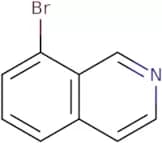
CAS:8-Bromoisoquinoline is a bifunctional alkylating agent that is used to synthesize esters and amides. It is commonly used for the synthesis of amino acids, peptides, and other biologically active molecules. 8-Bromoisoquinoline has been shown to have a synergistic effect with hydroxyalkyl carbamates, which may be due to its ability to form an ionic bond with the carboxylic acid in these compounds. This chemical can also react with nitro groups and serve as a chlorinating agent, as well as react with anions such as phosphate and acetate. 8-Bromoisoquinoline can be synthesized by reacting ethyl bromoacetate with tetrahydroisoquinolinium chloride in hydrochloric acid or isopropyl alcohol.
Formula:C9H6BrNPurity:Min. 95%Color and Shape:PowderMolecular weight:208.05 g/mol3-Bromobenzenesulfonyl chloride
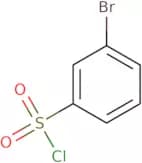
CAS:3-Bromobenzenesulfonyl chloride is a molecule that can be used to inhibit the uptake of 3-bromobenzoate. The inhibition of uptake is due to the desymmetrization of the unsymmetrical, 3-bromobenzoate. This reaction leads to an increase in the concentration of 3-bromobenzoate. Inhibition studies have shown that 3-bromobenzenesulfonyl chloride has an inhibitory effect on cancer cells and apoptosis pathway. The structural studies have shown that this drug is synthetic and biphenyl can be synthesized from it. T-cell lymphomas have been shown to be inhibited by this drug and heart disease has also been inhibited.Formula:C6H4BrClO2SPurity:Min. 95%Molecular weight:255.52 g/mol4-Bromo-2-phenylthiazole
CAS:4-Bromo-2-phenylthiazole is a reactive arylating agent that has been used in the Suzuki reaction to form biaryl compounds. It is also used in the synthesis of heterocycles and alkene cross-coupling reactions. The 4-bromo group can be replaced by other halides, such as chlorides, bromides, or iodides. The substituents on the phenyl ring can be varied to yield different products. Reactive groups are an important factor in optimizing yields and preventing side reactions. This molecule is a useful starting point for the synthesis of complex molecules with functional groups.Formula:C9H6BrNSPurity:Min. 95%Molecular weight:240.12 g/mol3-Phenyl-2-propyn-1-amine hydrochloride
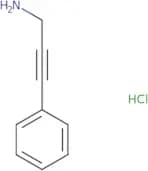
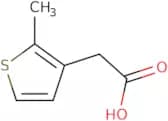
CAS:3-Phenyl-2-propyn-1-amine hydrochloride is a dopamine β-hydroxylase inhibitor that can be detected in urine. It is used to study the effects of various drugs and chemicals on the metabolism of dopamine, noradrenaline, and other catecholamines. 3PPPA has been shown to inhibit the activity of cytochrome P450 enzymes and blocks adrenergic receptors. This drug also inhibits the synthesis of epinephrine from norepinephrine by blocking its conversion to epinephrine. 3PPPA may also be used as a receptor blocker for diagnosis or treatment of asthma or allergic reactions by preventing the release of histamine, which is released from mast cells in response to an allergen, causing inflammation.Formula:C9H10ClNPurity:Min. 95%Molecular weight:167.64 g/mol2-(2-Methylthiophen-3-yl)acetic acid
CAS:Versatile small molecule scaffoldFormula:C7H8O2SPurity:Min. 95%Molecular weight:156.2 g/mol7-Methoxy-4-phenyl-1,2-dihydroquinolin-2-one
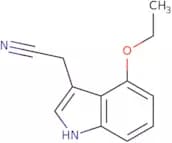
CAS:Versatile small molecule scaffoldFormula:C16H13NO2Purity:Min. 95%Molecular weight:251.28 g/mol2-(4-Ethoxy-1H-indol-3-yl)acetonitrile
CAS:Versatile small molecule scaffold
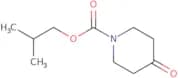
Formula:C12H12N2OPurity:Min. 95%Molecular weight:200.24 g/mol2-Methylpropyl 4-oxopiperidine-1-carboxylate
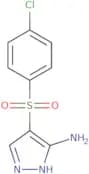
CAS:Controlled ProductVersatile small molecule scaffoldFormula:C10H17NO3Purity:Min. 95%Molecular weight:199.25 g/mol4-(4-Chlorobenzenesulfonyl)-1H-pyrazol-5-amine
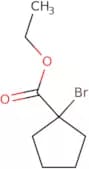
CAS:Versatile small molecule scaffoldFormula:C9H8ClN3O2SPurity:Min. 95%Molecular weight:257.7 g/molEthyl 1-bromocyclopentane-1-carboxylate
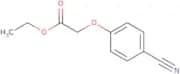
CAS:Versatile small molecule scaffoldFormula:C8H13BrO2Purity:Min. 95%Molecular weight:221.09 g/molEthyl 2-(4-cyanophenoxy)acetate
CAS:Versatile small molecule scaffold
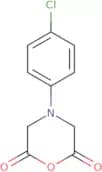
Formula:C11H11NO3Purity:Min. 95%Molecular weight:205.21 g/mol4-(4-Chlorophenyl)morpholine-2,6-dione
CAS:Versatile small molecule scaffold
Formula:C10H8ClNO3Purity:Min. 95%Molecular weight:225.63 g/mol1-(2-Oxopropyl)pyrrolidine-2,5-dione
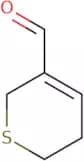
CAS:1-(2-Oxopropyl)pyrrolidine-2,5-dione is a reactive molecule that can be used to conjugate biomolecules and synthetic polymers. It has been immobilized on the surface of polymer particles or in polymer matrices, which allows for the efficient separation of biomolecules and synthetic polymers. This molecule is also reactive with thiol groups and can be used to crosslink biomolecules and synthetic polymers. 1-(2-Oxopropyl)pyrrolidine-2,5-dione has been shown to react with immobilized proteins and DNA.Formula:C7H9NO3Purity:Min. 95%Molecular weight:155.15 g/mol3,6-Dihydro-2H-thiopyran-5-carbaldehyde
CAS:3,6-Dihydro-2H-thiopyran-5-carbaldehyde is an aldehyde that is used as an intermediate in the synthesis of crotonaldehyde. It reacts with hydrogen sulfide in the presence of an acidic catalyst to produce acrolein and water. The reaction product can be boiled off to generate a crude form of crotonaldehyde. 3,6-Dihydro-2H-thiopyran-5-carbaldehyde has been patented by BASF SE under patent number EP0992871.Formula:C6H8OSPurity:Min. 95%Molecular weight:128.19 g/mol1,2,3,4-Tetrahydroquinoline-6-sulfonamide
CAS:Versatile small molecule scaffold
Formula:C9H12N2O2SPurity:Min. 95%Molecular weight:212.27 g/mol8-Chloro-5-methoxy-N-methyl-1,2,3,4-tetrahydronaphthalen-1-amine hydrochloride
CAS:Versatile small molecule scaffoldFormula:C12H17Cl2NOPurity:Min. 95%Molecular weight:262.17 g/mol1,2,3,5-Tetrahydroindolizine-1,5-dione
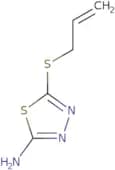
CAS:Versatile small molecule scaffoldFormula:C8H7NO2Purity:Min. 95%Molecular weight:149.15 g/mol5-Allylsulfanyl-1,3,4-thiadiazol-2-amine
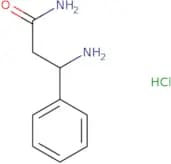
CAS:Versatile small molecule scaffoldFormula:C5H7N3S2Purity:Min. 95%Molecular weight:173.3 g/mol3-Amino-3-phenylpropanamide hydrochloride
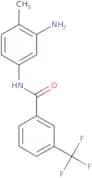
CAS:Versatile small molecule scaffoldFormula:C9H13ClN2OPurity:Min. 95%Molecular weight:200.66 g/molN-(3-Amino-4-methylphenyl)-3-(trifluoromethyl)benzamide
CAS:Versatile small molecule scaffold
Formula:C15H13F3N2OPurity:Min. 95%Molecular weight:294.27 g/mol2-amino-2-(3-nitrophenyl)acetic acid
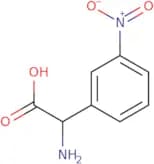
CAS:Versatile small molecule scaffoldFormula:C8H8N2O4Purity:Min. 95%Molecular weight:196.16 g/mol4-Bromo-2-nitro-1H-pyrrole
CAS:Versatile small molecule scaffold
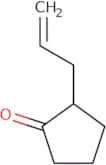
Formula:C4H3BrN2O2Purity:Min. 95%Molecular weight:190.98 g/mol2-(Prop-2-en-1-yl)cyclopentan-1-one
CAS:2-(Prop-2-en-1-yl)cyclopentan-1-one (propargyl alcohol) is a heterocyclic compound that is the simplest member of the cyclopentanones. It has been shown to be an effective inhibitor of human viruses such as Hepatitis C virus, HIV, and influenza A virus. The antiviral activity of propargyl alcohol is attributed to its ability to inhibit viral DNA polymerase and RNA polymerase in the infected cells. Propargyl alcohol also inhibits glycol dimethyl ether, which is a cofactor for some cellular enzymes involved in lipid metabolism. This compound can also act as a substrate for allylation reactions with other compounds such as 1,3 butadiene or ethylene.
Formula:C8H12OPurity:Min. 95%Molecular weight:124.18 g/mol3-{[(4-Chlorophenyl)sulfanyl]methyl}benzoic acid
CAS:Versatile small molecule scaffoldFormula:C14H11ClO2SPurity:Min. 95%Molecular weight:278.8 g/mol3-(2-Chlorophenoxymethyl)benzoic acid
CAS:Versatile small molecule scaffold
Formula:C14H11ClO3Purity:Min. 95%Molecular weight:262.69 g/mol2-Bromo-1-[4-(2-methylpropyl)phenyl]ethan-1-one
CAS:Versatile small molecule scaffoldFormula:C12H15BrOPurity:Min. 95%Molecular weight:255.15 g/mol2-Bromo-1-(3-chloro-4-methoxyphenyl)ethan-1-one
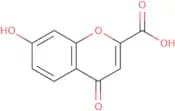
CAS:Versatile small molecule scaffoldFormula:C9H8BrClO2Purity:Min. 95%Molecular weight:263.51 g/mol7-Hydroxy-4-oxo-4H-chromene-2-carboxylic acid
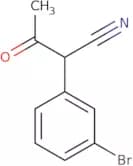
CAS:7-Hydroxy-4-oxo-4H-chromene-2-carboxylic acid is a molecule that is found in the human body. It has been shown to have cationic polymer activity and to inhibit the growth of bacteria by binding to the hydroxyl group of DNA. 7-Hydroxy-4-oxo-4H-chromene-2-carboxylic acid has potent inhibitory activity against Gram positive and Gram negative bacteria, including Mycobacterium tuberculosis and Staphylococcus aureus. This compound can be used as an antibiotic for bacterial infections due to its ability to bind with high concentrations of the hydroxyl group on DNA.Formula:C10H6O5Purity:Min. 95%Molecular weight:206.15 g/mol2-(3-Bromophenyl)-3-oxobutanenitrile
CAS:Versatile small molecule scaffold
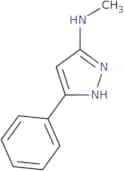
Formula:C10H8BrNOPurity:Min. 95%Molecular weight:238.08 g/molN-Methyl-5-phenyl-1H-pyrazol-3-amine
CAS:Versatile small molecule scaffold
Formula:C10H11N3Purity:Min. 95%Molecular weight:173.21 g/mol1,3-Dichloropentane
CAS:1,3-Dichloropentane is a molecule that consists of chlorine and hydrogen atoms. It has been studied extensively in kinetic isotope effect experiments for its transport properties. The kinetic isotope effect is the change in reaction rate due to the presence of an atom with an atomic mass different from the reactant or product. 1,3-Dichloropentane has also been studied for its role in cell membrane transport. This molecule is not reactive, but it does have a reactive isotope effect on cells when it reacts with chlorine atoms.Formula:C5H10Cl2Purity:Min. 95%Molecular weight:141.04 g/mol1-Benzylpyrrolidine-2,4-dione
CAS:Versatile small molecule scaffoldFormula:C11H11NO2Purity:Min. 95%Molecular weight:189.21 g/mol1-Bromo-4-(trifluoromethyl)cyclohexane
CAS:Versatile small molecule scaffoldFormula:C7H10BrF3Purity:Min. 95%Molecular weight:231.05 g/mol4-Chloro-6-methyl-1H-pyrazolo[3,4-d]pyrimidine
CAS:Versatile small molecule scaffoldFormula:C6H5ClN4Purity:Min. 95%Molecular weight:168.58 g/mol6-Methyl-1H-pyrazolo[3,4-d]pyrimidin-4(7H)-one
CAS:Versatile small molecule scaffoldFormula:C6H6N4OPurity:Min. 95%Molecular weight:150.14 g/molEthyl 3-bromo-2-oxocyclohexanecarboxylate
CAS:3-Bromo-2-oxocyclohexanecarboxylate is a diterpene alkaloid that has been prepared by the Friedel-Crafts reaction of ethyl bromoacetate and cyclohexane. The product is an intramolecular arylation, which means that the two carbons in the ring are bonded to each other. This type of reaction usually produces a group specific functional group, such as an acid chloride or ester, but in this case it produces an alcohol. 3-Bromo-2-oxocyclohexanecarboxylate is used as a precursor for silver salts which are used to make photographic film.Formula:C9H13BrO3Purity:Min. 95%Molecular weight:249.1 g/mol2-(3-Bromopropyl)-thiophene
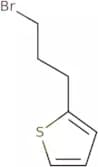
CAS:Versatile small molecule scaffold
Formula:C7H9BrSPurity:Min. 95%Molecular weight:205.12 g/mol

![7-Chloro-3-methyl-1H-pyrazolo[4,3-d]pyrimidine](/_next/image/?url=https%3A%2Fstatic.cymitquimica.com%2Fproducts%2F3D%2Fthumb-webp%2FFAA39995.webp&w=3840&q=75)









![3-{[(4-Chlorophenyl)sulfanyl]methyl}benzoic acid](/_next/image/?url=https%3A%2Fstatic.cymitquimica.com%2Fproducts%2F3D%2Fthumb-webp%2FFBA08241.webp&w=3840&q=75)

![2-Bromo-1-[4-(2-methylpropyl)phenyl]ethan-1-one](/_next/image/?url=https%3A%2Fstatic.cymitquimica.com%2Fproducts%2F3D%2Fthumb-webp%2FFBA09548.webp&w=3840&q=75)



![4-Chloro-6-methyl-1H-pyrazolo[3,4-d]pyrimidine](/_next/image/?url=https%3A%2Fstatic.cymitquimica.com%2Fproducts%2F3D%2Fthumb-webp%2FFBA12953.webp&w=3840&q=75)
![6-Methyl-1H-pyrazolo[3,4-d]pyrimidin-4(7H)-one](/_next/image/?url=https%3A%2Fstatic.cymitquimica.com%2Fproducts%2F3D%2Fthumb-webp%2FFBA12957.webp&w=3840&q=75)