Building Blocks
This section contains fundamental products for the synthesis of organic and biological compounds. Building blocks are the essential starting materials used to construct complex molecules through various chemical reactions. They play a critical role in drug discovery, material science, and chemical research. At CymitQuimica, we offer a diverse range of high-quality building blocks to support your innovative research and industrial projects, ensuring you have the essential components for successful synthesis.
Subcategories of "Building Blocks"
- Boronic Acids & Boronic Acid Derivatives(5,786 products)
- Chiral Building Blocks(1,246 products)
- Hydrocarbon Building Blocks(6,107 products)
- Organic Building Blocks(61,080 products)
Found 205478 products of "Building Blocks"
Sort by
Purity (%)
0
100
|
0
|
50
|
90
|
95
|
100
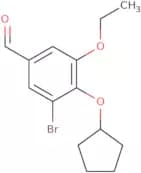
3-Bromo-4-(cyclopentyloxy)-5-ethoxybenzaldehyde
CAS:Versatile small molecule scaffoldFormula:C14H17BrO3Purity:Min. 95%Molecular weight:313.19 g/mol2-(5-Chloro-4-formyl-2-methoxyphenoxy)acetic acid
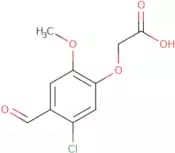
CAS:Versatile small molecule scaffoldFormula:C10H9ClO5Purity:Min. 95%Molecular weight:244.63 g/molMethyl (5-bromo-2-ethoxy-4-formylphenoxy)acetate
CAS:Versatile small molecule scaffoldFormula:C12H13BrO5Purity:Min. 95%Molecular weight:317.13 g/mol1-(Anilinocarbonyl)pyrrolidine-2-carboxylic acid
CAS:Versatile small molecule scaffoldFormula:C12H14N2O3Purity:Min. 95%Molecular weight:234.25 g/mol6-(4-Bromophenyl)-4-chlorothieno[3,2-d]pyrimidine
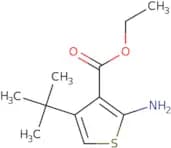
CAS:Versatile small molecule scaffoldFormula:C12H6BrClN2SPurity:Min. 95%Molecular weight:325.61 g/molEthyl 2-amino-4-tert-butylthiophene-3-carboxylate
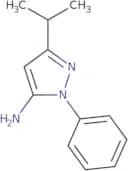
CAS:Versatile small molecule scaffoldFormula:C11H17NO2SPurity:Min. 95%Molecular weight:227.33 g/mol3-Isopropyl-1-phenyl-1H-pyrazol-5-amine
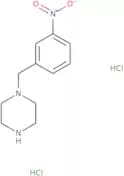
CAS:Versatile small molecule scaffoldFormula:C12H15N3Purity:Min. 95%Molecular weight:201.27 g/mol1-(3-Nitrobenzyl)piperazine dihydrochloride
CAS:Versatile small molecule scaffold
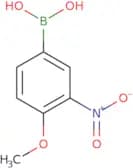
Formula:C11H17Cl2N3O2Purity:Min. 95%Molecular weight:294.17 g/mol4-Methoxy-3-nitrobenzeneboronic acid
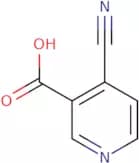
CAS:Versatile small molecule scaffoldFormula:C7H8BNO5Purity:Min. 95%Molecular weight:196.95 g/mol4-Cyanopyridine-3-carboxylic acid
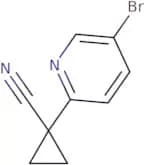
CAS:4-Cyanopyridine-3-carboxylic acid is a vanadium compound that has been shown to be an effective catalyst for the oxidation of alcohols to carboxylic acids. It has been used in the synthesis of esters and amides from alcohols and ammonia. 4-Cyanopyridine-3-carboxylic acid is more reactive than other catalysts, such as iron or copper, due to its high nucleophilicity and low gas solubility. This makes it a good candidate for use in the gaseous phase or gas phase. The metal center of 4-cyanopyridine-3-carboxylic acid is protonated by water molecules, which then act as electron acceptors. This mechanism leads to the formation of H+ ions, which act as an acid catalyst. One proposed mechanism for this reaction is the addition of hydroxide ion (OH-) to form a carbanion intermediateFormula:C7H4N2O2Purity:Min. 95%Molecular weight:148.12 g/mol1-(5-Bromopyridin-2-yl)cyclopropanecarbonitrile
CAS:Versatile small molecule scaffold
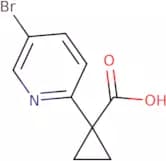
Formula:C9H7BrN2Purity:Min. 95%Molecular weight:223.07 g/mol1-(5-Bromopyridin-2-yl)cyclopropane-1-carboxylic acid
CAS:Versatile small molecule scaffoldFormula:C9H8BrNO2Purity:Min. 95%Molecular weight:242.07 g/mol5-Amino-3,4-dimethylthieno[2,3-c]pyridazine-6-carboxylic acid
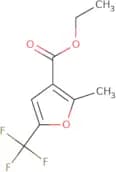
CAS:Versatile small molecule scaffoldFormula:C9H9N3O2SPurity:Min. 95%Molecular weight:223.25 g/molEthyl 2-methyl-5-(trifluoromethyl)furan-3-carboxylate
CAS:Versatile small molecule scaffoldFormula:C9H9F3O3Purity:Min. 95%Molecular weight:222.16 g/mol2-{[(tert-Butoxy)carbonyl](methyl)amino}-3-(1H-indol-3-yl)propanoic acid
CAS:Versatile small molecule scaffoldFormula:C17H22N2O4Purity:Min. 95%Molecular weight:318.4 g/mol2-(Tributylstannylmethylsulfanyl)ethanamine
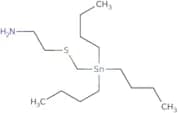
CAS:Controlled ProductThe 2-(Tributylstannylmethylsulfanyl)ethanamine is a ligand that forms stable complexes with transition metals. It has been used for the synthesis of heterocycles, carbanions, and in cross-coupling reactions. This ligand is soluble in organic solvents such as tetrahydrofuran, chloroform, dichloromethane and ether. The ligand can be used to form conjugates with target molecules that are insoluble in organic solvents. The ligand is an efficient catalyst for the conversion of ketones to carboxylic acids or alcohols.Formula:C15H35NSSnPurity:Min. 95%Molecular weight:380.22 g/molMethyl 4-chloroimidazo[1,2-a]quinoxaline-8-carboxylate
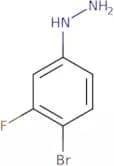
CAS:Versatile small molecule scaffoldFormula:C12H8ClN3O2Purity:Min. 95%Molecular weight:261.66 g/mol(4-Bromo-3-fluorophenyl)hydrazine
CAS:Versatile small molecule scaffoldFormula:C6H6BrFN2Purity:Min. 95%Molecular weight:205.03 g/mol3-[(Methylamino)methyl]pentan-3-ol
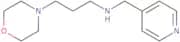
CAS:Versatile small molecule scaffoldFormula:C7H17NOPurity:Min. 95%Molecular weight:131.22 g/mol(3-Morpholin-4-yl-propyl)-pyridin-4-ylmethyl-amine
CAS:Versatile small molecule scaffoldFormula:C13H21N3OPurity:Min. 95%Molecular weight:235.33 g/molN-[(Pyridin-2-yl)methyl]pyridin-3-amine
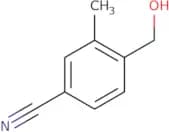
CAS:N-[(Pyridin-2-yl)methyl]pyridin-3-amine (NMP) is a nitrate salt that belongs to the class of anions. It forms complexes with metal cations and has been shown to be an effective ligand for lanthanide ions. NMP has also been shown to have luminescent properties, which are mediated by its ability to bind to metal cations. The crystal structure of NMP in the solid state was determined by single crystal x-ray diffraction. The molecule adopts a polyhedral geometry with two unsymmetrical geometries; one is a square pyramid and the other is a distorted octahedron. These two structures are related through a symmetry operation called glide reflection, which transforms one structure into the other. This transformation can be used to generate infinite architectural variations.Formula:C11H11N3Purity:Min. 95%Molecular weight:185.22 g/mol4-(Hydroxymethyl)-3-methylbenzonitrile
CAS:Versatile small molecule scaffold
Formula:C9H9NOPurity:Min. 95%Molecular weight:147.17 g/mol(2E)-3-{4-[(Pyridin-3-yl)methoxy]phenyl}prop-2-enoic acid
CAS:Versatile small molecule scaffold
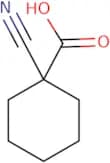
Formula:C15H13NO3Purity:Min. 95%Molecular weight:255.3 g/mol1-Cyanocyclohexane-1-carboxylic acid
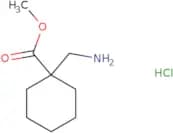
CAS:Versatile small molecule scaffoldFormula:C8H11NO2Purity:Min. 95%Molecular weight:153.18 g/molMethyl 1-(aminomethyl)cyclohexanecarboxylatehydrochloride
CAS:Versatile small molecule scaffold
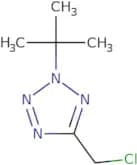
Formula:C9H18ClNO2Purity:Min. 95%Molecular weight:207.7 g/mol2-tert-Butyl-5-(chloromethyl)-2H-1,2,3,4-tetrazole
CAS:Versatile small molecule scaffoldFormula:C6H11ClN4Purity:Min. 95%Molecular weight:174.63 g/mol1-Bromo-3-(2-methoxyethoxy)benzene
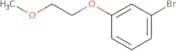
CAS:Versatile small molecule scaffoldFormula:C9H11BrO2Purity:Min. 95%Molecular weight:231.09 g/mol1,2-Dimethyl-5-(tetramethyl-1,3,2-dioxaborolan-2-yl)-1H-1,3-benzodiazole
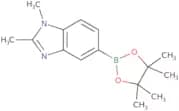
CAS:Versatile small molecule scaffoldFormula:C15H21BN2O2Purity:Min. 95%Molecular weight:272.15 g/mol2-Chloro-5-phenyl-1H-imidazole
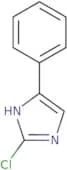
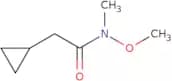
CAS:Versatile small molecule scaffoldFormula:C9H7ClN2Purity:Min. 95%Molecular weight:178.62 g/mol2-cyclopropyl-n-methoxy-n-methylacetamide
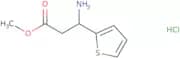
CAS:Versatile small molecule scaffoldFormula:C7H13NO2Purity:Min. 95%Molecular weight:143.19 g/molMethyl 3-amino-3-(thiophen-2-yl)propanoate hydrochloride
CAS:Versatile small molecule scaffoldFormula:C8H12ClNO2SPurity:Min. 95%Molecular weight:221.71 g/molBenzoic acid, 4-[(1,3-dihydro-1,3-dioxo-2H-isoindol-2-yl)methyl]-
CAS:Versatile small molecule scaffold
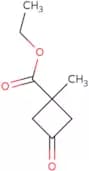
Formula:C16H11NO4Purity:Min. 95%Molecular weight:281.26 g/molEthyl 1-methyl-3-oxo-cyclobutanecarboxylate
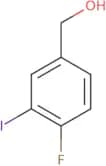
CAS:Versatile small molecule scaffoldFormula:C8H12O3Purity:Min. 95%Molecular weight:156.18 g/mol(4-Fluoro-3-iodophenyl)methanol
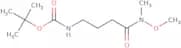
CAS:Versatile small molecule scaffoldFormula:C7H6FIOPurity:Min. 95%Molecular weight:252.02 g/molTert-Butyl 3-(N-Methoxy-N-Methylcarbamoyl)Propylcarbamate
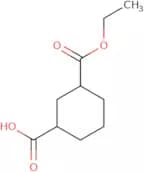
CAS:Versatile small molecule scaffoldFormula:C11H22N2O4Purity:Min. 95%Molecular weight:246.3 g/mol(1R,3S)-3-(Ethoxycarbonyl)cyclohexane-1-carboxylic acid
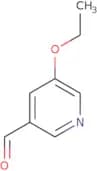
CAS:Versatile small molecule scaffoldFormula:C10H16O4Purity:Min. 95%Molecular weight:200.23 g/mol5-Ethoxynicotinaldehyde
CAS:Versatile small molecule scaffold
Formula:C8H9NO2Purity:Min. 95%Molecular weight:151.16 g/mol7-Benzyl-3-Boc-3,7-diazabicyclo[3.3.1]nonan-9-one
CAS:Versatile small molecule scaffold
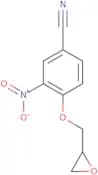
Formula:C19H26N2O3Purity:Min. 95%Molecular weight:330.42 g/mol3-Nitro-4-(oxiran-2-ylmethoxy)benzonitrile
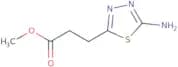
CAS:Versatile small molecule scaffoldFormula:C10H8N2O4Purity:Min. 95%Molecular weight:220.18 g/molMethyl 3-(5-amino-1,3,4-thiadiazol-2-yl)propanoate
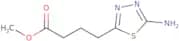
CAS:Versatile small molecule scaffoldFormula:C6H9N3O2SPurity:Min. 95%Molecular weight:187.22 g/molMethyl 4-(5-amino-1,3,4-thiadiazol-2-yl)butanoate
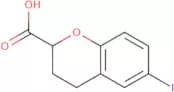
CAS:Versatile small molecule scaffoldFormula:C7H11N3O2SPurity:Min. 95%Molecular weight:201.25 g/mol6-Iodo-3,4-dihydro-2H-1-benzopyran-2-carboxylic acid
CAS:Versatile small molecule scaffold
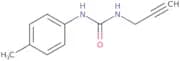
Formula:C10H9IO3Purity:Min. 95%Molecular weight:304.08 g/mol1-(4-Methylphenyl)-3-(prop-2-yn-1-yl)urea
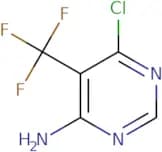
CAS:1-(4-Methylphenyl)-3-(prop-2-yn-1-yl)urea is a fluorescent derivative that can be detected with certain techniques. It has been used to detect phosphatases in cervical cancer cells and tumor cells. This compound is a ligand for the surface antigen of placental alkaline phosphatase (PLAP). It can also bind to other organic ligands, such as recombinant human erythropoietin (EPO), which may be useful for redirecting the action of this protein. 1-(4-Methylphenyl)-3-(prop-2-yn-1-yl)urea is an organic bispecific molecule that binds to two receptors, one on tumor cells and one on normal cells. This binding leads to cell death by apoptosis through the release of cytochrome c from mitochondria.Formula:C11H12N2OPurity:Min. 95%Molecular weight:188.23 g/mol6-Chloro-5-(trifluoromethyl)pyrimidin-4-amine
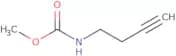
CAS:Versatile small molecule scaffoldFormula:C5H3ClF3N3Purity:Min. 95%Molecular weight:197.54 g/molMethyl N-(but-3-yn-1-yl)carbamate
CAS:Versatile small molecule scaffoldFormula:C6H9NO2Purity:Min. 95%Molecular weight:127.14 g/mol1-[5-(Bromomethyl)-1,2-oxazol-3-yl]ethan-1-one
CAS:Versatile small molecule scaffoldFormula:C6H6BrNO2Purity:Min. 95%Molecular weight:204.02 g/mol5-[(Thiophen-2-yl)methyl]-1,3-thiazol-2-amine
CAS:Versatile small molecule scaffoldFormula:C8H8N2S2Purity:Min. 95%Molecular weight:196.3 g/mol2-Isopropylphenyboronic acid pinacol ester
CAS:Versatile small molecule scaffold
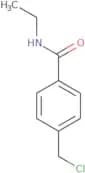
Formula:C15H23BO2Purity:Min. 95%Molecular weight:246.15 g/mol4-(Chloromethyl)-N-ethylbenzamide
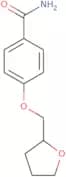
CAS:Versatile small molecule scaffoldFormula:C10H12ClNOPurity:Min. 95%Molecular weight:197.66 g/mol4-(Oxolan-2-ylmethoxy)benzamide
CAS:Versatile small molecule scaffoldFormula:C12H15NO3Purity:Min. 95%Molecular weight:221.25 g/mol


![6-(4-Bromophenyl)-4-chlorothieno[3,2-d]pyrimidine](/_next/image/?url=https%3A%2Fstatic.cymitquimica.com%2Fproducts%2F3D%2Fthumb-webp%2FCIB61425.webp&w=3840&q=75)
![5-Amino-3,4-dimethylthieno[2,3-c]pyridazine-6-carboxylic acid](/_next/image/?url=https%3A%2Fstatic.cymitquimica.com%2Fproducts%2F3D%2Fthumb-webp%2FCIC22614.webp&w=3840&q=75)
amino}-3-(1H-indol-3-yl)propanoic acid](/_next/image/?url=https%3A%2Fstatic.cymitquimica.com%2Fproducts%2F3D%2Fthumb-webp%2FCIC57400.webp&w=3840&q=75)
![Methyl 4-chloroimidazo[1,2-a]quinoxaline-8-carboxylate](/_next/image/?url=https%3A%2Fstatic.cymitquimica.com%2Fproducts%2F3D%2Fthumb-webp%2FCIC86418.webp&w=3840&q=75)
![3-[(Methylamino)methyl]pentan-3-ol](/_next/image/?url=https%3A%2Fstatic.cymitquimica.com%2Fproducts%2F3D%2Fthumb-webp%2FCJA01601.webp&w=3840&q=75)
![N-[(Pyridin-2-yl)methyl]pyridin-3-amine](/_next/image/?url=https%3A%2Fstatic.cymitquimica.com%2Fproducts%2F3D%2Fthumb-webp%2FCJA01797.webp&w=3840&q=75)
![(2E)-3-{4-[(Pyridin-3-yl)methoxy]phenyl}prop-2-enoic acid](/_next/image/?url=https%3A%2Fstatic.cymitquimica.com%2Fproducts%2F3D%2Fthumb-webp%2FCJA10492.webp&w=3840&q=75)
![Benzoic acid, 4-[(1,3-dihydro-1,3-dioxo-2H-isoindol-2-yl)methyl]-](/_next/image/?url=https%3A%2Fstatic.cymitquimica.com%2Fproducts%2F3D%2Fthumb-webp%2FCJA59841.webp&w=3840&q=75)
![7-Benzyl-3-Boc-3,7-diazabicyclo[3.3.1]nonan-9-one](/_next/image/?url=https%3A%2Fstatic.cymitquimica.com%2Fproducts%2F3D%2Fthumb-webp%2FCJA94070.webp&w=3840&q=75)
![1-[5-(Bromomethyl)-1,2-oxazol-3-yl]ethan-1-one](/_next/image/?url=https%3A%2Fstatic.cymitquimica.com%2Fproducts%2F3D%2Fthumb-webp%2FCJB10762.webp&w=3840&q=75)
![5-[(Thiophen-2-yl)methyl]-1,3-thiazol-2-amine](/_next/image/?url=https%3A%2Fstatic.cymitquimica.com%2Fproducts%2F3D%2Fthumb-webp%2FCJB10807.webp&w=3840&q=75)