Building Blocks
Subcategories of "Building Blocks"
- Boronic Acids & Boronic Acid Derivatives(5,805 products)
- Chiral Building Blocks(1,248 products)
- Hydrocarbon Building Blocks(6,118 products)
- Organic Building Blocks(61,447 products)
Found 208423 products of "Building Blocks"
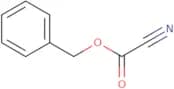
Benzyl Cyanoformate
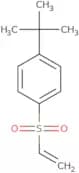
CAS:Benzyl Cyanoformate is a diagnostic agent that is used in the synthesis of amide compounds. It has a structure that includes an active methylene and nitrogen atoms. Benzyl Cyanoformate is synthesized through asymmetric synthesis, which encompasses the use of amines, inhibitors, and solid-phase synthesis. This compound has been shown to inhibit the activity of some receptor proteins by binding to them and preventing their activation, thus acting as an antagonist. Benzyl Cyanoformate binds to the enzyme carboxy with hydrochloric acid as a catalyst. The v600e mutation in K-ras can lead to increased sensitivity to this inhibitor; however, it is not known if this mutation confers sensitivity or resistance to other inhibitors of K-ras.Formula:C9H7NO2Purity:Min. 95%Molecular weight:161.16 g/mol1-tert-Butyl-4-(ethenesulfonyl)benzene
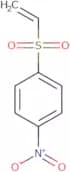
CAS:Versatile small molecule scaffoldFormula:C12H16O2SPurity:Min. 95%Molecular weight:224.32 g/mol1-(Ethenesulfonyl)-4-nitrobenzene
CAS:1-(Ethenesulfonyl)-4-nitrobenzene (1ESNB) is a pyrazoline that has been used as an oxidant in cyclic aliphatic and heterocyclic syntheses. 1ESNB is also used to form phosphate derivatives, which are important in the pharmaceutical industry. 1ESNB can be prepared by the organocatalytic coupling of ethyl sulfone with nitrobenzene. The azomethine ylide can be generated from 1ESNB through oxidation with potassium permanganate or ozone, followed by addition of an aliphatic amine. This reaction gives a quinolinium salt that can be converted to a sulfone using thionyl chloride or oxalyl chloride. A cycloaddition reaction can then convert the sulfone into a biologically active molecule such as methotrexate or daunorubicin.
Formula:C8H7NO4SPurity:Min. 95%Molecular weight:213.21 g/mol(4-Hydroxy-2,6-dimethylpyrimidin-5-yl)acetic acid
CAS:Versatile small molecule scaffoldFormula:C8H10N2O3Purity:Min. 95%Molecular weight:182.18 g/mol3-Amino-5-methyl-1-phenylpyrrolidin-2-one
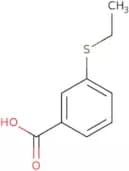
CAS:Versatile small molecule scaffoldFormula:C11H14N2OPurity:Min. 95%Molecular weight:190.24 g/mol3-(Ethylsulfanyl)benzoic acid
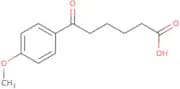
CAS:Versatile small molecule scaffoldFormula:C9H10O2SPurity:Min. 95%Molecular weight:182.24 g/mol6-(4-Methoxyphenyl)-6-oxohexanoic acid
CAS:Versatile small molecule scaffoldFormula:C13H16O4Purity:Min. 95%Molecular weight:236.26 g/molMethanesulfonyl acetate
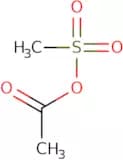
CAS:Methanesulfonyl acetate is a chemical that is used in the chemical industry as a solvent and as a conditioner for polymers. Methanesulfonyl acetate has been shown to have effects on blood pressure and cancer cells, where it inhibits the growth of cancer cells by inhibiting DNA synthesis. Methanesulfonyl acetate also binds strongly to chlorine atoms and is soluble in nonpolar solvents. The molecular weight of methanesulfonyl acetate is 164.19 g/mol and its melting point is -13°C.
Methanesulfonyl Acetate Chemical Formula: CH3SO2COCH3
Molecular Weight: 164.19 g/mol
Melting Point: -13°C
Boiling Point: 210°C
Density: 1.07 g/cm3
Solubility in Water: Insoluble
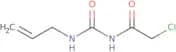
Appearance: Pale yellow liquidFormula:C3H6O4SPurity:Min. 95%Molecular weight:138.14 g/mol1-(2-Chloroacetyl)-3-(prop-2-en-1-yl)urea
CAS:Versatile small molecule scaffoldFormula:C6H9ClN2O2Purity:Min. 95%Molecular weight:176.6 g/mol(3-Chloropropanoyl)urea
CAS:3-Chloropropanoyl)urea is a urea derivative. It has been used as an intermediate in the synthesis of tranquilizers and reaction products. 3-Chloropropanoyl)urea has been shown to react with aliphatic hydrocarbons, cycloaliphatic compounds, piperidine, or acylurea. The resulting products are chlorinated or carboxylic acid derivatives.
Formula:C4H7ClN2O2Purity:Min. 95%Molecular weight:150.56 g/molEthyl 2-(3-methylpyridin-2-yl)acetate
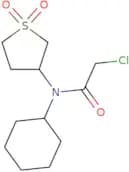
CAS:Versatile small molecule scaffoldFormula:C10H13NO2Purity:Min. 95%Molecular weight:179.2 g/mol2-Chloro-N-cyclohexyl-N-(1,1-dioxothiolan-3-yl)acetamide
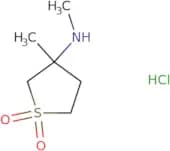
CAS:Versatile small molecule scaffoldFormula:C12H20ClNO3SPurity:Min. 95%Molecular weight:293.81 g/molMethyl-(3-methyl-1,1-dioxo-tetrahydro-1lambda*6*-thiophen-3-yl)-amine hydrochloride
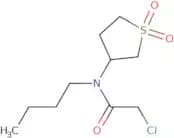
CAS:Versatile small molecule scaffoldFormula:C6H14ClNO2SPurity:Min. 95%Molecular weight:199.7 g/molN-Butyl-2-chloro-N-(tetrahydro-1,1-dioxido-3-thienyl)-acetamide
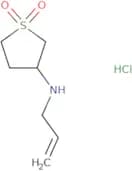
CAS:Versatile small molecule scaffoldFormula:C10H18ClNO3SPurity:Min. 95%Molecular weight:267.77 g/molTetrahydro-N-2-propen-1-yl-3-thiophenamine 1,1-dioxide hydrochloride
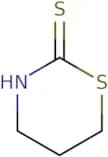
CAS:Versatile small molecule scaffoldFormula:C7H14ClNO2SPurity:Min. 95%Molecular weight:211.71 g/mol1,3-Thiazinane-2-Thione
CAS:1,3-Thiazinane-2-thione is an allylamine that can be used in the synthesis of a variety of compounds. 1,3-Thiazinane-2-thione is also an activator for carbon-carbon bond formation. This compound can be synthesized from an alkyl halide and an aldehyde by reaction with sulfur and heat. The stereoselectivity of this reaction has been shown using x-ray crystallography.
Formula:C4H7NS2Purity:Min. 95%Molecular weight:133.23 g/mol3-Dimethylamino-1-phenyl-1-propanol
CAS:3-Dimethylamino-1-phenyl-1-propanol is a chiral phenoxy propylamine optical isomer with a residue of carbonyl. It is a racemic mixture of two optical isomers and has the ability to form diastereoisomeric salts. 3-Dimethylamino-1-phenyl-1-propanol is an intermediate in the synthesis of fluoxetine, which is used to treat depression. This substance also has antihistamine and sedative properties, as well as other pharmacological effects that have not been studied extensively.
Formula:C11H17NOPurity:Min. 95%Molecular weight:179.26 g/molo-[(4-Chlorophenyl)methyl]hydroxylamine
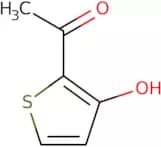
CAS:Versatile small molecule scaffoldFormula:C7H8ClNOPurity:Min. 95%Molecular weight:157.6 g/mol1-(3-Hydroxythiophen-2-yl)ethan-1-one
CAS:1-(3-Hydroxythiophen-2-yl)ethan-1-one is a hydrolyzable compound that has been shown to have microbicidal activity against food spoilage bacteria such as Bacillus cereus and Clostridium perfringens. It inhibits the growth of these bacteria by inhibiting the synthesis of bacterial cell walls, which leads to cell death.
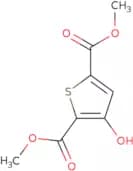
Formula:C6H6O2SPurity:Min. 95%Molecular weight:142.18 g/mol2,5-Dimethyl 3-hydroxythiophene-2,5-dicarboxylate
CAS:Versatile small molecule scaffoldFormula:C8H8O5SPurity:Min. 95%Molecular weight:216.21 g/mol2,3,5-Trimethoxybenzaldehyde
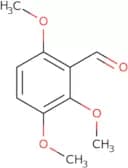
CAS:2,3,5-Trimethoxybenzaldehyde is the hydrolysis product of coumarin. It can be synthesized from 2,3-dimethoxybenzaldehyde and acetyl chloride. 2,3,5-Trimethoxybenzaldehyde can also be obtained by hydrolysis of coumarin with aqueous sodium hydroxide or potassium hydroxide. This compound is used as a natural flavoring agent in food products.Formula:C10H12O4Purity:Min. 95%Molecular weight:196.2 g/mol2,3,6-Trimethoxybenzaldehyde
CAS:Versatile small molecule scaffold
Formula:C10H12O4Purity:Min. 95%Molecular weight:196.2 g/molBenzyl 2-aopropanoate hydrochloride
CAS:Versatile small molecule scaffold
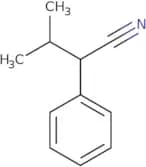
Formula:C10H14ClNO2Purity:Min. 95%Molecular weight:215.67 g/mol3-Methyl-2-phenylbutanenitrile
CAS:3-Methyl-2-phenylbutanenitrile is a synthetic, nucleophilic blocker that binds to the active site of the enzyme and inhibits its function. 3-Methyl-2-phenylbutanenitrile is able to bind to calcium antagonist sites on the enzyme and inhibit their function. This product has been shown to be efficient in multigram amounts. The synthesis of this product has been optimized by using a cavitation reaction rate efficient method that is not limited by the solubility of reactants or products. Crystallography revealed that this product contains an amine group, which can act as a nucleophile in reactions with alkylthio groups, such as those found in proteins. 3-Methyl-2-phenylbutanenitrile is immobilized through dioxolane chemistry, which prevents it from interacting with other chemical species.Formula:C11H13NPurity:Min. 95%Molecular weight:159.23 g/mol1-(Bicyclo[2.2.2]oct-1-yl)methanamine hydrochloride
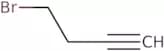
CAS:Versatile small molecule scaffoldFormula:C9H17N·ClHPurity:Min. 95%Molecular weight:175.7 g/mol4-Bromo-1-butyne
CAS:4-Bromo-1-butyne is an organic chemical compound that is used as a precursor in the synthesis of pharmaceuticals and agrochemicals. 4-Bromo-1-butyne has been shown to inhibit the growth of T-cell leukemia cells, murine leukemia cells, tuberculosis, and colorectal adenocarcinoma. In addition, 4-Bromo-1-butyne has been shown to be active against bacteria when conjugated with a variety of functional groups such as sulfonamides or amines. The synthetic route for this compound starts from styrene and bromination using NBS followed by 1,4-addition of butyne to the bromide. This process produces a mixture of cis and trans isomers which are separated by chromatography on silica gel.Formula:C4H5BrPurity:Min. 95%Color and Shape:Clear LiquidMolecular weight:132.99 g/moltert-Butyl 7-formyl-3,4-dihydro-2H-1,4-benzoxazine-4-carboxylate
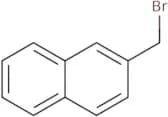
CAS:Please enquire for more information about tert-Butyl 7-formyl-3,4-dihydro-2H-1,4-benzoxazine-4-carboxylate including the price, delivery time and more detailed product information at the technical inquiry form on this pageFormula:C14H17NO4Molecular weight:263.29 g/mol2-(Bromomethyl)naphthalene
CAS:2-(Bromomethyl)naphthalene is a chemical that has been studied extensively for its ability to inhibit the growth of cancer cells. It binds with high affinity to the mitochondrial membrane potential and inhibits the production of ATP, leading to cell death. 2-(Bromomethyl)naphthalene has also been shown to produce reactive oxygen species (ROS), which can also induce tumor cell death. This compound has been used in a variety of biological samples, including urine samples, which have shown promising results. A potential target for this drug is an enzyme called hydrolysis, which may be found at higher concentrations in tumor cells. The proposed reaction mechanism is shown below: 2- (bromomethyl) naphthalene + H 2 O → bromide ion + 2- (hydroxymethyl) naphthalene The kinetic data and diphenyl sulfoxide are unknown at this time.Formula:C11H9BrPurity:Min. 98 Area-%Color and Shape:Off-White PowderMolecular weight:221.09 g/mol(+/-)-BOC-a-phosphonoglycine tri-methyl ester
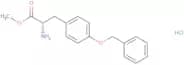
CAS:Reagent in the chemical synthesisFormula:C10H20NO7PPurity:Min. 95%Color and Shape:White PowderMolecular weight:297.24 g/molO-Benzyl-L-tyrosine methyl ester hydrochloride
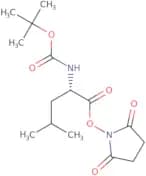
CAS:Please enquire for more information about O-Benzyl-L-tyrosine methyl ester hydrochloride including the price, delivery time and more detailed product information at the technical inquiry form on this pageFormula:C17H19NO3·HClPurity:Min. 95%Color and Shape:PowderMolecular weight:321.8 g/molBoc-L-leucine N-hydoxysuccinimide ester
CAS:The Boc-L-leucine N-hydoxysuccinimide ester is a synthetic molecule that is often used as a model for studying the effects of lysine on the activity of glutamic acid. This compound is biodegradable and has been shown to be less toxic than other compounds in its class. The Boc-L-leucine N-hydoxysuccinimide ester has potent inhibitory activity against mammalian cells, which may be due to its ability to inhibit chloride transport across membranes.Formula:C15H24N2O6Purity:Min. 95%Color and Shape:White/Off-White SolidMolecular weight:328.36 g/mol1-Bromo-2-fluoro-3-nitrobenzene
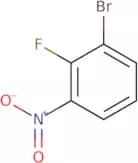
CAS:1-Bromo-2-fluoro-3-nitrobenzene is a synthetic chemical that is used as an intermediate in the synthesis of various dyes. It can be obtained by the diazotization of acetyl nitrite and acetonitrile, followed by acetylation with acetic anhydride and hydrolysis with sodium hydroxide. The bromoaniline formed after this reaction is then converted to 1-bromo-2-fluoro-3-nitrobenzene by refluxing it with nitric acid. This chemical can also be synthesized from bromines and chloride in the presence of a diazo salt. It reacts with fluoride or halogens to produce fluorobenzene derivatives, which are used as intermediates for other organic compounds.Formula:C6H3BrFNO2Purity:Min. 95%Color and Shape:Yellow PowderMolecular weight:220 g/molCyanogen bromide
CAS:Used as a condensing agent during chemical ligation of oligodeoxyribonucleotides, for peptide cleavage and in protein immobilization procedures. Other applications include inorganic synthesis to prepare cyanamides, dicyanamides, cyanuric bromide, guanidines and hydroxylguanidines.Formula:CNBrPurity:Min. 95%Color and Shape:PowderMolecular weight:105.92 g/molCyclobutyl bromide
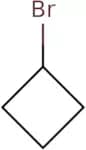
CAS:Cyclobutyl bromide is a cyclopentyl compound that has an hydroxyl group. It is a potent inhibitor of the CB2 receptor, which is primarily expressed on cells of the immune system. Cyclobutyl bromide has been shown to inhibit the uptake of uv light and also has anti-inflammatory properties. Studies have confirmed that this drug inhibits the production of cytokines and chemokines in chronic bronchitis patients, as well as other inflammatory diseases such as rheumatoid arthritis.Formula:C4H7BrPurity:Min. 95%Color and Shape:Clear LiquidMolecular weight:135 g/mol4-Cyanobenzoic acid
CAS:4-Cyanobenzoic acid (4CB) is a benzene derivative that inhibits the activity of tyrosinase, an enzyme involved in the production of melanin. It is synthesized by reacting 2,4-dichlorobenzoic acid with sodium hydroxide and acetone. 4CB has been shown to have a potent inhibitory effect on the enzyme, with an isolated yield of up to 83%. The compound also shows strong hydrogen bonding interactions with water molecules and coordinates in a geometry where one of its oxygen atoms is double bonded to two nitrogen atoms. This structural analysis suggests that 4 CB may bind to tyrosinase through adsorption mechanism.
Formula:C8H5NO2Purity:Min. 95%Color and Shape:White PowderMolecular weight:147.13 g/mol5-Chloro-1H-imidazo[4,5-b]pyridin-2(3H)-one
CAS:5-Chloro-1H-imidazo[4,5-b]pyridin-2(3H)-one is a chemical compound that is used in analytical chemistry as an insecticide. It has been shown to cause genotoxic activity in weevils exposed to light. The compound has also been shown to have long term efficacy in plants and toxicity studies on animals. 5-Chloro-1H-imidazo[4,5-b]pyridin-2(3H)-one is metabolized by detoxification enzymes and excreted through the urine.Purity:Min. 95%6-Chloro-1-methylpyridin-2(1H)-one
CAS:6-Chloro-1-methylpyridin-2(1H)-one is an insecticide and a heterocyclic compound. It is used to kill insects such as mites, ticks, and fleas. 6-Chloro-1-methylpyridin-2(1H)-one is also known as chlorantraniliprole, which has been shown to be effective against arthropods that are resistant to other compounds. This compound has an n-oxide group on the pyridine ring, which makes it more toxic than other compounds that have only one nitro group.Purity:Min. 95%5-Chloro-4-methylpyrimidine
CAS:Please enquire for more information about 5-Chloro-4-methylpyrimidine including the price, delivery time and more detailed product information at the technical inquiry form on this pageFormula:C5H5ClN2Purity:Min. 95%Molecular weight:128.56 g/mol2-Chloro-10-[3-[[3-(dimethylamino)propyl]methylamino]propyl]phenothiazine dihydrochloride
CAS:Please enquire for more information about 2-Chloro-10-[3-[[3-(dimethylamino)propyl]methylamino]propyl]phenothiazine dihydrochloride including the price, delivery time and more detailed product information at the technical inquiry form on this pageFormula:C21H28ClN3S•(HCl)2Purity:Min. 95%Molecular weight:462.91 g/molCinidon ethyl
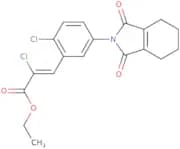
CAS:Please enquire for more information about Cinidon ethyl including the price, delivery time and more detailed product information at the technical inquiry form on this pageFormula:C19H17Cl2NO4Purity:Min. 95%Color and Shape:PowderMolecular weight:394.2 g/mol1-(2-Chlorophenyl)-2-(2H-tetrazol-2-yl)ethanone
CAS:Please enquire for more information about 1-(2-Chlorophenyl)-2-(2H-tetrazol-2-yl)ethanone including the price, delivery time and more detailed product information at the technical inquiry form on this page
Formula:C9H7ClN4OPurity:Min. 95%Molecular weight:222.63 g/mol2-Chloro-7H-pyrrolo[2,3-d]pyrimidin-4-amine
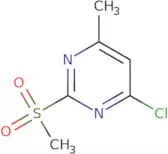
CAS:Please enquire for more information about 2-Chloro-7H-pyrrolo[2,3-d]pyrimidin-4-amine including the price, delivery time and more detailed product information at the technical inquiry form on this pageFormula:C6H5ClN4Purity:Min. 95%Molecular weight:168.58 g/mol4-Chloro-6-methyl-2-(methylsulfonyl)pyrimidine
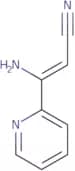
CAS:Versatile small molecule scaffoldFormula:C6H7ClN2O2SPurity:Min. 95%Molecular weight:206.65 g/mol3-Amino-3-(2-pyridinyl)acrylonitrile
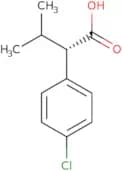
CAS:Versatile small molecule scaffoldFormula:C8H7N3Purity:Min. 95%Molecular weight:145.17 g/mol(S)-2-(4-Chlorophenyl)-3-methylbutanoic acid
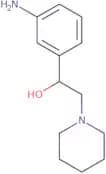
CAS:(S)-2-(4-Chlorophenyl)-3-methylbutanoic acid is a chiral molecule that has been shown to be an inhibitor of isovaleric acid. It can be used as a marker for the amino acid sequence. It has been reported that (S)-2-(4-chlorophenyl)-3-methylbutanoic acid is an endogenous metabolite in humans and its concentration can be measured by enzyme-linked immunosorbent assay, high-performance liquid chromatography, and optical monitoring. This compound has also been studied as a potential therapeutic agent for the treatment of Alzheimer's disease due to its ability to inhibit acetylcholinesterase activity. It can also be conjugated with other molecules to form amide or ester conjugates.Formula:C11H13ClO2Purity:Min. 95%Molecular weight:212.67 g/mol1-(3-Aminophenyl)-2-(piperidin-1-yl)ethan-1-ol
CAS:Versatile small molecule scaffoldFormula:C13H20N2OPurity:Min. 95%Molecular weight:220.31 g/mol6-Methylindolo[1,2-c]quinazolin-12-amine
CAS:6-Methylindolo[1,2-c]quinazolin-12-amine is a heterotetracyclic compound that contains a heterocyclic ring. It has been shown to inhibit the growth of bacteria and fungi, as well as promote apoptosis in cancer cells. 6-Methylindolo[1,2-c]quinazolin-12-amine also exhibits anti-inflammatory properties and can be used for the treatment of inflammatory diseases such as asthma.Formula:C16H13N3Purity:Min. 95%Molecular weight:247.29 g/molCyclooctane-1,5-diol
CAS:Cyclooctane-1,5-diol is a compound that consists of a carbonyl group and a hydroxyl group. It can be synthesized by the dehydrogenation of α-pinene. Cyclooctane-1,5-diol has been shown to have vibrational properties that are similar to those of intramolecular hydrogen. The 13C NMR spectrum displays strong signals at δ=54.7, δ=61.2, and δ=71.8 ppm corresponding to the carbonyl group and hydroxyl groups in the molecule. Cyclooctane-1,5-diol also has an ultraviolet absorption maximum at 265 nm and is a good nucleophile because it contains a reactive proton on its carbonyl group. Cyclooctane-1,5-diol is soluble in water and has chemical reactions with other compounds such as flavin or dinucleotide phosphate.br>br>Formula:C8H16O2Purity:Min. 95%Molecular weight:144.21 g/mol4-[(4-Methylphenyl)amino]-2,3-dihydro-1,6-thiophene-1,1-dione
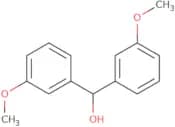
CAS:Versatile small molecule scaffoldFormula:C11H13NO2SPurity:Min. 95%Molecular weight:223.29 g/molBis(3-methoxyphenyl)methanol
CAS:Versatile small molecule scaffoldFormula:C15H16O3Purity:Min. 95%Molecular weight:244.28 g/mol





![o-[(4-Chlorophenyl)methyl]hydroxylamine](/_next/image/?url=https%3A%2Fstatic.cymitquimica.com%2Fproducts%2F3D%2Fthumb-webp%2FFAA55551.webp&w=3840&q=75)

![1-(Bicyclo[2.2.2]oct-1-yl)methanamine hydrochloride](/_next/image/?url=https%3A%2Fstatic.cymitquimica.com%2Fproducts%2F3D%2Fthumb-webp%2FFAA56174.webp&w=3840&q=75)



![5-Chloro-1H-imidazo[4,5-b]pyridin-2(3H)-one](/_next/image/?url=https%3A%2Fstatic.cymitquimica.com%2Fproducts%2F3D%2Fthumb-webp%2FFC142316.webp&w=3840&q=75)


![2-Chloro-10-[3-[[3-(dimethylamino)propyl]methylamino]propyl]phenothiazine dihydrochloride](/_next/image/?url=https%3A%2Fstatic.cymitquimica.com%2Fproducts%2F3D%2Fthumb-webp%2FFC183794.webp&w=3840&q=75)
![2-Chloro-7H-pyrrolo[2,3-d]pyrimidin-4-amine](/_next/image/?url=https%3A%2Fstatic.cymitquimica.com%2Fproducts%2F3D%2Fthumb-webp%2FFC63357.webp&w=3840&q=75)
![6-Methylindolo[1,2-c]quinazolin-12-amine](/_next/image/?url=https%3A%2Fstatic.cymitquimica.com%2Fproducts%2F3D%2Fthumb-webp%2FFCA33812.webp&w=3840&q=75)

![4-[(4-Methylphenyl)amino]-2,3-dihydro-1,6-thiophene-1,1-dione](/_next/image/?url=https%3A%2Fstatic.cymitquimica.com%2Fproducts%2F3D%2Fthumb-webp%2FFCA35770.webp&w=3840&q=75)