Building Blocks
This section contains fundamental products for the synthesis of organic and biological compounds. Building blocks are the essential starting materials used to construct complex molecules through various chemical reactions. They play a critical role in drug discovery, material science, and chemical research. At CymitQuimica, we offer a diverse range of high-quality building blocks to support your innovative research and industrial projects, ensuring you have the essential components for successful synthesis.
Subcategories of "Building Blocks"
- Boronic Acids & Boronic Acid Derivatives(5,805 products)
- Chiral Building Blocks(1,248 products)
- Hydrocarbon Building Blocks(6,118 products)
- Organic Building Blocks(61,447 products)
Found 208423 products of "Building Blocks"
Sort by
Purity (%)
0
100
|
0
|
50
|
90
|
95
|
100
2-Chloro-1-[2-(2,4-dimethoxyphenyl)pyrrolidin-1-yl]ethan-1-one
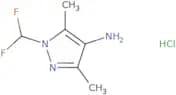
CAS:Versatile small molecule scaffoldFormula:C14H18ClNO3Purity:Min. 95%Molecular weight:283.75 g/mol1-(Difluoromethyl)-3,5-dimethyl-1H-pyrazol-4-amine hydrochloride
CAS:Versatile small molecule scaffold
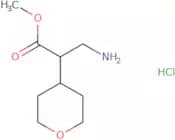
Formula:C6H10ClF2N3Purity:Min. 95%Molecular weight:197.61 g/molMethyl 3-amino-2-(oxan-4-yl)propanoate hydrochloride
CAS:Versatile small molecule scaffoldFormula:C9H18ClNO3Purity:Min. 95%Molecular weight:223.7 g/mol1-[3-Chloro-5-(trifluoromethyl)pyridin-2-yl]-5-(trifluoromethyl)-1H-pyrazole-4-carboxylic acid
CAS:Versatile small molecule scaffold
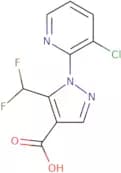
Formula:C11H4ClF6N3O2Purity:Min. 95%Molecular weight:359.61 g/mol1-(3-Chloropyridin-2-yl)-5-(difluoromethyl)-1H-pyrazole-4-carboxylic acid
CAS:Versatile small molecule scaffoldFormula:C10H6ClF2N3O2Purity:Min. 95%Molecular weight:273.62 g/mol4-[(4-Methylcyclohexyl)oxy]piperidine hydrochloride
CAS:Versatile small molecule scaffoldFormula:C12H24ClNOPurity:Min. 95%Molecular weight:233.78 g/mol[(4-Fluorophenyl)(pyridin-3-yl)methyl](propyl)amine dihydrochloride
CAS:Versatile small molecule scaffoldFormula:C15H19Cl2FN2Purity:Min. 95%Molecular weight:317.2 g/mol[(2-Chloro-4-fluorophenyl)(phenyl)methyl](methyl)amine hydrochloride
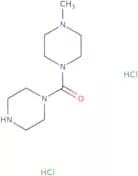
CAS:Versatile small molecule scaffoldFormula:C14H14Cl2FNPurity:Min. 95%Molecular weight:286.2 g/mol1-Methyl-4-(piperazine-1-carbonyl)piperazine dihydrochloride
CAS:Versatile small molecule scaffold
Formula:C10H22Cl2N4OPurity:Min. 95%Molecular weight:285.21 g/mol3-Amino-2-[(4-chlorophenyl)methyl]propanoic acid hydrochloride
CAS:Versatile small molecule scaffoldFormula:C10H13Cl2NO2Purity:Min. 95%Molecular weight:250.12 g/mol4-[4-(Propan-2-yl)-4H-1,2,4-triazol-3-yl]piperidine dihydrochloride
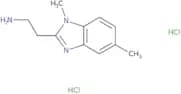
CAS:Versatile small molecule scaffoldFormula:C10H20Cl2N4Purity:Min. 95%Molecular weight:267.2 g/mol2-(1,5-Dimethyl-1H-1,3-benzodiazol-2-yl)ethan-1-amine dihydrochloride
CAS:Controlled ProductVersatile small molecule scaffoldFormula:C11H17Cl2N3Purity:Min. 95%Molecular weight:262.18 g/mol2-[4-(2-Methylpropoxy)phenyl]propan-2-amine hydrochloride
CAS:Versatile small molecule scaffoldFormula:C13H22ClNOPurity:Min. 95%Molecular weight:243.77 g/molEthyl(3-methylhexan-2-yl)amine hydrochloride
CAS:Versatile small molecule scaffold
Formula:C9H22ClNPurity:Min. 95%Molecular weight:179.73 g/mol2-{[1-(2-Chloro-4-fluorophenyl)ethyl]amino}-N-methylacetamide hydrochloride
CAS:Versatile small molecule scaffoldFormula:C11H15Cl2FN2OPurity:Min. 95%Molecular weight:281.15 g/mol2-Chloro-N-[(5-chlorothiophen-2-yl)methyl]acetamide
CAS:Versatile small molecule scaffoldFormula:C7H7Cl2NOSPurity:Min. 95%Molecular weight:224.11 g/mol(8aS)-7,7-Difluoro-octahydropyrrolo[1,2-a]piperazine dihydrochloride
CAS:Versatile small molecule scaffoldFormula:C7H14Cl2F2N2Purity:Min. 95%Molecular weight:235.1 g/molTrans,rel-(1R,2R)-2-methoxycyclopentan-1-amine hydrochloride
CAS:Versatile small molecule scaffoldFormula:C6H14ClNOPurity:Min. 95%Molecular weight:151.63 g/mol(1S)-1-(thiophen-2-yl)ethan-1-amine hydrochloride
CAS:Versatile small molecule scaffoldFormula:C6H9NS·HClPurity:Min. 95%Molecular weight:163.66 g/mol3-{[1-(4-Bromophenyl)-1-oxopropan-2-yl]carbamoyl}propanoic acid
CAS:Controlled ProductVersatile small molecule scaffoldFormula:C13H14BrNO4Purity:Min. 95%Molecular weight:328.16 g/mol5-Amino-1-ethyl-2,3-dihydro-1H-indol-2-one hydrochloride
CAS:Versatile small molecule scaffoldFormula:C10H13ClN2OPurity:Min. 95%Molecular weight:212.67 g/moltert-Butyl N-(2-methoxyethyl)-N-(piperidin-4-yl)carbamate
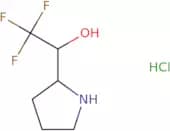
CAS:Versatile small molecule scaffoldFormula:C13H26N2O3Purity:Min. 95%Molecular weight:258.36 g/mol2,2,2-Trifluoro-1-(pyrrolidin-2-yl)ethan-1-ol hydrochloride
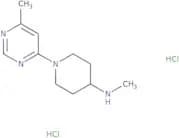
CAS:Versatile small molecule scaffoldFormula:C6H11ClF3NOPurity:Min. 95%Molecular weight:205.6 g/molN-Methyl-1-(6-methylpyrimidin-4-yl)piperidin-4-amine dihydrochloride
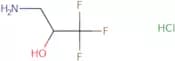
CAS:Versatile small molecule scaffoldFormula:C11H20Cl2N4Purity:Min. 95%Molecular weight:279.21 g/mol(2R)-3-Amino-1,1,1-trifluoropropan-2-ol hydrochloride
CAS:Versatile small molecule scaffold
Formula:C3H7ClF3NOPurity:Min. 95%Molecular weight:165.54 g/mol2-{3-[(Dimethylamino)methyl]phenyl}ethan-1-amine dihydrochloride
CAS:Versatile small molecule scaffold
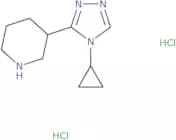
Formula:C11H20Cl2N2Purity:Min. 95%Molecular weight:251.19 g/mol3-(4-Cyclopropyl-4H-1,2,4-triazol-3-yl)piperidine dihydrochloride
CAS:Versatile small molecule scaffold
Formula:C10H18Cl2N4Purity:Min. 95%Molecular weight:265.18 g/mol1-Methyl-1H,2H,3H,4H,7H-pyrazolo[3,4-b]pyridine-3,4-dione
CAS:Versatile small molecule scaffoldFormula:C7H7N3O2Purity:Min. 95%Molecular weight:165.15 g/molMethyl 2-{[(3,4-difluorophenyl)methyl]amino}acetate hydrochloride
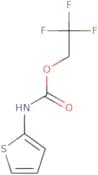
CAS:Versatile small molecule scaffoldFormula:C10H12ClF2NO2Purity:Min. 95%Molecular weight:251.66 g/mol2,2,2-Trifluoroethyl N-(thiophen-2-yl)carbamate
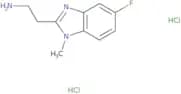
CAS:Versatile small molecule scaffoldFormula:C7H6F3NO2SPurity:Min. 95%Molecular weight:225.19 g/mol2-(5-Fluoro-1-methyl-1H-1,3-benzodiazol-2-yl)ethan-1-amine dihydrochloride
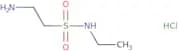
CAS:Controlled ProductVersatile small molecule scaffoldFormula:C10H14Cl2FN3Purity:Min. 95%Molecular weight:266.14 g/mol2-Amino-N-ethylethane-1-sulfonamide hydrochloride
CAS:Versatile small molecule scaffoldFormula:C4H13ClN2O2SPurity:Min. 95%Molecular weight:188.68 g/moltert-Butyl 3-amino-4-cyanopyrrolidine-1-carboxylate
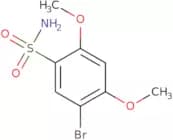
CAS:Versatile small molecule scaffoldFormula:C10H17N3O2Purity:Min. 95%Molecular weight:211.26 g/mol5-Bromo-2,4-dimethoxybenzene-1-sulfonamide
CAS:Versatile small molecule scaffoldFormula:C8H10BrNO4SPurity:Min. 95%Molecular weight:296.14 g/mol4-[3-(Dimethylamino)phenoxy]benzene-1-carbothioamide
CAS:Versatile small molecule scaffoldFormula:C15H16N2OSPurity:Min. 95%Molecular weight:272.4 g/mol2-Methyl-1-[4-(3-methylphenyl)piperazin-1-yl]propan-2-amine
CAS:Versatile small molecule scaffoldFormula:C15H25N3Purity:Min. 95%Molecular weight:247.38 g/mol3-[(6-Methylpyridazin-3-yl)amino]benzoic acid
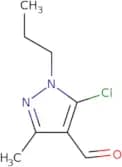
CAS:Versatile small molecule scaffoldFormula:C12H11N3O2Purity:Min. 95%Molecular weight:229.23 g/mol5-Chloro-3-methyl-1-propyl-1H-pyrazole-4-carbaldehyde
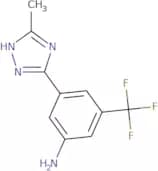
CAS:Versatile small molecule scaffoldFormula:C8H11ClN2OPurity:Min. 95%Molecular weight:186.64 g/mol3-(5-Methyl-1H-1,2,4-triazol-3-yl)-5-(trifluoromethyl)aniline
CAS:Versatile small molecule scaffoldFormula:C10H9F3N4Purity:Min. 95%Molecular weight:242.2 g/mol4-[5-(2,2-Dimethylpropyl)-1,2,4-oxadiazol-3-yl]benzoic acid
CAS:Versatile small molecule scaffoldFormula:C14H16N2O3Purity:Min. 95%Molecular weight:260.29 g/molDiethyl malonate
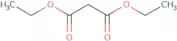
CAS:Diethyl malonate is a bioactive phytochemical that is one of the glycol ethers. It is an organic compound with a reactive nature, which can undergo reactions with other compounds to form new compounds. Diethyl malonate has been shown to be effective for reducing metabolic disorders in rats, such as diabetes mellitus and hypercholesterolemia. This compound is also used for the treatment of conditions related to coumarin derivatives and glycoside derivatives. Diethyl malonate may react with other molecules by using an oxidation process called a Michael addition. The x-ray diffraction data indicated that the diethylmalonic acid molecule had two rings: one ring was six-membered and the other was five-membered.Formula:C7H12O4Purity:Min. 95%Color and Shape:Colourless Clear LiquidMolecular weight:160.17 g/mol1-Docosanol
CAS:Docosanol is a drug that is used for the treatment of various skin disorders, including psoriasis, eczema, and ichthyosis. It is also used as an adjuvant in the treatment of chronic obstructive pulmonary disease. Docosanol is a lipid molecule that has been shown to have antiviral, antibacterial, antifungal, and antiprotozoal properties. It can be used as a carrier for topical medications and has been shown to have anti-inflammatory effects. The mechanism of action for docosanol is not well understood but may involve its ability to bind to Toll-like receptors on macrophages and neutrophils in the skin. This binding inhibits the synthesis of inflammatory mediators such as prostaglandins and leukotrienes. Docosanol also has physiological effects on water balance by acting as a surfactant in the lungs and preventing water vapor from escaping through respiratory membranes in the nose or mouth. DocosanolFormula:C22H46OPurity:Min. 95%Color and Shape:PowderMolecular weight:326.6 g/mol2,6-Dimethoxyaniline
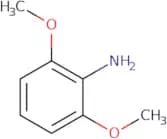
CAS:2,6-Dimethoxyaniline is a synthetic compound that has been used in the past as an antibacterial agent. It has been shown to be effective against Staphylococcus aureus and Escherichia coli, but not against Pseudomonas aeruginosa. 2,6-Dimethoxyaniline forms nanowires with an average diameter of 100 nm and lengths up to 1 micron when exposed to radiation (e.g., gamma rays). The reaction rate is dependent on the architecture and morphology of the azobenzene moiety. The chloride anion coordinates with the nitrogen atom in the molecule, which leads to a phase transition temperature of about 230 K.Formula:C8H11NO2Purity:Min. 95%Color and Shape:White PowderMolecular weight:153.18 g/mol3,5-Diamino-2,4,6-triiodobenzoic acid
CAS:3,5-Diamino-2,4,6-triiodobenzoic acid is a metabolite of hydrochloric acid and has been used in sample preparation for roentgenographic techniques. It is also used in the preparation of methylating agents for mass spectrometric analysis. It is hydrophilic with a methyl esterification that can be activated by amines. This chemical compound is found in human urine and has been shown to have an enhanced effect on tissues when combined with hydrochloric acid.
Formula:C7H5I3N2O2Purity:Min. 95%Color and Shape:PowderMolecular weight:529.84 g/mol2,2'-Dipyridylamine
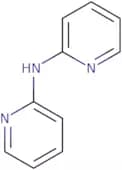
CAS:2,2'-Dipyridylamine is a compound that belongs to the group of low-energy compounds. It has been shown to have antimicrobial activity against bacteria and fungi and has been demonstrated to be effective in treating cancer cells. 2,2'-Dipyridylamine is a molecule with two nitrogen atoms, which are bound by hydrogen bonds. This compound also contains methoxy groups that are coordinated by the nitrogen atoms. The structural analysis shows that there are three open coordination sites for metal ions that can bind with the nitrogen atoms. The x-ray diffraction data show that 2,2'-dipyridylamine crystallizes in a monoclinic system with an orthorhombic unit cell.Formula:C10H9N3Purity:Min. 95%Molecular weight:171.2 g/mol2,5-Difluoropyridine
CAS:2,5-Difluoropyridine is a ligand that is used in the synthesis of pharmaceuticals and other organic compounds. 2,5-Difluoropyridine is typically activated by a metal ion (e.g., palladium) to form an organometallic complex. The orientation of substituents on the difluoropyridine ring can affect its reactivity and selectivity. For example, chlorine atoms interact with the electrophilic carbon atom in the ring and orientations with electron withdrawing groups are more reactive than those with electron donating groups. 2,5-Difluoropyridine can be used as a cross-coupling reagent for Grignard reactions and nucleophilic substitution reactions. It also has been shown to inhibit human erythrocyte pyruvate kinase activity in vitro and may be useful for the treatment of diabetic complications such as neuropathy or retinopathy.Formula:C5H3F2NPurity:Min. 95%Color and Shape:Clear LiquidMolecular weight:115.08 g/mol3,5-Dichloroaniline
CAS:3,5-Dichloroaniline is an organic compound that exists in two forms. The form that is of most interest to chemists is the para form, which is also called 3,5-dichloro-4-nitroaniline. It has been shown to be an inhibitor of the P450 enzyme system and can be used as a probe for this enzyme activity. 3,5-Dichloroaniline inhibits the activity of bacterial enzymes such as urease, nitroreductase, and cytochrome C reductase. This compound also inhibits the reaction between hydrochloric acid and ammonia to produce ammonium chloride and water. Solubility data for this compound have been obtained by a variety of methods including in vitro studies and experiments on Sprague-Dawley rats.Formula:C6H5Cl2NPurity:Min. 95%Molecular weight:162.02 g/mol4,6-Dichloroisatin
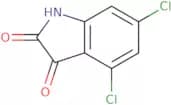
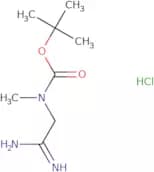
CAS:4,6-Dichloroisatin is a pro-apoptotic compound that is synthesized from amino acids. It has been shown to have anticancer activity in human liver cancer cells, which may be due to its ability to induce apoptosis. 4,6-Dichloroisatin has also been shown to inhibit the production of electron transport chain proteins in the mitochondria by binding to their regulatory sites and inhibiting their phosphorylation. This inhibition of electron transport chain proteins leads to an accumulation of electrons that can react with molecular oxygen and produce reactive oxygen species (ROS). ROS are known for their ability to cause DNA damage and cell death through oxidative stress.Formula:C8H3Cl2NO2Purity:Min. 95%Molecular weight:216.02 g/moltert-Butyl N-(2-amino-2-iminiumylethyl)-N-methylcarbamate chloride
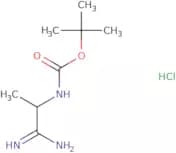
CAS:Versatile small molecule scaffoldFormula:C8H18ClN3O2Purity:Min. 95%Molecular weight:223.7 g/moltert-Butyl N-(1-carbamimidoylethyl)carbamate hydrochloride
CAS:Versatile small molecule scaffoldFormula:C8H18ClN3O2Purity:Min. 95%Molecular weight:223.7 g/mol
![2-Chloro-1-[2-(2,4-dimethoxyphenyl)pyrrolidin-1-yl]ethan-1-one](/_next/image/?url=https%3A%2Fstatic.cymitquimica.com%2Fproducts%2F3D%2Fthumb-webp%2FFCC71177.webp&w=3840&q=75)

![1-[3-Chloro-5-(trifluoromethyl)pyridin-2-yl]-5-(trifluoromethyl)-1H-pyrazole-4-carboxylic acid](/_next/image/?url=https%3A%2Fstatic.cymitquimica.com%2Fproducts%2F3D%2Fthumb-webp%2FFCC71184.webp&w=3840&q=75)
![4-[(4-Methylcyclohexyl)oxy]piperidine hydrochloride](/_next/image/?url=https%3A%2Fstatic.cymitquimica.com%2Fproducts%2F3D%2Fthumb-webp%2FFCC71189.webp&w=3840&q=75)
amine dihydrochloride](/_next/image/?url=https%3A%2Fstatic.cymitquimica.com%2Fproducts%2F3D%2Fthumb-webp%2FFCC71192.webp&w=3840&q=75)
amine hydrochloride](/_next/image/?url=https%3A%2Fstatic.cymitquimica.com%2Fproducts%2F3D%2Fthumb-webp%2FFCC71193.webp&w=3840&q=75)
![3-Amino-2-[(4-chlorophenyl)methyl]propanoic acid hydrochloride](/_next/image/?url=https%3A%2Fstatic.cymitquimica.com%2Fproducts%2F3D%2Fthumb-webp%2FFCC71203.webp&w=3840&q=75)
![4-[4-(Propan-2-yl)-4H-1,2,4-triazol-3-yl]piperidine dihydrochloride](/_next/image/?url=https%3A%2Fstatic.cymitquimica.com%2Fproducts%2F3D%2Fthumb-webp%2FFCC71206.webp&w=3840&q=75)
![2-[4-(2-Methylpropoxy)phenyl]propan-2-amine hydrochloride](/_next/image/?url=https%3A%2Fstatic.cymitquimica.com%2Fproducts%2F3D%2Fthumb-webp%2FFCC71213.webp&w=3840&q=75)
![2-{[1-(2-Chloro-4-fluorophenyl)ethyl]amino}-N-methylacetamide hydrochloride](/_next/image/?url=https%3A%2Fstatic.cymitquimica.com%2Fproducts%2F3D%2Fthumb-webp%2FFCC71217.webp&w=3840&q=75)
![2-Chloro-N-[(5-chlorothiophen-2-yl)methyl]acetamide](/_next/image/?url=https%3A%2Fstatic.cymitquimica.com%2Fproducts%2F3D%2Fthumb-webp%2FFCC71219.webp&w=3840&q=75)
![(8aS)-7,7-Difluoro-octahydropyrrolo[1,2-a]piperazine dihydrochloride](/_next/image/?url=https%3A%2Fstatic.cymitquimica.com%2Fproducts%2F3D%2Fthumb-webp%2FFCC71221.webp&w=3840&q=75)
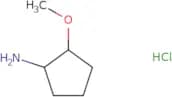
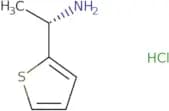
![3-{[1-(4-Bromophenyl)-1-oxopropan-2-yl]carbamoyl}propanoic acid](/_next/image/?url=https%3A%2Fstatic.cymitquimica.com%2Fproducts%2F3D%2Fthumb-webp%2FFCC71239.webp&w=3840&q=75)
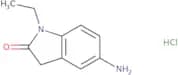
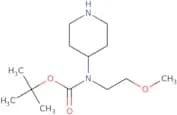
![2-{3-[(Dimethylamino)methyl]phenyl}ethan-1-amine dihydrochloride](/_next/image/?url=https%3A%2Fstatic.cymitquimica.com%2Fproducts%2F3D%2Fthumb-webp%2FFCC71260.webp&w=3840&q=75)
![1-Methyl-1H,2H,3H,4H,7H-pyrazolo[3,4-b]pyridine-3,4-dione](/_next/image/?url=https%3A%2Fstatic.cymitquimica.com%2Fproducts%2F3D%2Fthumb-webp%2FFCC71264.webp&w=3840&q=75)
![Methyl 2-{[(3,4-difluorophenyl)methyl]amino}acetate hydrochloride](/_next/image/?url=https%3A%2Fstatic.cymitquimica.com%2Fproducts%2F3D%2Fthumb-webp%2FFCC71266.webp&w=3840&q=75)

![4-[3-(Dimethylamino)phenoxy]benzene-1-carbothioamide](/_next/image/?url=https%3A%2Fstatic.cymitquimica.com%2Fproducts%2F3D%2Fthumb-webp%2FFCC78443.webp&w=3840&q=75)
![2-Methyl-1-[4-(3-methylphenyl)piperazin-1-yl]propan-2-amine](/_next/image/?url=https%3A%2Fstatic.cymitquimica.com%2Fproducts%2F3D%2Fthumb-webp%2FFCC78567.webp&w=3840&q=75)
![3-[(6-Methylpyridazin-3-yl)amino]benzoic acid](/_next/image/?url=https%3A%2Fstatic.cymitquimica.com%2Fproducts%2F3D%2Fthumb-webp%2FFCC79206.webp&w=3840&q=75)
![4-[5-(2,2-Dimethylpropyl)-1,2,4-oxadiazol-3-yl]benzoic acid](/_next/image/?url=https%3A%2Fstatic.cymitquimica.com%2Fproducts%2F3D%2Fthumb-webp%2FFCC93851.webp&w=3840&q=75)