


Building Blocks
This section contains fundamental products for the synthesis of organic and biological compounds. Building blocks are the essential starting materials used to construct complex molecules through various chemical reactions. They play a critical role in drug discovery, material science, and chemical research. At CymitQuimica, we offer a diverse range of high-quality building blocks to support your innovative research and industrial projects, ensuring you have the essential components for successful synthesis.
Subcategories of "Building Blocks"
- Boronic Acids & Boronic Acid Derivatives(5,781 products)
- Chiral Building Blocks(1,242 products)
- Hydrocarbon Building Blocks(6,101 products)
- Organic Building Blocks(61,033 products)
Found 205320 products of "Building Blocks"
Sort by
Purity (%)
0
100
|
0
|
50
|
90
|
95
|
100
Ethyl 5-chloropyrazolo[1,5-a]pyridine-2-carboxylate
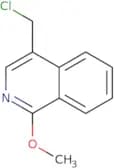
CAS:Versatile small molecule scaffoldFormula:C10H9ClN2O2Purity:Min. 95%Molecular weight:224.64 g/mol4-(Chloromethyl)-1-methoxyisoquinoline
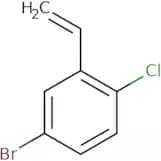
CAS:Versatile small molecule scaffoldFormula:C11H10ClNOPurity:Min. 95%Molecular weight:207.65 g/mol4-Bromo-1-chloro-2-ethenylbenzene
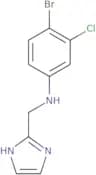
CAS:Versatile small molecule scaffoldFormula:C8H6BrClPurity:Min. 95%Molecular weight:217.49 g/mol4-Bromo-3-chloro-N-(1H-imidazol-2-ylmethyl)aniline
CAS:Versatile small molecule scaffoldFormula:C10H9BrClN3Purity:Min. 95%Molecular weight:286.55 g/mol3-{[(tert-Butoxy)carbonyl]amino}-2-(hydroxymethyl)propanoic acid
CAS:Versatile small molecule scaffold
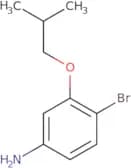
Formula:C9H17NO5Purity:Min. 95%Molecular weight:219.23 g/mol4-Bromo-3-(2-methylpropoxy)aniline
CAS:Versatile small molecule scaffold
Formula:C10H14BrNOPurity:Min. 95%Molecular weight:244.13 g/mol2-Chloro-5H,6H,7H-pyrimido[4,5-b][1,4]thiazin-6-one
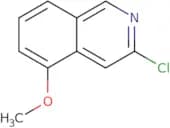
CAS:Versatile small molecule scaffoldFormula:C6H4ClN3OSPurity:Min. 95%Molecular weight:201.63 g/mol3-Chloro-5-methoxyisoquinoline
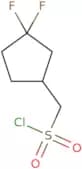
CAS:Versatile small molecule scaffoldFormula:C10H8ClNOPurity:Min. 95%Molecular weight:193.63 g/mol(3,3-Difluorocyclopentyl)methanesulfonyl chloride
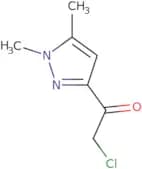
CAS:Versatile small molecule scaffoldFormula:C6H9ClF2O2SPurity:Min. 95%Molecular weight:218.65 g/mol2-Chloro-1-(1,5-dimethyl-1H-pyrazol-3-yl)ethan-1-one
CAS:Versatile small molecule scaffold
Formula:C7H9ClN2OPurity:Min. 95%Molecular weight:172.61 g/mol3,3-Dimethyl-1-[(thiolan-3-yl)methyl]urea
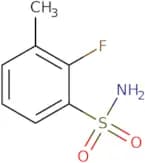
CAS:Versatile small molecule scaffoldFormula:C8H16N2OSPurity:Min. 95%Molecular weight:188.3 g/mol2-Fluoro-3-methylbenzene-1-sulfonamide
CAS:Versatile small molecule scaffoldFormula:C7H8FNO2SPurity:Min. 95%Molecular weight:189.21 g/mol[2-Bromo-4-(ethylsulfanyl)phenyl]methanol
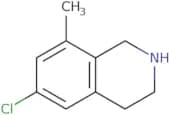
CAS:Versatile small molecule scaffoldFormula:C9H11BrOSPurity:Min. 95%Molecular weight:247.15 g/mol6-Chloro-8-methyl-1,2,3,4-tetrahydroisoquinoline
CAS:Versatile small molecule scaffoldFormula:C10H12ClNPurity:Min. 95%Molecular weight:181.66 g/mol8-Bromo-3,4-dihydro-2H-1-benzopyran-3-carboxylic acid
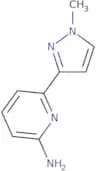
CAS:Versatile small molecule scaffoldFormula:C10H9BrO3Purity:Min. 95%Molecular weight:257.08 g/mol6-(1-Methyl-1H-pyrazol-3-yl)pyridin-2-amine
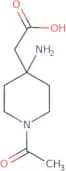
CAS:Versatile small molecule scaffoldFormula:C9H10N4Purity:Min. 95%Molecular weight:174.2 g/mol2-(1-Acetyl-4-aminopiperidin-4-yl)acetic acid
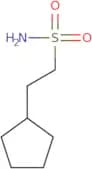
CAS:Versatile small molecule scaffoldFormula:C9H16N2O3Purity:Min. 95%Molecular weight:200.23 g/mol2-Cyclopentylethane-1-sulfonamide
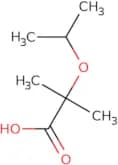
CAS:Versatile small molecule scaffoldFormula:C7H15NO2SPurity:Min. 95%Molecular weight:177.27 g/mol2-Methyl-2-(propan-2-yloxy)propanoic acid
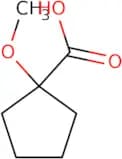
CAS:Versatile small molecule scaffoldFormula:C7H14O3Purity:Min. 95%Molecular weight:146.18 g/mol1-Methoxycyclopentane-1-carboxylic acid
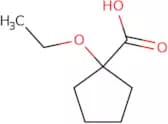
CAS:Versatile small molecule scaffoldFormula:C7H12O3Purity:Min. 95%Molecular weight:144.17 g/mol1-Ethoxycyclopentane-1-carboxylic acid
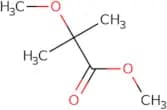
CAS:Versatile small molecule scaffoldFormula:C8H14O3Purity:Min. 95%Molecular weight:158.19 g/molMethyl 2-methoxy-2-methylpropanoate
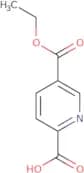
CAS:Versatile small molecule scaffoldFormula:C6H12O3Purity:Min. 95%Molecular weight:132.16 g/mol5-(Ethoxycarbonyl)pyridine-2-carboxylic acid
CAS:Versatile small molecule scaffoldFormula:C9H9NO4Purity:Min. 95%Molecular weight:195.17 g/mol5-ethynylpyridine-2-carboxylic acid
CAS:5-Ethynylpyridine-2-carboxylic acid is a ligand with a pyridine ring. It binds to the pyridyl subunit of proteins, such as phosphoglycerate kinase and ATP synthase. This compound coordinates with metals to form complexes. It has been used to synthesize other compounds, including benzoate and nitrate salts, which have yielded luminescent frameworks.Formula:C8H5NO2Purity:Min. 95%Molecular weight:147.1 g/mol[(4-Methylquinolin-2-yl)sulfanyl]acetic acid
CAS:[(4-Methylquinolin-2-yl)sulfanyl]acetic acid is a chemical intermediate that is used in the synthesis of other organic compounds. It can be obtained by reacting acrylonitrile with potassium permanganate in water, followed by hydrolysis of the resulting manganese dioxide to give [(4-methylquinolin-2-yl)sulfanyl]acetic acid. This intermediate can also be synthesized from chloroacetic acid and ethyl bromoacetate, which are then converted to allyl bromide by reaction with potassium. The allyl bromide is then reacted with methyl methacrylate in the presence of amide to produce [(4-methylquinolin-2-yl)sulfanyl]acetic acid.Formula:C12H11NO2SPurity:Min. 95%Molecular weight:233.29 g/mol3-(Trimethylsilyl)benzaldehyde
CAS:Versatile small molecule scaffoldFormula:C10H14OSiPurity:Min. 95%Molecular weight:178.3 g/mol2-[(4-Cyanophenyl)sulfanyl]acetic acid
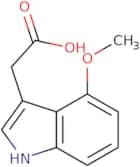
CAS:Versatile small molecule scaffoldFormula:C9H7NO2SPurity:Min. 95%Molecular weight:193.22 g/mol4-Methoxyindole-3-acetic Acid
CAS:Versatile small molecule scaffoldFormula:C11H11NO3Purity:Min. 95%Molecular weight:205.21 g/mol5-Ethyl-4,5,6,7-tetrahydro-thiazolo[5,4-c]pyridin-2-ylamine
CAS:Versatile small molecule scaffoldFormula:C8H13N3SPurity:Min. 95%Molecular weight:183.27 g/mol5-Isopropyl-4,5,6,7-tetrahydro-thiazolo[5,4-c]-pyridin-2-ylamine
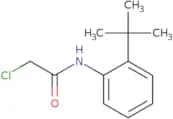
CAS:Versatile small molecule scaffoldFormula:C9H15N3SPurity:Min. 95%Molecular weight:197.3 g/molN-(2-tert-Butylphenyl)-2-chloroacetamide
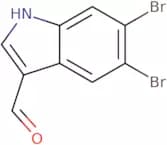
CAS:Versatile small molecule scaffoldFormula:C12H16ClNOPurity:Min. 95%Molecular weight:225.71 g/mol5,6-Dibromo-1H-indole-3-carbaldehyde
CAS:Versatile small molecule scaffoldFormula:C9H5Br2NOPurity:Min. 95%Molecular weight:302.95 g/mol6,7,8,9-Tetrahydro-5H-benzo[7]annulen-5-amine
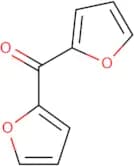
CAS:Versatile small molecule scaffoldFormula:C11H15NPurity:Min. 95%Molecular weight:161.25 g/molbis(furan-2-yl)methanone
CAS:Bis(furan-2-yl)methanone is a furyl compound that is activated by trifluoromethanesulfonic acid. It has been shown to be an effective dose for the treatment of bacterial infections that are resistant to erythromycin and other antibiotics. Bis(furan-2-yl)methanone is used in veterinary medicine to treat infections caused by bacteria such as Escherichia coli, Proteus mirabilis, Klebsiella pneumoniae, and Streptococcus agalactiae. This drug has been shown to be active against Gram-positive bacteria, including Bacillus cereus, Clostridium perfringens, Clostridium tetani, Staphylococcus aureus, Streptococcus pyogenes, and Streptococcus pneumoniae.Formula:C9H6O3Purity:Min. 95%Molecular weight:162.14 g/mol3-Methylenebicyclo[3.3.1]nonan-7-one
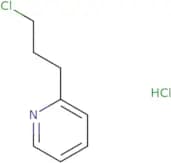
CAS:3-Methylenebicyclo[3.3.1]nonan-7-one is a chiral molecule that has been synthesized as a racemic mixture of two enantiomers. This compound is an amine with a hydroxy group and an isopropyl side chain. It has been shown to have anti-inflammatory properties, which may be due to its ability to inhibit cyclooxygenase and lipoxygenase activity. 3-Methylenebicyclo[3.3.1]nonan-7-one also has antiviral properties, which are due to its inhibition of protein synthesis in viruses by blocking the activity of ribonucleotide reductase, an enzyme required for nucleic acid synthesis. The reaction mechanism involves the formation of a covalent bond between the amantadine and the active site of ribonucleotide reductase through either radical or hydrogen atom transfer mechanisms.Formula:C10H14OPurity:Min. 95%Molecular weight:150.22 g/mol2-(3-Chloropropyl)pyridine hydrochloride
CAS:Versatile small molecule scaffoldFormula:C8H11Cl2NPurity:Min. 95%Molecular weight:192.08 g/mol(2-Phenoxyethyl)amine hydrochloride
CAS:2-Phenoxyethyl)amine hydrochloride is a chlorinated, industrial, synthetic chemical used as a reaction solvent. It can be derived from cyclohexylamine and ethanolamine by reacting with phenol. The reaction product is then hydrolyzed to produce 2-phenoxyethyl)amine hydrochloride.Formula:C8H12ClNOPurity:Min. 95%Molecular weight:173.64 g/mol4-[2-(Trimethylsilyl)ethyl]aniline
CAS:Versatile small molecule scaffold
Formula:C11H19NSiPurity:Min. 95%Molecular weight:193.36 g/mol3,7-Dibromo-1,5-naphthyridine
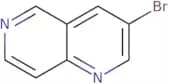
CAS:Versatile small molecule scaffoldFormula:C8H4Br2N2Purity:Min. 95%Molecular weight:287.94 g/mol3-Bromo-1,6-naphthyridine
CAS:Versatile small molecule scaffoldFormula:C8H5BrN2Purity:Min. 95%Molecular weight:209.04 g/mol3,8-Dibromo-[1,6]naphthyridine
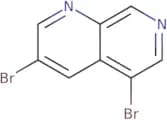
CAS:Versatile small molecule scaffoldFormula:C8H4Br2N2Purity:Min. 95%Molecular weight:287.94 g/mol3,5-Dibromo-1,7-naphthyridine
CAS:Versatile small molecule scaffoldFormula:C8H4Br2N2Purity:Min. 95%Molecular weight:287.94 g/mol2-[2-(2,4-Dichlorophenyl)-1,3-thiazol-4-yl]acetic acid
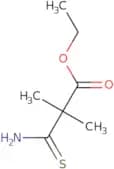
CAS:Controlled Product2-[2-(2,4-Dichlorophenyl)-1,3-thiazol-4-yl]acetic acid is a small molecule inhibitor that belongs to the class of peptides. It inhibits protein interactions by binding to peptide receptors on the surface of cells. This inhibitor is used as a research tool for studying the function of receptor molecules. 2-[2-(2,4-Dichlorophenyl)-1,3-thiazol-4-yl]acetic acid has been shown to activate ligand and receptor interactions in vitro. The purity of this product is high and it can be used as a research tool in life science and ion channels.Formula:C11H7Cl2NO2SPurity:Min. 95%Molecular weight:288.1 g/molEthyl 2-carbamothioyl-2,2-dimethylacetate
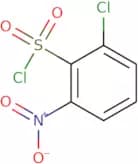
CAS:Versatile small molecule scaffoldFormula:C7H13NO2SPurity:Min. 95%Molecular weight:175.25 g/mol2-Chloro-6-nitrobenzene-1-sulfonyl chloride
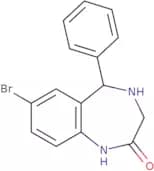
CAS:Versatile small molecule scaffoldFormula:C6H3Cl2NO4SPurity:Min. 95%Molecular weight:256.06 g/mol7-Bromo-5-phenyl-2,3,4,5-tetrahydro-1H-1,4-benzodiazepin-2-one
CAS:Controlled ProductVersatile small molecule scaffold
Formula:C15H13BrN2OPurity:Min. 95%Molecular weight:317.18 g/mol7-Methyl-5-phenyl-1,3,4,5-tetrahydro-2H-1,4-benzodiazepin-2-one
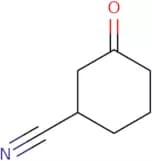
CAS:Controlled ProductVersatile small molecule scaffoldFormula:C16H16N2OPurity:Min. 95%Molecular weight:252.31 g/mol3-Oxocyclohexanecarbonitrile
CAS:3-Oxocyclohexanecarbonitrile (3OHC) is a novel chemical compound with analgesic properties. 3OHC has been shown to be effective in reducing the inflammation of the human body. The mechanism of action has not yet been elucidated, but it may be due to its ability to inhibit prostaglandin synthesis and reduce the oxidative stress by forming reactive oxygen species. 3OHC is also an active antinociceptive agent that can be used in combination with other drugs to treat inflammatory diseases. 3OHC is able to reduce the pain caused by inflammatory diseases by reducing the production of prostaglandins, which are a group of chemicals that are responsible for causing pain and inflammation.Formula:C7H9NOPurity:Min. 95%Molecular weight:123.15 g/mol2-[4-(Trimethylsilyl)phenyl]acetonitrile
CAS:Versatile small molecule scaffoldFormula:C11H15NSiPurity:Min. 95%Molecular weight:189.33 g/mol2-Nitro-5H,6H,7H,8H,9H,10H-cyclohepta[b]indole
CAS:Versatile small molecule scaffoldFormula:C13H14N2O2Purity:Min. 95%Molecular weight:230.26 g/mol
![Ethyl 5-chloropyrazolo[1,5-a]pyridine-2-carboxylate](/_next/image/?url=https%3A%2Fstatic.cymitquimica.com%2Fproducts%2F3D%2Fthumb-webp%2FRSC04687.webp&w=3840&q=75)

![3-{[(tert-Butoxy)carbonyl]amino}-2-(hydroxymethyl)propanoic acid](/_next/image/?url=https%3A%2Fstatic.cymitquimica.com%2Fproducts%2F3D%2Fthumb-webp%2FRSC24332.webp&w=3840&q=75)
![2-Chloro-5H,6H,7H-pyrimido[4,5-b][1,4]thiazin-6-one](/_next/image/?url=https%3A%2Fstatic.cymitquimica.com%2Fproducts%2F3D%2Fthumb-webp%2FRSC67342.webp&w=3840&q=75)
![3,3-Dimethyl-1-[(thiolan-3-yl)methyl]urea](/_next/image/?url=https%3A%2Fstatic.cymitquimica.com%2Fproducts%2F3D%2Fthumb-webp%2FRSC74951.webp&w=3840&q=75)
![[2-Bromo-4-(ethylsulfanyl)phenyl]methanol](/_next/image/?url=https%3A%2Fstatic.cymitquimica.com%2Fproducts%2F3D%2Fthumb-webp%2FRSC75622.webp&w=3840&q=75)

![[(4-Methylquinolin-2-yl)sulfanyl]acetic acid](/_next/image/?url=https%3A%2Fstatic.cymitquimica.com%2Fproducts%2F3D%2Fthumb-webp%2FSAA88062.webp&w=3840&q=75)

![2-[(4-Cyanophenyl)sulfanyl]acetic acid](/_next/image/?url=https%3A%2Fstatic.cymitquimica.com%2Fproducts%2F3D%2Fthumb-webp%2FSAA89344.webp&w=3840&q=75)
![5-Ethyl-4,5,6,7-tetrahydro-thiazolo[5,4-c]pyridin-2-ylamine](/_next/image/?url=https%3A%2Fstatic.cymitquimica.com%2Fproducts%2F3D%2Fthumb-webp%2FSAA89949.webp&w=3840&q=75)
![5-Isopropyl-4,5,6,7-tetrahydro-thiazolo[5,4-c]-pyridin-2-ylamine](/_next/image/?url=https%3A%2Fstatic.cymitquimica.com%2Fproducts%2F3D%2Fthumb-webp%2FSAA89951.webp&w=3840&q=75)
![6,7,8,9-Tetrahydro-5H-benzo[7]annulen-5-amine](/_next/image/?url=https%3A%2Fstatic.cymitquimica.com%2Fproducts%2F3D%2Fthumb-webp%2FSAA91026.webp&w=3840&q=75)
![3-Methylenebicyclo[3.3.1]nonan-7-one](/_next/image/?url=https%3A%2Fstatic.cymitquimica.com%2Fproducts%2F3D%2Fthumb-webp%2FSAA93329.webp&w=3840&q=75)

![4-[2-(Trimethylsilyl)ethyl]aniline](/_next/image/?url=https%3A%2Fstatic.cymitquimica.com%2Fproducts%2F3D%2Fthumb-webp%2FSAA96195.webp&w=3840&q=75)

![3,8-Dibromo-[1,6]naphthyridine](/_next/image/?url=https%3A%2Fstatic.cymitquimica.com%2Fproducts%2F3D%2Fthumb-webp%2FSAA96575.webp&w=3840&q=75)
![2-[2-(2,4-Dichlorophenyl)-1,3-thiazol-4-yl]acetic acid](/_next/image/?url=https%3A%2Fstatic.cymitquimica.com%2Fproducts%2F3D%2Fthumb-webp%2FSAA96929.webp&w=3840&q=75)

![2-[4-(Trimethylsilyl)phenyl]acetonitrile](/_next/image/?url=https%3A%2Fstatic.cymitquimica.com%2Fproducts%2F3D%2Fthumb-webp%2FSAA98341.webp&w=3840&q=75)
![2-Nitro-5H,6H,7H,8H,9H,10H-cyclohepta[b]indole](/_next/image/?url=https%3A%2Fstatic.cymitquimica.com%2Fproducts%2F3D%2Fthumb-webp%2FSAA99355.webp&w=3840&q=75)