Building Blocks
Subcategories of "Building Blocks"
- Boronic Acids & Boronic Acid Derivatives(5,786 products)
- Chiral Building Blocks(1,246 products)
- Hydrocarbon Building Blocks(6,107 products)
- Organic Building Blocks(61,079 products)
Found 205461 products of "Building Blocks"
1,3-Diethyl 2-[2-(2-nitrophenyl)hydrazin-1-ylidene]propanedioate
CAS:Versatile small molecule scaffoldFormula:C13H15N3O6Purity:Min. 95%Molecular weight:309.27 g/mol1,3-Diethyl 2-[2-(3-nitrophenyl)hydrazin-1-ylidene]propanedioate
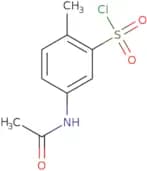
CAS:1,3-Diethyl 2-[2-(3-nitrophenyl)hydrazin-1-ylidene]propanedioate is a halogen that has been used in the production of silver and silver halide. In the presence of light, this compound undergoes a series of reactions to form silver. It can be used as a reducing agent for silver ions or as a precursor for the formation of other silver compounds. This compound also functions as an agent that converts chloride ions to bromide ions by reaction with hydrogen peroxide.Formula:C13H15N3O6Purity:Min. 95%Molecular weight:309.27 g/mol5-Acetylamino-2-methyl-benzenesulfonyl chloride
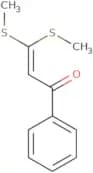
CAS:Versatile small molecule scaffoldFormula:C9H10ClNO3SPurity:Min. 95%Molecular weight:247.7 g/mol3,3-Bis(methylsulfanyl)-1-phenylprop-2-en-1-one
CAS:Versatile small molecule scaffoldFormula:C11H12OS2Purity:Min. 95%Molecular weight:224.35 g/mol6-Methoxy-1-phenyl-1H,2H,3H,4H,9H-pyrido[3,4-b]indole hydrochloride
CAS:Versatile small molecule scaffoldFormula:C18H19ClN2OPurity:Min. 95%Molecular weight:314.8 g/mol2-[(Pyridin-2-yl)methyl]cyclopentan-1-one
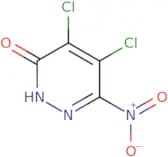
CAS:Versatile small molecule scaffoldFormula:C11H13NOPurity:Min. 95%Molecular weight:175.23 g/mol4,5-dichloro-6-nitro-2,3-dihydropyridazin-3-one
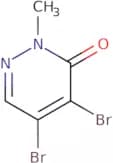
CAS:Versatile small molecule scaffoldFormula:C4HCl2N3O3Purity:Min. 95%Molecular weight:210 g/mol4,5-Dibromo-2-methyl-2,3-dihydropyridazin-3-one
CAS:Versatile small molecule scaffoldFormula:C5H4Br2N2OPurity:Min. 95%Molecular weight:267.91 g/mol2-(ethanesulfonyl)acetonitrile
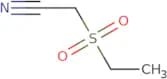
CAS:2-(ethanesulfonyl)acetonitrile is an organic solvent that has a constant boiling point, high reactivity, and low toxicity. It can be used as an acid catalyst in fluorination reactions or to synthesize nitro groups. 2-(ethanesulfonyl)acetonitrile has a reactive functional group and hydrocarbon group that can be substituted with other substituents. The fluorine atom in this compound is replaced with a nitro group when it reacts with oxygen. 2-(ethanesulfonyl)acetonitrile is used in synthetic chemistry to create nitro compounds by the reaction of nitric oxide with the nitro-group on the aromatic ring.
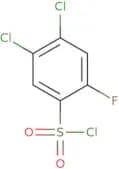
Formula:C4H7NO2SPurity:Min. 95%Molecular weight:133.17 g/mol4,5-Dichloro-2-fluorobenzenesulphonyl chloride
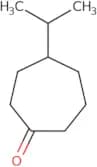
CAS:Versatile small molecule scaffoldFormula:C6H2Cl3FO2SPurity:Min. 95%Molecular weight:263.5 g/mol4-(Propan-2-yl)cycloheptan-1-one
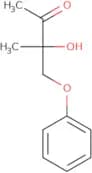
CAS:Versatile small molecule scaffoldFormula:C10H18OPurity:Min. 95%Molecular weight:154.25 g/mol3-Hydroxy-3-methyl-4-phenoxybutan-2-one
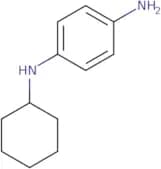
CAS:Versatile small molecule scaffoldFormula:C11H14O3Purity:Min. 95%Molecular weight:194.2 g/molN-(4-Aminophenyl)-N-cyclohexylamine
CAS:Versatile small molecule scaffold
Formula:C12H18N2Purity:Min. 95%Molecular weight:190.28 g/mol1-(4-Nitrophenyl)azepane
CAS:1-(4-Nitrophenyl)azepane is a potent fxa inhibitor. It inhibits the serine proteases, such as thrombin, and has been shown to have anticoagulant effects in animal models. 1-(4-Nitrophenyl)azepane interacts with the active site of serine protease and competes with the substrate for binding to coagulation proteins. This inhibition leads to a reduction in coagulation and an increase in bleeding time.
Formula:C12H16N2O2Purity:Min. 95%Molecular weight:220.27 g/mol1-[(2-Nitrophenyl)methyl]pyridin-1-ium bromide
CAS:Versatile small molecule scaffoldFormula:C12H11BrN2O2Purity:Min. 95%Molecular weight:295.13 g/molEthyl 2-[(6-formyl-1,3-dioxaindan-5-yl)oxy]acetate
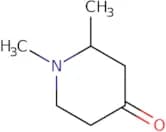
CAS:Versatile small molecule scaffoldFormula:C12H12O6Purity:Min. 95%Molecular weight:252.22 g/mol1,2-Dimethylpiperidin-4-one
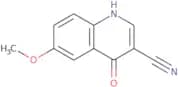
CAS:1,2-Dimethylpiperidin-4-one is a chiral compound that can be used to make optically active compounds. It is an important intermediate in the synthesis of piperidones. The 1,2-dimethylpiperidin-4-one has two diastereomers, which are called cis and trans. The cis configuration has a methyl group in the same plane as the amine group, whereas the trans configuration has the methyl group in a different plane. The cis configuration is more stable than the trans one and this is because it is less sterically hindered by the bulky groups on either side of it. This means that if you want to make an optical pure compound, it will be easier to do so using cis rather than trans 1,2-dimethylpiperidin-4-one.Formula:C7H13NOPurity:Min. 95%Molecular weight:127.18 g/mol4-Hydroxy-6-methoxyquinoline-3-carbonitrile
CAS:Versatile small molecule scaffold
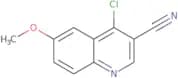
Formula:C11H8N2O2Purity:Min. 95%Molecular weight:200.19 g/mol4-Chloro-6-methoxy quinoline-3-carbonitrile
CAS:Versatile small molecule scaffoldFormula:C11H7ClN2OPurity:Min. 95%Molecular weight:218.64 g/mol3-bromo-6-chloroquinoline
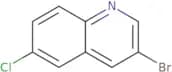
CAS:3-Bromo-6-chloroquinoline is a cisplatin analogue that is used in the treatment of cancer. It has been shown to have cytotoxic effects against human T47D cells, an estrogen receptor positive cell line, by binding to DNA and interfering with DNA replication. 3-Bromo-6-chloroquinoline has also been shown to have significant cytotoxic activity against the Mcf-7 breast cancer cell line. It binds to the proximal region of the human cytochrome P450 1A2 enzyme and blocks its ability to metabolize drugs, which prevents the activation of certain anticancer agents. This drug also inhibits the synthesis of RNA and protein, leading to cancer cell death.
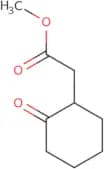
Formula:C9H5NClBrPurity:Min. 95%Molecular weight:242.49 g/molMethyl 2-(2-oxocyclohexyl)acetate
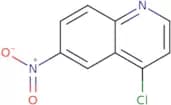
CAS:Methyl 2-(2-oxocyclohexyl)acetate is a chiral, polycyclic organic compound that is an intermediate in the synthesis of tryptamines. It is prepared by reacting cyclohexylamine with methyl chlorocarbonate and then refluxing the mixture to produce the desired product. The yields of this reaction are typically low, but can be increased by using phosphoric acid as a catalyst.Formula:C9H14O3Purity:Min. 95%Molecular weight:170.21 g/mol4-Chloro-6-nitroquinoline
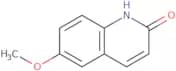
CAS:4-Chloro-6-nitroquinoline is a dopamine receptor antagonist that has been shown to have high affinity and selectivity for the 5-HT6 receptor. This agent inhibits the binding of serotonin to 5-HT6 receptors, which causes an increase in dopamine release in the brain. 4-Chloro-6-nitroquinoline has been used in a study of Parkinson's disease and depression in humans.Formula:C9H5ClN2O2Purity:Min. 95%Molecular weight:208.6 g/mol6-Methoxyquinolin-2-ol
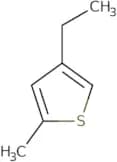
CAS:Versatile small molecule scaffoldFormula:C10H9NO2Purity:Min. 95%Molecular weight:175.18 g/mol4-Ethyl-2-methylthiophene
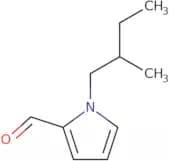
CAS:Versatile small molecule scaffoldFormula:C7H10SPurity:Min. 95%Molecular weight:126.22 g/mol1-(2-Methylbutyl)-1H-pyrrole-2-carbaldehyde
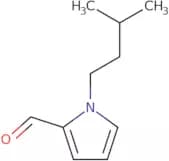
CAS:Versatile small molecule scaffoldFormula:C10H15NOPurity:Min. 95%Molecular weight:165.23 g/mol1-(3-Methylbutyl)-1H-pyrrole-2-carbaldehyde
CAS:Versatile small molecule scaffoldFormula:C10H15NOPurity:Min. 95%Molecular weight:165.23 g/mol3-Vinylthiophene
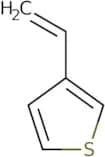
CAS:3-Vinylthiophene is a stabilizer that can be used in the production of polymers and copolymers. It is used in the Suzuki coupling reaction to form vinylidene-3-thiophene, which has been shown to be an effective surface modifier for mesoporous materials. 3-Vinylthiophene has low affinity for both organic ligands and metal ions, making it a reactive compound. The absorption spectroscopy of 3-vinylthiophene shows a strong peak at 290 nm and a weak peak at 320 nm. With a photoelectron spectroscopy, it was found to have an electron affinity of 2.5 eV with a reactive copolymerization with phenylethyl and selenophene being possible reactions.
Formula:C6H6SPurity:Min. 95%Molecular weight:110.18 g/mol1-(4-Methyl-1,3-thiazol-2-yl)propan-1-one
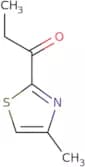
CAS:1-(4-Methyl-1,3-thiazol-2-yl)propan-1-one is a Grignard reagent that has been used in the synthesis of thiazoles. It has been shown to react with propionyl chloride to produce methylthiazole. This compound can also be used as a flavouring agent, which is often found in cinnamon, and as an anhydride for acylation reactions. 1-(4-Methyl-1,3-thiazol-2-yl)propan-1-one is oxidizing and can react with organic chlorides to form chromic acid. This reaction is reversible and when heated will produce the original Grignard reagent and hydrogen chloride gas.Formula:C7H9NOSPurity:Min. 95%Molecular weight:155.22 g/mol2-Methyltetrahydrothiophen-3-one
CAS:2-Methyltetrahydrothiophen-3-one is an organic solvent that is found in the environment as a result of natural processes. It has been shown to inhibit bacterial growth and is used for the analysis of fatty acids. 2-Methyltetrahydrothiophen-3-one inhibits bacterial growth by inhibiting the synthesis of fatty acids, which are needed for cell membrane synthesis.
Formula:C5H8OSPurity:Min. 95%Molecular weight:116.18 g/mol(2-Bromo-1-methoxyethyl)benzene
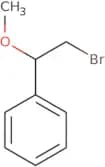
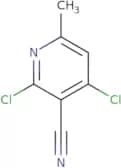
CAS:Versatile small molecule scaffoldFormula:C9H11BrOPurity:Min. 95%Molecular weight:215.09 g/mol2,4-dichloro-6-methylpyridine-3-carbonitrile
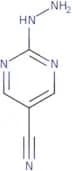
CAS:Versatile small molecule scaffoldFormula:C7H4Cl2N2Purity:Min. 95%Molecular weight:187 g/mol2-Hydrazinylpyrimidine-5-carbonitrile
CAS:2-Hydrazinylpyrimidine-5-carbonitrile is an anticancer drug that inhibits cell proliferation by binding to transition metal ions. It has cytostatic activity and is used to treat cancer. 2-Hydrazinylpyrimidine-5-carbonitrile also has antibacterial properties and can be used to treat infections caused by staphylococcus. The drug inhibits bacterial growth by binding to the sulfhydryl groups of enzymes such as methionine adenosyltransferase and acylhydrazone synthase, which are involved in fatty acid synthesis. This inhibition leads to a decrease in the production of fatty acids, thereby leading to bacterial death. 2-Hydrazinylpyrimidine-5-carbonitrile has been shown to have antiplatelet effects and can be immobilized for in vitro anticancer activity studies.
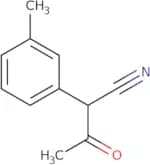
Formula:C5H5N5Purity:Min. 95%Molecular weight:135.13 g/mol2-(3-Methylphenyl)-3-oxobutanenitrile
CAS:Versatile small molecule scaffold
Formula:C11H11NOPurity:Min. 95%Molecular weight:173.21 g/mol8-Iodooct-1-ene
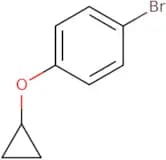
CAS:8-Iodooct-1-ene is a potential precursor in the synthesis of octadiene. It can be synthesized by dehydrating ethylene with magnesium. 8-Iodooct-1-ene is a coproduct of the Grignard reaction, which is used to synthesize an alkene from a vinyl group and a reactive organic halide. The preparation of 8-iodooct-1-ene has been described in detail using techniques such as focusing on chirality and using coproducts to avoid unwanted reactions.Formula:C8H15IPurity:Min. 95%Molecular weight:238.1 g/mol1-Bromo-4-cyclopropoxybenzene
CAS:Versatile small molecule scaffoldFormula:C9H9BrOPurity:Min. 95%Molecular weight:213.07 g/mol1-Bromo-2-cyclopropoxybenzene
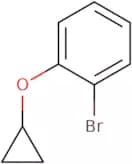
CAS:Versatile small molecule scaffoldFormula:C9H9BrOPurity:Min. 95%Molecular weight:213.07 g/molMethyl 3-vinylbenzoate
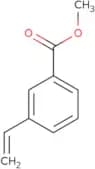
CAS:Versatile small molecule scaffoldFormula:C10H10O2Purity:Min. 95%Molecular weight:162.19 g/mol4-Nitronaphthalen-2-ol
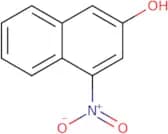
CAS:Versatile small molecule scaffoldFormula:C10H7NO3Purity:Min. 95%Molecular weight:189.17 g/mol4-Formyl-3-hydroxynaphthalene-2-carboxylic acid
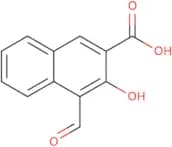
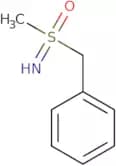
CAS:4-Formyl-3-hydroxynaphthalene-2-carboxylic acid (4FHN) is an antibacterial agent. It is bacteriostatic and has been shown to be effective against gram-negative bacteria such as Escherichia coli and Pseudomonas aeruginosa, but not against gram-positive bacteria such as Staphylococcus aureus. 4FHN was found to inhibit the growth of both gram-positive and gram-negative bacteria by binding to the ribosomal RNA in the bacterial cell wall, thereby inhibiting protein synthesis and cell division. 4FHN also shows antimicrobial activity due to its ability to form stable hydrazones with nucleophilic centers in the bacterial cell wall. These compounds react with cellular macromolecules, leading to cell death.Formula:C12H8O4Purity:Min. 95%Molecular weight:216.19 g/molbenzyl(imino)methyl-sulfanone
CAS:Versatile small molecule scaffold
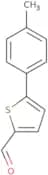
Formula:C8H11NOSPurity:Min. 95%Molecular weight:169.24 g/mol5-(4-Methylphenyl)thiophene-2-carbaldehyde
CAS:Versatile small molecule scaffoldFormula:C12H10OSPurity:Min. 95%Molecular weight:202.27 g/mol5-(4-Bromophenyl)thiophene-2-carbaldehyde
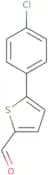
CAS:Versatile small molecule scaffoldFormula:C11H7BrOSPurity:Min. 95%Molecular weight:267.14 g/mol5-(4-Chlorophenyl)thiophene-2-carbaldehyde
CAS:Versatile small molecule scaffold
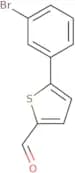
Formula:C11H7ClOSPurity:Min. 95%Molecular weight:222.69 g/mol5-(3-Bromo-phenyl)-thiophene-2-carbaldehyde
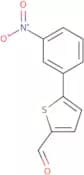
CAS:Versatile small molecule scaffoldFormula:C11H7BrOSPurity:Min. 95%Molecular weight:267.14 g/mol5-(3-Nitrophenyl)thiophene-2-carbaldehyde
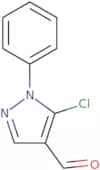
CAS:Versatile small molecule scaffoldFormula:C11H7NO3SPurity:Min. 95%Molecular weight:233.25 g/mol5-Chloro-1-phenyl-1H-pyrazole-4-carbaldehyde
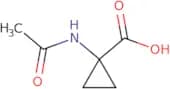
CAS:Versatile small molecule scaffoldFormula:C10H7ClN2OPurity:Min. 95%Molecular weight:206.63 g/mol1-Acetamidocyclopropanecarboxylic acid
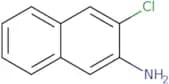
CAS:Versatile small molecule scaffoldFormula:C6H9NO3Purity:Min. 95%Molecular weight:143.14 g/mol3-Chloronaphthalen-2-amine
CAS:3-Chloronaphthalen-2-amine is a high concentration, organic solvent that is soluble in water and stable. It has been shown to be a reductant, which is a substance that donates electrons to another reactant in a chemical reaction. 3-Chloronaphthalen-2-amine can be used as a solvent for underwater applications and may have the ability to reduce nitrogen gas into ammonia. The residue of 3-chloronaphthalen-2-amine can be removed by solvents such as chloroform or ether.
Formula:C10H8ClNPurity:Min. 95%Molecular weight:177.63 g/mol5-[(Oxiran-2-yl)methoxy]-1,3-dioxaindane
CAS:Versatile small molecule scaffold
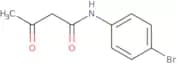
Formula:C10H10O4Purity:Min. 95%Molecular weight:194.18 g/molN-(4-Bromophenyl)-3-oxobutanamide
CAS:N-(4-Bromophenyl)-3-oxobutanamide is a complex molecule that belongs to the class of organocatalysts. It has been shown to show antitubercular activity in vitro, with an MIC of 2.5 µg/mL against Mycobacterium tuberculosis and a MIC of 0.05 µg/mL against Mycobacterium avium complex. It also has been shown to be active as an organocatalyst for the carbonylative synthesis of cyclic carbonate esters from simple alkyl dicarbonates and lithium diisopropylamide, which can be used in organic synthesis. The chemical name for this product is N-(4-bromophenyl)-3-oxobutanamide (NBPBA).Formula:C10H10BrNO2Purity:Min. 95%Molecular weight:256.1 g/mol
![1,3-Diethyl 2-[2-(2-nitrophenyl)hydrazin-1-ylidene]propanedioate](/_next/image/?url=https%3A%2Fstatic.cymitquimica.com%2Fproducts%2F3D%2Fthumb-webp%2FNAA63192.webp&w=3840&q=75)

![1,3-Diethyl 2-[2-(3-nitrophenyl)hydrazin-1-ylidene]propanedioate](/_next/image/?url=https%3A%2Fstatic.cymitquimica.com%2Fproducts%2F3D%2Fthumb-webp%2FNAA63194.webp&w=3840&q=75)
![6-Methoxy-1-phenyl-1H,2H,3H,4H,9H-pyrido[3,4-b]indole hydrochloride](/_next/image/?url=https%3A%2Fstatic.cymitquimica.com%2Fproducts%2F3D%2Fthumb-webp%2FNAA63747.webp&w=3840&q=75)
![2-[(Pyridin-2-yl)methyl]cyclopentan-1-one](/_next/image/?url=https%3A%2Fstatic.cymitquimica.com%2Fproducts%2F3D%2Fthumb-webp%2FNAA64055.webp&w=3840&q=75)
![1-[(2-Nitrophenyl)methyl]pyridin-1-ium bromide](/_next/image/?url=https%3A%2Fstatic.cymitquimica.com%2Fproducts%2F3D%2Fthumb-webp%2FNAA66480.webp&w=3840&q=75)
![Ethyl 2-[(6-formyl-1,3-dioxaindan-5-yl)oxy]acetate](/_next/image/?url=https%3A%2Fstatic.cymitquimica.com%2Fproducts%2F3D%2Fthumb-webp%2FNAA66886.webp&w=3840&q=75)



![5-[(Oxiran-2-yl)methoxy]-1,3-dioxaindane](/_next/image/?url=https%3A%2Fstatic.cymitquimica.com%2Fproducts%2F3D%2Fthumb-webp%2FNBA41765.webp&w=3840&q=75)