Building Blocks
Subcategories of "Building Blocks"
- Boronic Acids & Boronic Acid Derivatives(5,805 products)
- Chiral Building Blocks(1,248 products)
- Hydrocarbon Building Blocks(6,118 products)
- Organic Building Blocks(61,447 products)
Found 208423 products of "Building Blocks"
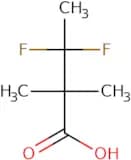
3,3-Difluoro-2,2-dimethylbutanoic acid
CAS:Versatile small molecule scaffoldFormula:C6H10F2O2Purity:Min. 95%Molecular weight:152.14 g/mol6-Chloro-1-phenyl-1H,4H,5H-pyrazolo[3,4-d]pyrimidine
CAS:Versatile small molecule scaffoldFormula:C11H9ClN4Purity:Min. 95%Molecular weight:232.67 g/molmethyl 4-[(chlorosulfonyl)methyl]benzoate
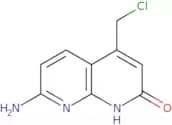
CAS:Methyl 4-[(chlorosulfonyl)methyl]benzoate is a potent and selective inhibitor of nuclear receptors that are involved in the inflammatory response. It has been shown to inhibit tumor cell proliferation in a xenograft model. Methyl 4-[(chlorosulfonyl)methyl]benzoate inhibits the activity of nuclear receptors by binding to an allosteric site on their ligand-binding domain and preventing coactivator binding. This leads to reduced transcriptional activation, which inhibits the production of proinflammatory molecules. Methyl 4-[(chlorosulfonyl)methyl]benzoate is orally bioavailable and has been shown to have anti-tumor effects in mice with neuroblastoma tumors.Formula:C9H9ClO4SPurity:Min. 95%Molecular weight:248.7 g/mol7-Amino-4-(chloromethyl)-1,2-dihydro-1,8-naphthyridin-2-one
CAS:Versatile small molecule scaffoldFormula:C9H8ClN3OPurity:Min. 95%Molecular weight:209.63 g/molSpiro[5.6]dodecan-3-one
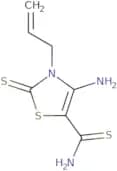
CAS:Versatile small molecule scaffoldFormula:C12H20OPurity:Min. 95%Molecular weight:180.29 g/mol4-Amino-3-(prop-2-en-1-yl)-2-sulfanylidene-2,3-dihydro-1,3-thiazole-5-carbothioamide
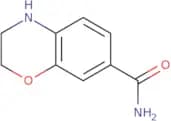
CAS:Versatile small molecule scaffoldFormula:C7H9N3S3Purity:Min. 95%Molecular weight:231.4 g/mol3,4-Dihydro-2H-1,4-benzoxazine-7-carboxamide
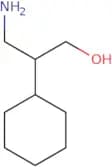
CAS:Versatile small molecule scaffoldFormula:C9H10N2O2Purity:Min. 95%Molecular weight:178.19 g/mol3-Amino-2-cyclohexylpropan-1-ol
CAS:Versatile small molecule scaffoldFormula:C9H19NOPurity:Min. 95%Molecular weight:157.3 g/mol2,3-Dihydro-benzo[b]thiophene-3-acetic acid 1,1-dioxide
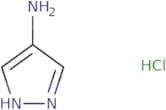
CAS:Versatile small molecule scaffoldFormula:C10H10O4SPurity:Min. 95%Molecular weight:226.25 g/molTert-butyl-(1H-pyrazol-4-yl)carbamate
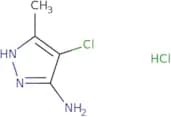
CAS:Tert-butyl-(1H-pyrazol-4-yl)carbamate is a potent inhibitor of protein kinases. It has been shown to inhibit the activity of casein kinase II in vitro, with an IC50 value of 0.2 μM. This drug also has immunosuppressive properties and can be used to treat immunodeficiencies such as HIV infection and leukemia. Tert-butyl-(1H-pyrazol-4-yl)carbamate inhibits inflammation by inhibiting the enzyme phospholipase A2, which is involved in the production of prostaglandins and leukotrienes. This inhibition leads to decreased levels of proinflammatory mediators that are associated with pain, swelling, and fever.Formula:C8H13N3O2Purity:Min. 95%Molecular weight:183.21 g/mol4-Chloro-3-methyl-1H-pyrazol-5-amine hydrochloride
CAS:Versatile small molecule scaffoldFormula:C4H7Cl2N3Purity:Min. 95%Molecular weight:168.02 g/mol2-Amino-6-nitrobenzaldehyde
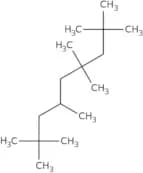
CAS:2-Amino-6-nitrobenzaldehyde is a glycol amide that is industrially synthesized to produce 9-nitrocamptothecin. This drug is used in the treatment of cancer and inhibits topoisomerase II, which is an enzyme that maintains DNA integrity. 2-Amino-6-nitrobenzaldehyde has a high product yield and high industrial capacity, making it an ideal candidate for large scale production. It can be obtained by a condensation reaction between acetone and nitroethane. The reaction proceeds smoothly at room temperature and pressure with no catalyst or solvent required.Formula:C7H6N2O3Purity:Min. 95%Molecular weight:166.14 g/mol2,2,4,4,6,8,8-Heptamethylnonane
CAS:2,2,4,4,6,8,8-Heptamethylnonane is a hydrogenated form of 2-methylnonane. It is used as a model system for fatty acids in order to study the kinetics of air entrainment and constant pressure distillation. The chemical stability of 2,2,4,4,6,8,8-heptamethylnonane has been shown to be excellent when heated at 200°C under nitrogen. This compound can also be used as an analytical method for ethylene diamine in pharmaceutical preparations of sodium salts and boron nitride. The use of 2-methylnonane as a starting material may lead to the production of chinese herb by reacting with acetic acid or formic acid.
Formula:C16H34Purity:Min. 95%Color and Shape:PowderMolecular weight:226.44 g/mol2-Hydroxy-3-methylbutanenitrile
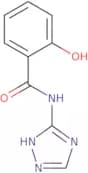
CAS:2-Hydroxy-3-methylbutanenitrile is a carbonyl group and an amide, with the chemical formula CH2OHCN. It can be synthesized from isobutyraldehyde and cyanogen chloride. The reaction solution of this compound reacts with a hydroxy group to form cyanate, which can be used as a medicine. 2-Hydroxy-3-methylbutanenitrile is also used in organic solvents, such as chloroform and acetone. The reaction selectivity of this compound is determined by chromatographic analysis and spectrometry.Formula:C5H9NOPurity:Min. 95%Color and Shape:Clear LiquidMolecular weight:99.13 g/mol2-Hydroxy-N-1H-1,2,4-triazol-3-ylbenzamide
CAS:2-Hydroxy-N-1H-1,2,4-triazol-3-ylbenzamide is a synthetic product that is a white crystalline solid. It has a melting point of 105°C and an average particle diameter of 3.5 nm. This compound is used as a precursor to produce the peroxide 2,2'-dihydroxybenzophenone, which can be used in the synthesis of other organic compounds. It can also be used in the production of amides and quaternary ammonium salts. 2-Hydroxy-N-1H-1,2,4-triazol-3-ylbenzamide is structurally similar to hydrotalcite and hydroxyl group which are both natural products found in nature.Formula:C9H8N4O2Purity:Min. 95%Molecular weight:204.19 g/molDL-6-Hydroxy norleucine
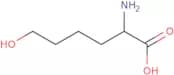
CAS:DL-6-Hydroxy norleucine is a non-essential amino acid that is synthesized by the hydroxylation of leucine. It has been found to be an inhibitor of inflammation, as it can inhibit the production of inflammatory cytokines and prostaglandins. DL-6-Hydroxy norleucine can also activate collagenase, which breaks down connective tissue, and inhibit the formation of lipoprotein particles. This amino acid may be used in the treatment of cancer due to its ability to inhibit cell growth. DL-6-Hydroxy norleucine is toxic when taken orally because it inhibits cytochrome P450 in the liver and increases serum levels of uric acid.Formula:C6H13NO3Purity:Min. 95%Molecular weight:147.17 g/mol6-Hydroxy-5-nitronicotinic acid
CAS:Please enquire for more information about 6-Hydroxy-5-nitronicotinic acid including the price, delivery time and more detailed product information at the technical inquiry form on this pageFormula:C6H4N2O5Purity:Min. 95%Molecular weight:184.11 g/mol3-Hydroxy-4-nitrobenzaldehyde
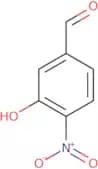
CAS:3-Hydroxy-4-nitrobenzaldehyde is a ternary complex, which consists of three molecules that are bound to each other in a specific way. It has been observed in the nmr spectra and it has been proposed as a fluorescence probe for the detection of hydrogen bonds. 3-Hydroxy-4-nitrobenzaldehyde catalyzes the reaction by forming a covalent bond with the pbr322 dna, which is an important DNA molecule in bacteria. The enzyme mechanism is not fully understood, but it has been shown that it can bind to Toll-like receptor 4 (TLR4), which is an innate immune system protein. This binding event activates TLR4, leading to the inflammatory response. 3-Hydroxy-4-nitrobenzaldehyde has shown efficacy against microglia cells and animal experiments have shown that this compound may be useful for reducing pain after surgery or injury.
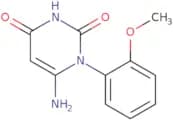
Formula:C7H5NO4Purity:Min. 95%Color and Shape:PowderMolecular weight:167.12 g/mol6-Amino-1-(2-methoxyphenyl)pyrimidine-2,4(1H,3H)-dione
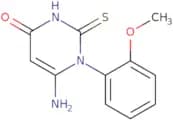
CAS:Versatile small molecule scaffoldFormula:C11H11N3O3Purity:Min. 95%Molecular weight:233.22 g/mol6-Amino-1-(2-methoxyphenyl)-2-sulfanylidene-1,2,3,4-tetrahydropyrimidin-4-one
CAS:Versatile small molecule scaffold
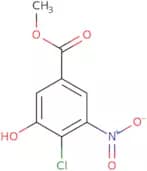
Formula:C11H11N3O2SPurity:Min. 95%Molecular weight:249.29 g/molMethyl 4-chloro-3-hydroxy-5-nitrobenzoate
CAS:Versatile small molecule scaffold
Formula:C8H6ClNO5Purity:95%NmrMolecular weight:231.59 g/mol2-(Thiophen-2-ylmethanesulfonyl)acetic acid
CAS:Versatile small molecule scaffoldFormula:C7H8O4S2Purity:Min. 95%Molecular weight:220.3 g/molMethyl 3-{[(2-methoxyphenyl)methyl]sulfanyl}propanoate
CAS:Versatile small molecule scaffoldFormula:C12H16O3SPurity:Min. 95%Molecular weight:240.32 g/mol2-[(1R,4R)-4-({[(tert-Butoxy)carbonyl]amino}methyl)cyclohexyl]acetic acid
CAS:Versatile small molecule scaffold
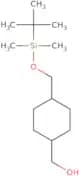
Formula:C14H25NO4Purity:Min. 95%Molecular weight:271.35 g/molrac-((1R,4R)-4-(((tert-Butyldimethylsilyl)oxy)methyl)cyclohexyl)methanol
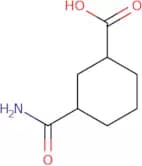
CAS:Versatile small molecule scaffoldFormula:C14H30O2SiPurity:Min. 95%Molecular weight:258.47 g/mol3-Carbamoylcyclohexane-1-carboxylic acid
CAS:Versatile small molecule scaffold
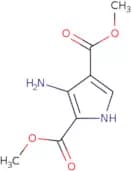
Formula:C8H13NO3Purity:Min. 95%Molecular weight:171.19 g/mol2,4-Dimethyl 3-amino-1H-pyrrole-2,4-dicarboxylate
CAS:2,4-Dimethyl 3-amino-1H-pyrrole-2,4-dicarboxylate is an inhibitor of the enzyme formamidine acetate N-formyltransferase. This compound has been shown to inhibit bacterial growth in vitro and in vivo, and is being investigated as a potential antibacterial agent. 2,4-Dimethyl 3-amino-1H-pyrrole-2,4,-dicarboxylate inhibits the synthesis of formamidines by blocking the enzyme formamidine acetate N-formyltransferase. Formamidines are important for bacterial cell wall synthesis and cell division. This compound also inhibits the growth of methicillin resistant Staphylococcus aureus (MRSA) isolates.Formula:C8H10N2O4Purity:Min. 95%Molecular weight:198.18 g/moltert-Butyl N-[1-(3-nitrophenyl)ethyl]carbamate
CAS:Versatile small molecule scaffoldFormula:C13H18N2O4Purity:Min. 95%Molecular weight:266.3 g/moltert-Butyl (2S)-3-(4-aminophenyl)-2-{[(tert-butoxy)carbonyl]amino}propanoate
CAS:Versatile small molecule scaffoldFormula:C18H28N2O4Purity:Min. 95%Molecular weight:336.4 g/molN-[(3-Aminophenyl)methyl]acetamide
CAS:Versatile small molecule scaffold
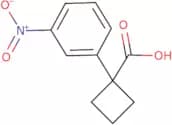
Formula:C9H12N2OPurity:Min. 95%Molecular weight:164.2 g/mol1-(3-Nitrophenyl)cyclobutanecarboxylic acid
CAS:Versatile small molecule scaffold
Formula:C11H11NO4Purity:Min. 95%Molecular weight:221.21 g/moltert-Butyl N-[3-(4-aminophenyl)propyl]carbamate
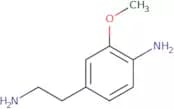
CAS:Versatile small molecule scaffoldFormula:C14H22N2O2Purity:Min. 95%Molecular weight:250.34 g/mol4-(2-Aminoethyl)-2-methoxyaniline
CAS:Controlled ProductVersatile small molecule scaffold
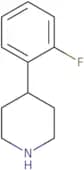
Formula:C9H14N2OPurity:Min. 95%Molecular weight:166.22 g/mol4-(2-Fluorophenyl)piperidine
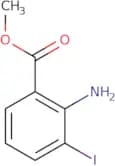
CAS:Versatile small molecule scaffoldFormula:C11H14FNPurity:Min. 95%Molecular weight:179.23 g/molmethyl 2-amino-3-iodobenzoate
CAS:Versatile small molecule scaffoldFormula:C8H8INO2Purity:Min. 95%Molecular weight:277.1 g/mol3-([(9H-Fluoren-9-ylmethoxy)carbonyl]amino)-2,2-dimethyl-3-phenylpropanoic acid
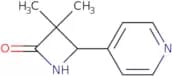
CAS:Versatile small molecule scaffoldFormula:C26H25NO4Purity:Min. 95%Molecular weight:415.5 g/mol3,3-Dimethyl-4-(pyridin-4-yl)azetidin-2-one
CAS:Versatile small molecule scaffoldFormula:C10H12N2OPurity:Min. 95%Molecular weight:176.21 g/mol4-Cyclopropyl-3,3-dimethylazetidin-2-one
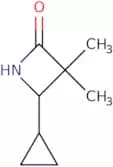
CAS:Versatile small molecule scaffold
Formula:C8H13NOPurity:Min. 95%Molecular weight:139.19 g/mol3-Amino-3-cyclopropyl-2,2-dimethylpropanoic acid hydrochloride
CAS:Versatile small molecule scaffold
Formula:C8H16ClNO2Purity:Min. 95%Molecular weight:193.7 g/mol2-({[(9H-Fluoren-9-ylmethoxy)carbonyl]amino}methyl)butanoic acid
CAS:Versatile small molecule scaffoldFormula:C20H21NO4Purity:Min. 95%Molecular weight:339.4 g/mol2-({[(9H-Fluoren-9-ylmethoxy)carbonyl]amino}methyl)-3-methylbutanoic acid
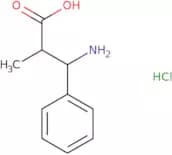
CAS:Versatile small molecule scaffoldFormula:C21H23NO4Purity:Min. 95%Molecular weight:353.4 g/mol3-Amino-2-methyl-3-phenylpropanoic acid hydrochloride
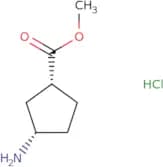
CAS:Versatile small molecule scaffoldFormula:C10H14ClNO2Purity:Min. 95%Molecular weight:215.67 g/molmethyl (1R,3S)-3-aminocyclopentane-1-carboxylate hydrochloride
CAS:Versatile small molecule scaffoldFormula:C7H14ClNO2Purity:Min. 95%Molecular weight:179.64 g/mol2-[1-(Aminomethyl)cyclobutyl]ethan-1-ol
CAS:Versatile small molecule scaffoldFormula:C7H15NOPurity:Min. 95%Molecular weight:129.2 g/mol[1-(Aminomethyl)cyclopent-3-en-1-yl]methanol
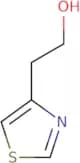
CAS:Versatile small molecule scaffoldFormula:C7H13NOPurity:Min. 95%Molecular weight:127.2 g/mol2-(1,3-Thiazol-4-yl)ethan-1-ol
CAS:Versatile small molecule scaffold
Formula:C5H7NOSPurity:Min. 95%Molecular weight:129.18 g/moltert-butyl N-(3-methylpyridin-4-yl)carbamate
CAS:Versatile small molecule scaffold
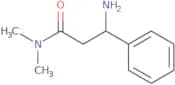
Formula:C11H16N2O2Purity:Min. 95%Molecular weight:208.25 g/mol3-Amino-N,N-dimethyl-3-phenylpropanamide
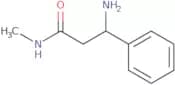
CAS:Versatile small molecule scaffoldFormula:C11H16N2OPurity:Min. 95%Molecular weight:192.26 g/mol3-Amino-N-methyl-3-phenylpropanamide
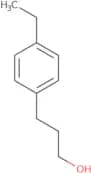
CAS:Versatile small molecule scaffoldFormula:C10H14N2OPurity:Min. 95%Molecular weight:178.23 g/mol3-(4-Ethylphenyl)propan-1-ol
CAS:Versatile small molecule scaffold
Formula:C11H16OPurity:Min. 95%Molecular weight:164.24 g/mol

![6-Chloro-1-phenyl-1H,4H,5H-pyrazolo[3,4-d]pyrimidine](/_next/image/?url=https%3A%2Fstatic.cymitquimica.com%2Fproducts%2F3D%2Fthumb-webp%2FFFA02405.webp&w=3840&q=75)
![methyl 4-[(chlorosulfonyl)methyl]benzoate](/_next/image/?url=https%3A%2Fstatic.cymitquimica.com%2Fproducts%2F3D%2Fthumb-webp%2FFFA04714.webp&w=3840&q=75)
![Spiro[5.6]dodecan-3-one](/_next/image/?url=https%3A%2Fstatic.cymitquimica.com%2Fproducts%2F3D%2Fthumb-webp%2FFFA06592.webp&w=3840&q=75)
![2,3-Dihydro-benzo[b]thiophene-3-acetic acid 1,1-dioxide](/_next/image/?url=https%3A%2Fstatic.cymitquimica.com%2Fproducts%2F3D%2Fthumb-webp%2FFFA10546.webp&w=3840&q=75)




![Methyl 3-{[(2-methoxyphenyl)methyl]sulfanyl}propanoate](/_next/image/?url=https%3A%2Fstatic.cymitquimica.com%2Fproducts%2F3D%2Fthumb-webp%2FFHA04450.webp&w=3840&q=75)
![2-[(1R,4R)-4-({[(tert-Butoxy)carbonyl]amino}methyl)cyclohexyl]acetic acid](/_next/image/?url=https%3A%2Fstatic.cymitquimica.com%2Fproducts%2F3D%2Fthumb-webp%2FFHA04657.webp&w=3840&q=75)
![tert-Butyl N-[1-(3-nitrophenyl)ethyl]carbamate](/_next/image/?url=https%3A%2Fstatic.cymitquimica.com%2Fproducts%2F3D%2Fthumb-webp%2FFHA07958.webp&w=3840&q=75)
![tert-Butyl (2S)-3-(4-aminophenyl)-2-{[(tert-butoxy)carbonyl]amino}propanoate](/_next/image/?url=https%3A%2Fstatic.cymitquimica.com%2Fproducts%2F3D%2Fthumb-webp%2FFHA08007.webp&w=3840&q=75)
![N-[(3-Aminophenyl)methyl]acetamide](/_next/image/?url=https%3A%2Fstatic.cymitquimica.com%2Fproducts%2F3D%2Fthumb-webp%2FFHA08056.webp&w=3840&q=75)
![tert-Butyl N-[3-(4-aminophenyl)propyl]carbamate](/_next/image/?url=https%3A%2Fstatic.cymitquimica.com%2Fproducts%2F3D%2Fthumb-webp%2FFHA14782.webp&w=3840&q=75)
![3-([(9H-Fluoren-9-ylmethoxy)carbonyl]amino)-2,2-dimethyl-3-phenylpropanoic acid](/_next/image/?url=https%3A%2Fstatic.cymitquimica.com%2Fproducts%2F3D%2Fthumb-webp%2FFHA18106.webp&w=3840&q=75)

![2-({[(9H-Fluoren-9-ylmethoxy)carbonyl]amino}methyl)butanoic acid](/_next/image/?url=https%3A%2Fstatic.cymitquimica.com%2Fproducts%2F3D%2Fthumb-webp%2FFHA18195.webp&w=3840&q=75)
![2-({[(9H-Fluoren-9-ylmethoxy)carbonyl]amino}methyl)-3-methylbutanoic acid](/_next/image/?url=https%3A%2Fstatic.cymitquimica.com%2Fproducts%2F3D%2Fthumb-webp%2FFHA18198.webp&w=3840&q=75)
![2-[1-(Aminomethyl)cyclobutyl]ethan-1-ol](/_next/image/?url=https%3A%2Fstatic.cymitquimica.com%2Fproducts%2F3D%2Fthumb-webp%2FFHA20527.webp&w=3840&q=75)
![[1-(Aminomethyl)cyclopent-3-en-1-yl]methanol](/_next/image/?url=https%3A%2Fstatic.cymitquimica.com%2Fproducts%2F3D%2Fthumb-webp%2FFHA20536.webp&w=3840&q=75)