Building Blocks
Subcategories of "Building Blocks"
- Boronic Acids & Boronic Acid Derivatives(5,805 products)
- Chiral Building Blocks(1,248 products)
- Hydrocarbon Building Blocks(6,118 products)
- Organic Building Blocks(61,447 products)
Found 208422 products of "Building Blocks"
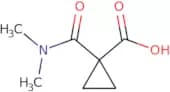
1-(Dimethylcarbamoyl)cyclopropane-1-carboxylic acid
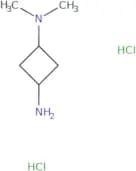
CAS:Versatile small molecule scaffoldFormula:C7H11NO3Purity:Min. 95%Molecular weight:157.17 g/molN1,N1-Dimethylcyclobutane-1,3-diamine dihydrochloride
CAS:Versatile small molecule scaffoldFormula:C6H16Cl2N2Purity:Min. 95%Molecular weight:187.11 g/mol[4-(Methoxymethyl)thiophen-2-yl]methanol
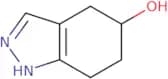
CAS:Versatile small molecule scaffoldFormula:C7H10O2SPurity:Min. 95%Molecular weight:158.22 g/mol4,5,6,7-Tetrahydro-1H-indazol-5-ol
CAS:Versatile small molecule scaffold
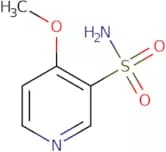
Formula:C7H10N2OPurity:Min. 95%Molecular weight:138.17 g/mol4-Methoxypyridine-3-sulfonamide
CAS:4-Methoxypyridine-3-sulfonamide is a potent inhibitor of carbonic anhydrase. It is used in the treatment of chronic glaucoma and other diseases that result from increased intraocular pressure, such as iritis, keratitis, or optic neuritis. 4-Methoxypyridine-3-sulfonamide inhibits the activity of all isoforms of human carbonic anhydrase. The inhibition constants for this drug are higher for cytosolic isoforms than for transmembrane isoforms. This drug has a high selectivity for carbonic anhydrase over other enzymes and can be used to distinguish between different types of isoforms.
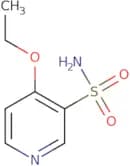
Formula:C6H8N2O3SPurity:Min. 95%Molecular weight:188.21 g/mol4-Ethoxypyridine-3-sulfonamide
CAS:Versatile small molecule scaffold
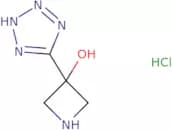
Formula:C7H10N2O3SPurity:Min. 95%Molecular weight:202.23 g/mol3-(1H-1,2,3,4-Tetrazol-5-yl)azetidin-3-ol hydrochloride
CAS:Versatile small molecule scaffold
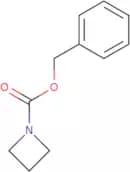
Formula:C4H8ClN5OPurity:Min. 95%Molecular weight:177.59 g/molBenzyl azetidine-1-carboxylate
CAS:Versatile small molecule scaffold
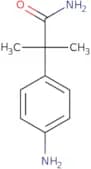
Formula:C11H13NO2Purity:Min. 95%Molecular weight:191.23 g/mol2-(4-Aminophenyl)-2-methylpropanamide
CAS:Versatile small molecule scaffold
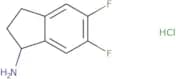
Formula:C10H14N2OPurity:Min. 95%Molecular weight:178.23 g/mol5,6-Difluoro-2,3-dihydro-1H-inden-1-amine hydrochloride
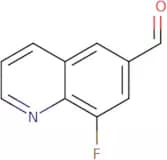
CAS:Controlled ProductVersatile small molecule scaffoldFormula:C9H10ClF2NPurity:Min. 95%Molecular weight:205.63 g/mol8-Fluoroquinoline-6-carbaldehyde
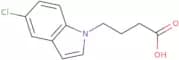
CAS:Versatile small molecule scaffoldFormula:C10H6FNOPurity:Min. 95%Molecular weight:175.16 g/mol4-(5-Chloro-1H-indol-1-yl)butanoic acid
CAS:Versatile small molecule scaffold
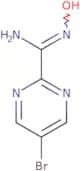
Formula:C12H12ClNO2Purity:Min. 95%Molecular weight:237.68 g/mol(Z)-5-Bromo-N-hydroxypyrimidine-2-carboximidamide
CAS:Versatile small molecule scaffoldFormula:C5H5BrN4OPurity:Min. 95%Molecular weight:217.02 g/mol5-[Benzyl(cyclopropyl)amino]pentan-2-one
CAS:Versatile small molecule scaffoldFormula:C15H21NOPurity:Min. 95%Molecular weight:231.3 g/moltert-Butyl N-[(1,4-oxazepan-2-yl)methyl]carbamate
CAS:Versatile small molecule scaffoldFormula:C11H22N2O3Purity:Min. 95%Molecular weight:230.3 g/moltert-Butyl N-{2-[(2-aminoethyl)amino]ethyl}-N-methylcarbamate
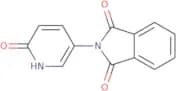
CAS:Versatile small molecule scaffoldFormula:C10H23N3O2Purity:Min. 95%Molecular weight:217.31 g/mol2-(6-Hydroxypyridin-3-yl)isoindole-1,3-dione
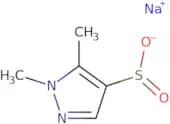
CAS:Versatile small molecule scaffoldFormula:C13H8N2O3Purity:Min. 95%Molecular weight:240.21 g/molSodium 1,5-dimethyl-1H-pyrazole-4-sulfinate
CAS:Versatile small molecule scaffold
Formula:C5H7N2NaO2SPurity:Min. 95%Molecular weight:182.18 g/mol1-{[(9H-Fluoren-9-yl)methoxy]carbonyl}-4-hydroxypiperidine-4-carboxylic acid
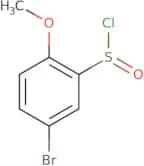
CAS:Versatile small molecule scaffoldFormula:C21H21NO5Purity:Min. 95%Molecular weight:367.4 g/mol5-Bromo-2-methoxybenzene-1-sulfinyl chloride
CAS:Versatile small molecule scaffold
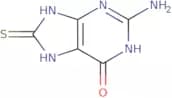
Formula:C7H6BrClO2SPurity:Min. 95%Molecular weight:269.54 g/mol2-Amino-6-hydroxy-8-mercaptopurine
CAS:2-Amino-6-hydroxy-8-mercaptopurine is an antimicrobial agent that inhibits the growth of bacteria by binding to their ribosomes. It has been shown to have a cytotoxic effect in vivo on cancer cells and intestinal parasites, as well as a protective effect against infectious diseases. 2-Amino-6-hydroxy-8-mercaptopurine has also been shown to inhibit the synthesis of proteins in vitro, which may be due to its ability to bind to the ribosomal subunit and inhibit protein synthesis. 2-Amino-6-hydroxy-8-mercaptopurine inhibits bacterial growth by binding to DNA dependent RNA polymerase, thereby preventing transcription and replication. The high frequency of human activity has been shown using a patch clamp technique on human erythrocytes. This active form is metabolized through a number of metabolic transformations, including hydrolysis by esterases or gluc
Formula:C5H5N5OSPurity:Min. 95%Color and Shape:PowderMolecular weight:183.19 g/mol2-Bromo-1-methyl-1H-imidazole
CAS:Please enquire for more information about 2-Bromo-1-methyl-1H-imidazole including the price, delivery time and more detailed product information at the technical inquiry form on this page
Formula:C4H5BrN2Purity:Min. 95%Molecular weight:161 g/moltert-Butyl azetidine-3-carboxylate
CAS:Please enquire for more information about tert-Butyl azetidine-3-carboxylate including the price, delivery time and more detailed product information at the technical inquiry form on this page
Formula:C8H15NO2Purity:Min. 95%Molecular weight:157.21 g/molButyl vinyl ether
CAS:Butyl vinyl ether is a chemical compound that belongs to the class of quinoline derivatives. It is synthesized by the reaction of butyl alcohol with ethylene oxide. Butyl vinyl ether can be used as a model system for studying the redox potentials of quinoline derivatives and their reactivity with polyvinyl compounds. The polymerization reaction of butyl vinyl ether with cationic polymerization initiators has been shown through nmr spectra and radiation experiments to proceed via an ionic mechanism rather than an electron transfer mechanism. This reaction proceeds through two steps: first, the formation of an alkoxide ion from the hydroxyl group; second, protonation of this ion by a methyl ketone molecule to form a vinyl ether.Formula:C6H12OPurity:Min. 95%Molecular weight:100.16 g/molBenzydamine hydrochloride EP Impurity D
CAS:Controlled ProductPlease enquire for more information about Benzydamine hydrochloride EP Impurity D including the price, delivery time and more detailed product information at the technical inquiry form on this page
Formula:C23H32N4OPurity:Min. 95%Molecular weight:380.53 g/molBis(ethylamino)-1,3,5-triazin-2-ol hydrochloride
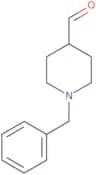
CAS:Please enquire for more information about Bis(ethylamino)-1,3,5-triazin-2-ol hydrochloride including the price, delivery time and more detailed product information at the technical inquiry form on this pageFormula:C7H13N5O•HClPurity:Min. 95%Molecular weight:219.67 g/mol1-Benzyl-4-piperidine-carboxaldehyde
CAS:1-Benzyl-4-piperidine-carboxaldehyde is a polymorphic compound with two crystalline forms: the α form and β form. The α form has a molecular weight of 174.2 g/mol and the β form has a molecular weight of 178.3 g/mol. Both forms are soluble in organic solvents but not in water. It is insoluble in hydrochloric acid, n-hexane, and acetonitrile. It is stable at room temperature but unstable at temperatures above 60°C. 1-Benzyl-4-piperidinecarboxaldehyde is an inhibitor of liver function, which may be due to its inhibition of CYP450 enzymes or other unknown mechanisms that lead to haemodynamic effects such as hypotension and tachycardia.Formula:C13H17NOPurity:Min. 95%Color and Shape:Yellow PowderMolecular weight:203.28 g/moltrans-1-Boc-4-amino-piperidine-3-carboxylic acid ethyl ester hydrochloride
CAS:Please enquire for more information about trans-1-Boc-4-amino-piperidine-3-carboxylic acid ethyl ester hydrochloride including the price, delivery time and more detailed product information at the technical inquiry form on this pageFormula:C13H24N2O4•HClPurity:Min. 95%Molecular weight:308.8 g/molN-[(2-Bromo-4,5-dimethoxyphenyl)methyl]-N-(2-chloroethyl)morpholine bromide
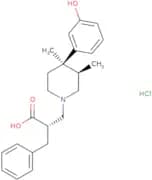
Please enquire for more information about N-[(2-Bromo-4,5-dimethoxyphenyl)methyl]-N-(2-chloroethyl)morpholine bromide including the price, delivery time and more detailed product information at the technical inquiry form on this pageFormula:C15H22Br2ClNO3Purity:Min. 95%Molecular weight:459.6 g/mol(3R,4R)-1-((2S)-2-Benzyl-2-carboxyethyl)-4-(3-hydroxyphenyl)-3,4-dimethylpiperidine hydrochloride
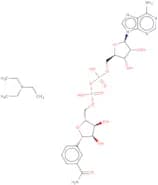
CAS:Please enquire for more information about (3R,4R)-1-((2S)-2-Benzyl-2-carboxyethyl)-4-(3-hydroxyphenyl)-3,4-dimethylpiperidine hydrochloride including the price, delivery time and more detailed product information at the technical inquiry form on this pageFormula:C23H29NO3•HClPurity:Min. 95%Molecular weight:403.94 g/molBenzamide adenine dinucleotide triethylamine
CAS:Please enquire for more information about Benzamide adenine dinucleotide triethylamine including the price, delivery time and more detailed product information at the technical inquiry form on this page
Formula:C22H28N6O14P2•C6H15NPurity:Min. 95%Molecular weight:763.63 g/mol2-Bromoethanol
CAS:2-Bromoethanol is a chemical used in the manufacture of sodium salts and ethylene. It has been shown to inhibit the enzyme activity of wild-type strains of E. coli, but not resistant mutants. 2-Bromoethanol was found to cause cell lysis, which may be due to its hydroxyl group reacting with argon, forming reactive oxygen species. The reaction mechanism for 2-bromoethanol is as follows: 2-bromoethanol + H2O → 2-(hydroxyethyl) bromide + HBr + heat
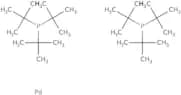
Formula:C2H5BrOPurity:Min. 95%Color and Shape:Colorless Clear LiquidMolecular weight:124.96 g/molBis(tri-tert-butylphosphine)palladium(0)
CAS:Bis(tri-tert-butylphosphine)palladium(0) is a chemical compound, insoluble in organic solvents. It has been used as a catalyst for cross-coupling reactions in organic chemistry. Bis(tri-tert-butylphosphine)palladium(0) reacts with sodium salts and palladium-catalyzed cross-coupling to form an insoluble complex in the presence of hexane, which is soluble in organic solvents. The reaction proceeds through reductive elimination, yielding a trisubstituted product. This process can be used for the synthesis of halides and transmetallation.Formula:C24H54P2PdPurity:Min. 95%Color and Shape:White PowderMolecular weight:511.05 g/mol5-Bromobenzo[d]oxazol-2-amine
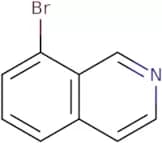
CAS:5-Bromobenzo[d]oxazol-2-amine is a chemical that is used in the treatment of cancer. It is synthesized from benzoic acid and bromoacetonitrile. 5-Bromobenzo[d]oxazol-2-amine is an anticancer agent that has been shown to have a depressant activity on animal tissues, which may be due to its ability to neutralize cyanogen chloride, a chemical that reacts with organic solvents and produces toxic gases such as hydrogen cyanide. This drug also binds to DNA, preventing cell growth and causing cell death. 5-Bromobenzo[d]oxazol-2-amine can be used to treat cancer cells in mice and has been shown to inhibit the proliferation of MCT7 cells. It also inhibits the growth of human breast cancer cells by blocking protein synthesis at the ribosome level.Formula:C7H5BrN2OPurity:Min. 95%Molecular weight:213.03 g/mol8-Bromoisoquinoline
CAS:8-Bromoisoquinoline is a bifunctional alkylating agent that is used to synthesize esters and amides. It is commonly used for the synthesis of amino acids, peptides, and other biologically active molecules. 8-Bromoisoquinoline has been shown to have a synergistic effect with hydroxyalkyl carbamates, which may be due to its ability to form an ionic bond with the carboxylic acid in these compounds. This chemical can also react with nitro groups and serve as a chlorinating agent, as well as react with anions such as phosphate and acetate. 8-Bromoisoquinoline can be synthesized by reacting ethyl bromoacetate with tetrahydroisoquinolinium chloride in hydrochloric acid or isopropyl alcohol.
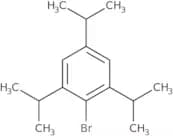
Formula:C9H6BrNPurity:Min. 95%Color and Shape:PowderMolecular weight:208.05 g/mol2-Bromo-1,3,5-triisopropylbenzene
CAS:2-Bromo-1,3,5-triisopropylbenzene is an ethylene acetal that is prepared by the catalyzed reaction of aryl chlorides and anhydrous zinc bromide in the presence of triethylamine. The selectivities of this method are high because it can produce mainly a single isomer. The stereoselectivity is also high because the reaction proceeds with the formation of only one stereoisomer. The mechanism for this reaction involves a nucleophilic substitution of the halogenated aryl chloride with the trialkylborane, which generates two different products. This product has been used in the synthesis of biphenyls and nitro compounds.
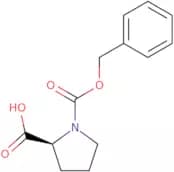
Formula:C15H23BrPurity:Min. 95%Color and Shape:Colorless Clear LiquidMolecular weight:283.25 g/molN-Benzyloxycarbonyl-L-proline
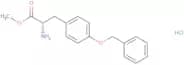
CAS:N-Benzyloxycarbonyl-L-proline is a cationic polymerization inhibitor that has been shown to inhibit the growth of Pseudomonas aeruginosa. It inhibits bacterial growth by inhibiting the production of collagen, an important component in the cell wall. N-Benzyloxycarbonyl-L-proline is also used as a histological staining agent and has been shown to be effective against breast cancer cells resistant to tamoxifen therapy.Formula:C13H15NO4Purity:Min. 95%Color and Shape:PowderMolecular weight:249.26 g/molO-Benzyl-L-tyrosine methyl ester hydrochloride
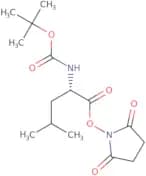
CAS:Please enquire for more information about O-Benzyl-L-tyrosine methyl ester hydrochloride including the price, delivery time and more detailed product information at the technical inquiry form on this pageFormula:C17H19NO3·HClPurity:Min. 95%Color and Shape:PowderMolecular weight:321.8 g/molBoc-L-leucine N-hydoxysuccinimide ester
CAS:The Boc-L-leucine N-hydoxysuccinimide ester is a synthetic molecule that is often used as a model for studying the effects of lysine on the activity of glutamic acid. This compound is biodegradable and has been shown to be less toxic than other compounds in its class. The Boc-L-leucine N-hydoxysuccinimide ester has potent inhibitory activity against mammalian cells, which may be due to its ability to inhibit chloride transport across membranes.Formula:C15H24N2O6Purity:Min. 95%Color and Shape:White/Off-White SolidMolecular weight:328.36 g/mol4-Bromo-3,5-dimethylbenzoic acid methyl ester
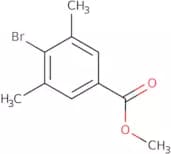
CAS:4-Bromo-3,5-dimethylbenzoic acid methyl ester is a versatile building block that is used in the synthesis of complex compounds. 4-Bromo-3,5-dimethylbenzoic acid methyl ester is an intermediate in the synthesis of speciality chemicals and research chemicals. It is also a useful scaffold for the synthesis of high quality and useful reagents as well as reaction components.Formula:C10H11BrO2Purity:Min. 95%Color and Shape:White PowderMolecular weight:243.1 g/molEthyl 2-(4-bromobenzenesulfonyl)acetate
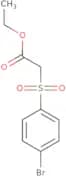
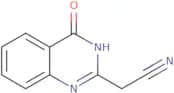
CAS:Versatile small molecule scaffoldFormula:C10H11BrO4SPurity:Min. 95%Molecular weight:307.16 g/mol2-(4-Oxo-3,4-dihydroquinazolin-2-yl)acetonitrile
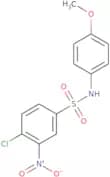
CAS:Versatile small molecule scaffoldFormula:C10H7N3OPurity:Min. 95%Molecular weight:185.18 g/mol4-Chloro-N-(4-methoxyphenyl)-3-nitrobenzene-1-sulfonamide
CAS:Versatile small molecule scaffold
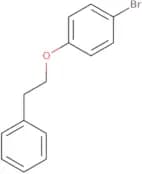
Formula:C13H11ClN2O5SPurity:Min. 95%Molecular weight:342.76 g/mol1-Bromo-4-(2-phenylethoxy)benzene
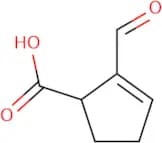
CAS:Versatile small molecule scaffoldFormula:C14H13BrOPurity:Min. 95%Molecular weight:277.16 g/mol2-Formylcyclopent-2-ene-1-carboxylic acid
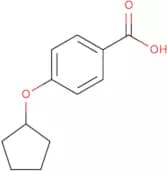
CAS:2-Formylcyclopent-2-ene-1-carboxylic acid is a synthetic, ring-opening reaction that can be used to produce cyclopentenones. It has been optimized for use with a temperature of 100 degrees Celsius and in the presence of solvents such as dichloromethane or benzene. The ring opening and hydrolysis are efficient, with an optimized reaction temperature of 100 C.Formula:C7H8O3Purity:Min. 95%Molecular weight:140.14 g/mol4-(Cyclopentyloxy)-benzoic acid
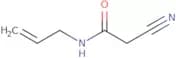
CAS:Versatile small molecule scaffoldFormula:C12H14O3Purity:Min. 95%Molecular weight:206.24 g/mol2-Cyano-N-(prop-2-en-1-yl)acetamide
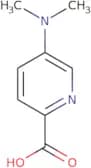
CAS:Versatile small molecule scaffoldFormula:C6H8N2OPurity:Min. 95%Molecular weight:124.14 g/mol5-(Dimethylamino)pyridine-2-carboxylic acid
CAS:Versatile small molecule scaffoldFormula:C8H10N2O2Purity:Min. 95%Molecular weight:166.18 g/mol2-[(2-Hydroxyethyl)(2-methylpropyl)amino]ethan-1-ol
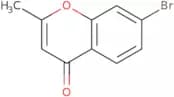
CAS:Versatile small molecule scaffoldFormula:C8H19NO2Purity:Min. 95%Molecular weight:161.24 g/mol7-Bromo-2-methyl-4H-chromen-4-one
CAS:Versatile small molecule scaffoldFormula:C10H7BrO2Purity:Min. 95%Molecular weight:239.06 g/mol

![[4-(Methoxymethyl)thiophen-2-yl]methanol](/_next/image/?url=https%3A%2Fstatic.cymitquimica.com%2Fproducts%2F3D%2Fthumb-webp%2FEZB62707.webp&w=3840&q=75)
![5-[Benzyl(cyclopropyl)amino]pentan-2-one](/_next/image/?url=https%3A%2Fstatic.cymitquimica.com%2Fproducts%2F3D%2Fthumb-webp%2FEZC29824.webp&w=3840&q=75)
![tert-Butyl N-[(1,4-oxazepan-2-yl)methyl]carbamate](/_next/image/?url=https%3A%2Fstatic.cymitquimica.com%2Fproducts%2F3D%2Fthumb-webp%2FEZC33236.webp&w=3840&q=75)
![tert-Butyl N-{2-[(2-aminoethyl)amino]ethyl}-N-methylcarbamate](/_next/image/?url=https%3A%2Fstatic.cymitquimica.com%2Fproducts%2F3D%2Fthumb-webp%2FEZC65337.webp&w=3840&q=75)
![1-{[(9H-Fluoren-9-yl)methoxy]carbonyl}-4-hydroxypiperidine-4-carboxylic acid](/_next/image/?url=https%3A%2Fstatic.cymitquimica.com%2Fproducts%2F3D%2Fthumb-webp%2FEZC92685.webp&w=3840&q=75)




![N-[(2-Bromo-4,5-dimethoxyphenyl)methyl]-N-(2-chloroethyl)morpholine bromide](/_next/image/?url=https%3A%2Fstatic.cymitquimica.com%2Fproducts%2F3D%2Fthumb-webp%2FFB183793.webp&w=3840&q=75)

![5-Bromobenzo[d]oxazol-2-amine](/_next/image/?url=https%3A%2Fstatic.cymitquimica.com%2Fproducts%2F3D%2Fthumb-webp%2FFB32511.webp&w=3840&q=75)
![2-[(2-Hydroxyethyl)(2-methylpropyl)amino]ethan-1-ol](/_next/image/?url=https%3A%2Fstatic.cymitquimica.com%2Fproducts%2F3D%2Fthumb-webp%2FFBA76976.webp&w=3840&q=75)