


Building Blocks
This section contains fundamental products for the synthesis of organic and biological compounds. Building blocks are the essential starting materials used to construct complex molecules through various chemical reactions. They play a critical role in drug discovery, material science, and chemical research. At CymitQuimica, we offer a diverse range of high-quality building blocks to support your innovative research and industrial projects, ensuring you have the essential components for successful synthesis.
Subcategories of "Building Blocks"
- Boronic Acids & Boronic Acid Derivatives(5,783 products)
- Chiral Building Blocks(1,242 products)
- Hydrocarbon Building Blocks(6,105 products)
- Organic Building Blocks(61,055 products)
Found 205383 products of "Building Blocks"
Sort by
Purity (%)
0
100
|
0
|
50
|
90
|
95
|
100
2-(Trifluoromethyl)bicyclo[2.2.1]heptane-2-carboxylic acid
CAS:Versatile small molecule scaffoldFormula:C9H11F3O2Purity:Min. 95%Molecular weight:208.18 g/molEthyl 2-amino-[1,3]thiazolo[4,5-b]pyridine-6-carboxylate
CAS:Versatile small molecule scaffoldFormula:C9H9N3O2SPurity:Min. 95%Molecular weight:223.25 g/mol{[1,2,4]Triazolo[1,5-a]pyrimidin-2-yl}methanamine hydrochloride
CAS:Versatile small molecule scaffoldFormula:C6H8ClN5Purity:Min. 95%Molecular weight:185.61 g/mol3-Ethyl-1-oxa-3,8-diazaspiro[4.5]decan-2-one hydrochloride
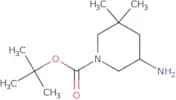
CAS:Versatile small molecule scaffoldFormula:C9H17ClN2O2Purity:Min. 95%Molecular weight:220.69 g/moltert-Butyl 5-amino-3,3-dimethylpiperidine-1-carboxylate
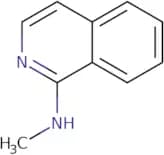
CAS:Versatile small molecule scaffoldFormula:C12H24N2O2Purity:Min. 95%Molecular weight:228.33 g/mol1-(Methylamino)isoquinoline
CAS:1-(Methylamino)isoquinoline (1-MAIQ) is a methylamine that can be synthesized by amination of anilines with potassium permanganate. 1-MAIQ has been shown to form n-oxides, which are compounds in which the nitro group is bonded to the oxygen atom of the oxo group. Nitro groups are electron acceptors and can be used as reagents for amination reactions. 1-MAIQ reacts with potassium permanganate to form a purple solution, and its regioselectivity increases in acidic conditions.Formula:C10H10N2Purity:Min. 95%Molecular weight:158.2 g/mol2-(1H-Indol-7-yl)ethan-1-amine
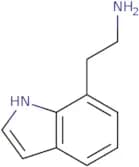
CAS:Controlled ProductVersatile small molecule scaffoldFormula:C10H12N2Purity:Min. 95%Molecular weight:160.22 g/mol1-(3-Methylbutyl)-2,5-dihydro-1H-pyrrole-2,5-dione
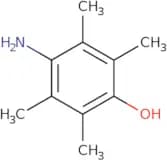
CAS:Versatile small molecule scaffoldFormula:C9H13NO2Purity:Min. 95%Molecular weight:167.2 g/mol4-Amino-2,3,5,6-tetramethylphenol
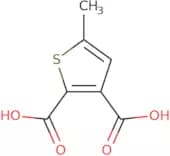
CAS:Versatile small molecule scaffoldFormula:C10H15NOPurity:Min. 95%Molecular weight:165.23 g/mol5-Methylthiophene-2,3-dicarboxylic acid
CAS:Versatile small molecule scaffoldFormula:C7H6O4SPurity:Min. 95%Molecular weight:186.19 g/mol2-(2-Methoxy-5-methylphenyl)ethan-1-amine
CAS:Controlled ProductVersatile small molecule scaffoldFormula:C10H15NOPurity:Min. 95%Molecular weight:165.23 g/mol1-Cyclohexylpyrrolidin-3-amine
CAS:1-Cyclohexylpyrrolidin-3-amine is a chemical compound that acts as an antagonist of the chemokine receptor CXCR2. It has been shown to reduce inflammation and its associated symptoms in animal models. 1-Cyclohexylpyrrolidin-3-amine binds to the chemokine receptor and prevents it from binding to chemokines, which are inflammatory mediators. The inhibition of these receptors blocks the migration of cells towards sites of inflammation, reducing the symptoms associated with this condition. This compound also inhibits the activity of other G protein coupled receptors, such as muscarinic acetylcholine receptors, dopamine receptors (D1), serotonin receptors (5HT2A), and histamine H1 receptors.Formula:C10H20N2Purity:Min. 95%Molecular weight:168.28 g/mol3-Amino-1-(azepan-1-yl)propan-1-one
CAS:Versatile small molecule scaffoldFormula:C9H18N2OPurity:Min. 95%Molecular weight:170.25 g/mol3-Amino-1-(4-chlorophenyl)propan-1-ol
CAS:Versatile small molecule scaffold
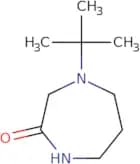
Formula:C9H12ClNOPurity:Min. 95%Molecular weight:185.65 g/mol4-tert-Butyl-1,4-diazepan-2-one
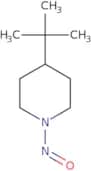
CAS:Versatile small molecule scaffoldFormula:C9H18N2OPurity:Min. 95%Molecular weight:170.25 g/mol4-tert-Butyl-1-nitrosopiperidine
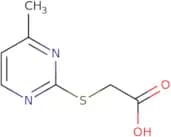
CAS:Versatile small molecule scaffoldFormula:C9H18N2OPurity:Min. 95%Molecular weight:170.25 g/mol2-(Carboxymethylthio)-4-methylpyrimidine
CAS:Versatile small molecule scaffoldFormula:C7H8N2O2SPurity:Min. 95%Molecular weight:184.22 g/mol2-[6-(Cyanomethyl)pyridin-2-yl]acetonitrile
CAS:Versatile small molecule scaffoldFormula:C9H7N3Purity:Min. 95%Molecular weight:157.17 g/mol1,4-Dioxaspiro[4.6]undecan-2-ylmethanamine
CAS:Versatile small molecule scaffoldFormula:C10H19NO2Purity:Min. 95%Molecular weight:185.26 g/mol6-Chloro-1,1-dioxo-1,2-dihydro-1-benzo[d]isothiazol-3-one
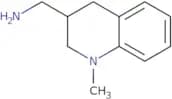
CAS:6-Chloro-1,1-dioxo-1,2-dihydro-1-benzo[d]isothiazol-3-one is a chemical used for the treatment of bladder cancer. It inhibits the growth of cancer cells by interacting with DNA and inhibiting its synthesis. 6CDAI has been shown to be effective in treating refluxing bladder cancer, but has also been shown to have carcinogenic properties. This drug is metabolized mainly by hydroxylation and then conjugation with glucuronic acid or sulfate.Formula:C7H4ClNO3SPurity:Min. 95%Molecular weight:217.62 g/mol(1-Methyl-1,2,3,4-tetrahydroquinolin-3-yl)methanamine
CAS:Versatile small molecule scaffoldFormula:C11H16N2Purity:Min. 95%Molecular weight:176.26 g/mol3-(Morpholin-2-yl)phenol
CAS:Versatile small molecule scaffold
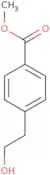
Formula:C10H13NO2Purity:Min. 95%Molecular weight:179.22 g/molMethyl 4-(2-hydroxyethyl)benzoate
CAS:Versatile small molecule scaffold
Formula:C10H12O3Purity:Min. 95%Molecular weight:180.2 g/mol2-Phenylmethanesulfonylethan-1-amine
CAS:Versatile small molecule scaffoldFormula:C9H13NO2SPurity:Min. 95%Molecular weight:199.27 g/molN-(2-Furylmethyl)pyridin-2-amine hydrochloride
CAS:Versatile small molecule scaffoldFormula:C10H11ClN2OPurity:Min. 95%Molecular weight:210.66 g/molBenzyl 2-(aminooxy)acetate
CAS:Versatile small molecule scaffold
Formula:C9H11NO3Purity:Min. 95%Molecular weight:181.19 g/mol4-Phenyl-1,4-diazepan-2-one
CAS:Versatile small molecule scaffoldFormula:C11H14N2OPurity:Min. 95%Molecular weight:190.24 g/mol2-Amino-1,8-naphthyridine-3-carboxylic acid
CAS:Versatile small molecule scaffoldFormula:C9H7N3O2Purity:Min. 95%Molecular weight:189.17 g/mol2-[(4-Aminophenyl)formamido]acetamide
CAS:Versatile small molecule scaffoldFormula:C9H11N3O2Purity:Min. 95%Molecular weight:193.2 g/molN2-Phenylpyridine-2,6-diamine
CAS:Versatile small molecule scaffoldFormula:C11H11N3Purity:Min. 95%Molecular weight:185.22 g/molFosinopril related compound H
CAS:Fosinopril Related Compound H is a ligand that binds to aluminium oxide. It has been shown to be active in the presence of acetonitrile and aluminium, with a binding constant of K = 3.6 x 10 M-1. Fosinopril Related Compound H was obtained by chromatographic separation from fosinopril sodium, which was synthesized by reacting orthophosphoric acid with phosphonates. The ligand was characterized using modelling and validation procedures that demonstrated its suitability for use as an ion exchange resin in chromatographic methods.Formula:C10H15O3PPurity:Min. 95%Molecular weight:214.2 g/molEthyl 1,2,3,4-tetrahydroisoquinoline-4-carboxylate
CAS:Versatile small molecule scaffoldFormula:C12H15NO2Purity:Min. 95%Molecular weight:205.25 g/mol3-(2-Hydroxyphenyl)-1H-pyrazole-5-carboxylic acid
CAS:Versatile small molecule scaffoldFormula:C10H8N2O3Purity:Min. 95%Molecular weight:204.18 g/mol3-(2-Ethoxyphenoxy)pyrrolidine
CAS:Versatile small molecule scaffoldFormula:C12H17NOPurity:Min. 95%Molecular weight:191.27 g/molN-[(2-Chlorophenyl)methyl]cyclohexanamine
CAS:Versatile small molecule scaffoldFormula:C13H18ClNPurity:Min. 95%Molecular weight:223.74 g/molEthyl 2-amino-2-methyl-3-phenylpropanoate
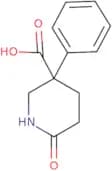
CAS:Versatile small molecule scaffoldFormula:C12H17NO2Purity:Min. 95%Molecular weight:207.3 g/mol6-Oxo-3-phenylpiperidine-3-carboxylic acid
CAS:Versatile small molecule scaffoldFormula:C12H13NO3Purity:Min. 95%Molecular weight:219.24 g/mol3-Phenyl-2-(1H-pyrrol-1-yl)propanoic acid
CAS:Versatile small molecule scaffoldFormula:C13H13NO2Purity:Min. 95%Molecular weight:215.25 g/mol4-Amino-6-(morpholin-4-yl)-1,3,5-triazine-2-carboxylic acid
CAS:Versatile small molecule scaffoldFormula:C8H11N5O3Purity:Min. 95%Molecular weight:225.2 g/molrac-(1R,4R)-4-{[(2-Aminophenyl)methyl]amino}cyclohexan-1-ol
CAS:Versatile small molecule scaffoldFormula:C13H20N2OPurity:Min. 95%Molecular weight:220.31 g/mol4-[2-(Pyrrolidin-1-yl)ethoxy]benzonitrile
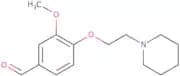
CAS:Versatile small molecule scaffoldFormula:C13H16N2OPurity:Min. 95%Molecular weight:216.28 g/mol3-Methoxy-4-(2-piperidin-1-yl-ethoxy)-benzaldehyde
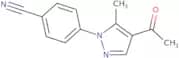
CAS:Versatile small molecule scaffoldFormula:C15H21NO3Purity:Min. 95%Molecular weight:263.33 g/mol4-(4-Acetyl-5-methyl-1H-pyrazol-1-yl)benzonitrile
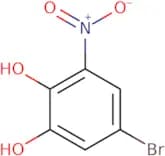
CAS:Versatile small molecule scaffoldFormula:C13H11N3OPurity:Min. 95%Molecular weight:225.25 g/mol5-bromo-3-nitrobenzene-1,2-diol
CAS:Versatile small molecule scaffold
Formula:C6H4BrNO4Purity:Min. 95%Molecular weight:234.01 g/mol4-(2-Aminobenzoyl)-2-piperazinone
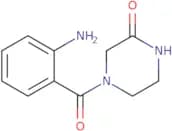
CAS:Versatile small molecule scaffoldFormula:C11H13N3O2Purity:Min. 95%Molecular weight:219.25 g/molHydroxy-PEG1-(CH2)2-Boc
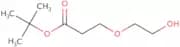
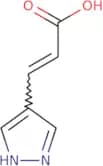
CAS:Hydroxy-PEG1-(CH2)2-Boc is a PEG polymer categorised as monofunctional (OH-PEG-X). Used as a linker, hydroxy-PEG1-(CH2)2-Boc is used to attached PEG to proteins, peptides, oligonucleotides, nanoparticles and small molecules via pegylation, a bioconjugation technique.Formula:C9H18O4Purity:Min. 95%Molecular weight:190.24 g/mol3-(1H-Pyrazol-4-yl)prop-2-enoic acid
CAS:Versatile small molecule scaffoldFormula:C6H6N2O2Purity:Min. 95%Molecular weight:138.12 g/molEthyl 2-(4-bromo-3-fluorophenyl)acetate
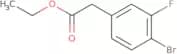
CAS:Versatile small molecule scaffold
Formula:C10H10BrFO2Purity:Min. 95%Molecular weight:261.09 g/mol6-bromo-3-chloroimidazo[1,2-a]pyridine
CAS:Versatile small molecule scaffoldFormula:C7H4BrClN2Purity:Min. 95%Molecular weight:231.48 g/mol4-Bromothieno[2,3-c]pyridine
CAS:Versatile small molecule scaffoldFormula:C7H4BrNSPurity:Min. 95%Molecular weight:214.08 g/mol
![2-(Trifluoromethyl)bicyclo[2.2.1]heptane-2-carboxylic acid](/_next/image/?url=https%3A%2Fstatic.cymitquimica.com%2Fproducts%2F3D%2Fthumb-webp%2FWAD75294.webp&w=3840&q=75)

![Ethyl 2-amino-[1,3]thiazolo[4,5-b]pyridine-6-carboxylate](/_next/image/?url=https%3A%2Fstatic.cymitquimica.com%2Fproducts%2F3D%2Fthumb-webp%2FWAD75311.webp&w=3840&q=75)
![{[1,2,4]Triazolo[1,5-a]pyrimidin-2-yl}methanamine hydrochloride](/_next/image/?url=https%3A%2Fstatic.cymitquimica.com%2Fproducts%2F3D%2Fthumb-webp%2FWAD82595.webp&w=3840&q=75)
![3-Ethyl-1-oxa-3,8-diazaspiro[4.5]decan-2-one hydrochloride](/_next/image/?url=https%3A%2Fstatic.cymitquimica.com%2Fproducts%2F3D%2Fthumb-webp%2FWAD91528.webp&w=3840&q=75)



![2-[6-(Cyanomethyl)pyridin-2-yl]acetonitrile](/_next/image/?url=https%3A%2Fstatic.cymitquimica.com%2Fproducts%2F3D%2Fthumb-webp%2FWBA13338.webp&w=3840&q=75)
![1,4-Dioxaspiro[4.6]undecan-2-ylmethanamine](/_next/image/?url=https%3A%2Fstatic.cymitquimica.com%2Fproducts%2F3D%2Fthumb-webp%2FWBA14557.webp&w=3840&q=75)
![6-Chloro-1,1-dioxo-1,2-dihydro-1-benzo[d]isothiazol-3-one](/_next/image/?url=https%3A%2Fstatic.cymitquimica.com%2Fproducts%2F3D%2Fthumb-webp%2FWBA14910.webp&w=3840&q=75)



![2-[(4-Aminophenyl)formamido]acetamide](/_next/image/?url=https%3A%2Fstatic.cymitquimica.com%2Fproducts%2F3D%2Fthumb-webp%2FWBA31919.webp&w=3840&q=75)


![N-[(2-Chlorophenyl)methyl]cyclohexanamine](/_next/image/?url=https%3A%2Fstatic.cymitquimica.com%2Fproducts%2F3D%2Fthumb-webp%2FWBA42573.webp&w=3840&q=75)



![rac-(1R,4R)-4-{[(2-Aminophenyl)methyl]amino}cyclohexan-1-ol](/_next/image/?url=https%3A%2Fstatic.cymitquimica.com%2Fproducts%2F3D%2Fthumb-webp%2FWBA72791.webp&w=3840&q=75)
![4-[2-(Pyrrolidin-1-yl)ethoxy]benzonitrile](/_next/image/?url=https%3A%2Fstatic.cymitquimica.com%2Fproducts%2F3D%2Fthumb-webp%2FWBA74539.webp&w=3840&q=75)
![6-bromo-3-chloroimidazo[1,2-a]pyridine](/_next/image/?url=https%3A%2Fstatic.cymitquimica.com%2Fproducts%2F3D%2Fthumb-webp%2FWBC22401.webp&w=3840&q=75)
![4-Bromothieno[2,3-c]pyridine](/_next/image/?url=https%3A%2Fstatic.cymitquimica.com%2Fproducts%2F3D%2Fthumb-webp%2FWBC22408.webp&w=3840&q=75)