Building Blocks
Subcategories of "Building Blocks"
- Boronic Acids & Boronic Acid Derivatives(5,783 products)
- Chiral Building Blocks(1,242 products)
- Hydrocarbon Building Blocks(6,105 products)
- Organic Building Blocks(61,055 products)
Found 205383 products of "Building Blocks"
4-[Methyl(2-methylpropyl)amino]benzoic acid hydrochloride
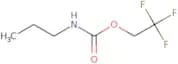
CAS:Versatile small molecule scaffoldFormula:C12H18ClNO2Purity:Min. 95%Molecular weight:243.73 g/mol2,2,2-Trifluoroethyl N-propylcarbamate
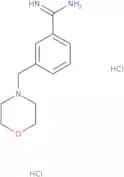
CAS:Versatile small molecule scaffoldFormula:C6H10F3NO2Purity:Min. 95%Molecular weight:185.14 g/mol3-(Morpholin-4-ylmethyl)benzene-1-carboximidamide dihydrochloride
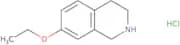
CAS:Versatile small molecule scaffoldFormula:C12H19Cl2N3OPurity:Min. 95%Molecular weight:292.2 g/mol7-Ethoxy-1,2,3,4-tetrahydroisoquinoline hydrochloride
CAS:Versatile small molecule scaffoldFormula:C11H16ClNOPurity:Min. 95%Molecular weight:213.7 g/mol3-[(2,4-Dioxo-1,3-thiazolidin-3-yl)methyl]benzonitrile
CAS:Versatile small molecule scaffoldFormula:C11H8N2O2SPurity:Min. 95%Molecular weight:232.26 g/mol2-Chloro-N-[2-(2-methylphenyl)ethyl]propanamide
CAS:Versatile small molecule scaffoldFormula:C12H16ClNOPurity:Min. 95%Molecular weight:225.71 g/mol4-{[(2-Chlorophenyl)methyl]amino}butanoic acid hydrochloride
CAS:Versatile small molecule scaffold
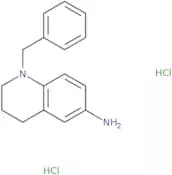
Formula:C11H15Cl2NO2Purity:Min. 95%Molecular weight:264.14 g/mol1-Benzyl-1,2,3,4-tetrahydroquinolin-6-amine dihydrochloride
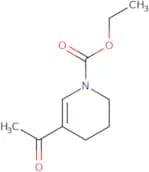
CAS:Versatile small molecule scaffoldFormula:C16H20Cl2N2Purity:Min. 95%Molecular weight:311.2 g/molEthyl 5-acetyl-1,2,3,4-tetrahydropyridine-1-carboxylate
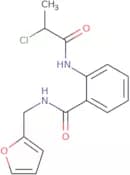
CAS:Versatile small molecule scaffoldFormula:C10H15NO3Purity:Min. 95%Molecular weight:197.23 g/mol2-(2-Chloropropanamido)-N-(furan-2-ylmethyl)benzamide
CAS:Versatile small molecule scaffoldFormula:C15H15ClN2O3Purity:Min. 95%Molecular weight:306.74 g/mol1-{4-[(Difluoromethyl)sulfanyl]-3-methoxyphenyl}ethan-1-one
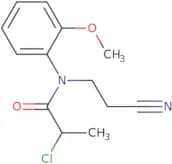
CAS:Versatile small molecule scaffoldFormula:C10H10F2O2SPurity:Min. 95%Molecular weight:232.25 g/mol2-Chloro-N-(2-cyanoethyl)-N-(2-methoxyphenyl)propanamide
CAS:Versatile small molecule scaffold
Formula:C13H15ClN2O2Purity:Min. 95%Molecular weight:266.72 g/mol2-[({3-Bromoimidazo[1,2-a]pyridin-2-yl}methyl)sulfanyl]benzoic acid hydrobromide
CAS:Versatile small molecule scaffoldFormula:C15H12Br2N2O2SPurity:Min. 95%Molecular weight:444.1 g/mol1-(Cyclopropylmethyl)-4-methyl-1H-pyrazol-5-amine hydrochloride
CAS:Versatile small molecule scaffold
Formula:C8H14ClN3Purity:Min. 95%Molecular weight:187.67 g/mol2-Methyl-4-(piperazine-1-carbonyl)quinoline dihydrochloride
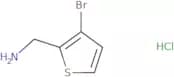
CAS:Versatile small molecule scaffoldFormula:C15H19Cl2N3OPurity:Min. 95%Molecular weight:328.2 g/mol(3-Bromothiophen-2-yl)methanamine hydrochloride
CAS:Versatile small molecule scaffoldFormula:C5H7BrClNSPurity:Min. 95%Molecular weight:228.54 g/mol1-(Chloromethyl)-4-[(difluoromethyl)sulfanyl]benzene
CAS:Versatile small molecule scaffoldFormula:C8H7ClF2SPurity:Min. 95%Molecular weight:208.66 g/mol2-[3-(Aminomethyl)phenoxy]-N-cyclopropylacetamide hydrochloride
CAS:Versatile small molecule scaffoldFormula:C12H17ClN2O2Purity:Min. 95%Molecular weight:256.73 g/mol8-Chloroisoquinoline-5-sulfonyl chloride
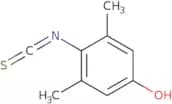
CAS:Versatile small molecule scaffoldFormula:C9H5Cl2NO2SPurity:Min. 95%Molecular weight:262.11 g/mol4-Isothiocyanato-3,5-dimethylphenol
CAS:Versatile small molecule scaffold
Formula:C9H9NOSPurity:Min. 95%Molecular weight:179.24 g/molMethyl 2-{[(tert-butoxy)carbonyl]amino}-4-methyl-1,3-thiazole-5-carboxylate
CAS:Versatile small molecule scaffoldFormula:C11H16N2O4SPurity:Min. 95%Molecular weight:272.32 g/mol{1-[2-(Pyridin-2-yl)ethyl]-1H-1,2,3-triazol-4-yl}methanol
CAS:Versatile small molecule scaffold
Formula:C10H12N4OPurity:Min. 95%Molecular weight:204.23 g/mol2-Methyl-4,5,6,7-tetrahydro-oxazolo[4,5-c]pyridine hydrochloride
CAS:Versatile small molecule scaffoldFormula:C7H11ClN2OPurity:Min. 95%Molecular weight:174.63 g/mol3-[(Pyridin-3-yl)amino]-1,2-dihydroisoquinolin-1-one
CAS:Versatile small molecule scaffoldFormula:C14H11N3OPurity:Min. 95%Molecular weight:237.26 g/mol1-Ethoxypiperidin-4-amine
CAS:Versatile small molecule scaffoldFormula:C7H16N2OPurity:Min. 95%Molecular weight:144.2 g/mol2-[(4-Benzylpiperazin-1-yl)methyl]-5-bromoaniline
CAS:Versatile small molecule scaffoldFormula:C18H22BrN3Purity:Min. 95%Molecular weight:360.3 g/molEthyl 5-chloro-2-(cyclopropylamino)pyridine-4-carboxylate
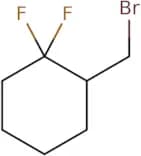
CAS:Versatile small molecule scaffoldFormula:C11H13ClN2O2Purity:Min. 95%Molecular weight:240.68 g/mol2-(Bromomethyl)-1,1-difluorocyclohexane
CAS:Versatile small molecule scaffoldFormula:C7H11BrF2Purity:Min. 95%Molecular weight:213.06 g/mol2-[(Benzyloxy)methyl]-2-ethylbutanoic acid
CAS:Versatile small molecule scaffold
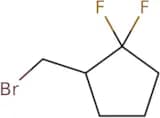
Formula:C14H20O3Purity:Min. 95%Molecular weight:236.31 g/mol2-(Bromomethyl)-1,1-difluorocyclopentane
CAS:Versatile small molecule scaffoldFormula:C6H9BrF2Purity:Min. 95%Molecular weight:199.04 g/mol5-(3-Amino-4-methylphenyl)thiophene-2-carbonitrile
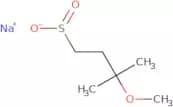
CAS:Versatile small molecule scaffoldFormula:C12H10N2SPurity:Min. 95%Molecular weight:214.3 g/molSodium 3-methoxy-3-methylbutane-1-sulfinate
CAS:Versatile small molecule scaffoldFormula:C6H13NaO3SPurity:Min. 95%Molecular weight:188.22 g/mol6-(Bromomethyl)-2,2-dimethyloxane
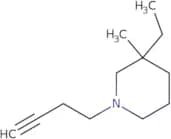
CAS:Versatile small molecule scaffoldFormula:C8H15BrOPurity:Min. 95%Molecular weight:207.11 g/mol1-(But-3-yn-1-yl)-3-ethyl-3-methylpiperidine
CAS:Versatile small molecule scaffoldFormula:C12H21NPurity:Min. 95%Molecular weight:179.3 g/mol1-Phenyl-2-azaspiro[3.5]nonane
CAS:Versatile small molecule scaffoldFormula:C14H19NPurity:Min. 95%Molecular weight:201.31 g/mol3-(Methylsulfanyl)-1-(1,3-thiazolidin-3-yl)propan-1-one
CAS:Versatile small molecule scaffold
Formula:C7H13NOS2Purity:Min. 95%Molecular weight:191.3 g/mol2-[(Dimethyloxido-λ4-sulfanylidene)amino]-2-oxo-acetic acid
CAS:Versatile small molecule scaffold
Formula:C4H7NO4SPurity:Min. 95%Molecular weight:165.17 g/mol4-Amino-7,8-dihydropteridin-7-one
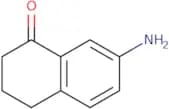
CAS:Versatile small molecule scaffoldFormula:C6H5N5OPurity:Min. 95%Molecular weight:163.14 g/mol7-amino-alpha-tetralone
CAS:Versatile small molecule scaffold
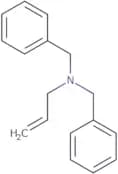
Formula:C10H11NOPurity:Min. 95%Molecular weight:161.2 g/molDibenzyl(prop-2-en-1-yl)amine
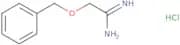
CAS:Dibenzyl(prop-2-en-1-yl)amine is an imidazole compound that can be prepared from the reaction of benzyl chloride with ammonia. It is a heterocyclic compound that contains a benzyl group and is used as an intermediate for the synthesis of other molecules. Dibenzyl(prop-2-en-1-yl)amine has been shown to have antiplatelet effects in vitro and may be useful in the treatment of thrombosis.Formula:C17H19NPurity:Min. 95%Molecular weight:237.34 g/mol2-(Benzyloxy)ethanimidamide hydrochloride
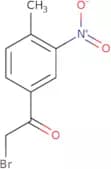
CAS:Versatile small molecule scaffoldFormula:C9H13ClN2OPurity:Min. 95%Molecular weight:200.66 g/mol2-Bromo-1-(3-nitro-4-methylphenyl)ethanone
CAS:Versatile small molecule scaffold
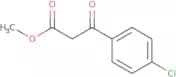
Formula:C9H8BrNO3Purity:Min. 95%Molecular weight:258.07 g/molMethyl (4-chlorobenzoyl)acetate
CAS:Methyl (4-chlorobenzoyl)acetate is a nonlinear optical material with hyperpolarizability. It has a fingerprint spectrum that can be used as an identification tool and it has been shown to have diffraction properties. This compound crystallizes in the orthorhombic crystal structure and its optical properties are determined by its interconnected molecular lattice. Methyl (4-chlorobenzoyl)acetate is used in the preparation of other compounds, such as methoxymethane, which can be used to synthesize pharmaceuticals such as acetaminophen.
Formula:C10H9ClO3Purity:Min. 95%Molecular weight:212.63 g/mol(R)-1-(thiophen-2-yl)ethanamine
CAS:Versatile small molecule scaffoldFormula:C6H9NSPurity:Min. 95%Molecular weight:127.21 g/mol4-(2-Hydroxyethoxy)benzaldehyde
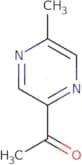
CAS:4-(2-Hydroxyethoxy)benzaldehyde is a growth factor that inhibits the synthesis of isonicotinic acid and erythromycin. It can be used to treat inflammatory diseases, such as arthritis, by inhibiting prostaglandin production. 4-(2-Hydroxyethoxy)benzaldehyde can be synthesized by the reaction of hydroxybenzaldehyde with 2-bromoethanol in the presence of hydrochloric acid or methyl ethyl chloride. The compound forms a deep purple solution when mixed with hydrochloric acid and turns yellow when treated with an aqueous solution of hydroxide ions. Azobenzene can form adducts with 4-(2-hydroxyethoxy)benzaldehyde, which are useful for studying the photochemical properties of this molecule.Formula:C9H10O3Purity:Min. 95%Molecular weight:166.18 g/mol1-(5-Methyl-pyrazin-2-yl)-ethanone
CAS:1-(5-Methyl-pyrazin-2-yl)-ethanone is an acidic compound that has been detected in the headspace of foods such as meat and fish. It is formed by the reaction of hexanal with fatty acids. 1-(5-Methyl-pyrazin-2-yl)-ethanone has been detected in various foods and beverages, including meat, fish, bakery products, and fruit juices. The detection of this compound can be done using a mass spectrometer or a gas chromatograph. This chemical is analysed by solid phase microextraction (SPME) and ionization detector (GC/MS). In some cases it can also be determined by spectrometric analysis.
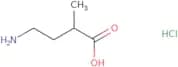
Formula:C7H8N2OPurity:Min. 95%Molecular weight:136.15 g/mol4-Amino-2-methylbutanoic acid hydrochloride
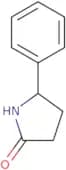
CAS:Versatile small molecule scaffoldFormula:C5H12ClNO2Purity:Min. 95%Molecular weight:153.61 g/mol5-Phenylpyrrolidin-2-one
CAS:5-Phenylpyrrolidin-2-one is a synthetic molecule that optimizes the catalysis of allylamines. This molecule has been shown to be a hydrolysis product of an amide and a carbonyl, and can be oxidized by sodium periodate to generate the allylamine. 5-Phenylpyrrolidin-2-one has also been found to catalyze the transfer of carbonyl groups from one molecule to another, which is useful for photocyclization reactions. This compound can also be used as an oxidant in allylamine reactions.Formula:C10H11NOPurity:Min. 95%Molecular weight:161.2 g/mol1-[(2-Nitrophenyl)sulfanyl]propan-2-one
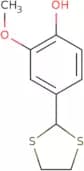
CAS:Versatile small molecule scaffoldFormula:C9H9NO3SPurity:Min. 95%Molecular weight:211.24 g/mol2-(4-Hydroxy-3-methoxyphenyl)-1,3-dithiolane
CAS:2-(4-Hydroxy-3-methoxyphenyl)-1,3-dithiolane is a metabolite of the drug product 2-[4-(hydroxymethyl)phenyl]-1,3-dithiolane. It is used as an analytical standard for drug development and in natural product research and development. The chemical properties of 2-(4-hydroxy-3-methoxyphenyl)-1,3-dithiolane are similar to those of its parent compound, but it has a smaller molecular weight. This compound has been found to be a substrate for CYP2C9 and CYP2C19 in vitro. Metabolism studies have shown that 2-(4-hydroxy-3-methoxyphenyl)-1,3-dithiolane is not converted to the parent compound or any other metabolites when incubated with human liver microsomes at 37°C.Formula:C10H12O2S2Purity:Min. 95%Molecular weight:228.3 g/mol
![4-[Methyl(2-methylpropyl)amino]benzoic acid hydrochloride](/_next/image/?url=https%3A%2Fstatic.cymitquimica.com%2Fproducts%2F3D%2Fthumb-webp%2FWYB72309.webp&w=3840&q=75)

![3-[(2,4-Dioxo-1,3-thiazolidin-3-yl)methyl]benzonitrile](/_next/image/?url=https%3A%2Fstatic.cymitquimica.com%2Fproducts%2F3D%2Fthumb-webp%2FWYB72316.webp&w=3840&q=75)
![2-Chloro-N-[2-(2-methylphenyl)ethyl]propanamide](/_next/image/?url=https%3A%2Fstatic.cymitquimica.com%2Fproducts%2F3D%2Fthumb-webp%2FWYB72319.webp&w=3840&q=75)
![4-{[(2-Chlorophenyl)methyl]amino}butanoic acid hydrochloride](/_next/image/?url=https%3A%2Fstatic.cymitquimica.com%2Fproducts%2F3D%2Fthumb-webp%2FWYB72320.webp&w=3840&q=75)
![1-{4-[(Difluoromethyl)sulfanyl]-3-methoxyphenyl}ethan-1-one](/_next/image/?url=https%3A%2Fstatic.cymitquimica.com%2Fproducts%2F3D%2Fthumb-webp%2FWYB72325.webp&w=3840&q=75)
![2-[({3-Bromoimidazo[1,2-a]pyridin-2-yl}methyl)sulfanyl]benzoic acid hydrobromide](/_next/image/?url=https%3A%2Fstatic.cymitquimica.com%2Fproducts%2F3D%2Fthumb-webp%2FWYB72327.webp&w=3840&q=75)


![1-(Chloromethyl)-4-[(difluoromethyl)sulfanyl]benzene](/_next/image/?url=https%3A%2Fstatic.cymitquimica.com%2Fproducts%2F3D%2Fthumb-webp%2FWYB72334.webp&w=3840&q=75)
![2-[3-(Aminomethyl)phenoxy]-N-cyclopropylacetamide hydrochloride](/_next/image/?url=https%3A%2Fstatic.cymitquimica.com%2Fproducts%2F3D%2Fthumb-webp%2FWYB72343.webp&w=3840&q=75)

![Methyl 2-{[(tert-butoxy)carbonyl]amino}-4-methyl-1,3-thiazole-5-carboxylate](/_next/image/?url=https%3A%2Fstatic.cymitquimica.com%2Fproducts%2F3D%2Fthumb-webp%2FWZB82922.webp&w=3840&q=75)
![{1-[2-(Pyridin-2-yl)ethyl]-1H-1,2,3-triazol-4-yl}methanol](/_next/image/?url=https%3A%2Fstatic.cymitquimica.com%2Fproducts%2F3D%2Fthumb-webp%2FWZB84779.webp&w=3840&q=75)
![2-Methyl-4,5,6,7-tetrahydro-oxazolo[4,5-c]pyridine hydrochloride](/_next/image/?url=https%3A%2Fstatic.cymitquimica.com%2Fproducts%2F3D%2Fthumb-webp%2FWZB89218.webp&w=3840&q=75)
![3-[(Pyridin-3-yl)amino]-1,2-dihydroisoquinolin-1-one](/_next/image/?url=https%3A%2Fstatic.cymitquimica.com%2Fproducts%2F3D%2Fthumb-webp%2FWZB96103.webp&w=3840&q=75)

![2-[(4-Benzylpiperazin-1-yl)methyl]-5-bromoaniline](/_next/image/?url=https%3A%2Fstatic.cymitquimica.com%2Fproducts%2F3D%2Fthumb-webp%2FWZC16399.webp&w=3840&q=75)

![2-[(Benzyloxy)methyl]-2-ethylbutanoic acid](/_next/image/?url=https%3A%2Fstatic.cymitquimica.com%2Fproducts%2F3D%2Fthumb-webp%2FWZC44131.webp&w=3840&q=75)


![1-Phenyl-2-azaspiro[3.5]nonane](/_next/image/?url=https%3A%2Fstatic.cymitquimica.com%2Fproducts%2F3D%2Fthumb-webp%2FWZC88941.webp&w=3840&q=75)

![2-[(Dimethyloxido-λ4-sulfanylidene)amino]-2-oxo-acetic acid](/_next/image/?url=https%3A%2Fstatic.cymitquimica.com%2Fproducts%2F3D%2Fthumb-webp%2FWZC99160.webp&w=3840&q=75)



![1-[(2-Nitrophenyl)sulfanyl]propan-2-one](/_next/image/?url=https%3A%2Fstatic.cymitquimica.com%2Fproducts%2F3D%2Fthumb-webp%2FXAA05728.webp&w=3840&q=75)