Building Blocks
This section contains fundamental products for the synthesis of organic and biological compounds. Building blocks are the essential starting materials used to construct complex molecules through various chemical reactions. They play a critical role in drug discovery, material science, and chemical research. At CymitQuimica, we offer a diverse range of high-quality building blocks to support your innovative research and industrial projects, ensuring you have the essential components for successful synthesis.
Subcategories of "Building Blocks"
- Boronic Acids & Boronic Acid Derivatives(5,778 products)
- Chiral Building Blocks(1,242 products)
- Hydrocarbon Building Blocks(6,098 products)
- Organic Building Blocks(61,059 products)
Found 199579 products of "Building Blocks"
Sort by
Purity (%)
0
100
|
0
|
50
|
90
|
95
|
100
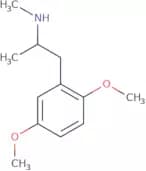
Methyl-DMA
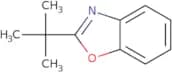
CAS:Controlled Product<p>Versatile small molecule scaffold</p>Formula:C12H19NO2Purity:Min. 95%Molecular weight:209.28 g/mol2-tert-Butyl-1,3-benzoxazole
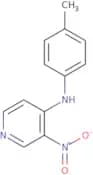
CAS:<p>2-tert-Butyl-1,3-benzoxazole is an organic compound that belongs to the group of benzoxazoles. It can be synthesized by a variety of methods, including oxidative coupling of 2-tert-butylbenzothiazole with benzene or 1,2-dibromobenzene, or by the intramolecular cross-coupling reaction between 2-(2'-hydroxyphenyl)benzothiazole and methyl iodide. The compound has been shown to be an excellent ligand for palladium(II). This ligand can be used in asymmetric synthesis strategies to generate optimal yields of benzoxazoles from simple starting materials.</p>Formula:C11H13NOPurity:Min. 95%Molecular weight:175.23 g/molN-(4-Methylphenyl)-3-nitropyridin-4-amine
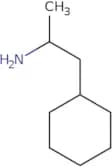
CAS:Versatile small molecule scaffoldFormula:C12H11N3O2Purity:Min. 95%Molecular weight:229.23 g/mol1-Cyclohexylpropan-2-amine
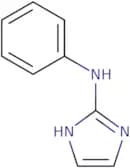
CAS:<p>Versatile small molecule scaffold</p>Formula:C9H19NPurity:Min. 95%Molecular weight:141.25 g/molN-Phenyl-1H-imidazol-2-amine
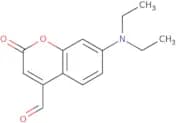
CAS:N-Phenyl-1H-imidazol-2-amine is an antiinflammatory drug that belongs to the group of imidazole derivatives. It has been shown to be effective in treating inflammation and joint pain. This compound is a psychostimulant that acts as an antagonist of the dopamine D1 receptor. It also has a role in suppressing the synthesis of prostaglandin E2, which inhibits inflammatory responses. N-Phenyl-1H-imidazol-2-amine has been shown to inhibit the production of nitric oxide and leukotrienes, which are mediators involved in inflammatory responses.Formula:C9H9N3Purity:Min. 95%Molecular weight:159.19 g/mol7-(Diethylamino)-2-oxo-2H-chromene-4-carbaldehyde
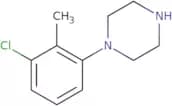
CAS:<p>7-(Diethylamino)-2-oxo-2H-chromene-4-carbaldehyde (DEA) is a fluorescent probe that has been shown to be a chemosensor for HClO. It reacts with HClO to produce an increase in fluorescence intensity and the generation of formyl radicals. DEA has also been shown to react with peroxide, hypochlorous acid, and zinc ions. The ethyl group on DEA can be used as a linker for the attachment of other molecules, such as proteins or drugs, for bioconjugation.</p>Formula:C14H15NO3Purity:Min. 95%Molecular weight:245.27 g/mol1-(3-Chloro-2-methylphenyl)piperazine
CAS:Controlled Product<p>Versatile small molecule scaffold</p>Formula:C11H15ClN2Purity:Min. 95%Molecular weight:210.7 g/mol2-(Aminooxy)-4-methylpentanoic acid hydrochloride
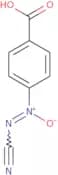
CAS:Versatile small molecule scaffoldFormula:C6H14ClNO3Purity:Min. 95%Molecular weight:183.6 g/mol4-Carboxy-N-(cyanoimino)benzen-1-imine oxide
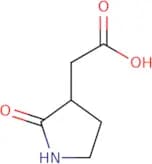
CAS:4-Carboxy-N-(cyanoimino)benzen-1-imine oxide (4CNIO) is a chemical compound that inhibits the activity of methyltransferases, which are enzymes that regulate the addition of methyl groups to proteins. It has been shown to inhibit growth factor production in k562 cells. 4CNIO also has antimicrobial activity against sarcoma cell and cryptococcus neoformans. The mechanism by which 4CNIO inhibits protein synthesis in rat liver microsomes is through its ability to react with amino groups on proteins. Its second order rate constant and amido group make it an effective inhibitor of protein synthesis.Formula:C8H5N3O3Purity:Min. 95%Molecular weight:191.14 g/mol2-(2-Oxopyrrolidin-3-yl)acetic acid
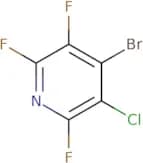
CAS:<p>Versatile small molecule scaffold</p>Formula:C6H9NO3Purity:Min. 95%Molecular weight:143.14 g/mol4-Bromo-3-chloro-2,5,6-trifluoropyridine
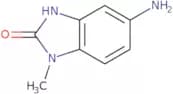
CAS:Versatile small molecule scaffoldFormula:C5BrClF3NPurity:Min. 95%Molecular weight:246.41 g/mol5-Amino-1-methyl-2,3-dihydro-1H-1,3-benzodiazol-2-one
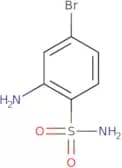
CAS:<p>Versatile small molecule scaffold</p>Formula:C8H9N3OPurity:Min. 95%Molecular weight:163.18 g/mol2-Amino-4-bromobenzene-1-sulfonamide
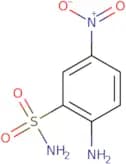
CAS:Versatile small molecule scaffoldFormula:C6H7BrN2O2SPurity:Min. 95%Molecular weight:251.1 g/mol2-Amino-5-nitrobenzenesulfonamide
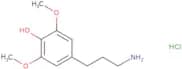
CAS:<p>2-Amino-5-nitrobenzenesulfonamide is a synthetic compound that is an inhibitor of the NS5B polymerase enzyme, which is part of the hepatitis C virus (HCV). It has been shown to be active against genotype 1 HCV. The chemical structure of 2-amino-5-nitrobenzenesulfonamide is similar to that of other unsymmetrical dialkyl sulfonamides, and it is classified as a class I NS5B polymerase inhibitor. 2-Amino-5-nitrobenzenesulfonamide can inhibit viral replication in vitro by inhibiting the activity of the HCV NS5B polymerase enzyme. It has also been shown to be effective against genotype 4 HCV in mice. In addition, this drug inhibits alkane biosynthesis in bacteria through competitive inhibition with a natural substrate (2-aminobenzothiazole) and analogs have been</p>Formula:C6H7N3O4SPurity:Min. 95%Molecular weight:217.2 g/mol4-(3-Aminopropyl)-2,6-dimethoxyphenol hydrochloride
CAS:Versatile small molecule scaffoldFormula:C11H18ClNO3Purity:Min. 95%Molecular weight:247.72 g/mol3-Amino-1,5-dihydro-1-methyl-4H-pyrazolo[3,4-d]pyrimidin-4-one
CAS:<p>Versatile small molecule scaffold</p>Formula:C6H7N5OPurity:Min. 95%Molecular weight:165.15 g/mol3-Bromo-1-methyl-1H,4H,5H-pyrazolo[3,4-d]pyrimidin-4-one
CAS:<p>Versatile small molecule scaffold</p>Formula:C6H5BrN4OPurity:Min. 95%Molecular weight:229.03 g/mol1-Methyl-1H,4H,7H-pyrazolo[3,4-b]pyridin-4-one
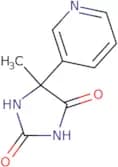
CAS:Versatile small molecule scaffoldFormula:C7H7N3OPurity:Min. 95%Molecular weight:149.15 g/mol5-Methyl-5-(pyridin-3-yl)imidazolidine-2,4-dione
CAS:<p>Versatile small molecule scaffold</p>Formula:C9H9N3O2Purity:Min. 95%Molecular weight:191.19 g/mol2-{8-Oxa-3-azabicyclo[3.2.1]octan-3-yl}ethan-1-amine
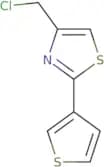
CAS:<p>Versatile small molecule scaffold</p>Formula:C8H16N2OPurity:Min. 95%Molecular weight:156.23 g/mol4-(Chloromethyl)-2-(thiophen-3-yl)-1,3-thiazole
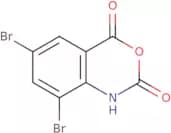
CAS:Versatile small molecule scaffoldFormula:C8H6ClNS2Purity:Min. 95%Molecular weight:215.7 g/mol6,8-Dibromo-2,4-dihydro-1H-3,1-benzoxazine-2,4-dione
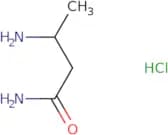
CAS:<p>Versatile small molecule scaffold</p>Formula:C8H3Br2NO3Purity:Min. 95%Molecular weight:320.92 g/mol3-Aminobutanamide hydrochloride
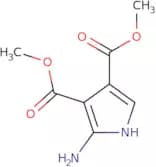
CAS:<p>Versatile small molecule scaffold</p>Formula:C4H11ClN2OPurity:Min. 95%Molecular weight:138.59 g/mol3,4-Dimethyl 2-amino-1H-pyrrole-3,4-dicarboxylate
CAS:<p>Versatile small molecule scaffold</p>Formula:C8H10N2O4Purity:Min. 95%Molecular weight:198.18 g/mol5H,6H,7H,8H-Imidazo[1,2-b]pyridazine
CAS:<p>Versatile small molecule scaffold</p>Formula:C6H9N3Purity:Min. 95%Molecular weight:123.16 g/mol5H,6H,7H,8H-[1,2,4]Triazolo[4,3-b]pyridazine
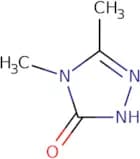
CAS:<p>Versatile small molecule scaffold</p>Formula:C5H8N4Purity:Min. 95%Molecular weight:124.14 g/mol3,4-Dimethyl-4,5-dihydro-1H-1,2,4-triazol-5-one
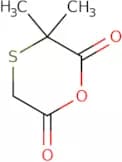
CAS:Versatile small molecule scaffoldFormula:C4H7N3OPurity:Min. 95%Molecular weight:113.12 g/mol3,3-Dimethyl-1,4-oxathiane-2,6-dione
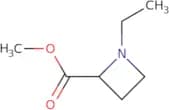
CAS:<p>Versatile small molecule scaffold</p>Formula:C6H8O3SPurity:Min. 95%Molecular weight:160.19 g/molMethyl 1-ethylazetidine-2-carboxylate
CAS:<p>Versatile small molecule scaffold</p>Formula:C7H13NO2Purity:Min. 95%Molecular weight:143.18 g/mol3H-Spiro[2-benzofuran-1,3'-piperidine]
CAS:<p>Versatile small molecule scaffold</p>Formula:C12H15NOPurity:Min. 95%Molecular weight:189.25 g/molEthyl({1-[4-(trifluoromethyl)phenyl]propan-2-yl})amine hydrochloride
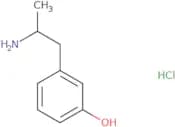
CAS:Controlled Product<p>Versatile small molecule scaffold</p>Formula:C12H17ClF3NPurity:Min. 95%Molecular weight:267.72 g/mol3-(2-Aminopropyl)phenol hydrochloride
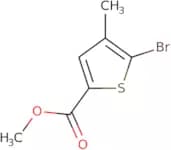
CAS:Controlled Product<p>Versatile small molecule scaffold</p>Formula:C9H14ClNOPurity:Min. 95%Molecular weight:187.66 g/molMethyl 5-bromo-4-methyl-2-thiophenecarboxylate
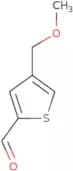
CAS:Versatile small molecule scaffoldFormula:C7H7BrO2SPurity:Min. 95%Molecular weight:235.1 g/mol4-(Methoxymethyl)thiophene-2-carbaldehyde
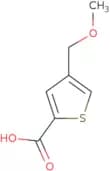
CAS:<p>Versatile small molecule scaffold</p>Formula:C7H8O2SPurity:Min. 95%Molecular weight:156.2 g/mol4-(Methoxymethyl)thiophene-2-carboxylic acid
CAS:<p>Versatile small molecule scaffold</p>Formula:C7H8O3SPurity:Min. 95%Molecular weight:172.2 g/mol5-Bromo-4-methylthiophene-2-carboxylic acid
CAS:5-Bromo-4-methylthiophene-2-carboxylic acid (BMTCA) is a small molecule inhibitor of proteasome activity. It has been shown to be effective against life-threatening diseases and is currently in the process of optimization for use as a drug candidate. BMTCA binds to the active site of the endopeptidase, preventing it from cleaving peptides into amino acids, which prevents the formation of proteins. This action prevents cancer cells from proliferating, leading to an anti-tumor effect. The efficiency of this drug is related to its functional groups and affinity for the active site.br>br>Formula:C6H5BrO2SPurity:Min. 95%Molecular weight:221.07 g/mol2-Phenyl-2H-1,2,3,4-tetrazole-5-carboxylic acid
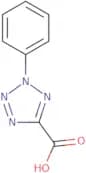
CAS:<p>Tetrazole is a heterocyclic compound that has the chemical formula C4H2N4. It is an aromatic heterocycle and can be used in organic synthesis. Tetrazole is synthesized by reacting sodium azide with a substituted hydrazine to produce a substituted hydrazide, which then reacts with nitrous acid to form a diazonium salt. This salt then undergoes hydrolysis to release the tetrazole product.</p>Formula:C8H6N4O2Purity:Min. 95%Molecular weight:190.16 g/mol5,6,7,8-Tetrahydroquinolin-2(1H)-one
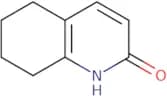
CAS:<p>Tetrahydroquinolin-2(1H)-one is a hydrobromide that has been found in the environment as an environmental pollutant. Tetrahydroquinolin-2(1H)-one is used to synthesize amides and has been studied by single-crystal x-ray diffraction. The molecule is centrosymmetric, with a molecular weight of 244.06 g/mol. Tetrahydroquinolin-2(1H)-one can be used as a ligand for metals such as chlorine and magnesium. It does not dissolve in water but does dissolve in organic solvents such as ethers, chloroform, or benzene.</p>Formula:C9H11NOPurity:Min. 95%Molecular weight:149.19 g/mol1-(3,4-Dimethoxyphenyl)cyclohexane-1-carboxylic acid
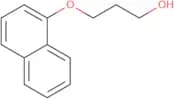
CAS:Versatile small molecule scaffoldFormula:C15H20O4Purity:Min. 95%Molecular weight:264.32 g/mol3-(Naphthalen-1-yloxy)propan-1-ol
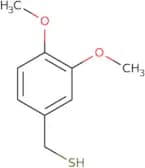
CAS:<p>Versatile small molecule scaffold</p>Formula:C13H14O2Purity:Min. 95%Molecular weight:202.25 g/mol(3,4-Dimethoxyphenyl)methanethiol
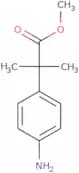
CAS:<p>Versatile small molecule scaffold</p>Formula:C9H12O2SPurity:Min. 95%Molecular weight:184.26 g/molMethyl 2-(4-aminophenyl)-2-methylpropanoate
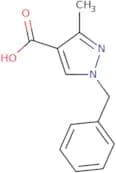
CAS:<p>Versatile small molecule scaffold</p>Formula:C11H15NO2Purity:Min. 95%Molecular weight:193.24 g/mol1-Benzyl-3-methyl-1H-pyrazole-4-carboxylic acid
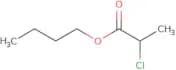
CAS:<p>Versatile small molecule scaffold</p>Formula:C12H12N2O2Purity:Min. 95%Molecular weight:216.24 g/molButyl 2-chloropropanoate
CAS:<p>Butyl 2-chloropropanoate is a synthetic compound that can be derived by reacting butyl chloride and propanol in the presence of persulfate. The reaction yields two products, with the desired product being the major product. Butyl 2-chloropropanoate has been used as a reactant in organic synthesis to generate disulphides and hydroxy groups. Optimization of the reaction parameters has resulted in a faster reaction time and higher yield. Butyl 2-chloropropanoate is typically used as a solvent for other reactions due to its ability to dissolve halides, such as chloroformates and bromides, and hydrocarbons, such as hexane or benzene.</p>Formula:C7H13ClO2Purity:Min. 95%Molecular weight:164.63 g/mol3-Bromo-4-chloroacetophenone
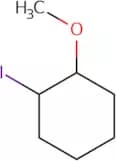
CAS:<p>Versatile small molecule scaffold</p>Formula:C8H6BrClOPurity:Min. 95%Molecular weight:233.49 g/molrac-(1R,2R)-1-Iodo-2-methoxycyclohexane
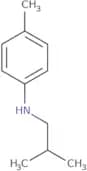
CAS:<p>Versatile small molecule scaffold</p>Formula:C7H13IOPurity:Min. 95%Molecular weight:240.08 g/mol4-Methyl-N-(2-methylpropyl)aniline
CAS:<p>Versatile small molecule scaffold</p>Formula:C11H17NPurity:Min. 95%Molecular weight:163.26 g/mol4-[Methyl(phenyl)sulfamoyl]benzoic acid
CAS:Versatile small molecule scaffoldFormula:C14H13NO4SPurity:Min. 95%Molecular weight:291.32 g/molEthyl 5-hydroxy-3-oxobicyclo[3.3.1]nonane-2-carboxylate
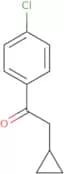
CAS:Versatile small molecule scaffoldFormula:C12H18O4Purity:Min. 95%Molecular weight:226.27 g/mol1-(4-chlorophenyl)-2-cyclopropylethan-1-one
CAS:<p>1-(4-chlorophenyl)-2-cyclopropylethan-1-one is a phenylcyclohexanone derivative that can be synthesized by diazotizing cyclopropylamine with sodium nitrite in an alkaline condition. This compound has been shown to be a good precursor for the synthesis of other compounds, such as amino acids, peptides, and nucleosides. 1-(4-Chlorophenyl)-2-cyclopropylethan-1-one has also been shown to have antimicrobial effects against several bacteria.</p>Formula:C11H11ClOPurity:Min. 95%Molecular weight:194.66 g/mol

![3-Amino-1,5-dihydro-1-methyl-4H-pyrazolo[3,4-d]pyrimidin-4-one](/_next/image/?url=https%3A%2Fstatic.cymitquimica.com%2Fproducts%2F3D%2Fthumb-webp%2FECA73866.webp&w=3840&q=75)
![3-Bromo-1-methyl-1H,4H,5H-pyrazolo[3,4-d]pyrimidin-4-one](/_next/image/?url=https%3A%2Fstatic.cymitquimica.com%2Fproducts%2F3D%2Fthumb-webp%2FECA73870.webp&w=3840&q=75)
![1-Methyl-1H,4H,7H-pyrazolo[3,4-b]pyridin-4-one](/_next/image/?url=https%3A%2Fstatic.cymitquimica.com%2Fproducts%2F3D%2Fthumb-webp%2FECA73876.webp&w=3840&q=75)
![2-{8-Oxa-3-azabicyclo[3.2.1]octan-3-yl}ethan-1-amine](/_next/image/?url=https%3A%2Fstatic.cymitquimica.com%2Fproducts%2F3D%2Fthumb-webp%2FECA74629.webp&w=3840&q=75)
![5H,6H,7H,8H-Imidazo[1,2-b]pyridazine](/_next/image/?url=https%3A%2Fstatic.cymitquimica.com%2Fproducts%2F3D%2Fthumb-webp%2FECA76047.webp&w=3840&q=75)
![5H,6H,7H,8H-[1,2,4]Triazolo[4,3-b]pyridazine](/_next/image/?url=https%3A%2Fstatic.cymitquimica.com%2Fproducts%2F3D%2Fthumb-webp%2FECA76048.webp&w=3840&q=75)
![3H-Spiro[2-benzofuran-1,3'-piperidine]](/_next/image/?url=https%3A%2Fstatic.cymitquimica.com%2Fproducts%2F3D%2Fthumb-webp%2FECA77503.webp&w=3840&q=75)
![Ethyl({1-[4-(trifluoromethyl)phenyl]propan-2-yl})amine hydrochloride](/_next/image/?url=https%3A%2Fstatic.cymitquimica.com%2Fproducts%2F3D%2Fthumb-webp%2FECA77955.webp&w=3840&q=75)



![4-[Methyl(phenyl)sulfamoyl]benzoic acid](/_next/image/?url=https%3A%2Fstatic.cymitquimica.com%2Fproducts%2F3D%2Fthumb-webp%2FECA83878.webp&w=3840&q=75)
![Ethyl 5-hydroxy-3-oxobicyclo[3.3.1]nonane-2-carboxylate](/_next/image/?url=https%3A%2Fstatic.cymitquimica.com%2Fproducts%2F3D%2Fthumb-webp%2FECA83902.webp&w=3840&q=75)