


Building Blocks
This section contains fundamental products for the synthesis of organic and biological compounds. Building blocks are the essential starting materials used to construct complex molecules through various chemical reactions. They play a critical role in drug discovery, material science, and chemical research. At CymitQuimica, we offer a diverse range of high-quality building blocks to support your innovative research and industrial projects, ensuring you have the essential components for successful synthesis.
Subcategories of "Building Blocks"
- Boronic Acids & Boronic Acid Derivatives(5,778 products)
- Chiral Building Blocks(1,242 products)
- Hydrocarbon Building Blocks(6,098 products)
- Organic Building Blocks(61,059 products)
Found 199580 products of "Building Blocks"
Sort by
Purity (%)
0
100
|
0
|
50
|
90
|
95
|
100
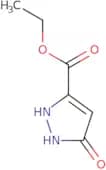
5-Hydroxy-1H-pyrazole-3-carboxylic acid ethyl ester
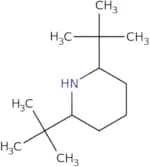
CAS:5-Hydroxy-1H-pyrazole-3-carboxylic acid ethyl ester is a synthetic oxytocin analog that has been shown to have high inhibitory potency on the oxytocin receptor. It is a dihydrate form of 5-hydroxy-1H pyrazole 3-carboxylic acid ethyl ester, and its crystal structure was determined by x-ray crystallography. This compound binds to the oxytocin receptor with a binding affinity of 0.4 nM and stabilizes the receptor in its active conformation. These properties make it an attractive lead for drug discovery efforts to combat oxytocin deficiency or related disorders such as autism spectrum disorder (ASD).Formula:C6H8N2O3Purity:Min. 95%Molecular weight:156.14 g/mol2,6-Di-tert-butylpiperidine
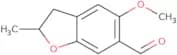
CAS:<p>Versatile small molecule scaffold</p>Formula:C13H27NPurity:Min. 95%Molecular weight:197.36 g/mol5-Methoxy-2-methyl-2,3-dihydro-1-benzofuran-6-carbaldehyde
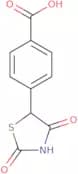
CAS:Versatile small molecule scaffoldFormula:C11H12O3Purity:Min. 95%Molecular weight:192.21 g/mol4-(2,4-Dioxo-1,3-thiazolidin-5-yl)benzoic acid
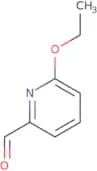
CAS:<p>Versatile small molecule scaffold</p>Formula:C10H7NO4SPurity:Min. 95%Molecular weight:237.23 g/mol6-Ethoxypyridine-2-carbaldehyde
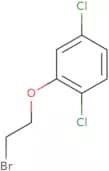
CAS:<p>Versatile small molecule scaffold</p>Formula:C8H9NO2Purity:Min. 95%Molecular weight:151.16 g/mol2-(2-Bromoethoxy)-1,4-dichlorobenzene
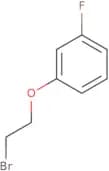
CAS:<p>Versatile small molecule scaffold</p>Formula:C8H7BrCl2OPurity:Min. 95%Molecular weight:269.95 g/mol1-(2-bromoethoxy)-3-fluorobenzene
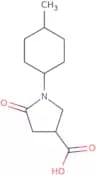
CAS:<p>Versatile small molecule scaffold</p>Formula:C8H8BrFOPurity:Min. 95%Molecular weight:219.05 g/mol1-(4-Methylcyclohexyl)-5-oxopyrrolidine-3-carboxylic acid
CAS:Controlled Product<p>1-(4-Methylcyclohexyl)-5-oxopyrrolidine-3-carboxylic acid is a synthetic ligand that binds to the receptor site on the GABA receptor, which is responsible for inhibiting neuronal activity. The binding of 1-(4-methylcyclohexyl)-5-oxopyrrolidine-3-carboxylic acid to the GABA receptor alters the conformation of the protein and causes it to open ion channels in the cell membrane. This leads to an influx of chloride ions and hyperpolarization of the neuron, resulting in inhibition of neuronal activity. 1-(4-Methylcyclohexyl)-5-oxopyrrolidine-3-carboxylic acid has been shown to inhibit ligand binding to some other receptors, such as NMDA and AMPA glutamate receptors.</p>Formula:C12H19NO3Purity:Min. 95%Molecular weight:225.28 g/mol5-Acetyl-2-methoxybenzene-1-sulfonamide
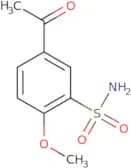
CAS:<p>Versatile small molecule scaffold</p>Formula:C9H11NO4SPurity:Min. 95%Molecular weight:229.3 g/mol1-(3-Methoxy-5-nitrophenyl)ethan-1-one
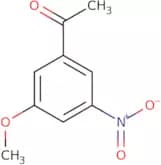
CAS:<p>Versatile small molecule scaffold</p>Formula:C9H9NO4Purity:Min. 95%Molecular weight:195.17 g/mol1-(3-Methylpyridin-2-yl)ethanone
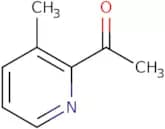
CAS:Versatile small molecule scaffoldFormula:C8H9NOPurity:Min. 95%Molecular weight:135.17 g/mol4-(4-Bromophenyl)-1,3-oxazolidin-2-one
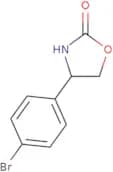
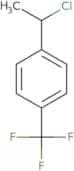
CAS:<p>Versatile small molecule scaffold</p>Formula:C9H8BrNO2Purity:Min. 95%Molecular weight:242.07 g/mol1-(1-Chloroethyl)-4-(trifluoromethyl)benzene
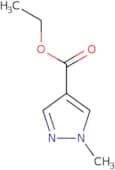
CAS:<p>Versatile small molecule scaffold</p>Formula:C9H8ClF3Purity:Min. 95%Molecular weight:208.61 g/molEthyl 1-methylpyrazole-4-carboxylate
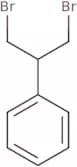
CAS:Ethyl 1-methylpyrazole-4-carboxylate (EMPC) is an organic compound, a pyrazole carboxylic acid derivative. It is the simplest alkyl ester of pyrazole-4-carboxylic acid. EMPC is used as a fungicide, yielding a maximum of 13% yield in water with hexamethylenetetramine. The reaction proceeds via activated chloroformate and carbonyl intermediates. Structural analogues with aminopyrazoles have been developed as selective herbicides and reagents for the synthesis of heterocycles. EMPC has been shown to inhibit the growth of fungi by inhibiting chitin synthesis and cell wall formation at the fungal membrane level.Formula:C7H10N2O2Purity:Min. 95%Molecular weight:154.17 g/mol(1,3-Dibromopropan-2-yl)benzene
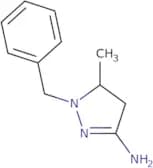
CAS:(1,3-Dibromopropan-2-yl)benzene is a x-ray crystallography and electrocatalysis protonation. It is a cyclic voltammetry that catalyzes the oxidation of trifluoroacetic acid in the presence of an electron donor to form trifluoroacetic acid. The cyclic voltammetry technique has been applied to study the electrocatalytic activity of (1,3-dibromopropan-2-yl)benzene in water. The crystal structures of (1,3-dibromopropan-2-yl)benzene have been determined using x-ray crystallography techniques. =ENDFormula:C9H10Br2Purity:Min. 95%Molecular weight:277.98 g/mol1-Benzyl-5-methyl-4,5-dihydro-1H-pyrazol-3-amine
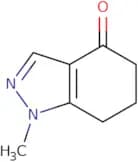
CAS:<p>Versatile small molecule scaffold</p>Formula:C11H15N3Purity:Min. 95%Molecular weight:189.26 g/mol1-Methyl-1,5,6,7-tetrahydroindazol-4-one
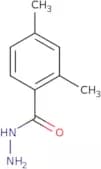
CAS:<p>Versatile small molecule scaffold</p>Formula:C8H10N2OPurity:Min. 95%Molecular weight:150.18 g/mol2,4-Dimethylbenzohydrazide
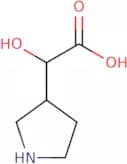
CAS:<p>Versatile small molecule scaffold</p>Formula:C9H12N2OPurity:Min. 95%Molecular weight:164.2 g/mol2-Hydroxy-2-(pyrrolidin-3-yl)acetic acid
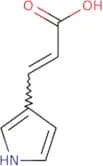
CAS:<p>Versatile small molecule scaffold</p>Formula:C6H11NO3Purity:Min. 95%Molecular weight:145.16 g/mol(2E)-3-(1H-Pyrrol-3-yl)prop-2-enoic acid
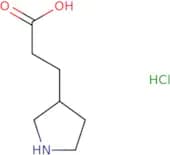
CAS:<p>Versatile small molecule scaffold</p>Formula:C7H7NO2Purity:Min. 95%Molecular weight:137.14 g/mol3-(Pyrrolidin-3-yl)propanoic acid hydrochloride
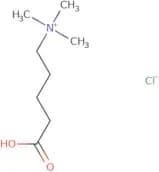
CAS:<p>Versatile small molecule scaffold</p>Formula:C7H14ClNO2Purity:Min. 95%Molecular weight:179.64 g/mol4-Carboxy-N,N,N-trimethyl-1-butanaminium chloride
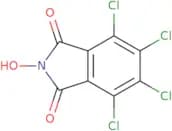
CAS:<p>Versatile small molecule scaffold</p>Formula:C8H18ClNO2Purity:Min. 95%Molecular weight:195.69 g/molN-Hydroxytetrachlorophthalimide
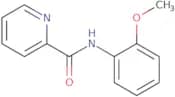
CAS:N-Hydroxytetrachlorophthalimide is an organic compound with the chemical formula CHClNO. It is a primary alcohol that is used in the synthesis of surfactants and fluorinated products. N-Hydroxytetrachlorophthalimide is synthesized by the reaction of chlorine with phthalic anhydride. The product is a white solid that can be purified by recrystallization from water or acetic acid, or by washing with aqueous sodium bicarbonate solution followed by filtration.Formula:C8HCl4NO3Purity:Min. 95%Molecular weight:300.91 g/molN-(2-Methoxyphenyl)pyridine-2-carboxamide
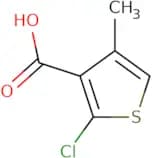
CAS:<p>Versatile small molecule scaffold</p>Formula:C13H12N2O2Purity:Min. 95%Molecular weight:228.25 g/mol2-Chloro-4-methylthiophene-3-carboxylic acid
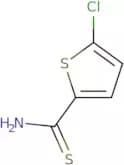
CAS:<p>Versatile small molecule scaffold</p>Formula:C6H5ClO2SPurity:Min. 95%Molecular weight:176.62 g/mol5-Chlorothiophene-2-carbothioamide
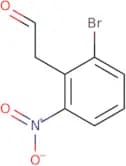
CAS:Versatile small molecule scaffoldFormula:C5H4ClNS2Purity:Min. 95%Molecular weight:177.7 g/mol2-(2-bromo-6-nitrophenyl)acetaldehyde
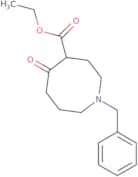
CAS:<p>Versatile small molecule scaffold</p>Formula:C8H6BrNO3Purity:Min. 95%Molecular weight:244.04 g/molEthyl 1-benzyl-5-oxoazocane-4-carboxylate
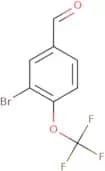
CAS:<p>Versatile small molecule scaffold</p>Formula:C17H23NO3Purity:Min. 95%Molecular weight:289.4 g/mol3-Bromo-4-(trifluoromethoxy)benzaldehyde
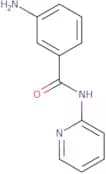
CAS:<p>Versatile small molecule scaffold</p>Formula:C8H4BrF3O2Purity:Min. 95%Molecular weight:269.02 g/mol3-Amino-N-(pyridin-2-yl)benzamide
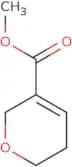
CAS:Versatile small molecule scaffoldFormula:C12H11N3OPurity:Min. 95%Molecular weight:213.23 g/molMethyl 5,6-dihydro-2H-pyran-3-carboxylate
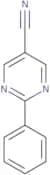
CAS:Versatile small molecule scaffoldFormula:C7H10O3Purity:Min. 95%Molecular weight:142.2 g/mol2-Phenyl-pyrimidine-5-carbonitrile
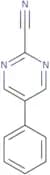
CAS:<p>Versatile small molecule scaffold</p>Formula:C11H7N3Purity:Min. 95%Molecular weight:181.19 g/mol5-Phenylpyrimidine-2-carbonitrile
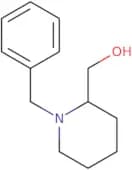
CAS:<p>Versatile small molecule scaffold</p>Formula:C11H7N3Purity:Min. 95%Molecular weight:181.19 g/mol1-Benzyl-2-piperidinemethanol
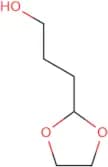
CAS:<p>Versatile small molecule scaffold</p>Formula:C13H19NOPurity:Min. 95%Molecular weight:205.3 g/mol3-(1,3-Dioxolan-2-yl)propan-1-ol
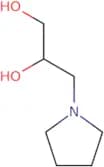
CAS:<p>Versatile small molecule scaffold</p>Formula:C6H12O3Purity:Min. 95%Molecular weight:132.16 g/mol3-(Pyrrolidin-1-yl)propane-1,2-diol
CAS:<p>Versatile small molecule scaffold</p>Formula:C7H15NO2Purity:Min. 95%Molecular weight:145.2 g/mol2-{[2-(2-Hydroxyethoxy)ethyl]sulfanyl}ethan-1-ol
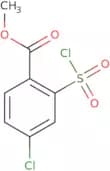
CAS:<p>Versatile small molecule scaffold</p>Formula:C6H14O3SPurity:Min. 95%Molecular weight:166.24 g/molmethyl 4-chloro-2-(chlorosulfonyl)benzoate
CAS:<p>Methyl 4-chloro-2-(chlorosulfonyl)benzoate is a synthetic chemical intermediate. It is used in the industrial production of methyl benzoate and toluene sulfonic acid. Methyl 4-chloro-2-(chlorosulfonyl)benzoate can be synthesized by diazotization of 2,4-dichlorobenzenesulfonic acid followed by esterification with methyl benzoate. The reaction proceeds via an esterification reaction between the carboxylic acid group of the chlorosulfonylbenzene and the alcohol group of methyl benzoate. The efficiency of this process can be increased by using high boiling solvents such as benzene, chlorobenzene, or toluene for the esterification reaction.<br>Methyl 4-chloro-2-(chlorosulfonyl)benzoate is also used in the synthesis of sulfamoyl</p>Formula:C8H6Cl2O4SPurity:Min. 95%Molecular weight:269.1 g/mol9-Oxa-1-thia-4-azaspiro[5.5]undecane
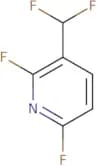
CAS:<p>Versatile small molecule scaffold</p>Formula:C8H15NOSPurity:Min. 95%Molecular weight:173.28 g/mol3-(Difluoromethyl)-2,6-difluoro-pyridine
CAS:Versatile small molecule scaffoldFormula:C6H3F4NPurity:Min. 95%Molecular weight:165.09 g/molEthyl 2-(but-3-en-1-yloxy)acetate
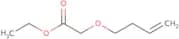
CAS:<p>Versatile small molecule scaffold</p>Formula:C8H14O3Purity:Min. 95%Molecular weight:158.19 g/mol2-(4-Chloro-3-methylphenyl)acetonitrile
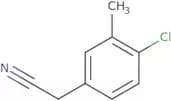
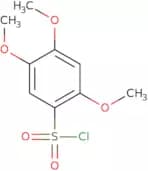
CAS:Versatile small molecule scaffoldFormula:C9H8ClNPurity:Min. 95%Molecular weight:165.62 g/mol2,4,5-Trimethoxybenzene-1-sulfonyl chloride
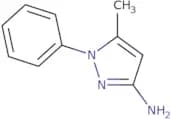
CAS:<p>2,4,5-Trimethoxybenzene-1-sulfonyl chloride is a potent antimicrobial agent that is effective against gram-positive and gram-negative bacteria. It prevents the growth of microorganisms by inhibiting the production of thiols and nitric oxide. 2,4,5-Trimethoxybenzene-1-sulfonyl chloride has been shown to be a potent antagonist of CRTH2 receptors in vitro. This receptor is involved in the inflammatory response and its inhibition may have therapeutic potential for the treatment of inflammatory diseases such as hepatitis and rheumatoid arthritis.</p>Formula:C9H11ClO5SPurity:Min. 95%Molecular weight:266.7 g/mol5-Methyl-1-phenyl-1H-pyrazol-3-amine
CAS:Versatile small molecule scaffoldFormula:C10H11N3Purity:Min. 95%Molecular weight:173.21 g/mol2-(1-Benzothiophen-2-yl)propanoic acid
CAS:<p>Versatile small molecule scaffold</p>Formula:C11H10O2SPurity:Min. 95%Molecular weight:206.26 g/mol2-{5-Methylthieno[2,3-b]thiophen-3-yl}acetic acid
CAS:<p>Versatile small molecule scaffold</p>Formula:C9H8O2S2Purity:Min. 95%Molecular weight:212.3 g/mol2-{5-Methylthieno[3,2-b]thiophen-3-yl}acetic acid
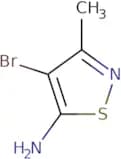
CAS:Versatile small molecule scaffoldFormula:C9H8O2S2Purity:Min. 95%Molecular weight:212.3 g/mol5-Amino-4-bromo-3-methylisothiazole
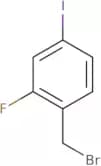
CAS:<p>Versatile small molecule scaffold</p>Formula:C4H5BrN2SPurity:Min. 95%Molecular weight:193.06 g/mol1-(Bromomethyl)-2-fluoro-4-iodobenzene
CAS:<p>1-(Bromomethyl)-2-fluoro-4-iodobenzene is a heterocyclic chemical compound that belongs to the class of linear compounds. It was discovered by diversity-oriented synthesis and is an example of a pharmacophore. The discovery of this compound was based on the interaction between pharmacophores and their biological targets, which are phosphodiesterases. 1-(Bromomethyl)-2-fluoro-4-iodobenzene interacts with dopamine receptors in the nervous system, thereby playing a role in schizophrenia and nervous system diseases such as Parkinson's disease. This compound has been shown to be effective in animal models for these diseases because it inhibits the enzyme phosphodiesterase, which regulates neurotransmitter levels in the brain.</p>Formula:C7H5BrFIPurity:Min. 95%Molecular weight:314.92 g/mol[(5-Bromopentyl)oxy](tert-butyl)dimethylsilane
CAS:<p>Versatile small molecule scaffold</p>Formula:C11H25BrOSiPurity:Min. 95%Molecular weight:281.3 g/mol

![2-{[2-(2-Hydroxyethoxy)ethyl]sulfanyl}ethan-1-ol](/_next/image/?url=https%3A%2Fstatic.cymitquimica.com%2Fproducts%2F3D%2Fthumb-webp%2FKDA39194.webp&w=3840&q=75)
![9-Oxa-1-thia-4-azaspiro[5.5]undecane](/_next/image/?url=https%3A%2Fstatic.cymitquimica.com%2Fproducts%2F3D%2Fthumb-webp%2FKDA39292.webp&w=3840&q=75)

![2-{5-Methylthieno[2,3-b]thiophen-3-yl}acetic acid](/_next/image/?url=https%3A%2Fstatic.cymitquimica.com%2Fproducts%2F3D%2Fthumb-webp%2FKDA50438.webp&w=3840&q=75)
![2-{5-Methylthieno[3,2-b]thiophen-3-yl}acetic acid](/_next/image/?url=https%3A%2Fstatic.cymitquimica.com%2Fproducts%2F3D%2Fthumb-webp%2FKDA50442.webp&w=3840&q=75)
dimethylsilane](/_next/image/?url=https%3A%2Fstatic.cymitquimica.com%2Fproducts%2F3D%2Fthumb-webp%2FKDA51443.webp&w=3840&q=75)