


Building Blocks
This section contains fundamental products for the synthesis of organic and biological compounds. Building blocks are the essential starting materials used to construct complex molecules through various chemical reactions. They play a critical role in drug discovery, material science, and chemical research. At CymitQuimica, we offer a diverse range of high-quality building blocks to support your innovative research and industrial projects, ensuring you have the essential components for successful synthesis.
Subcategories of "Building Blocks"
- Boronic Acids & Boronic Acid Derivatives(5,784 products)
- Chiral Building Blocks(1,242 products)
- Hydrocarbon Building Blocks(6,105 products)
- Organic Building Blocks(61,061 products)
Found 205399 products of "Building Blocks"
Sort by
Purity (%)
0
100
|
0
|
50
|
90
|
95
|
100
Methyl 3-amino-2-hydroxy-4-methylpentanoate hydrochloride
CAS:Versatile small molecule scaffoldFormula:C7H16ClNO3Purity:Min. 95%Molecular weight:197.66 g/mol4-(2-Bromophenyl)butan-1-ol
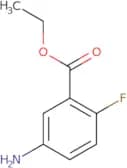
CAS:Versatile small molecule scaffoldFormula:C10H13BrOPurity:Min. 95%Molecular weight:229.11 g/molEthyl-5-amino-2-fluorobenzoate
CAS:Versatile small molecule scaffoldFormula:C9H10FNO2Purity:Min. 95%Molecular weight:183.18 g/mol2-[4-(Hydroxymethyl)phenoxy]acetonitrile
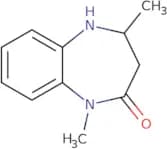
CAS:Versatile small molecule scaffoldFormula:C9H9NO2Purity:Min. 95%Molecular weight:163.17 g/mol1,4-Dimethyl-2,3,4,5-tetrahydro-1H-1,5-benzodiazepin-2-one
CAS:Versatile small molecule scaffoldFormula:C11H14N2OPurity:Min. 95%Molecular weight:190.24 g/mol4-Methoxynaphthalene-2-carbaldehyde
CAS:Versatile small molecule scaffoldFormula:C12H10O2Purity:Min. 95%Molecular weight:186.21 g/molN-(4,6-dichloropyrimidin-5-yl)formamide
CAS:N-(4,6-dichloropyrimidin-5-yl)formamide is a versatile compound with various applications. It is commonly used as a substrate for enzymatic reactions due to its specific interaction with adenine and guanidine. In wastewater treatment, this compound has been found to effectively degrade clothianidin and thiacloprid, which are neonicotinoid pesticides. Additionally, it has shown promising results as a research chemical in the development of new compounds and catalysts. Its reactive nature allows for efficient synthesis of monophosphates, and it can be used as a solid catalyst for emission control in industrial processes. With its wide range of uses and effectiveness in various applications, N-(4,6-dichloropyrimidin-5-yl)formamide is an invaluable compound in many industries.Formula:C5H3Cl2N3OPurity:Min. 95%Molecular weight:192 g/mol2,2-Dimethylbutan-1-amine hydrochloride
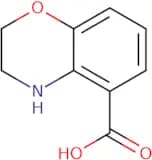
CAS:Versatile small molecule scaffoldFormula:C6H16ClNPurity:Min. 95%Molecular weight:137.65 g/mol3,4-Dihydro-2H-1,4-benzoxazine-5-carboxylic acid
CAS:Versatile small molecule scaffoldFormula:C9H9NO3Purity:Min. 95%Molecular weight:179.17 g/mol6-Benzofurancarbaldehyde
CAS:Versatile small molecule scaffold
Formula:C9H6O2Purity:Min. 95%Molecular weight:146.14 g/mol4,5,6,7-Tetrahydro-[1,2,3]triazolo[1,5-a]pyrazine hydrochloride
CAS:Versatile small molecule scaffoldFormula:C5H9ClN4Purity:Min. 95%Molecular weight:160.6 g/mol1-{[(tert-Butoxy)carbonyl]amino}-2,2-dimethylcyclopropane-1-carboxylic acid
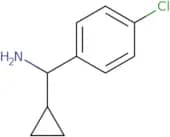
CAS:Versatile small molecule scaffoldFormula:C11H19NO4Purity:Min. 95%Molecular weight:229.27 g/mol1-(4-Chlorophenyl)cyclopropanemethylamine
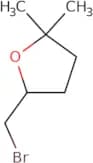
CAS:Versatile small molecule scaffoldFormula:C10H12ClNPurity:Min. 95%Molecular weight:181.66 g/mol5-(Bromomethyl)-2,2-dimethyloxolane
CAS:Versatile small molecule scaffold
Formula:C7H13BrOPurity:Min. 95%Molecular weight:193.08 g/mol4-(Trifluoromethyl)-1H-pyrrole-3-carboxylic acid
CAS:Versatile small molecule scaffold
Formula:C6H4F3NO2Purity:Min. 95%Molecular weight:179.1 g/mol2-Azido-1,4-difluorobenzene
CAS:Versatile small molecule scaffoldFormula:C6H3F2N3Purity:Min. 95%Molecular weight:155.1 g/moltert-Butyl 4-amino-3-methoxybenzoate
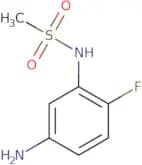
CAS:Versatile small molecule scaffoldFormula:C12H17NO3Purity:Min. 95%Molecular weight:223.27 g/molN-(5-Amino-2-fluorophenyl)methanesulfonamide
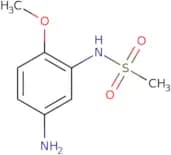
CAS:Versatile small molecule scaffoldFormula:C7H9FN2O2SPurity:Min. 95%Molecular weight:204.22 g/molN-(5-Amino-2-methoxyphenyl)methanesulfonamide
CAS:Versatile small molecule scaffoldFormula:C8H12N2O3SPurity:Min. 95%Molecular weight:216.26 g/mol3-(Chloromethyl)-1-phenyl-1H,4H,5H,6H-cyclopenta[C]pyrazole
CAS:Versatile small molecule scaffoldFormula:C13H13ClN2Purity:Min. 95%Molecular weight:232.71 g/mol4-(2-Methylprop-2-en-1-yl)-5-phenyl-4H-1,2,4-triazole-3-thiol
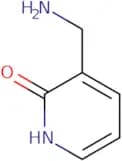
CAS:Versatile small molecule scaffoldFormula:C12H13N3SPurity:Min. 95%Molecular weight:231.32 g/mol3-(Aminomethyl)pyridin-2(1H)-one
CAS:Versatile small molecule scaffold
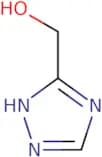
Formula:C6H8N2OPurity:Min. 95%Molecular weight:124.14 g/mol1H-1,2,4-Triazol-5-ylmethanol hydrochloride
CAS:Versatile small molecule scaffoldFormula:C3H6ClN3OPurity:Min. 95%Molecular weight:135.55 g/moltert-Butyl N-methyl-N-[(trimethylsilyl)methyl]carbamate
CAS:Versatile small molecule scaffoldFormula:C10H23NO2SiPurity:Min. 95%Molecular weight:217.38 g/mol2-[(4-Methoxyphenyl)sulfanyl]propanoic acid
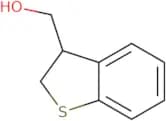
CAS:2-[(4-Methoxyphenyl)sulfanyl]propanoic acid is a cell biology reagent that is used to study protein interactions, as well as to identify and characterize receptors and ion channels. It is also a research tool for studying the mechanisms of brain disorders. 2-[(4-Methoxyphenyl)sulfanyl]propanoic acid has been shown to activate some G protein coupled receptors, such as the muscarinic M1 receptor. The effects of this drug on ion channel activity are not yet fully understood.Formula:C10H12O3SPurity:Min. 95%Molecular weight:212.27 g/mol(2,3-Dihydro-1-benzothiophen-3-yl)methanol
CAS:Versatile small molecule scaffoldFormula:C9H10OSPurity:Min. 95%Molecular weight:166.24 g/mol5-Bromo-4-chlorothiophene-2-carboxylic acid
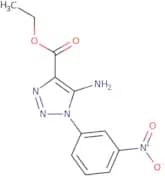
CAS:Versatile small molecule scaffoldFormula:C5H2BrClO2SPurity:Min. 95%Molecular weight:241.49 g/molEthyl 5-amino-1-(3-nitrophenyl)-1H-1,2,3-triazole-4-carboxylate
CAS:Versatile small molecule scaffold
Formula:C11H11N5O4Purity:Min. 95%Molecular weight:277.24 g/mol(2S)-2-(4-Bromophenyl)-2-hydroxyacetic acid
CAS:Versatile small molecule scaffoldFormula:C8H7BrO3Purity:Min. 95%Molecular weight:231.04 g/mol6-Methoxy-3-methylpyridine-2-carbaldehyde
CAS:Versatile small molecule scaffoldFormula:C8H9NO2Purity:Min. 95%Molecular weight:151.16 g/mol6-Methoxy-5-methylpyridine-2-carbaldehyde
CAS:Versatile small molecule scaffoldFormula:C8H9NO2Purity:Min. 95%Molecular weight:151.16 g/mol5-Formyl-2-methoxy-4-picoline
CAS:Versatile small molecule scaffold
Formula:C8H9NO2Purity:Min. 95%Molecular weight:151.16 g/mol2-Isoproxy-3-methylpyridine-5-carboxaldehyde
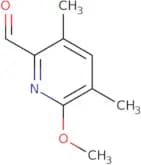
CAS:Versatile small molecule scaffoldFormula:C8H9NO2Purity:Min. 95%Molecular weight:151.16 g/mol6-Methoxy-3,5-dimethylpyridine-2-carbaldehyde
CAS:Versatile small molecule scaffoldFormula:C9H11NO2Purity:Min. 95%Molecular weight:165.19 g/mol6-Methoxy-1,3-benzothiazole-2-carbaldehyde
CAS:Versatile small molecule scaffold
Formula:C9H7NO2SPurity:Min. 95%Molecular weight:193.22 g/mol3-Benzothiazol-2-yl-acrylic acid
CAS:Versatile small molecule scaffoldFormula:C10H7NO2SPurity:Min. 95%Molecular weight:205.23 g/mol2-Phenylimidazo[1,2-a]pyrimidine-3-carboxylic acid
CAS:Versatile small molecule scaffoldFormula:C13H9N3O2Purity:Min. 95%Molecular weight:239.23 g/mol5-Fluoro-2-(trifluoromethoxy)aniline
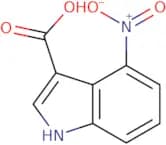
CAS:Versatile small molecule scaffoldFormula:C7H5F4NOPurity:Min. 95%Molecular weight:195.11 g/mol4-Nitro-1H-indole-3-carboxylic acid
CAS:Versatile small molecule scaffoldFormula:C9H6N2O4Purity:Min. 95%Molecular weight:206.15 g/mol2-(Furan-3-yl)acetic acid
CAS:2-(Furan-3-yl)acetic acid is a compound that plays a crucial role in lysine methylation, which is an important process in various biological pathways. It has unique electrostatic properties that make it ideal for crystallization and methylating reactions. Additionally, it can be used as a precursor for the synthesis of other compounds.Formula:C6H6O3Purity:Min. 95%Molecular weight:126.11 g/mol2-Chloro-6-methylquinoline-3-methanol
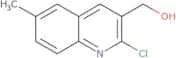
CAS:2-Chloro-6-methylquinoline-3-methanol is a versatile compound that serves as a catalyst in various chemical reactions. It is particularly effective in facilitating the synthesis of glutamate, reactive carboxy intermediates, and metofluthrin. With its unique amide structure and c1-4 alkyl group, this compound acts as a solid catalyst for dehydrating cellulose and dichloride polymers. Its exceptional performance makes it an essential component in the field of research chemicals and industrial applications. Whether you're conducting experiments or developing new materials, 2-Chloro-6-methylquinoline-3-methanol is your go-to catalyst for reliable results.Formula:C11H10ClNOPurity:Min. 95%Molecular weight:207.66 g/mol2,2-Dimethyl-2,3-dihydro-1-benzofuran-5-carboxylic acid
CAS:Versatile small molecule scaffoldFormula:C11H12O3Purity:Min. 95%Molecular weight:192.21 g/mol2,2-Dimethyl-2,3-dihydro-1-benzofuran-6-carboxylic acid
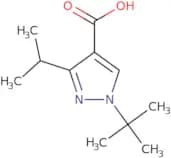
CAS:Versatile small molecule scaffoldFormula:C11H12O3Purity:Min. 95%Molecular weight:192.21 g/mol1-tert-Butyl-3-(propan-2-yl)-1H-pyrazole-4-carboxylic acid
CAS:Versatile small molecule scaffoldFormula:C11H18N2O2Purity:Min. 95%Molecular weight:210.3 g/molN-(1,3-Dioxaindan-5-yl)propanamide
CAS:Versatile small molecule scaffoldFormula:C10H11NO3Purity:Min. 95%Molecular weight:193.2 g/mol1-Iodo-2-methoxypropane
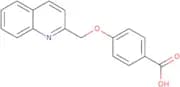
CAS:Versatile small molecule scaffoldFormula:C4H9IOPurity:Min. 95%Molecular weight:200.02 g/mol4-(Quinolin-2-ylmethoxy)benzoic Acid
CAS:Versatile small molecule scaffold
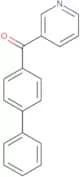
Formula:C17H13NO3Purity:Min. 95%Molecular weight:279.29 g/mol3-(4-Phenylbenzoyl)pyridine
CAS:Versatile small molecule scaffoldFormula:C18H13NOPurity:Min. 95%Molecular weight:259.3 g/mol2-(N-Methylnaphthalene-2-sulfonamido)acetic acid
CAS:Versatile small molecule scaffoldFormula:C13H13NO4SPurity:Min. 95%Molecular weight:279.31 g/mol(2S)-2-{[(4-Chlorophenyl)methyl]amino}propanoic acid
CAS:Versatile small molecule scaffoldFormula:C10H12ClNO2Purity:Min. 95%Molecular weight:213.66 g/mol

![2-[4-(Hydroxymethyl)phenoxy]acetonitrile](/_next/image/?url=https%3A%2Fstatic.cymitquimica.com%2Fproducts%2F3D%2Fthumb-webp%2FYEA22638.webp&w=3840&q=75)
![4,5,6,7-Tetrahydro-[1,2,3]triazolo[1,5-a]pyrazine hydrochloride](/_next/image/?url=https%3A%2Fstatic.cymitquimica.com%2Fproducts%2F3D%2Fthumb-webp%2FYEA30828.webp&w=3840&q=75)
![1-{[(tert-Butoxy)carbonyl]amino}-2,2-dimethylcyclopropane-1-carboxylic acid](/_next/image/?url=https%3A%2Fstatic.cymitquimica.com%2Fproducts%2F3D%2Fthumb-webp%2FYEA31118.webp&w=3840&q=75)
![3-(Chloromethyl)-1-phenyl-1H,4H,5H,6H-cyclopenta[C]pyrazole](/_next/image/?url=https%3A%2Fstatic.cymitquimica.com%2Fproducts%2F3D%2Fthumb-webp%2FYEA34576.webp&w=3840&q=75)
![tert-Butyl N-methyl-N-[(trimethylsilyl)methyl]carbamate](/_next/image/?url=https%3A%2Fstatic.cymitquimica.com%2Fproducts%2F3D%2Fthumb-webp%2FYEA38770.webp&w=3840&q=75)
![2-[(4-Methoxyphenyl)sulfanyl]propanoic acid](/_next/image/?url=https%3A%2Fstatic.cymitquimica.com%2Fproducts%2F3D%2Fthumb-webp%2FYEA39237.webp&w=3840&q=75)


![2-Phenylimidazo[1,2-a]pyrimidine-3-carboxylic acid](/_next/image/?url=https%3A%2Fstatic.cymitquimica.com%2Fproducts%2F3D%2Fthumb-webp%2FYEA53343.webp&w=3840&q=75)
![(2S)-2-{[(4-Chlorophenyl)methyl]amino}propanoic acid](/_next/image/?url=https%3A%2Fstatic.cymitquimica.com%2Fproducts%2F3D%2Fthumb-webp%2FYEA76095.webp&w=3840&q=75)