Building Blocks
Subcategories of "Building Blocks"
- Boronic Acids & Boronic Acid Derivatives(5,805 products)
- Chiral Building Blocks(1,248 products)
- Hydrocarbon Building Blocks(6,118 products)
- Organic Building Blocks(61,447 products)
Found 208423 products of "Building Blocks"
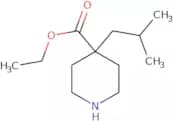
Ethyl 4-(2-methylpropyl)piperidine-4-carboxylate
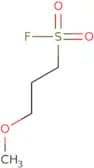
CAS:Versatile small molecule scaffoldFormula:C12H23NO2Purity:Min. 95%Molecular weight:213.32 g/mol3-Methoxypropane-1-sulfonyl fluoride
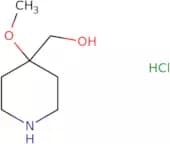
CAS:Versatile small molecule scaffoldFormula:C4H9FO3SPurity:Min. 95%Molecular weight:156.18 g/mol(4-Methoxypiperidin-4-yl)methanol hydrochloride
CAS:Versatile small molecule scaffoldFormula:C7H16ClNO2Purity:Min. 95%Molecular weight:181.66 g/mol1H-Pyrazolo[3,4-b]pyridine-4-carboxylic acid
CAS:1H-Pyrazolo[3,4-b]pyridine-4-carboxylic acid (1HPC) is a fatty acid metabolism activator that is used for the treatment of certain cancers. 1HPC binds to receptor α and activates it by binding to the ligand binding site. This leads to increased expression of target genes and activation of proliferator-activated receptor α (PPARα). PPARα regulates fatty acid metabolism and lipid production in adipose tissue, leading to reduced serum triglycerides levels. 1HPC also has anti-diabetic effects due to its ability to activate PPARα, which increases insulin sensitivity.Formula:C7H5N3O2Purity:Min. 95%Molecular weight:163.13 g/mol3,6-Dimethyl-1H-pyrazolo[3,4-b]pyridine-4-carboxylic acid
CAS:Versatile small molecule scaffoldFormula:C9H9N3O2Purity:Min. 95%Molecular weight:191.19 g/molMethyl 5-amino-2,3-difluorobenzoate
CAS:Versatile small molecule scaffoldFormula:C8H7F2NO2Purity:Min. 95%Molecular weight:187.14 g/mol6-Chloro-2-iodo-1H-pyrrolo[2,3-b]pyridine
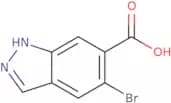
CAS:Versatile small molecule scaffoldFormula:C7H4ClIN2Purity:Min. 95%Molecular weight:278.48 g/mol5-Bromo-1H-indazole-6-carboxylic acid
CAS:Versatile small molecule scaffoldFormula:C8H5BrN2O2Purity:Min. 95%Molecular weight:241.04 g/mol2-Iodo-1H-pyrrolo[2,3-c]pyridine
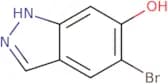
CAS:Versatile small molecule scaffoldFormula:C7H5IN2Purity:Min. 95%Molecular weight:244.03 g/mol5-bromo-1h-indazol-6-ol
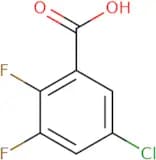
CAS:Versatile small molecule scaffoldFormula:C7H5BrN2OPurity:Min. 95%Molecular weight:213.03 g/mol5-Chloro-2,3-difluorobenzoic acid
CAS:Versatile small molecule scaffoldFormula:C7H3ClF2O2Purity:Min. 95%Molecular weight:192.55 g/moltert-Butyl N-(5-tert-butylthiophen-2-yl)carbamate
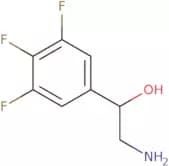
CAS:Versatile small molecule scaffoldFormula:C13H21NO2SPurity:Min. 95%Molecular weight:255.4 g/mol2-Amino-1-(3,4,5-trifluorophenyl)ethan-1-ol
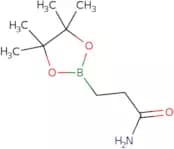
CAS:Versatile small molecule scaffoldFormula:C8H8F3NOPurity:Min. 95%Molecular weight:191.15 g/mol3-(Tetramethyl-1,3,2-dioxaborolan-2-yl)propanamide
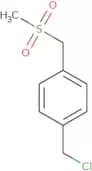
CAS:Versatile small molecule scaffoldFormula:C9H18BNO3Purity:Min. 95%Molecular weight:199.06 g/mol1-(Chloromethyl)-4-(methanesulfonylmethyl)benzene
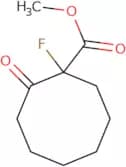
CAS:Versatile small molecule scaffoldFormula:C9H11ClO2SPurity:Min. 95%Molecular weight:218.7 g/molMethyl 1-fluoro-2-oxocyclooctane-1-carboxylate
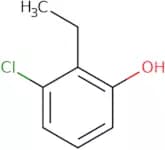
CAS:Versatile small molecule scaffoldFormula:C10H15FO3Purity:Min. 95%Molecular weight:202.22 g/mol3-Chloro-2-ethylphenol
CAS:Versatile small molecule scaffold
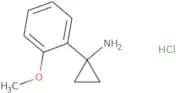
Formula:C8H9ClOPurity:Min. 95%Molecular weight:156.61 g/mol1-(2-Methoxyphenyl)cyclopropan-1-amine hydrochloride
CAS:Versatile small molecule scaffoldFormula:C10H14ClNOPurity:Min. 95%Molecular weight:199.68 g/mol[1-(2-Chlorophenyl)cyclobutyl]methanamine
CAS:Versatile small molecule scaffold
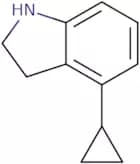
Formula:C11H14ClNPurity:Min. 95%Molecular weight:195.69 g/mol4-Cyclopropyl-2,3-dihydro-1H-indole
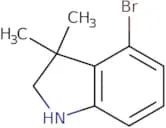
CAS:Versatile small molecule scaffoldFormula:C11H13NPurity:Min. 95%Molecular weight:159.23 g/mol4-bromo-3,3-dimethylindoline
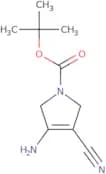
CAS:Versatile small molecule scaffoldFormula:C10H12BrNPurity:Min. 95%Molecular weight:226.12 g/moltert-Butyl 3-amino-4-cyano-2,5-dihydro-1H-pyrrole-1-carboxylate
CAS:Versatile small molecule scaffold
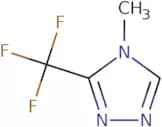
Formula:C10H15N3O2Purity:Min. 95%Molecular weight:209.24 g/mol4-Methyl-3-(trifluoromethyl)-4H-1,2,4-triazole
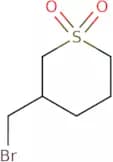
CAS:Versatile small molecule scaffoldFormula:C4H4F3N3Purity:Min. 95%Molecular weight:151.09 g/mol3-(Bromomethyl)tetrahydro-2H-thiopyran 1,1-dioxide
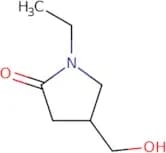
CAS:Versatile small molecule scaffoldFormula:C6H11BrO2SPurity:Min. 95%Molecular weight:227.12 g/mol1-Ethyl-4-(hydroxymethyl)-2-pyrrolidinone
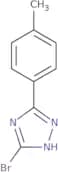
CAS:Versatile small molecule scaffoldFormula:C7H13NO2Purity:Min. 95%Molecular weight:143.18 g/mol3-Bromo-5-(4-methylphenyl)-1H-1,2,4-triazole
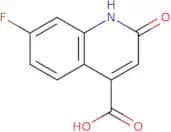
CAS:Versatile small molecule scaffoldFormula:C9H8BrN3Purity:Min. 95%Molecular weight:238.09 g/mol7-Fluoro-2-oxo-1,2-dihydroquinoline-4-carboxylic acid
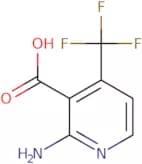
CAS:Versatile small molecule scaffoldFormula:C10H6FNO3Purity:Min. 95%Molecular weight:207.16 g/mol2-Amino-4-(trifluoromethyl)nicotinic acid
CAS:Versatile small molecule scaffold
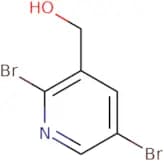
Formula:C7H5F3N2O2Purity:Min. 95%Molecular weight:206.12 g/mol(2,5-Dibromopyridin-3-yl)methanol
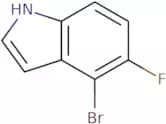
CAS:Versatile small molecule scaffoldFormula:C6H5Br2NOPurity:Min. 95%Molecular weight:266.92 g/mol4-bromo-5-fluoro-1H-indole
CAS:Versatile small molecule scaffold
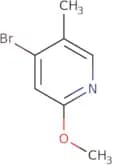
Formula:C8H5BrFNPurity:Min. 95%Molecular weight:214.04 g/mol4-Bromo-2-methoxy-5-methylpyridine
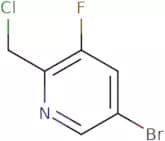
CAS:Versatile small molecule scaffoldFormula:C7H8BrNOPurity:Min. 95%Molecular weight:202.05 g/mol5-Bromo-2-(chloromethyl)-3-fluoropyridine
CAS:Versatile small molecule scaffold
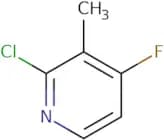
Formula:C6H4BrClFNPurity:Min. 95%Molecular weight:224.46 g/mol2-Chloro-4-fluoro-3-methylpyridine
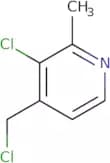
CAS:Versatile small molecule scaffoldFormula:C6H5ClFNPurity:Min. 95%Molecular weight:145.56 g/mol3-Chloro-4-(chloromethyl)-2-methylpyridine
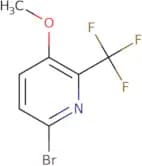
CAS:Versatile small molecule scaffoldFormula:C7H7Cl2NPurity:Min. 95%Molecular weight:176.04 g/mol6-Bromo-3-methoxy-2-(trifluoromethyl)pyridine
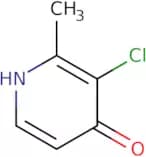
CAS:Versatile small molecule scaffoldFormula:C7H5BrF3NOPurity:Min. 95%Molecular weight:256.02 g/mol3-Chloro-2-methylpyridin-4-ol
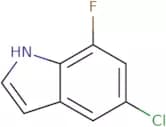
CAS:Versatile small molecule scaffoldFormula:C6H6ClNOPurity:Min. 95%Molecular weight:143.57 g/mol5-Chloro-7-fluoro-1H-indole
CAS:Versatile small molecule scaffold
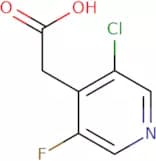
Formula:C8H5ClFNPurity:Min. 95%Molecular weight:169.58 g/mol2-(3-Chloro-5-fluoropyridin-4-yl)acetic acid
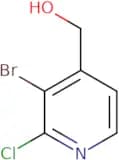
CAS:Versatile small molecule scaffoldFormula:C7H5ClFNO2Purity:Min. 95%Molecular weight:189.57 g/mol(3-Bromo-2-chloropyridin-4-yl)methanol
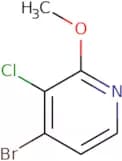
CAS:Versatile small molecule scaffoldFormula:C6H5BrClNOPurity:Min. 95%Molecular weight:222.47 g/mol4-Bromo-3-chloro-2-methoxypyridine
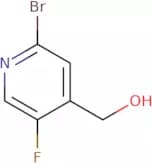
CAS:Versatile small molecule scaffoldFormula:C6H5BrClNOPurity:Min. 95%Molecular weight:222.47 g/mol(2-Bromo-5-fluoropyridin-4-yl)methanol
CAS:Versatile small molecule scaffold
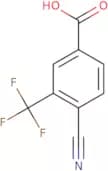
Formula:C6H5BrFNOPurity:Min. 95%Molecular weight:206.01 g/mol4-Cyano-3-(trifluoromethyl)benzoic acid
CAS:4-Cyano-3-(trifluoromethyl)benzoic acid (4CBA) is a chemical compound that exhibits a high uptake by cells. It is used in the treatment of infectious diseases and has been shown to be active against viruses, such as HIV, and bacteria, such as Mycobacterium tuberculosis. 4CBA is chemically stable in human serum or plasma and can be prepared using caffeine or theophylline as an internal standard. This agent can also be used for diagnosis of various chemical substances in biological samples and is suitable for sample preparation. The 4CBA monomer has been electropolymerized on a solid phase microextraction (SPME) fiber to form a microsphere with an average diameter of 5μm.
Formula:C9H4F3NO2Purity:Min. 95%Molecular weight:215.13 g/mol3-Acetamidopyridine-2-carboxylic acid
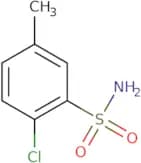
CAS:Versatile small molecule scaffoldFormula:C8H8N2O3Purity:Min. 95%Molecular weight:180.16 g/mol2-Chloro-5-methylbenzene-1-sulfonamide
CAS:2-Chloro-5-methylbenzene-1-sulfonamide is an organic compound that is a crystalline solid at room temperature. It has been shown to have antibiotic properties, and it competitively inhibits the bacterial enzyme dihydropteroate synthase. This product also interacts with hydrogen bonds in the crystal structure of 2-chloro-5-methylbenzene-1 sulfonamide and crystallizes as a 1:1 molecular complex with the macrocyclic ether.Formula:C7H8ClNO2SPurity:Min. 95%Molecular weight:205.66 g/mol2-Azabicyclo[2.2.2]octan-3-one
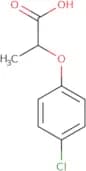
CAS:2-Azabicyclo[2.2.2]octan-3-one is a cyclic molecule that has a protonated form and a deprotonated form. The protonation of the ring nitrogen atom leads to conformational changes in the molecule, which are observed as changes in the magnetic properties of 2-azabicyclo[2.2.2]octan-3-one. These changes occur in the frequency range from 1 to 10 GHz, with a constant that depends on the solvent used for measurements (acetonitrile) and on the dilution factor of 2-azabicyclo[2.2.2]octan-3-oneFormula:C7H11NOPurity:Min. 95%Molecular weight:125.17 g/mol2-(4-Chlorophenoxy)propionic acid
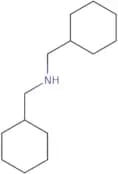
CAS:2-(4-Chlorophenoxy)propionic acid is a synthetic phenoxy compound that binds to the peroxisome proliferator-activated receptor gamma (PPARγ) and induces peroxisome proliferation. It also has the ability to induce enantioselective degradation of xenopus oocytes. 2-(4-Chlorophenoxy)propionic acid is an aliphatic monocarboxylic acid with a hydroxyl group on the second carbon atom from the left end of the molecule. The chemical structure of this compound consists of a chlorine atom, two carbons, and two hydrogens. The name "2-(4-chlorophenoxy)propionic acid" may be abbreviated as "2-CPPA."Formula:C9H9ClO3Purity:Min. 95%Molecular weight:200.62 g/molBis(cyclohexylmethyl)amine
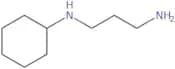
CAS:Versatile small molecule scaffoldFormula:C14H27NPurity:Min. 95%Molecular weight:209.37 g/molN1-Cyclohexylpropane-1,3-diamine
CAS:N1-Cyclohexylpropane-1,3-diamine is a potent compound that has been shown to inhibit cholesterol synthesis and mitochondrial membrane potential. This drug also has anti-cancer effects and can be used for the treatment of cancers in which nuclear DNA is affected by light emission. N1-Cyclohexylpropane-1,3-diamine has been shown to have physiological activities such as cell growth inhibition, matrix effect, and intracellular hydrogen release. The drug binds to the enzyme activity site with a coordination geometry that is similar to other inhibitors of cholesterol synthesis. N1-Cyclohexylpropane-1,3-diamine was crystallized from methanol at room temperature and its molecular structure was determined by X-ray diffraction techniques.
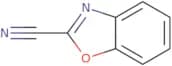
Formula:C9H20N2Purity:Min. 95%Molecular weight:156.27 g/mol1,3-Benzoxazole-2-carbonitrile
CAS:1,3-Benzoxazole-2-carbonitrile is an overarching compound with a pyrazole ring. It has significant antifungal activity and significant antibacterial activity, as well as coordination complex properties. The mechanism of action for this molecule is not yet known, but it is thought to be due to the presence of a metal ion. X-ray crystallography has shown that 1,3-benzoxazole-2-carbonitrile has a ferrimagnetic property. This molecule also inhibits the growth of bacterial cells by binding to the surface of the bacterial cell wall and weakening its structure.
Formula:C8H4N2OPurity:Min. 95%Molecular weight:144.13 g/molBenzooxazole-2-carboxylic acid amide
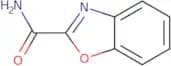
CAS:Benzooxazole-2-carboxylic acid amide is a potent inhibitor of epidermal growth factor receptor (EGFR) tyrosine kinase, with IC50 values in the low nanomolar range. It also inhibits the activation of EGFR by other growth factors, such as epidermal growth factor (EGF) and transforming growth factor alpha (TGFα). Benzooxazole-2-carboxylic acid amide has been shown to inhibit tumor cell proliferation in vitro and in vivo. The mechanism of action is not fully understood but may involve interference with repair mechanisms that are activated by DNA damage. The drug binds to the EGFR receptor and prevents its phosphorylation by other molecules, which would otherwise activate it.Formula:C8H6N2O2Purity:Min. 95%Molecular weight:162.15 g/mol

![1H-Pyrazolo[3,4-b]pyridine-4-carboxylic acid](/_next/image/?url=https%3A%2Fstatic.cymitquimica.com%2Fproducts%2F3D%2Fthumb-webp%2FCZB26726.webp&w=3840&q=75)
![3,6-Dimethyl-1H-pyrazolo[3,4-b]pyridine-4-carboxylic acid](/_next/image/?url=https%3A%2Fstatic.cymitquimica.com%2Fproducts%2F3D%2Fthumb-webp%2FCZB26891.webp&w=3840&q=75)

![6-Chloro-2-iodo-1H-pyrrolo[2,3-b]pyridine](/_next/image/?url=https%3A%2Fstatic.cymitquimica.com%2Fproducts%2F3D%2Fthumb-webp%2FCZB26904.webp&w=3840&q=75)
![2-Iodo-1H-pyrrolo[2,3-c]pyridine](/_next/image/?url=https%3A%2Fstatic.cymitquimica.com%2Fproducts%2F3D%2Fthumb-webp%2FCZB27026.webp&w=3840&q=75)
![[1-(2-Chlorophenyl)cyclobutyl]methanamine](/_next/image/?url=https%3A%2Fstatic.cymitquimica.com%2Fproducts%2F3D%2Fthumb-webp%2FCZB41818.webp&w=3840&q=75)

![2-Azabicyclo[2.2.2]octan-3-one](/_next/image/?url=https%3A%2Fstatic.cymitquimica.com%2Fproducts%2F3D%2Fthumb-webp%2FDAA30669.webp&w=3840&q=75)