


Building Blocks
Subcategories of "Building Blocks"
- Boronic Acids & Boronic Acid Derivatives(5,783 products)
- Chiral Building Blocks(1,242 products)
- Hydrocarbon Building Blocks(6,105 products)
- Organic Building Blocks(61,055 products)
Found 205383 products of "Building Blocks"
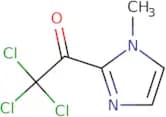
1-Methyl-2-(trichloroacetyl)imidazole
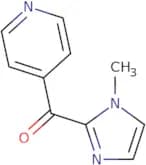
CAS:1-Methyl-2-(trichloroacetyl)imidazole is a small molecule that is synthesized for the treatment of cancer. It interacts with dna and inhibits its function by binding to the minor groove in DNA, which causes conformational changes. 1-Methyl-2-(trichloroacetyl)imidazole has been shown to be effective against cancer cells that are resistant to other anticancer compounds. The molecular target for this compound is not fully understood, but it may work by inhibiting DNA synthesis or by inducing apoptosis. 1-Methyl-2-(trichloroacetyl)imidazole has shown some activity against leukemia and colon cancer cell lines in vitro and in vivo.Formula:C6H5Cl3N2OPurity:Min. 95%Molecular weight:227.48 g/mol4-(1-Methyl-1H-imidazole-2-carbonyl)pyridine
CAS:Versatile small molecule scaffoldFormula:C10H9N3OPurity:Min. 95%Molecular weight:187.2 g/mol2-(2-Chlorobenzoyl)-1-methyl-1H-imidazole
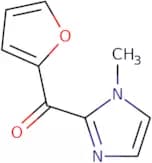
CAS:Controlled ProductVersatile small molecule scaffoldFormula:C11H9ClN2OPurity:Min. 95%Molecular weight:220.65 g/mol2-(Furan-2-carbonyl)-1-methyl-1H-imidazole
CAS:Versatile small molecule scaffoldFormula:C9H8N2O2Purity:Min. 95%Molecular weight:176.17 g/mol3-[3-(4-Bromo-phenyl)-[1,2,4]oxadiazol-5-yl]-propionic acid
CAS:Versatile small molecule scaffoldFormula:C11H9BrN2O3Purity:Min. 95%Molecular weight:297.1 g/mol4-Bromo-3-methylthiophene-2-carboxaldehyde
CAS:Versatile small molecule scaffoldFormula:C6H5BrOSPurity:Min. 95%Molecular weight:205.07 g/mol4,5-Dibromo-3-methylthiophene-2-carbaldehyde
CAS:Versatile small molecule scaffoldFormula:C6H4Br2OSPurity:Min. 95%Molecular weight:283.97 g/mol1-(Pyridin-2-yl)-2-(pyridin-4-yl)ethan-1-one
CAS:Versatile small molecule scaffoldFormula:C12H10N2OPurity:Min. 95%Molecular weight:198.22 g/mol1-(3-Pyridyl)-2-thiourea
CAS:1-(3-Pyridyl)-2-thiourea is an organic compound that belongs to the thiourea functional group. It is a white crystalline solid that has orthorhombic symmetry. 1-(3-Pyridyl)-2-thiourea has a protonated nitrogen atom on its pyridine ring, which gives it a positive charge. This functional group interacts with other molecules due to the presence of lone electron pairs on the nitrogen atom and the carbonyl oxygen atom. Crystal x-ray diffraction studies have shown that 1-(3-Pyridyl)-2-thiourea crystallizes in the group p2 space group and is oriented along [001]. The ligand coordinates are nitrate and solvent.Formula:C6H7N3SPurity:Min. 95%Molecular weight:153.2 g/mol(Quinolin-3-yl)thiourea
CAS:Versatile small molecule scaffold
Formula:C10H9N3SPurity:Min. 95%Molecular weight:203.27 g/mol2-(2-methyl-1H-imidazol-1-yl)acetic acid hydrochloride
CAS:Versatile small molecule scaffold
Formula:C6H9ClN2O2Purity:Min. 95%Molecular weight:176.6 g/mol3-(5,6-Dimethyl-1H-1,3-benzodiazol-1-yl)propanoic acid hydrochloride
CAS:Versatile small molecule scaffoldFormula:C12H15ClN2O2Purity:Min. 95%Molecular weight:254.71 g/mol2-[(Carboxymethyl)dimethylazaniumyl]acetate
CAS:Versatile small molecule scaffoldFormula:C6H11NO4Purity:Min. 95%Molecular weight:161.16 g/mol3,6-Bis(3,5-dimethyl-1H-pyrazol-1-yl)-1,2,4,5-tetrazine
CAS:3,6-Bis(3,5-dimethyl-1H-pyrazol-1-yl)-1,2,4,5-tetrazine is a group P2 molecule that diffracts well with x-rays. The compound has a molecular weight of 270.27 g/mol and the chemical formula is C12H11N5. 3,6-Bis(3,5-dimethyl-1H-pyrazol-1-yl)-1,2,4,5-tetrazine is soluble in acetonitrile but insoluble in water. The compound is stable at room temperature but will evaporate when heated to higher temperatures. 3,6bis(3,5dimethyl 1Hpyrazol 1yl) 1 2 4 5 tetrazine can be found in biochemical reactions as a nucleophile or can act as an inhibitor to enzymes such as cytochrome c oxidase or ATP synthaseFormula:C12H14N8Purity:Min. 95%Molecular weight:270.29 g/mol6-Chloro-4-phenylquinolin-2(1H)-one
CAS:Dimethyl sulfate (DMS) is a highly toxic industrial chemical that is used in the production of other chemicals and as an analytical reagent. DMS is mainly used in the production of phenols, alkyl sulfates, and other organic compounds. Dimethyl sulfate is also used as a laboratory reagent for the synthesis of various organic compounds.
Formula:C15H10NOClPurity:Min. 95%Molecular weight:255.69 g/molrac-(2R,3S)-3-Amino-2-phenylbutan-2-ol hydrochloride
CAS:Versatile small molecule scaffoldFormula:C10H16ClNOPurity:Min. 95%Molecular weight:201.69 g/mol1-(4-Methoxyphenyl)-1H-pyrrole-2-carbaldehyde
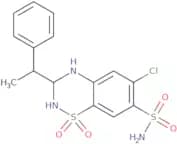
CAS:Versatile small molecule scaffoldFormula:C12H11NO2Purity:Min. 95%Molecular weight:201.23 g/mol6-Chloro-3,4-dihydro-3-(a-methylbenzyl)-2H-1,2,4-benzothiadiazine-7-sulfonamide 1,1-dioxide
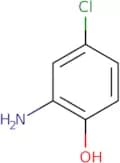
CAS:6-Chloro-3,4-dihydro-3-(a-methylbenzyl)-2H-1,2,4-benzothiadiazine-7-sulfonamide 1,1-dioxide is an active metabolite of the drug benzbromarone. It is primarily administered as a diuretic to treat high blood pressure and congestive heart failure. The pharmacodynamics of this drug are related to its ability to inhibit the activity of sodium channels in vascular smooth muscle cells and thereby reduce the force of contraction and relax the vessel wall. 6CBDMTD has shown an increase in glomerular filtration rate in patients with congestive heart failure. This drug also decreases the plasma concentration of fatty acids by inhibiting the formation of lipoprotein particles. 6CBDMTD has been shown to be effective at lowering diastolic and systolic blood pressure levels in patients with hypertension.Formula:C15H16ClN3O4S2Purity:Min. 95%Molecular weight:401.89 g/mol4-Chloro-2-aminophenol
CAS:4-Chloro-2-aminophenol is a chemical compound that can be found in nature or synthesized. It has antibacterial properties and is used as an antimicrobial agent. 4-Chloro-2-aminophenol inhibits the growth of bacteria by inhibiting nitrogenase enzyme activity, which is required for the production of amino acids and nucleic acids. This compound also induces cytotoxicity and significant cell death in colorectal adenocarcinoma cells. 4-Chloro-2-aminophenol is a weak acid that reacts with hydrochloric acid to form a diazonium salt, which reacts with benzene to form an intramolecular hydrogen bond. The final product of this reaction is a solid phase microextraction (SPME) sorbent that can be used to extract analytes from liquid samples.
Formula:C6H6ClNOPurity:Min. 95%Molecular weight:143.57 g/mol5-Chloro-4-methylpyrimidine
CAS:Please enquire for more information about 5-Chloro-4-methylpyrimidine including the price, delivery time and more detailed product information at the technical inquiry form on this pageFormula:C5H5ClN2Purity:Min. 95%Molecular weight:128.56 g/mol2-Chloro-10-[3-[[3-(dimethylamino)propyl]methylamino]propyl]phenothiazine dihydrochloride
CAS:Please enquire for more information about 2-Chloro-10-[3-[[3-(dimethylamino)propyl]methylamino]propyl]phenothiazine dihydrochloride including the price, delivery time and more detailed product information at the technical inquiry form on this pageFormula:C21H28ClN3S•(HCl)2Purity:Min. 95%Molecular weight:462.91 g/molCinidon ethyl
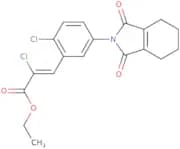
CAS:Please enquire for more information about Cinidon ethyl including the price, delivery time and more detailed product information at the technical inquiry form on this pageFormula:C19H17Cl2NO4Purity:Min. 95%Color and Shape:PowderMolecular weight:394.2 g/mol1-(2-Chlorophenyl)-2-(2H-tetrazol-2-yl)ethanone
CAS:Please enquire for more information about 1-(2-Chlorophenyl)-2-(2H-tetrazol-2-yl)ethanone including the price, delivery time and more detailed product information at the technical inquiry form on this page
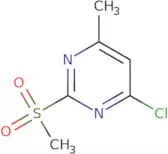
Formula:C9H7ClN4OPurity:Min. 95%Molecular weight:222.63 g/mol4-Chloro-6-methyl-2-(methylsulfonyl)pyrimidine
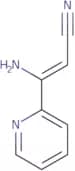
CAS:Versatile small molecule scaffoldFormula:C6H7ClN2O2SPurity:Min. 95%Molecular weight:206.65 g/mol3-Amino-3-(2-pyridinyl)acrylonitrile
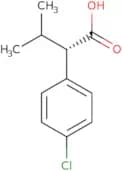
CAS:Versatile small molecule scaffoldFormula:C8H7N3Purity:Min. 95%Molecular weight:145.17 g/mol(S)-2-(4-Chlorophenyl)-3-methylbutanoic acid
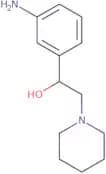
CAS:(S)-2-(4-Chlorophenyl)-3-methylbutanoic acid is a chiral molecule that has been shown to be an inhibitor of isovaleric acid. It can be used as a marker for the amino acid sequence. It has been reported that (S)-2-(4-chlorophenyl)-3-methylbutanoic acid is an endogenous metabolite in humans and its concentration can be measured by enzyme-linked immunosorbent assay, high-performance liquid chromatography, and optical monitoring. This compound has also been studied as a potential therapeutic agent for the treatment of Alzheimer's disease due to its ability to inhibit acetylcholinesterase activity. It can also be conjugated with other molecules to form amide or ester conjugates.Formula:C11H13ClO2Purity:Min. 95%Molecular weight:212.67 g/mol1-(3-Aminophenyl)-2-(piperidin-1-yl)ethan-1-ol
CAS:Versatile small molecule scaffoldFormula:C13H20N2OPurity:Min. 95%Molecular weight:220.31 g/mol6-Methylindolo[1,2-c]quinazolin-12-amine
CAS:6-Methylindolo[1,2-c]quinazolin-12-amine is a heterotetracyclic compound that contains a heterocyclic ring. It has been shown to inhibit the growth of bacteria and fungi, as well as promote apoptosis in cancer cells. 6-Methylindolo[1,2-c]quinazolin-12-amine also exhibits anti-inflammatory properties and can be used for the treatment of inflammatory diseases such as asthma.Formula:C16H13N3Purity:Min. 95%Molecular weight:247.29 g/molCyclooctane-1,5-diol
CAS:Cyclooctane-1,5-diol is a compound that consists of a carbonyl group and a hydroxyl group. It can be synthesized by the dehydrogenation of α-pinene. Cyclooctane-1,5-diol has been shown to have vibrational properties that are similar to those of intramolecular hydrogen. The 13C NMR spectrum displays strong signals at δ=54.7, δ=61.2, and δ=71.8 ppm corresponding to the carbonyl group and hydroxyl groups in the molecule. Cyclooctane-1,5-diol also has an ultraviolet absorption maximum at 265 nm and is a good nucleophile because it contains a reactive proton on its carbonyl group. Cyclooctane-1,5-diol is soluble in water and has chemical reactions with other compounds such as flavin or dinucleotide phosphate.br>br>Formula:C8H16O2Purity:Min. 95%Molecular weight:144.21 g/mol4-[(4-Methylphenyl)amino]-2,3-dihydro-1,6-thiophene-1,1-dione
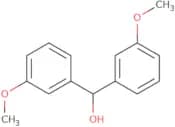
CAS:Versatile small molecule scaffoldFormula:C11H13NO2SPurity:Min. 95%Molecular weight:223.29 g/molBis(3-methoxyphenyl)methanol
CAS:Versatile small molecule scaffoldFormula:C15H16O3Purity:Min. 95%Molecular weight:244.28 g/mol2-{[(tert-butoxy)carbonyl]amino}-2-(4-methoxyphenyl)acetic acid
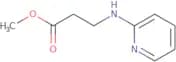
CAS:Versatile small molecule scaffoldFormula:C14H19NO5Purity:Min. 95%Molecular weight:281.3 g/molMethyl 3-(pyridin-2-ylamino)propanoate
CAS:Versatile small molecule scaffoldFormula:C9H12N2O2Purity:Min. 95%Molecular weight:180.2 g/mol5H,6H,7H,8H-Imidazo[1,2-a]pyridine-3-carboxylic acid
CAS:Versatile small molecule scaffoldFormula:C8H10N2O2Purity:Min. 95%Molecular weight:166.18 g/mol[1,2,4]Triazolo[1,5-a]pyrazin-8-amine
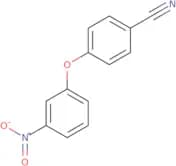
CAS:Versatile small molecule scaffoldFormula:C5H5N5Purity:Min. 95%Molecular weight:135.13 g/mol4-(3-Nitrophenoxy)benzonitrile
CAS:Versatile small molecule scaffold
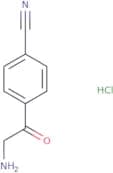
Formula:C13H8N2O3Purity:Min. 95%Molecular weight:240.21 g/mol4-(2-Aminoacetyl)benzonitrile hydrochloride
CAS:Versatile small molecule scaffoldFormula:C9H9ClN2OPurity:Min. 95%Molecular weight:196.63 g/mol5-[4-(Trifluoromethyl)phenyl]furan-2-carbaldehyde
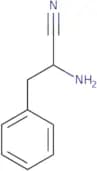
CAS:Versatile small molecule scaffoldFormula:C12H7F3O2Purity:Min. 95%Molecular weight:240.18 g/mol2-Amino-3-phenylpropanenitrile
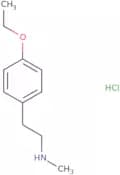
CAS:2-Amino-3-phenylpropanenitrile is an active form of a sulfoxide that has been shown to be effective in the treatment of brain tumors. It is chiral, with two enantiomers, and can be used as a diagnostic tool for the detection of brain tumors. The mechanism of action of 2-amino-3-phenylpropanenitrile is not fully understood, but it has been shown to have therapeutic effects on brain tumors in animal models. The stereoselective properties of this drug make it an attractive candidate for optimization and cancer treatment. Optimization studies have focused on the use of potassium t-butoxide in asymmetric synthesis, which may lead to improved therapeutic efficacy and reduced toxicity.Formula:C9H10N2Purity:Min. 95%Molecular weight:146.19 g/mol2-(4-Ethoxyphenyl)-N-methylethanamine hydrochloride
CAS:Controlled ProductVersatile small molecule scaffold
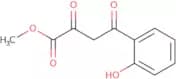
Formula:C11H18ClNOPurity:Min. 95%Molecular weight:215.72 g/molMethyl 4-(2-hydroxyphenyl)-2,4-dioxobutanoate
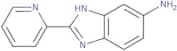
CAS:Methyl 4-(2-hydroxyphenyl)-2,4-dioxobutanoate is an organic compound that belongs to the class of pyrrole derivatives. It is a precursor for the synthesis of a number of pharmaceuticals and other organic compounds. Methyl 4-(2-hydroxyphenyl)-2,4-dioxobutanoate can be prepared by condensation of formaldehyde with 2,4-dihydroxyphenylacetic acid in acidic media. This reaction gives a mixture of methyl 4-(2-hydroxyphenyl)-2,4-dioxobutanoate and methyl 3-(2-hydroxyphenyl)-3,5-dioxopentanoate. The major product can be purified by recrystallization from methanol or ethanol.Formula:C11H10O5Purity:Min. 95%Molecular weight:222.19 g/mol2-(Pyridin-2-yl)-1H-1,3-benzodiazol-5-amine
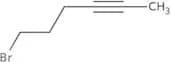
CAS:Versatile small molecule scaffoldFormula:C12H10N4Purity:Min. 95%Molecular weight:210.23 g/mol6-Bromohex-2-yne
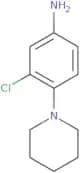
CAS:Versatile small molecule scaffoldFormula:C6H9BrPurity:Min. 95%Molecular weight:161.04 g/mol3-Chloro-4-piperidin-1-yl-phenylamine
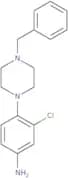
CAS:Versatile small molecule scaffoldFormula:C11H15ClN2Purity:Min. 95%Molecular weight:210.71 g/mol4-(4-Benzyl-1-piperazinyl)-3-chlorophenylamine
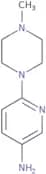
CAS:Versatile small molecule scaffoldFormula:C17H20ClN3Purity:Min. 95%Molecular weight:301.82 g/mol3-Amino-6-(4-methylpiperazin-1-yl)pyridine
CAS:Versatile small molecule scaffoldFormula:C10H16N4Purity:Min. 95%Molecular weight:192.26 g/mol3,6-Dibromopyrazolo[1,5-a]pyrimidine
CAS:Versatile small molecule scaffoldFormula:C6H3Br2N3Purity:Min. 95%Molecular weight:276.92 g/mol3-Methylthiophene-2-carbonitrile
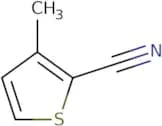
CAS:3-Methylthiophene-2-carbonitrile is a crystalline solid that is soluble in water and has a boiling point of 115°C. This compound can be found as a gas or liquid at room temperature. 3-Methylthiophene-2-carbonitrile has been shown to undergo vaporization at high temperatures, with an enthalpy of vaporization of -5.5 kJ/mol. The structural formula for this compound is CH3CSCH3, which is made up of two methyl groups and one thiophene ring. 3-Methylthiophene-2-carbonitrile has been shown to have an energy of -4.6 kJ/mol when heated to 100°C, making it a very stable molecule.Formula:C6H5NSPurity:Min. 95%Molecular weight:123.18 g/mol(2E)-3-(2-Methyl-2H-1,2,3,4-tetrazol-5-yl)prop-2-enoic acid
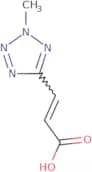
CAS:Versatile small molecule scaffoldFormula:C5H6N4O2Purity:Min. 95%Molecular weight:154.13 g/mol[2-Amino-3-(trifluoromethyl)phenyl]methanol
CAS:Versatile small molecule scaffoldFormula:C8H8F3NOPurity:Min. 95%Molecular weight:191.15 g/mol


![3-[3-(4-Bromo-phenyl)-[1,2,4]oxadiazol-5-yl]-propionic acid](/_next/image/?url=https%3A%2Fstatic.cymitquimica.com%2Fproducts%2F3D%2Fthumb-webp%2FFBA14994.webp&w=3840&q=75)


![2-[(Carboxymethyl)dimethylazaniumyl]acetate](/_next/image/?url=https%3A%2Fstatic.cymitquimica.com%2Fproducts%2F3D%2Fthumb-webp%2FFBA16390.webp&w=3840&q=75)



![2-Chloro-10-[3-[[3-(dimethylamino)propyl]methylamino]propyl]phenothiazine dihydrochloride](/_next/image/?url=https%3A%2Fstatic.cymitquimica.com%2Fproducts%2F3D%2Fthumb-webp%2FFC183794.webp&w=3840&q=75)

![6-Methylindolo[1,2-c]quinazolin-12-amine](/_next/image/?url=https%3A%2Fstatic.cymitquimica.com%2Fproducts%2F3D%2Fthumb-webp%2FFCA33812.webp&w=3840&q=75)

![4-[(4-Methylphenyl)amino]-2,3-dihydro-1,6-thiophene-1,1-dione](/_next/image/?url=https%3A%2Fstatic.cymitquimica.com%2Fproducts%2F3D%2Fthumb-webp%2FFCA35770.webp&w=3840&q=75)
![2-{[(tert-butoxy)carbonyl]amino}-2-(4-methoxyphenyl)acetic acid](/_next/image/?url=https%3A%2Fstatic.cymitquimica.com%2Fproducts%2F3D%2Fthumb-webp%2FFCA36276.webp&w=3840&q=75)
![5H,6H,7H,8H-Imidazo[1,2-a]pyridine-3-carboxylic acid](/_next/image/?url=https%3A%2Fstatic.cymitquimica.com%2Fproducts%2F3D%2Fthumb-webp%2FFCA36504.webp&w=3840&q=75)
![[1,2,4]Triazolo[1,5-a]pyrazin-8-amine](/_next/image/?url=https%3A%2Fstatic.cymitquimica.com%2Fproducts%2F3D%2Fthumb-webp%2FFCA36618.webp&w=3840&q=75)
![5-[4-(Trifluoromethyl)phenyl]furan-2-carbaldehyde](/_next/image/?url=https%3A%2Fstatic.cymitquimica.com%2Fproducts%2F3D%2Fthumb-webp%2FFCA37777.webp&w=3840&q=75)
![3,6-Dibromopyrazolo[1,5-a]pyrimidine](/_next/image/?url=https%3A%2Fstatic.cymitquimica.com%2Fproducts%2F3D%2Fthumb-webp%2FFCA40568.webp&w=3840&q=75)
![[2-Amino-3-(trifluoromethyl)phenyl]methanol](/_next/image/?url=https%3A%2Fstatic.cymitquimica.com%2Fproducts%2F3D%2Fthumb-webp%2FFCA41460.webp&w=3840&q=75)