Building Blocks
This section contains fundamental products for the synthesis of organic and biological compounds. Building blocks are the essential starting materials used to construct complex molecules through various chemical reactions. They play a critical role in drug discovery, material science, and chemical research. At CymitQuimica, we offer a diverse range of high-quality building blocks to support your innovative research and industrial projects, ensuring you have the essential components for successful synthesis.
Subcategories of "Building Blocks"
- Boronic Acids & Boronic Acid Derivatives(5,756 products)
- Chiral Building Blocks(1,242 products)
- Hydrocarbon Building Blocks(6,095 products)
- Organic Building Blocks(61,038 products)
Found 196817 products of "Building Blocks"
Sort by
Purity (%)
0
100
|
0
|
50
|
90
|
95
|
100
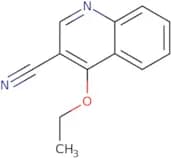
4-Ethoxyquinoline-3-carbonitrile
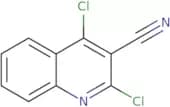
CAS:<p>Versatile small molecule scaffold</p>Formula:C12H10N2OPurity:Min. 95%Molecular weight:198.22 g/mol2,4-Dichloroquinoline-3-carbonitrile
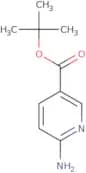
CAS:<p>2,4-Dichloroquinoline-3-carbonitrile is a nitrosourea compound that inhibits cancer cells. It is activated by the addition of a reducing agent such as triethyl orthoformate and then reacts with an amine to form the corresponding N,N'-dichloroquinoline. The product of this reaction inhibits cancer cells by binding to DNA and inhibiting RNA synthesis. 2,4-Dichloroquinoline-3-carbonitrile has been shown to be effective against leukemia cells in vitro.</p>Formula:C10H4Cl2N2Purity:Min. 95%Molecular weight:223.06 g/moltert-Butyl 6-aminopyridine-3-carboxylate
CAS:<p>Versatile small molecule scaffold</p>Formula:C10H14N2O2Purity:Min. 95%Molecular weight:194.23 g/mol6-Hydrazinylpyridine-3-carboxamide
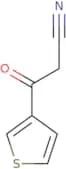
CAS:<p>6-Hydrazinylpyridine-3-carboxamide is a coligand with high affinity for technetium, which is used in analytical chemistry. The compound has been shown to bind to the transcription-polymerase chain reaction (PCR) and monoclonal antibody binding sites of the human immunodeficiency virus type 1 (HIV-1). 6-Hydrazinylpyridine-3-carboxamide has also been shown to be an effective inhibitor of protein synthesis in animal cells and to inhibit tumor cell growth. Clinical trials have demonstrated that this compound can be used as an aneurysm sealant and as a cancer treatment.</p>Formula:C6H8N4OPurity:Min. 95%Molecular weight:152.15 g/mol3-Oxo-3-(3-thienyl)propanenitrile
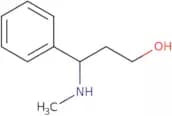
CAS:<p>3-Oxo-3-(3-thienyl)propanenitrile is a metabolite of 3-oxothiopropanal. It is an analog of prostaglandin, which has been shown to have antiinflammatory properties. 3-Oxo-3-(3-thienyl)propanenitrile has been used in the treatment of adjuvant arthritis and was found to inhibit the production of prostaglandins.</p>Formula:C7H5NOSPurity:Min. 95%Molecular weight:151.19 g/mol3-(Methylamino)-3-phenylpropan-1-ol
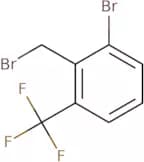
CAS:<p>Versatile small molecule scaffold</p>Formula:C10H15NOPurity:Min. 95%Molecular weight:165.23 g/mol2-Bromo-6-(trifluoromethyl)benzyl bromide
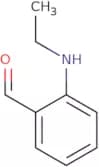
CAS:<p>Versatile small molecule scaffold</p>Purity:Min. 95%2-(Ethylamino)benzaldehyde
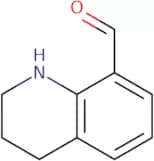
CAS:<p>2-(Ethylamino)benzaldehyde (2-EABA) is a reactive, radiation-sensitive compound that can be used as a diagnostic agent. 2-EABA is the precursor of styryl dyes and coumarin derivatives. 2-EABA reacts with chloride to form an amide in the presence of hydroxyl groups. The amide reacts with aromatic hydrocarbons to produce cationic polymers. The reactive functional group of 2-EABA is an aldehyde group, which reacts with basic dyes to form diamines and diamides. In addition, it has been shown that 2-EABA can be used to detect chloride ions in water samples, owing to its high solubility in water.</p>Formula:C9H11NOPurity:Min. 95%Molecular weight:149.19 g/mol1,2,3,4-Tetrahydroquinoline-8-carbaldehyde
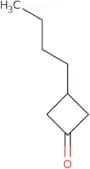
CAS:<p>Versatile small molecule scaffold</p>Formula:C10H11NOPurity:Min. 95%Molecular weight:161.2 g/mol3-Butylcyclobutan-1-one
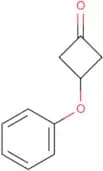
CAS:<p>Versatile small molecule scaffold</p>Formula:C8H14OPurity:Min. 95%Molecular weight:126.2 g/mol3-Phenoxycyclobutan-1-one
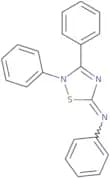
CAS:<p>3-Phenoxycyclobutan-1-one is a chemical compound that belongs to the group of sulfoxides. It is an intermediate in the synthesis of other compounds, such as methyl esters and sulfones. 3-Phenoxycyclobutan-1-one can be synthesized by coupling with phenol and cyclohexanone in the presence of a base. 3-Phenoxycyclobutan-1-one is also a precursor for the synthesis of other compounds, such as dyes and pharmaceuticals. The conversion to 3-phenoxycyclobutanones requires pyrolysis at temperatures greater than 300°C.</p>Formula:C10H10O2Purity:Min. 95%Molecular weight:162.19 g/molN,2,3-Triphenyl-2,5-dihydro-1,2,4-thiadiazol-5-imine
CAS:<p>Versatile small molecule scaffold</p>Formula:C20H15N3SPurity:Min. 95%Molecular weight:329.4 g/molrac-[(2R,5S)-5-tert-Butyloxolan-2-yl]methanol
CAS:<p>Versatile small molecule scaffold</p>Formula:C9H18O2Purity:Min. 95%Molecular weight:158.2 g/mol1-(3-Methylphenyl)-3-(prop-2-yn-1-yl)urea
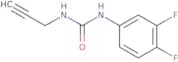
CAS:<p>Versatile small molecule scaffold</p>Formula:C11H12N2OPurity:Min. 95%Molecular weight:188.23 g/mol1-(3,4-Difluorophenyl)-3-(prop-2-yn-1-yl)urea
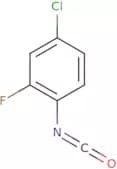
CAS:<p>Versatile small molecule scaffold</p>Formula:C10H8F2N2OPurity:Min. 95%Molecular weight:210.18 g/mol4-Chloro-2-fluoro-1-isocyanatobenzene
CAS:<p>Versatile small molecule scaffold</p>Formula:C7H3ClFNOPurity:Min. 95%Molecular weight:171.55 g/mol5-Amino-1-phenyl-1H,4H,5H-pyrazolo[3,4-d]pyrimidin-4-one
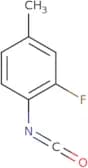
CAS:<p>Versatile small molecule scaffold</p>Formula:C11H9N5OPurity:Min. 95%Molecular weight:227.22 g/mol2-Fluoro-1-isocyanato-4-methylbenzene
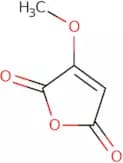
CAS:<p>Versatile small molecule scaffold</p>Formula:C8H6FNOPurity:Min. 95%Molecular weight:151.14 g/mol3-Methoxy-2,5-furandione
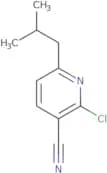
CAS:<p>3-Methoxy-2,5-furandione is a reactive functional group that belongs to the group of β-carboline alkaloids. It is used as a crosslinker in polyvinyl and iontophoresis applications, as well as a cross-linking agent for coatings or natural compounds. 3-Methoxy-2,5-furandione reacts with benzyl groups to form crosslinked products that are stable in acidic environments. This product is also used as an intermediate for the synthesis of tetronic acid (a coating) or reaction products.</p>Formula:C5H4O4Purity:Min. 95%Molecular weight:128.08 g/mol2-Chloro-6-(2-methylpropyl)pyridine-3-carbonitrile
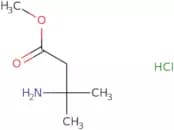
CAS:<p>2-Chloro-6-(2-methylpropyl)pyridine-3-carbonitrile is a naphthyridine that has been correlated to the ionization of the molecule. The substituent on the nitrogen atom is not ionized, while the nitrogens on the ring are. This difference in ionization constants allows 2CMP to be used as a research tool for studying nucleic acids and proteins.</p>Formula:C10H11ClN2Purity:Min. 95%Molecular weight:194.66 g/molMethyl 3-amino-3-methylbutanoate hydrochloride
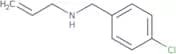
CAS:<p>Versatile small molecule scaffold</p>Formula:C6H14ClNO2Purity:Min. 95%Molecular weight:167.63 g/molN-(4-Chlorobenzyl)prop-2-en-1-amine
CAS:<p>Versatile small molecule scaffold</p>Formula:C10H12ClNPurity:Min. 95%Molecular weight:181.66 g/mol[(3,4-Dichlorophenyl)methyl](propan-2-yl)amine
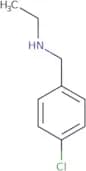
CAS:<p>Versatile small molecule scaffold</p>Formula:C10H13Cl2NPurity:Min. 95%Molecular weight:218.12 g/molN-Ethyl-4-chlorobenzylamine
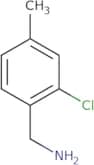
CAS:<p>Versatile small molecule scaffold</p>Formula:C9H12ClNPurity:Min. 95%Molecular weight:169.65 g/mol(2-Chloro-4-methylphenyl)methanamine
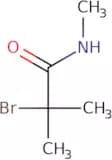
CAS:<p>Versatile small molecule scaffold</p>Formula:C8H10ClNPurity:Min. 95%Molecular weight:155.62 g/mol2-Bromo-N,2-dimethylpropanamide
CAS:<p>Versatile small molecule scaffold</p>Formula:C5H10BrNOPurity:Min. 95%Molecular weight:180.04 g/mol2-(Oxiran-2-yl)oxane
CAS:<p>Versatile small molecule scaffold</p>Formula:C7H12O2Purity:Min. 95%Molecular weight:128.2 g/mol2,2-Dimethyl-2H-chromene-6-carbaldehyde
CAS:<p>Versatile small molecule scaffold</p>Formula:C12H12O2Purity:Min. 95%Molecular weight:188.23 g/mol3-[(Methylsulfanyl)methyl]pyridine
CAS:<p>Versatile small molecule scaffold</p>Formula:C7H9NSPurity:Min. 95%Molecular weight:139.22 g/mol3-[(Phenylsulfanyl)methyl]pyridine
CAS:<p>Versatile small molecule scaffold</p>Formula:C12H11NSPurity:Min. 95%Molecular weight:201.29 g/molN-Methyl-N-[(pyridin-3-yl)methyl]acetamide
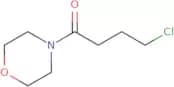
CAS:<p>Versatile small molecule scaffold</p>Formula:C9H12N2OPurity:Min. 95%Molecular weight:164.2 g/mol4-Chloro-1-(morpholin-4-yl)butan-1-one
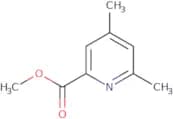
CAS:<p>Versatile small molecule scaffold</p>Formula:C8H14ClNO2Purity:Min. 95%Molecular weight:191.65 g/molMethyl 4,6-dimethylpyridine-2-carboxylate
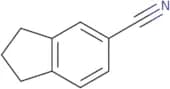
CAS:<p>Versatile small molecule scaffold</p>Formula:C9H11NO2Purity:Min. 95%Molecular weight:165.19 g/mol2,3-Dihydro-1h-indene-5-carbonitrile
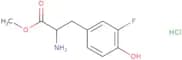
CAS:<p>Versatile small molecule scaffold</p>Formula:C10H9NPurity:Min. 95%Molecular weight:143.19 g/molMethyl 2-amino-3-(3-fluoro-4-hydroxyphenyl)propanoate hydrochloride
CAS:<p>Versatile small molecule scaffold</p>Formula:C10H13ClFNO3Purity:Min. 95%Molecular weight:249.66 g/mol1-[5-Methyl-1-(4-methylphenyl)-1H-1,2,3-triazol-4-yl]ethan-1-one
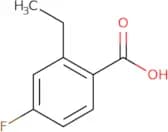
CAS:Controlled Product<p>1-[5-Methyl-1-(4-methylphenyl)-1H-1,2,3-triazol-4-yl]ethan-1-one is a nicotinic compound that has been synthesized. It is a thiosemicarbazide derivative that reacts with azide compounds to form pyridine derivatives. The reaction with halides and amines leads to the formation of pyridines and thiosemicarbazones, respectively. Phenylcarbamate can be formed by reacting phenols with this compound. Elemental analysis shows that 1-[5-Methyl-1-(4-methylphenyl)-1H-1,2,3-triazol-4-- yl]ethan-1-- one is composed of hydrogen (H), carbon (C), nitrogen (N), and oxygen (O).</p>Formula:C12H13N3OPurity:Min. 95%Molecular weight:215.25 g/mol2-Ethyl-4-fluorobenzoic acid
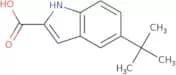
CAS:<p>Versatile small molecule scaffold</p>Formula:C9H9FO2Purity:Min. 95%Molecular weight:168.16 g/mol5-tert-Butyl-1H-indole-2-carboxylic acid
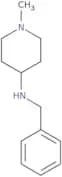
CAS:<p>5-tert-Butyl-1H-indole-2-carboxylic acid is an acidic, carboxylic acid that is synthesized from indole and benzene. It has a moiety of substituents on the phenyl ring. 5-tert-Butyl-1H-indole-2-carboxylic acid is synthesised by reacting indole with benzene in the presence of trifluoroacetic acid and sodium hydroxide. This reaction yields 5-(benzoyloxy)indole and 5-(benzoyloxy)indole carboxylic acid. The carboxylic acid can be obtained as a white solid that is soluble in water, ethanol, and ether. The brain membranes contain high concentrations of this compound, which can be used to study its function as a neurotransmitter or neuromodulator.</p>Formula:C13H15NO2Purity:Min. 95%Molecular weight:217.26 g/molBenzyl-(1-methyl-piperidin-4-yl)-amine
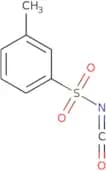
CAS:<p>Versatile small molecule scaffold</p>Formula:C13H20N2Purity:Min. 95%Molecular weight:204.31 g/mol3-Methylbenzene-1-sulfonyl isocyanate
CAS:<p>Versatile small molecule scaffold</p>Formula:C8H7NO3SPurity:Min. 95%Molecular weight:197.21 g/mol3-[(1S)-1-Hydroxyethyl]phenol
CAS:<p>Versatile small molecule scaffold</p>Formula:C8H10O2Purity:Min. 95%Molecular weight:138.2 g/mol2-Ethoxy-5-[(4-methylpiperazin-1-yl)sulfonyl]benzoic acid
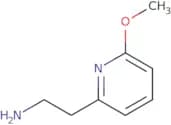
CAS:<p>2-Ethoxy-5-[(4-methylpiperazin-1-yl)sulfonyl]benzoic acid (EMSB) is a nitrogen and sulfonamide compound that belongs to the class of piperazine derivatives. It binds to the 50S ribosomal subunit in bacteria, preventing mRNA translation and inhibiting bacterial growth. EMSB has been shown to inhibit the growth of Mycobacterium tuberculosis and Staphylococcus aureus. EMSB also inhibits aminoacyl-tRNA binding and protein synthesis in bacteria. This drug has been shown to be active against methicillin resistant Staphylococcus aureus (MRSA) isolates in laboratory tests.</p>Formula:C14H20N2O5SPurity:Min. 95%Molecular weight:328.39 g/mol2-(6-Methoxypyridin-2-yl)ethan-1-amine
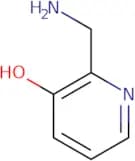
CAS:<p>Versatile small molecule scaffold</p>Formula:C8H12N2OPurity:Min. 95%Molecular weight:152.19 g/mol2-(Aminomethyl)pyridin-3-ol
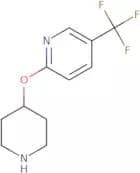
CAS:<p>Versatile small molecule scaffold</p>Formula:C6H8N2OPurity:Min. 95%Molecular weight:124.14 g/mol2-(Piperidin-4-yloxy)-5-(trifluoromethyl)pyridine
CAS:<p>Versatile small molecule scaffold</p>Formula:C11H13F3N2OPurity:Min. 95%Molecular weight:246.23 g/mol6-Bromothiazolo[4,5-b]pyridine-2-thiol
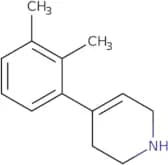
CAS:<p>Versatile small molecule scaffold</p>Formula:C6H3BrN2S2Purity:Min. 95%Molecular weight:247.14 g/mol4-(2,3-Dimethylphenyl)-1,2,3,6-tetrahydropyridine
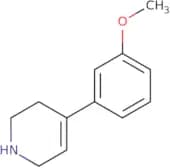
CAS:<p>Versatile small molecule scaffold</p>Formula:C13H17NPurity:Min. 95%Molecular weight:187.28 g/mol4-(3-Methoxyphenyl)-1,2,3,6-tetrahydropyridine
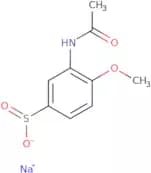
CAS:<p>Versatile small molecule scaffold</p>Formula:C12H15NOPurity:Min. 95%Molecular weight:189.25 g/molSodium 3-acetamido-4-methoxybenzene-1-sulfinate
CAS:<p>Versatile small molecule scaffold</p>Formula:C9H10NNaO4SPurity:Min. 95%Molecular weight:251.24 g/mol2-(4-Bromophenyl)tetrahydrofuran
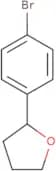
CAS:<p>2-(4-Bromophenyl)tetrahydrofuran is a heterocyclic compound that is a chiral molecule. The racemic mixture of 2-(4-bromophenyl)tetrahydrofuran exists as two enantiomers, which can be separated in a chiral column. This molecule has been studied for its mechanistic effects on focusing. A systematic study was performed to investigate the mechanism of 2-(4-bromophenyl)tetrahydrofuran and its analogs. The chemical structure of this molecule is similar to that of natural products such as lactones and enantioselectivity agents, which may be useful for the synthesis of new drugs.</p>Formula:C10H11OBrPurity:Min. 95%Molecular weight:227.1 g/mol


![rac-[(2R,5S)-5-tert-Butyloxolan-2-yl]methanol](/_next/image/?url=https%3A%2Fstatic.cymitquimica.com%2Fproducts%2F3D%2Fthumb-webp%2FUCA91466.webp&w=3840&q=75)

![5-Amino-1-phenyl-1H,4H,5H-pyrazolo[3,4-d]pyrimidin-4-one](/_next/image/?url=https%3A%2Fstatic.cymitquimica.com%2Fproducts%2F3D%2Fthumb-webp%2FUCA92395.webp&w=3840&q=75)
amine](/_next/image/?url=https%3A%2Fstatic.cymitquimica.com%2Fproducts%2F3D%2Fthumb-webp%2FUCA95782.webp&w=3840&q=75)

![3-[(Methylsulfanyl)methyl]pyridine](/_next/image/?url=https%3A%2Fstatic.cymitquimica.com%2Fproducts%2F3D%2Fthumb-webp%2FUCA96644.webp&w=3840&q=75)
![3-[(Phenylsulfanyl)methyl]pyridine](/_next/image/?url=https%3A%2Fstatic.cymitquimica.com%2Fproducts%2F3D%2Fthumb-webp%2FUCA96647.webp&w=3840&q=75)
![N-Methyl-N-[(pyridin-3-yl)methyl]acetamide](/_next/image/?url=https%3A%2Fstatic.cymitquimica.com%2Fproducts%2F3D%2Fthumb-webp%2FUCA96650.webp&w=3840&q=75)
![1-[5-Methyl-1-(4-methylphenyl)-1H-1,2,3-triazol-4-yl]ethan-1-one](/_next/image/?url=https%3A%2Fstatic.cymitquimica.com%2Fproducts%2F3D%2Fthumb-webp%2FUHA47814.webp&w=3840&q=75)
![3-[(1S)-1-Hydroxyethyl]phenol](/_next/image/?url=https%3A%2Fstatic.cymitquimica.com%2Fproducts%2F3D%2Fthumb-webp%2FUHA54544.webp&w=3840&q=75)
![2-Ethoxy-5-[(4-methylpiperazin-1-yl)sulfonyl]benzoic acid](/_next/image/?url=https%3A%2Fstatic.cymitquimica.com%2Fproducts%2F3D%2Fthumb-webp%2FUHA60223.webp&w=3840&q=75)
![6-Bromothiazolo[4,5-b]pyridine-2-thiol](/_next/image/?url=https%3A%2Fstatic.cymitquimica.com%2Fproducts%2F3D%2Fthumb-webp%2FUHA66871.webp&w=3840&q=75)