


Building Blocks
This section contains fundamental products for the synthesis of organic and biological compounds. Building blocks are the essential starting materials used to construct complex molecules through various chemical reactions. They play a critical role in drug discovery, material science, and chemical research. At CymitQuimica, we offer a diverse range of high-quality building blocks to support your innovative research and industrial projects, ensuring you have the essential components for successful synthesis.
Subcategories of "Building Blocks"
- Boronic Acids & Boronic Acid Derivatives(5,756 products)
- Chiral Building Blocks(1,242 products)
- Hydrocarbon Building Blocks(6,095 products)
- Organic Building Blocks(61,051 products)
Found 199813 products of "Building Blocks"
Sort by
Purity (%)
0
100
|
0
|
50
|
90
|
95
|
100
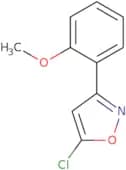
5-Chloro-3-(2-methoxyphenyl)-1,2-oxazole
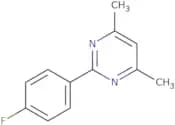
CAS:<p>Versatile small molecule scaffold</p>Formula:C10H8ClNO2Purity:Min. 95%Molecular weight:209.63 g/mol2-(4-Fluorophenyl)-4,6-dimethylpyrimidine
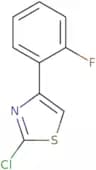
CAS:<p>Versatile small molecule scaffold</p>Formula:C12H11FN2Purity:Min. 95%Molecular weight:202.23 g/mol2-Chloro-4-(2-fluorophenyl)-1,3-thiazole
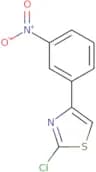
CAS:<p>Versatile small molecule scaffold</p>Formula:C9H5ClFNSPurity:Min. 95%Molecular weight:213.66 g/mol2-Chloro-4-(3-nitrophenyl)thiazole
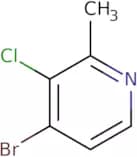
CAS:<p>Versatile small molecule scaffold</p>Formula:C9H5ClN2O2SPurity:Min. 95%Molecular weight:240.67 g/mol4-Bromo-3-chloro-2-methylpyridine
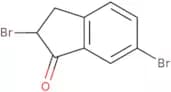
CAS:<p>Versatile small molecule scaffold</p>Formula:C6H5BrClNPurity:Min. 95%Molecular weight:206.47 g/mol2,6-Dibromo-2,3-dihydro-1H-inden-1-one
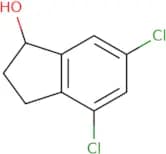
CAS:<p>Versatile small molecule scaffold</p>Formula:C9H6Br2OPurity:Min. 95%Molecular weight:289.95 g/mol4,6-Dichloro-2,3-dihydro-1H-inden-1-ol
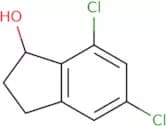
CAS:<p>Versatile small molecule scaffold</p>Formula:C9H8Cl2OPurity:Min. 95%Molecular weight:203.06 g/mol5,7-Dichloro-2,3-dihydro-1H-inden-1-ol
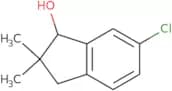
CAS:<p>Versatile small molecule scaffold</p>Formula:C9H8Cl2OPurity:Min. 95%Molecular weight:203.06 g/mol6-Chloro-2,2-dimethyl-2,3-dihydro-1H-inden-1-ol
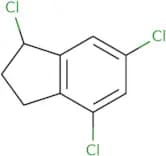
CAS:<p>Versatile small molecule scaffold</p>Formula:C11H13ClOPurity:Min. 95%Molecular weight:196.67 g/mol1,4,6-Trichloro-2,3-dihydro-1H-indene
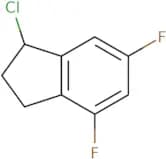
CAS:<p>Versatile small molecule scaffold</p>Formula:C9H7Cl3Purity:Min. 95%Molecular weight:221.5 g/mol1-Chloro-4,6-difluoro-2,3-dihydro-1H-indene
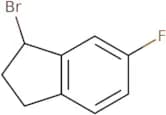
CAS:<p>Versatile small molecule scaffold</p>Formula:C9H7ClF2Purity:Min. 95%Molecular weight:188.6 g/mol1-Bromo-6-fluoro-2,3-dihydro-1H-indene
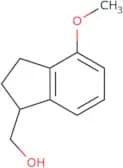
CAS:<p>Versatile small molecule scaffold</p>Formula:C9H8BrFPurity:Min. 95%Molecular weight:215.06 g/mol(4-Methoxy-2,3-dihydro-1H-inden-1-yl)methanol
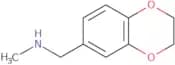
CAS:<p>Versatile small molecule scaffold</p>Formula:C11H14O2Purity:Min. 95%Molecular weight:178.23 g/mol(2,3-Dihydro-1,4-benzodioxin-6-ylmethyl)(methyl)amine
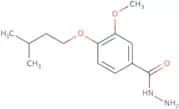
CAS:<p>Versatile small molecule scaffold</p>Formula:C10H13NO2Purity:Min. 95%Molecular weight:179.22 g/mol3-Methoxy-4-(3-methylbutoxy)benzohydrazide
CAS:<p>3-Methoxy-4-(3-methylbutoxy)benzohydrazide is a high purity and cost-effective small molecule with an IC50 of 9.2 μM, which can be used as a research tool for studying the interaction between proteins and peptides. It has been shown to inhibit ion channels in cells, such as the nicotinic acetylcholine receptor (nAChR), and can be used as a potential therapeutic agent for treating conditions that involve excessive neurotransmitter release, such as epilepsy. 3-Methoxy-4-(3-methylbutoxy)benzohydrazide has also been shown to bind to an antibody in cell culture, suggesting that it may be useful for detecting protein expression levels in cells.</p>Formula:C13H20N2O3Purity:Min. 95%Molecular weight:252.31 g/mol(3-Methyl-2,4-dioxo-thiazolidin-5-yl)-acetic acid
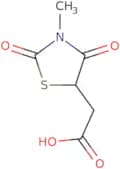
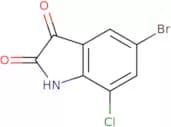
CAS:<p>Versatile small molecule scaffold</p>Formula:C6H7NO4SPurity:Min. 95%Molecular weight:189.19 g/mol5-Bromo-7-chloroindoline-2,3-dione
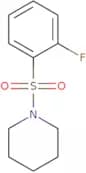
CAS:<p>Versatile small molecule scaffold</p>Formula:C8H3BrClNO2Purity:Min. 95%Molecular weight:260.47 g/mol1-(2-Fluorobenzenesulfonyl)piperidine
CAS:<p>Versatile small molecule scaffold</p>Formula:C11H14FNO2SPurity:Min. 95%Molecular weight:243.3 g/mol4-(([3-(Trifluoromethyl)phenyl]sulfonyl)amino)benzoic acid
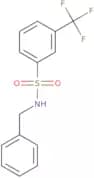
CAS:<p>Versatile small molecule scaffold</p>Formula:C14H10F3NO4SPurity:Min. 95%Molecular weight:345.3 g/molN-Benzyl-3-(trifluoromethyl)benzene-1-sulfonamide
CAS:<p>Versatile small molecule scaffold</p>Formula:C14H12F3NO2SPurity:Min. 95%Molecular weight:315.31 g/mol3-[2-(Trifluoromethyl)benzenesulfonamido]propanoic acid
CAS:<p>Versatile small molecule scaffold</p>Formula:C10H10F3NO4SPurity:Min. 95%Molecular weight:297.25 g/mol5-Fluoro-2-phenoxyaniline
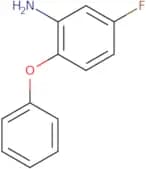
CAS:<p>5-Fluoro-2-phenoxyaniline is a synthetic drug that has been shown to bind to the benzodiazepine receptor in rat brain tissue. This binding causes a decrease in cerebral blood flow, which can lead to seizure activity. 5-Fluoro-2-phenoxyaniline has also been shown to inhibit the production of inflammatory cytokines and other substances that are associated with neuroinflammation. It has not been determined whether this drug binds to any other receptors or what its target organ might be.</p>Formula:C12H10FNOPurity:Min. 95%Molecular weight:203.22 g/mol3-Methyl-1-oxa-3,8-diazaspiro[4,5]decan-2-one hydrochloride
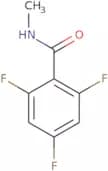
CAS:<p>Versatile small molecule scaffold</p>Formula:C8H15ClN2O2Purity:Min. 95%Molecular weight:206.67 g/mol2,4,6-Trifluoro-N-methylbenzamide
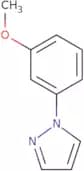
CAS:<p>Versatile small molecule scaffold</p>Formula:C8H6F3NOPurity:Min. 95%Molecular weight:189.13 g/mol1-(3-Methoxyphenyl)-1H-pyrazole
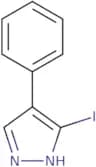
CAS:<p>Versatile small molecule scaffold</p>Formula:C10H10N2OPurity:Min. 95%Molecular weight:174.2 g/mol3-Iodo-4-phenyl-1H-pyrazole
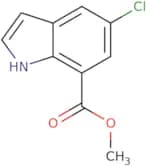
CAS:<p>Versatile small molecule scaffold</p>Formula:C9H7IN2Purity:Min. 95%Molecular weight:270.07 g/molMethyl 5-chloro-1H-indole-7-carboxylate
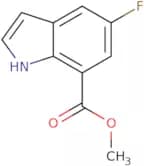
CAS:<p>Versatile small molecule scaffold</p>Formula:C10H8ClNO2Purity:Min. 95%Molecular weight:209.63 g/molMethyl 5-fluoro-1H-indole-7-carboxylate
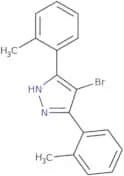
CAS:<p>Versatile small molecule scaffold</p>Formula:C10H8FNO2Purity:Min. 95%Molecular weight:193.17 g/mol4-Bromo-3,5-bis(2-methylphenyl)-1H-pyrazole
CAS:<p>Versatile small molecule scaffold</p>Formula:C17H15BrN2Purity:Min. 95%Molecular weight:327.2 g/molN-[(Z)-2-Nitroethenyl]acetamide
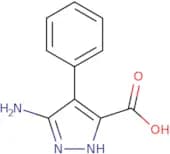
CAS:<p>N-[(Z)-2-Nitroethenyl]acetamide is a synthetic anti-influenza drug. It has shown to be effective against influenza virus, and it is currently being optimized for use as an anti-influenza drug. N-[(Z)-2-Nitroethenyl]acetamide binds to the neuraminidase enzyme of influenza viruses, which prevents them from releasing viral particles. This drug has been shown to be effective in experiments that used nitro compounds in place of the more commonly used tetraethyl amine. The nitro group is thought to increase the rate of reaction because it is more reactive than the tetraethyl amine group. Optimization of parameters such as solvent, temperature, and concentration were required for this synthesis.</p>Formula:C4H6N2O3Purity:Min. 95%Molecular weight:130.1 g/mol5-amino-4-phenyl-1H-pyrazole-3-carboxylic acid
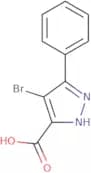
CAS:<p>Versatile small molecule scaffold</p>Formula:C10H9N3O2Purity:Min. 95%Molecular weight:203.2 g/mol4-bromo-3-phenyl-1H-pyrazole-5-carboxylic acid
CAS:<p>Versatile small molecule scaffold</p>Formula:C10H7BrN2O2Purity:Min. 95%Molecular weight:267.1 g/mol6,6-Difluoro-5,6,7,8,9,10-hexahydrobenzo[8]annulen-5-one
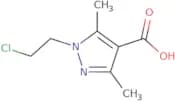
CAS:<p>Versatile small molecule scaffold</p>Formula:C12H12F2OPurity:Min. 95%Molecular weight:210.22 g/mol1-(2-Chloroethyl)-3,5-dimethyl-1H-pyrazole-4-carboxylic acid
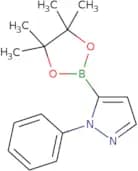
CAS:<p>Versatile small molecule scaffold</p>Formula:C8H11ClN2O2Purity:Min. 95%Molecular weight:202.64 g/mol1-Phenyl-5-(4,4,5,5-tetramethyl-1,3,2-dioxaborolan-2-yl)-1H-pyrazole
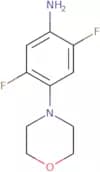
CAS:<p>Versatile small molecule scaffold</p>Formula:C15H19BN2O2Purity:Min. 95%Molecular weight:270.14 g/mol2,5-Difluoro-4-(morpholin-4-yl)aniline
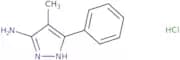
CAS:<p>Versatile small molecule scaffold</p>Formula:C10H12F2N2OPurity:Min. 95%Molecular weight:214.21 g/mol4-Methyl-3-phenyl-1H-pyrazol-5-amine hydrochloride
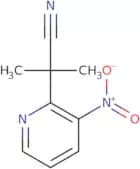
CAS:<p>Versatile small molecule scaffold</p>Formula:C10H12ClN3Purity:Min. 95%Molecular weight:209.67 g/mol2-Methyl-2-(3-nitropyridin-2-yl)propanenitrile
CAS:<p>Versatile small molecule scaffold</p>Formula:C9H9N3O2Purity:Min. 95%Molecular weight:191.19 g/molN-(5-Hydroxy-2,4-dimethylphenyl)acetamide
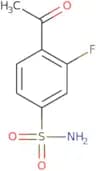
CAS:<p>Versatile small molecule scaffold</p>Formula:C10H13NO2Purity:Min. 95%Molecular weight:179.2 g/mol4-Acetyl-3-fluorobenzene-1-sulfonamide
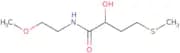
CAS:<p>Versatile small molecule scaffold</p>Formula:C8H8FNO3SPurity:Min. 95%Molecular weight:217.22 g/mol2-Hydroxy-N-(2-methoxyethyl)-4-(methylsulfanyl)butanamide
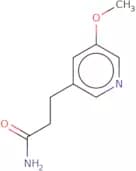
CAS:<p>Versatile small molecule scaffold</p>Formula:C8H17NO3SPurity:Min. 95%Molecular weight:207.3 g/mol3-(5-Methoxypyridin-3-yl)propanamide
CAS:<p>Versatile small molecule scaffold</p>Formula:C9H12N2O2Purity:Min. 95%Molecular weight:180.2 g/molN-(1-Methyl-1H-1,2,3,4-tetrazol-5-yl)formamide
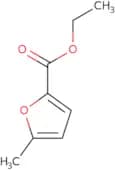
CAS:<p>Versatile small molecule scaffold</p>Formula:C3H5N5OPurity:Min. 95%Molecular weight:127.1 g/molEthyl 5-methylfuran-2-carboxylate
CAS:<p>Ethyl 5-methylfuran-2-carboxylate is a feedstock that is used in the production of additives for lubricants. Ethyl 5-methylfuran-2-carboxylate has been shown to have high thermal stability, excellent lubricity, and good resistance to oxidation. This feedstock has also been found to be compatible with alkoxycarbonyl groups and can be used as an additive for gasoline. The synthesis of this compound involves the alkylation of pyrrole using ethyllithium followed by dehydration, which leads to a high yield of this compound.</p>Formula:C8H10O3Purity:Min. 95%Molecular weight:154.16 g/mol4-Phenyl-tetrahydro-pyran-4-ylamine
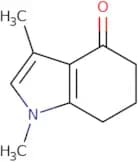
CAS:<p>Versatile small molecule scaffold</p>Formula:C11H15NOPurity:Min. 95%Molecular weight:177.24 g/mol1,3-Dimethyl-4,5,6,7-tetrahydro-1H-indol-4-one
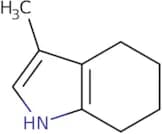
CAS:<p>Versatile small molecule scaffold</p>Formula:C10H13NOPurity:Min. 95%Molecular weight:163.22 g/mol3-Methyl-4,5,6,7-tetrahydro-1H-indole
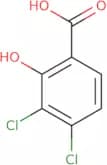
CAS:<p>Versatile small molecule scaffold</p>Formula:C9H13NPurity:Min. 95%Molecular weight:135.2 g/mol3,4-Dichloro-2-hydroxybenzoic acid
CAS:<p>3,4-Dichloro-2-hydroxybenzoic acid is a byproduct of the chlorination of carbon tetrachloride and 2,6-dichlorobenzoic acid. It can be used as an intermediate in the production of polyphosphoric acid. 3,4-Dichloro-2-hydroxybenzoic acid has been shown to have high yields and processability for use in polymer manufacturing. This active substance has also been shown to exhibit antibiotic activity against Staphylococcus aureus, which may be due to its ability to inhibit protein synthesis.</p>Formula:C7H4Cl2O3Purity:Min. 95%Molecular weight:207.01 g/mol1-(1,2,3,4-Tetrahydroisoquinolin-2-yl)ethan-1-one
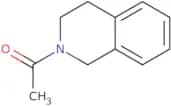
CAS:<p>Versatile small molecule scaffold</p>Formula:C11H13NOPurity:Min. 95%Molecular weight:175.23 g/mol[(4-Amino-3,5-dimethylphenyl)sulfanyl]formonitrile
CAS:<p>Versatile small molecule scaffold</p>Formula:C9H10N2SPurity:Min. 95%Molecular weight:178.26 g/mol

![4-(([3-(Trifluoromethyl)phenyl]sulfonyl)amino)benzoic acid](/_next/image/?url=https%3A%2Fstatic.cymitquimica.com%2Fproducts%2F3D%2Fthumb-webp%2FNZA65761.webp&w=3840&q=75)
![3-[2-(Trifluoromethyl)benzenesulfonamido]propanoic acid](/_next/image/?url=https%3A%2Fstatic.cymitquimica.com%2Fproducts%2F3D%2Fthumb-webp%2FNZA65796.webp&w=3840&q=75)
![3-Methyl-1-oxa-3,8-diazaspiro[4,5]decan-2-one hydrochloride](/_next/image/?url=https%3A%2Fstatic.cymitquimica.com%2Fproducts%2F3D%2Fthumb-webp%2FNZA67534.webp&w=3840&q=75)
![N-[(Z)-2-Nitroethenyl]acetamide](/_next/image/?url=https%3A%2Fstatic.cymitquimica.com%2Fproducts%2F3D%2Fthumb-webp%2FNZB30524.webp&w=3840&q=75)
![6,6-Difluoro-5,6,7,8,9,10-hexahydrobenzo[8]annulen-5-one](/_next/image/?url=https%3A%2Fstatic.cymitquimica.com%2Fproducts%2F3D%2Fthumb-webp%2FNZB62755.webp&w=3840&q=75)
![[(4-Amino-3,5-dimethylphenyl)sulfanyl]formonitrile](/_next/image/?url=https%3A%2Fstatic.cymitquimica.com%2Fproducts%2F3D%2Fthumb-webp%2FPAA03102.webp&w=3840&q=75)