


Building Blocks
Subcategories of "Building Blocks"
- Boronic Acids & Boronic Acid Derivatives(5,774 products)
- Chiral Building Blocks(1,237 products)
- Hydrocarbon Building Blocks(6,098 products)
- Organic Building Blocks(60,980 products)
Found 205158 products of "Building Blocks"
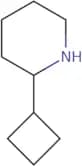
2-Cyclobutylpiperidine
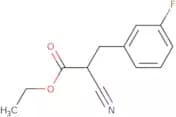
CAS:Versatile small molecule scaffoldFormula:C9H17NPurity:Min. 95%Molecular weight:139.24 g/molEthyl 2-cyano-3-(3-fluorophenyl)propanoate
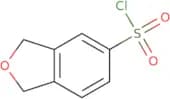
CAS:Versatile small molecule scaffoldFormula:C12H12FNO2Purity:Min. 95%Molecular weight:221.23 g/mol1,3-Dihydro-2-benzofuran-5-sulfonyl chloride
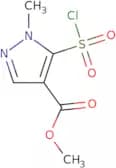
CAS:Versatile small molecule scaffoldFormula:C8H7ClO3SPurity:Min. 95%Molecular weight:218.66 g/molMethyl 5-(chlorosulfonyl)-1-methyl-1H-pyrazole-4-carboxylate
CAS:Versatile small molecule scaffoldFormula:C6H7ClN2O4SPurity:Min. 95%Molecular weight:238.65 g/mol4-Bromothieno[2,3-c]pyridine-2-carboxylic acid
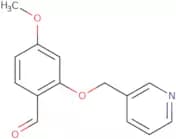
CAS:Versatile small molecule scaffoldFormula:C8H4BrNO2SPurity:Min. 95%Molecular weight:258.1 g/mol4-Methoxy-2-(pyridin-3-ylmethoxy)benzaldehyde
CAS:Versatile small molecule scaffold
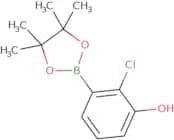
Formula:C14H13NO3Purity:Min. 95%Molecular weight:243.26 g/molPhenol, 2-chloro-3-(4,4,5,5-tetramethyl-1,3,2-dioxaborolan-2-yl)-
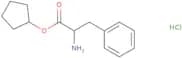
CAS:Versatile small molecule scaffoldFormula:C12H16BClO3Purity:Min. 95%Molecular weight:254.52 g/molCyclopentyl (2S)-2-amino-3-phenylpropanoate hydrochloride
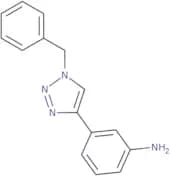
CAS:Versatile small molecule scaffoldFormula:C14H20ClNO2Purity:Min. 95%Molecular weight:269.77 g/mol3-(1-Benzyl-1H-1,2,3-triazol-4-yl)aniline
CAS:Versatile small molecule scaffoldFormula:C15H14N4Purity:Min. 95%Molecular weight:250.3 g/mol[(5Z)-5-Benzylidene-4-oxo-2-thioxo-1,3-thiazolidin-3-yl]acetic acid
CAS:Versatile small molecule scaffold
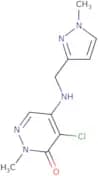
Formula:C12H9NO3S2Purity:Min. 95%Molecular weight:279.3 g/mol4-Chloro-2-methyl-5-(((1-methyl-1H-pyrazol-3-yl)methyl)amino)pyridazin-3(2H)-one
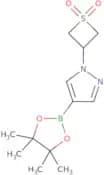
CAS:Versatile small molecule scaffoldFormula:C10H12ClN5OPurity:Min. 95%Molecular weight:253.69 g/mol1-(1,1-Dioxido-3-thietanyl)-4-(4,4,5,5-tetramethyl-1,3,2-dioxaborolan-2-yl)-1H-pyrazole
CAS:Versatile small molecule scaffoldFormula:C12H19BN2O4SPurity:Min. 95%Molecular weight:298.17 g/mol7-Bromo-1H,2H,3H-pyrazolo[1,5-a]imidazole hydrobromide
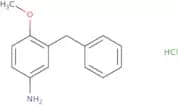
CAS:Versatile small molecule scaffoldFormula:C5H7Br2N3Purity:Min. 95%Molecular weight:268.94 g/mol3-Benzyl-4-methoxyaniline hydrochloride
CAS:Versatile small molecule scaffold
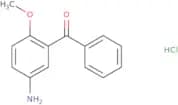
Formula:C14H16ClNOPurity:Min. 95%Molecular weight:249.73 g/mol3-Benzoyl-4-methoxyaniline hydrochloride
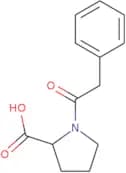
CAS:Versatile small molecule scaffoldFormula:C14H14ClNO2Purity:Min. 95%Molecular weight:263.72 g/mol1-(2-Phenylacetyl)pyrrolidine-2-carboxylic acid
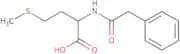
CAS:1-(2-Phenylacetyl)pyrrolidine-2-carboxylic acid is a synthetic acylase inhibitor. It is prepared from valine, chloroacetic acid, and phenylacetyl chloride by condensation of the carboxylic acid chloride with the amine in the presence of a base, followed by hydrolysis of the ester. 1-(2-Phenylacetyl)pyrrolidine-2-carboxylic acid can be used to prepare other compounds that have an acylase activity. This compound has been shown to inhibit acylases that are involved in reactions involving organic solvents or amino acids such as valine and methionine. The reaction rate for this compound is determined by its kinetic, which is stereospecific.Formula:C13H15NO3Purity:Min. 95%Molecular weight:233.26 g/mol4-(Methylsulfanyl)-2-(2-phenylacetamido)butanoic acid
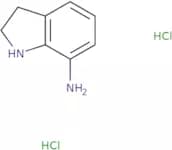
CAS:Versatile small molecule scaffoldFormula:C13H17NO3SPurity:Min. 95%Molecular weight:267.35 g/molIndolin-7-amine dihydrochloride
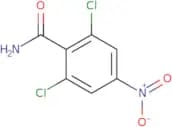
CAS:Versatile small molecule scaffoldFormula:C8H10N2·2HClPurity:Min. 95%Molecular weight:207.1 g/mol2,6-Dichloro-4-nitrobenzamide
CAS:2,6-Dichloro-4-nitrobenzamide is a chemical compound that is used in the manufacture of other chemicals. It can be synthesized by the diazotization of an amino acid or nitrite with sodium nitrite and hydrolysing the resulting cyanohydrin with an inorganic acid or alkali metal. This compound is typically used as a feed additive to control coccidiosis in poultry, although it also has anticoccidial properties against some bacteria. 2,6-Dichloro-4-nitrobenzamide is used for the treatment of humans as a salt orally or intravenously, and as an anticoccidial agent that is effective against Eimeria tenella and Eimeria acervulina. It is also used to treat bacterial infections such as typhoid fever, cholera, dysentery and salmonellosis.
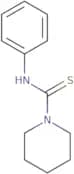
Formula:C7H4Cl2N2O3Purity:Min. 95%Molecular weight:235.02 g/molN-Phenylpiperidine-1-carbothioamide
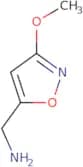
CAS:N-Phenylpiperidine-1-carbothioamide is a piperidine derivative. It has a crystal structure that is composed of phenyl and hydrogen bonds.Formula:C12H16N2SPurity:Min. 95%Molecular weight:220.34 g/mol(3-Methoxy-1,2-oxazol-5-yl)methanamine
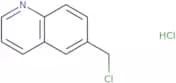
CAS:Versatile small molecule scaffoldFormula:C5H8N2O2Purity:Min. 95%Molecular weight:128.13 g/mol6-(Chloromethyl)quinoline hydrochloride
CAS:Versatile small molecule scaffoldFormula:C10H9Cl2NPurity:Min. 95%Molecular weight:214.09 g/mol4-Hydroxy-3,4-dihydro-2H-1λ⁶-benzothiopyran-1,1-dione
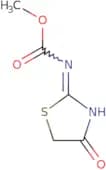
CAS:Versatile small molecule scaffoldFormula:C9H10O3SPurity:Min. 95%Molecular weight:198.24 g/molMethyl N-(4-oxo-4,5-dihydro-1,3-thiazol-2-yl)carbamate
CAS:Versatile small molecule scaffoldFormula:C5H6N2O3SPurity:Min. 95%Molecular weight:174.2 g/mol(3R)-3-Hydroxy-3-phenylpropanoic acid
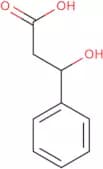
CAS:(3R)-3-Hydroxy-3-phenylpropanoic acid is a fatty acid that is involved in the biosynthesis of erythroxylum. It has an innovative function for valorisation because it can be used to produce hydroxy fatty acids through a reaction with oleaginous materials. The synthesis of this compound is driven by the catalytic function of enzymes and the reaction system, which are made up of biocatalysts and substrates. The reaction products are compounds with a hydroxy group and an enantiomer. This process is catalyzed by esterases. The reactions take place at temperatures between 30°C and 50°C, with a pH range between 7 and 11.Formula:C9H10O3Purity:Min. 95%Molecular weight:166.17 g/mol2-Isocyano-1,3-dimethyl-benzene
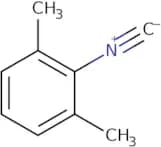
CAS:2-Isocyano-1,3-dimethyl-benzene is an organic compound that is used to synthesize other compounds. It has a redox potential of -0.6 volts and a crystallography of orthorhombic with a space group of Pbca. It reacts with nitrogen atoms in the reaction solution to form stable complexes and can react with copper ions to form a copper complex. 2-Isocyano-1,3-dimethyl-benzene has been shown to undergo transfer reactions with molybdenum in the presence of xylene as solvent and ammonia gas as a catalyst. This chemical reaction mechanism leads to the formation of an isocyanide intermediate, which then reacts with water molecules to create an aminium ion and hydrogen cyanide. Titration calorimetry experiments have shown that 2-isocyano-1,3-dimethylbenzene has an enthalpy change of -2Formula:C9H9NPurity:Min. 95%Molecular weight:131.17 g/mol2-(1H-Indol-3-yl)-2-methylpropanoic acid
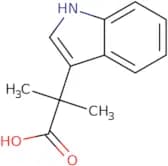
CAS:Versatile small molecule scaffoldFormula:C12H13NO2Purity:Min. 95%Molecular weight:203.24 g/mol1-Chloro-N-(4-chlorophenyl)methanecarbonimidoyl chloride
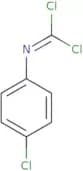
CAS:Versatile small molecule scaffoldFormula:C7H4Cl3NPurity:Min. 95%Molecular weight:208.5 g/mol4-{2-[1-(4-Bromophenyl)ethylidene]hydrazin-1-yl}benzoic acid
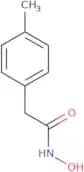
CAS:Versatile small molecule scaffoldFormula:C15H13BrN2O2Purity:Min. 95%Molecular weight:333.18 g/molN-Hydroxy-2-(4-methylphenyl)acetamide
CAS:Versatile small molecule scaffold
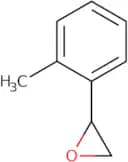
Formula:C9H11NO2Purity:Min. 95%Molecular weight:165.19 g/mol2-(2-Methylphenyl)oxirane
CAS:Versatile small molecule scaffold
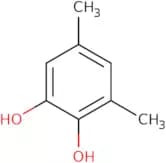
Formula:C9H10OPurity:Min. 95%Molecular weight:134.17 g/mol3,5-Dimethylbenzene-1,2-diol
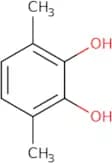
CAS:3,5-Dimethylbenzene-1,2-diol is a chemical compound that belongs to the class of organic compounds. This molecule can be synthesised from 3,5-dimethylbenzoic acid. The oxidation of this molecule was achieved by using an intramolecular reaction with potassium permanganate. The configuration of the molecules are in a cis form. This molecule is used as an intermediate for various other organic compounds such as carbohydrates and antibiotics. 3,5-Dimethylbenzene-1,2-diol can be isolated from natural sources such as plants or fungi. The chemical synthesis of this molecule requires a Diels–Alder reaction between two cyclohexadiene rings and three methyl groups.Formula:C8H10O2Purity:Min. 95%Molecular weight:138.16 g/mol3,6-Dimethylbenzene-1,2-diol
CAS:3,6-Dimethylbenzene-1,2-diol is a bactericidal agent that belongs to the class of amides. It inhibits bacterial growth by binding to water molecules and thus preventing their availability for use in the construction of cell walls. 3,6-Dimethylbenzene-1,2-diol has been shown to be efficient when used as a catalyst for the reaction between 2-aminoterephthalic acid and benzodioxan under mild conditions. This process results in a fluorescent product with an intramolecular hydrogen bond. The catalytic mechanism is thought to involve an active site containing a hydroxyl group that attacks the substrate at the C3 position, followed by a proton transfer from water molecule to form a hydroxyl oxygen intermediate.Formula:C8H10O2Purity:Min. 95%Molecular weight:138.17 g/mol2-Methoxy-4-propylphenol
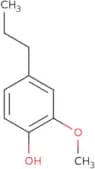
CAS:2-Methoxy-4-propylphenol (2MPP) is a cross-linking agent that reacts with eugenol to form reaction intermediates. It has been shown to be effective in the treatment of skin conditions such as acne, eczema and dermatitis. This product is a reaction product of 2MPP and eugenol, which forms the intermediate 2-methoxyphenylpropene, which then reacts with another molecule of eugenol to form a second intermediate. The final reaction product is 3-(3,4-dimethoxyphenyl)propene. 2MPP has been shown to be an active ingredient in the treatment of acne and other skin conditions due to its ability to penetrate the skin, crosslink collagen and elastin fibers, and promote tissue repair.Formula:C10H14O2Purity:Min. 95%Molecular weight:166.22 g/molCyclohexyl(4-methylphenyl)methanone
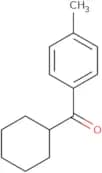
CAS:Cyclohexyl(4-methylphenyl)methanone (CPM, CHMPM) is an organic compound that has a nitrogen atom and an alkoxy group. It is a low-toxicity, volatile, colorless liquid with a strong odor. CPM is used as a reagent in the synthesis of other compounds. The most common use of CPM is in Grignard reactions to form alcohols and ketones. It can also be used to prepare ethers and aralkyl compounds. CPM has been shown to have toxic effects on animals and should not be handled without gloves or protective clothing.Formula:C14H18OPurity:Min. 95%Molecular weight:202.29 g/mol4,4,4-Trifluorobutanimidamide hydrochloride
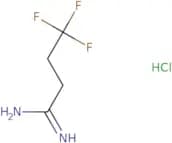
CAS:Versatile small molecule scaffoldFormula:C4H8ClF3N2Purity:Min. 95%Molecular weight:176.57 g/mol1-(4-Fluorophenyl)-2-(methylamino)ethan-1-ol hydrochloride
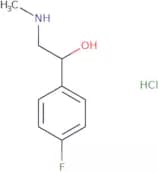
CAS:Versatile small molecule scaffoldFormula:C9H13ClFNOPurity:Min. 95%Molecular weight:205.66 g/mol3,3,3-Trifluoro-2-methylpropan-1-amine hydrochloride
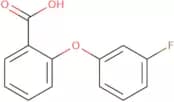
CAS:Versatile small molecule scaffoldFormula:C4H9ClF3NPurity:Min. 95%Molecular weight:163.57 g/mol2-(3-Fluorophenoxy)benzoic acid
CAS:Versatile small molecule scaffold
Formula:C13H9FO3Purity:Min. 95%Molecular weight:232.21 g/molQuinoclamine
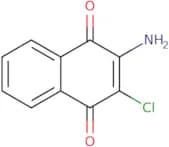
CAS:Quinoclamine is a redox-active film-forming polymer that has been shown to be effective against bacterial strains such as S. aureus, E. coli and B. subtilis. Quinoclamine inhibits the growth of bacteria by targeting their respiratory electron transport chain and reducing its activity. This leads to an accumulation of reactive oxygen species (ROS) in the cells which can cause oxidative stress, leading to cell death. Quinoclamine has also been shown to have antibacterial efficacy against Hl-60 cells and prevents the formation of carbonyl groups in mitochondria, which are toxic to cells. Quinoclamine is metabolized by cytochrome P450 enzymes into quinolinic acid, which is then converted into nicotinamide adenine dinucleotide phosphate (NADP+).Formula:C10H6ClNO2Purity:Min. 95%Molecular weight:207.61 g/mol3-Bromopropyl isothiocyanate
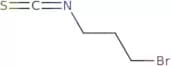
CAS:3-Bromopropyl isothiocyanate (3BPITC) is a bifunctional molecule that has been used for radiolabeling and bifunctional labeling strategies. 3BPITC can be used to label amino acids, peptides, proteins, carbohydrates, and lipids with the same specificity as biotin. 3BPITC has been shown to be an effective radiolabeling agent for imaging of tumors in mice. The stereoisomers of 3BPITC can be separated by column chromatography or thin-layer chromatography. This compound can also be detected at the low picomolar level using nuclear magnetic resonance spectroscopy (NMR).Formula:C4H6BrNSPurity:Min. 95%Molecular weight:180.07 g/mol5,6-Dihydro-4H-1,3-thiazin-2-amine hydrobromide
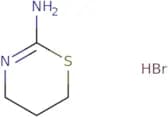
CAS:5,6-Dihydro-4H-1,3-thiazin-2-amine hydrobromide is a chemical that is used in the diagnosis of diseases of the cardiovascular system. It has been shown to cause damage to the intestinal mucosa and also has effects on parameters such as blood pressure and ionizing radiation. 5,6-Dihydro-4H-1,3-thiazin-2-amine hydrobromide damages the intestinal tissue by reacting with reactive oxygen species (ROS) or reactive nitrogen species (RNS), which are generated from ionizing radiation. These ROS/RNS are generated in response to endotoxin exposure and can lead to cell death.Formula:C4H9BrN2SPurity:Min. 95%Molecular weight:197.1 g/molSodium (quinolin-8-yl)sulfanide
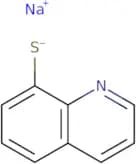
CAS:Sodium (quinolin-8-yl)sulfanide is a sulfonamide compound that is structurally related to the quinoline derivatives. It has been shown to have high cytotoxicity against hepatoma and mouse melanoma cells, as well as good activity against human colon cancer. The preparation of this compound is difficult because it undergoes rapid dehydration to form anhydrous sodium sulfoxide. Sodium (quinolin-8-yl)sulfanide forms two polymorphs, one of which is hydrated and one of which is anhydrous. The hydrated polymorph has a lower solubility in water, but has higher solubilities in organic solvents and methanol. The anhydrous polymorph has higher solubilities in water and methanol, but lower solubilities in organic solvents like chloroform or dichloromethane. !--Formula:C9H6NNaSPurity:Min. 95%Molecular weight:183.21 g/molMethyl 5-chloro-4-oxohexanoate
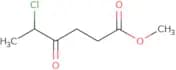
CAS:Versatile small molecule scaffoldFormula:C7H11ClO3Purity:Min. 95%Molecular weight:178.61 g/molMethyl 2-(3-oxocyclohexyl)acetate
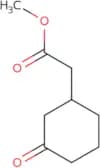
CAS:Versatile small molecule scaffoldFormula:C9H14O3Purity:Min. 95%Molecular weight:170.21 g/mol[Hydroxy(phenyl)phosphonomethyl]phosphonic acid
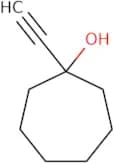
CAS:Versatile small molecule scaffoldFormula:C7H10O7P2Purity:Min. 95%Molecular weight:268.1 g/mol1-Ethynylcycloheptan-1-ol
CAS:1-Ethynylcycloheptan-1-ol is a synthetic drug that inhibits protease activity. It has been shown to have an inhibitory effect on the adenosine receptor and protonation of the skeleton. The 1-ethynylcycloheptan-1-ol molecule can be synthesised in two steps from phenylacetone. It has been shown to have hypoglycemic activity, which may be due to its ability to inhibit pancreatic alpha amylase. This drug also has a nucleophilic character, which is essential for its mechanism of action as it binds reversibly to the active site of the enzyme.
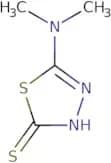
Formula:C9H14OPurity:Min. 95%Molecular weight:138.21 g/mol5-(Dimethylamino)-1,3,4-thiadiazole-2-thiol
CAS:Versatile small molecule scaffoldFormula:C4H7N3S2Purity:Min. 95%Molecular weight:161.3 g/mol3,5-Diethyl-1H-pyrazole
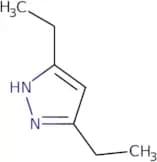
CAS:Versatile small molecule scaffold
Formula:C7H12N2Purity:Min. 95%Molecular weight:124.18 g/mol2-Oxo-1-oxaspiro[4.5]decane-4-carboxylic acid
CAS:2-Oxo-1-oxaspiro[4.5]decane-4-carboxylic acid is a nitrile that can be synthesized by decarboxylation of 4-chloro-2,6-dimethylaniline with nitrous acid and sulfuric acid. The intramolecular cyclization of methyl 2-(nitrobenzyl)malonate to the thiazole ring is catalyzed by a mixture of acetic anhydride and pyridine. The reaction is carried out at refluxing temperatures in a homogeneous solvent such as toluene or chloroform. This product can also be obtained from the reaction of 2,6-dimethylaniline with hydroxylamine hydrochloride in the presence of sodium hydroxide.Formula:C10H14O4Purity:Min. 95%Molecular weight:198.22 g/mol

![4-Bromothieno[2,3-c]pyridine-2-carboxylic acid](/_next/image/?url=https%3A%2Fstatic.cymitquimica.com%2Fproducts%2F3D%2Fthumb-webp%2FBWB51225.webp&w=3840&q=75)
![[(5Z)-5-Benzylidene-4-oxo-2-thioxo-1,3-thiazolidin-3-yl]acetic acid](/_next/image/?url=https%3A%2Fstatic.cymitquimica.com%2Fproducts%2F3D%2Fthumb-webp%2FBWB94457.webp&w=3840&q=75)
![7-Bromo-1H,2H,3H-pyrazolo[1,5-a]imidazole hydrobromide](/_next/image/?url=https%3A%2Fstatic.cymitquimica.com%2Fproducts%2F3D%2Fthumb-webp%2FBWC06628.webp&w=3840&q=75)

![4-{2-[1-(4-Bromophenyl)ethylidene]hydrazin-1-yl}benzoic acid](/_next/image/?url=https%3A%2Fstatic.cymitquimica.com%2Fproducts%2F3D%2Fthumb-webp%2FCAA77237.webp&w=3840&q=75)
![[Hydroxy(phenyl)phosphonomethyl]phosphonic acid](/_next/image/?url=https%3A%2Fstatic.cymitquimica.com%2Fproducts%2F3D%2Fthumb-webp%2FCAA80926.webp&w=3840&q=75)
![2-Oxo-1-oxaspiro[4.5]decane-4-carboxylic acid](/_next/image/?url=https%3A%2Fstatic.cymitquimica.com%2Fproducts%2F3D%2Fthumb-webp%2FCAA81956.webp&w=3840&q=75)