Building Blocks
This section contains fundamental products for the synthesis of organic and biological compounds. Building blocks are the essential starting materials used to construct complex molecules through various chemical reactions. They play a critical role in drug discovery, material science, and chemical research. At CymitQuimica, we offer a diverse range of high-quality building blocks to support your innovative research and industrial projects, ensuring you have the essential components for successful synthesis.
Subcategories of "Building Blocks"
- Boronic Acids & Boronic Acid Derivatives(5,778 products)
- Chiral Building Blocks(1,242 products)
- Hydrocarbon Building Blocks(6,098 products)
- Organic Building Blocks(61,059 products)
Found 199580 products of "Building Blocks"
Sort by
Purity (%)
0
100
|
0
|
50
|
90
|
95
|
100
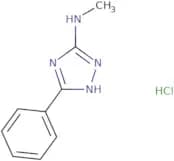
N-Methyl-5-phenyl-4H-1,2,4-triazol-3-amine hydrochloride
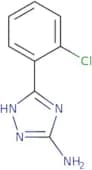
CAS:Versatile small molecule scaffoldFormula:C9H11ClN4Purity:Min. 95%Molecular weight:210.66 g/mol5-(2-chlorophenyl)-4H-1,2,4-triazol-3-amine
CAS:Versatile small molecule scaffoldFormula:C8H7ClN4Purity:Min. 95%Molecular weight:194.62 g/mol4-[(2-Ethoxybenzoyl)amino]butanoic acid
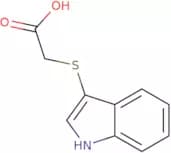
CAS:4-[(2-Ethoxybenzoyl)amino]butanoic acid is a natural product that belongs to the class of phytochemicals. It is an analytical standard used for HPLC and has been isolated from plants such as the leaves of "Rhododendron ponticum" and the bark of "Quercus ilex". 4-[(2-Ethoxybenzoyl)amino]butanoic acid has been shown to have anti-inflammatory properties, which may be due to its ability to inhibit prostaglandin synthesis.Formula:C13H17NO4Purity:Min. 95%Molecular weight:251.28 g/mol(1H-Indol-3-ylsulfanyl)-acetic acid
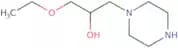
CAS:<p>(1H-Indol-3-ylsulfanyl)-acetic acid is a versatile compound with various applications. It serves as an active agent in the synthesis of several important compounds, including cellulose derivatives, lapatinib, pyrazoles, and sulfonyl compounds. This compound is widely used in industrial settings as a synthetic intermediate for the production of various chemicals.</p>Formula:C10H9NO2SPurity:Min. 95%Molecular weight:207.25 g/mol1-Ethoxy-3-(piperazin-1-yl)propan-2-ol
CAS:Versatile small molecule scaffoldFormula:C9H20N2O2Purity:Min. 95%Molecular weight:188.27 g/mol3-[(3-Chlorophenyl)amino]propanenitrile
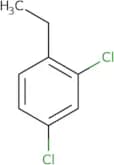
CAS:<p>Versatile small molecule scaffold</p>Formula:C9H9ClN2Purity:Min. 95%Molecular weight:180.63 g/mol2,4-Dichloro-1-ethylbenzene
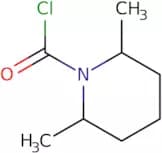
CAS:<p>2,4-Dichloro-1-ethylbenzene is an antineoplastic drug that belongs to the class of medications with long-term effects. It is used in the treatment of cancers of the skeleton and protonation. 2,4-Dichloro-1-ethylbenzene has been shown to cause neutropenia in infants and children. This drug also has a stabilizing effect on flecainide, which is a medication used for the treatment of cardiac arrhythmias. The orientations are determined by the dihedral angle between two planes of symmetry that are perpendicular to each other. 2,4-Dichloro-1-ethylbenzene has two isomers: 1,2 and 1,3.</p>Formula:C8H8Cl2Purity:Min. 95%Molecular weight:175.05 g/mol2,6-Dimethylpiperidine-1-carbonyl chloride
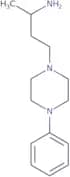
CAS:<p>Versatile small molecule scaffold</p>Formula:C8H14ClNOPurity:Min. 95%Molecular weight:175.65 g/mol4-(4-Phenylpiperazin-1-yl)butan-2-amine
CAS:<p>Versatile small molecule scaffold</p>Formula:C14H23N3Purity:Min. 95%Molecular weight:233.35 g/mol2-[(4-Chlorophenyl)sulfanyl]-5-methylbenzoic acid
CAS:Versatile small molecule scaffoldFormula:C14H11ClO2SPurity:Min. 95%Molecular weight:278.8 g/mol[(3-Chlorophenyl)amino]carbonitrile
CAS:<p>3-Chlorophenylacetonitrile is a centrosymmetric molecule with a density of 1.5 g/cm3. It has a monoanion form and when dissolved in water, its optical rotation is negative. The molecule can be synthesized from cyanamide and 3-chlorobenzenesulfonyl chloride. 3-Chlorophenylacetonitrile has been studied using x-ray crystallographic techniques and was found to have two hydrogen atoms on nitrogen. The molecule is a ligand for copper(II) ion complexes and is used for the preparation of other compounds in shift reaction techniques. It also undergoes irreversible oxidation when heated, which leads to a shift in the absorption spectrum of the compound.</p>Formula:C7H5ClN2Purity:Min. 95%Molecular weight:152.58 g/molTrans-2,6-dimethyloxan-4-one
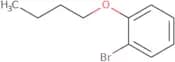
CAS:<p>Versatile small molecule scaffold</p>Formula:C7H12O2Purity:Min. 95%Molecular weight:128.17 g/mol1-Bromo-2-butoxybenzene
CAS:<p>1-Bromo-2-butoxybenzene is a chemical compound that is used in the manufacture of zinc oxide. It is also used as an electrolyte in dye-sensitized solar cells. In these cells, 1-bromo-2-butoxybenzene acts as an electron donor, which provides electrons to the redox dye on the surface of the semiconductor. This process leads to recombination, where electrons and holes recombine to produce electricity. The introduction of alkoxy groups into 1-bromo-2-butoxybenzene molecules allows for increased stability and efficiency in dye-sensitized solar cells.</p>Formula:C10H13BrOPurity:Min. 95%Molecular weight:229.11 g/mol4,5-Dibromothiophene-2-carbonitrile
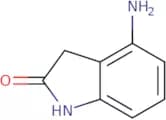
CAS:<p>Versatile small molecule scaffold</p>Formula:C5HBr2NSPurity:Min. 95%Molecular weight:266.94 g/mol4-Amino-1,3-dihydro-indol-2-one
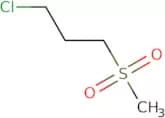
CAS:<p>Versatile small molecule scaffold</p>Formula:C8H8N2OPurity:Min. 95%Molecular weight:148.16 g/mol1-Chloro-3-(methylsulfonyl)propane
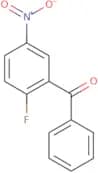
CAS:<p>Versatile small molecule scaffold</p>Formula:C4H9ClO2SPurity:Min. 95%Molecular weight:156.63 g/mol(2-Fluoro-5-nitrophenyl)(phenyl)methanone
CAS:Versatile small molecule scaffoldFormula:C13H8FNO3Purity:Min. 95%Molecular weight:245.21 g/mol4-[(1H-Imidazol-2-yl)methyl]morpholine
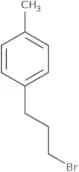
CAS:<p>Versatile small molecule scaffold</p>Formula:C8H13N3OPurity:Min. 95%Molecular weight:167.21 g/mol1-(3-Bromopropyl)-4-methylbenzene
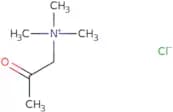
CAS:<p>Versatile small molecule scaffold</p>Formula:C10H13BrPurity:Min. 95%Molecular weight:213.11 g/molTrimethyl(2-oxopropyl)azanium chloride
CAS:<p>Versatile small molecule scaffold</p>Formula:C6H14ClNOPurity:Min. 95%Molecular weight:151.63 g/mol2-Methoxy-5-[(methylamino)methyl]phenol
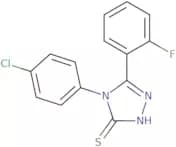
CAS:<p>Versatile small molecule scaffold</p>Formula:C9H13NO2Purity:Min. 95%Molecular weight:167.21 g/mol4-(4-Chlorophenyl)-5-(2-fluorophenyl)-4H-1,2,4-triazole-3-thiol
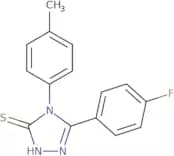
CAS:Versatile small molecule scaffoldFormula:C14H9ClFN3SPurity:Min. 95%Molecular weight:305.8 g/mol5-(4-Fluorophenyl)-4-(4-methylphenyl)-4H-1,2,4-triazole-3-thiol
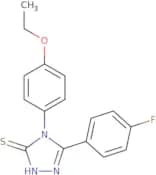
CAS:Versatile small molecule scaffoldFormula:C15H12FN3SPurity:Min. 95%Molecular weight:285.3 g/mol4-(4-Ethoxyphenyl)-5-(4-fluorophenyl)-4H-1,2,4-triazole-3-thiol
CAS:Versatile small molecule scaffoldFormula:C16H14FN3OSPurity:Min. 95%Molecular weight:315.4 g/mol1-Bromo-2-(2-ethoxyethoxy)ethane
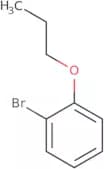
CAS:1-Bromo-2-(2-ethoxyethoxy)ethane is a triazolium ionic liquid that is used as an organic solvent. It has been shown to be a nucleophilic reagent and to react with carbonyl compounds such as benzyl. This compound can also be used as a transition-metal catalyst for the synthesis of organic compounds and yields high densities in solvents. 1-Bromo-2-(2-ethoxyethoxy)ethane can also be used to synthesize functionalized halides, such as fluoride or halides, by reacting with chlorine or other halogens.Formula:C6H13BrO2Purity:Min. 95%Molecular weight:197.07 g/mol1-bromo-2-propoxybenzene
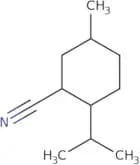
CAS:<p>Versatile small molecule scaffold</p>Formula:C9H11OBrPurity:Min. 95%Molecular weight:215.08 g/mol2-Isopropyl-5-methylcyclohexanecarbonitrile
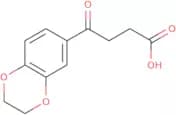
CAS:<p>Versatile small molecule scaffold</p>Formula:C11H19NPurity:Min. 95%Molecular weight:165.27 g/mol4-(2,3-Dihydro-1,4-benzodioxin-6-yl)-4-oxobutanoic acid
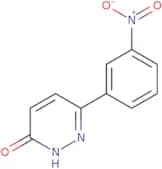
CAS:<p>Versatile small molecule scaffold</p>Formula:C12H12O5Purity:Min. 95%Molecular weight:236.22 g/mol6-(3-Nitrophenyl)-2,3-dihydropyridazin-3-one
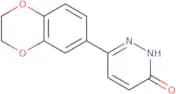
CAS:<p>Versatile small molecule scaffold</p>Formula:C10H7N3O3Purity:Min. 95%Molecular weight:217.18 g/mol6-(2,3-Dihydro-1,4-benzodioxin-6-yl)pyridazin-3-ol
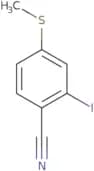
CAS:<p>Versatile small molecule scaffold</p>Formula:C12H10N2O3Purity:Min. 95%Molecular weight:230.22 g/mol2-Iodo-4-(methylsulfanyl)benzonitrile
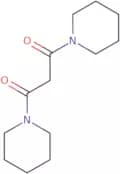
CAS:<p>Versatile small molecule scaffold</p>Formula:C8H6INSPurity:Min. 95%Molecular weight:275.11 g/mol1,3-Bis(piperidin-1-yl)propane-1,3-dione
CAS:Versatile small molecule scaffoldFormula:C13H22N2O2Purity:Min. 95%Molecular weight:238.33 g/mol4,5,6-Trimethylpyrimidin-2-amine
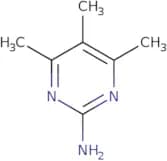
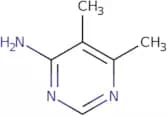
CAS:<p>4,5,6-Trimethylpyrimidin-2-amine is a human immunodeficiency virus (HIV) type 1 inhibitor that is currently in the early stages of development. It has shown antiviral activity against HIV type 1 strains and cytotoxicity against HIV-infected cells. In vitro studies have shown that 4,5,6-trimethylpyrimidin-2-amine inhibits the HIV transcriptional elongation factor TFIIS by binding to the enzyme. This inhibition leads to a decrease in viral RNA synthesis and consequently a decrease in virus production.</p>Formula:C7H11N3Purity:Min. 95%Molecular weight:137.18 g/mol5,6-dimethylpyrimidin-4-amine
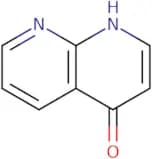
CAS:<p>Versatile small molecule scaffold</p>Formula:C6H9N3Purity:Min. 95%Molecular weight:123.15 g/mol1,8-Naphthyridin-4-ol
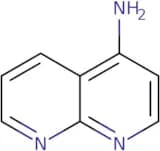
CAS:<p>1,8-Naphthyridin-4-ol is a synthetic compound with anti-inflammatory and pain relieving properties. It is used as an intermediate in the preparation of 1,8 naphthyridine and other compounds. This drug has been shown to have antiviral activity against herpes simplex virus type 2 in cell cultures. It also has been shown to be effective for the treatment of colitis and respiratory diseases, such as asthma. 1,8-Naphthyridin-4-ol inhibits the production of inflammatory cytokines by blocking cyclooxygenase (COX) enzymes. In addition, this compound may have antidepressant effects due to its ability to inhibit monoamine oxidase (MAO).</p>Formula:C8H6N2OPurity:Min. 95%Molecular weight:146.15 g/mol1,8-Naphthyridin-4-amine
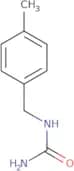
CAS:<p>1,8-Naphthyridin-4-amine is a genotoxic compound that has been detected in human glioblastoma cells. It can be used to investigate the molecular mechanism of cancer and the carcinogenesis process. 1,8-Naphthyridin-4-amine binds to DNA polymerase and inhibits its activity, which prevents the replication of DNA. This drug also induces p53 activation and increases chloride levels in cancer cells. 1,8-Naphthyridin-4-amine has also been shown to cause DNA repair by base excision.</p>Formula:C8H7N3Purity:Min. 95%Molecular weight:145.16 g/molN-(4-Methylbenzyl)urea
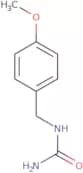
CAS:<p>Versatile small molecule scaffold</p>Formula:C9H12N2OPurity:Min. 95%Molecular weight:164.2 g/mol1-(4-Methoxybenzyl)urea
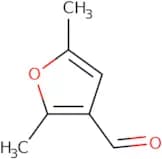
CAS:1-(4-Methoxybenzyl)urea is a nitrosourea that inhibits the production of nitric oxide. It has been shown to inhibit the formation of peroxynitrite and nitrous oxide, which are products of the reaction between superoxide and nitric oxide. 1-(4-Methoxybenzyl)urea is also capable of inhibiting aerobic respiration in bacteria, by binding to anions such as bicarbonate. This drug has been shown to inhibit the oxidation of formaldehyde by oxidoreductases and form compounds with other aromatic amines.Formula:C9H12N2O2Purity:Min. 95%Molecular weight:180.2 g/mol2,5-Dimethylfuran-3-carbaldehyde
CAS:<p>Versatile small molecule scaffold</p>Formula:C7H8O2Purity:Min. 95%Molecular weight:124.14 g/mol4-[(4-Bromophenyl)methoxy]phenol
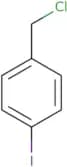
CAS:<p>Versatile small molecule scaffold</p>Formula:C13H11BrO2Purity:Min. 95%Molecular weight:279.13 g/molp-Iodobenzylchloride
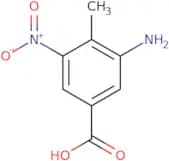
CAS:<p>Versatile small molecule scaffold</p>Formula:C7H6ClIPurity:Min. 95%Molecular weight:252.48 g/mol3-Amino-4-methyl-5-nitro-benzoic acid
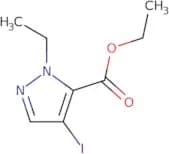
CAS:Versatile small molecule scaffoldFormula:C8H8N2O4Purity:Min. 95%Molecular weight:196.16 g/molEthyl 1-ethyl-4-iodo-1H-pyrazole-5-carboxylate
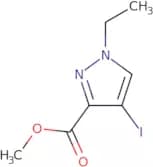
CAS:<p>Versatile small molecule scaffold</p>Formula:C8H11IN2O2Purity:Min. 95%Molecular weight:294.09 g/molMethyl 1-ethyl-4-iodo-1H-pyrazole-3-carboxylate
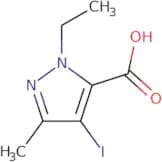
CAS:<p>Versatile small molecule scaffold</p>Formula:C7H9IN2O2Purity:Min. 95%Molecular weight:280.06 g/mol1-Ethyl-4-iodo-3-methyl-1H-pyrazole-5-carboxylic acid
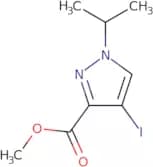
CAS:Versatile small molecule scaffoldFormula:C7H9IN2O2Purity:Min. 95%Molecular weight:280.06 g/mol4-Iodo-1-isopropyl-1H-pyrazole-3-carboxylic acid methyl ester
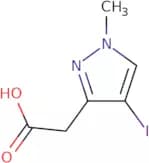
CAS:<p>Versatile small molecule scaffold</p>Formula:C8H11IN2O2Purity:Min. 95%Molecular weight:294.09 g/mol2-(4-Iodo-1-methyl-1H-pyrazol-3-yl)acetic acid
CAS:<p>Versatile small molecule scaffold</p>Formula:C6H7IN2O2Purity:Min. 95%Molecular weight:266.04 g/mol1-Ethyl-4-iodo-5-nitro-1H-pyrazole
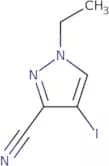
CAS:Versatile small molecule scaffoldFormula:C5H6IN3O2Purity:Min. 95%Molecular weight:267.02 g/mol1-Ethyl-4-iodo-1H-pyrazole-3-carbonitrile
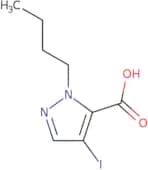
CAS:<p>Versatile small molecule scaffold</p>Formula:C6H6IN3Purity:Min. 95%Molecular weight:247.04 g/mol1-Butyl-4-iodo-1H-pyrazole-5-carboxylic acid
CAS:<p>Versatile small molecule scaffold</p>Formula:C8H11IN2O2Purity:Min. 95%Molecular weight:294.09 g/mol

![4-[(2-Ethoxybenzoyl)amino]butanoic acid](/_next/image/?url=https%3A%2Fstatic.cymitquimica.com%2Fproducts%2F3D%2Fthumb-webp%2FECA46418.webp&w=3840&q=75)
![3-[(3-Chlorophenyl)amino]propanenitrile](/_next/image/?url=https%3A%2Fstatic.cymitquimica.com%2Fproducts%2F3D%2Fthumb-webp%2FECA47592.webp&w=3840&q=75)
![2-[(4-Chlorophenyl)sulfanyl]-5-methylbenzoic acid](/_next/image/?url=https%3A%2Fstatic.cymitquimica.com%2Fproducts%2F3D%2Fthumb-webp%2FECA50681.webp&w=3840&q=75)
![[(3-Chlorophenyl)amino]carbonitrile](/_next/image/?url=https%3A%2Fstatic.cymitquimica.com%2Fproducts%2F3D%2Fthumb-webp%2FECA50799.webp&w=3840&q=75)
![4-[(1H-Imidazol-2-yl)methyl]morpholine](/_next/image/?url=https%3A%2Fstatic.cymitquimica.com%2Fproducts%2F3D%2Fthumb-webp%2FECA53492.webp&w=3840&q=75)
![2-Methoxy-5-[(methylamino)methyl]phenol](/_next/image/?url=https%3A%2Fstatic.cymitquimica.com%2Fproducts%2F3D%2Fthumb-webp%2FECA54257.webp&w=3840&q=75)

![4-[(4-Bromophenyl)methoxy]phenol](/_next/image/?url=https%3A%2Fstatic.cymitquimica.com%2Fproducts%2F3D%2Fthumb-webp%2FECA58952.webp&w=3840&q=75)